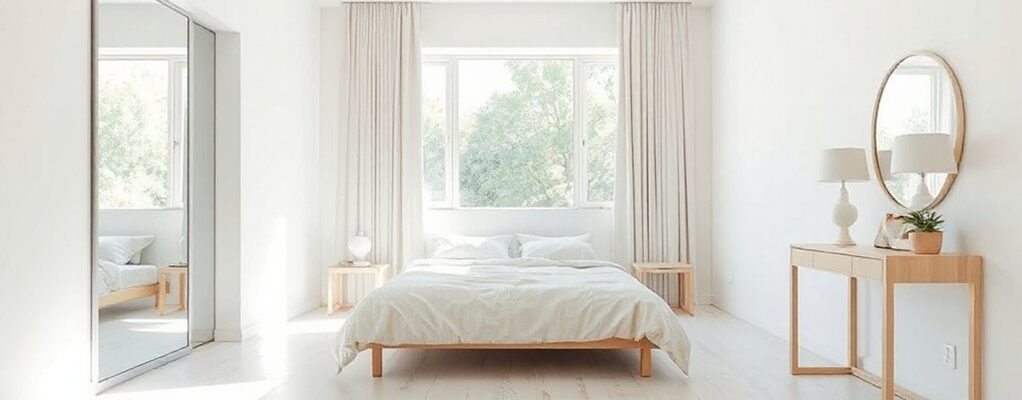
You probably don’t realize how much clutter and color weight can shrink a room, even with decent furniture. You’ll get the most impact by clearing sightlines, leaning on sheer fabrics, and bouncing light with mirrors, all without tearing down walls. Start with a practical plan that uses vertical storage, light hues, and layered lighting, then see how small changes reveal a noticeably airier feel. Curious how to apply these moves without renovation?
Key Takeaways
- Maximize vertical storage with tall shelves and wall-mounted organizers to keep surfaces clear and the floor open.
- Use light, reflective colors, matte finishes, and mirrors to brighten space and create depth.
- Keep sightlines clear of bulky furniture, favor low-profile pieces, and group items to define zones without crowding.
- Implement layered, dimmable lighting and strategic window treatments to enhance height and perceived space.
- Employ space-saving furniture with built-in storage and modular wall-mounted bins to reduce clutter and maintain breathability.
Why a Small Bedroom Feels Crowded: and How to Fix It
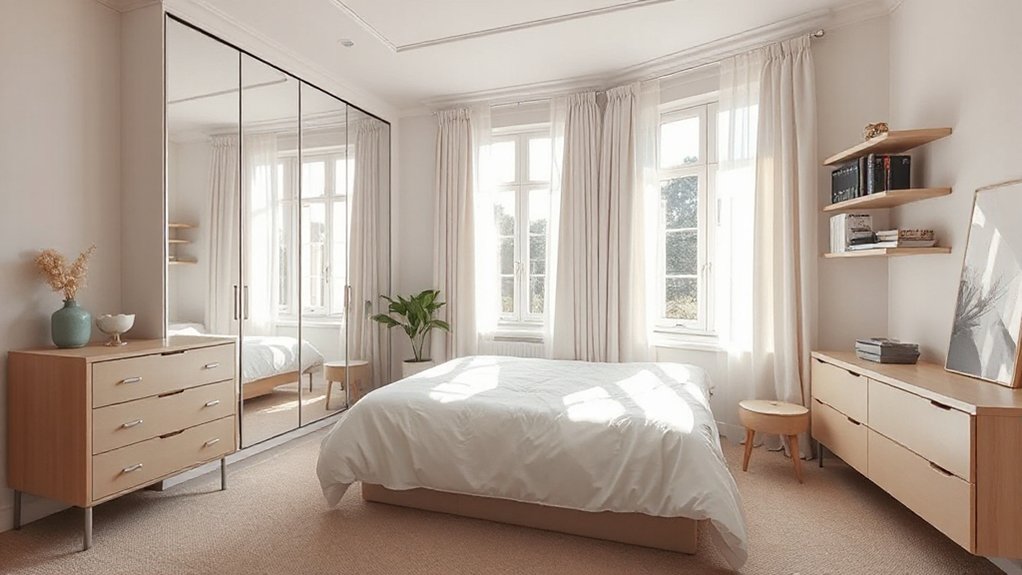
A small bedroom feels crowded because the space is overfilled with furniture, clutter, and visual noise. You’ll reduce the squeeze by prioritizing, not piling on.
Start with room height as a guide: raise emphasis on vertical storage, use tall shelves, and keep low-profile furniture to create open sightlines. Reassess ceiling design elements; install unobtrusive lighting and avoid heavy crown moldings that trap attention.
Clear the floor by wall-mugging items: mount hooks, hang organizers, and rotate seldom-used gear out of sight. Choose a single visible focal point, like a bed with a slim headboard, to anchor the room.
Color and texture should recede, not shout. By trimming extraneous pieces and aligning proportions to the ceiling height, you’ll craft a calmer, more breathable space.
Set a Light-Friendly Color Palette for a Brighter Room
A light-friendly color palette instantly enhances perceived brightness, so pick airy tones that reflect natural light without washing you out.
Start with brightness-boosting wall colors and pair them with lighter textiles and accents to reinforce the effect.
Think in terms of practical contrasts and cohesive hues to keep the room feeling open and inviting.
Light-Tilled Palette Strategies
To make a small bedroom feel brighter, start with a light-tilled palette that reflects more natural light and visually expands the space. You’ll use restrained tones, airy neutrals, and soft whites to keep reflections clean and effortless.
Consistency matters, so apply a deliberate color coordination approach across walls, textiles, and accents. Balance lightness with subtle contrast to prevent flatness, and choose finishes that read slightly warm or cool to suit your room’s light.
- Color coordination guides the room’s rhythm and balance
- Use lighter upholstery and bedding to maximize reflectivity
- Pair cool whites with warm neutrals for depth
- Plan furniture placement to keep sightlines open and airy
Brightness-Boosting Wall Colors
Are you aiming for a brighter room fast? Choose light, reflective wall colors to maximize natural light and perceived space. In practice, opt for soft whites, pale beiges, and cool neutrals that bounce sunlight rather than absorb it.
Color psychology suggests lighter tones feel more open and calm, boosting room airiness without shifting your furniture setup. Pair these with a consistent wall texture—gentle matte or eggshell finishes reduce glare and hide minor wall flaws.
Avoid heavy, saturated hues on large expanses; reserve them for accents if you want depth without narrowing the space. Test samples at different times of day, and note how shadows alter color.
A cohesive, light-friendly palette keeps the room visually larger while maintaining warmth and personality.
Maximize Natural Light in a Small Bedroom Without Remodeling
Natural light can transform a small bedroom, and you don’t need to remodel to boost it. You’ll maximize daylight with simple, intentional choices that don’t require tools or major changes. Focus on how you receive light, not just how it looks.
- Window placement: keep sightlines clear and avoid blocking the source with bulky furniture.
- Curtain styles: choose lightweight fabrics and install rods higher than frames for a brighter feel.
- Valances and transparent treatments: use sheer panels to diffuse sun without dulling brightness.
- Outdoor access: trim greenery from windowsills and keep exterior glass clean for maximum glare-free light.
Use Mirrors to Visually Extend the Space
Mirrors are one of the quickest, simplest ways to make a small bedroom feel bigger. To maximize impact, think mirror placement that doubles visual depth without crowding walls.
Place a large mirror opposite a window to bounce natural light, or lean a full-length mirror where it reflects the room’s best feature. Use multiple reflective surfaces sparingly; two or three carefully positioned pieces beat a chaotic wall of glass.
Mounting mirrors flush against walls keeps lines clean and prevents awkward gaps. Consider framed options that complement your décor, not compete with it. Avoid oversized, busy frames that overwhelm scale.
Keep mirrors unobtrusive, letting the reflected space read as a broader, brighter room rather than clutter.
Choose Multifunctional Furniture for a Tight Footprint
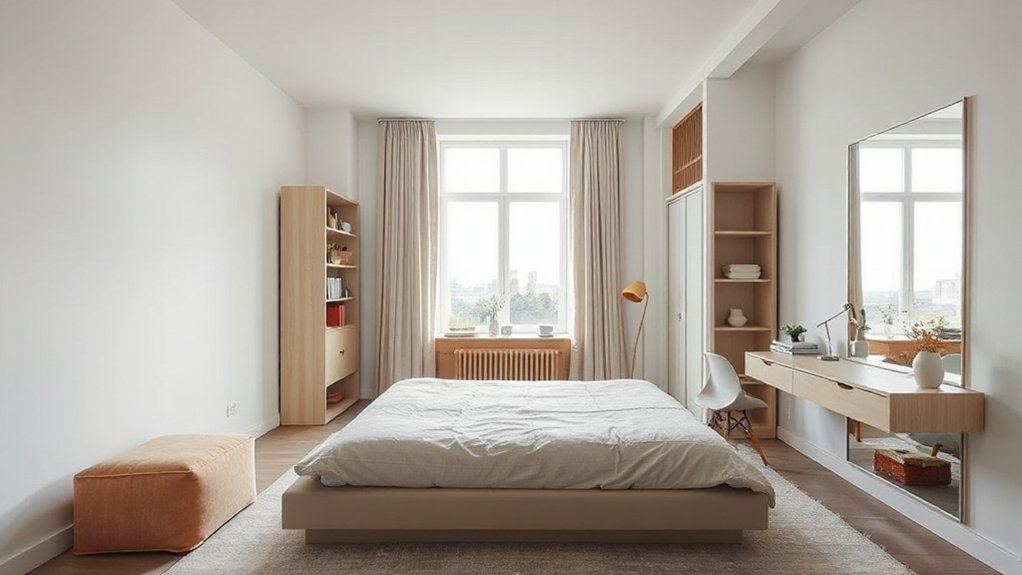
Choose multifunctional furniture to maximize every square inch without clutter. When you pick pieces that serve two roles, you free floor space and reduce visual noise. Look for storage beds, ottomans with hidden compartments, and desks that fold into walls.
Group furniture in a way that defines zones without crowding—think a compact desk near the window and a nightstand that doubles as a shelf. Color contrast helps separate functions, making each piece feel distinct within the same palette.
Use vertical storage to keep surfaces clear, and choose lightweight frames to maintain openness. Favor clean lines and hidden hardware to minimize visual clutter.
- Choose storage beds with built-in drawers or shelves.
- Opt for a fold-down desk that tucks away.
- Use an ottoman with hidden storage.
- Pair a slim dresser with wall-mounted shelves.
Declutter Smartly to Create a Calmer, Bigger Feel
Decluttering isn’t about perfection; it’s about removing the excess that makes a room feel small. You’ll gain space by prioritizing essentials and storing everything else out of sight.
Start with a quick audit: keep items you use weekly, donate or discard the rest, and touch up surfaces so they read clean, not cluttered.
Implement smart storage solutions that fit your layout—under-bed boxes, slim drawers, and wall shelves—so daily items stay accessible without crowding floors.
Color coordination helps too: assign a limited palette and group belongings by tone to reduce visual noise.
Commit to a 15-minute daily reset, returning items to their homes.
With intentional removal and orderly placement, you’ll notice a calmer, bigger feel without renovations.
Create Zones With Non-Structural, Rental-Friendly Dividers
To carve out distinct zones without compromising rental restrictions, use non-structural, removable dividers that are easy to install and move. These temporary partitions and DIY room dividers create visual boundaries without drilling or walls, preserving flexibility for future changes.
- Choose lightweight materials you can reposition without tools.
- Use fabric screens, bookfold screens, or foldable panels for quick texture.
- Lean tall, open shelving to define zones while keeping airflow.
- Install removable hooks or rods for curtain dividers that glide.
Position dividers to frame a sleeping nook, workspace, or sitting area without blocking light. Keep color palette cohesive to maintain flow. Prioritize stability at floor level and avoid heavy hardware. When you remove them, nothing remains except a refreshed, adaptable layout.
This approach delivers function, saves space, and preserves your rental’s integrity.
Optimize Vertical Space for Storage and Style
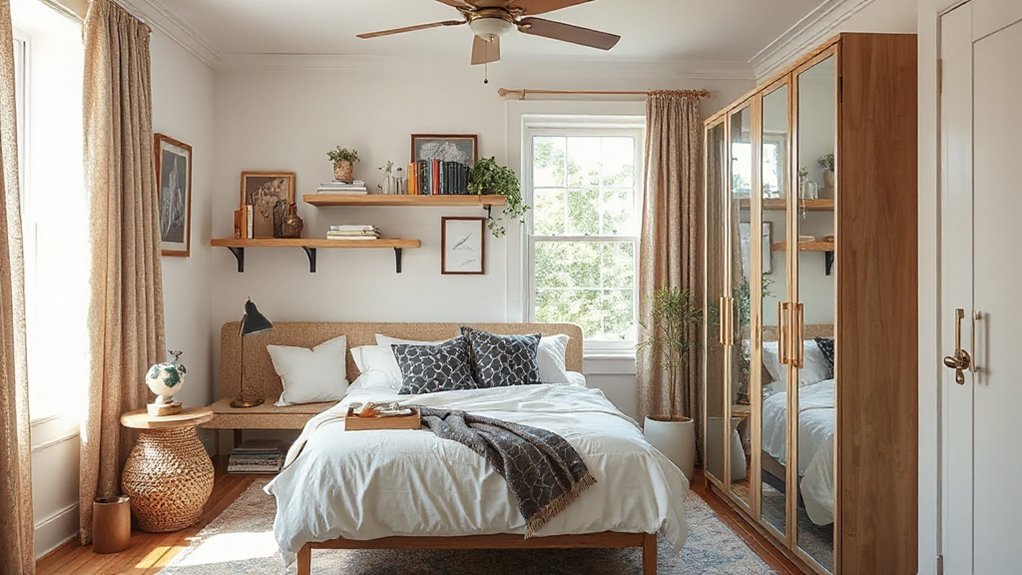
Put vertical space to work with slim-profile storage that keeps floor area clear and rooms breathable. Use tall, slender shelving and wall-mounted units to stash essentials without crowding the walk zone.
Pair vertical lines with simple decor to draw the eye upward and create a clean, cohesive look.
Vertical Storage Tricks
Vertical storage isn’t just about fitting more in; it’s about reclaiming floor space and keeping essentials within easy reach. You’ll maximize every inch by using tall, slender bookcases, wall-mounted organizers, and ceiling-height storage where possible.
Focus on hidden compartments and overhead shelving to keep rarely used items out of sight yet accessible.
- Install overhead shelving above closet doors or bed alcoves to free dresser space.
- Choose hidden compartments in ottomans or bed frames for seasonal items.
- Use wall-mounted, modular bins instead of floor-standing units.
- Hang hooks and slender wall rails for accessories and small essentials.
Keep pathways clear and label containers for quick retrieval. This approach preserves openness while boosting usable storage without clutter.
Slim Profile Decor
Use tall, narrow shelves and wall-mounted organizers to free floor space without sacrificing capacity. Choose compact seating with slim arms or wraparound options that don’t crowd the room.
Keep surfaces clutter-free by incorporating space-saving accessories—over-the-door hangers, magnetic strips, and hidden drawer dividers. Opt for multi-use items: a mirror with storage, bed frames with built-in drawers, and wall hooks that replace freestanding racks.
This approach yields a breathable, organized vibe while boosting storage verticality.
Layer Lighting to Add Depth and Airiness
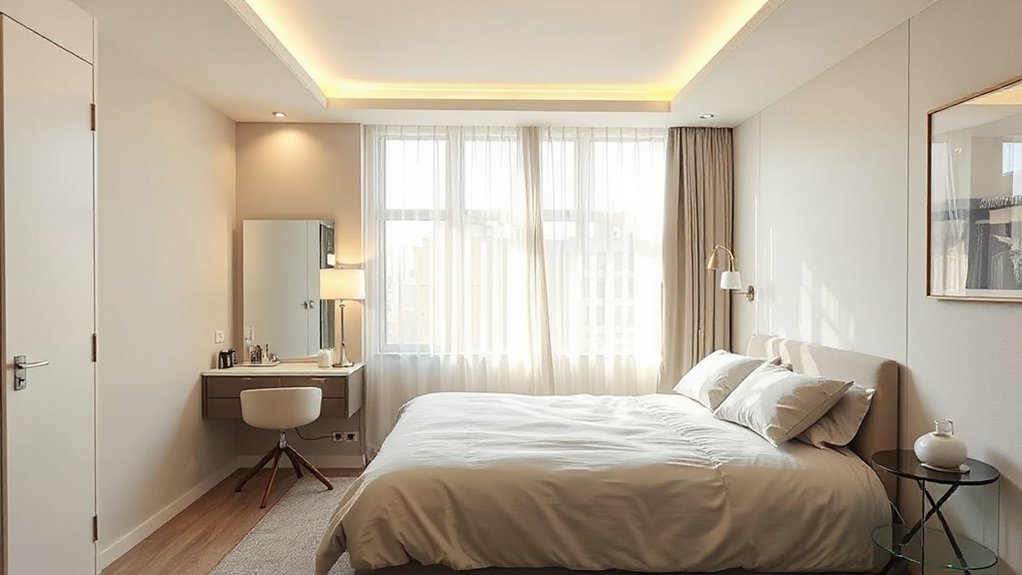
Layering lighting creates depth and a sense of airiness by combining ambient, task, and accent lights. You’ll balance glow with focused beams to shape spaces, not overpower them. Ambient layering establishes the overall mood, while shadow play adds dimension without adding bulk. Use dimmers to fine-tune intensity and avoid harsh contrasts.
Choose a low-profile floor lamp or wall sconces that sit comfortably above furniture, then add a small desk lamp for tasks. Avoid relying on a single ceiling light; layered sources reduce clutter and create visual height.
Finish with a discreet LED strip along a mirror or under shelves to suggest space beyond.
- Use dimmable ambient sources to control mood
- Pair wall sconces with a desk lamp for task depth
- Integrate shadow play with angled lighting
- Add subtle LED accents to imply more room
Decor Tricks That Visually Expand a Small Bedroom
One smart way to visually enlarge a small bedroom is to maximize light and reflectivity. You’ll boost perceived space by choosing light, neutral walls and reflective surfaces on furniture and mirrors.
Use color contrast sparingly to create depth: a brighter foreground against a subtly darker accent behind the bed makes the room feel longer without adding bulk.
Prioritize vertical lines to emphasize ceiling height; tall dressers, floor-to-ceiling curtains, and mounted shelves draw the eye upward.
Keep clutter off surfaces and leverage clear or glass materials to maintain breathability.
Strategically placed lighting enhances this effect without shrinking floorspace.
Fast, Rental-Friendly Space Fixes That Pay Off Quickly
You can start boosting space fast with two rental-friendly moves: choose quick window treatments that let in light and feel airy, and rework your layout to create clear pathways.
Keep the focus on minimal furniture with a simple setup that frees floor space and reduces visual clutter. These low-commitment tweaks pay off fast by making the room feel brighter and more functional.
Quick Window Treatments
Smart, fast window treatments can transform a small bedroom in minutes. You’ll want simple, rental-friendly options that don’t require tools or drilling, yet still feel intentional and polished. Focus on boosting light, reducing clutter, and creating clean sightlines with easy swaps.
- Use airy, light-filtering window coverings to maximize daylight and minimize shadowed corners.
- Choose curtain styles that hit just above the floor for the illusion of height.
- Opt for solid, neutral tones to maintain cohesion and avoid visual noise.
- Install tension rods or adhesive hooks for a no-drill setup that’s quick to reverse.
With these moves, you emphasize openness, guide the eye upward, and keep the room feeling larger and more cohesive.
Minimal Furniture Layout
You’ll maximize floor space by prioritizing multiuse items and wall-mounted solutions, not bulky bases. Choose a bed with storage drawers or a slim futon, then add a compact dresser or wall unit that doesn’t widen the room.
Consider a small desk that tucks into a corner and a single, versatile table for meals or work. Embrace space-saving furniture that folds or stacks, and keep surfaces clear to maintain flow.
Favor minimalist decor: neutral tones, simple lines, and restrained accessories. The result is a calmer, more functional space you can enjoy daily.
Frequently Asked Questions
Can Color Choices Truly Affect Room Size Perception?
Yes, color choices can affect room size perception. Color psychology shows light hues visually expand spaces, while darker tones compress them.
Use cool, airy colors on walls and maximize light reflectivity with matte or satin finishes. Incorporate visual illusions like color-gradients on accents, and keep ceilings light to feel higher.
Balance bold accents sparingly to avoid crowding. You’ll feel more open, organized, and calm when you apply these practical, evidence-based strategies.
Which Mirrors Work Best for Small Bedrooms?
Mirror choice matters: go with tall, full-length options and a few strategically placed pieces to bounce light. Allude to stories of explorers finding treasure—use that inspiration to pick decorative frames that feel timeless.
For small bedrooms, practice mirror placement: place one large mirror opposite a window to maximize daylight, and add a secondary, slimmer mirror near the doorway to widen the perception.
Avoid heavy frames; opt for minimal, cohesive decorative frames.
How Can I Optimize Vertical Storage Safely in Rentals?
You can optimize vertical storage safely in rentals by leveraging sturdy wall shelves, tall bookcases, and over-bed units, avoiding ceiling fixtures.
Plan furniture arrangement to keep pathways clear and distribute weight evenly.
Use adjustable shelves for flexibility and label boxes for quick access.
Safety considerations include securing tall furniture to walls, using anti-tip straps, and avoiding heavy loads on high shelves.
Choose sturdy, non-slip storage bins and check lease rules before drilling or mounting.
Do Rugs Affect Perceived Room Dimensions, and How?
Yes, rugs affect perceived dimensions. A well-chosen rug can visually expand a room by anchoring furniture and guiding flow.
Opt for a size that fits your main seating or bed area, not a tiny scatter.
Use furniture arrangement to keep clear sightlines, and anchor with a larger rug to create defined zones.
Pair with lighting techniques: layered lighting, wall wash, and task lights to enhance depth.
Choose neutral tones for space, bold patterns for balance.
What’s Quick, Affordable Decluttering Method for Tiny Spaces?
Declutter quickly by sorting: donate, recycle, and store only what you truly use.
For tiny spaces, use vertical storage and keep surfaces clear.
Start with a two-bin system: essentials within reach, non-essentials out of sight.
Focus on furniture arrangement to maximize floor space, and employ lighting techniques—brighten corners, layer ambient and task lighting.
Use multi-functional pieces, like an ottoman with storage, and foldable options.
Maintain flow, keep one area free, and revisit weekly.
Conclusion
Imagine your room as a small ship charting a bright sea. By keeping sightlines clear, letting light sail in, and stacking clever, vertical storage like tall males and wall rails, you free deck space. Add mirrors as portholes and multifunction furniture as sturdy keels. Layer lighting to create depth, reflect colors, and smooth away clutter. With these rental-friendly moves, your cramped cabin becomes a roomy vessel—efficient, airy, ready to voyage toward calmer, larger-feeling horizons.