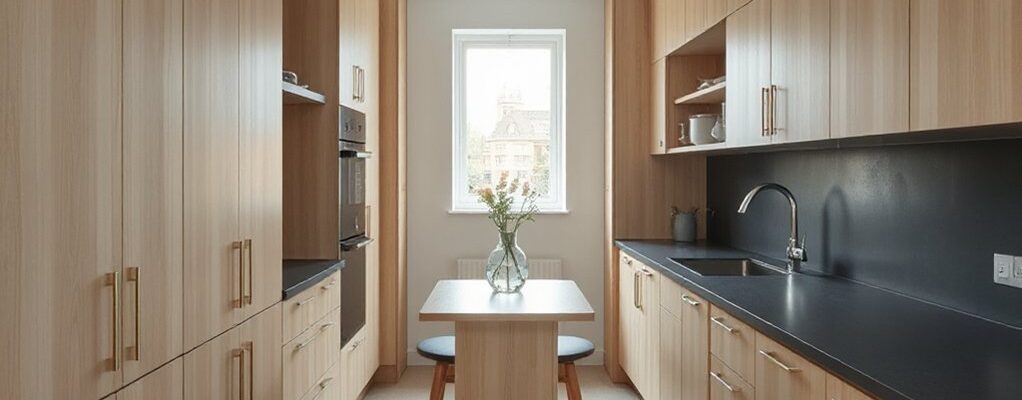
In narrow terraced homes, you’ll want a kitchen that maximizes every centimeter with a clear flow from prep to cleanup. Think galley precision, smart storage, and corner configurations that define zones without crowding sightlines. You’ll balance compact appliances, extendable surfaces, and layered lighting to keep the space bright and practical. It’s a design puzzle you can solve step by step, but the key moves—layout, storage, and light—will guide you toward a surprisingly spacious feel, if you commit to the right details.
Key Takeaways
- Galley layouts optimize narrow spaces by aligning work zones in a single line for efficient prep, cooking, and cleaning.
- U- and L-shaped configurations maximize storage and workflow within compact footprints and defined zones.
- Corner configurations free wall space, reducing obstructions and improving sightlines in narrow terraces.
- Vertical storage, shallow cabinets, and tall units preserve sightlines while increasing capacity without widening the footprint.
- Thoughtful circulation, door swing considerations, and color-coded functional zones enhance flow and usability in tight layouts.
Narrow Kitchen Essentials: Criteria for Terraced Homes
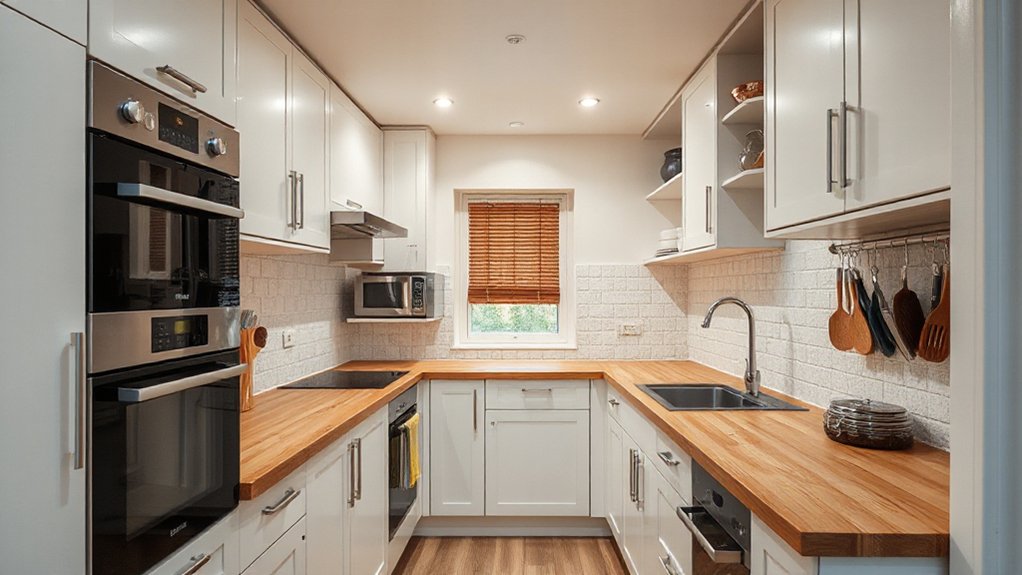
In narrow terraced homes, the baseline is practicality: every inch should serve a purpose, from doorway to doorway. You approach core criteria with clarity, prioritizing workflow, safety, and adaptability.
Start by evaluating corridor width, ensuring door swings don’t block access to key zones. Consider appliance placement to minimize steps between prep, cooking, and cleaning, choosing compact models where possible without sacrificing performance.
Storage should be lean yet reachable, with tall units and shallow cabinetry that respect sightlines. Select countertop materials that resist stains and moisture while aging well in limited footprint spaces.
Prioritize durable surfaces, harmonious tones, and understated seams to maintain a cohesive flow. Finally, plan for future flexibility, allowing changes in family needs without structural upheaval.
Galley Layouts for Tight Widths: Pros, Cons, and When to Use Them
Galley layouts excel in tight widths by prioritizing workflow and wall-to-wall efficiency. You maximize every inch by keeping work zones linear: prep near the stove, prep near fridge, clean-up adjacent to the sink. This minimizes back-and-forth, so your kitchen feels calmer and more controllable.
Appliance placement matters: place the fridge toward the entrance for quick access, mount or tuck bulky units to the sides to preserve center aisle width, and consider a slim, integrated dishwasher to maintain a clean line.
Traffic flow should be uninterrupted, with a clear path from doorway to work zone without bottlenecks.
Use tall cabinets on one side to boost storage without stealing floor space. Choose compact, front-face appliances to preserve a cohesive, unobtrusive look.
Compact Open-Plan Tricks That Still Feel Spacious
When you combine open sightlines with smart zoning, you keep the room feeling expansive without losing function. In compact open plans, precision matters more than size, so you prioritize flow, light, and flexible surfaces.
Innovative storage and multi functional furniture transform tight footprints into capable spaces, without visual clutter.
- Use wall-mounted storage to free floor space while keeping essentials accessible.
- Integrate seating with hidden compartments to conceal everyday items.
- Choose extendable counters and foldaway surfaces for meal prep on demand.
- Pair transparent or light finishes with mirrors to amplify brightness and depth.
Corner Configurations: U-Shape and L-Shape for Small Nooks
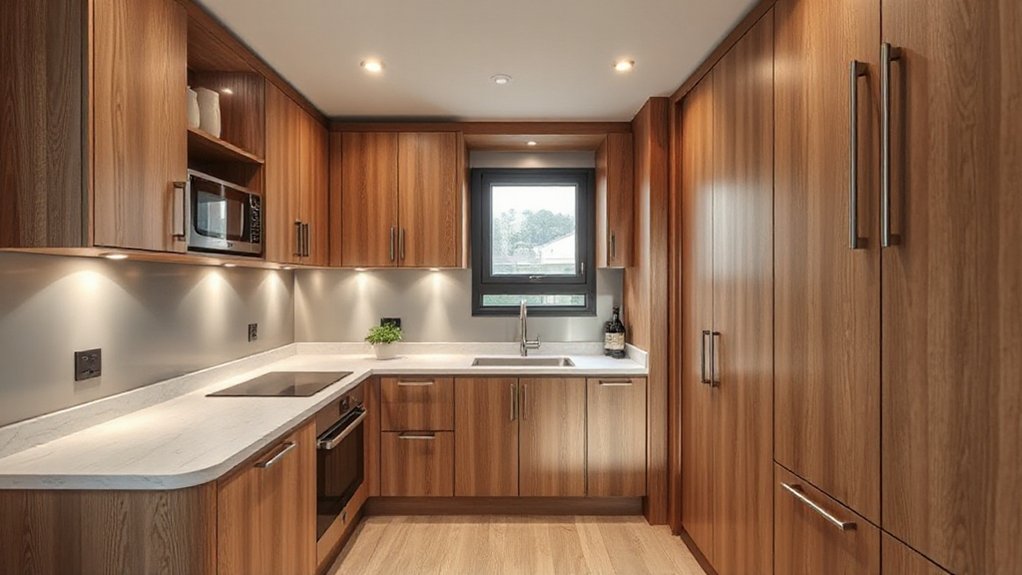
A U-Shape puts the sink and cooktop in easy reach while locking in counter space for prep and cleanup.
With a compact L-Shape, you gain defined zones that minimize traffic through the work triangle, maximizing usable width.
We’ll compare the U-Shape benefits with concise L-Shape tactics to fit tight nooks without sacrificing flow.
Corner U-Shape Benefits
Corner U-shaped kitchens take advantage of tight corners by threading workflow into a compact, high-efficiency footprint. You’ll feel the benefit as you move fluidly between zones, with clear sightlines and minimized backtracking.
U shape ergonomics streamline prep, cooking, and cleanup in a contained arc, while optimizing corner storage so every inch counts.
1) Maximize vertical storage with tall cabinets that don’t encroach on workflow
2) Place the primary work zone at the corner to reduce distance between sink, hob, and prep
3) Use shallow toe-kick drawers for utensils and small tools, freeing counter space
4) Choose integrated appliances to keep surfaces uncluttered and cabinets continuous
This layout prioritizes efficiency, precision, and practical space planning for narrow kitchens. Corner storage shines, and ergonomics stay comfortable at every move.
Compact L-Shape Tactics
Choose a shallow cabinet depth and drawer arrays that reveal tools without fuss, reducing clutter at the counter edge. Prioritize vertical storage: tall pantry, open racks, and magnetized strips for knives and lids.
Finish with eco-friendly materials and durable surfaces that resist wear, like bamboo or recycled composites. Vintage appliances can add character without sacrificing space; ensure they fit standard footprints and stay reliable in tight corridors.
This approach balances function, style, and material responsibility.
Smart Storage Tactics for Every Inch of Gangway
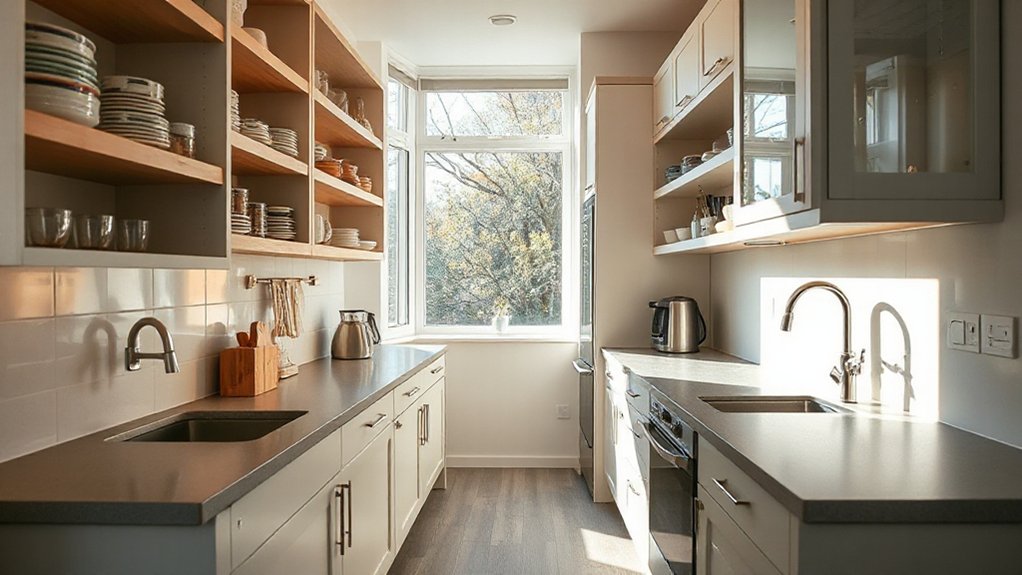
Ever thought every inch of that gangway could hold more than just foot traffic? You can reclaim space with smart storage built into the flow. Use vertical shelving, slim pull-out pantries, and fold-away surfaces that don’t disrupt traffic.
Prioritize accessibility; keep frequently used items within arm’s reach, and tuck away rarely used gear behind doors. Appliance placement should favor compact, modular units that free floor area while preserving usability.
Choose countertop materials that double as staging zones for prep and storage, like 2-tier boards or inset trays. Build in dividers, labeled bins, and magnetic rails to keep odds and ends tidy.
- Slim pull-out pantry systems
- Fold-away prep surfaces
- Vertical banks of open shelving
- Magnetic and modular organization accessories
Lighting, Color, and Materials That Shrink or Expand Space
Lighting tricks that open up a tight kitchen, plus color schemes that feel larger, start with how you reflect and absorb light. Use bright, neutral tones and high-contrast accents to expand perceived space.
While strategic lighting layers—ambient, task, and accent—shape depth. In practice, choose materials with subtle sheen and minimal grout, so color reads clean and spaces breathe.
Lighting Tricks That Open
When you light a narrow kitchen strategically, you can instantly feel more space breathe. You’ll create daylight-like clarity with layered layers, directing glare away from walls and toward work zones. Use brighter task lighting near counters and under cabinets, then soften with ambient sources to avoid harsh contrasts.
Focus on scale, not quantity, and pick fixtures that visually recede.
- Elevate with slim, recessed LEDs along toe-kicks to add width perception without bulk.
- Add under-cabinet strips to illuminate work areas while keeping countertops airy.
- Choose pendant shades that are translucent or reflective to bounce light upward.
- Integrate hidden cove lighting behind soffits or shelves for depth and warmth.
Incorporate kitchen appliances and decorative accessories carefully to maintain flow.
Color Schemes For Space
Color choices and material finishes have a direct impact on perceived space in narrow terraced kitchens. You optimize space by pairing light, cool tones with crisp white accents to reflect more light and visually expand walls.
Color psychology guides you to use subtle blues or greens to calm the room and reduce clutter perception, while brighter ceilings create vertical relief.
Choose paint finishes that balance durability with sheen: eggshell or satin on walls for easy cleaning, semi-gloss on trims to sharpen edges, and avoid heavy gloss that traps glare.
Keep cabinetry near the same tonal family as walls to minimize boundary lines; this seamlessness enlarges, not constrains.
Use strategic contrasting accents sparingly to delineate zones without breaking openness.
From Measurements to Mood Board: A Practical Step-by-Step Floorplan
To turn measurements into a usable floorplan, start by rechecking every dimension with a laser measure and note-taking, then sketch a to-scale outline on graph paper or a digital tool. From there, translate data into layout logic, prioritizing walk zones, appliance footprints, and corridor clearance. This is where historical influences and cultural variations inform decisions without clutter. You’ll optimize homes with tight constraints while preserving character.
- Reconcile wall irregularities and doors before furniture placement.
- Color-code zones by function to visualize flow and proportions.
- Layer mood-board ideas next to measurements to test scale.
- Annotate potential swing arcs, storage niches, and lighting needs.
Frequently Asked Questions
How Do I Choose Between a Galley and U-Shaped Layout?
A galley or a U-shape works, but you choose based on space flow and task routing. If you value efficiency and single-file prep, pick galley.
If you need a perimeter work zone with seated spots, go U-shaped. Consider open shelving to save cabinet depth, and color schemes that brighten narrow rooms.
Prioritize clear traffic paths, and keep zones compact yet ergonomic. Use smart storage, integrate lighting, and guarantee the layout supports easy appliance access and cleaning.
What Budget Range Is Realistic for Narrow Terraced Kitchens?
“Time is money.” A realistic budget for narrow terraced kitchens sits between $10,000 and $25,000, depending on finishes and appliances.
You’ll want tight budget planning early, then allocate for smarter material selection that lasts. Expect higher costs if you upscale counters or cabinetry.
You’ll optimize space with compact appliances and modular units.
Keep a 10–15% contingency for surprises, and track every detail to maximize design intuition and efficiency.
Which Appliances Save Space Without Sacrificing Function?
Compact appliances save space without sacrificing function. Choose stackable washer-dryer units and under-counter fridge-freezers, paired with a slimline dishwasher.
Opt for compact appliances with high energy ratings to boost appliance efficiency while keeping footprints small. Use integrated or built-in options to hide heftier gear and maintain clean lines.
Prioritize multi-function devices, like a microwave with convection, and have precise measurements before buying to guarantee fit and usability.
Can I Retrofit Smart Storage in a Tiny Kitchen?
Yes, you can retrofit smart storage in a tiny kitchen. Start with smart cabinetry that maximizes vertical space and pulls out where you need them.
Choose compact fixtures that still feel roomy, like slimline appliances and recess shelves. Integrate magnetic strips, fold-down surfaces, and corner gizmos to reclaim every inch.
Measure, plan, and install modular units so changes feel intentional, not cramped. You’ll gain function without sacrificing flow or style.
How Do Zoning and Lighting Affect Perceived Space?
Zoning and lighting affect perceived space by guiding your eye and shaping rhythm in the room. Use color schemes with pale neutrals and bright accents to reflect natural light, making walls recede and ceilings feel higher.
Position lighting to layer tasks and ambiance—task lights near prep zones, soft ambient glow elsewhere. Mirror or glass elements amplify daylight, while clear sightlines reduce clutter.
Efficient zoning keeps zones distinct, maximizing perceived openness and practical, design-intuitive flow.
Conclusion
You’ve got the know-how to turn a narrow terraced kitchen into a high-efficiency haven. Lean into galley discipline, shallow panels, and vertical storage to clear sightlines and slash clutter. Use corner or L/U shapes to coax every inch into action, and foldaway surfaces to boost prep space without crowding. Smart lighting and calm colors keep the room airy. Measure, plan, execute—and watch your compact space perform like a workshop on warp speed. This kitchen will redefine “cozy.”