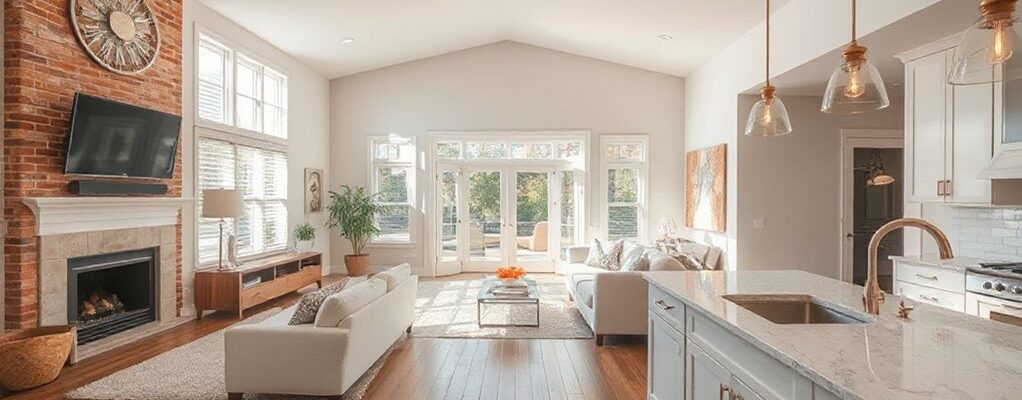
To boost your property’s appeal, start with a bright, sell-ready palette and layered lighting that feels cohesive from room to room. Prioritize smart storage to maximize perceived space, and upgrade floors with durable, texture-rich finishes. Focus on kitchen and bathroom updates with low-maintenance, high-impact materials, then tie the whole look together from curb appeal to closets. Quick wins—decluttering and quick system checks—deliver fast momentum, but the real payoff hinges on a consistent, polished finish that invites a closer look.
Key Takeaways
- Establish a cohesive neutral palette with warm accents, layered lighting, and consistent finishes from exterior to interior to enhance photos and tours.
- Prioritize smart storage and multi-use furniture to maximize space while maintaining clean lines and accessible, discreet storage.
- Upgrade floors and textures with light-reflecting materials and matte finishes to brighten spaces and reduce visual seams.
- Use durable, low-maintenance kitchen/bath finishes (quartz, porcelain, factory-finished cabinetry) with layered lighting for a polished look.
- Implement quick-win improvements (decluttering, smart tech, strategic outlet placement) to boost appeal and momentum for larger renovations.
Start With a Bright, Sell-Ready Palette: Paint and Lighting That Wow
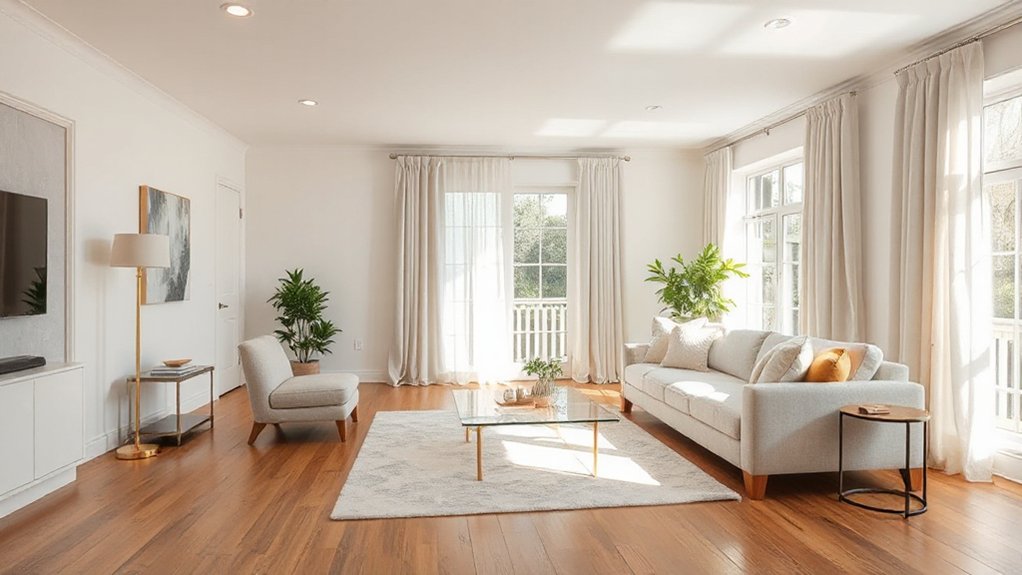
A bright, sell-ready palette instantly broadens appeal and makes spaces feel larger, lighter, and more inviting. You’ll choose neutral ground tones paired with warm accents, yielding a timeless backdrop that enhances photos and on-site tours.
Focus on paint with excellent coverage and low odor, and apply consistent color flows from room to room to avoid jarring progressions.
Color psychology guides your selections: soft whites and greiges calm, while subtle blues or greens introduce serenity and perceived space.
For lighting, prioritize ambient lighting that flatters surfaces without harsh shadows. Layer sources—overhead, sconces, and task lights—to balance color temperature and depth.
This approach aligns with current trends, remains practical, and improves perceived value without overhauling textures or architectural features. ambiance ✔, cohesion ✔, impact ✔.
Maximize Space First: Smart Storage That Feels Capacious
Smart storage is your first decision to maximize space, so you’ll prioritize smart storage tines, hidden cabinet solutions, and multi-use furniture that scales with your needs.
Think clean lines, accessible compartments, and furniture that folds, stacks, or hides in plain sight. This approach keeps rooms capacious without clutter, aligning practical use with a modern, trend-aware aesthetic.
Smart Storage Tines
To maximize space without sacrificing function, Smart Storage Tines redefine how you organize closets and cabinets, letting every inch count. You install adjustable racking and modular dividers that snap into place, so you tailor configurations to your items and routines.
Every tine creates a defined lane for sets, tools, and apparel, reducing rummage time and preventing overflow. You’ll appreciate clear zones for seasonal gear and daily essentials, plus pull-out bins that keep seldom-used pieces accessible without clutter.
The system supports minimalist, color-blocked visuals while accommodating vintage accents through compatible finishes and hardware. It’s practical, durable, and scalable, so you upgrade incrementally without reworking existing fixtures.
Smart Storage Tines deliver efficiency, cohesion, and a cultivated sense of order that enhances overall property appeal.
Hidden Cabinet Solutions
Looking to maximize space first, Hidden Cabinet Solutions deliver a capacious feel without bulky renovations. You’ll spot shallow pull-out trays behind kitchen or bathroom doors, converting dead corners into usable depth without altering aesthetics.
Hidden cabinet solutions prioritize clean lines, with integrated panels that vanish against cabinetry, so clutter stays out of sight and your rooms breathe. Concealed storage innovations include toe-kick drawers, appliance garages, and flip-front niches that tuck away small essentials while keeping daily workflows fluid.
Use retractable shelves in pantry zones to minimize overstock, and treat upper cabinets with push-to-open mechanisms to reduce hardware clutter.
Precision matters: align gaps, test weight limits, and maintain consistent finishes. This approach enhances flow, resale appeal, and perceived value without intrusive remodeling.
Multi-Use Furniture Ideas
When space is at a premium, multi-use furniture that blends storage with everyday function can redefine a room’s footprint, and you’ll feel the difference the moment you step in.
You’ll prioritize convertible furniture that switches roles—sofas become beds, coffee tables reveal drawers, and desks morph into compact workstations.
Modular designs let you tailor layouts without bulk, swapping modules to fit evolving needs.
Look for hidden storage under seating and nested pieces that tuck away when not in use.
Precision construction matters: sturdy hinges, smooth slides, and durable finishes endure daily traffic.
Choose neutral tones with subtle texture to maintain flow, then add a few bold accents for contrast.
This approach maximizes square footage while delivering stylish, practical versatility you’ll actually use.
Flooring and Texture Upgrades That Read as Larger Rooms
Light-Soaked Floor Upgrades brighten walls and open sightlines, making spaces feel instantly larger.
Pair bright, continuous flooring with texture-enhanced perimeter trim to subtly define boundaries without breaking the flow. This approach keeps your rooms cohesive, modern, and ready for both everyday living and show-ready staging.
Light-Soaked Floor Upgrades
To make rooms feel larger, opt for light-reflecting flooring and subtle textures that bounce as much daylight as possible. You’ll maximize natural lighting with pale, low-contrast materials like brushed white oak, ash, or porcelain planks that mirror nearby walls. Choose finishes that resist yellowing and maintain uniform reflections across spaces.
Consider seamless runs and extended planks to reduce visual seams, which helps read as larger rooms. Pair floors with simple, architectural details—clean connections, concealed fasteners, and minimal grout lines—that keep sightlines clear.
For texture, favor matte or satin sheens over high gloss to avoid glare while preserving depth. Keep color palettes cool and cohesive, and let natural lighting guide your contrast decisions.
This approach respects architectural details without overcrowding the space.
Texture-Enhanced Perimeter Trim
Select low-profile baseboards and casings in a single finish to maximize flow, then introduce textural accents through subtle floor textures that read as expansive rather than busy. This approach preserves perceived space while adding depth, because trim detailing remains understated.
Use crisp progressions between flooring and walls, avoiding heavy profiles that interrupt sightlines. Prioritize durable, matte finishes for trim and flooring to maintain a modern edge.
The result is a calm, trend-aware environment that reads larger with refined texture and precise, practical execution.
Kitchen and Bath Finishes That Move the Needle (ROI Focus)
When you’re weighing kitchen and bath upgrades for ROI, focus on finishes that deliver immediate impact without blowing the budget. In these spaces, choose durable materials with visual lift: quartz countertops, porcelain tile, and factory-finished cabinets that look timeless yet current.
Prioritize neutral palettes with strategic color pops via hardware and accents to support flexible color schemes. Install lighting fixtures that brighten without glare, pairing layered lighting (ambient, task, accent) to showcase texture and finish.
Lean into high-contrast faucets, matching metals, and cohesive trim for a polished look. Avoid ornate trends that date quickly; instead, favor clean lines and consistent edge profiles.
Finally, guarantee sealants, grouts, and finishes are low-maintenance, resistant to moisture, and easy to clean for sustained appeal.
Cohesive Design Front to Back: From Curb Appeal to Closet
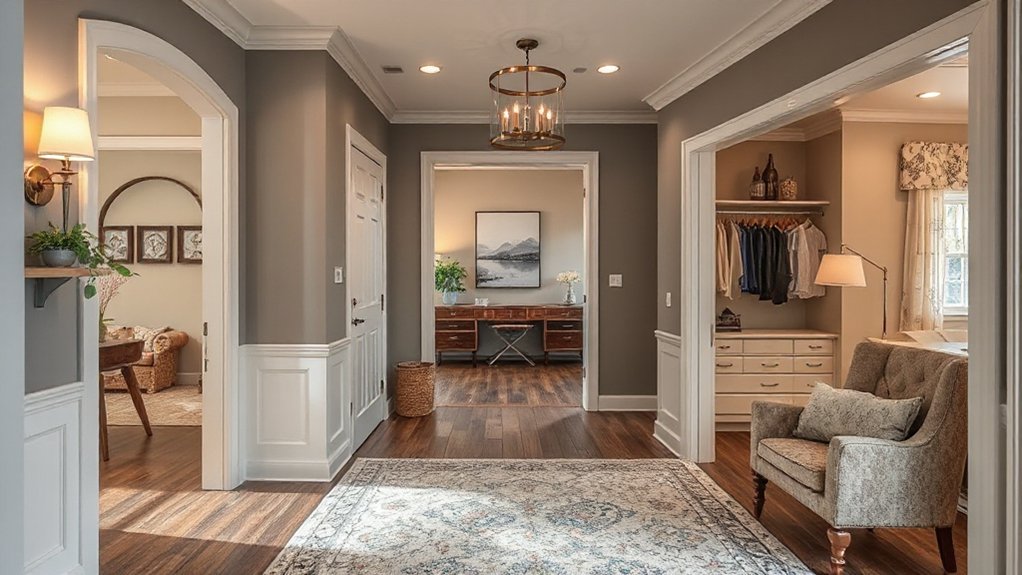
A cohesive design approach starts at the street and flows through every interior touchline, ensuring curb appeal, entry sequence, and interior moments read as a single, deliberate narrative. You align front yard landscaping and exterior lighting so progressions feel intentional, not incidental, guiding visitors from outside in.
Keep color, texture, and hardware consistent across zones, so sightlines stay cohesive—from the curb to the closet. Prioritize lighting layers that highlight architecture and pathways without glare, and choose greenery that complements building materials.
Layout establishes a predictable rhythm: entry, living spaces, and storage areas speak with shared scale and finishes.
- front yard landscaping that echoes the home’s materials
- exterior lighting with warm, motion-aware layers
- consistent hardware, trim, and color across exterior and interior
- sightline-conscious storage and doorway progressions
Quick-Start Projects for Immediate Impact and Fast Wins
Even with a tight schedule, you can secure quick, tangible gains by prioritizing high-impact, low-effort updates that readers can implement this weekend. You’ll target immediate visuals and usability, not perfection.
Start with curb-appeal tweaks: a fresh coat of neutral paint, updated hardware, and clean lighting to set a confident first impression.
Inside, declutter targeted zones, then install smart home technology like a programmable thermostat and smart bulbs for instant atmosphere and efficiency.
Choose durable, modern fixtures that photograph well and endure wear.
Outdoor landscaping matters just as much as indoor polish—edge planters, a defined path, and drought-tolerant greenery offer fast, testable lift.
Focus on systems: quick wiring checks, outlet placement, and a charging hub.
These fast wins create momentum for bigger upgrades later.
Frequently Asked Questions
How Long Before Upgrades Show a Noticeable Resale Impact?
In about 1 to 3 months, you’ll notice a resale bump once upgrades land, with kitchen renovations delivering the strongest payoff.
Start by boosting curb appeal, because first impressions matter before buyers step inside. Then, refine your kitchen and bathrooms to meet current trends, showing tangible value.
You’ll attract more interest, shorten days on market, and justify a higher asking price relative to comparable homes.
Stay consistent with quality finishes and a cohesive design direction.
Which Colors Appeal to the Broadest Pool of Buyers?
Color that broadens appeal tends toward soft neutrals and balanced warm tones. You’ll attract more buyers with hues like greiges, warm whites, and greys, plus gentle blues and greens as accents.
Rely on color psychology to convey calm and openness, and watch paint trends for durable choices.
Start with a clean, consistent base, then add restrained color pops. Don’t overdo it—your goal is timeless, versatile palettes that feel modern and inviting.
Do Smart Storage Solutions Increase Appraisal Value?
Smart storage does increase appraisal impact when you optimize spaces, reduce clutter, and showcase functionality. You’ll help buyers visualize livability, which can lift perceived value.
Keep built-ins clean, measure-for-fit, and avoid overbearing systems that look improvised. Don’t overlook accessibility and maintenance; storage that’s easy to use earns credibility.
Are There Budget-Friendly Upgrades With the Highest ROI?
Yes—budget-friendly upgrades with the highest ROI exist. Focus on affordable renovations that refresh key spaces: updated lighting, fresh paint in neutral tones, bathroom cosmetic fixes, and kitchen hardware swaps.
Prioritize ROI-focused upgrades like efficient appliances, hardware upgrades, and smart storage. You’ll gain appeal without overspending, maintain practicality, and stay trend-aware.
Track costs against value, avoid over-improving, and document improvements. This approach delivers strong resale leverage while keeping your project affordable and purposeful.
How to Prioritize Upgrades for a Fixer-Upper vs. Move-In Ready?
“Time is of the essence,” so you prioritize—fixer-upper first: solid structure, safe systems, and essential repairs, then move-in ready touches that add value.
Assess costs, ROI, and risk, charting a clear upgrade path. For a fixer-upper, lean on practical projects like damp-proofing and kitchen basics.
For move-in ready, focus on fresh paint, lighting, and durable finishes. Include historical renovation considerations and eco-friendly fixtures to boost appeal without overhauling the core.
Conclusion
You’ll finish strong, like a well-edited room that reads “home” at first glance. Think of your upgrades as a familiar tune—neutral palettes, layered lighting, and smart storage harmonizing to expand space and calm the eye. The finish line isn’t flashy; it’s cohesive, durable, and ROI-smart, guiding buyers with quiet confidence. Like an allusion to a trusted classic, your refreshed home hints at better days ahead—bordering on timeless, relentlessly practical, and ready to welcome.