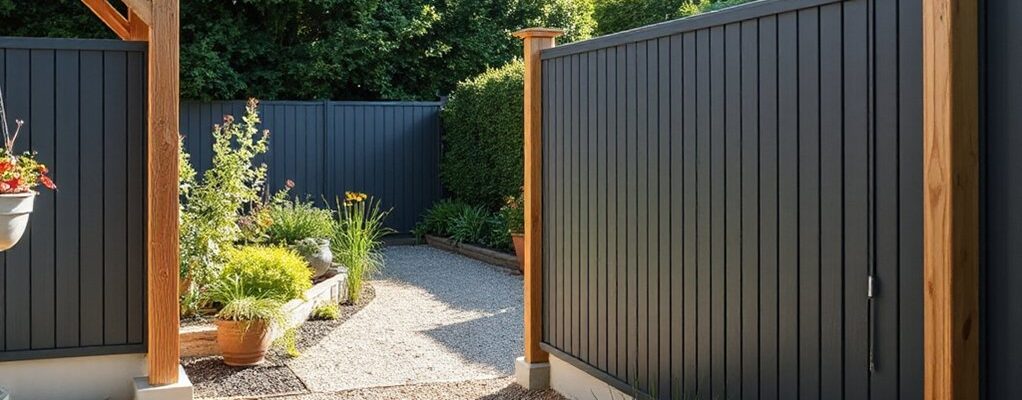
You see the fence line as a quiet boundary glinting in the Kent light, steady against wind and rain. You’ll want a choice that balances durability, privacy, and curb appeal, with climate-resilient finishes and low maintenance. Consider how traditional pickets, solid panels, or modern composites align with your home’s character and your budget. The right mix offers long-term value, but the best option asks more questions—about weather, security, and how your landscape will evolve. Let’s get into it.
Key Takeaways
- Contemporary options like powder-coated metal and composites offer low maintenance, weather resistance, and clean lines suitable for Kent’s climate.
- Picket fences provide decorative curb appeal with light privacy, ideal for front yards and sightlines in Kent neighborhoods.
- Panel systems deliver solid privacy and wind resistance, balancing screening with durability for longer-term value.
- Brick enclosures maximize privacy and sound attenuation, fitting traditional Kent yards with higher upfront costs.
- Plan for security and zoning: verify permits, use tamper-resistant fasteners, and align fence lines with rooflines and landscape features.
Decide Your Kent Fence Style: Climate, Character, and Curb Appeal
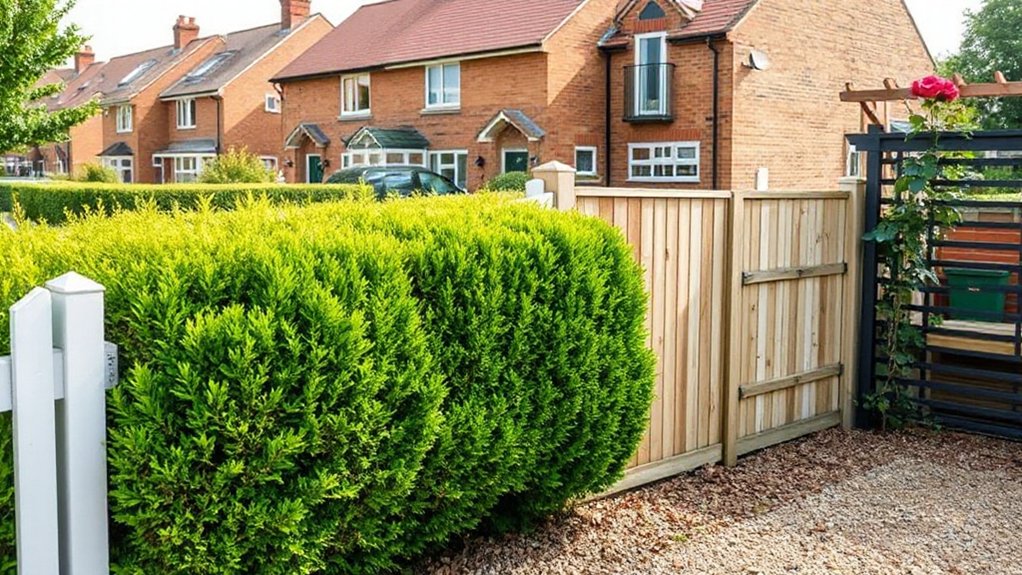
Choosing a fence style for your Kent home starts with climate, character, and curb appeal. You assess how wind, humidity, and temperature cycles affect materials, fasteners, and coatings, selecting options that resist wear and routine maintenance.
Next, evaluate site aesthetics: you align fencing with landscape elements, architectural lines, and outdoor rooms to achieve cohesive sightlines and progressions.
Define your character goals—modern, traditional, or rustic—and translate them into proportional heights, rail counts, and textural finishes.
Consider fencing height considerations early, balancing property privacy with visibility for security and neighbor relations.
Plan for installation tolerances, soil conditions, and drainage to avoid long-term distortion.
Finally, assure durability standards, warranty coverage, and local code compliance to guarantee consistent performance over seasons.
Landscape integration and height considerations guide your final choice.
Compare Privacy Options: Picket, Panel, and Brick for Kent Homes
Picket, panel, and brick privacy options each deliver distinct performance and aesthetics for Kent homes. Each choice defines sightlines, noise reduction, and security level, so you’ll measure privacy by design intent and site.
Picket fences offer light obstruction with high curb appeal, prioritizing decorative value and visibility, while maintaining engagement with passersby.
Panel systems deliver solid, uniform screening, maximizing privacy without gaps, and they excel at wind resistance and maintenance predictability.
Brick provides the strongest enclosure, delivering substantial privacy and sound attenuation, at the expense of openness and cost.
Consider Picket fence aesthetics when balancing charm and visibility, and assess Brick privacy effectiveness for active boundaries and security needs.
Align material, height, and spacing with zoning, sightlines, and personal privacy goals.
Kent Durability Guide: Materials, Coatings, and Seasonal Maintenance
Materials durability starts with selecting proven substrates and coatings that resist Kent’s regional stresses, including moisture, temperature swings, and UV exposure. You’ll evaluate performance basics for each material, then align coatings and seasonal care to expected cycles, using data-driven maintenance intervals.
This guide introduces core concepts for durable fencing by focusing on Materials Durability Basics and Seasonal Maintenance Essentials to set clear expectations and actions.
Materials Durability Basics
In fences, material durability hinges on composition, finish, and the environment, so understanding how each factor resists wear informs long-term performance. You assess base materials for strength, porosity, and corrosion resistance, then pair them with appropriate coatings to minimize moisture ingress and UV degradation.
Fence post selection governs load capacity, embedment depth, and rot resistance, while rails and panels demand dimensional stability under temperature fluctuation. Material longevity hinges on combined properties: substrate resilience, coating cohesion, and proper sealants.
You prioritize corrosion-resistant alloys, treated lumber, or reinforced composites where Kent’s climate challenges humidity and rainfall. Apply manufacturer-recommended maintenance cycles to sustain finish adhesion and prevent microcracking.
Documentation of material certifications supports predictable performance, enabling accurate life-cycle cost estimates and reliable, lasting aesthetics.
Seasonal Maintenance Essentials
Seasonal maintenance is the linchpin that keeps Kent fences performing under variable weather, combining timely inspections, targeted treatments, and calendar-driven upkeep.
You should perform quarterly checks for loose boards, fasteners, and posts, addressing corrosion or rot before failures occur.
Clean surfaces with gentle, non-abrasive solutions to remove dirt, mildew, and algae without degrading coatings.
Apply preventative sealants or stains after rainfall gaps, ensuring adequate drying time and proper weather window adherence.
Schedule protective coatings for spring and fall, aligning with plant growth cycles and soil moisture levels.
Monitor for pest activity and wildlife entries, sealing gaps promptly to preserve structural integrity.
Consider garden aesthetics and wildlife considerations when planning repairs, ensuring flexibility without compromising durability.
Maintain clear records to guide future routine interventions.
Traditional vs. Contemporary: Aligning Your Fence With Your Home
Traditional alignment considerations demand you evaluate how classic fence lines complement or contrast with your home’s silhouette and architectural cues.
Contemporary material pairings require you to assess how modern textures, colors, and finishes harmonize with your façade while meeting Kent’s climate demands.
Start by identifying which elements—line, scale, and material—drive cohesive curb appeal for both traditional and modern aesthetics.
Traditional Alignment Considerations
When aligning a fence with your Kent home, consider how the structure complements both the roofline and façade. Traditional alignment prioritizes proportion, symmetry, and a setback consistent with historic patterns. You assess window alignment, eave overhangs, and ridge lines to guarantee the fence presents a cohesive street façade.
Emphasize vertical posts and horizontal rails that echo preceding architectural rhythms, while avoiding visual clutter near ornamental details. Historical significance informs your choice of materials, colors, and profile profiles that mirror established Kentish precedents.
Regional influences guide tolerances for fencing height and gate geometry, ensuring compatibility with local streetscapes and regulations. Prioritize durable finishes that resist weathering without compromising authenticity, and document alignment decisions for maintenance and future renovations.
Contemporary Material Pairings
Favor low-maintenance materials that resist weathering, such as powder-coated metals, high-durability composites, and treated timbers, and specify precise joint detailing to minimize gaps and edge wear.
Consider fascia, rail profiles, and infill patterns that reflect contemporary aesthetics—horizontal slats, solid panels, or restrained mesh—without compromising security or privacy.
Prioritize innovative design without overcomplicating fabrication, ensuring system compatibility with gates and automation.
Eco-friendly options include sustainably sourced timber, recycled-content composites, and coatings with low VOCs, guaranteeing long-term performance with reduced environmental impact.
Budget and Value: Cost, Lifespan, and Return on Curb Appeal
Budget and value hinge on balancing upfront costs with longevity and curb appeal gains. You assess total ownership by comparing initial installation expenses, maintenance needs, and expected lifespan across materials common in Kent homes.
Durable options reduce long-term outlays, while aesthetic enhancements can boost property value without excessive expenditure. When evaluating affordable options, consider installation time, local climate resistance, and warranty terms to forecast return on curb appeal.
Metal and composite materials often offer strong longevity with lower ongoing upkeep compared to traditional timber, though price variance exists. You should quantify cost per year of service and potential resale premium.
Aim for a balance where initial spend yields predictable maintenance intervals and enduring visual impact, aligning budget constraints with performance expectations.
From Plan to Install: Permits, Setup, and Security Considerations
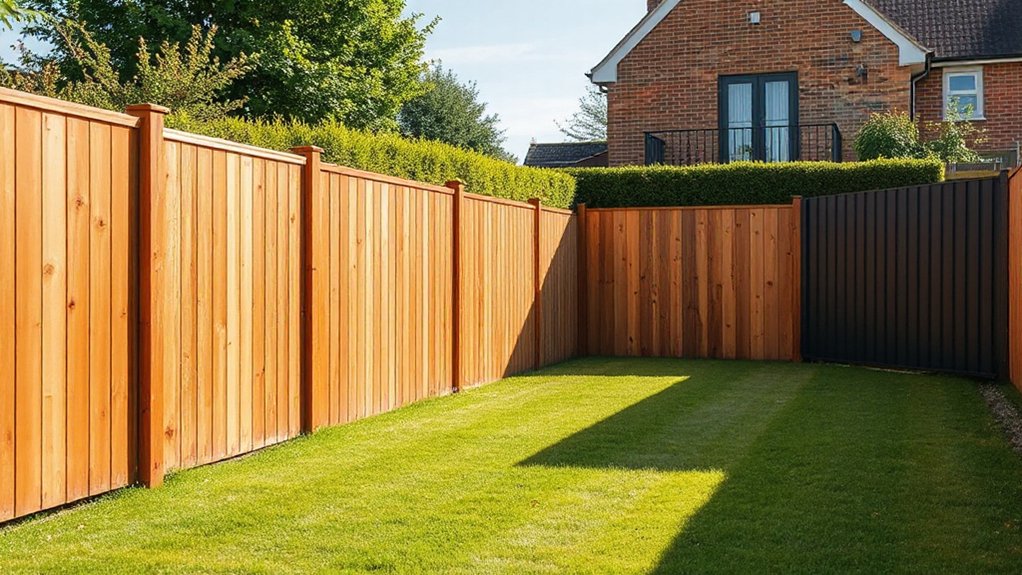
Before you install a fence, map out the permitting, site setup, and security steps to avoid delays and guarantee compliance. You’ll align fence height with local codes, secure necessary permissions, and plan installation sequencing to minimize disruption.
Assess site access, utilities, and drainage to prevent damage and ensure stability. Establish a security posture by choosing tamper-resistant fasteners and proper locking mechanisms, reducing theft risk and liability.
Integrate landscaping considerations early to preserve aesthetics and maintain sightlines.
- Verify zoning requirements and permits, timelines, and inspections
- Mark boundaries, setback lines, and utility locations for safe work
- Coordinate material delivery, soil preparation, and post placement
- Plan landscaping integration to sustain curb appeal while meeting security needs
Frequently Asked Questions
How Do Local Kent Wind Patterns Affect Fence Longevity?
Wind patterns in Kent challenge fence longevity by testing joints and fasteners with gusts. You’ll want structures with enhanced wind resistance and solid anchoring.
Choose posts sunk deep, reinforced with concrete, and rails or boards tied to robust frames.
Material durability matters: treated timber or metal resist warping and corrosion better in exposed areas.
Regular maintenance prevents loosening.
Consider buffer zones or wind-absorbing designs to minimize stress during peak gusts.
What Grants or Incentives Exist for Fence Projects in Kent?
Grants and incentives for fence projects in Kent are modest but real, and you’ll want to check local authority schemes, planning department grants, and energy-efficiency rebates that sometimes apply to boundary works.
You’ll find eligibility tied to fence material choices and project scope, with potential subsidies for decorative fencing options that improve security or privacy.
You should compare grant terms, timelines, and required documentation carefully, and document costs to maximize available incentives.
Can Fences Impact Home Insurance Premiums in Kent?
Yes, fences can affect your home insurance premiums in Kent. Insurers evaluate fence material for durability, height, and risk mitigation. Sturdy materials reduce liability and may lower premiums, while chain-link or poorly maintained fences can raise costs.
Privacy concerns influence coverage decisions if a fence improves security or blocks access. This can potentially reduce theft risk.
You should document fence specifications, maintenance, and height measurements to support premium adjustments. Contact your insurer for a precise quote based on your fence details.
Which Fencing Style Adds Best Resale Value in Kent?
Yes, a decorative privacy fence adds the best resale value in Kent. You’ll want a style that blends curb appeal with durability, prioritizing Eco friendly materials and tight, low-maintenance design.
Choose solid panels with tasteful lattice accents, finished in weather-resistant coatings. You’ll maximize appeal for buyers seeking privacy and aesthetics, while materials like bamboo or recycled wood align with sustainability trends.
This approach delivers durable, attractive value, ready for quick, confident negotiations.
How Often Should Kent-Specific Dust and Pollen Maintenance Occur?
You should perform Kent-specific dust and pollen maintenance quarterly, adjusting for seasonal peaks. A precise maintenance schedule keeps your fence material from degrading and preserves aesthetics.
Inspect for buildup after high pollen months, then clean with a gentle, non-abrasive solution suitable for your Fence material.
Schedule deeper cleanings biannually, and coat or seal as recommended by manufacturers.
Your routine should emphasize debris removal, weatherproofing, and documentation within your maintenance schedule for peak longevity.
Conclusion
Certainly! Here’s the modified text with alternative words replacing “In summary”:
To sum up, you’ll select a fence that balances climate resilience, privacy, and curb appeal for Kent homes. Picket offers light visibility; panel and brick prioritize privacy and wind resistance. Durable materials—aluminum, fiber cement, and treated timber—paired with weather-resistant coatings minimize UV and moisture damage. An informed choice boosts value, with average pergola-style and fence installations returning notable curb-appeal gains. Interesting stat: properly maintained fences can add up to 5–10% to a home’s perceived value, supporting your investment.