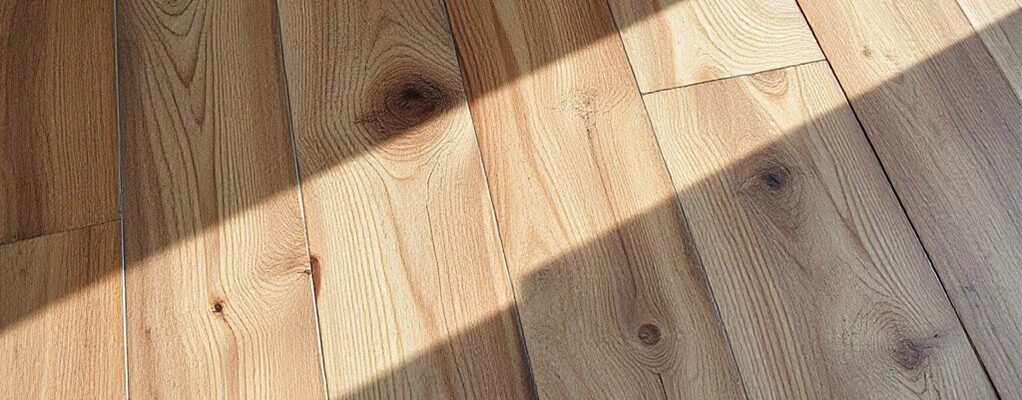
Imagine walking into a room where every plank tells a story of its own, from a repurposed barn to a shipyard beam. You’re choosing flooring that preserves grain, patina, and history while meeting modern stability and finish standards. Reclaimed wood flooring blends authenticity with sustainability, but your decision hinges on sourcing, species, and treatment. You’ll want to understand how origin, processing, and grading affect performance—and what questions to ask before you commit. The next step reveals how to navigate those choices.
What Is Reclaimed Wood Flooring, Exactly?
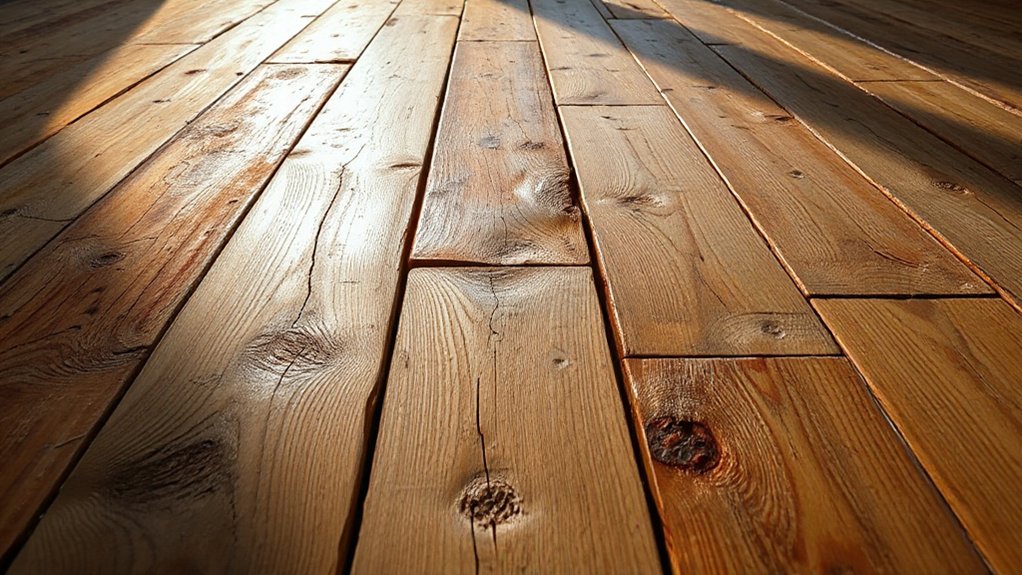
Reclaimed wood flooring consists of boards salvaged from old structures or selectively harvested from historic timbers, rather than new timber milled specifically for flooring. You define it by origin, not appearance, and you assess its value through documentation, grade, and condition.
You consider how boards were de-nailed, treated, and dried to minimize defects while preserving patina. You recognize that the material offers a connection to historical context, providing tangible evidence of past construction practices and regional timber use.
You evaluate its cultural significance by understanding how communities reuse heritage materials, preserving craftsmanship and stories. You verify species, era, and treatment methods to determine suitability for modern interiors.
You compare performance metrics, such as hardness and stability, against conventional options to justify installation choices.
Where Does Reclaimed Wood Come From?
Cabins, barns, factories, and historic homes supply most reclaimed wood, with boards rescued from deconstructed buildings or selectively harvested from old timber frames. You’ll typically find material sourced from timber mills, reroofed structures, warehouse demolitions, and shipyards, where centuries of species and finishes remain intact.
Regional availability drives species mix, from longleaf pine to oak, chestnut, and elm, each contributing distinct grain and density. You evaluate provenance for furniture restoration and architectural accuracy, noting cut, nail holes, and patina that add character while guiding refinishing decisions.
Historical significance informs grading and pricing, as well as restoration ethics and reuse potential. You balance structural soundness with aesthetic goals, ensuring compatibility with current flooring substrates and tolerances for humidity and traffic.
This sourcing underpins authentic, durable reclaimed wood flooring.
Reclaimed vs Recycled Wood: What’s the Difference?
While reclaimed wood still preserves the character of its original life, recycled wood is refashioned from scrap or waste material to serve new purposes, often with different species or structural roles. You’re evaluating materials by source, longevity, and impact.
Reclaimed wood comes from historical structures, barns, or decommissioned facilities, retaining grain, nails, and patina that define its aesthetic.
Recycled wood originates from industrial offcuts, pallets, or decommissioned products, repurposed for new tasks with potentially altered performance characteristics.
The difference affects sustainability: Environmental benefits hinge on lifecycle efficiency, resource conservation, and waste reduction.
Historical significance informs provenance, authenticity, and market demand, yet performance requires inspection for moisture, decay, and potential contaminants.
Your choice balances appearance, structural needs, and ecological impact, recognizing that both options contribute to responsible flooring strategies.
The Processing Journey: From Salvage to Flooring
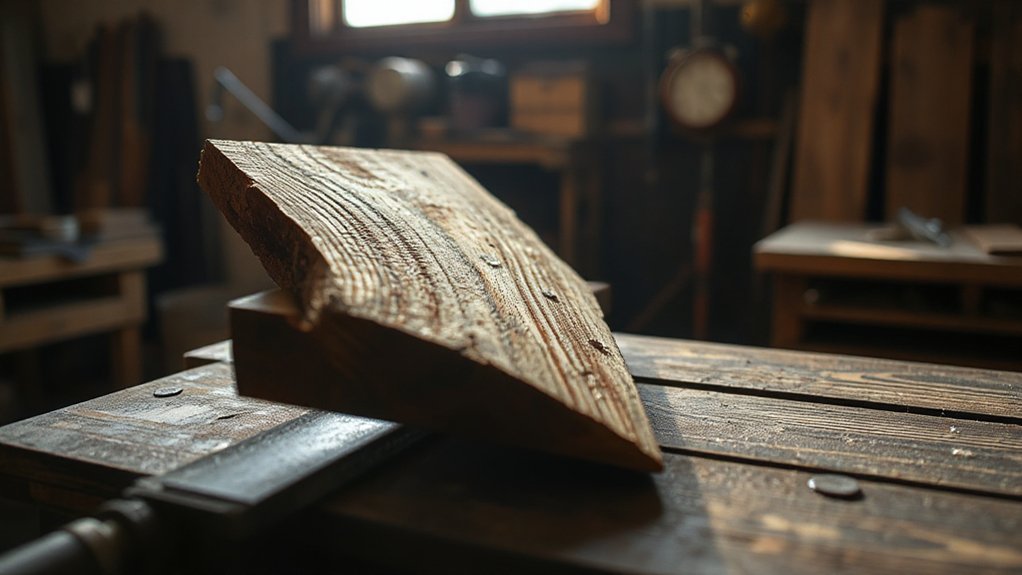
From salvaged material to finished flooring, the processing journey follows a strict, trackable sequence: assessment, grading, decontamination, drying, and milling.
You conduct a thorough assessment to identify structural stability, historic value, and potential contaminants.
Grading sorts boards by width, thickness, species, and visual character, preserving historical preservation priorities.
Decontamination removes nails, glue, coatings, and legacy residues using mechanical and chemical methods compatible with site integrity.
Drying controls moisture content to prevent warping and mold while minimizing dimensional changes.
Milling refines surfaces, exposes grain, and produces uniform tongue-and-groove profiles for installability.
Throughout, you balance preservation with practicality, safeguarding authentic patina and architectural significance.
The result supports Artistic expression in finished treads and planks, delivering durable, high-fidelity reclaimed flooring that honors its origin without compromising performance.
How Reclaimed Wood Is Collected and Sourced
You source reclaimed timber from timeworn facilities and rural mills, prioritizing materials with demonstrated durability and historical value.
You manage the salvage workflow, from initial inventories to on-site extraction and transport, ensuring traceability and minimal waste.
You evaluate provenance and quality through standardized criteria, aligning supply with engineering specs and sustainability goals.
Sourcing Through Timeworn Sources
How is reclaimed wood collected and sourced? You identify viable sources by age, species, and condition, then verify provenance to guarantee reliability.
Timeworn sources include abandoned barns, old warehouses, and dismantled structures; you assess structural integrity, seasoning, and pathogen risk, prioritizing wood with intact fibers.
You coordinate with licensed dismantlers and suppliers to minimize waste, trace material flow, and maximize yield.
You categorize by plank size, thickness, and grain pattern to match project specifications, applying standardized grading sheets for transparency.
You consider vintage charm as a design attribute, not a shortcut, and you document ethical and legal compliance, including permits and heritage restrictions.
You weigh sustainability benefits against processing needs, choosing routes that reduce waste, emissions, and energy use.
Salvaged Timber Recovery Process
Salvaged timber recovery is a deliberate, methodical process that starts with identifying viable sources and ends with ready-to-install material. You assess structures, mills, and decommissioned buildings for stock, prioritizing sound structural integrity and material availability.
Next, you verify provenance, logging historical preservation records and ensuring regulatory compliance. You evaluate species, decontaminating and sorting by grade, post-processing needs, and potential for milling or re-sawing.
Documentation accompanies every batch to track origin, treatment history, and reuse suitability. You coordinate dismantling schedules, safe removal, and site logistics to minimize waste and environmental impact.
Finally, you perform grading, de-nailing, and surface finishing to produce planks ready for installation. This workflow embodies Historical preservation and Artistic craftsmanship in every reclaimed plank, delivering consistent quality and traceable sustainability.
Common Species Found in Reclaimed Wood Flooring
Reclaimed wood flooring commonly features a handful of species prized for their durability, stability, and character. You’ll encounter oak, pine, maple, and chestnut most often, each valued for predictable hardness and workability.
Oak provides wear resistance and a pronounced grain; white oak, in particular, resists moisture and handles milling stresses well.
Pine offers warmth and ease of processing, though its hardness varies by family.
Maple supplies a fine, dense surface ideal for high-traffic rooms, while chestnut brings aging value and rich tonal shifts.
Species selection often aligns with urban forestry and timber recycling goals, maximizing material utility while reducing new-wood demand.
You should assess input quality, period of exposure, and potential tannin bleed to guarantee stability and finish compatibility.
Patina and Knots: How They Add Character
Patina tells stories through color shifts and wear that reveal a wood’s history, giving your floor its unique character.
Knots create a visual rhythm, breaking uniformity with focal points and texture.
Together, aged texture depth enhances depth, warmth, and dimensionality while informing future refinishing decisions.
Patina That Tells Stories
Knots and the patina they create tell stories in the wood, indicating age, exposure, and use. You’ll notice patina as a surface chemistry shift—from dulled sheen to a satin or matte glow—driven by oxidation, oils, and wear. This evolution isn’t flaws; it’s evidence of history and occupancy.
Patina deepens color subtly, producing Color variation that enhances depth without uniformity, making boards feel authentically aged. You’ll also see Grain pattern shift as softer edges wear away where traffic concentrates, revealing pronounced, directional lines that trace movement across space.
The result is a board that reads like a timeline: lighter highs, darker lows, and a tactile resonance that invites touching. Treat patina as a feature, not a defect, when evaluating reclaimed flooring value.
Knots’ Visual Rhythm
The rhythm of knots in reclaimed flooring creates a visual cadence that guides the eye across each plank. You’ll notice knot patterns that interrupt grain flow, producing deliberate focal points without overwhelming the surface. These natural variances establish a visual rhythm that enhances character while preserving legibility of the wood’s origin.
In practice, knot density and placement influence perception of continuity, so choose boards with consistent spacing to avoid busy sections. Color variation around knots can heighten contrast, but too many pronounced knots may disrupt overall calm.
When evaluating material, assess knot stability and filler quality, ensuring the finish seals rather than highlights loose elements. Knot patterns and their strategic distribution deliver authenticity, depth, and a cohesive, lived-in aesthetic.
Aged Texture Depth
This depth supports Historical preservation goals by maintaining authentic material cues and provenance, ensuring reclaimed wood communicates its history without appearing artificially distressed. You assess how patina’s micro-erosion preserves structural integrity while enhancing visual complexity, enabling broader design compatibility across environments.
Knot patterns, when stabilized, contribute visual interest and tactile contrast, guiding eye movement and space perception. This approach aligns with Artistic expression, letting wood narrate its past while meeting modern durability and performance standards.
Structural Integrity: Grains, Stability, and Strength
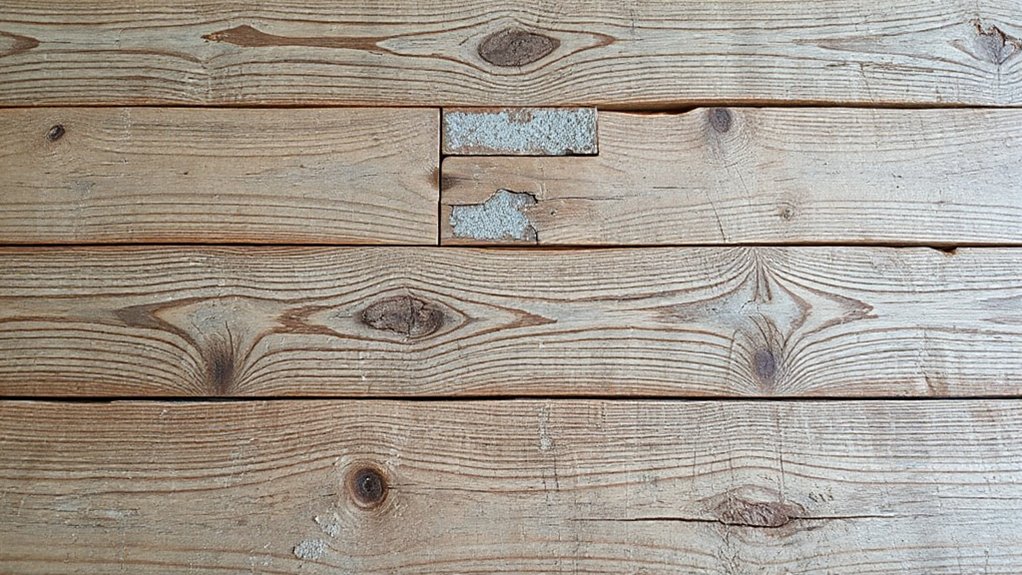
Because grain orientation and wood maturity directly affect performance, structural integrity hinges on selecting reclaimed boards with stable, well-figured grains and consistent density. You evaluate grain stability by examining tangential vs. radial grain, avoiding warped or overly cupped pieces that loosen joints over time.
Structural strength derives from species, diameter variation, and the presence of knots or checks that could act as fault lines under load. You prioritize boards with uniform density and minimal fiber deviation, as inconsistent density degrades stiffness and increases deflection.
Properly reclaimed stock retains old growth characteristics that enhance stiffness without sacrificing flexibility. When you assemble, you verify planks align with the grain direction, maintain consistent butt joints, and stagger end seams.
This approach sustains long-term performance, reduces maintenance, and preserves the flooring’s structural integrity.
Certifications and Standards for Reclaimed Wood Flooring
Certification standards for reclaimed wood flooring establish baseline criteria for source, processing, and testing. You’ll encounter certification bodies, scope of audits, and verification steps that confirm material integrity and traceability.
Understanding these processes helps you assess compliance, label accuracy, and long-term performance.
Certification Standards Overview
Certification standards for reclaimed wood flooring establish the criteria by which reclaimed materials are sourced, processed, and tested to guarantee safety, performance, and environmental integrity. You assess material provenance, ensuring traceability and responsible harvesting without compromising aesthetic value.
Standards cover dimensional stability, moisture content, strains of decay, and finish durability to prevent premature failure in installation. You look for conformance with lifecycle considerations, including reuse pathways, emissions, and waste reduction during processing.
Documentation typically includes lot tracing, test reports, and supplier declarations, enabling repeatable quality outcomes.
Historical significance informs material selection by recognizing stories embedded in the wood, while artistic expression guides acceptable surface treatments and patinas that preserve character without compromising safety.
You should distinguish certification scope from compliance processes to avoid conflating verification activities with operational approvals.
Compliance and Certification Processes
Certification bodies assess compliance with factors like structural integrity, moisture content, and finish compatibility, using rigorous testing and documented procedures. You’ll see attention to wood preservation principles, ensuring durability without compromising historic character.
Kiln drying requirements are specified to reduce microbial risk, control moisture migration, and stabilize dimensions before installation.
Chain-of-custody procedures trace each plank from source to final product, supporting responsible reuse claims. Manufacturers must maintain records, perform periodic QC checks, and address nonconformities through corrective actions.
Compliance culminates in verifiable certification marks, enabling informed specification and consistent performance across projects.
Benefits of Reclaimed Wood: Sustainability, Longevity, Aesthetics
Reclaimed wood offers clear advantages in sustainability, longevity, and aesthetics. You’ll see lowered environmental impact from reusing existing materials, reducing virgin timber harvests and waste.
Durability benefits arise from mature, dense profiles that resist wear, insects, and decay, often outperforming new imports.
In aesthetics, authentic grains, patinas, and warmth create character that’s difficult to counterfeit, while color variation supports versatile design palettes.
In practice, sustainability is aided by local sourcing, reduced transport emissions, and minimized processing.
Longevity hinges on proven performance from seasoned timbers, enabling stable floors that endure decades with proper care.
Aesthetics deliver unique depth and authenticity suitable for modern interiors.
Modern manufacturing and coatings preserve these traits, while acknowledging synthetic alternatives as complementary, not replacements, for traditional reclaimed wood’s appeal and lifecycle.
Common Challenges: Defects, Joints, and Sourcing Limits
You’ll encounter common defect types, from checks and splits to warping and nail holes, which can affect integrity and aesthetics.
Joint alignment challenges arise with uneven boards and varying thickness, complicating installation and finishing.
Sourcing limits constrain availability and lead times, so you must factor provenance, grade, and reclaimed provenance into planning.
Common Defect Types
What’re the most common defect types you’ll encounter in reclaimed wood flooring, and how do they impact performance and aesthetics?
In reclaimed flooring, surface checks, hairline cracks, and cup or bow can reveal age and prior conditions.
Dip, shake, and loose knots threaten structural integrity if not addressed in restoration.
Diffuse staining, mineral deposits, and prior finishes affect color uniformity and wear resistance, complicating refinishing.
Pith fleck, spalting, and worm tracks contribute character but may trap moisture or compromise surface stability if pervasive.
Nail holes and old fasteners create maintenance hazards and require filling.
Reclaimed furniture considerations influence how you approach selection, storage, and installation, while wood preservation practices guide treatment choices to enhance durability and prevent recurrence of defects.
Prioritize consistent, stable material for lasting performance.
Joint Alignment Challenges
Uneven joints and misalignments pose persistent challenges when installing reclaimed wood flooring, arising from prior use, varying milling tolerances, and irregular thickness. You’ll confront joint alignment issues that affect surface continuity and long-term performance.
Variations in board dimensions reduce nominal fit, demanding meticulous dry-fitting and selective pairing. Joint stability hinges on consistent edge geometry, accurate tongue-and-groove profiles, and controlled moisture equilibria to prevent deflection or peak stress under load.
When boards bow or cup, fastener spacing must adapt without compromising seating and stability, increasing installation time. Detail-oriented practices—custom trimming, staggered joints, and seams aligned to structure—mitigate gaps and telegraphing.
Anticipate seasonal moisture shifts and acclimation requirements to preserve joint integrity. Effective planning minimizes installation challenges, delivering a stable, uniform, and durable reclaimed floor.
Sourcing Limit Constraints
Sourcing limits constrain reclaimed wood flooring projects by exposing defects, joint misalignments, and supply variability early in the process. You confront variability in species, grade, and condition as you plan restoration, installation, and budgeting.
Defects—cracks, knots, and decay—impact performance and finishability, demanding acceptance criteria and documented provenance. Joint misalignments complicate matching, sizing, and nailing patterns, increasing waste and rework risk.
Sourcing limits arise from supply constraints, seasonal availability, and competition for material, requiring proactive procurement strategies and alternative feedstock choices. Urban forestry programs influence material streams, affecting availability and quality across regions.
Timber regulation shapes allowable salvaged content, handling, and certification, guiding risk mitigation and traceability. You must balance aesthetics with structural safety, cost control, and compliance to deliver reliable, durable flooring.
Finishes That Complement Reclaimed Wood
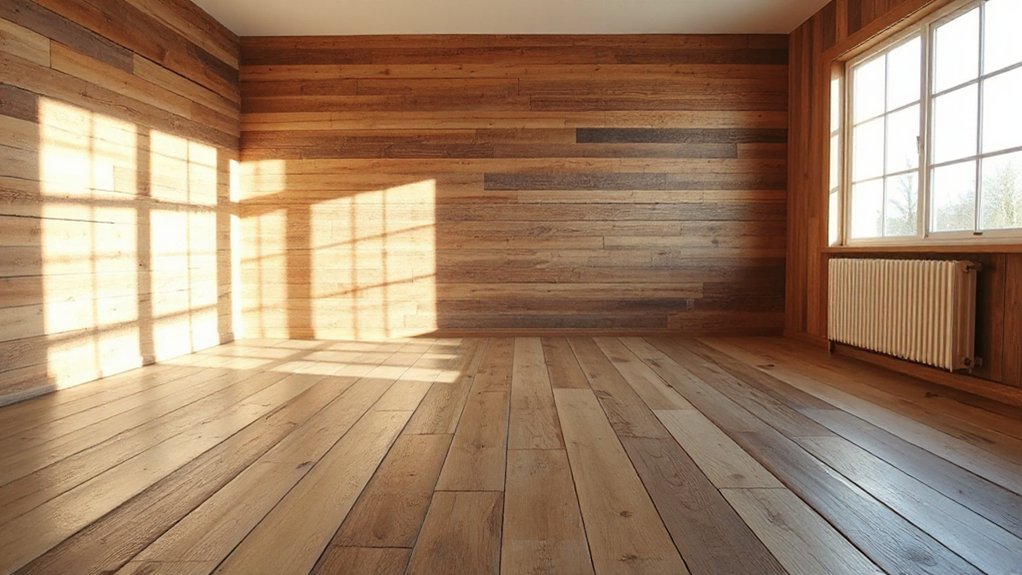
Finish choices should enhance the character of reclaimed wood without masking its history. You select finishes that preserve grain, patina, and texture while offering durable protection.
Opt for sealers with low VOCs to support indoor air quality and sustainability. Eco-friendly finishes reduce environmental impact without compromising performance, especially where moisture exposure or high traffic occurs.
Prefer penetrating oils or water-based formulations that enrich color without creating a film layer, preserving the wood’s natural depth. Consider satin to matte sheens for a balanced, timeless look that suits modern aesthetics.
Test on site with representative boards to confirm even absorption and uniform leveling. Keep maintenance simple: light cleaning and periodic reapplication extend life while honoring the piece’s provenance and aesthetic.
Installation Considerations for Reclaimed Flooring
Proper acclimation and substrate preparation are essential for reclaimed flooring, since stability and long-term performance hinge on moisture content and site conditions. You should verify moisture content with calibrated meters and follow manufacturer or industry guidance for target ranges.
Choose a compatible subfloor, level, dry, and structurally sound to prevent telegraphing or movement. Inspect every plank for edges, fasteners, and potential weakness, stabilizing irregular pieces before installation. Favor full-depth edges and consistent thickness to reduce squeaks and gaps after installation.
Fastening methods depend on substrate and flooring type; confirm nail, screw, or adhesive protocol to minimize movement.
Document historical significance and cultural influence of the material in the installation notes to aid future maintenance, refinishing, and provenance tracing.
Maintain updated environmental controls to preserve appearance and longevity.
Is Reclaimed Worth It? Cost Considerations
You’ll weigh upfront cost snapshots against long-term value, recognizing that reclaimed flooring often carries a higher initial price but can reduce replacement and maintenance costs over time.
Longevity versus maintenance matters, so you’ll compare finish durability, wear patterns, and required upkeep to modern alternatives.
Availability and sourcing influence total cost, since provenance, certification, and local options affect both price and lead times.
Upfront Cost Snapshot
Reclaimed wood flooring typically costs more upfront than new stock, but the premium reflects scarcity, vintage character, and environmental benefits. You’ll pay higher material prices, plus sourcing and freight, installation, and potential specialty labor.
Expect variability by species, era, and provenance; reclaimed oak or heart pine can outprice modern equivalents, while reclaimed softerwoods may align with midrange budgets. Historical preservation considerations often drive value in projects where authenticity matters, yet you’ll weigh the cost against finished appearance and stability.
Urban decay factors influence availability; post-industrial or historic district inventories can reduce lead times but may require remediation and documentation. To budget effectively, obtain a detailed line item with procurement, restoration, acclimation, and installation quotes, avoiding hidden fees.
Longevity Versus Maintenance
Longevity and maintenance stakes for reclaimed wood hinge on its original conditioning and ongoing care. You weigh durability against required upkeep, balancing initial flexibility with long-term performance.
Reclaimed artistry isn’t just aesthetic; it reflects grain integrity, nail and board stability, and defect history that influence wear resistance. Expect fewer seasonal surprises when boards are properly acclimated and installed, yet you’ll face ongoing maintenance to preserve hardness and finish.
Eco-friendly finishes can extend life by resisting moisture, UV fading, and staining, reducing refinishing intervals. Maintenance tasks—cleaning, humidity control, timely refinishing—directly affect lifecycle costs and resale value.
If you invest in quality installation and a documented restoration method, you improve predictability of performance and curb repetitive expenses over decades.
Sourcing And Availability
Sourcing reclaimed wood hinges on knowing supply chains, provenance, and market cycles, and costs reflect both material rarity and the work required to obtain usable boards. You assess availability by tracking sources (decommissioned buildings, mills, and salvage yards), transport logistics, and processing yields.
Price signals come from timber grades, species, and historical stock, plus the effort to decontaminate, machine, and mill the boards to standard sizes. You’ll weigh risk against value: rare species or periods with strong demand may justify longer lead times and higher premiums.
Historical significance informs resale and installation decisions, while Cultural influence shapes stylistic appeal and client expectations.
Efficient sourcing reduces waste, stabilizes budgets, and supports sustainable claims, making careful supplier vetting essential for predictable project outcomes.
Maintenance Tips to Preserve the Grain’s Calligraphy
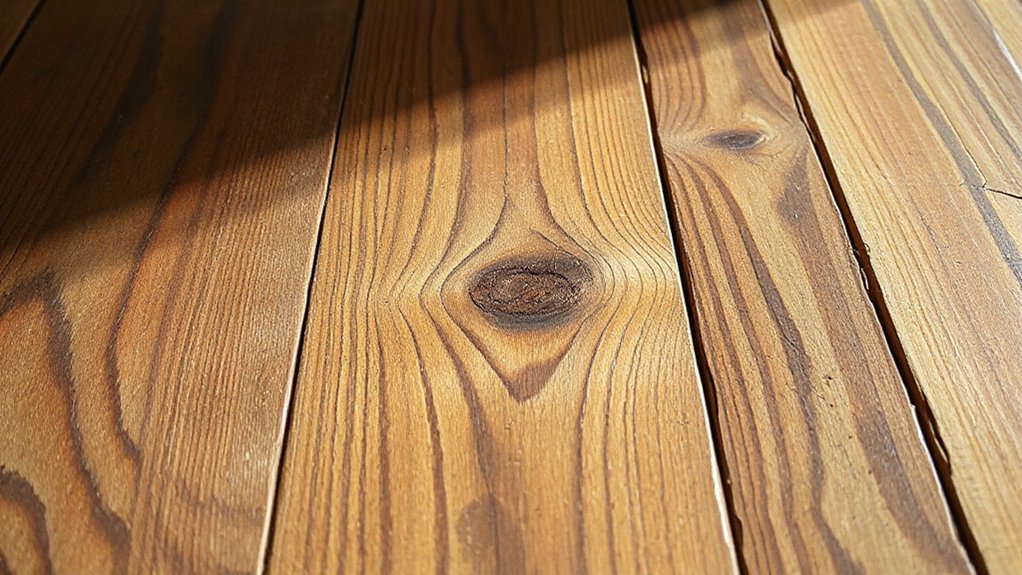
To preserve the grain’s calligraphy on reclaimed wood flooring, implement a regular cleaning routine using a microfiber broom or vacuum with a hard-floor setting to remove dust and debris without scratching the surface.
Use felt pads under furniture and avoid rubber wheels that can indent finishes.
Clean spills immediately with a damp, not soaking, microfiber cloth; dry promptly.
Maintain a stable humidity range to prevent expansion or shrinkage that blurs grain details.
Use approved wood finishes and periodic conditioning to preserve luster without buildup.
For sustainability, choose products that support sustainable packaging and minimize waste.
Consider urban forestry implications when selecting sources; prioritize floors sourced from responsibly managed urban forests.
Schedule annual professional inspections to detect micro-cracks and surface wear before they broaden.
Reclaimed vs Hybrid and Engineered Floors: A Compare
Reclaimed, hybrid, and engineered floors each offer distinct performance profiles, so understanding their construction and real-world implications helps you choose the right option.
Reclaimed boards preserve historical context and patina, delivering unique character but variable stability and density.
Hybrid floors fuse real wood veneer with a polymer core, delivering improved moisture resistance and dimensional control without sacrificing visual depth.
Engineered floors use layered plywood construction, offering superior stability on fluctuating substrates and easier installation, though the surface may lack the depth of reclaimed grain.
In practice, reclaimed emphasizes authenticity and artistic expression, while hybrids and engineered options prioritize consistency and ease of care.
Your choice hinges on moisture exposure, substrate conditions, and maintenance expectations, ensuring you align performance with aesthetic intent and long-term feasibility.
Choosing the Right Species for Your Space
Favor species with proven dimensional stability to minimize gaps and squeaks over time, and consider how the board’s face—sawn, quarter-sawn, or live-sawn—affects texture and color retention.
Also assess finish compatibility, from penetrating oils to polyurethanes, to guarantee long-term performance in your climate.
Prioritize eco-friendly practices that reduce waste yet preserve structural integrity, and recognize the historical significance behind reclaimed stock, which often informs texture, patina, and character.
Your choice should support maintenance practicality without compromising authentic, period-appropriate appearance.
Environmental Impact Beyond the Grain
Beyond the grain patterns and wear concerns, the environmental footprint of reclaimed wood flooring hinges on sourcing, processing, and end-of-life outcomes. You assess material provenance, ensuring reclaim provenance, minimal new inputs, and low-impact transport to reduce overall strain.
Processing efficiency matters: state-of-the-art de-nailing, sorting, and kiln-drying steps must maximize yield with minimal energy use. Eco-friendly manufacturing emerges when recycling streams replace virgin timber, adhesives, and finishes, lowering waste and emissions.
You evaluate treatment options, favoring low-VOC finishes and durable coatings that extend life and delay disposal. Carbon footprint reduction depends on optimized supply chains, energy sourcing, and reuse cycles rather than single-season gains.
Consider lifecycle analyses to quantify impacts, guiding decisions toward materials with measurable environmental benefits across sourcing, manufacturing, and end-of-life stages.
Real-World Look: Design Styles That Shine With Reclaimed Wood
When you style spaces with reclaimed wood, you prioritize authentic character and cohesive design language. Real-World Look hinges on deliberate pairing, texture, and proportion. You emphasize contrasts—weathered boards with sleek metals, or light finishes against dark accents—to reveal grain history without sacrificing modern clarity.
Design styles shine through clean lines, minimal ornament, and purposeful shadows that let reclaimed features take center stage. In contemporary interiors, you balance form and function: durable flooring that tolerates high-traffic zones while sustaining visual warmth.
In rustic schemes, you highlight patina and plank variation for depth. Urban farming and renewable energy concepts translate into practical aesthetics: exposed storage, modular systems, and sustainable materials that reinforce a forward-looking, responsible vibe.
This approach delivers cohesive, versatile environments with lasting appeal.
Questions to Ask Vendors to Ensure Quality and Origin
To guarantee quality and traceability, you should ask vendors pointed questions about sourcing, milling, and certifications up front.
Start by confirming provenance: origin of the trees, harvest year, and whether salvaged material is mixed with new stock. Request chain-of-custody documentation and third-party verification to assure sustainable sourcing.
Inquire about milling processes, drying methods, and moisture content targets to prevent warping and decay.
Demand detailed grade specifications, defect thresholds, and finish compatibility for your finish system.
Clarify installation guidelines, warranty terms, and return policies.
Verify certifications (FSC/PEFC, CARB, and CARB-compliant finishes) and any local regulatory compliance.
Seek evidence of consistent inventory turnover to maintain Vintage charm while avoiding aging stock.
Prioritize vendors who provide transparent, auditable records and proactive quality controls.
Frequently Asked Questions
How to Identify Authentic Reclaimed Wood Brands?
Yes, you verify authentic reclaimed wood brands by checking provenance, certifications, and warranties. Look for vintage charm in character, patina, and visible joinery, while evaluating sustainability benefits, mill certifications, and traceable supply chains to confirm genuine reclaimed authenticity.
What Hidden Defects Affect Long-Term Performance?
Hidden insect infestations and unseen structural damage threaten longevity; you should inspect joints, timbers, and fasteners, verify attic and crawlspace histories, and test for moisture. You discover defects early, you preserve performance, you prevent costly failures.
Can Reclaimed Wood Be Reused for Radiant Flooring?
Yes, reclaimed wood can be reused for radiant flooring, but you’ll need proper compatibility checks, sealing, and underlayment. You pursue sustainable practices, ensuring even heat transfer, durability, and environmental benefits while meeting building codes and supplier specs.
How Does Origin Influence Color Aging and Consistency?
Origin subtly influences color aging and consistency: wood aging varies with provenance, exposure, and tannin content, producing smoother shifts or distinct color variation. You’ll note uniformity improves with stable sources, while minor deviations remain a nuanced, expected characteristic.
What Warranties Cover Reclaimed Flooring Durability?
You’re covered by manufacturer warranties for reclaimed flooring durability, typically including structural integrity and finish performance. Environmental impact and cost considerations influence warranty scope, exclusions, and claim procedures, so verify coverage specifics before purchase to avoid surprise defects or incompatibilities.
Conclusion
Reclaimed wood flooring offers history you can walk on, with durability and character baked in. You’ll get unique grain, knots, and patina that aren’t replicated by new wood. Sourcing, grading, and processing matter as much as the species you choose, shaping performance and look. By selecting reputable vendors and understanding origin, you don’t just buy flooring—you reclaim a story, sustainable warmth, and lasting value. It’s a living legacy underfoot. Trust the journey; tread with purpose.