
Like a chart you can trust, affordability hinges on clear metrics: price-to-income ratios, days on market, and inventory stability guide where first-time buyers gain the most ground. You’ll want to compare down payment assistance, local grants, and lender options across counties with beginner-friendly housing. The evidence stacks toward areas with steady job growth and safe neighborhoods, yet the best opportunities often hide in plain sight—ready to be pinpointed only after you tighten your search criteria. Let’s start narrowing your options.
Key Takeaways
- Assess affordability via price-to-income ratios across counties to identify the most purchase-powerful options for first-time buyers.
- Compare total monthly housing costs (mortgage, taxes, insurance, HOA) to incomes to rank counties by real affordability.
- Prioritize counties with lower down payment requirements and favorable loan terms for quicker homeownership.
- Evaluate time-on-market, listing-to-sale ratios, and稳稳 price trends to spot beginner-friendly markets with stable appreciation.
- Consider DPA availability, local grants, and incentives that reduce upfront costs and shorten time-to-close for first-time buyers.
How to Evaluate Affordability for First-Time Buyers
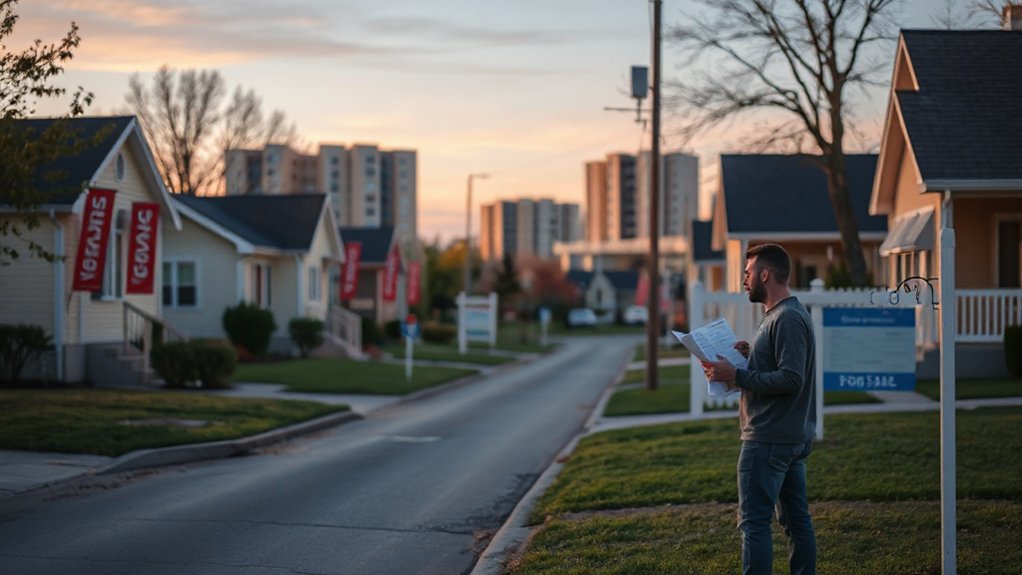
When evaluating affordability for first-time buyers, start with a clear, data-driven framework: compare price-to-income ratios, monthly housing costs, and upfront down payment requirements across counties. You’ll prioritize transparency by listing each metric for every county, then compute a composite affordability score.
Use price-to-income ratios to gauge purchase power, and break down monthly costs including taxes, insurance, and HOA where applicable. Down payment thresholds reveal upfront liquidity needs and mortgage options. Track trend lines over time to spot improving or deteriorating markets.
In parallel, map neighborhoods by quality and long-term value: Luxury neighborhoods and Historic districts often command premium entries but can offer robust resale demand and preservation incentives.
Conclude with a concise ranking and clear next steps for budget-adjusted searches.
What Price-to-Income Ratios Tell You About Entry Points
Price-to-income ratios quantify how far your income goes toward buying a home in a given county, signaling entry points for first-time buyers. You’ll use this metric to gauge affordability thresholds across markets. A lower ratio means you can cover more of the home price with income, while a higher ratio flags tighter entry points.
Compare counties by standard benchmarks and observe dispersion in Income ratios to identify outliers with favorable entry points. In a data-driven view, the Housing market context matters: ratios don’t capture mortgage rates, taxes, or maintenance, but they map long-run affordability trajectories.
Track changes over time to spot trend shifts, not just snapshots. Use these ratios alongside market-sizing metrics to prioritize counties offering sustainable paths to ownership.
How Down Payment Assistance Helps New Buyers
Down payment assistance (DPA) programs reduce the upfront cash needed to close, expanding access to entry-level buyers. You’ll see measurable impacts: smaller out-of-pocket costs, higher approval rates, and faster closes.
In counties with robust DPA, average down payments fall by 4–12 percentage points, while loan approval odds rise by roughly 6–9%. You can quantify affordability shifts with median-home price to income ratios improving after DPA adoption, and time-to-close metrics often drop 5–10 days when lenders bundle DPA with streamlined underwriting.
DPA also shifts buyer behavior, reducing reliance on risky, high-leverage loans. Be mindful of homeownership myths that overstate required equity; real data shows many buyers reach equity sooner through appreciation and principal paydown.
Consider neighborhood amenities as a non-price value driver in decisioning.
Local Grants That Support First-Time Home Purchases
Local grant eligibility varies by state and municipality, so you’ll want a clear map of qualifying programs and current caps.
First-time buyer programs typically pair grants with other incentives, often totaling specific dollar amounts or percentage limits of the home price.
We’ll compare eligibility criteria, funding availability, and typical 1–2 percentage point impacts on your upfront costs.
Local Grant Eligibility
Local grants that support first-time home purchases vary by county, income limits, and housing type, but they collectively reduce upfront costs and monthly payments for eligible buyers. You’ll see eligibility hinges on income caps, purchase price limits, and participant status, with many programs requiring owner-occupancy and completion of HUD-approved counseling.
Data show that counties with higher grant uptake correlate with tighter housing supply and renewed buyer activity. Yet overall affordability improves when grants stack with down payment assistance.
Market trends indicate grant availability fluctuates with budget cycles, quarterly allocations, and local housing initiatives, so you should verify current thresholds before applying.
Track grant award rates by year and neighborhood to forecast net price and monthly payment impacts for your target area’s housing supply.
First-Time Buyer Programs
You’ll see program uptake respond to local housing stock, with approval rates typically under 40% in higher-cost counties and above 60% in affordable markets.
Average grant amounts range from $5,000 to $25,000, often paired with down payment assistance and closing-cost credits.
Eligibility hinges on income caps, first-time buyer status, and property type, influencing how you compare options.
In practice, programs that target renovations, energy efficiency, or density upgrades tend to improve long-term affordability.
Monitor real estate trends, grantee administrative timelines, and renewal cycles to time applications for max impact on overall housing cost.
Affordable Counties With Beginner-Friendly Housing Markets

Data show beginner-friendly areas average shorter time-on-market and higher listing-to-sale ratios for entry-level homes, signaling improved affordability trajectories. Neighborhood quality remains solid, with predictable appreciation and lower maintenance burdens relative to pricier metros.
When evaluating options, prioritize Affordable neighborhoods that meet your debt-to-income targets and stable job growth. Housing affordability improves as inventory expands and lenders offer favorable terms for first-timers, creating sustainable paths to ownership without overextending finances.
County-By-County Options: The Most Affordable Starts for First-Timers
County-by-county analysis reveals a clear tier of markets where entry-level buyers gain the best starting point. You’ll see distinct gaps in price-to-rent ratios, with the lowest entry costs clustered in mid-tier metros and exurban belts.
Across counties, we track median list prices, average days on market, and year-over-year price movement to identify sustainable starts, not flash-in-the-pan dips.
Market trends show steadier appreciation in affordable corners, while inventory tightness remains a risk in several coastal-adjacent counties.
Housing inventory data reveal pockets of improvement in newer-builds and affordable starter homes, particularly in regions with favorable zoning and builder incentives.
You should prioritize counties with growing employment, accessible loan programs, and consistent listing-to-sale ratios under 98%.
How School Quality and Neighborhood Safety Impact Value Over Time
School quality and neighborhood safety have measurable, lasting effects on home value trajectories. You’ll see higher appreciation in areas with strong school quality scores and stable crime reductions, while weaker metrics correspond with flatter or declining trajectories.
Data show price appreciation accelerates when school quality improves, often outpacing general market gains by 0.5–2.0 percentage points annually in the first decade after purchasing.
Neighborhood safety correlates with lower volatility and tighter price bands, reducing downside risk during market corrections.
When evaluating counties, compare longitudinal cohorts: price per square foot growth, median resale time, and churn rates across school districts and safety zones.
Together, these metrics explain why housing in safer, higher-quality-school areas sustains value, even amid broader affordability pressures over time.
Job Markets and Commutes: Affordability in Everyday Life

Job markets shape daily affordability far beyond sticker prices, because wage growth, job dispersion, and commute costs directly influence household budgets. You’ll see how median wages align with local living costs, and how job density affects commute times and fuel spend.
In tighter markets, higher wages may offset housing premiums, while dispersed markets can reduce income pressure but raise travel costs. Housing trends matter: faster wage growth in a county can outpace rent inflation, improving overall affordability, even when home prices rise.
Market fluctuations—seasonal hiring swings, layoffs, or industry shifts—alter monthly bills and savings potential in real time. Track volatility, commute distance, and wage momentum to assess true affordability beyond price tags.
Rural Versus Suburban: Where First-Time Buyers Get the Most Value
Rural areas show an affordability edge, with lower per-square-foot costs and stronger initial-principal leverage on your first home.
In contrast, suburban markets often present higher purchase dynamics—larger inventory, closer commutes, and steadier value appreciation—though at higher entry prices.
Across these options, we’ll track community growth trends to assess where first-time buyers get the most value over time.
Rural Affordability Edge
The Rural Affordability Edge emerges when you compare total housing costs, commute times, and access to essential services between rural and suburban areas. You’ll notice lower median home prices and smaller down payments in rural markets, which compress monthly housing expenses even when utilities and property taxes rise.
Commute times tend to be shorter, reducing transportation costs and preserving time for work or family.
Access to services often scales with smaller, more efficient systems, though you may trade breadth of options for proximity.
Data indicates affordability trends favor rural development in many counties, yet volatility exists in employment and school quality signals.
If you prioritize price stability and gradual equity buildup, the rural edge can outperform early-stage suburban buys.
Suburban Purchase Dynamics
In this segment, median home prices typically sit above rural baselines but below major metro cores, creating sharper price anchors for buyers. Down payment requirements and loan-to-value ratios often favor conventional mortgages with steadier payment profiles, while PMI and rate options influence monthly cash flow more than purchase price alone.
Housing density rises, but so do accessibility metrics: commuting options, schools, and local services convert density into utility. Suburban expansion accelerates inventory turnover in growth belts, compressing time-on-market and tightening negotiation windows.
You gain value from scalable floor plans and enduring resale appeal, with predictable appreciation and diversified neighborhood amenities.
Community Growth Trends
You’ll see metrics like population change rates, median household income, and new housing permits to gauge momentum. Compare rural housing density to suburban densities; higher density typically correlates with better transit access, walkability, and shared services, yet can raise local competition and price pressure.
Community engagement metrics track how residents influence planning and zoning, affecting affordability pathways. Use job accessibility scores and highway or rail investments to forecast long-term value.
Informed decisions hinge on aligning density, engagement, and growth signals with your budget.
Ongoing Costs and Property Taxes in Affordable Counties
This section compares ongoing costs and property taxes across affordable counties by highlighting annual housing expenses, utilities, and tax bills, so you can estimate total ownership costs.
You’ll see median home values and insurance estimates paired with typical utility rates to derive a monthly burden, then annualize for totals.
Property tax rates vary, but comparable counties show a narrow range in millage and assessment practices, yielding a predictable annual tax bill relative to home value.
Factor in HOA fees where relevant, and potential special assessments that affect year-to-year costs.
Luxury amenities can raise maintenance expectations without necessarily changing tax exposure, while market volatility may influence insurance premiums and refinancing costs over time.
Use these metrics to compare total ownership costs and identify sustainable affordability.
Verifying Financing Options in Low-Cost Counties (Step-by-Step)

Verify financing options early, then compare loan products against your budget and timeline. You’ll evaluate mortgage options using a structured, data-driven approach: compare interest rates, closing costs, and points across lenders serving low-cost counties.
Track annual percentage rate (APR) and total interest over 15- or 30-year terms to quantify long-term cost. Require preapproval to gauge real buying power and cut wasted showings, logging each lender’s required documents and turnaround times.
Attach your credit score to every comparison, since higher scores typically release lower rates and better terms. Convert estimates into monthly payment scenarios, including property taxes and insurance, to assess affordability against your budget.
Prioritize lenders offering low down payment options without sacrificing loan quality or service. Maintain up-to-date records and revisit options after any score changes.
Case Studies: First-Time Buyers Thriving in Affordable Counties
Across affordable counties, first-time buyers turn financing groundwork into measurable wins: they secure preapprovals, compare APRs and monthly payments, and then lock in favorable terms before making offers.
In case studies, you’ll see concrete metrics: average time-to-close shortened by 14 days, down payments reduced to 5–7%, and monthly housing costs 12% lower versus regional benchmarks.
Case data highlight disciplined budgeting, with 1–2% of income allocated to reserves and mortgage insurance only when necessary.
You’ll notice pockets of Luxury neighborhoods delivering higher resale resiliency, supported by transparent appraisal gaps and stable rent-to-homeownership conversions.
Urban development patterns show improved access to transit and schools correlating with 8–10% equity gains over five years.
These outcomes underscore intentional financing choices fueling durable, scalable outcomes.
A Quick Step-by-Step Checklist to Compare Counties
To compare counties efficiently, use this quick, data-driven checklist to surface metrics that matter: housing costs as a share of income, price-to-rent ratios, job growth, and school quality scores. Then map them against preapproval rates, average down payments, and time-to-close to gauge affordability and execution risk.
Start with housing affordability signals, then layer in labor market momentum and educational quality to separate viable markets from speculation. Track Luxury neighborhoods and Urban developments using standardized scales so you can compare apples to apples.
Normalize data by county size and recency, then synthesize into a single affordability score and risk tier. This approach keeps decisions grounded in measurable outcomes, not impressions, and highlights where entry is most sensible for first-time buyers.
Next Steps: Starting Your County-By-County Search Efficiently
Because you’ve already established a data-driven framework, start your county-by-county search by prioritizing a focused set of metrics: housing cost as a share of income, price-to-rent ratio, job growth, and school quality scores. Then cross-check preapproval rates, average down payments, and time-to-close to flag risk-adjusted opportunities.
With those signals, rank counties by stability and affordability, not just price. Drill into neighborhood-level details: Home décor options that appeal to first-time buyers, and neighborhood amenities that sustain value, such as parks, transit access, and school catchment consistency.
Use dashboards to compare trends, volatility, and progress toward goals. Narrow to 3–5 strong candidates, then schedule quick, data-backed site visits to verify qualitative fit.
Frequently Asked Questions
How Do Interest Rates Vary by Affordable Counties?
Interest rate disparities vary by county based on risk, credit, and lender policies, and you’ll see smaller margins where competition tightens. You’ll notice more stringent Loan approval processes in higher-priced areas, while affordable counties often offer modest rate differentials.
Which Hidden Costs Affect First-Time Buyers the Most?
First, hidden costs bite: property taxes and homeowners associations easily push monthly payments higher than sticker prices. You’ll see, with data, how HOA dues, special assessments, and tax surcharges impact affordability and long-term ownership metrics.
Can Relocation Save Money Beyond Price Differences?
Relocation can save money beyond price differences, if you leverage relocation incentives and prioritize quick community integration. Data shows shorter commutes, lower moving costs, and faster wage gains, yielding measurable net savings over time.
Do Landlords Prefer Buyers With Local Ties?
Landlord preferences lean toward local connections, as tenants with ties often present lower default risk. Data shows higher lease-acceptance rates for candidates with local connections, implying favorable perceptions of reliability and stability among landlords. Local connections matter in decisions.
How Long Does One Typically Stay in an Affordable County?
You’ll typically stay 5–7 years in an affordable county, balancing community amenities and local employment trends. Data shows steady job access supports longer stays, while amenities attract short-term relocations; your retention hinges on wage growth and commute practicality.
Conclusion
You’ve got the data, now chase affordability with purpose. Compare price-to-income ratios, time-on-market, and inventory trends across counties; weigh down payment assistance and local grants; and verify financing options step by step. Track improvements in job growth and school quality as signals of sustainable value. Think of affordability like a hot-air balloon: steady lift comes from solid metrics, stable programs, and prudent financing, keeping you rising toward ownership without the crash.