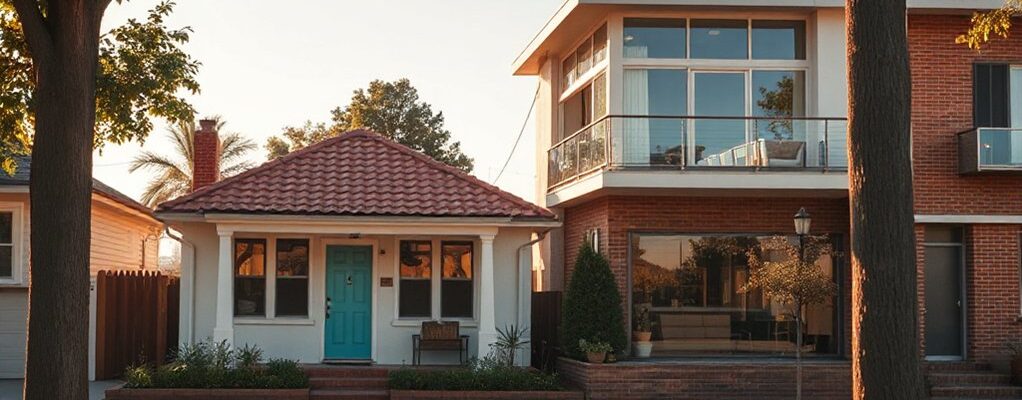
Did you know your daily routines could tilt the scales between a bungalow and a two-storey home before you even see the price tag? You’ll want to weigh barrier-free living against land use, view potential, and how each layout could adapt as your needs change. Consider maintenance, budget, and privacy, then map how you’ll live in the spaces week to week. The answer hinges on how you balance convenience with growth, and that balance deserves careful consideration.
Key Takeaways
- Consider lifestyle goals: bungalow supports aging-in-place and barrier-free access; two-storey optimizes views, sun, and private/public zones.
- Weigh costs and maintenance: bungalows may have higher per-square-foot foundations; two-stories save land but add stairs and systems access needs.
- Prioritize accessibility and future-proofing: favour universal design, adjustable fixtures, and gentle stairs with landings for evolving needs.
- Plan layout and flow: open plans offer flexibility for entertaining or work, while defined rooms support dedicated zones and storage.
- Assess outdoor space and resale: decide between compact, low-maintenance yards or terraces/garden access, and consider how layout affects resale value.
Why Your Lifestyle Chooses Between a Bungalow and a Two-Storey
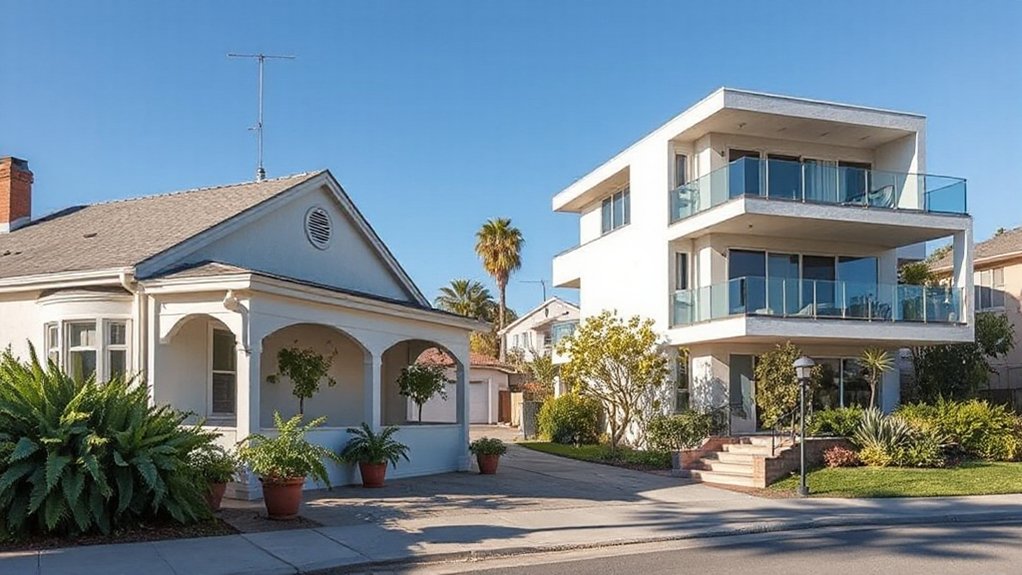
Choosing between a bungalow and a two-storey home hinges on how you live today and what you expect from future routines. Your day-to-day patterns influence layout, access, and flow; you’ll weigh stair usage, bedroom clustering, and main-level convenience.
If you prize rapid, barrier-free access, a bungalow minimizes steps and supports aging-in-place goals.
Conversely, you may prefer a two-storey design to separate public and private zones, improving noise control and personal space for family members.
Consider outdoor living opportunities: a single-level footprint can simplify outdoor entertaining, while a two-storey plan can optimize views and sun exposure.
Privacy considerations matter too: consider window placement, sightlines, and surface buffering.
Your decisions should align with how you work, entertain, and unwind, now and in the years ahead.
Costs, Value, and Maintenance: What Each Home Type Really Delivers
Both bungalow and two‑storey homes carry distinct cost profiles, value propositions, and maintenance needs that influence long‑term ownership. You’ll weigh upfront prices, ongoing utilities, and potential renovation spend to gauge total cost of ownership.
Bungalows often incur higher foundation and roofing costs per usable square foot, while two‑storey builds may save land and framing expenses but demand stairs and phased heating.
Value hinges on layout flexibility, resale demand, and neighborhood dynamics, with longer life cycles for well‑located, single‑level access appealing to some buyers.
Maintenance patterns differ: bungalow exteriors are exposed to ground moisture; two‑storey roofs and upper-level systems require access planning.
Prioritize interior design efficiency and energy efficiency to maximize livability, curb appeal, and operating costs over time.
Accessibility and Aging in Place: Planning for the Next Decade
Accessibility and aging in place should be integral to your planning for the next decade, since a thoughtfully designed home can adapt as needs change without costly renovations. You’ll benefit from universal design principles that prioritize reachable routes, adaptable fixtures, and clear sightlines, enabling safer navigation now and later without sacrificing style.
When evaluating bungalow versus two-storey options, assess entrance thresholds, stair design, and potential retrofit requirements. Prioritize flexible layouts, such as single-floor living possibilities or gentle stairs with landings, and plan for future-proofing inputs like lever handles, adjustable counters, and non-slip surfaces.
Consider future health contingencies, storage availability, and ease of maintenance. This approach aligns with proactive risk management, enhances resilience, and preserves home value over time.
Layouts by Type: Room Placement and Growth Opportunities
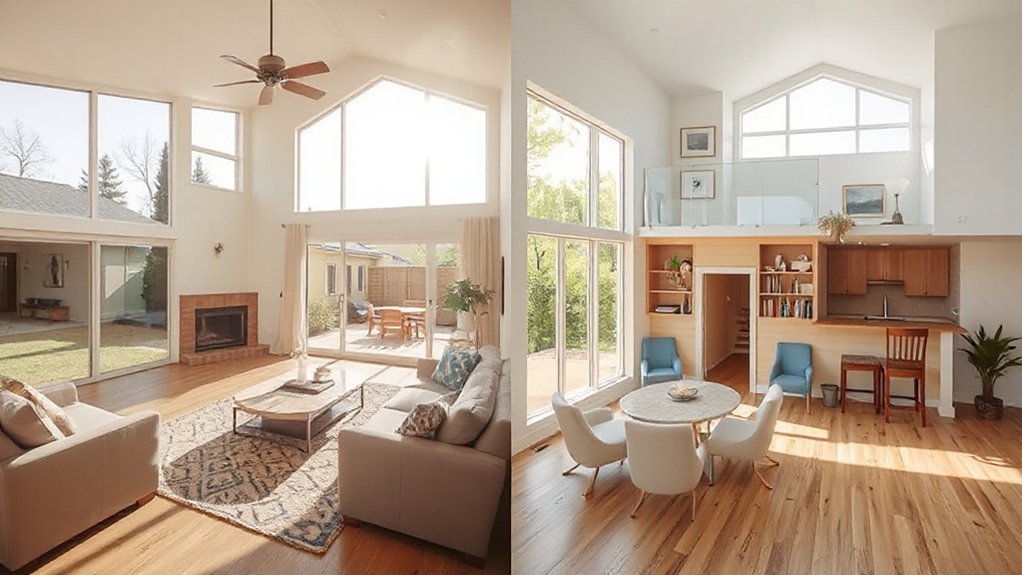
Effective room placement and growth-ready layouts optimize flow and adaptability, enabling you to reconfigure spaces as needs shift.
In layouts by type, you’ll assess how open floor plans support flexible use—great for entertaining, work zones, or quiet zones without excessive partitioning.
Prioritize circulation paths that minimize dead space and promote natural light, which enhances perceived spaciousness in both bungalows and two-storey designs.
Growth opportunities hinge on scalable footprints: consider future room additions, adaptable storage, and multi-functional areas that can convert with minimal disruption.
Storage solutions should be embedded into core zones—closets, under-stair nooks, and modular cabinets—to reduce clutter.
Evaluate how stair placement, mezzanines, or potential room enclosures affect long-term usability and resale appeal.
Quick Decision Prompts: A Practical Checklist to Pick Your Home Type
Choosing the right home type hinges on clear, practical checks you can apply quickly. Use this quick decision prompts checklist to clarify priorities without overthinking.
First, assess interior design goals: do you prefer open-plan, flexible layouts, or distinct rooms? If you value seamless flow, a bungalow may suit; if you want defined zones, a two-storey could be better.
Next, evaluate outdoor space: is a compact yard acceptable, or do you need a terrace or garden accessible from multiple levels?
Consider accessibility: stairs affect mobility, future resale, and cost of maintenance.
Budget constraints matter: consider building envelope, insulation, and potential extensions.
Finally, visualize day-to-day life: mood, privacy, and noise.
Use these prompts to decide confidently, then validate with a simple floor plan mock-up.
Frequently Asked Questions
How Does Natural Light Differ Between Bungalow and Two-Storey Layouts?
Natural light typically pours evenly in bungalows, while two-storey layouts offer varied daylight through upper skylights and fewer obstructions; consider indoor air quality and privacy levels, as stairwell exposure can affect glare and perceived brightness.
Which Option Offers Better Resale Value in Urban Areas?
You’ll likely see stronger resale value with a two-storey home in urban areas. Luxury amenities and architectural styles attract buyers who seek efficiency and prestige, while bungalows appeal for accessibility but may lag in equity growth.
Do Floor Plans Affect Long-Term Energy Efficiency Significantly?
Yes, floor plans affect long-term energy efficiency considerably; you’ll optimize Home insulation and choose Roofing materials that minimize heat gain and loss, leveraging compact layouts and proper orientation to reduce heating and cooling needs over time.
How Do Noise Levels Compare Between Shared Walls and Open Spaces?
Shared walls typically offer poorer noise isolation than open spaces; sound insulation varies with construction. You’ll notice privacy benefits in open areas, while shared walls compromise privacy. Analyze wall materials, insulation, and decoupling to optimize sound insulation and privacy benefits.
What Are Typical Insurance Considerations for Each Home Type?
Like a shielded fortress, your insurance depends on home type. You’ll weigh Home security and Maintenance costs; bungalows often spark lower exterior liability, while two-stories may raise premium factors due to structure and access considerations.
Conclusion
As you weigh bungalow vs. two-storey, the odds often align with your daily rhythms and future plans. Coincidence, if you notice, tends to reveal the right fit—a single flight when mobility matters, or a layered layout when views and privacy beckon. Your budget, maintenance tolerance, and growth goals will quietly converge, guiding you to the option that harmonizes with your lifestyle now and down the road. Trust that subtle alignment to make the choice confidently.