
A 6–8% year-on-year rent rise in Southampton signals strong yields you can’t ignore. You’ll see demand driven by regeneration, transport links, and green spaces, with central areas attracting professionals and families while outskirts offer value-led gains. Supply constraints and ongoing developments shape price trajectories, especially near hubs and amenities. Want to know which corridors and schemes most impact your strategy as markets shift with infrastructure milestones and regulatory tweaks? Let’s unpack the patterns.
Southampton’s Evolving Property Market in 2026

Southampton’s property market in 2026 is marked by steady demand and selective price growth, driven by ongoing regeneration projects and a robust rental sector. You’ll observe historical developments shaping supply cycles, with infill and brownfield redevelopments gradually expanding available units while preserving local character.
In this evolving landscape, a market comparison reveals a tighter regional spread: central locales show modest appreciation, outskirts lag, and rental yields remain resilient amid inflationary pressure. Data indicates higher activity in multiplexes and flats near transport hubs, contrasted with slower single-family turnover in peripheral zones.
You measure performance through occupancy rates, time-on-market, and rent per square foot, all trending upward, yet selectively. Overall, the market displays disciplined price discipline, anchored by regeneration momentum and a stable rental ecosystem.
What’s Driving Price Changes in Southampton
You’ll see price movements driven by current demand trends, including shifting buyer preferences and heightened competition for prime locations in Southampton.
Supply constraints—restricted new builds and longer lead times—amplify price pressure, especially in sought-after neighborhoods.
Key economic indicators, from wage growth to interest rates, help explain the trajectory and volatility you’re observing.
Demand Drivers Now
Rental demand anchors price moves in Southampton, with strong owner-occupier buying and investor activity shaping short-term shifts. You’ll see price changes hinge on job resilience, commuter access, and rental yield expectations, rather than broad sentiment alone.
Data indicate current turnover remains elevated, yet buyers remain selective as market liquidity tightens in pockets where affordability hurdles persist. Property taxation influences decision timing, nudging some buyers toward buy-to-let holds or alternative strategies, while others accelerate purchases to secure favorable terms before policy shifts.
You notice regional employment growth and university demand supporting steady baselines, even as seasonal swings appear. In sum, demand drivers blend occupancy needs, investment appetite, and regulatory signals, creating a measured ascent with micro-fluctuations driven by liquidity access and tax considerations.
Supply Constraints Effects
Supply constraints are tightening in Southampton, driving price moves as new listings lag behind demand and housing stock remains scarce in key neighborhoods. You’ll see prices respond to limited supply, with bid activity outpacing new inventory.
In the latest data, supply shortages persist across midtown and coastal suburbs, constraining options and supporting price momentum even as mortgage costs fluctuate. Market saturation remains a risk signal in some pockets, where recent sales outpace quarterly listings and turnover rises at the high end.
Yet, not all segments are equally constrained; affordable entry points show thinner demand relief, creating asymmetric dynamics by price tier. You should monitor days-on-market trends, revised price-per-square-foot metrics, and seasonal listing cycles to gauge ongoing price stability.
Economic Indicators Impact
Economic indicators are shaping Southampton’s price moves as macro trends filter into local demand. You’ll see that market fluctuations reflect shifts in interest rates, employment, and consumer confidence, not just local sales.
We track data on mortgage approvals, inflation, and wage growth to gauge momentum behind price changes. When rates rise, affordability tightens, cooling demand and tempering gains; when rates ease, buyers return and prices respond promptly.
Regional employment trends and commuter dynamics shape how quickly demand returns after seasonal dips. You’ll also notice investment opportunities evolving with rental yields and development pipelines, influencing price trajectories beyond simple supply-demand math.
In short, macro indicators translate into sharper, more actionable pricing signals for Southampton’s market.
Rent Trends in Southampton: Implications for Tenants
Despite recent fluctuations, rents in Southampton have trended upward over the past year, driven by tight supply and steady demand from renters and relocatees. You’ll notice modest monthly increases concentrated in entry and mid-tier properties, with larger spikes near central campuses and transport hubs.
Data shows year-on-year rent growth around 6–8% across most postcodes, though primaries for quality stock exhibit stronger gains.
For tenants, visibility into lease terms matters: longer fixed periods can lock in favorable rates, while shorter tenures may expose you to renewals at higher prices.
Tenant rights protections exist to curb unlawful increases and guarantee fair notice.
When negotiating, reference standard lease agreements that clearly itemize utilities, maintenance, and renewal clauses.
Precise budgets and documented agreements reduce disputes and support stable occupancy.
How New Developments Shape Southampton Neighborhoods
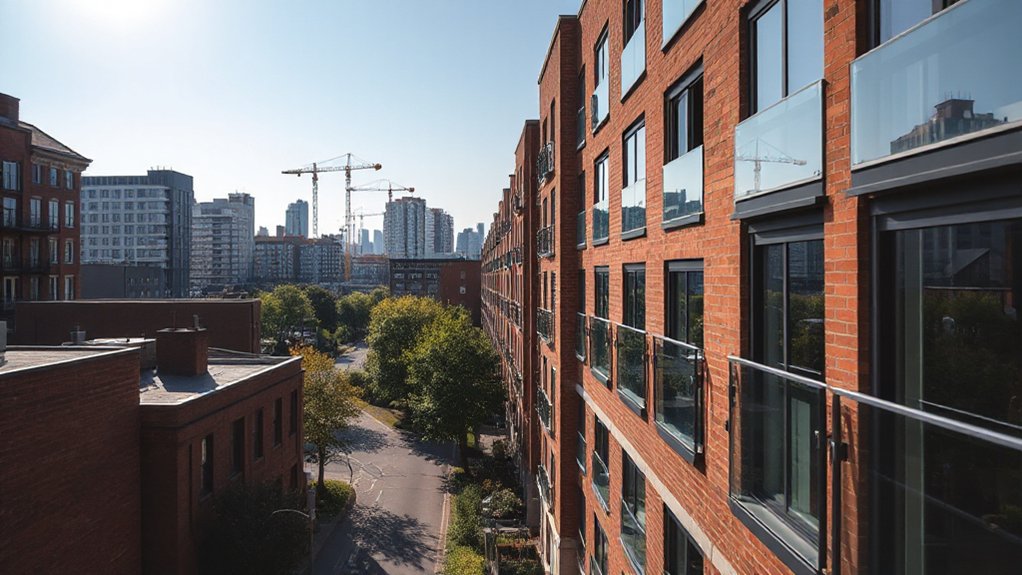
New developments are reshaping Southampton’s neighborhoods by concentrating investment, boosting amenities, and altering demographic patterns. You’ll see housing supply expand alongside commercial bases, shifting supply-demand dynamics and pricing signals.
Data indicate higher density projects cluster near transit and business nodes, supporting walkability and shorter commutes. You notice mixed-use schemes adding retail, childcare, and cultural venues, which elevates daily sink-to-sun value for residents.
Affordability metrics respond to developer engagement with affordable quotas and rental controls, creating a nuanced market trajectory. Historical architecture remains a reference point within new insertions, informing design codes and setback requirements that preserve character while enabling modernization.
Green spaces emerge as critical equity drivers, with pocket parks and tree-lined corridors improving health outcomes and cross-neighborhood cohesion. You should monitor perimeters, impact studies, and long-term gating effects to forecast neighborhood resilience.
Central Southampton: Where Demand Is Most Intense
Central Southampton currently leads demand intensity due to its dense mix of transit access, employment nodes, and amenity clusters. You’ll see elevated transaction velocity as proximity to offices, rail links, and bus hubs shortens commute times.
Volume and price data show tighter spread between asking and selling prices, with year-over-year gains outperforming wider city metrics. Historic architecture contributes to unique value signals, attracting professionals seeking character alongside modern upgrades.
Within this core, luxury amenities—premium gyms, boutique dining, and high-end retail—correlate with larger down payments and faster absorption of listings.
Your due diligence should map migration patterns from adjacent neighborhoods and quantify time-on-market shifts after major service upgrades.
Suburban Shifts: Where Buyers Are Relocating
Suburban shifts show buyers migrating away from dense cores toward value-led markets that offer balance between affordability and lifestyle.
In Southampton, you’ll see pricing gaps narrow as demand concentrates around towns with reliable commute options and practical amenities. Data signals indicate increases in take-up near arterial routes and rail nodes, with buyers prioritizing space-per-dollar and longer-term resilience.
You’ll notice demand clustering around areas featuring urban greenery and accessible parks, supporting work-from-home flexibility and family life. Historic architecture adds aspirational value, boosting appeal without pushing price beyond regional norms.
Inventory turnover slows slightly in these belts, yet overall affordability improves relative to central zones. You’ll weigh proximity to schools, services, and green corridors against evolving lifestyle preferences shaping suburban relocation patterns.
Who Is Buying in Southampton in 2026 and Why

You’ll see the 2026 purchaser profile tighten around professionals, families, and downsizers, with age bands and income ranges pinpointing demand.
Motivations center on affordability, transport links, and lifestyle upgrades, supported by emerging trends in mortgage access and rental-to-own shifts.
This snapshot sets the stage for deeper analysis of why Southampton attracts these buyers and how it shapes market dynamics.
Buyers’ Demographics 2026
In 2026, Southampton’s buyer profile leans toward professionals and investors seeking resilience and liquidity, underpinned by a steady job market, ongoing regeneration, and favorable financing conditions.
You’ll find a shift toward higher-income cohorts, with age skew around 30s to 50s and a growing share of international buyers, especially from nearby tech hubs.
Demand concentrates in well-connected districts offering downsized options and lifestyle appeal, including Luxury apartments and city-fringe amenities.
Investors pursue rental yield and capital protection amid steady leasing activity and modernized stock.
First-time buyers remain cautious, choosing smaller, central units with long-term value.
Historic estates attract niche buyers seeking heritage and luxury, while newer developments balance price growth and liquidity, reinforcing a diversified, data-driven market outlook for 2026.
Motivations For Purchase Southampton
Motivations for purchase in Southampton in 2026 center on resilience, liquidity, and lifestyle value. You’re part of a buyer pool drawn to stable, low-risk assets, with liquidity driven by rental demand and steady resale prospects.
Historical trends show gradual price normalization after recent volatility, supporting confidence in medium-term gains. Buyers also seek diversified portfolios, combining location appeal with affordability within regional markets.
Demand from professionals relocating, families seeking schooling access, and buy-to-let investors remains resilient, aided by Southampton’s transport links and university footprint.
Market forecasts point to moderated price growth yet sustained rental yields, reinforcing long-term attractiveness.
You’ll weigh macro factors, employment trends, and interest-rate trajectories to time entry, balancing upside potential against liquidity needs and holding costs.
Where Rental Yield Is Strongest in Southampton

Across Southampton, rental yields are strongest in areas close to the harbor, university campuses, and major transport links, where demand and occupancy rates stay high year-round. You’ll see yields cluster around central housing nodes and student-adjacent zones, with modest declines in farther residential belts.
Historical trends show a steady narrowing between peak and off-peak yields, yet year-over-year rent growth supports healthy cash-on-cash returns for rental portfolios.
Market forecasts suggest continued resilience, aided by commuter accessibility and regeneration projects that preserve high occupancy. Data points indicate occupancy above 95% in core corridors even during seasonal lulls, while diversification into family-friendly suburbs maintains stable demand.
Focus on these hotspots for robust yield in Southampton’s evolving market.
Financing Options and Borrowing Conditions in 2026
Financing options in 2026 favor borrowers with solid credit, stable income, and clear cash-flow plans, as lenders tighten underwriting and emphasize liquidity. You’ll see higher scrutiny on debt-service coverage, employment stability, and forthcoming cash reserves, especially for investment loans.
Banks and non-bank lenders increasingly favor fixed-rate structures and shorter fixed periods to manage rate risk, while requiring larger buffers above required minimums.
Alternative financing options remain available for niche borrowers, but terms are more stringent, with higher spreads and stricter amortization.
Borrowing conditions reflect macroprudential policy: stricter loan-to-value caps, stress-testing at elevated rates, and tighter documentation standards.
Consequently, you’ll benefit from precise cash-flow modeling, transparent asset performance projections, and proactive credit repair before application.
Plan contingencies for rate volatility and liquidity gaps.
Practical First-Time Buyer Strategies in Southampton
In Southampton, first-time buyers should start with a precise budget that combines purchase price, stamp duty, and moving costs, then map that to a realistic mortgage and required savings.
You’ll prioritize price bands with steady growth, compare lender terms, and lock in a fixed-rate period tied to your plan.
Track ongoing monthly outlays: council tax, utilities, insurance, and maintenance, using a conservative 3–6 month cushion for unexpected costs.
Data suggests property taxes and additional fees vary by borough, so you’ll model scenarios to avoid overleveraging.
When considering homes, weigh renovation needs against resale value, noting that home renovation budgets often extend; build a contingency into the plan.
Finally, assemble a phased purchase strategy, aligning timelines with market signals and personal savings milestones.
How Infrastructure Upgrades Affect Property Values

Infrastructure upgrades reshape property values by improving accessibility and reducing commute times, which tends to boost demand and pricing.
You’ll see timing matters, as projects with clear implementation schedules and funding correlate with quicker value appreciation.
Connectivity gains—through new transit links or road improvements—often translate into higher near-term and long-term property yields.
Infrastructure Timing Impacts
Even when projects are announced years in advance, you’ll see property values respond only after clear milestones are met and timelines are tightened. Timing matters because market reactions hinge on deliverables, funding milestones, and procurement readiness.
In Southampton, data show sharp value upticks align with confirmed completion dates and visible interim progress, not mere announcements. Historical trends reveal lagged yet persistent bumps once construction calendars firm up and accessibility improves.
You should track milestone adherence, bid wins, and permitting speed to forecast short-term shifts. Market forecasts indicate that value sensitivity rises around 6–18 months before opening doors, then moderates post-completion as supply adjusts.
Investors benefit from aligning entry timing with confirmed phases, avoiding early bids during uncertainty and capitalizing as momentum synchronizes with actual infrastructure deliverables.
Value Through Connectivity
Connectivity upgrades translate directly into property value adjustments. When you examine recent projects, you’ll see measurable bumps in average sale prices and quicker market times in neighborhoods near new or upgraded networks.
Data shows Connectivity benefits rise with proximity to stations, improved bus corridors, and higher-capacity broadband or fiber access, translating into stronger demand from commuters and remote workers alike.
In Southampton, valuations respond not only to project scope but timing and perceived reliability, with incremental increases accelerating as infrastructure moves from planning to completion.
You should track changes in property valuation alongside project milestones, noting which upgrades yield sustainable gains versus temporary spikes.
Quality of Life Factors Boosting Southampton Demand
Southampton’s appeal is driven by tangible quality-of-life factors that attract buyers and renters: green spaces, coastal access, and a thriving city-center offering amenities within easy reach.
You’ll notice the data-driven pattern: residential demand correlates strongly with proximity to parks and waterfronts, plus walkable cores.
Luxury apartments are clustering near high-activity zones, delivering compact living with premium finishes and strong rent resilience.
Green spaces show measurable impact on desirability scores, with residents citing recreation, outdoor exercise, and social venues as key value drivers.
Market surveys indicate consistent preference for bike lanes and pedestrian connectivity, reducing commute friction and boosting daily utility.
What Rents Mean for Long-Term Investment Strategy
Rents are more than housing costs; they’re a leading indicator of long-term value and investor confidence. In Southampton, rent trajectories reveal demand durability and income growth, shaping your strategy.
You’ll assess rent per square foot, vacancy rates, and time-to-lease to gauge price resilience across cycles. Data shows steadier increases for unit types with stable employment anchors, suggesting selective capex in high-demand corridors.
Consider rental affordability trends to forecast occupancy stability and borrower risk, adjusting leverage and debt service assumptions accordingly.
Lease agreements become a strategic tool, balancing renewal incentives with market rent realism to preserve cash flow. Align rent setting with tenant turnover costs, maintain competitive concessions, and monitor regulatory shifts that affect returns and portfolio risk over the long horizon.
Seasonal Patterns and Smart Timing in Southampton
Seasonal demand shifts in Southampton influence price momentum and listing velocity, so you’re better off timing shows and viewings around peak activity periods.
By aligning with data on monthly supply, occupancy, and rent changes, you can optimize entry points and minimize vacancy risk.
Smart timing tactics turn seasonal patterns into measurable advantages rather than guesswork.
Seasonal Demand Shifts
Have you noticed how demand ebbs and flows through the year in Southampton? Seasonal demand shifts reflect detectable patterns across months, quarters, and years. You’ll see higher activity during spring selling windows and early autumn influxes, with dips in midwinter.
Seasonal fluctuations align with school terms, mortgage cycles, and local events, shaping listing-to-sale times and price momentum. Data show volume peaks in May and September, followed by slower periods in January and February, creating identifiable Market cycles.
As a buyer, you’ll benefit from tracking these rhythms to time offers and relax pricing pressure, while sellers can optimize staging and exposure around peak windows. Keep monitoring inventory levels, days-on-market, and price momentum to anticipate shifts rather than react.
This disciplined approach reduces uncertainty and enhances outcomes.
Smart Timing Tactics
Track price momentum, inventory turnover, and days-on-market by quarter, then map these signals to your timing strategy. In peak demand months, expect tighter competition and potentially higher prices; in slower periods, you may gain negotiating leverage.
Apply sensitivity to Property tax changes that accompany fiscal shifts, forecasting how tax regimes influence buyer behavior and price trajectories.
Leverage historical seasonality alongside current indicators to set target entry points, contingency plans, and exit criteria. This disciplined approach minimizes missteps and sharpens your response to evolving Market cycles.
What Developers Are Delivering in Southampton 2026
Developers are delivering a robust mix of residential and mixed-use projects in Southampton for 2026, driven by persistent demand in the city’s core and fringe zones. Construction activity targets higher-density living around transport hubs, plus refreshed retail and office nodes integrated with homes.
Data indicates a shift toward mid-market, mid-rise schemes with compact footprints and efficient layouts, maximizing land value. For urban regeneration, schemes integrate public sphere upgrades, improved cycling routes, and gateway entrances to key neighborhoods.
Historic preservation remains a shaping constraint and opportunity, guiding selective conversions and retrofit of listed assets alongside new builds.
Delivery pipelines show steady progress, with planning consents translating into substantial starts within the year. The mix emphasizes sustainability metrics, lifecycle cost clarity, and measurable impact on local employment and housing supply.
Planning and Regulatory Influences in Southampton
Zoning policies define allowable uses, densities, and massing, creating predictable pathways for many proposals while limiting speculative developments. Data shows a gradual shift toward mixed-use, with greater emphasis on affordable housing quotas and sustainability requirements, raising upfront viability thresholds.
Public consultation timelines, impact assessments, and biodiversity protections add iterative milestones, subtly elongating project delivery. Local authoritative bodies report incremental policy consistency, yet approving authorities still demand robust evidence for deviations.
You should expect tighter scrutiny for coastal and flood-prone sites, elevating risk-adjusted returns. Overall, regulatory clarity improves project confidence, provided developers align designs with established planning expectations and timing windows.
Practical Takeaways: Navigating Southampton’s Market Now
Southampton’s market now hinges on disciplined viability and targeted delivery, as data show a steady shift toward mixed-use, affordable housing, and sustainability constraints that shape project economics.
You should focus on actionable patterns: demand is strongest where Neighborhood revitalization aligns with transit access and public environment upgrades, reducing vacancy risk and improving resale value.
Expect Market volatility to persist, driven by financing conditions and policy signals; hedge by stress-testing returns across scenarios and prioritizing lower loan-to-value structures.
Prioritize sites with clear mixed-use potential, predictable construction costs, and reach for grants or incentives that support affordability.
Build a timeline that sequences approvals with site readiness, and preserve optionality on density to adapt to changing rules.
Finally, monitor absorption rates weekly to refine pricing and tenure mix.
Frequently Asked Questions
How Do Interest Rate Changes Specifically Affect Southampton Prices?
Interest rate rises cool housing demand in Southampton, lowering prices, while cuts spur activity and push prices up. You’ll see mortgage refinancing become harder when rates climb, and inflation impact narrows affordability, dampening buyer confidence and transaction velocity.
Which Neighborhoods Show Fastest Short-Term Price Growth?
You’ll see fastest short-term price growth in luxury apartments and historic districts, where demand spikes and supply tightens. You defend your positions by tracking month-to-month shifts, price per square foot, and recent redevelopment momentum driving compression in those neighborhoods.
What Are Typical Closing Costs for Southampton Purchases?
Typical closing costs in Southampton mix taxes, fees, and inspections; plan for property tax upfront, plus a home inspection contingency. You’ll likely incur transfer stamps, lender fees, and closing credits, totaling several thousand dollars depending on price and lender.
How Does Student Demand Influence Rental Yields?
Student demand boosts rental yields by elevating occupancy and shortening vacancies; you’ll see tighter markets around universities, driving higher rents. Consider student housing impacts on rental affordability, as persistent demand supports cap rate resilience and income stability.
What Impact Do Planning Permissions Have on Value Timelines?
Like a ticking clock, planning permissions shape value timelines: you’ll see delays, then value shifts as zoning regulations and infrastructure development align; you anticipate slower starts but stronger post-approval momentum, guiding your decisions with precise, data-driven timing.
Conclusion
In the Southampton market, you’re steering a living tapestry where data threads weave growth. Think of it as a growing city garden: planters (developers) seed near stations and green space, while weather (regulation and rents) tests where roots take hold. You’ll see steady price gains and rent climbs, driven by regeneration and demand. With smart timing and disciplined investments, you harvest stable, long‑term returns—yet you still must stay adaptable to shifting seasons.