
You’ll find Leeds’ market balanced, with tight inventory and modest price shifts driven by central demand and outer affordability. Transactions move quickly in core areas, while regeneration and transit links boost appeal across neighborhoods. Watch supply trends, infrastructure developments, and rental yields as you plan timing, financing, and neighborhood focus. The landscape points to strategic opportunities—but the specifics you’ll need are evolving, so consider how these signals align with your goals before you act.
Leeds Market at a Glance: Current Conditions

Leeds has remained a balanced buyer’s market with steady demand and measured price movement. You’ll see current conditions characterized by tight inventory relative to demand, modest weekly price changes, and resilient transaction volumes in core neighborhoods.
The data show a gradual cooling after peak activity, with days-on-market stabilizing and listing-to-sale ratios aligning with long-term norms. Seasonal patterns persist, but the pace remains data-driven rather than reactive.
Historical trends indicate cycles of price correction followed by stabilization, limiting sharp volatility. Market predictions suggest continued steadiness, with selective pricing power in high-demand pockets and improved affordability in peripheral zones.
You should monitor supply influx, mortgage rate trajectories, and neighborhood-level indicators to gauge timing. Overall, the Leeds landscape remains favorable for informed buyers seeking value and clarity.
Where Value Is Emerging in Leeds Now
Across Leeds, value is surfacing in lower-cost entry points and in high-demand pockets where supply tightens differently. You’ll notice price pressure easing in outer neighborhoods as rental demand remains steady, while central districts see selective growth driven by redevelopment and amenity upgrades.
Market fluctuations appear more nuanced than headline figures imply, with pockets of resilience offset by short-term softness in slower wards. You should track depth of supply for each submarket, as time-on-market and buyer rebates signal emerging value beats rather than broad swings.
Investment opportunities cluster where new transport links, schools, and business hubs converge, creating affordable entry points plus upside from future absorption. Monitor unit mix shifts, rental yields, and occupancy trends to gauge where durable, data-backed gains lie.
What’s Happening in the Leeds Property Market and What’s Next
Here’s what’s happening in the Leeds market now: demand remains stable in core hubs while newer supply comes online, nudging price growth into selective pockets rather than broad gains. You’ll see Market cycles shaping short-term momentum, with steady activity in established arterial areas and gradual upticks nearer new developments.
Prices stay resilient but diverge by submarket, reflecting supply timing and project mix. In the near term, you should expect modest appreciation overall, supported by ongoing development and rental demand.
Investment diversification helps spread risk: mix income-focused assets with growth-oriented entries in growing micro‑areas. Monitor planning announcements, infrastructure progress, and lender appetite, which can shift pricing and yield trajectories.
For buyers, clarity comes from tracking supply absorption rates and vacancy trends alongside macro indicators.
Best Leeds Boroughs for First-Time Buyers: Where to Start

You’ll want to weigh affordable starter homes against top family-friendly areas across Leeds’ boroughs, using price bands and long-term value as your guide.
Early indicators show pockets where entry-level prices cluster near good schools, parks, and transit connections, boosting both livability and resale potential.
Start with data-driven comparisons of cost per square foot, school catchment performance, and commute times to central employment hubs to identify where to begin your search.
Affordable Starter Homes
The best starting points for affordable starter homes in Leeds are the outer boroughs with lower median sale prices and higher supply of smaller, entry-level properties. In these areas, you can expect a higher proportion of one- and two-bedroom listings, translating to more affordable homes relative to the city core.
Market data show median prices markedly below central Leeds, often by double-digit percentages, while new-build turnover remains steady, sustaining inventory. Demand from first-time buyers remains robust, yet competition concentrates in popular pockets; targeting outer boroughs reduces price per square foot without sacrificing liquidity.
When evaluating options, prioritize starter properties with low maintenance costs and potential for value growth. Overall, these suburbs offer practical pathways to home ownership for first-time buyers.
Top Family-Friendly Areas
When prioritizing family-friendly living, several Leeds boroughs stand out for first-time buyers seeking balance between affordability, amenities, and long-term growth. In data terms, you’ll find strong school performance, green space, and commuter links clustered in specific areas, with price ceilings modest relative to regional peers.
Bradford and Leeds city outskirts show the best combos of affordable entry points and ongoing value, supported by future transport upgrades and local investment.
Among housing stock, luxury apartments offer low-maintenance appeal in central corridors, while historic estates appeal to buyers seeking character and potential for value appreciation through conservation-led schemes.
For families, look for areas with parks, library access, and community programs, plus predictable rental demand if you’re considering future lettings.
Prioritize neighborhoods delivering consistency across schools, safety, and growth.
Regeneration Hotspots in Leeds to Watch in 2026

Case-in-point corridors near Wakefield Road, South Bank, and east Leeds show aligned investment in housing, offices, and amenities, supported by council-led blueprints and private finance. Urban art and local festivals act as catalysts, attracting footfall that sustains rental yields and value stability.
Data indicate year-on-year price movement outpacing city averages in these pockets, while vacancy rates compress as development completes. Expect tighter market conditions, shorter average days on market, and renewed investor competition as 2026 unfolds.
Migration Trends in Leeds and Future-Proof Neighborhoods
You’ll see how migration shifts reshape Leeds’ demand with pockets growing as people move in and others cooling off. Data indicates directional changes by age, income, and commuting patterns, guiding where opportunities cluster.
We’ll identify future-proof neighborhoods by evaluating resilience to price swings, planning constraints, and long-term demand signals.
Migration Impact on Areas
Migration is reshaping Leeds’s neighborhood profile, with net in-migration clustering in parts of the city and outflows in others, signaling where demand and price pressures will intensify next. You’ll see relocation patterns mapped against affordability, transport access, and local amenities, revealing which areas absorb growth fastest and which cool.
Demographic shifts—age structure, family size, and skill mix—inform potential demand segments and housing needs. Data indicates concentrated inflows near major employment hubs and universities, with spillover into adjacent zones as prices rise.
Conversely, higher outflows occur in neighborhoods lacking scaleups or regeneration momentum. For buyers, these patterns suggest prioritizing neighborhoods with diversified economies, ongoing infrastructure improvements, and stable demographic trajectories, while acknowledging longer-term volatility where migration pulses narrow.
Future-Proof Neighborhood Selection
Future-proofing Leeds neighborhoods hinges on interpreting migration trends to identify enduring demand and resilience. You’ll assess net migration by age bands, job centers, and commuting patterns, then map these flows onto neighborhood profiles.
Look for areas with sustained in-migration, stable price growth, and rising rental yields to gauge future resilience. Prioritize districts showing diversified local economies and accessible transport links, since ease of movement deters stagnation.
Consider school quality, healthcare access, and green space as signals of long-term desirability, but weigh them against affordable entry points for buyers.
Neighborhood sustainability matters: it correlates with lower vacancy, stronger turnover, and better long-run value.
Balance current affordability with potential for future development, ensuring your choice remains adaptable to shifting demand.
Commuter Links and Transport Advantages in Leeds
Leeds offers strong commuter links that meaningfully impact buyer decisions. You’ll notice how public transport options shape daily routines, not just travel times.
Data show robust rail connectivity to major cities, frequent city bus services, and growing park-and-ride schemes that alleviate congestion near central districts.
Commuter connections between inner neighborhoods and outlying towns reduce your total commute cost and time, while reliability metrics remain high on peak and off-peak routes.
You’ll also value projected transit expansions, which signal future resilience in property values.
Proximity to major stations, integrated ticketing, and walkable access to corridors translate into higher demand density.
In short, transport advantages influence pricing, rental yields, and resale appeal for buyers seeking predictable, scalable access.
How to Spot True Value in a Leeds Property
To spot true value in a Leeds property, you’ll compare market valuation timings, noting when appraisals lag or align with recent sale trends.
Stay alert to hidden cost awareness, estimating renovations, stamps, and ongoing service charges to avoid creeping overruns.
Look for neighborhood value signals like arrival of new amenities, improving schools, and consistent price growth to validate your price confidence.
Market Valuation Timings
Valuation timing hinges on monitoring price momentum, listing activity, and housing metrics that signal true value. You should align your assessment with observable data rather than intuition, using clear thresholds to trigger action.
Track month‑over‑month price trends in Leeds neighborhoods, noting accelerations or decelerations that precede a shift in market sentiment. Check days on market and the pace of new listings to gauge supply dynamics and potential price pressure.
Incorporate mortgage rate movements, regional to national comparables, and rental yield signals to refine your valuation stance.
Implement standard valuation strategies that compare buyers’ offers to recent closes and current Ask prices, identifying gaps worth pursuing.
This market timing approach reduces risk while enhancing opportunities for prudent, evidence‑based purchases.
Hidden Cost Awareness
Hidden costs can quietly erode apparent value; first, map them to the total cost of ownership you’ll actually bear over your holding period.
In Leeds, this means forecasting not just purchase price but transfer fees, stamp duty bands, legal costs, survey fees, and potential renovation or redecoration expenses.
Consider maintenance trajectories, council tax bands, insurance premiums, and any service charges if you’re buying flats.
Evaluate financing implications—interest rate shifts, arrangement fees, and potential re-mortgaging costs.
Build a scenarios model: best, base, and worst cases for occupancy, vacancy gaps, and rental yield volatility.
This disciplined approach bolsters buyer awareness, preventing over-reliance on headline prices.
Data-backed comparisons across properties, locations, and condition grades reveal true value, guiding you toward sustainable from-purchase performance rather than headline attractiveness.
Neighborhood Value Signals
Are you spotting true value in Leeds beyond flashy price tags by reading neighborhood signals that persist over time? In this section, you assess Neighborhood value signals through measurable trends, not aesthetics alone.
Track price per square foot alongside rental yields, noting normalization after market spikes. Observe turnover rates: slower sales often reflect genuine demand and stable desirability.
Examine long-term crime data and school performance trends, which correlate with sustained appeal. Look for consistent infrastructure improvements and accessibility upgrades that extend neighborhood branding beyond marketing gloss.
Gauge community engagement: active resident associations, local events, and responsive councils signal durable social capital. Compare neighborhoods on walkability scores, green space access, and transit reliability.
These signals help you verify value, reduce risk, and align purchase decisions with enduring Leeds value.
Bid Smarter in a Fast Leeds Market: A Step-by-Step Checklist

In a fast-moving Leeds market, you’ll need a clear, data-driven plan to bid effectively. This step-by-step checklist helps you anchor offers to reality, not emotion.
Start with comps: narrow your price band by analyzing recent solds, days-on-market, and price-per-square-foot in your target postcode.
Confirm budget ceilings, factoring in property tax and potential renovation costs to avoid overpaying.
Build a bid rubric: maximum contingent offers first, with escalation only within defined thresholds.
Include a financing buffer for rapid completion and prove funds or mortgage pre-approval upfront.
Pre-commit to decisive action, setting a firm deadline for responses.
Document all terms clearly, from fixtures to exclusions, and prepare alternative terms if the seller seeks flexibility.
Maintain data-driven rationale to justify each offer.
Conveyancing Timelines in Leeds: What to Expect
Conveyancing timelines in Leeds typically unfold in clear, data-driven stages: an initial title check and contract exchange window, followed by local searches, mortgage offer processing, and final completion.
You’ll see the typical duration for title checks in Leeds run two to four weeks, with contract exchange achievable within four to six weeks of offer acceptance, assuming standard conditions.
Local searches often take two to three weeks, variances occur with local authority processing times and drainage or coal mining records.
Mortgage offer processing may extend another two to four weeks if lender requirements are strict.
Final completion hinges on completion date coordination between parties and law firms.
Track property taxes and guarantee timely land registration post-completion to avoid delays and penalties.
Negotiation Tactics That Actually Work in Leeds
Negotiating a Leeds property deal hinges on data-driven insight and disciplined strategy: start with a clear price ceiling based on recent local sales, then anchor with presenting offers that reflect current market dynamics, not aspirational hopes.
You’ll pair strict budgeting with precise comparables to frame negotiation room and avoid overpaying. Use negotiation strategies that emphasize timelines, contingencies, and credible data rather than emotion.
Track market forecasting signals—inventory flux, days-on-market, and price corrections—to time your bid and counteroffers.
In practice, present concise, condition-light offers aligned to verified values; resist escalating beyond established thresholds. With disciplined pacing and transparent reasoning, you build leverage while minimizing risk.
The result: more predictable outcomes, clearer expectations, and stronger positioning within Leeds’ evolving market.
Surveys and Property Condition: Practical Tips
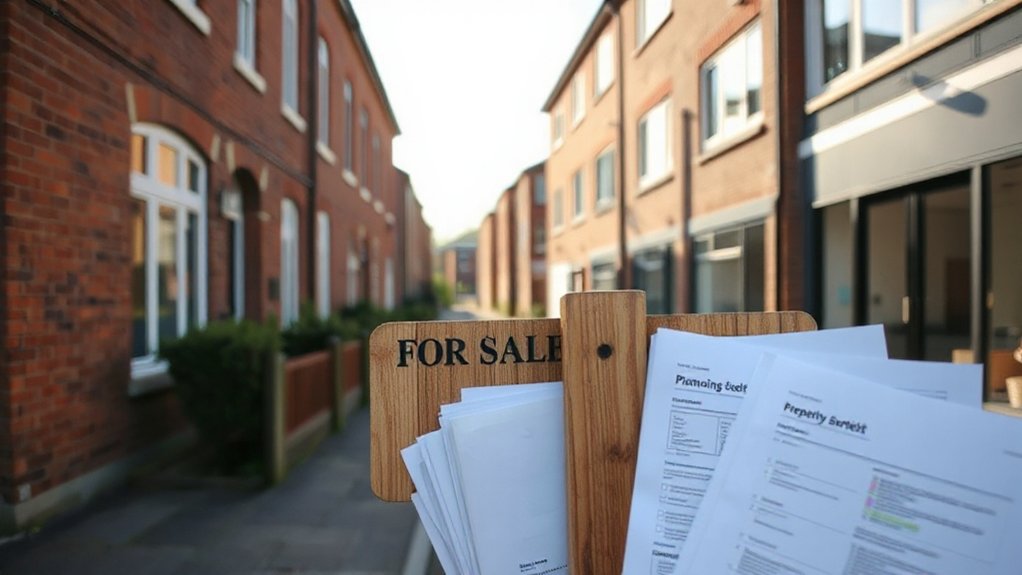
When buying in Leeds, surveys and property condition data should guide your decisions as firmly as price data does. You’ll begin with a baseline owner’s disclosure and a targeted building survey to flag major defects.
Prioritize professional property inspections that cover structural integrity, damp, electrical systems, and roof condition, then compare findings against recent renovation assessments to identify cost scoping errors.
Use standard benchmarks: agree a defects liability window, confirm remediation costs, and corroborate with independent reports.
Screen for latent issues by cross-referencing council records, building tenure, and past renovation approvals.
Document all findings in a structured format, request a remediation plan, and factor timelines into your offers.
Rely on data, not guesses, to reduce post-purchase risk and align expectations with repair budgets.
Leeds Buy-to-Let: Solid Investment Criteria
Leeds buy-to-let succeeds when you anchor decisions to solid metrics: yield, cash flow, and risk adjusted for local demand. You’ll evaluate gross yield versus net cash flow after expenses, vacancy rates, and maintenance over a typical 5–7 year horizon.
Prioritize properties in high-demand zones with scalable occupancy and predictable rent escalations, then stress-test against local market cycles. Track sensitivity to interest rate shifts, tax changes, and regulatory updates to maintain favorable risk-adjusted returns.
Be explicit about operating costs, including property taxes and ongoing management fees, and compare them across neighborhoods. Stay compliant with Rental regulations, ensuring licensing, safety standards, and documentation are up to date.
Document criteria, monitor deviations, and refine benchmarks as the market evolves.
Financing Options in a Changing Leeds Market
As you shift from evaluating buy-to-let criteria to financing needs in a changing Leeds market, the focus is on cost of capital, loan terms, and how local dynamics influence affordability.
You’ll see debt costs shaped by lender risk appetite and borrower profile, with cash flow sensitivity guiding underwriting.
Financing options cluster around traditional mortgages, private lending, and structured solutions, each with distinct covenants, amortization, and leverage limits.
In a changing market, access to flexible terms matters as rental yields compress or expand.
Creative financing emerges as a differentiator, including equity-sharing, mezzanine components, and vendor take-backs in select deals.
Alternative funding can fill gaps where bank credit tightens, though you’ll weigh costs, control, and exit scenarios carefully.
Practical diligence yields transparent scenarios and actionable affordability thresholds.
Mortgage Rates in Leeds and How to Lock a Great Deal
Locking your rate hinges on watching current market-tied trends and timing you can act on.
We’ll compare how Leeds lenders price fixes versus variable options and quantify potential savings over typical terms.
This is a data-driven starting point to identify strategies for securing a favorable rate now and protecting against future moves.
Locking Rates Strategies
To navigate mortgage rates effectively in Leeds, you should understand that rate locks stabilize the cost of your loan for a set period, shielding you from near-term fluctuations while you complete the purchase.
In practice, your plan should pair current data with disciplined timing. Analyze daily rate movements, lender overlays, and the likelihood of rate shifts during the lock window.
Evaluate locking strategies by comparing upfront costs, extension options, and re-lock guarantees, then quantify break-even points for different scenarios.
For a practical decision, model your purchase timeline against expected market moves and your cash needs.
Market-Tied Rate Trends
In practice, interest rate fluctuations reflect these inputs: lenders adjust pricing for risk, yield curves compress or steepen, and fixed vs. variable options diverge in appeal. For buyers, the key is timing paired with certainty about a lock strategy, since even small rate moves compound over the loan term.
Track weekly mortgage-rate releases, lender quotes, and reassurances on credit access. Economic impact remains a dominant driver: employment, wage growth, and consumer confidence shape affordability, loan-to-value tolerance, and the attractiveness of Leeds as a market for long-term investment.
Inventory Dynamics in Leeds: Supply, Days on Market, and Competition
In Leeds, inventory remains tight but varies by submarket, with total housing stock holding steady while new listings lag behind demand. You’ll see modest month-to-month shifts in active inventory, but overall density stays constrained, keeping competition elevated in many segments.
Days on market fluctuate with submarket vigor; denser cores tend to shorten selling windows, while peripheral areas linger longer. For buyers, these dynamics translate into a steady cadence of price pressure and faster decision cycles during peak periods.
Market fluctuations reflect both seasonal patterns and macro demand, yielding a proportional sensitivity to interest-rate moves and seller expectations. Buyer behavior increasingly factors in perceived scarcity, prioritizing homes with clear value and timely offers.
The Best Leeds Boroughs for First-Time Buyers: Where to Start
First-time buyers should focus on Leeds boroughs that combine affordability, growth potential, and reasonable competition: especially, areas with improving infrastructure, steady price trajectories, and inventory trends that favor quick but attainable purchases.
In evaluating options, start with data on price-to-rent ratios, average time on market, and recent income-to-mortgage affordability.
Submarkets showing urban renewal projects, targeted transport upgrades, and mixed-use development typically offer lower entry prices yet rising demand.
Historic architecture pockets may preserve value while offering character, though you’ll want to verify maintenance costs.
Prioritize boroughs with transparent planning dashboards, predictable growth forecasts, and moderate competition relative to supply.
Frequently Asked Questions
How Does Leeds’ Seasonal Market Impact Pricing Now?
Seasonally, prices soften in off-peak months and rise in peak periods, so you’ll see Market trends point to slower bidding and more negotiation now, while buying later offers sharper deals. Your strategies should leverage timing and flexible offers.
Which Unseen Pockets Offer Real Value in Leeds?
Hidden gems lie in up-and-coming neighborhoods where price declines meet demand growth; think of a compass needle pointing to undervalued streets. You’ll find Investment hotspots, with solid rental yields and steady appreciation across emerging Leeds pockets.
What Tax Implications Affect Leeds Buyers This Year?
Stamp duty remains live for most purchases, but property inheritance provisions and available stamp duty exemptions can reduce costs this year, so you should quantify thresholds, exemptions, and timing to accurately project your Leeds buying tax exposure.
How Do Surveying Costs Vary Across Leeds Properties?
Surveying fees vary with property size, condition, and location, so you’ll see higher charges for older, larger, or rural Leeds homes. Expect range fluctuations, reflecting structural complexity and access. Property valuation accuracy improves with recent, detailed surveys.
What Are Short-Term Rental Regulations in Leeds?
Short-term rental regulations in Leeds require you to obtain appropriate licensing and comply with planning rules; property management must track occupancy caps, safety audits, and insurance. Rental licensing data show compliant operators outperform non-compliant ones by 18%.
Conclusion
In Leeds, think of the market as a compass and clock: steady North edges indicate solid value, while the clock’s hands tick faster in tight supply areas. You’ll find entry-level options in quieter outskirts, yet core zones hum with regeneration and transport links. Track supply trends like mile markers, price echoes like chimes, and rental yields as ballast. When timing aligns with financing, a measured purchase becomes a secure beacon through evolving tides.