
Did you know outer London boroughs can offer up to 30% lower entry prices than central areas while still delivering solid transport links? If you’re weighing affordability, schools, and growth potential, you’ll want a clear map of where value meets livability. There are trade-offs to reflect on, and a smarter approach today might reveal options you hadn’t thought about—before you lock in on a choice that could shape your finances for years.
Key Criteria for Choosing a Borough as a First-Time Buyer

When choosing a borough as a first-time buyer, start with affordability, then assess ongoing costs and transport links. You’ll quantify price-to-income ratios, rental yields, and council tax bands to compare options quickly.
Next, evaluate long-term costs like maintenance, ground rent, and utility expectations, using local data on average bills. Consider transport connectivity: tube lines, overground access, and bus reliability to estimate commute times and fare budgets.
Look for stable school performance and healthcare access as quality anchors. Historical landmarks and cultural festivals signal cultural value and tourism resilience, which can influence property demand and resale potential.
Finally, weigh safety metrics, regeneration plans, and tenant demand to forecast appreciation. Prioritize transparent data, consistent sourcing, and updated local government guidance for confident decisions.
Budget-Minded Picks in Outer London
Outer London offers several budget-minded picks where you can stretch your money farther without sacrificing accessibility. In this outer-ring focus, you’ll notice lower average asking prices per square meter than inner zones, with several boroughs posting above-average rental yields and improving school performance.
For first-time buyers, look for areas where new-build flats and refurbished older homes balance cost with quality of life. Density often remains moderate, helping you avoid crowded commutes while keeping parklands and high streets within reach.
When evaluating value, consider ongoing regeneration projects that can boost property value over five to seven years. Embrace neighborhoods with vibrant cultural scenes, including urban art and local cuisine, which add daily appeal without inflating total ownership costs.
How Transport Links Shape Your Daily Commute
Transport links are the backbone of your daily commute, and in London they vary as much as the boroughs themselves. You’ll notice how tube lines, overground routes, and bus networks intersect with your location, affecting door-to-door times and reliability.
Data show that interborough travel times improve where multiple lines converge, while single-line corridors create bottlenecks during peak hours. You can optimize by mapping your distance to major stations, then comparing average wait times and service frequency across options.
Historical landmarks often cluster near transit hubs, signaling areas with higher demand and investment. Local factors, like nearby markets and eateries, influence strollability and weekend trips, shaping your overall cost of living.
Local cuisine becomes a pleasant tie‑in to efficient routing, not a bonus.
How to Assess School Quality in a Borough

Evaluating school quality in a borough starts with clear metrics you can compare quickly. You’ll want objective indicators like Ofsted ratings, GCSE/A-Level outcomes, and progress measures to gauge consistency across schools.
Look beyond headlines by checking school rankings within the borough and nearby comparators to understand relative performance. Consider school capacity and admissions policies, as popularity can skew perceived quality.
Map catchment area effects; small shifts can impact access for first-time buyers. Factor into staffing stability, leadership continuity, and pupil-teacher ratios, which influence daily results.
Review extracurricular activities offered, since breadth of clubs and programs supports holistic development and can signal an institutional focus on student engagement.
Combine data with recent inspection notes to form a balanced view of where educational quality genuinely stands.
Growing Areas With Real Potential for Price Growth
You’ll want to track Growth-Driven Neighborhoods for early signs of price uplift, focusing on areas with rising rents, new amenities, and owner-occupier demand.
Infrastructure boosts Ahead—like transit upgrades and green spaces—can correlate with faster price growth, so you should map projects and timing against market cycles.
Affordable Entry-Points Emerging offer entry price relief now, with potential for leverage as surrounding areas mature and investor interest grows.
Growth-Driven Neighborhoods
Data tracks appreciation where regeneration aligns with improved transit access, often near Crossrail-adjacent zones or overground upgrades, boosting short- and mid-term appeal. Cultural diversity strengthens demand, attracting a broader buyer pool and sustaining tenancy levels.
You’ll also see density increases near town centers, with mixed-use schemes blending housing, shops, and services to shorten weekly commutes. While prices rise, entry points remain manageable where planners prioritize grained, incremental growth and quality-of-life improvements that attract first-time buyers seeking long-term value.
Urban renewal supports resilience; cultural diversity broadens market appeal.
Infrastructure Boosts Ahead
Infrastructure boosts are shaping growth-ready areas, where targeted upgrades open faster commutes, easier access to amenities, and higher long-term value. You’ll see this in patterns of urban revitalization, with new housing near transport hubs and refurbished town centers driving demand.
Data shows project-led infrastructure, from transit upgrades to cycle lanes, correlates with above-average price growth over five years in mixed-use districts. Cultural landmarks attract footfall, supporting retail and hospitality services that sustain neighborhoods between major developments.
Investors note enhanced permeability—more reliable journey times, fewer bottlenecks, and predictable upgrade timelines reduce risk. Look for boroughs that combine rail/road investments with district-wide placemaking.
As projects advance, you’ll gain access to improving schools, parks, and healthcare facilities, reinforcing long-term value without sacrificing affordability today.
Affordable Entry-Points Emerging
Across London, watch for neighborhoods where entry costs remain relatively low yet growth drivers are taking shape, such as mixed-use developments near upcoming transport upgrades, affordable new-builds close to town centers, and targeted placemaking efforts.
In Affordable Entry-Points Emerging, you’ll see pockets labeled as Emerging neighborhoods with rising demand indicators and improving infrastructure. Data shows modest price bands compared with central boroughs, while planning-led housing programs expand Affordable housing options for first-time buyers.
Look for areas benefiting from cross-borough regeneration, increased bus and rail reliability, and school redevelopments that lift resale appeal.
Focus on neighborhoods delivering rental yield resilience and longer-term price momentum. These signals suggest price growth potential while keeping initial entry costs accessible, aligning with practical budgeting and portfolio diversification for first-time buyers.
Boroughs With Quick Access to the City and West End
You’ll find certain boroughs offer quick access to the City and the West End, cutting commute times and boosting daily flexibility.
Proximity translates to higher demand from commuters and stronger resale potential, with many areas boasting fast rail, Tube, and bus links.
In this discussion, we’ll compare transit times, peak-hour reliability, and how these factors align with first-time buyer budgets.
Quick Access to City
Which London boroughs offer the fastest paths to the City and the West End, and how does that map to first-time buyers? You’ll notice clusters along the Northern and Central corridors deliver short commutes via Tube or rail, with typical journey times under 30 minutes to the City and under 20 minutes to the West End.
Data-driven patterns show higher frequency lines and shorter interchanges in these areas, supporting reliable daily plans.
Housing affordability varies by borough, but several fast-access locations balance price with strong rental demand. Market trends indicate steady demand for compact, well-connected units, often with modern amenities.
If proximity to finance hubs matters, prioritize routes with consistent service and projected capacity upgrades to sustain value. Consider total commute cost alongside house price trajectories.
West End Proximity Benefits
West End proximity pays off: several central and well-connected boroughs offer the fastest commutes to both the City and the West End, with typical door-to-desk times under 20 minutes to the West End and under 30 minutes to the City.
You’ll notice shorter travel fringes in Westminster, Camden, and Kensington & Chelsea, translating to more usable time on workdays and weekends.
This proximity also correlates with higher property prices, reflecting demand for swift access and amenities. Data shows premium markets where rents and purchase prices rise as transit times shrink.
If you’re prioritizing time efficiency, expect property prices to be higher in these belts, but consider the long-term value of preserving commute minutes and robust resale demand in your budget planning.
Commuter-Friendly Boroughs
Are you aiming for the fastest city-to-desk commutes? In commuter-friendly boroughs, you’ll find consistent transit times and reliable service that shorten daily travel.
Data shows central lines—Crossrail, Jubilee, Central—deliver under 35 minutes to the City and under 25 to the West End from many zones. Property price-to-commute metrics stay competitive where rail hubs cluster, while congestion relief boosts predictable journeys.
Borough history matters: pockets with legacy transport investments correlate to higher timetable reliability and planned improvements.
Cultural hotspots plus efficient routes create value beyond rent, supporting after-work life and social capital.
If you value time, prioritize boroughs with direct, high-frequency services and well-maintained stations, plus ongoing rail upgrades and predictably short onward connections.
Family-Friendly Boroughs With Parks and Amenities

Many London boroughs appeal to first-time buyers by balancing affordable housing with parks and family-friendly amenities. In particular, you’ll find neighborhoods that offer ample green space, playgrounds, good schools, and convenient transit.
You gain practical value in places where large parks, library programs, and sports facilities are within walking distance. Data shows higher family-satisfaction scores in boroughs with active park management and safe, well-lit high streets.
Cultural festivals and weekend markets drive community engagement without sacrificing affordability, while reliable transport links shorten commutes for work or study.
Look for historic parks, well-maintained playgrounds, and local youth programs as indicators of long-term livability. Historical landmarks add cultural texture, and scheduled events reflect a vibrant, family-friendly cadence.
Price vs Resale Value: How to Weigh Both When Buying
When you weigh price growth against resale value, you should track both current affordability and potential appreciation to gauge long-term gains.
Consider tradeoffs between higher price tags with stronger resale demand and slower-growth areas with steadier equity buildup, using data like recent price trajectories and days-on-market.
This approach highlights Long-Term Equity Considerations and how Price Growth vs Value, Resale Potential Tradeoffs, and future sellability intersect in your buying decision.
Price Growth vs Value
Price growth and resale value aren’t the same thing, but they both shape long-term affordability. You weigh them by examining how prices rise over time and how much value you could extract on sale.
Price growth reflects market momentum, often driven by supply-demand gaps, infrastructure, and local jobs.
Resale value emphasizes how a home retains appeal, including layout efficiency, upkeep, and neighborhood desirability.
Historical trends show London boroughs can outpace inflation during booms yet stall in downturns; cycles vary by school catchments, transport links, and new developments.
Cultural diversity often correlates with stable demand, supporting steadier value.
Use data: price trajectories, cap rates, and time-on-market, then balance immediate affordability with projected value stability to guide your purchase decision.
Resale Potential Tradeoffs
Resale potential hinges on balancing upfront price with how well a home retains value over time. You weigh short-term affordability against long-run equity by analyzing price sensitivity to market cycles and demand shifts.
Higher upfront cost can yield stronger resale if properties stay below price ceilings and attract stable appraisals, but you’ll face steeper initial depreciation risk if downturns hit.
Market saturation in a borough affects how quickly homes move and the price cushion you receive at sale, so you should compare current inventory turnover and time-on-market alongside anticipated demand.
Consider buyer demographics: first-time buyers often favor value-driven features, public transport, and future development plans, which can support resale if aligned with local growth.
Balance price with resilience to shifts in buyer sentiment and neighborhood fundamentals.
Long-Term Equity Considerations
Long-term equity hinges on balancing upfront affordability with sustained value growth and resale potential. When you weigh price versus resale, focus on peak-price history, tenancy demand, and macro cycles for the boroughs you’re considering.
Look beyond initial sticker price: cap rates, maintenance costs, and how end users perceive value over 5–10 years. Luxury apartments often deliver strong rental yields in demand zones, but premium pricing can dampen liquidity if buyers shift priorities.
Historical districts may offer resilience due to heritage appeal, yet renovation costs and regulatory constraints matter. Track price per square foot growth in your shortlisted areas and compare with nearby transport upgrades.
Prioritize neighborhoods with transparent development plans and consistent demand, then model scenarios for resale windows to protect long-term equity.
Green Spaces, Walkability, and Quality of Life
Green spaces boost mood and health, and London’s parks, riverside walks, and community gardens correlate with higher resident satisfaction and tighter social networks.
You’ll notice walkability scores matter: shorter commutes boost time for leisure and reduce transport costs, while mixed-use zones sustain daytime and evening activity.
Data show greener boroughs correlate with stronger mental well-being indicators and higher perceived safety after dark.
Urban wildlife enhances biodiversity without harming accessibility; you can spot birds, bats, and pollinators near residential clusters, signaling healthy ecosystems.
Community events in parks create informal networks that translate into local support during crises and everyday sharing.
Prioritize boroughs with continuous green corridors, frequent safe crossings, and accessible recreational facilities to maximize quality of life and long-term affordability.
Practical Steps for Researching Local Markets
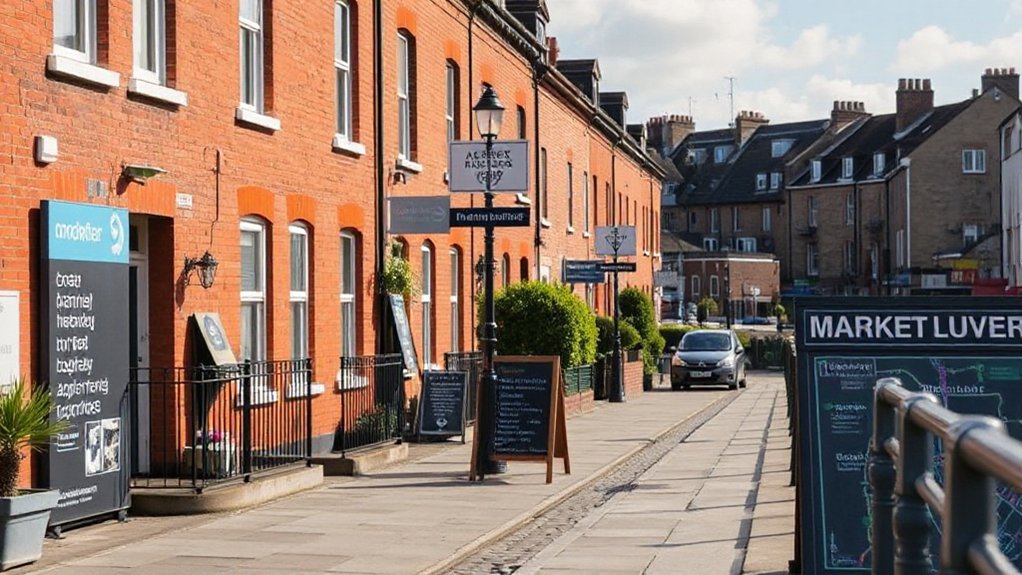
To turn quality-of-life insights into smart buying decisions, start researching your local markets with a structured, data-driven approach. You’ll map fundamentals like price trends, days-on-market, and rent yields, then layer in microdata such as school performance, crime stats, and commute times.
Prioritize sources you trust: official statistics, reputable portals, and local council dashboards. Track Luxury apartments pricing trajectories and vacancy rates across neighborhoods to gauge upside and risk.
Compare historical patterns around major developments and demand shifts, noting how Historical landmarks and protected zones influence resale value and desirability.
Build a decision checklist: budget, preferred boroughs, transport access, and future-planned amenities. Regularly refresh data, set alerts, and validate with market sentiment from trusted local brokers.
Commit to disciplined, evidence-based evaluations.
Financing Moves That Suit First-Time Buyers
Financing for first-time buyers hinges on balancing upfront costs with monthly payments, so start by mapping your total budget, preferred loan types, and eligible schemes.
You’ll compare Mortgage options across fixed, variable, and hybrid terms, weighting rates, fees, and early repayment penalties.
Consider Government-backed schemes if eligible, calculating eligibility thresholds and repayment caps to avoid overextension.
Your Credit score influences both approval odds and rate offers, so identify factors that lift it—on-time payments, low credit utilization, and address stability.
Run scenario analyses: minimum deposits, shared ownership, and matched savings plans, then translate outcomes into monthly commitments you can sustain for 25–35 years.
Track lender requirements, dispute any inaccuracies promptly, and re-rate options as your finances evolve to preserve affordability.
How to Spot and Evaluate Upcoming Development
If you’ve mapped your budget and loan options, next you’ll want a clear view of upcoming developments to gauge long-term value. Look for publicly available masterplans, zoning approvals, and construction timelines from council portals and developer press releases.
Track project density, phasing, and completion dates to estimate impact on housing supply and local prices. Assess accessibility improvements, new transport links, and mixed-use components that support walkability and daily needs.
Check for historical architecture protections and any adaptations that preserve character amid growth. Consider cultural festivals and neighborhood programming as indicators of sustained demand.
Compare pre/post development price trajectories within similar boroughs, and weigh risks like construction disruption and overbuilding. Prioritize projects with transparent reporting, phased delivery, and strong community engagement.
Case Study Snapshots: Typical First-Time Buys by Area
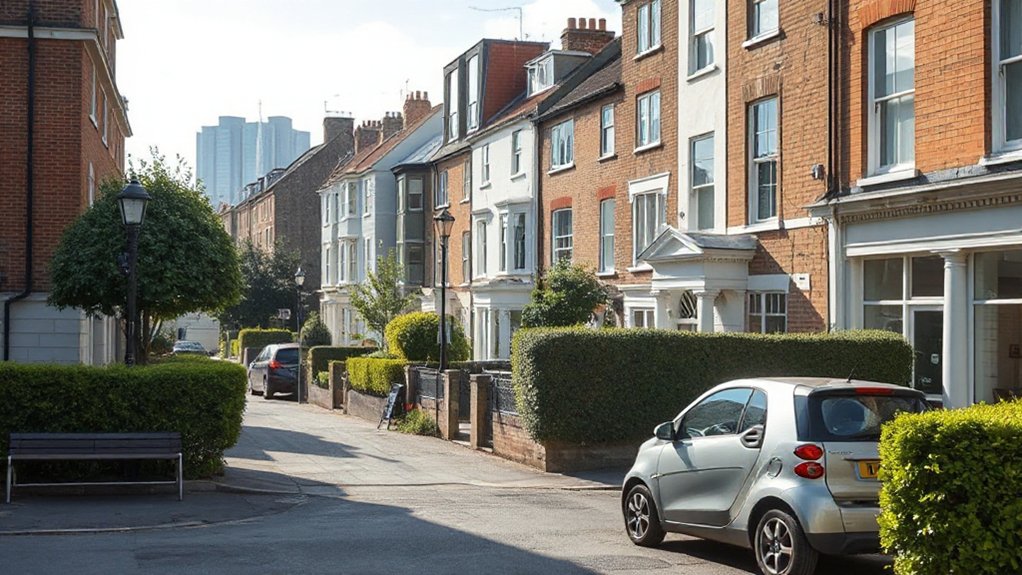
Case Study Snapshots capture how typical first-time buyers differ by London area, revealing practical price ranges, age and type of units, and common financing routes. You’ll see that affordable entry points cluster in outer boroughs, with flats often in the £350k–£550k band, while inner areas push toward £500k–£800k for one-bed units.
Young buyers commonly choose leaseholds with shared ownership sometimes available, and many combine deposits with Help to Buy alternatives where still applicable.
Historical trends show gradual price resilience despite cyclical dips, while Market fluctuations reflect neighborhood regeneration, transport access, and new-build activity.
Across boroughs, you’ll notice younger purchasers prioritizing compact, well-connected options over space, and families gravitating to slightly larger layouts in value-heavy zones.
This snapshot emphasizes timing, location, and financing as key levers.
How to Shortlist Boroughs and Plan Your Next Steps
Start by listing your non-negotiables—budget, commute, schools, and nightlife—and map them to boroughs that meet each target.
Use a simple scoring system to compare options on cost, transport links, and future growth indicators like planned developments and council plans.
Then outline concrete next steps: request recent price data, schedule viewings, and set milestones for narrowing down to 2–3 boroughs.
Shortlist Borough Criteria
To shortlist London boroughs effectively, start by identifying your budget, commute needs, and desired amenities, then map them against key metrics like average house price, transport links, schools, and crime rates.
You’ll compare districts on live data: price bands, weekly peak travel times, and school Ofsted or equivalent ratings, then filter out outliers.
Weight your priorities: affordability, accessibility, and safety trend.
Look for consistency between transport nodes and amenities, such as parks or cultural hubs, to maximise value over time.
Historical architecture and Cultural festivals should inform appeal and resale potential, not just aesthetics.
Create a short list with two to three backups per core requirement, test drive neighborhoods with a weekend visit, and document findings for quick decision-making.
Your shortlist should balance cost, connectivity, and future growth potential.
Next-Step Planning Guide
You’ve identified a solid shortlist; now it’s time to map your next steps with a practical, data-driven plan. Begin by weighting each borough against key metrics: price trajectory, rental yields, transport links, and school quality. Create a simple scoring rubric so you compare apples to apples, not vibes.
Research neighborhood culture to identify where daily life aligns with your lifestyle, then verify with recent census or council data for population stability and growth. Map your commute realistically, using peak and off-peak times, and note local amenities, parks, and healthcare access.
Check landlord-friendly policies and permit requirements if you’re renting or prepping for a future purchase. Finally, set a one-, three-, and six-month checklist to move from shortlist to decision.
Frequently Asked Questions
How Long Does It Take to Complete a London Property Purchase?
In London, completion typically takes 8–12 weeks once you’ve exchange contracts, depending on searches and mortgage timing, and you’ll navigate property law and the mortgage process along the way. Stay organized, communicate milestones, and expect potential delays.
What Grants or Schemes Are Most Helpful for First-Time Buyers Now?
First-time buyers can access incentives like the Help to Buy scheme winding down, but government support programs remain. You’ll find grants and tax relief worth up to several thousands, boosting deposits and mortgage affordability. Use First time buyer incentives strategically.
Which Boroughs Have the Strongest Resale Potential Short-Term?
You’ll find the strongest short-term resale potential in Market growth areas with rising demand, especially Investment hotspots like outer boroughs. Prioritize locations showing price momentum, planned infrastructure, and density increases to maximize quick turnover and appreciation.
How Does Brexit-Era Pricing Affect Current Borough Values?
Brexit-era pricing sent market fluctuations soaring, yet today you’ll see steadier values in some boroughs, revealing selective investment opportunities as you compare data, trends, and rents to gauge resilience and potential gains.
What Hidden Costs Appear After Exchange of Contracts?
Hidden fees pop up after exchange of contracts, and survey costs can surprise you. You’ll typically face conveyancing, mortgage arrangement, stamp duty, and missed-gap insurance fees, but you’ll want to budget for potential hidden fees and survey costs.
Conclusion
You can lock in a great deal by focusing on outer London boroughs with solid regeneration and rental yields. For instance, Barking & Dagenham has seen price growth outpace London’s average by around 20% over five years, signaling future value. Prioritize strong transport links, reputable schools, and upcoming developments to balance costs with long-term gains. With careful research and a clear plan, you’ll turn your first purchase into a stable, appreciating asset.