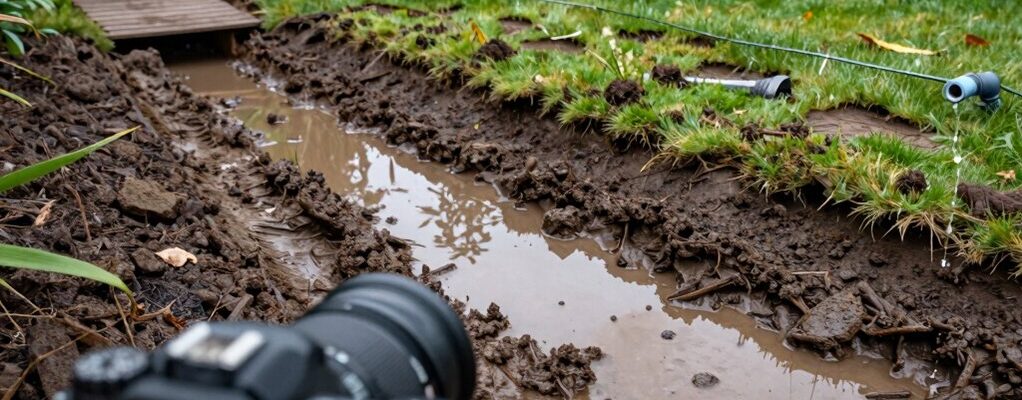
Before you plant, diagnose drainage first. Map where water pools, test soil texture, and check slope away from foundations. Fix grading to keep 2–5% incline, clear outlets, and extend downspouts. Consider perforated pipes, gravel trenches, or swales to move water off surfaces and into proper outlets before landscaping. Don’t ignore compaction or clay pockets—they steal drainage. Quick fixes buy time, but persistent issues demand a structured plan. If you keep at it, you’ll uncover essential steps ahead.
Diagnosing Common Drainage Problems in Yards
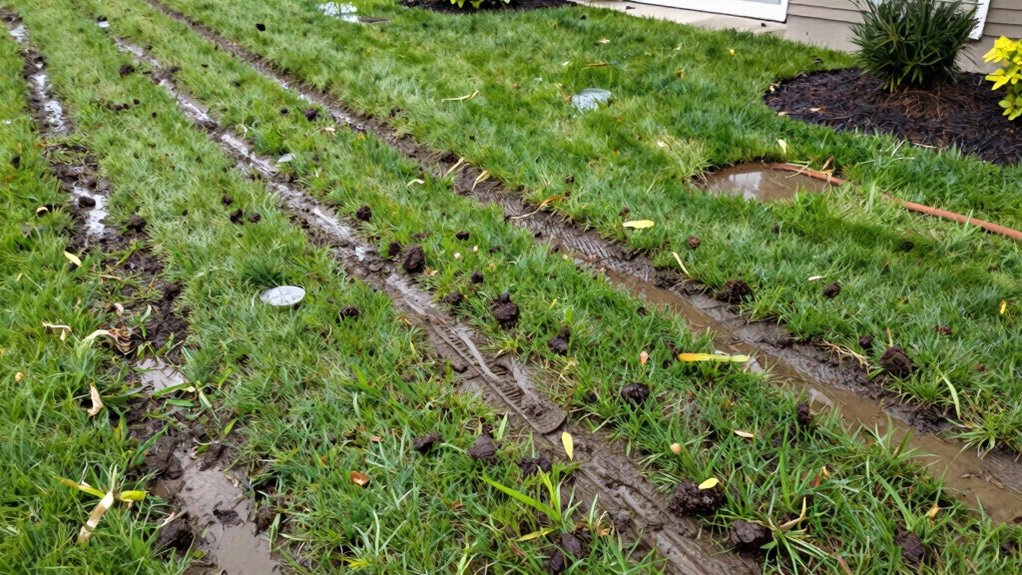
Drainage issues in yards often reveal themselves as pooled water, mushy soil, or persistent soggy areas after rainfall. You’ll start by mapping symptoms: where water collects, how long it stays, and how quickly it drains after a storm.
Inspect grading and slope: ensure the yard directs runoff away from foundations and toward appropriate discharge points; a gentle 2–5% grade is typical.
Check soil texture; clay-heavy soils hold water longer, while sandy soils drain faster, but both can clog with sediment.
Examine surfaces for compaction from foot traffic or equipment, and test for poor infiltration by pouring water and timing absorption.
Look for clogged outlets, damaged gutter downspouts, or blocked French drains.
Document patterns across seasons to distinguish surface issues from subsurface failures.
Prioritize defects that threaten foundations or plant health.
How Water Moves Through Your Soil
Water moves through soil mainly by gravity, capillary action, and ventilation pathways. You’ll see how each mechanism controls saturation and drainage in your yard.
The soil’s porosity, including the size and connectivity of pores, determines how quickly water infiltrates and how long it remains available for plants.
Consider the drainage impact zones where perched water, root zones, and downward flow converge, shaping where drainage improvements will be most effective.
Water Movement Mechanisms
How does water move through your soil, and why does that matter for drainage? Water moves through soil by gravity, capillary action, and transit via pore networks. You’ll see rapid drainage in coarse textures with larger pores, while fine textures slow flow due to smaller pore throats.
In practice, infiltration depends on soil structure, contrast between saturated and unsaturated zones, and matric potential gradients. When you apply irrigation, water enters primary pore pathways or macropores created by roots and soil fauna; gravity drives deep movement, whereas capillarity sustains surface and near-surface wetting.
Saturated hydraulic conductivity dictates how quickly water leaves the root zone after rainfall. Be mindful that abrupt saturation reduces air exchange, increasing anaerobic stress. Calibration of irrigation and grading improves drainage efficiency and protects root health.
Soil Porosity Impact
Porosity directly shapes how quickly and evenly moisture moves through soil. You measure porosity by comparing pore space to solids, not by soil texture alone. Higher porosity soils contain more voids, letting water infiltrate faster yet drain freely, reducing surface runoff.
Lower porosity traps water, creating perched zones and slower percolation that can anchor moisture near roots and encourage anaerobic conditions. You’ll see macropores from roots, worm channels, and coarse aggregates accelerate drainage, while micropores hold small volumes, sustaining brief supply between rains.
Compaction reduces porosity, compressing air and water pathways; tilling can restore structure, but overworking soil causes dispersion and crusting. Organic matter increases pore connectivity, improving infiltration and storage.
For reliable moisture behavior, assess porosity after compaction events and monitor drainage response to rainfall intensities.
Drainage Impact Zones
In soils with varying porosity, drainage impact zones define where and how fast water moves after rainfall. You’ll observe distinct zones: saturated surface runoff, transitional flow, and perched or downward seepage, each governed by pore size distribution and connectivity.
Immediately after rain, coarse layers bleed quickly, creating a rapid influx of water into underlying finer strata, while clay pockets trap moisture and slow drainage. You should map zone boundaries by noting ponding duration, soil texture, and color change with moisture.
Use a moisture meter and observe infiltration rates on slopes versus flat areas to predict sheet flow and subsurface movement. By understanding these zones, you can tailor grading, aeration, and amending strategies for reliable drainage and plant health.
Signs Your Landscape Needs Drainage Fixes
Water pooling, persistent wet spots, or runoff that fails to drain indicate a drainage issue you must address.
Look for soil saturation, where the topsoil stays damp after rain and barely dries, signaling inefficient water removal.
Check gradient and slope cues—shallow or flat areas with little natural drainage tend to collect water and require remediation.
Water Pooling Indicators
Have you noticed pooled water lingering after rainfall or irrigation in low spots of your yard? Water pooling indicators signal drainage issues that can affect root health, soil structure, and turf stability. Look for persistent puddles beyond 24 to 48 hours after rainfall, even during light showers.
Repeated surface depressions that retain moisture or form micro-wetlands indicate inadequate grading or blocked outlets. Observe runoff patterns: water flowing toward foundations, walkways, or low-lying beds, creating erosion ruts. Check infractions like surface film on the water, which may reveal poor infiltration rates.
Note seasonal delays in drying, especially after heavy rain events, suggesting impaired soil permeability. Use a level or laser line to confirm slope proper flow away from structures and toward drainage outlets.
Soil Saturation Signs
Soil saturation signs point to drainage issues beneath the surface, where prolonged湿 or perched water slows root respiration and promotes compaction. When your soil remains visibly wet after rainfall or irrigation, you’ll notice reduced granular porosity, sluggish infiltration, and crusting at the surface that resists drying.
Plant vigor declines, with chlorosis, pale growth, and new shoots stalling in heavy soils. You may detect a sour or anaerobic odor, indicating anaerobic conditions that suppress beneficial microbes.
During cultivation, you’ll feel a sticky, waterlogged texture at shallow depths, and subsoil remains damp well beyond typical drying cycles. Persistent saturation triggers root girdling and increased disease risk.
Verify with soil moisture readings, noting extended field capacity, and plan remediation before landscaping decisions.
Gradient and Slope Clues
Gradient and slope can dictate drainage performance: steeper sections shed water quickly, while low-lying or concave areas collect it, creating pooling that undermines turf and plant health. You’ll notice water lingering after rain, uneven grass growth, and mushy soil beneath high-traffic paths.
Inspect grade changes along the lawn; abrupt depressions indicate passive drainage failures, while continuous low spots suggest poor subsurface flow. Locate runoff paths during a moderate rainfall; if water pools near foundations or bed edges, regrading may be required.
Check soil surface sheen after light showers—persistent sheen signals slow infiltration. Observe runoff concentration along driveways or walkways; install swales, French drains, or regrading to restore slope continuity.
Verify that downstream corrugations or outlet pipes remain unblocked to prevent backflow and erosion.
Quick DIY Solutions for Mild Drainage Issues
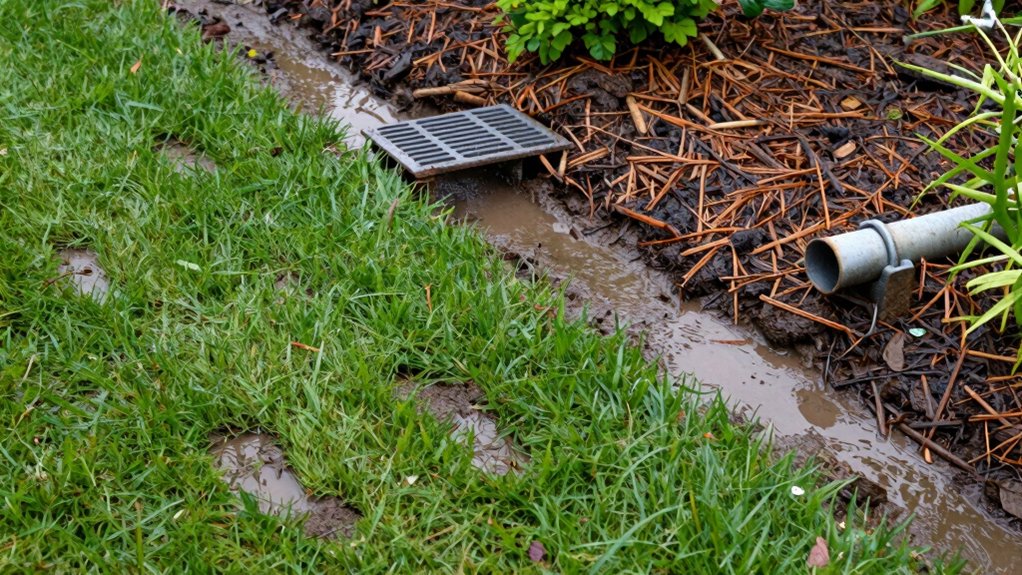
If you’re dealing with mild drainage issues, start with quick, practical fixes that restore flow without major work. Begin by identifying surface obstructions, then clear debris in gutters, trenches, and around outlets. Rake fine debris from swales and redirect shallow runoff toward established paths.
Install temporary grading shifts using sand or soil to encourage parallel flow away from foundations, keeping slopes under a 2% rule where possible. Add infiltration outlets like catch basins with gravel-filled trenches to equalize moisture pockets.
For compact soils, aerate with a fork, loosen surface, and lightly top-dress with compost to improve permeability. Flush downspouts and extend or redirect elbows to continuous drainage paths.
Monitor after rain, adjusting minor grade or outlet positions promptly.
Budget-Friendly Upgrades That Move Water Away
Gearing up for budget-friendly upgrades means focusing on effective, low-cost changes that reliably move water away from foundations. Start with grading adjustments that divert surface runoff at least 6 to 12 inches away from the structure, maintaining a continuous slope.
Add a perimeter trench or French drain where soil permeability is poor, using perforated pipe with filter fabric and crushed stone backfill, then cover with soil and sod.
Install downspout extensions to keep roof drainage clear of walls, and connect them to a splash block or splash garden to reduce erosion.
Use landscape swales to capture sheet flow, ensuring they empty away from the foundation.
Use permeable pavers or gravel for walkways near walls to minimize puddling, while preserving accessibility and maintenance.
Inspect after heavy rain and adjust as needed.
When to Consider Professional Drainage Help
Determining when to hire a drainage professional becomes necessary when DIY measures fail to improve water flow, or when drainage issues recur after a period of improvement.
You should consider pro involvement if ground saturation persists after you’ve attempted grading, surface diversion, and minor trenching. If drainage systems you installed show slow operation, inconsistent results, or frequent clogs, a specialist can diagnose covert problems, such as failing subsoil conditions, improper slope, or buried utilities.
Professionals use specialized equipment to perform hydrostatic tests, soil percolation analysis, and pipe integrity checks, then design targeted solutions.
Expect an assessment that weighs cost, disruption, and long‑term reliability.
Before proceeding, document drainage history, test results, and prior fixes to guide the consultation and avoid redundant work.
Preventing Future Drainage Problems in Landscaping
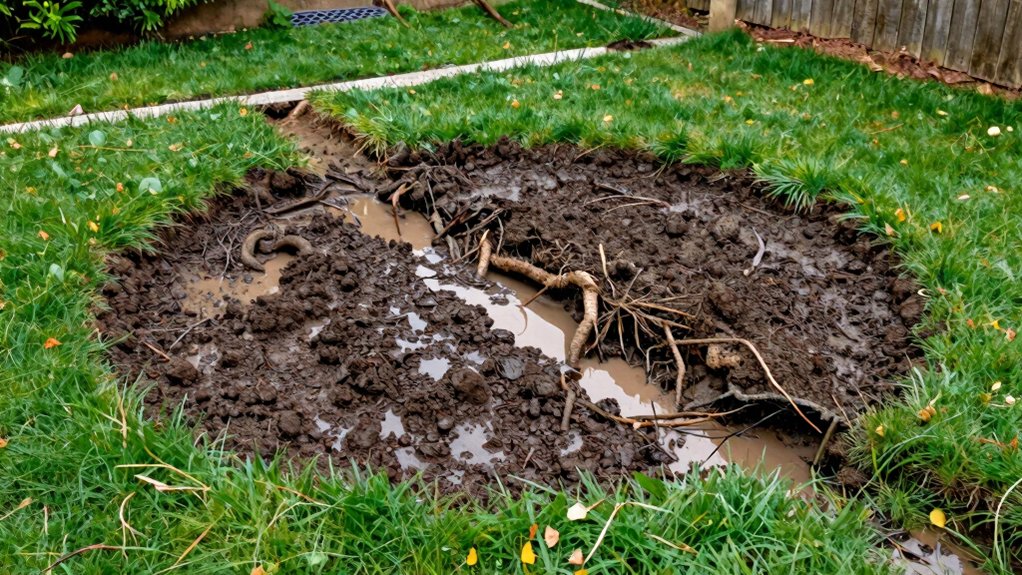
To prevent future drainage problems in landscaping, start with a proactive, site-specific plan that prioritizes drainage priorities, soil health, and long-term stability. Assess existing gradients, runoff paths, and subsoil conditions to define drainage objectives and target performance.
Select appropriate systems—grated swales, French drains, or under-slab perforations—based on soil permeability and anticipated loads. Incorporate soil amendments to improve structure, organic matter, and infiltration rate, then verify with percolation tests.
Design layouts that distribute drainage evenly, avoid concentrating flow, and align with built features to prevent erosion. Implement drainage corridors that double as planting zones, using native species with soil-stabilizing root systems.
Finally, document standards, inspection points, and performance criteria to guide future adjustments and prevent degradation.
Maintenance Practices to Keep Your Yard Dry
Proper maintenance is essential to keep your yard dry after drainage systems are in place. Start with regular inspections of grates, inlets, and outlets, and remove debris before rain events. Schedule seasonal checks for soil moisture, ensuring that nothing blocks vegetation or alters flow paths.
Test your curves, swales, and trenches for sediment buildup; remove sediment promptly to preserve permeability. Verify the integrity of seals and joints in culverts and French drains, replacing damaged components without delay. Maintain outlet cleanouts and ensure downstream basins aren’t overtopped by high water.
Monitor sump pumps for operation, testing backup power. Apply minimal compaction by avoiding heavy traffic on soft areas after rainfall, and reseed exposed zones to prevent erosion. Document findings to guide proactive repairs and long-term performance.
Conclusion
Conclusion: You don’t have to learn, guess, or gamble with soggy yards. By diagnosing drainage, understanding how water moves through soil, and applying practical fixes, you’ll protect plants and foundations while stretching your budget. Treat marginal issues now, not later, and expect clearer, drier lawns with minimal disruption. Think of a well‑planned system like a well‑greased machine—quiet, efficient, and built to last. If in doubt, call in a pro before things get worse.