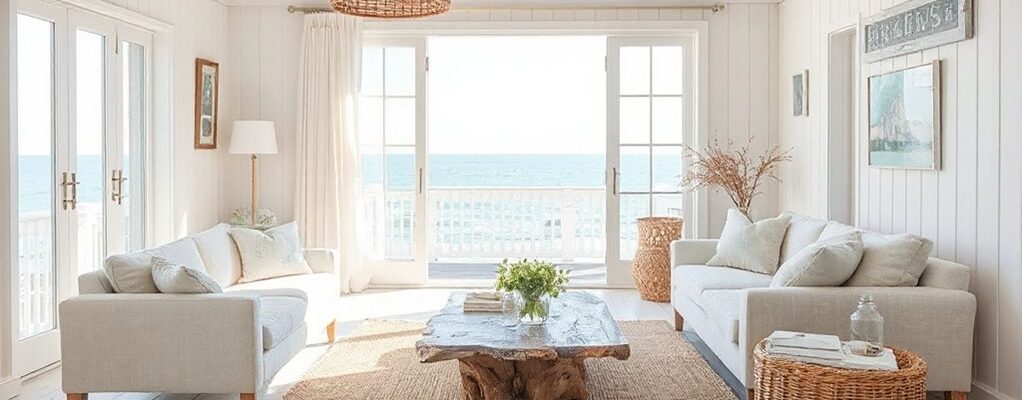
You wonder if a coastal-inspired interior can feel both serene and deeply tactile, and the answer isn’t in bold surfaces but in quiet choices. You’ll blend natural textures, soften your palette, and let light drift through your rooms. Keep nautical hints subtle, layer materials for depth, and invite greenery and art to tell your story. If you seek a space that breathes like the sea, stay with me as we map the easy steps ahead.
Define Your Coastal Concept and Why It Works
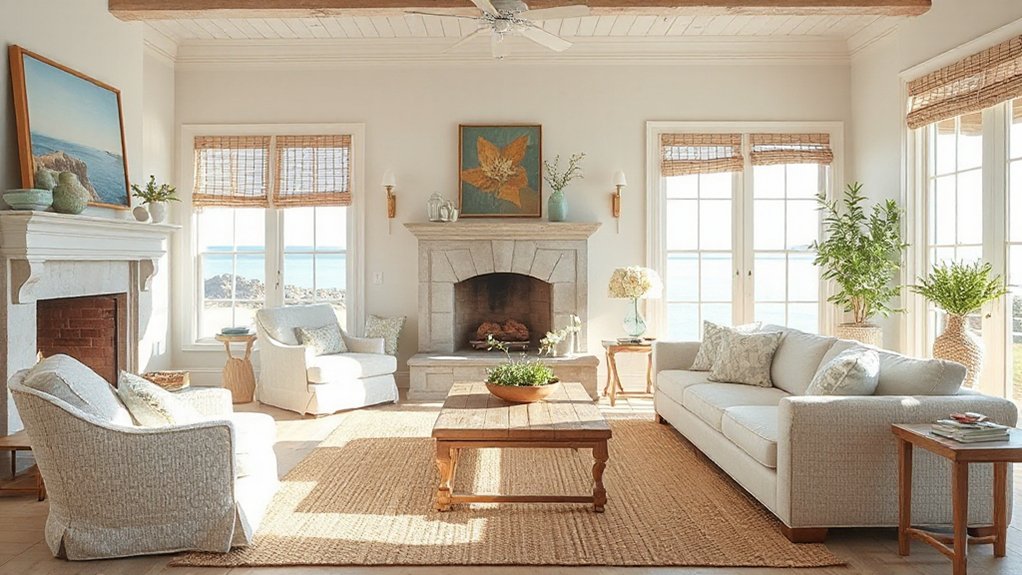
A coastal concept begins with a clear image of where the sea meets your space and what feeling you want to carry through every room. You define a sensory map, then translate it into form: textures, light, scale, and rhythm. Your concept should honor marine motifs and the language of coastal architecture without sacrificing function. Visual focus stays on natural materials—weathered wood, linen, stone—paired with soft, sunlit tones. You want spaces that breathe: calm, organized, with room for driftwood sculptures and sea-glass accents that catch the breeze. The concept guides layout, furniture, and storage choices, ensuring flow from entry to living areas. By anchoring decisions in a single, tangible idea, you create coherence, ease, and a signature coastal experience.
Choose a Soothing Ocean Palette
Choose a soothing ocean palette by anchoring your walls, fabrics, and accents in a few driftwood-muted hues that echo the shoreline. You’ll want colors with blue-gray undertones, warm sand neutrals, and soft seafoam greens that read calm rather than flashy. Limit contrast for a cohesive, restorative vibe, and test swatches in natural light to confirm mood shifts throughout the day. Introduce subtle variation with matte finishes, woven textures, and tactile fabrics that invite touch. Use a restrained palette for larger surfaces, then layer in aquatic motifs—shells, coral silhouettes, and gentle wave patterns—as accents rather than focal points. This approach embodies seaside tranquility, keeping spaces breathable and serene. Your palette should feel timeless, easy to live with, and naturally connected to the sea.
Layer Natural Materials for Texture
Layer natural materials set the scene with tactile contrasts, pairing woven fibers with smooth stone and warm wood for depth. You’ll mix textures—soft hides with crisp ceramics, and airy surfaces with grounded, heavy elements—to add quiet nuance. Let natural pairings, layered textures, and thoughtful light-fiber combos guide the coastal feel from room to room.
Natural Material Pairings
Sea air and sunlight mingle as you layer natural materials for texture, pairing wicker, linen, and driftwood with stone or clay to ground a coastal space. You feel the tactile mix as it travels from table to throw, grounding the room with quiet resilience. Opt for Seaside ceramics to echo shoreline tones, letting their matte glazes contrast with smooth driftwood decor. Balance wicker’s airy weave with sturdy stone, so the room breathes yet remains anchored. Linen brings soft, wrinkled warmth, while terracotta adds warmth and subtle shine. Keep color restrained—beige, sand, and storm-blue—so texture does the talking. Don’t overthink placement; lightweight pieces join heavier anchors, creating rhythm. The result reads calm, coastal, and collected, inviting lingering, barefoot moments.
Texture Through Layers
Have you ever noticed how texture builds a room’s mood without shouting? You layer natural materials to create a calm, tactile rhythm. Start with a foundational surface—washed linen, cotton, or hemp—then add driftwood, jute, or sisal for subtle relief. The goal is textural contrast: smooth ceramic against rough rope, pale wood against sun-warmed brick, matte against a gentle sheen. You mix layered textiles, letting throw blankets, pillows, and curtains speak in varied scales and weaves. Keep the palette cohesive, so each piece reads as part of a single shoreline. Balance softness with structure, inviting lingering touch without clutter. The result feels coastal, serene, and lived-in, as if you’ve gathered textures along a quiet shore.
Light and Fiber Mixes
You’ve built texture with layers; now weave light with your natural materials to amplify that coastal calm. Fiber blends with fiber optics and woven textures to create soft, moodful glows that don’t overwhelm the view. Choose light fixtures that complement driftwood tones and sea-bleached linens, letting the glow bounce across linen, jute, and sisal. Use layered ambient, task, and accent lighting to reveal texture without harsh contrasts. Thin, coastal fixtures—rattan pendants, glass-bead pendants, or metal-soft blends—ease photons through coastal colors. For evenings, slip柔e subtle color shifts from warm to cool with dimmers, avoiding glare on glossy seashell surfaces. Highlight porous materials by placing lights at eye level, so shadows sculpt grain and weave a tactile, serene shoreline in your room.
Use Nautical Accents Sparingly
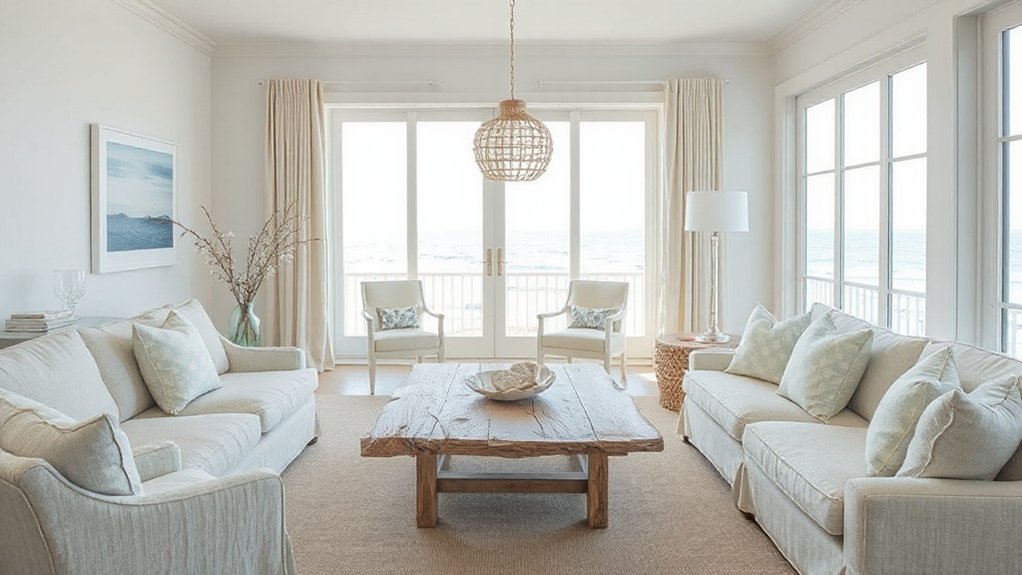
You keep nautical touches small and thoughtful, letting subtle shells, ropes, or brass accents rise with calm ease. Pair balanced vessel accents with quiet, ocean-inspired color schemes to avoid crowding the room. By choosing restraint, you invite texture and light to speak more loudly than any single nautical prop.
Subtle Nautical Touches
Subtle nautical touches can elevate a coastal space without overpowering it. You choose restrained accents that speak softly to the room’s texture and light. Start with small, tactile elements you can feel as you move through the space: a linen throw in sea-salt hues, a woven rope-trim basket, or a ceramic plate with a shallow, tide-washed glaze. Marine motifs appear sparingly, like a single study of shells on a bedside table or a framed print that hints at waves rather than shouting them. Nautical symbols should feel intentional, not thematic twelvefold; a compass-inspired hardware or a driftwood mirror can be quiet anchors. Keep lines clean, surfaces uncluttered, and let the space breathe with gentle, tactile pauses.
Balanced Vessel Accents
Balanced Vessel Accents: place a few well-chosen nautical pieces where they can be noticed without shouting. You choose vessels whose scale feels thoughtful, not heroic, so each piece breathes with the room. Start with a couple of decorative bowls on a low console, their textures catching light and inviting touch. Pair them with one vessel at eye level—something simple, maritime, and restrained—so the eye moves gently around the space. Remember vessel scale: a mix of small, medium, and one larger anchor keeps balance without clutter. Avoid clutter by keeping surfaces clean and deliberate. Let the materials—ceramic glaze, driftwood, linen—tell the coastline story. Sparing decor respects the room, while still giving it a tactile, coastal heartbeat.
Ocean-Inspired Color Schemes
Ocean-inspired color schemes wash the room in a serene, sun-warmed quiet, where soft blues meet sandy beiges and a touch of seafoam green keeps the palette feeling fresh. You feel the momentum of coastal light as you pair crisp whites with weathered textures, letting natural materials breathe. Use muted tones on walls and reserve bolder accents for small, tactile details you can touch and feel. Seaside serenity emerges through gentle contrasts: a driftwood armrest, a linen throw, a ceramic reef-blue vase. Marine motifs appear sparingly, woven into cushions or artwork, so they stay refined rather than overpowering. Balance airy openness with tactile layers, inviting restfulness and clarity as you move through the space.
Maximize Natural Light for an Airy Feel
Light pours in from every window and doorway, turning a room into a softly lit shoreline. You’ll feel the breeze of daylight shaping space, so you choose views over clutter and let the glow guide your mood. In this approach, window treatments become a quiet instrument, not a distraction, and you control balance with linen and sheer textures. You also plan for artificial lighting that complements daylight, so corners stay inviting after sunset.
- Let in morning light with low-profile drapery
- Layer textures for depth without glare
- Use dimmable LEDs to mimic tides
- Align lamps and sconces to emphasize wall textures
Plan a Coastal-Flow Layout for Easy Living
A coastal-flow layout guides traffic softly through the space, so conversations stay casual and effortless. You’ll arrange rooms to minimize crossing paths, placing common zones within arm’s reach of each other for seamless living. Start by anchoring the seating area with a clear focal point, like a window seat or a sunlit vista, so you can drift from conversation to activity without disruption. Choose low-profile, breathable coastal furniture styles that invite touch—linen cushions, rattan frames, pale woods. Circulate around a central plan that keeps dining, lounging, and prep areas visually connected yet distinct. Embrace seaside architecture cues in proportions and scale, ensuring openings feel generous but intimate. This layout supports daily ease, relaxed flow, and quiet coastal serenity throughout the home.
Add Weathered Details Without Clutter
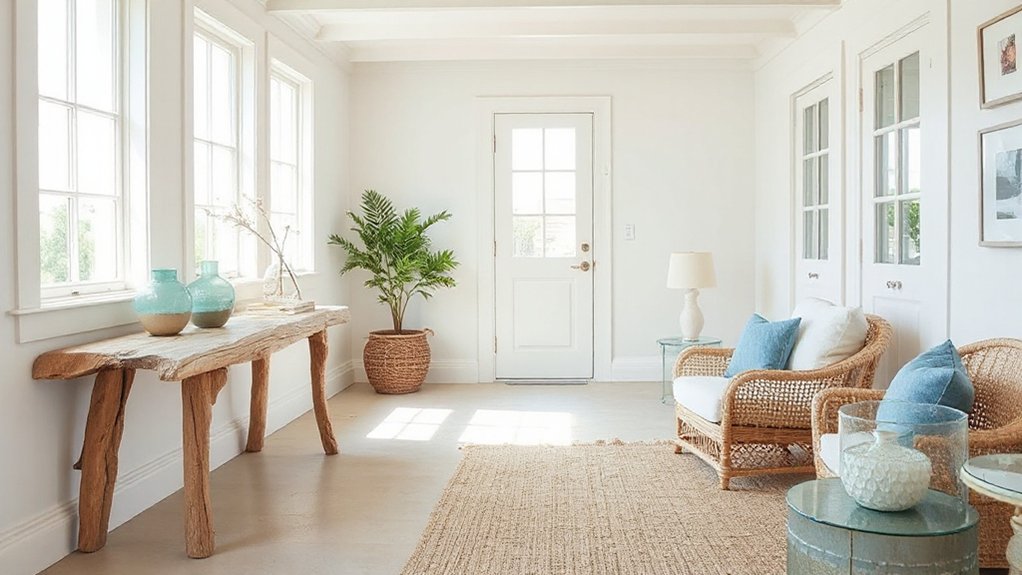
To add weathered details without clutter, choose a few well-loved elements and let them tell the story. You’ll evoke coastlines with subtle textures and softened tones, avoiding distractions. Let weathered furniture and distressed finishes anchor rooms, then pair them with calm fabrics and simple silhouettes. A single trunk, a console, or a bench can carry memories without shouting.
- Select a weathered furniture piece as a focal point
- Use distressed finishes sparingly on trim and hardware
- Layer tactile textiles that echo sea-washed hues
- Keep surfaces clean and open to breathe room
Finish With Plants, Art, and Personal Touches
Finish with plants, art, and personal touches by letting greenery, meaningful objects, and textures curate the room’s mood. You’ll blend indoor succulents with soft coastal textiles, letting gentle greens echo the sea. Choose a few wall mounted sculptures to punctuate clean walls, avoiding overcrowding. Let art pieces reflect your travels or favorite shells, and keep frames light to preserve airiness. Introduce coastal textures—woven baskets, linen cushions, driftwood accents—that invite touch without shouting. Place a single, meaningful keepsake on a shelf for balance. Layer subtle scents, like sea-grass candles, to anchor the ambiance. Maintain a restrained palette of sand, seafoam, and navy to reinforce serenity. In every choice, prefer restraint over clutter, so the space remains calm, tactile, and inviting.
Frequently Asked Questions
How Can I Balance Color With Durability in Coastal Interiors?
Balance color with durability by selecting a calm color palette and durable finishes. You’ll layer coastal textures, and use matte or satin paint finishes. Choose washable, UV-resistant fabrics and keep color palette cohesive for serene, tactile spaces.
What Ceiling Treatments Suit a Coastal Vibe Without Clutter?
A simple beadboard ceiling delivers a beach-inspired vibe without clutter, you’ll feel serene and tactile; like a cottage after a storm, you savor beach inspired lighting and driftwood accents, creating calm, luminous ceilings you’ll love.
Which Coastal Details Scale Best in Small Rooms?
You’ll scale coastal details in small rooms by choosing beach inspired accessories sparingly, and you’ll lean on one statement piece. Pair with seaside color palettes, simple textures, and soft light to keep the space serene and tactile.
How Can I Avoid Over-Using Nautical Motifs?
You avoid over-using nautical motifs by mixing sea glass and driftwood accents sparingly, letting texture guide calm spaces. Coincidence nudges your eye: a weathered shell motif echoes sea glass, while driftwood accents quietly parametrize the vibe. Serene, tactile, coastal.
What Faux or Synthetic Textures Replicate Natural Materials Effectively?
You’ll find faux textures like layered linen, sisal, and driftwood composites resemble nature’s grain; they deliver textural contrast while maintaining material authenticity, so your space feels coastal, serene, and tactile without shouting replication.
Conclusion
You’re creating a coastal-inspired interior that feels calm, airy, and inviting. If you worry it’ll read as “theme-y,” remember: restraint is your sea breeze—soft colors, clean lines, and a few well-placed textures do the talking. Lean into natural light, tactile fabrics, and a simple layout, then finish with personal art and greenery. When you trust the process, the coast comes alive—serene, tactile, and utterly you.