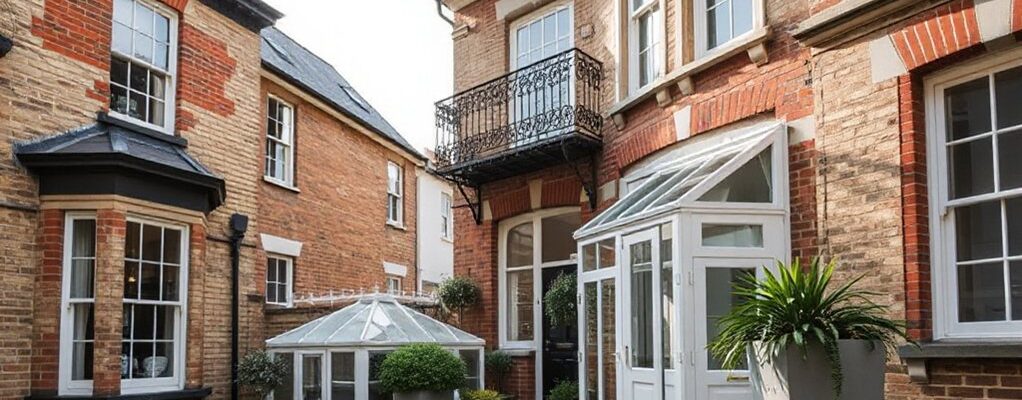
Like a quiet predecessor awaiting its cue, a Victorian terrace asks you to balance memory and function. You’ll assess original drawings, plasterwork, and sash windows before any change, then plan light and flow with restraint. Subtle updates—discreet cooling, hidden controls, period-appropriate finishes—should respect proportion and patina. The challenge isn’t just what to add, but how to invite modernization without erasing character, leaving a path you’ll want to follow further.
Assessing Victorian Terrace Character Before Updates
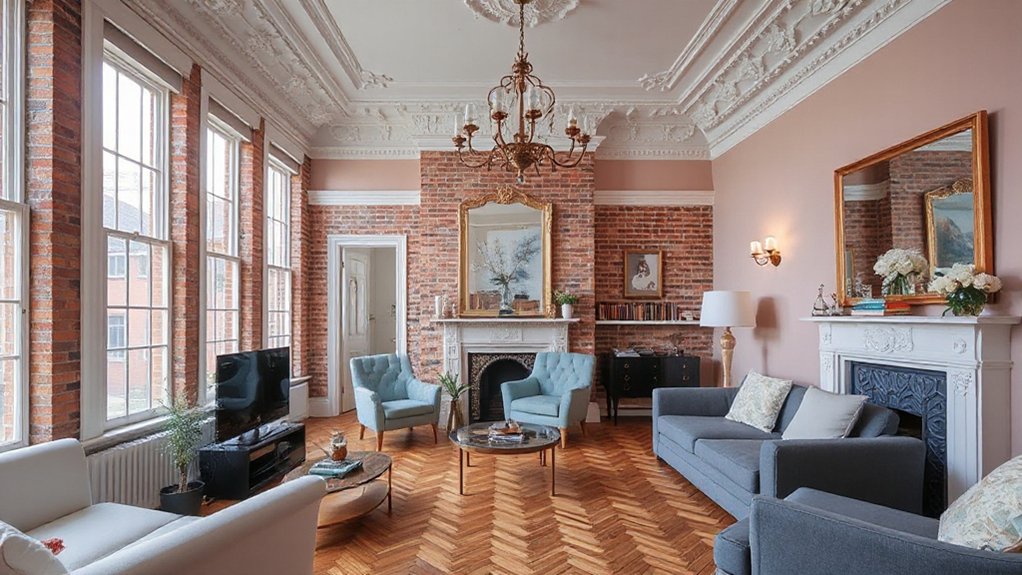
Before you plan any update, take stock of the terrace’s existing character as a baseline for respect and coherence. You’ll evaluate structural rhythm, material palettes, and detailing that define Victorian architecture, noting how brickwork, sash windows, cornices, and decorative ironwork establish a coherent street presence.
Assess spatial logic: room proportions, ceiling heights, and party-wall relationships that influence circulation and light. Identify original constraints, such as fireplace alignments, timber framing, and plaster finishes, to guide compatible interventions.
Document persistently, distinguishing features worthy of preservation from retrofit candidates. Frame decisions within Period preservation principles, ensuring new elements support, not supplant, inherited character.
This careful audit yields a technical brief that anchors modernisation in authenticity, minimizing visual disruption while enabling purposeful, durable improvements.
Layout Tweaks to Maximize Light While Preserving Original Features
You can increase daylight without sacrificing historic character by focusing on strategic layout tweaks that preserve key features.
Balance larger window opportunities with careful partitioning so original plasterwork, cornices, and timber alignments remain visible and intact.
This approach foregrounds light, while maintaining the cadence and charm that define a Victorian terrace.
Maximizing Light, Preserving Features
To maximize daylight while preserving original features, focus on layout tweaks that minimize obstruction and draw light deeper into the home. You align circulation with glass-fronted connections, using pocket doors or unobtrusive partitions that vanish at open time, so rooms breathe without breaking line and form.
Avoid bulky soffits; recess lighting and carefully chosen fixtures illuminate period spaces without shouting. Emphasize window work: slim frames, high transoms, and unobtrusive glazing to invite external brightness inward.
Choose period appropriate lighting that complements decorative moldings, casting even, soft light that respects the casing and cornice. Preserve existing wall depth and plaster texture, deploying mirrors and light-reflective paint sparingly to amplify daylight.
This disciplined approach yields tactile clarity, measured elegance, and a coherent sense of Victorian restraint.
Layout Adjustments for Original Charm
Careful layout tweaks release daylight without eroding original charm. You approach the plan with precision, aligning openings to enhance circulation while preserving historic constraints.
Start by evaluating room proportions and sightlines; small shifts can illuminate corners without exposing hidden fabric. Use narrow, high-contrast reveals around doors to emphasize original timber without overpowering the space.
Respect roof and ceiling lines when considering skylights, ensuring they sit within their structural bays to avoid compromising Victorian architecture integrity. Where plaster reveals or cornices exist, keep openings aligned to their rhythms, not their fashion.
Choose lightweight partitions that read as temporary, so you retain period authenticity while enabling flexible use. Favor intent over imitation; modern light respects tradition, and tradition defends modern daylight.
Finishes and Materials That Honor Victorian Charm
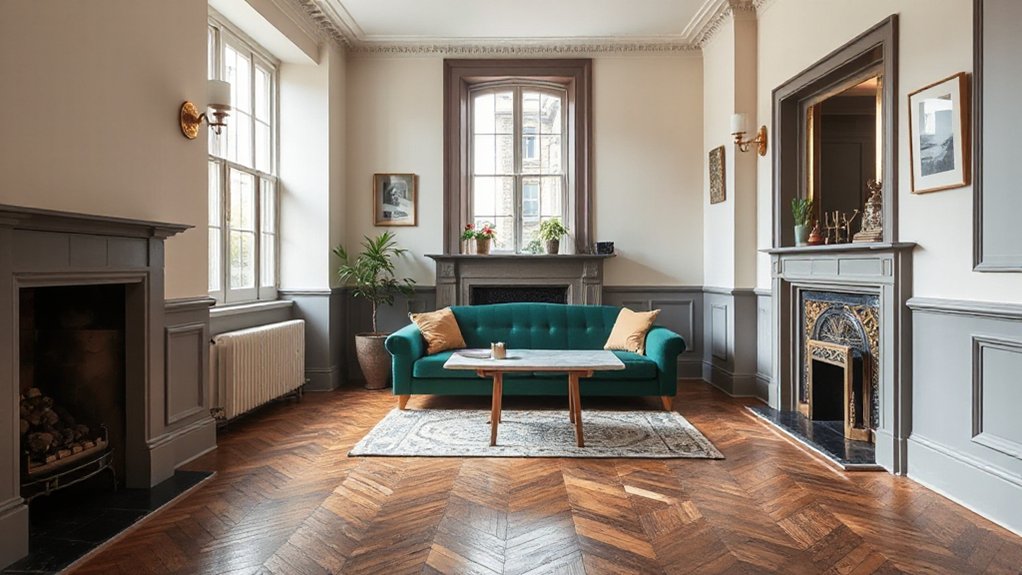
Victorian charm isn’t about imitation; it’s about selecting finishes and materials that echo the era’s quality while serving today’s standards. You choose surface materials and textures that respect proportion, scale, and patina, avoiding obvious faddish contrasts.
Opt for timber floors with a restrained finish, crisp plaster walls, and period-accurate cornices where appropriate, ensuring joints and progressions feel deliberate. When selecting fixtures and fittings, prioritize craftsmanship and provenance, favoring period appropriate fixtures that reveal authentic detailing without overstating the look.
Colour palettes should be muted, with depth added through natural stone, brick, and tile work. Prioritize durability, ease of maintenance, and compatibility with modern systems.
This approach honors Victorian craftsmanship while delivering comfort, cohesion, and timeless authenticity.
Subtle Energy Upgrades for Authentic Interiors
Modern interiors don’t require modernist rigidity to feel new; subtle energy upgrades can align with Victorian restraint while supporting contemporary comfort. You approach authenticity through intention, selecting fixtures that read as period lighting without shouting novelty.
Prioritize low-profile controls, dimmable LEDs, and color temperatures that mimic warm gaslight, so the ambiance remains legible to the era’s proportions. Integrate decorative moldings with hidden wiring and soft, indirect layers to preserve rhythm and restraint.
Use acoustic interventions that aren’t visible as modern add-ons, ensuring room acoustics stay balanced alongside visuals. Favor materials and finishes that reflect the era’s tactility, avoiding stark contrasts.
The goal is a coherent narrative where subtle energy choices reinforce period charm while granting modern ease.
Heating, Cooling, and Comfort That Stay True to the Look
You’ll explore quiet heat options and how they integrate with period architecture, ensuring warmth without sacrificing the exterior or interior rhythm.
Quiet Heat Options
Quiet heat options balance comfort with period integrity by prioritizing low-noise, unobtrusive systems that respect sightlines and textures. You’ll select equipment with slim profiles, hidden duct routes, and compact radiators that appear as intended architectural elements rather than novelties.
Smart thermostats integrate discreetly, offering precise control without intrusive displays. Zoned heating lets you tailor temperatures room by room, reducing waste and maintaining harmony with old joinery and plasterwork.
Look for radiant panels and low-velocity systems that minimize air disturbance and noise, preserving ceiling lines and wall textures. When planning, site equipment to minimize visual impact and align with existing architectural rhythms.
Maintenance remains straightforward, with accessible service points and clear labeling to sustain quiet performance without compromising period charm.
Efficient Climate Comfort
Efficient climate comfort blends steady warmth with cooling that respects the building’s bones, delivering precise control without compromising Victorian character. You’ll implement systems that respond to occupancy and weather without visible disruption, prioritizing the house’s proportions and joinery.
A smart thermostat centralizes regulation, allowing you to fine‑tune temperatures while maintaining a discreet surface footprint. Pair it with well‑insulated radiators or underfloor circuits that distribute heat evenly, avoiding drafts and fluctuating spots.
For cooling, use discreet ducting or painless alternative strategies that align with the fabric, such as ceiling fans aligned with ceiling medievals or window berms that don’t betray the era.
Solar panels near the roofline provide renewable energy, reducing running costs without dominating the skyline or interior style.
Integrating Modern Tech With Site-Sensitive Design
Integrating modern tech with site-sensitive design means embedding smart systems in a way that respects the Victorian terrace’s proportions, materials, and light. You balance cables and devices with plasterwork and timber, ensuring discreteness over display.
Prioritize low-profile hardware, recessed fittings, and concealed conduits that won’t compromise wall rhythms or natural textures. Aim for Digital integration that serves comfort without dominant presence, letting light and air remain the primary characters.
Spatial planning should sequence zones so sensors don’t intrude on ceremonial views or gallery-like ceilings. Choose scalable, interoperable platforms for a Smart home that can evolve with needs while preserving character.
Document the rationale for placements to guide future adjustments, keeping service runs minimal and recoverable. In short, integrate thoughtfully, not ostentatiously.
Planning, Budgeting, and Common Renovation Pitfalls
Planning a Victorian terrace renovation requires disciplined budgeting and risk awareness from the outset: establish a clear scope, assign responsibilities, and lock in contingencies before any materials ship or trades begin.
You build a framework for historic preservation through disciplined budget planning, aligning approvals, permits, and procurement with sensory restraint. Track costs by category—structure, services, finishes—and forecast contingencies for unseen discoveries, like fabric deterioration or concealed framing.
Prioritize milestones, define acceptance criteria, and document changes to avoid scope creep. Anticipate lead times, warranty clauses, and contractor qualifications to reduce friction during execution.
Revisit the budget after design decisions, not upon completion. Learn from past renovations, but adapt to your site’s nuance, maintaining period integrity while embracing modern reliability and energy efficiency.
Frequently Asked Questions
How Can I Preserve Original Timber When Replacing Floors?
You preserve original timber by selecting matching species and grades, then install limited-gap boards using traditional joinery. Use compatible finishes, avoid over-sanding, and document restorations. Restoration techniques guide your choice; Material preservation anchors authenticity throughout the project.
Which Period-Accurate Fixtures Suit a Compact Terrace?
You step into a story where a tiny stage glows with Victorian lighting, curtains drawn by period-appropriate wallpapers, and you choose hexagonal brass fixtures, compact chandeliers, columned sconces, maintaining proportion and graceful restraint for your terrace.
Are There Hidden Structural Risks When Removing Walls?
Yes—you should anticipate hidden load bearing walls and potential unexpected foundation issues when removing walls, requiring careful assessment. You’ll need structural calculations, temporary supports, and prudent sequencing to preserve stability while respecting the terrace’s historic integrity.
What Are Low-Odor Finishes for Victorian Interiors?
“Like a quiet heartbeat, you choose low-odor options.” You’ll use eco friendly paints and natural sealants, ensuring minimal emissions while preserving shine; these materials meet standards, reduce scent, and respect historic patina through technically restrained, contextually reverent application.
How Do I Source Authentic Period-Accurate Hardware?
You source authentic period-accurate hardware by prioritizing antique reproduction sellers and reputable restoration studios, verifying provenance, and inspecting maker marks; pursue hardware restoration specialists for functional care, then integrate discreet period-appropriate pieces that enhance architectural authenticity.
Conclusion
You’ve balanced old and new with restraint, preserving the terrace’s soul while adding quiet comforts. With careful detailing, you’ll enhance light, warmth, and practicality without erasing character. Think of your home as a well-tuned instrument: every note—materials, scale, and finish—rings true, harmonizing the past and present. Maintain patina, respect proportion, and let discreet tech fade into the fabric. The result is a timeless chorus, resilient and refined, that ages gracefully with each season.