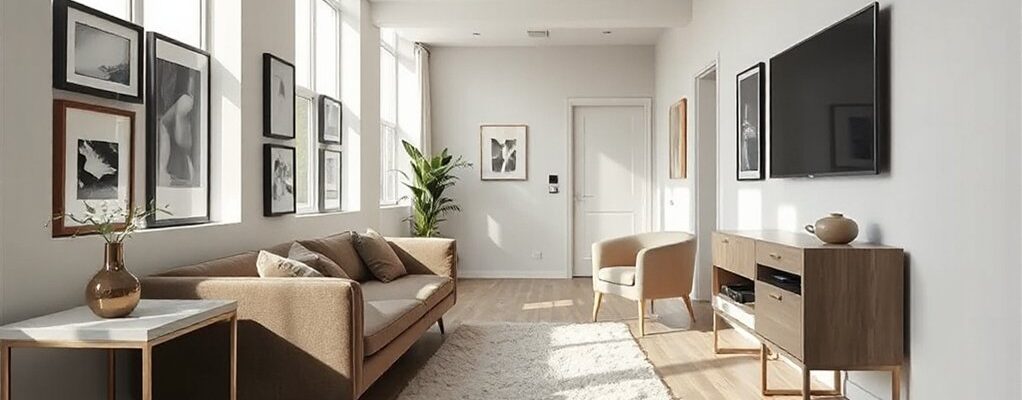
You’ll notice a coincidence: a narrow room can feel wider when you treat it like a sequence of well-defined steps. Start by zoning for living, dining, and circulation, then pick slim, proportionate furniture that fits without crowding. Use light colors and mirrors to bounce daylight, layer in practical storage, and choose textures that add warmth. Keep an eye on flow and balance, so the space feels inviting rather than cluttered—and you’ll see how simple tweaks *release* a surprisingly open vibe. Ready to map it out?
Diagnose Your Narrow Living Room: Identify Goals and Pain Points
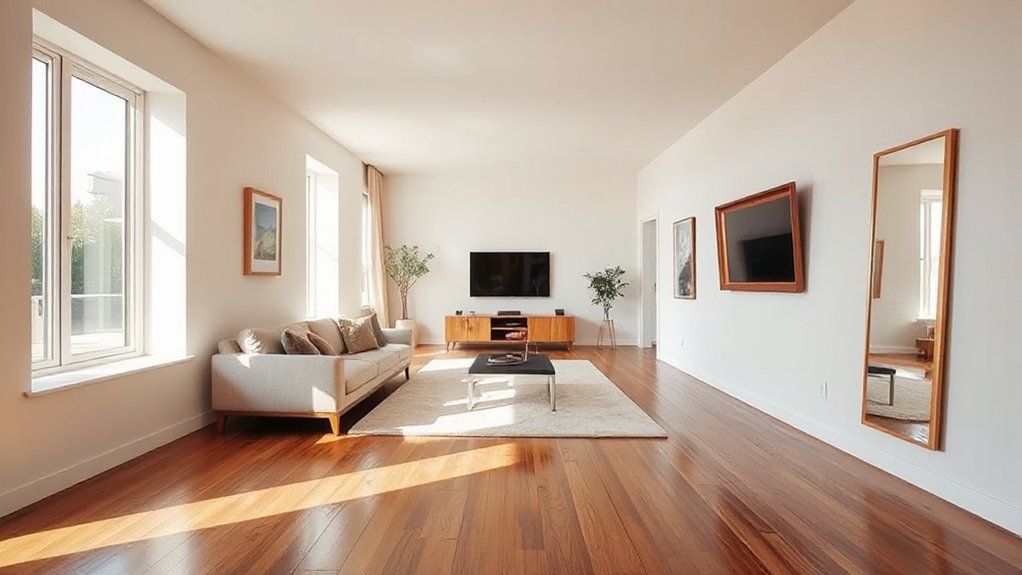
Start by pinpointing what you want from the space and where it’s falling short. You’ll map goals clearly: seating comfort, flow, and visual balance in a narrow footprint. Identify pain points—awkward sightlines, crowding, glare, and uneven lighting. Use color psychology to shape mood: cool neutrals can expand; bold accents add energy without overwhelming. Assess furniture ergonomics first: sofa and chairs should support you without forcing awkward angles, and every surface should be reachable without stretching. Measure clearance around each piece to maintain circulation. Note zones for TV, reading, and conversation, ensuring access aligns with daily routines. Then prioritize changes that deliver the most impact with minimal clutter, focusing on proportional scales, harmonious contrasts, and practical, repeatable design rules.
Zone for Function: Create Clear Living, Dining, and Circulation Areas
To create clear living, dining, and circulation zones, start by defining distinct footprints within the room: a comfortable seating cluster, a dining area, and a clear path that ties them together. Position the sofa and chairs to face a focal point, keeping traffic flows unobstructed. A slim console or cabinet can delineate the dining zone without blocking sight lines. Use color coordination to unify zones—select a cohesive palette and repeat accents across furniture, textiles, and art. Choose a dining table that feels proportionate to the seating area, and keep the circulation path at least 36 inches wide for easy movement. Fine-tune Furniture arrangement so each zone serves its function while maintaining an open, breathable feel.
Choose Proportional Furniture for a Narrow Space
Choosing furniture that fits a narrow space hinges on scale, placement, and visual balance. You’ll create flow by selecting pieces that respect the room’s depth, not crowding sightlines. Proportional furniture feels intentional, not squeezed. Use carefully sized sofas and chairs, short-profile tables, and compact media consoles to preserve width and movement.
- Align seating with wall length to maintain rhythm.
- Pair low, slim profiles with light textiles for airiness.
- Center coffee tables to maintain balance without blocking traffic.
- Choose multipurpose pieces to reduce clutter and maximize floor space.
Remember: Furniture placement and window treatments shape the perceived width. Keep pathways clear, and let windows breathe to enhance proportion.
Color Strategies to Visually Widen a Narrow Living Room
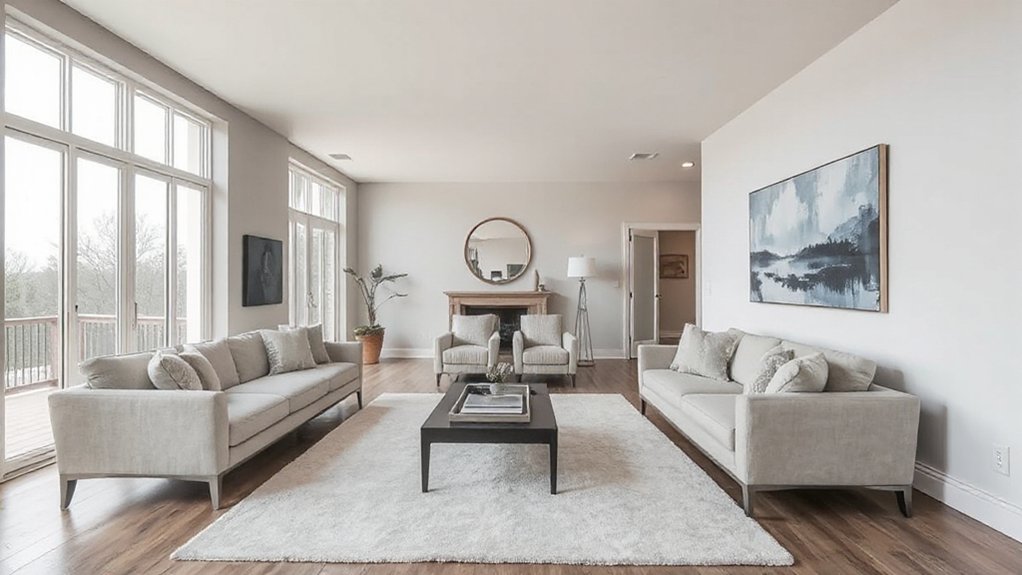
To widen a narrow living room, lean on light-reflecting palettes and strategic accent walls that expand visual depth. Start with airy neutrals across walls and ceilings to bounce light, then introduce a monochrome accent wall to draw the eye outward. Use subtle, high-contrast details and minimal furniture to reinforce the sense of openness without clutter.
Light Reflecting Palettes
Light- reflecting palettes use pale neutrals and bright accents to bounce light around a narrow living room, making the space feel wider and more open. You’ll create an ambient glow by pairing soft whites with warm beiges and adding luminous accents through glass, metallics, or glossy surfaces. Use these steps:
- Choose a base of pale neutrals for walls and large furniture.
- Integrate bright, sparse accents to prevent visual clutter.
- Opt for reflective textures—glass, lacquer, or polished wood.
- Position light sources at multiple heights to maximize bounce.
This approach keeps the room feel airy, organized, and purposeful, guiding the eye outward rather than constricting it. The result is a visually expansive, inviting space with a refined, modern edge.
Monochrome Accent Walls
Monochrome accent walls can visually widen a narrow living room by layering a single, bold shade across key surfaces while keeping adjacent neutrals light and uncluttered. You’ll apply one saturated tone to a main wall or fireplace surround, then suspend the rest in softer neutrals to create depth without crowding the space. Choose a hue with cool undertones to pull light toward the center and reflect natural daylight. Maintain consistent finishes—matte walls, satin trim—to avoid busy contrasts. Monochrome color schemes work best when texture and scale support the look: add subtle patterns in textiles, use glass or metal accents, and keep furniture streamlined. Result: a cohesive, expansive feel that feels deliberate, modern, and effortlessly coordinated.
Light First: Layered Lighting to Elongate and Welcome
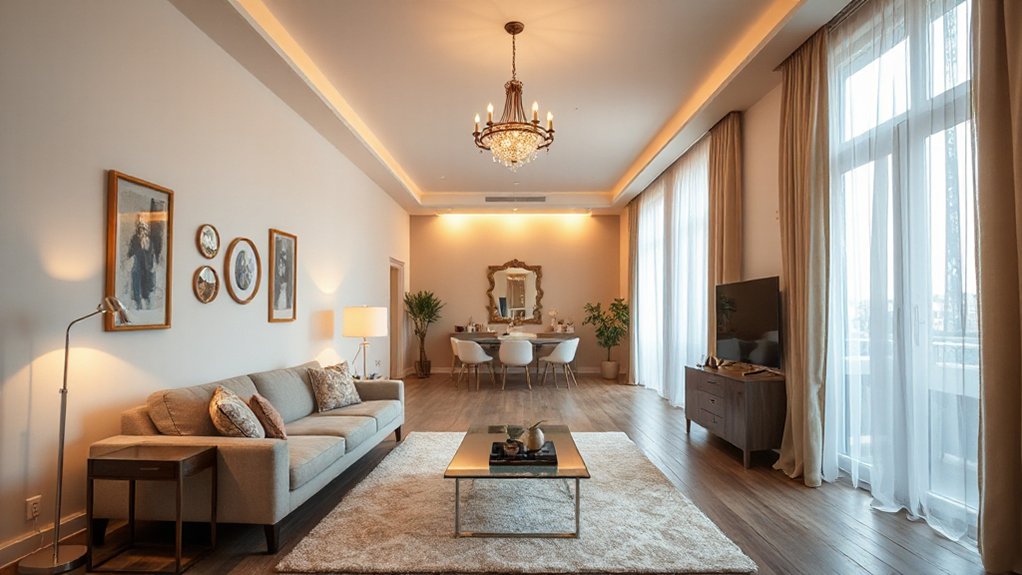
Layering lighting starts by drawing eyes along the space: place a bright ceiling light as your base, then add task lamps near seating and subtle wall washes to broaden the room’s perceived depth. Ambient glow from indirect sources smooths the progression between zones, while task illumination finesses reading and conversations without clutter.
- Align ceiling focal with seating for balanced scale.
- Place task illumination where you sit, read, or work.
- Use wall washes to extend depth without overpowering.
- Layer dimmers to refine mood from bright to intimate.
Using Mirrors and Reflective Surfaces for Depth
Mirrors and reflective surfaces amplify a narrow living room by visually extending the walls and bouncing light to soften tight corners. You place a tall, slender mirror opposite windows to double daylight without crowding floor space. Choose antique frames for character, then pair with simple, clean glass to avoid busy borders that read heavy. Scatter metallic finishes through small decorative elements—lamp bases, picture rails, or a coffee table edge—to catch and refract glow. Opt for recessed or frameless options to minimize visual weight. Use mirrored backs on cabinets or a console to create depth and surprise from different angles. Maintain symmetry around seating to enhance balance, and avoid over-cluttering reflective surfaces that can echo clutter. Subtle, intentional reflections keep movement fluid and space airy.
Layout Patterns That Promote Flow Without Crowding
Layout patterns that promote flow without crowding start with clear sightlines and purposeful spacing. You’ll optimize an open plan by aligning furniture to create gentle, navigable paths, not clusters. Focus on scale, proportion, and purpose—each piece earns its place.
- Open plan zoning: define zones with low-profile furniture and area rugs that guide movement without blocking it.
- Linear layouts: position sofas and consoles along walls to keep the center open, widening perception.
- Island seating: use a narrow, movable focal point that facilitates conversation without crowding.
- Funnel walks: arrange furniture to subtly direct foot traffic toward natural exits and entries.
In this approach, furniture arrangement becomes a tool for clarity, making a long, narrow living room feel spacious and intentional.
Layer Textures and Materials for Warmth and Comfort
Textures and materials are your instant mood boosters; start by mixing tactile surfaces that invite touch—think soft textiles, rugged natural fibers, and gleaming surfaces—so the room feels layered and inviting. Begin with a neutral base and add contrast through textile layering: a plush rug, velvet cushions, and linen drapes create depth without crowding the floor plan. Pair warm woods with cool metals or glass to balance warmth with light reflection. Use material combinations to cue zones: a fabric-upholstered sofa anchors seating; leather accents add character; ceramic or stone accessories ground the visuals. Keep color restrained, letting textures lead. Layered textiles should repeat subtly across furnishings for cohesion, ensuring scale aligns with the room’s narrow proportions. This approach delivers warmth, texture, and timeless polish.
Storage Solutions That Preserve Floor Space
Think vertically with slim profile storage that tucks neatly along walls without stealing square footage. Pair wall-mounted organizers with a clean, layered arrangement to keep essentials accessible yet out of the way. This approach preserves floor space while preserving visual openness and flow.
Slim Profile Storage
Slim profile storage frees up precious floor space without sacrificing function. You’ll gain room with compact shelving that tucks slimly into corners and behind furniture, maintaining flow while boosting capacity. Hidden compartments hide clutter, letting you stash essentials out of sight without sacrificing accessibility. Choose pieces that double as surfaces—think a narrow console with a lift-top or a slim ottoman with a hinged lid—so every inch earns purpose. Keep lines clean and hardware minimal to preserve the airy feel. Use these options to create a cohesive, multi-use setup:
- Narrow bookshelves that reach the ceiling for vertical storage
- Coffee tables with built-in drawers and hidden compartments
- Wall-thin cabinets positioned along perimeters
- Benches and ottomans with concealed under-seat storage
Wall-Mounted Organizers
Wall-mounted organizers punch above their size, keeping floors clear while you optimize every inch of wall space. You transform a narrow room by choosing modular units that align with your wall angles and traffic flow. Start with a slim, vertical rack near seating to hold magazines, remotes, and chargers, freeing surface clutter. Add shallow cubbies at eye level for quick-grab items, then install a magnetic strip to corral knives, scissors, or tools in a kitchenette nook. Use labeled bins for small collectibles, so you maintain a tidy seam between decor and function. This approach strengthens wall organization while offering flexible storage options that adapt as needs change. Keep lines clean, mounts secure, and avoid overstuffing. Storage options stay practical, not crowded.
Finishing Touches: Art, Rugs, and Softening Details
Art, rugs, and softening details pull the room together by adding color, texture, and warmth without crowding the doorway or interrupting sightlines. You’ll guide the eye with intentional art placement and select soft furnishings that echo the palette and scale of furniture, avoiding clutter.
- Align artwork at eye level and spread pieces across walls to create a balanced rhythm without overloading narrow walls.
- Choose area rugs that define seating zones and extend under key furniture for cohesion.
- Layer textiles—throws, cushions, and drapery—in varying textures to soften angles and soften acoustics.
- Opt for sleek frames and minimal motifs to keep sightlines clear while adding visual interest.
Frequently Asked Questions
How Can I Make a Small Entry Feel Welcoming?
Add warm entrance lighting and welcoming accents, and you’ll feel instantly greeted. Place a compact console, a framed mirror, and soft rugs along the path; use a lamp, a vase, and a 실행able tray to organize.
What Color Schemes Help Hide Clutter Visually?
Color illusions and visual masking help hide clutter; you choose soft neutrals with deeper accents, keep lines clean, and group storage visually. You’ll create calm, spacious feel while your eyes skim over surfaces instead of mess.
Can I Rearrange Doors or Windows for Better Flow?
You can’t practically rearrange doors or windows yourself; instead, optimize flow with door placement and window positioning by widening sightlines, guiding traffic, and placing furniture to channel circulation smoothly. Use rugs and lighting to emphasize intended pathways.
How Many Seating Pieces Won’T Crowd a Hallway?
You can fit two seating pieces without crowding the hall—ideally a sectional sofa and a compact chair, anchored by area rugs. Sectional sofas guide flow like arrows, while rugs create visual paths through the room’s narrow corridor.
Which Textures Add Coziness Without Shrinking Space?
Textured throws and plush rugs add coziness without shrinking space; you’ll feel warmer, layered, and grounded. You pair them strategically, choose light neutrals, and keep textures subtle, crisp, and visually expansive for a polished, practical look.
Conclusion
You’ll feel first-hand harmony as you harmonize height, hue, and hush. Plan, place, and pace with purpose, prioritizing proportion and pathways. Layer light, lean into mirrors, and let color cling to walls to widen your world. Zone with intent, store smartly, and sprinkle subtle textures to soften and unify. Choose art that elevates atmosphere, rugs that define routes, and textiles that tempt touch. With thoughtful steps, your slender space becomes welcoming, wide, and wonderfullyWin-win.