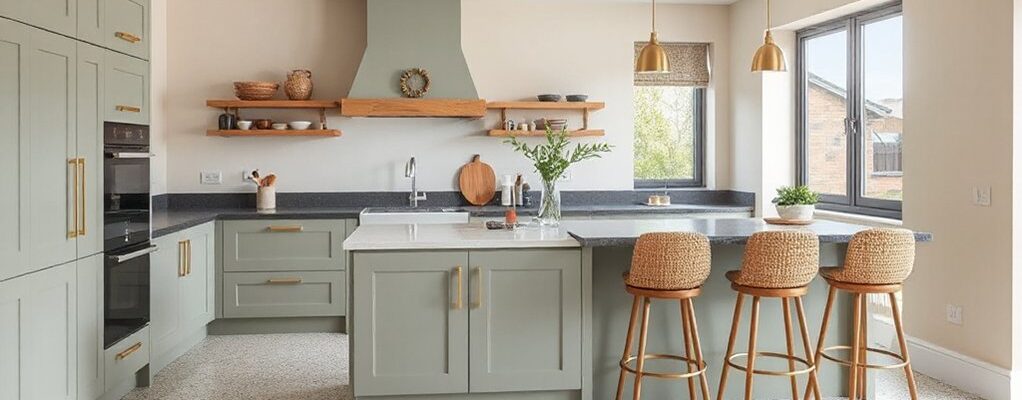
Brace yourself, these kitchen colour trends could redefine every surface you touch. You’ll blend timeless neutrals with calming greens and deep charcoal, using timber and stone to add warmth without clutter. Lighting and finishes shape how these tones behave, while smart color pairings keep things sophisticated, not shouty. If you’ve got a small space, clever contrasts and perceptual tricks await. Curious to see how your palette holds up in real life? Let’s explore the practical path forward.
What Makes UK Kitchen Colors Timeless and Current
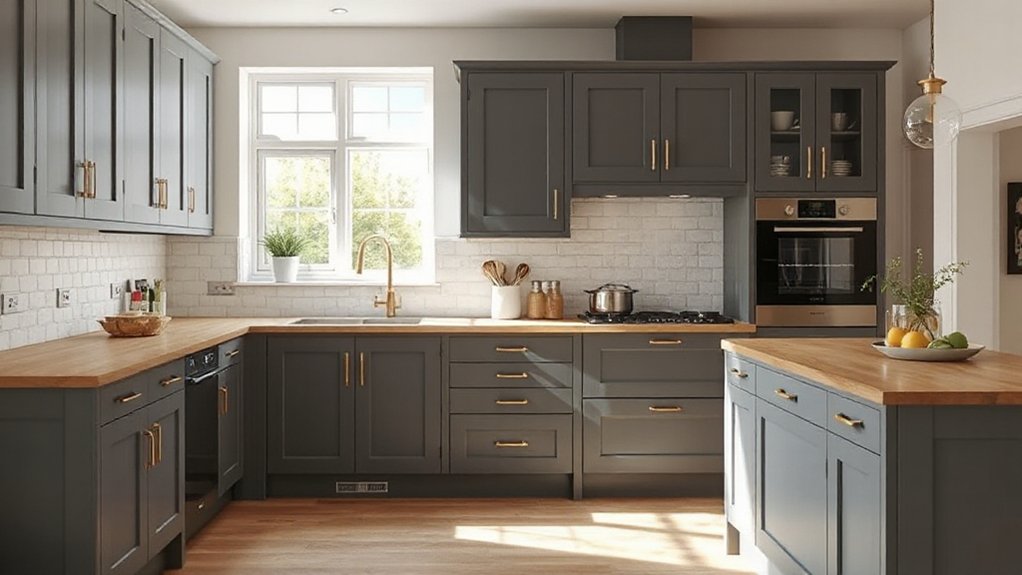
Timeless UK kitchen colors blend durability with subtle statement. You notice how durable finishes pair with versatile tones that adapt across eras, making choices feel forward-looking yet rooted.
You weigh historical influences that shape palettes—from traditional schemes to mid-century nudges—and you recognize how they inform today’s contrasts and textures.
Cultural variations drive nuance, guiding you toward warmth, brightness, or restraint according to regional sensibilities and family needs.
You value clarity: timeless color acts as a quiet anchor, while current tendencies inject intentional modernity through undertones, depth, and lighting.
You seek balance between practicality and personality, ensuring surfaces resist wear while still inviting conversation.
The result is a kitchen that remains relevant, evolves gracefully, and preserves a distinct British character.
Warm Creams and Off-Whites for Everyday Calm
Warm creams and off-whites offer everyday calm by softening contrast and creating a breathable backdrop for busy UK kitchens. You’ll notice how these tones reduce visual noise, helping you focus on form, light, and texture rather than color clashes.
In practice, they stabilize scheme foundations while still allowing personality to surface through material choices. Pair them with natural woods and matte metals to enhance warmth without overpowering space, ensuring a timeless feel.
The approach supports a sense of Vintage charm, subtly elevating traditional details while remaining contemporary. When you introduce bold accents, keep them restrained—think a single statement lamp, a dark cabinet pull, or a graphic backsplash—that punctuates calm rather than clatters it.
This balance makes daily tasks feel serenely efficient.
Soft Greens That Refresh Without Overwhelm
Soft greens create a calm, breathable backdrop that won’t overpower your kitchen. You’ll notice how these hues read as fresh and versatile, pairing easily with natural materials and clean lines.
Consider subtle shifts in saturation to tailor the ambience, from mint for morning energy to sage for quiet focus.
Soft Green Ambience
Soft greens bring a fresh, breathable feel to kitchens without overpowering the space. You’ll notice a calm backdrop that supports visual longevity, making it easier to switch accents seasonally. Choose pale sage or misty olive as wall tones to maintain airiness while preserving depth.
In practical terms, soft green ambients work best with clean lines and restrained contrasts, highlighting natural textures like timber grain and stone. Garden integration beads into the design subtly, tying outdoor views to indoor routines without shouting for attention.
For functionality, coordinate finishes deliberately: matte walls with glossy or satin appliance finishes to keep surfaces perceptually distinct yet cohesive. Use warm whites for cabinetry to avoid clinical vibes, ensuring the palette remains soothing, balanced, and contemporary.
Refreshing Kitchen Hues
Could soft greens truly refresh a kitchen without overwhelming the space? Yes, when chosen with intent, these hues create a calm backdrop that amplifies natural light and clean lines.
Soft greens pair well with neutral cabinetry, enabling you to keep focal points on hardware and textures rather than wall colour. Opt for muted, unsaturated tones to prevent a clinical feel, and introduce depth with varying finishes—matte walls, satin splashbacks, and a subtle glaze on cabinetry.
Consider sustainable paint options that minimise fumes and environmental impact. Monitor kitchen appliance trends; sleek, energy-efficient models in complementary tones avoid colour clashes while enhancing cohesion.
This approach yields a refreshed, breathable environment that remains practical for everyday use.
Charcoal Depths for Modern Contrast
Charcoal depths anchor modern interiors by delivering a strong, versatile contrast that’s easy to refresh with brighter accents. You’ll notice how charcoal grounds a room, letting metallics, whites, and woods pop without shouting.
This hue supports clean lines and a sense of restraint, enhancing architectural details rather than competing with them. Use it selectively on cabinetry or islands to create a focal point, then balance with lighter surfaces to avoid a heavy ambience.
The effect is modern yet warm, inviting daily use and quick seasonal updates. Artistic expression thrives as you layer textures—matte, satin, and gloss—while Cultural influences subtly inform your palette choices, from tile motifs to hardware finishes.
Keep saturation moderate, and let depth guide contrast, not overwhelm.
Timber and Stone as Color Correctives in Kitchens
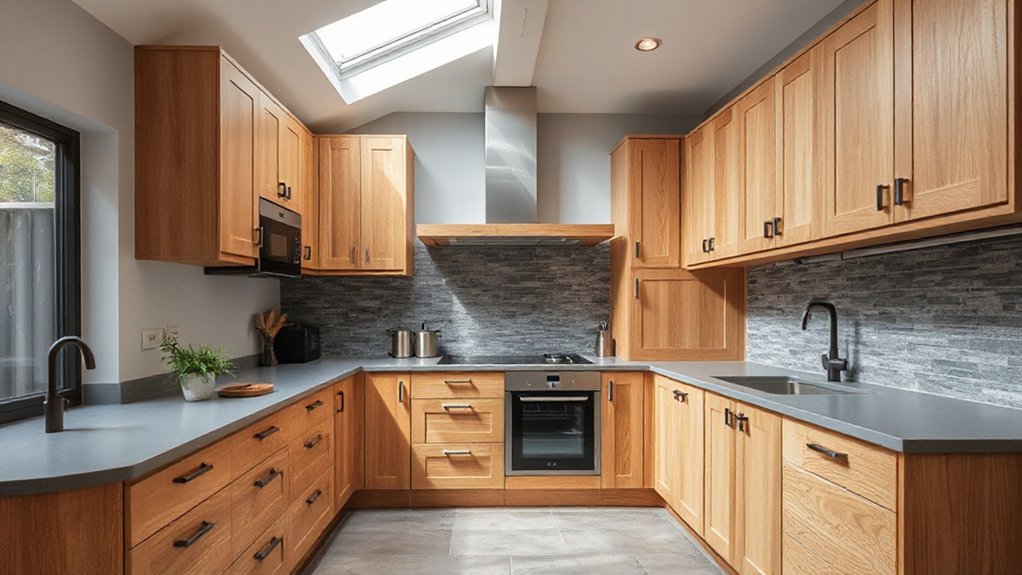
Timber and stone act as color correctives in kitchens by tempering bold finishes with natural warmth and tactile grounding. You’ll find wood tones soften metallics, while stone adds a cool, honest counterpoint that prevents overstatement.
In practice, timber and stone act as a balancing trio: warmth from timber, restraint from stone, and the discipline of measured contrast. Vintage charm surfaces when aged oak or walnut pick up patina, creating a narrative layer that anchors modern hardware.
Industrial influence emerges through sleek, utilitarian profiles paired with natural textures, delivering a refined ruggedness. Use timber ceilings or shelves to frame stone countertops, then introduce subtle, matte finishes to preserve clarity.
The result feels cohesive, deliberate, and calibrated, supporting bold palettes without overwhelming the space.
How Lighting Shifts Color Perception in the Kitchen
Light sources don’t just illuminate — they tint. You’ll notice hue shifts as warm and cool glows interact with cabinet and countertop materials, altering perceived color warmth and contrast.
Lighting Alters Hue
Lighting can dramatically shift how colors read in a kitchen, so you’ll want to test hues under the actual fixtures you’ll use. In practice, you’ll notice warm bulbs enrich yellows and reds, while cool tones emphasize blues and grays, altering perceived undertones of cabinets, countertops, and walls.
This is where Kitchen color psychology matters: the same shade can feel cozy, clinical, or modern depending on the illumination. Before committing, compare swatches at multiple brightness levels and under both task and ambient lighting.
Remember paint finish options also influence hue, sheen, and perceived depth; matte dulls glare, while satin or semi-gloss reflects more light and appears brighter. Use this knowledge to align color choices with function, timing, and room mood, not just aesthetics.
Warm vs Cool Glow
Warm or cool glow isn’t just about mood—it shifts how every surface reads in real time. In your kitchen, ambient warmth makes woods, brass, and warm whites feel inviting, while cool illumination sharpens greys, stainless, and pale surfaces. You’ll notice textures and edges transform as you switch lighting temperatures, so plan lighting zones rather than a single hue.
For task areas, cooler light reduces shadowy distortion and helps you see true colors when chopping or plating. For gathering spaces, ambient warmth enhances comfort and makes warm materials glow without overpowering chroma.
Balance matters: too much ambient warmth can muddy color contrasts, too much cool illumination can wash out cozy undertones. Tailor mixes to activity and wall tone for cohesive perception.
Color Perception Shifts
Color shifts in the kitchen happen softly but decisively: your eyes interpret color differently as you move from task lighting to ambient glow, so you’ll notice reds glow warmer under warm light and cooler under blue-tinted tones.
In practical terms, this is a navigation guide for color choices, not a free-for-all. Color psychology suggests certain hues evoke specific moods, but perceptual illusions remind you that context matters: the same cabinet panel can appear vastly different under varied light spectra.
Leverage this by testing progressions between lighting modes during design decisions. You’ll prefer pairing warm neutrals with adjustable lighting, avoiding overly saturated tones that discordantly clash under mixed illumination.
Document your observations, then calibrate palettes to maintain visual harmony across environments.
Matching Cabinets to Surfaces: Wood, Paint, and Laminate
Choosing cabinets that harmonize with your surface materials—wood, paint, and laminate—sets the tone for your kitchen’s look and function. You’ll align cabinet tones with countertop materials to guarantee cohesion without sacrificing contrast where needed.
Wood cabinets pair well with warm laminates or cool stone-inspired countertops, creating depth and tactile interest. Painted surfaces offer flexibility: match them to lighter countertops for airiness or contrast with darker finishes for drama.
Laminate options demand practical compatibility; choose subtle wood grains or monochrome paints to maintain visual calm. Consider finishes that reflect appliance finishes, making sure a unified silhouette across appliances, cabinetry, and surfaces.
Balance is key: the goal is a streamlined workflow, legible lines, and a durable, easy-to-maintain palette that supports daily use.
Backsplash Colour Strategies That Tie the Room Together
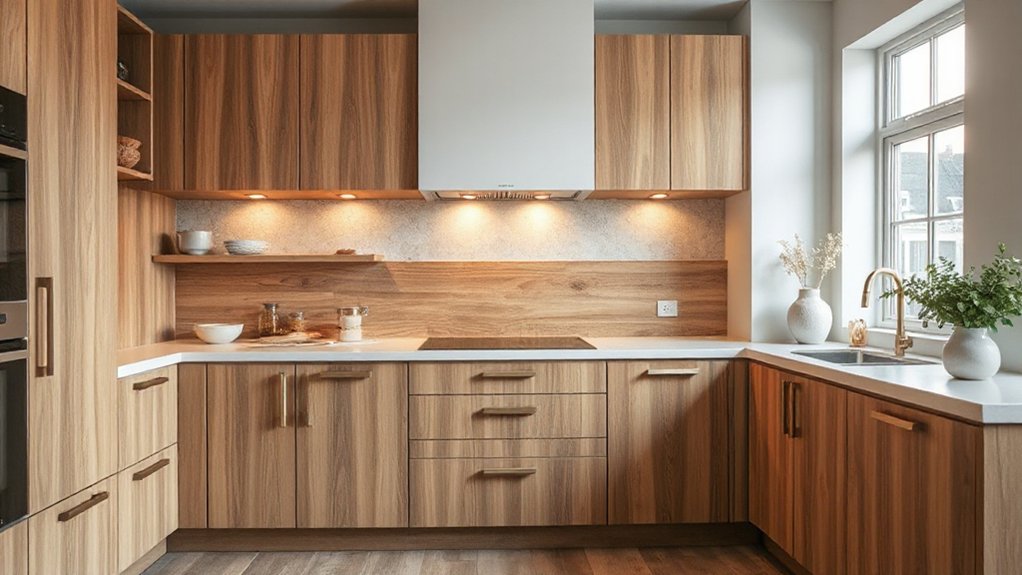
Backsplash colour acts as the tying thread between cabinetry, surfaces, and appliances, so you’ll want a palette that unifies the room without overpowering it. You’ll choose strategies that balance contrast and cohesion, letting texture and finish inform tone.
Ceramic mosaics offer subtle movement without loud repetition, guiding the eye along the wall while staying understated. Glass splashbacks deliver a reflective surface that amplifies light and reinforces a modern, clean vibe.
Aim for a restrained range—one dominant hue with a couple of supporting tones—to prevent clashing with counters or timber. Consider grout colour as a quiet equaliser; it can either soften passage or sharpen delineation.
Finally, test in daylight and artificial light to guarantee the scheme remains legible across hours and tasks.
Accent Colour Ideas for Small UK Kitchens
If you want small UK kitchens to feel brighter and more expansive, accent colours should punch up the space without overwhelming it. Focus on a restrained palette: pick one bold hue for key elements and let the rest stay neutral. This creates contrast without chaos, helping surfaces read as larger than they are.
Introduce Vintage accents through small hardware, lamps, or cushions that echo the chosen colour while avoiding clashing patterns. Pair Bold patterns sparingly—think a single patterned rug or a geometric backsplash tile in moderation to add interest without shrinking the room visually.
Use colour in functional zones: an accent cabinet, a bright stove hood, or a statement appliance. Keep lighting bright and cool to reflect the hues effectively.
Stone, Timber, and Metal Palettes: Material-Paired Palettes
Stone, timber, and metal form a trio that anchors modern UK kitchens with tactile warmth and quiet sophistication. You combine stone’s cool neutrality with timber’s organic depth and metal’s crisp edge to craft enduring palettes.
Marble textures offer veined movement that softens hard surfaces, while granite finishes provide durable, granular contrast for work surfaces and islands. Pair white or pale stone with warm oak or walnut for balanced contrast, then introduce brushed steel, nickel, or blackened metal for defining accents.
The trick is restraint: limit metal to 10–20 percent of visible surfaces to avoid busyness. Textural variety matters more than bold color shifts; matte or satin finishes reduce glare and unify tones.
This approach yields spaces that feel cohesive, contemporary, and quietly timeless.
Painting Panels and Framing for Impact
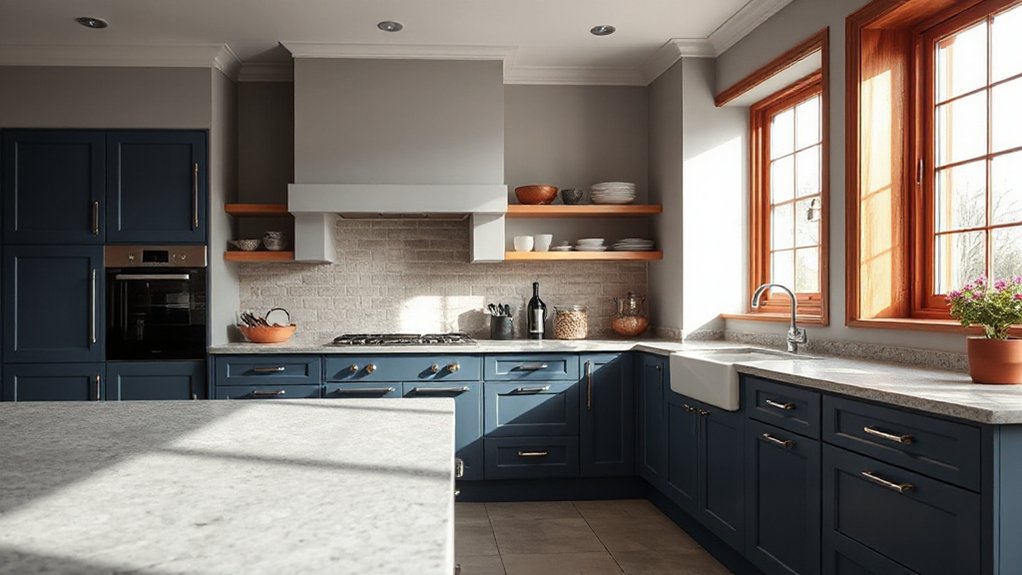
Painting panels and framing can redefine a kitchen’s rhythm by guiding the eye and setting tonal balance. You shape focal points with painted panels, using bold contrast or subtle harmonies to anchor cabinetry and walls.
Framing accents—think slim borders, boxed frames, or coordinated mouldings—create deliberate pauses that structure movement through the space. Choose a palette that reinforces function: lighter panels brighten work zones, darker frames add depth to islands, and midtones unify diverse finishes.
Consistency matters; repeat a motif across doors, drawers, and trims to avoid visual noise. Consider proportion: narrow frames feel crisp in compact kitchens, wider frames establish a relaxed, gallery-like cadence in larger ones.
Balance provenance and modernity by aligning framing accents with hardware and lighting for cohesive impact.
Fabrics and Accessories: Textural Touchpoints
Textural touches through fabrics and accessories bring tactile contrast and warmth to a modern UK kitchen. You’ll notice how textiles and surface details soften angular cabinetry, adding depth without overpowering the palette.
Textural fabrics, such as woven towels, linen chair cushions, and charcoal felted rugs, introduce subtle variation that travels beyond color alone.
Accessory textures—matte ceramics, rattan storage, brushed steel hardware, and natural fiber lampshades—create dimensional lift while maintaining a cohesive look.
Pairing smooth countertops with tactile accents helps define zones and signals function.
Choose a restrained mix of textures, ensuring scale and repetition align with your overall design strategy.
The result is a layered, contemporary kitchen where sensory richness supports usability, not distraction, guiding attention toward refined, intentional details.
Budget-Friendly Colour Upgrades That Age Gracefully
Budget-friendly colour upgrades can refresh a kitchen without a full renovation, leveraging strategic shifts that age gracefully. You’ll start with durable, low-cost paint or panels in timeless hues—stone, ivory, or sage—that resist quick obsolescence. Pair these with matte finishes and softer whites to conceal minor wear and fingerprints.
Introduce contrast through hardware or a single accent wall instead of a full repaint, keeping maintenance minimal. Flexible palettes let you adapt to evolving trends without abandoning the core scheme, ensuring longevity.
Consider premium-quality primers and stain-resistant topcoats to extend life, so you don’t chase updates yearly. Subtle colour shifts around cabinets, islands, or shelves achieve a refreshed look while preserving value.
Budget friendly choices support longevity and practical daily use, Age gracefully.
A Colour Roadmap: Planning to Execution
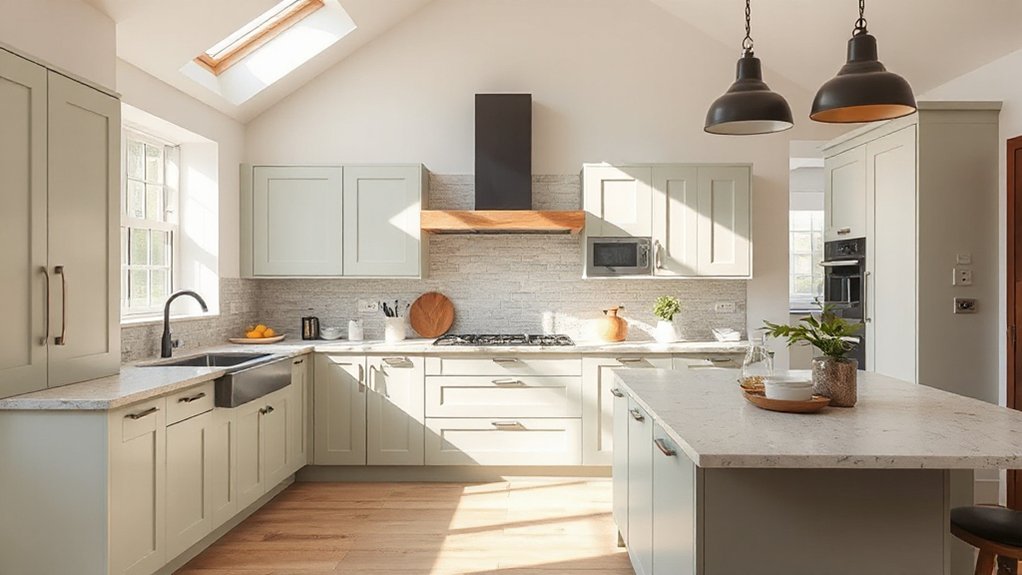
A clear colour roadmap connects your vision with real-world steps, guiding you from concept to execution without surprises. You start by defining a palette philosophy, aligning mood with function, and documenting constraints like budget and space.
Next, translate ideas into tangible swatches, noting undertones and material finishes to prevent clashes. Create a phased plan: dominant walls, secondary accents, and a subtle contrast layer, then map timescales to procurement and installation.
Prioritise Eco friendly paints where possible to ease environmental concerns and future-proof your kitchen. Incorporate Vintage accents as strategic focal points, ensuring they complement modern cabinetry and hardware rather than overpower it.
Finally, establish checkpoints to review progress, adjust for supply delays, and confirm consistency across all surfaces before completion.
Lighting Scenarios to Maximise Colour Harmony
Good lighting is essential to reveal true colour during kitchen tasks and create a cohesive mood across finishes. You optimise colour harmony by layering light sources: ambient, task, and accent, ensuring balance across warm and cool tones.
Ambient light should be neutral to avoid skew, while task lighting highlights cabinetry and work surfaces without glare. Dimensional shifts occur as you switch bulbs; choose high-CRI LEDs to preserve nuance in Vintage accents and natural wood.
Accent lighting draws attention to architectural details and eco-friendly paints, reinforcing your chosen palette. Consider daylight complements; windows skew colour temperature, so adapt fixtures accordingly.
Controls matter: dimmers offer flexibility during cooking and entertaining. Consistency in lighting strategies reduces perceptual colour drift and strengthens space cohesion.
Small Kitchen Layouts: Colour Tricks for Space Perception
When space is tight, colour becomes a tool for perception as much as decoration. In small kitchens, you pick colours to manipulate visual cues: light walls expand, darker accents recede, and continuity across zones keeps the room coherent.
Use a single, pale base to reflect light from countertops and appliances, then add contrast sparingly to delineate work zones without breaking flow. Linear patterns and shallow cabinets create a sense of depth, while glossy surfaces bounce light to widen the perimeter.
Implement sustainable materials for countertops and cabinetry where possible, and choose eco-friendly paints with low emissions to maintain air quality. Avoid heavy textures on large surfaces; opt for smooth finishes that read as airy, clean, and unfussed to maximise perceived space.
Durable, Easy-To-Clean Finishes in Popular Hues
Durable, easy-to-clean finishes are a practical anchor for modern UK kitchens, especially when you’re balancing style with daily use. You’ll want surfaces that resist fingerprints, stains, and moisture without sacrificing contrast or texture. Matte and satin sheens in muted blues, warm greys, and cream tones reduce urgency around maintenance while staying contemporary.
Look for finishes labeled as stain- and scratch-resistant, with sealed edges to deter water ingress. Easy clean hues help conceal wear from frequent wiping and high-traffic zones, making upkeep predictable.
Around doors, frames, and islands, consistent durable finishes create a cohesive field that reads calm and fresh. Select materials that tolerate daily splash zones, then pair with hardware that enhances cleanliness perception rather than demanding excessive polishing.
Choosing a Main Colour: A Step-by-Step Framework
Choosing a main colour isn’t about chasing the latest trend; it’s about establishing a durable backdrop that supports your daily rhythm. Start with a brief mood brief: note how you move, cook, and gather—then map light, glare, and shadow across the day.
Pick a base hue with steady undertones, avoiding loud contrasts that fatigue over time. Color psychology guides you to calmer greens or grounded neutrals for balance, while warmer tones invite sociability in kitchens that double as hubs.
Next, test paint on large swatches, observing in morning and evening. Consider paint application techniques: matte for reduced glare, satin for wipeability, and a ceiling/trim plan that reinforces depth.
Finally, plan a controlled update path: accent pieces, textiles, and art, not wholesale re-colours.
Frequently Asked Questions
How to Choose an Expert Color Palette for UK Kitchens?
You should pick an expert palette by considering color psychology and lighting effects, testing swatches at different times, and aligning with your space’s mood; you’ll balance warm neutrals with cool accents to optimize perception and practicality.
What Finishes Resist Staining in Busy Family Kitchens?
Sure thing: you want finishes that resist staining in busy family kitchens, and you can trust quartz countertops and porcelain tiles. Kitchen backsplash options and Durable countertop materials stay pristine, even when life gets chaotic, hands-on, last-minute.
How to Balance Warm Vs Cool Tones in Small Spaces?
You balance warm and cool tones by prioritizing lighting harmony and furniture coordination, pairing subtle neutrals with accent hues, using dimmable lighting to shift mood, and ensuring textures contrast to keep small spaces visually expansive and cohesive.
Which Hues Maintain Resale Value and Timeless Appeal?
You’ll favor timeless neutrals with enduring appeal, since color psychology shows they evoke trust, while historical kitchen palettes anchor resale value by simplicity. To stay relevant, balance subtle warmth with restrained cool accents, preserving versatility and broad consumer appeal.
How to Test Color Choices Before Committing to Paint?
Test color choices by swatching, testing in daylight and artificial lighting, and observing under different moods. Compare paint chips on walls, then use color psychology and lighting considerations to validate harmony before committing.
Conclusion
You’ve seen how timeless neutrals, calming greens, and charcoal balance practicality with sophistication. If you worry trends will date, choose enduring neutrals as your base and reserve personality for accents. This approach keeps kitchens versatile for evolving tastes while feeling cohesive. By layering timber and stone, you add warmth without clutter. With thoughtful lighting, even small spaces read larger. Ready to design a kitchen that stays current—and genuinely you—for years to come?