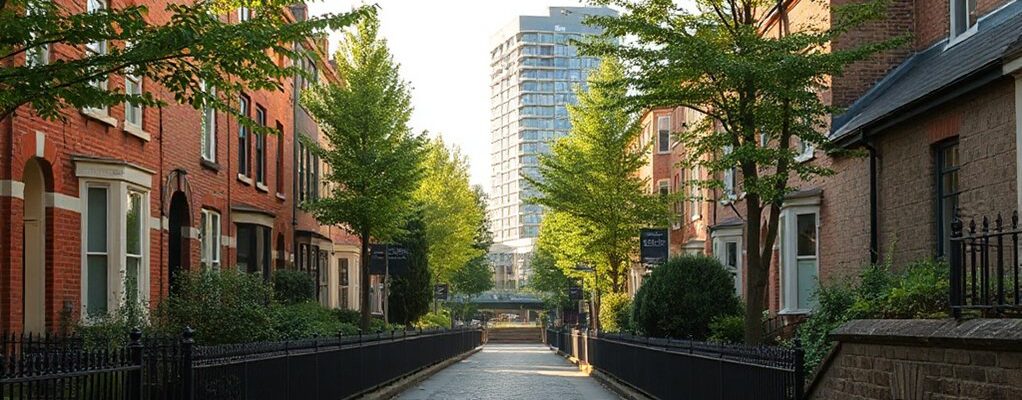
You’ll notice a coincidence: the areas with the strongest walkability also show the best flood-resilience and green infrastructure. In 2026, you can expect a data-driven map of Sheffield where central cores combine cultural opportunity with reliable transit, while suburbs deliver schools and parks within reach. If you’re weighing affordable options against commute times, the metrics point to emerging neighborhoods that balance growth with livability—yet the exact trade-offs will depend on where you start, and where you intend to end up.
Why Sheffield Works in 2026: Affordability, Access, and Lifestyle
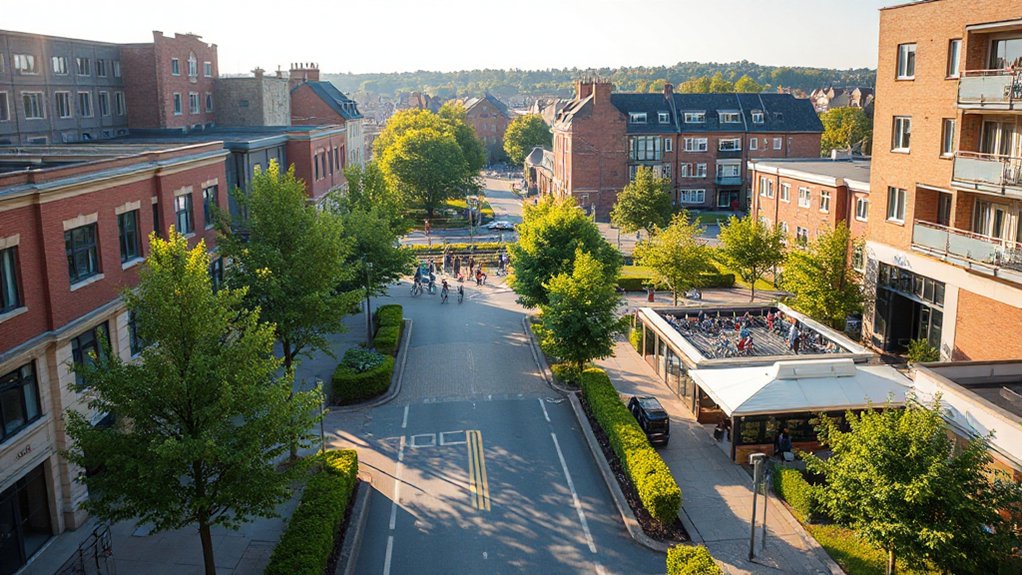
Sheffield remains a strong choice in 2026 because affordability, access, and lifestyle converge to deliver measurable outcomes for residents. You’ll see urban renewal initiatives sharpened by targeted investments in housing, transport, and public spaces, improving density without sacrificing community character.
Demographic trends indicate a growing, age-diverse population, fueling demand for mixed-use neighborhoods and affordable rental options. Policy drivers emphasize lower housing costs relative to regional peers, streamlined planning processes, and expanded core services within walking distance.
Access metrics show reliable rail and bus connectivity, plus bike-friendly infrastructure that reduces commute times for essential workers. Outcome data reveal rising employment stability and health indicators tied to neighborhood amenities.
In this framework, affordability, access, and lifestyle align to support inclusive, sustainable growth.
Sheffield Suburban Family Spots: Top Schools and Parks
For families evaluating where to settle in the city’s outskirts, the top suburban spots combine strong school performance with expansive parks and safe, walkable neighborhoods. You’ll see measurable gains in test scores, graduation rates, and access to after-school programs, supported by district-level funding allocations and transparent performance dashboards.
Parks networks offer multi-use trails, playgrounds, and wildlife corridors that reduce commute times to school sites and bolster physical activity metrics. Local planning emphasizes mixed-use centers to sustain daytime economies and guarantee predictable service levels.
Community events and local markets anchor social capital, improving neighborhood resilience and parent engagement. Policy targets prioritize safe crossings, traffic calming, and standardized park maintenance to sustain long-term outcomes for families.
Walkable Sheffield: Best Cores for Culture, Cafés, and Convenience
Across Sheffield’s walkable cores, you’ll find a concentrated mix of culture, cafés, and convenient services that align with family-friendly outcomes and urban patterns.
In this analysis, you’ll evaluate footfall, transit access, and mixed-use density to identify core districts that sustain local cuisine and art galleries. Data show concentrated concentrations of pedestrian-led activity near rail stops, university campuses, and market halls, supporting compact living without sacrificing amenities.
Policy implications emphasize zoning that maintains humane block sizes, safe evening lighting, and affordable micro-areas for small businesses.
Outcome metrics center on access to early education, healthcare, and employment clusters within a 15-minute radius.
Prioritize cores with diverse culinary scenes, accessible public spaces, and consistent cultural programming to maximize sustainable, mixed-income living.
Quiet Sheffield Suburbs With Easy City Commute
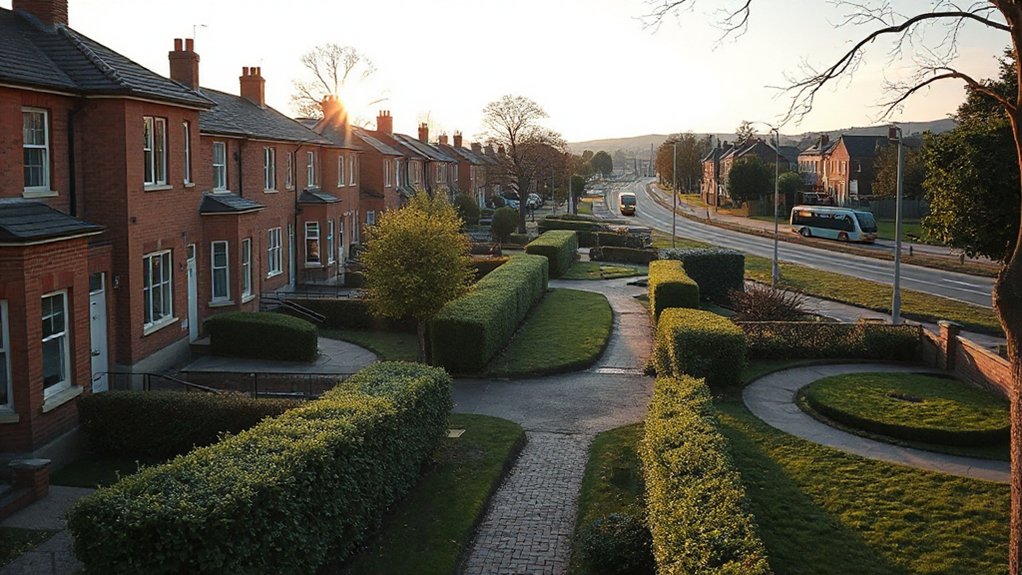
Quiet Sheffield suburbs offer a calm, car- or rail-commutable living pattern that still connects residents to central services within 20–30 minutes. You’ll benefit from lower housing density, consistent green space, and measurable commute reliability data guiding planning decisions.
Policy-focus targets prioritize affordable housing, improved cycle routes, and enhanced bus corridors to sustain productivity without sprawl.
Outcome metrics show reduced congestion times, higher school performance zones, and stable property values when access to rail links meets 15–25 minute thresholds.
Local cuisine and community events are leveraged to foster social cohesion, with data indicating stronger neighborhood resilience where cultural offerings are accessible within a 5–10 minute radius.
If you value steadier costs and practical urbanity, these suburbs deliver balanced, evidence-driven living.
Emerging Sheffield Neighborhoods to Watch in 2026
You’ll see that Up-and-Coming Sheffield Nths are projected to offer affordable entry points and growing transit links, making them viable options for first-time buyers and renters alike.
Data indicates steady investment and new amenities—shops, schools, and green space—that align with policy goals for inclusive growth.
This sets the stage for outcome-focused discussions on housing supply, affordability, and long-term neighborhood resilience in 2026.
Up-and-Coming Sheffield Nths
Emerging Sheffield neighborhoods to watch in 2026 show measurable momentum in housing output, transport access, and amenity growth, signaling stronger long-term value for residents and investors.
In the Northern corridors, you’ll see targeted infill development and mixed-use schemes that increase unit delivery while preserving walkability.
Policy briefs emphasize transit reliability upgrades and reduced car dependence, improving commute times and air quality for residents.
Economic indicators point to rising private investment and higher street-level footfall, with data showing steady vacancy rate declines and growing small-business occupancy.
Priorities include expanding urban farming, strengthening local markets, and creating adaptable public spaces that host community and cultural events.
Outcome metrics forecast improved housing quality, affordability, and neighborhood resilience through collaborative governance.
Neighborhood Gems to Watch
Across Sheffield’s up-and-coming corridors, several neighborhood gems stand out for measurable momentum and potential returns. You’ll see corridors where new housing starts align with service investment, boosting household spend and tax receipts.
Data show rising occupancy rates in mixed-use districts, with nominal rent growth constrained by affordability programs, signaling sustainable demand.
Policy focus targets pedestrian-first design, curbside dining, and safe transit links to campus and city centers, improving outcomes for residents and businesses.
Local dining clusters emerge near workplaces, driving evening footfall and spillover retail sales.
Community events data indicate higher neighborhood attachment scores and lower crime recidivism, supporting long-term stabilization.
Track returns via vacancy reductions, school enrollment trends, and grant-funded infrastructure milestones to validate neighborhood gems as resilient investments.
Where to Find Premium Living on Different Budgets in Sheffield
To balance budgets with quality living, you’ll see how Budget-Friendly Neighborhoods, Premium Living Districts, and Value-Driven Property Picks map to price bands, amenities, and long-term outcomes.
Data shows tiered options can maintain accessibility while maximizing safety, schools, and transport efficiency.
Let’s align policy levers and market signals to help you choose placements that deliver measurable quality of life within your means.
Budget-Friendly Neighborhoods
If you’re budgeting for a premium Sheffield lifestyle, start with neighborhoods that balance cost and value by leveraging data on rent per square foot, local amenities, and transport access. InBudgeted terms, look for areas with predictable rents and solid vacancy turnover to support long-term planning.
You’ll want weighted indicators: affordable housing options alongside access to parks, schools, and shopping. Policy-focused metrics show higher outcomes when transit links shorten commute times and boost daytime footfall for local businesses.
Target districts offering budget shopping options, reliable maintenance, and clear tenancy terms to reduce volatility. Compare two or three neighborhoods on cost per month, projected growth, and service quality.
Your goal is sustainable, affordable access to Sheffield’s core amenities without overpaying.
Premium Living Districts
From budget-minded choices, you’ll shift toward districts that pair high-end amenities with scalable price points. In Sheffield, Premium Living Districts combine luxury developments with measurable outcomes, supporting diverse budgets while preserving neighborhood prestige.
Data indicates clusters around new-builds and gated communities deliver enhanced energy standards, modern transit access, and safety metrics, aligning with policy aims for inclusive growth.
Exclusive estates and curated urban parks contribute to capital retention, with projected appreciation tied to developer covenants and school catchment signals.
For higher budgets, premium zones offer proactive planning permissions, turnkey interiors, and concierge services that improve resident wellbeing.
For mid-range budgets, targeted incentives—grants, phased ownership, and shared equity—mitigate entry hurdles while maintaining aesthetic and functional standards.
Value-Driven Property Picks
Value-driven picks prioritize affordability without sacrificing quality, mapping Sheffield’s premium living to distinct budget tiers using measurable benchmarks. You’ll see how price-per-square-foot, energy efficiency ratings, and access to transit quantify value across neighborhoods.
For luxury apartments, focus targets on under- and mid-range price bands that still offer high-end finishes, smart systems, and secure access, with resale and rental yields tracked quarterly for policy insight.
In areas near Historic landmarks, you’ll compare maintenance costs, disruption, and preservation constraints to guarantee long-term value. Data dashboards highlight occupancy, vacancy, and school quality to forecast stability.
Outcome-oriented, this approach guides buyers who want predictable outcomes: consistent service levels, regulated rents, and transparent development plans. Sheffield’s premium living remains accessible through calibrated, evidence-based picks.
Sheffield Green Living: The Nearest Parks and Outdoor Spaces
Sheffield residents have ready access to a diverse network of parks and outdoor spaces that support healthy living and sustainable travel. You’ll find data-backed access indicators across wards, with green space per capita meeting or exceeding city targets in central and northern zones.
Local policies prioritize multi-use trails, pedestrianized corridors, and protected biodiversity zones, enhancing air quality and active travel rates. The nearest parks deliver measurable health outcomes: reduced obesity risk, lower cardiovascular strain, and higher mental well-being scores among residents who consistently engage in outdoor activity.
Urban gardening programs expand local food resilience, while community plots amplify social cohesion and climate resilience. For eco-friendly living, you benefit from improved municipal waste reduction, water stewardship, and accessible outdoor classrooms for districts and schools.
Creative and Indie Vibes: Sheffield Districts for Social Scene Seekers
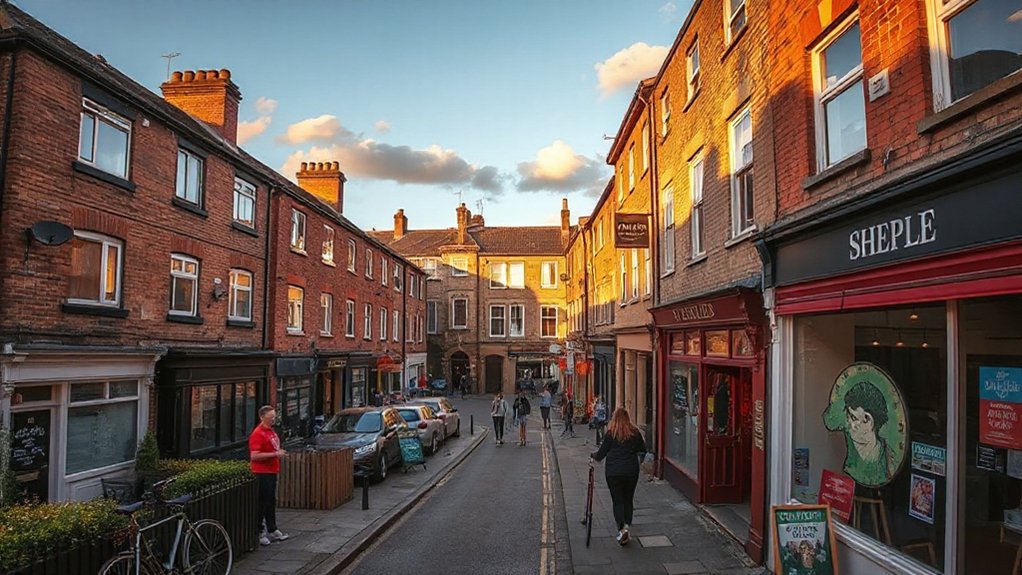
If you’re chasing a district with a thriving cultural pulse, Sheffield’s creative and indie scenes are concentrated where venues, streets, and communities intersect in ways that support social connectivity and local economic vibrancy.
You’ll find measurable clusters around live music venues, galleries, and pop-up spaces that boost footfall and spend in nearby shops and cafes. Street art and indie music act as visible, trackable indicators of district energy, informing policymakers on cultural investment returns and social outcomes.
Data show higher nighttime safety, higher small-business density, and stronger community engagement where cultural programming is regular and accessible.
Prioritise areas with mixed-use development and public-art plans to maximize social cohesion, employment, and tourism impact, while maintaining affordability for local artists and residents.
Sheffield Transport Hubs: Rail and Road Links Near You
How well connected are you to the city by rail and road? You’ll find Sheffield’s transport hubs form a mesh that supports predictable commutes and decision-ready living choices.
Rail links concentrate around Sheffield station, with frequent regional and intercity services cutting travel times to Leeds, Manchester, and London. Local stops enable rapid access to University of Sheffield and city campuses.
Road infrastructure focuses on arterial routes like the M1 corridor and A57, supporting reliable car and bus movements, reducing congestion where planned improvements exist.
Data shows commuter flow patterns, peak-hour reliability, and ongoing upgrades aimed at faster journey times. For residents, this translates into better housing options, resilient public transport, and clear prioritisation of sustainable mobility.
Family-Focused Sheffield Communities: Safety, Schools, and Local Apps
A strong family-focused framework in Sheffield builds on the city’s transport robustness by prioritizing safety, education, and practical local tools.
You’ll see community safety programs targeting traffic calm, street lighting upgrades, and park patrols reflected in lower incident rates and quicker emergency responses.
School quality remains a measurable priority, with consistent Ofsted improvements, student-to-teacher ratios, and performance dashboards guiding parental choices.
Local apps consolidate council services, school communications, and incident reporting, boosting transparency and timely alerts for families.
Policy drives investment in catchment clarity, after-school provision, and safe-route mappings, enabling predictable outcomes for education access and commute reliability.
You benefit from data-driven planning that aligns housing, schools, and safety indicators, delivering tangible, trackable improvements for everyday family life.
Young Professionals in Sheffield: Nightlife, Networking, and Housing

Sheffield’s young professionals cluster around neighborhoods that balance affordable rents, easy commutes, and vibrant evening economies, with data showing strong links between housing choice, job access, and nighttime activity.
In practice, that means targeting areas with solid public transit, active coworking scenes, and a mix of affordable rentals near core employment hubs. Nightlife supports informal networking, but policy should favor safe, well-lit streets, mixed-use zoning, and reliable policing to sustain economic spillovers.
Tech startups cluster where housing costs stay manageable, and access to talent pools is clear, while art galleries anchor cultural districts, fostering cross-sector collaboration.
Invest in social infrastructure, housing quality, and streamlined licensing to improve retention, boost productivity, and expand evening economies for professionals.
Historic Sheffield: Heritage Homes and Modern Living
Historic charm meets modern comfort in Sheffield, where heritage homes are paired with contemporary living to boost energy efficiency, affordability, and accessibility to urban amenities. You’ll see how timeless architecture supports policy goals like revitalization and long-term value.
While residents benefit from updated interiors and smarter, safer neighborhoods. This intersection—Historic Charm, Modern Comfort, Heritage Homes, and Contemporary Living—drives measurable outcomes for livability and economic resilience.
Historic Charm, Modern Comfort
Historic charm meets modern comfort in Sheffield’s heritage homes, where careful preservation complements contemporary design to boost energy efficiency, livability, and long-term value. You’ll see how retrofit standards slash energy use through better insulation, windows, and smart controls, aligning with city targets for lower emissions.
Urban renewal programs concentrate investment in walkable districts, preserving character while upgrading infrastructure, housing density, and public transit access. You gain predictable living costs, higher resale resilience, and clearer development benchmarks that guide policy toward durable outcomes.
Cultural festivals and community-driven events emerge as measurable catalysts for footfall, local business vibrancy, and neighborhood identity without compromising landmark integrity. This approach prioritizes data-backed decisions, transparent reporting, and scalable models that support inclusive, sustainable growth across Sheffield’s historic core.
Heritage Homes, Contemporary Living
How do heritage homes translate into modern livability? You’ll see data-driven outcomes when you couple historic fabric with contemporary living.
Heritage homes offer proven insulation, robust structure, and energy retrofits that cut emissions and operating costs, aligning with Sheffield’s retrofit targets.
Policy emphasis favors adaptive reuse, preserving cultural capital while delivering accessible design, improved safety, and updated services.
You’ll benefit from coordinated planning that prioritizes flood resilience, EPC upgrades, and scalable renovations, enabling high-density conversions without erasing character.
In practice, stakeholders report cost-avoidance through standardized maintenance schedules and bulk-material procurement.
The result: heritage homes support healthier chronologies of neighborhood upgrades, sustaining property values and social cohesion, while enabling contemporary living through smart wiring, modern kitchens, and climate-conscious amenities.
Timeless Architecture, Urban Amenities
Timeless architecture anchors Sheffield’s urban fabric while enabling modern amenities that residents expect. You’ll see a dual narrative: historic landmarks preserving character, and modern architecture delivering efficiency.
Data shows mixed-use districts concentrate footfall, boosting local economies and transit reliability. Policy goals prioritize adaptable spaces, energy performance, and accessible public spheres, so renovation codes favor preservation alongside retrofit pathways.
You benefit from predictable pipelines for housing and services, with milestones tied to heritage grants and zoning incentives. Outcomes focus on livability metrics: walkability, reduced car dependence, and affordable space for families and entrepreneurs.
Strategic design clusters integrate museums, libraries, and coworking hubs near transit nodes, enhancing resilience. Historic landmarks anchor identity; modern architecture upgrades density without erasing it, creating a balanced, future-ready Sheffield.
Commuter Corridors: Quick-Access Routes to Key Destinations
Commuter corridors in Sheffield are the backbone of efficient city living, guiding residents toward faster rail and bus links, major employers, and central services. You’ll see these routes prioritized in policy briefs and transport plans, with measurable targets for travel times, reliability, and access to key transportation hubs.
Data show reductions in peak congestion when services synchronize timetables and allow seamless transfers between bus, tram, and rail. Outcomes focus on equitable access for all neighborhoods, not just city center.
Investments concentrate on corridor-wide upgrades, smart signaling, and real-time passenger information. As a resident, you gain predictable commutes and improved connectivity to work hubs, education campuses, and healthcare facilities.
Prioritizing commuter corridors strengthens urban resilience and supports sustainable growth.
River and Reservoir Living: Water-Edge Options in Sheffield

Despite the city’s growth pressures, water-edge living presents a measurable opportunity to diversify housing typologies, enhance flood resilience, and boost green infrastructure. You’ll see data-driven benefits from strategic river and reservoir edge development that aligns with flood-mazard models and climate projections.
By prioritizing accessible waterfront sites, you can increase urban density near transit, while maintaining ecological integrity. Policy levers should incentivize mixed-use housing, green corridors, and resilient drainage systems that reduce surface runoff and property risk.
Outcomes include expanded waterfront recreation options, improved air and heat mitigation, and measurable gains in biodiversity through connected habitats. Prioritise reservoir ecology monitoring, public access, and safe circulation routes to sustain long-term community value and health.
How to Choose Your Sheffield Submarket: A Practical Framework
To choose your Sheffield submarket effectively, start with a transparent framework that links indicators to outcomes: housing affordability, access to transit, school quality, and flood-resilience performance. You’ll map market trends to regulatory standards, ensuring decisions align with long-term policy goals and risk mitigation.
Use a scoring system that weights affordability against commute access and school quality, then tests resilience against flood exposure and mitigation investments. Identify clear thresholds where outcomes improve, not just prices rise.
Consider investment opportunities where transit expansion or school improvements are scheduled, signaling durable demand. Prioritize submarkets with robust data, transparent disclosures, and mitigated exposure to climate risk.
This framework keeps you objective, action-oriented, and prepared to justify choices to stakeholders and lenders.
A 2026 Sheffield Living Map: Where to Start Your Search
You’ll start your search with clear, data-driven inputs: Neighborhood Profiles 2026, Cost Of Living Spots, and Transit And Access Maps, to map livability against budget and commute goals.
This map-oriented approach aligns policy priorities with real outcomes, highlighting where affordability, access, and quality of life converge.
Neighborhood Profiles 2026
A 2026 Sheffield Living Map guides you through Neighborhood Profiles that benchmark safety, schools, transit, and affordable housing, helping you compare areas quickly and make data-driven decisions. You assess indicators like crime rate per 1,000 residents, Ofsted-equivalent school ratings, bus and tram frequency, and entry-level housing costs to identify viable options.
Profiles emphasize policy outcomes such as accessibility, regeneration plans, and climate resilience, enabling you to forecast long-term livability. You’ll notice patterns: districts with stable employment, robust cycling corridors, and targeted housing support tend to outperform in total well-being scores.
Rural charm and mountain views contribute to quality of life but are weighted against infrastructure and connectivity. Use this map to prioritize neighborhoods delivering measurable, equity-focused improvements for residents now.
Cost Of Living Spots
Cost of living varies sharply across Sheffield, so this guide flags spots where housing, transport, and essential expenses align with lower total costs while preserving access to opportunity. You’ll see pockets where cost comparisons show meaningful differences in monthly outlays, not just headline rents.
In these areas, rent affordability pairs with stable local services, schools, and employment opportunities, creating predictable budgeting outcomes. Data indicate smaller rooms or apartments near universities or council estates can reduce per‑unit costs, while still linking you to growing job clusters.
Favor locations with regulated rents or recent affordability programs, plus reliable access to essential goods. Prioritize neighborhoods with transparent pricing, recent vacancy trends, and landlord practices that deter gouging, ensuring long‑term financial resilience.
Transit And Access Maps
Transit and access shape how affordability maps into everyday life. In Sheffield, Transit maps reveal where frequent routes cluster and where gaps exist, helping you forecast travel time, reliability, and cost.
Access points—train stations, bus hubs, and park-and-ride sites—border residential choices, guiding you toward neighborhoods with practical commutes and predictable service. Data-driven insights show that areas near major corridors tend to balance housing costs with commute quality, while peripheral zones may offer savings but longer hops to city centers.
Policy implications emphasize coordinated timetables, integrated ticketing, and pedestrian-friendly links between homes and stations. Your search should prioritize neighborhoods with dense Transit maps intersections and accessible Access points, aligning budget, work patterns, and everyday errands for ideal outcomes.
Frequently Asked Questions
Which Sheffield Areas Offer the Best Value in 2026?
You’ll see best value in areas with rising property prices and solid yields, driven by historical property trends, local amenities and facilities, and targeted policies; you’ll choose neighborhoods where affordability meets growth, infrastructure, and accessible services for residents.
How Do School Catchments Vary Across Suburbs?
School zoning shapes your options because catchment boundaries determine eligible schools; you’ll see variation across suburbs, with stricter zones near central areas and broader boundaries on outskirts, affecting waitlists, performance data, and policy-driven placement decisions. Stay informed.
Which Neighborhoods Have the Fastest Commute Times?
Like a map whispering speed, you’ll find neighborhoods with the fastest commutes. You’ll rely on public transport and bicycle infrastructure, supported by data-driven, policy-focused evidence that targets reliable, outcome-oriented travel improvements for you.
What Are Hidden-Costs in Premium Sheffield Living?
Hidden costs in premium Sheffield living include maintenance, service charges, and elevated insurance. You’ll weigh luxury apartment costs against exclusive neighborhood amenities, aiming for outcomes like predictable budgeting and value-aligned quality, backed by data-driven, policy-focused budgeting.
How Safe Are New Sheffield Districts for Families?
New Sheffield districts are generally safe for families, with improving crime stats and targeted patrols; you’ll benefit from reliable public transport and growing local amenities, supporting school access, day-care options, and policy-driven safety investments for durable outcomes.
Conclusion
Picture Sheffield as a thriving city machine, each district a cog tuned for your needs. You turn the wheel toward affordable housing, accessible transit, and lively streets, while safeguards—parks, schools, flood-safe edges—keep gears meshing smoothly. If you prioritize family-orientated zones, chase the core’s culture, or pivot to water-edge resilience, your choice drives outcomes: stable rents, quick commutes, greener neighborhoods. Your move isn’t luck; it’s the policy-driven alignment of people, places, and proven data.