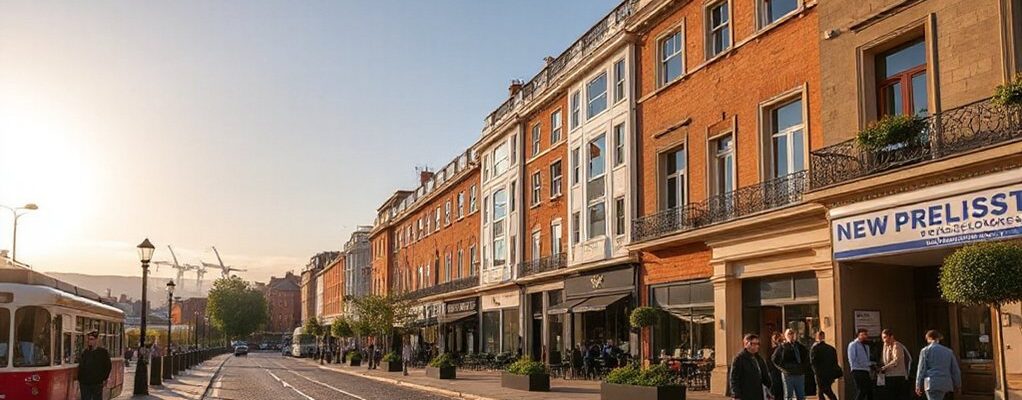
Like a compass pointing through fog, Belfast’s neighborhoods reveal distinct value levers for buyers and investors. You’ll weigh city-center liquidity against South Belfast’s charm, East Belfast’s entry prices, and emerging corridors that hint at early-stage yields. With data on price trajectories, rent stability, and projected infrastructure, you can map risk and return. But which mix delivers sustainable demand as markets shift—and what footprint should you target first? Let’s navigate the options.
What Makes Belfast’s Neighborhoods Tick for Buyers?
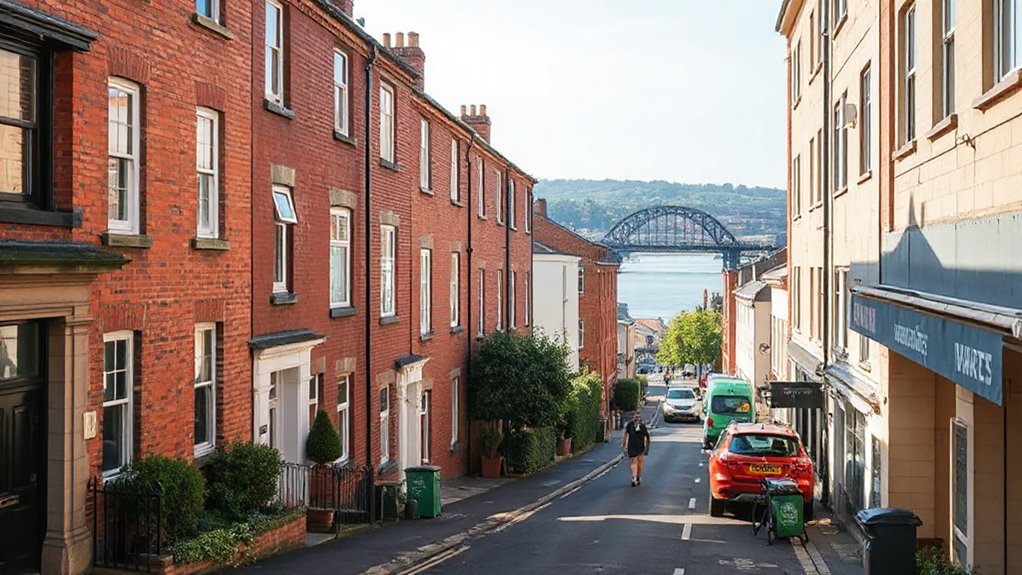
Belfast’s neighborhoods operate as a mix of heritage, accessibility, and evolving amenities, and buyers should map how these forces shape value and livability. You’ll see that districts with preserved historical architecture attract resident demand, while proximity to transit and green spaces boosts turnover and month-to-month resilience.
Data trends point to steady price appreciation where walkable cores pair with diversified local amenities, keeping vacancy rates low and rental yields competitive. You’ll evaluate supply factors, including adaptive reuse of historic structures and new-build density, to gauge future value corridors.
Market signals favor areas balancing character with practical access to schools, healthcare, and shops. By tracking amenity diversification and preservation incentives, you gain clarity on risk-adjusted returns and long-term livability.
Belfast Investment Framework: Core Criteria for Price, Yield, and Liquidity
To build a robust Belfast investment framework, start with three core pillars: price dynamics, yield potential, and liquidity resilience.
You measure price trajectories using indicators like quarterly appreciation, discount-to-rent ratios, and cyclical momentum, then benchmark against regional peers to gauge upside.
Yield potential hinges on rent growth parity, occupancy trends, and cap rate compression, adjusted for macro shifts.
Liquidity resilience captures market depth, time-on-market, and bid-ask tightness, ensuring exit pathways during stress.
You must monitor Market volatility and associated risk premia, calibrating entry points to maintain favorable risk-adjusted returns.
Regulatory changes, tax incentives, and planning constraints will shift fundamentals; embed scenario analysis to stress-test investment theses.
In this framework, disciplined data review outpaces intuition, guiding selective, value-driven acquisitions.
The Waterfront District: Why It’s a Growth Magnet for Yields
The Waterfront District shows a clear growth trajectory, with rising occupancy and shifting supply tightness signaling stronger yield potential.
We’ll unpack Waterfront Growth Trend, analyze Yield Maximization Strategies, and identify Investment Demand Drivers to quantify future returns.
This data-driven view will guide you on where to place bets as demand accelerates and rents lift asset value.
Waterfront Growth Trend
The Waterfront District is increasingly a magnet for investment, driven by recent infrastructure upgrades, rising occupier demand, and improving transport links that shorten commute times and boost desirability. You’ll see a clear growth trajectory reflected in transactional data, with rising prime yields and shorter vacancy spells as demand outpaces supply.
Waterfront redevelopment projects are accelerating, converting underutilized parcels into mixed-use hubs that attract both residents and regional employers. Residential density is trending upward, supported by zoning shifts and higher density schemes that optimize land use without compromising amenity.
Forecasts point to continued rental growth and price appreciation as occupancy tightness persists. You should monitor construction timelines, planning approvals, and connectivity enhancements to time entry into the market with peak post-upgrade demand.
Yield Maximization Strategies
In the Waterfront District, yields point higher when occupier demand remains resilient and new supply tightens, making disciplined asset selection critical. You’ll see that strategy centers on targeting assets with enduring lease profiles, diversified tenant mixes, and near-term rent escalations that align with market fundamentals.
Analyzing data, you should prioritize properties with transparent cap rates, visible upside from re-leasing, and minimal vacancy risk amid macro fluctuations. Market volatility shapes risk-adjusted returns; stress-testing cash flows against rent collection scenarios helps you confirm resilience.
Tax incentives play a pivotal role, potentially boosting net yields through refurbishment allowances, depreciation, or developer relief. Pair these incentives with disciplined due diligence, and you’ll position your portfolio for steadier efectivo growth while preserving upside in a tightening supply environment.
Investment Demand Drivers
Investors flock to the Waterfront District because its growth dynamics translate into tangible demand signals: diversified employment anchors, resilient occupier demand, and accelerating development pipelines that lift rental growth and cap rates.
You’ll see historical trends guiding current expectations, with supply additions and mixed-use projects reinforcing steady occupancy.
Market volatility has moderated in high-visibility schemes, as anchor tenants drive income stability and lenders price risk more conservatively.
Demographic resilience, proximity to transport nodes, and cross-sector synergies support rent resilience even during cyclical shifts.
Forward-looking indicators point to rising gross yields, supported by asset quality, updated amenity ecosystems, and phased completions that elongate rent escalations.
In this environment, the Waterfront District remains a distinctive growth magnet for risk-adjusted returns.
City Centre Belfast: Accessibility, Rent Potential, and Tenant Demand

City Centre Belfast offers strong accessibility that translates into higher tenant demand and quicker take-up across property types.
We expect rent potential to rise as central amenities and transport links lock in consistent occupancy, with occupier mix skewing toward renters seeking short commutes and plug‑and‑play spaces.
With ongoing investments and data trends pointing to stable tenant demand, this area remains a forward-looking, data-driven core for risk-adjusted returns.
Accessibility and Demand
Even though City Centre Belfast is compact, it offers standout accessibility that directly boosts demand: a dense mix of transit links, high walkability, and growing pedestrianization shorten commute times for residents and workers alike.
Steady upgrades to rail and bus services expand catchment areas. In this framework, you’ll see demand concentrated around core corridors with consistent occupancy, driven by accessibility rather than size alone.
Historical trends show seasonal peaks tied to events and business cycles, framing stable rent momentum even amid macro shifts.
Cultural influences shape tenant preferences, favoring locations near cultural venues, universities, and creative hubs, which sustain long stays and repeat occupancy.
Looking ahead, continued investment in transit, pedestrian zones, and mixed-use development should elevate occupancy stability and tenant retention.
Rent Potential in Centre
Centre Centre Belfast shows strong rent potential driven by its dense accessibility and steady demand from both residents and firms. You’ll notice rents align with central location premiums, yet remain competitive relative to outlying areas, supporting steady occupancy.
Data indicates high turnover is offset by resilient yields, driven by mass transit access, walkability, and proximity to professional hubs. Over the next 12–24 months, expect gradual rent growth as tenant demand tightens around core conveniences and project completions.
Rent affordability will hinge on the balance between supply additions and wage growth, with affordable micro-units filling gaps for single occupants and small teams. Tenant preferences favor modern, compact spaces with flexible layouts and living-work integration, reinforcing Centre’s continued appeal for investor portfolios seeking stable cash flow.
South Belfast: Character, Value, and Investor Appeal

South Belfast blends historic character with strong investment signals, delivering steady demand from both owner-occupiers and landlords. You’ll find consistent price growth supported by high rental yields relative to the broader city, underpinned by durable demand from professionals and families seeking proximity to universities and green spaces.
Historical architecture anchors value, while ongoing refurbishments lift appeal across price bands, narrowing yield gaps between period and modern homes. Cultural festivals and a dense amenity mix strengthen occupancy stability, especially in well-connected subareas near Queens University and Botanic Gardens.
Price momentum is tempered by careful supply management, creating favorable entry points for buy‑to‑let strategies and owner-occupier upgrades. Looking ahead, urban infill and selective regeneration should sustain upside, with disciplined capex enhancing long‑term cash flow.
East Belfast: Entry Points for Value and Long‑Term Growth
East Belfast presents a compelling mix of value entry points and growth potential, underpinned by steady demand from professionals and families drawn to rapid transport links, improving amenities, and key universities within reach.
You’ll see a clear pattern in Historical housing trends that favor affordable entry prices relative to midcity corridors, followed by steady price per square foot gains as demand compounds.
Local transportation developments, including enhanced bus corridors and nearby rail access, shorten commute times and expand catchment for rental demand.
Market analytics show pre-2024 to 2026 momentum, with supply tightening in entry-level segments and higher absorption in rental stock.
Long‑term, East Belfast offers compounding total-return potential through strategic investments near campuses, hospitals, and revitalized town centers.
South-East Belfast: Family Appeal, Stability, and Rentability
South-East Belfast presents a stable, family-focused profile underpinned by reliable demand, solid rental returns, and predictable long-term growth. You’ll notice consistent occupancy and modest premium rents, supported by strong local employment clusters and accessible transport links.
Demand centers around family-friendly amenities, top-tier schools, and secure neighborhoods, yielding resilient cash flows even in market cycles. Luxury apartments there command higher yields when paired with well-maintained common areas, while lower turnover reduces vacancy risk.
Historic landmarks add cultural value, attracting steady tourist spillover and prestige without compromising rental stability. Projections show gradual rent appreciation aligned with inflating construction costs and demographic growth.
You gain diversification benefits by combining steady occupancy with upside from selective refurbishments and product differentiation in a market that prioritizes stability.
Greater Shankill & Newbuild Corridors: Early-Stage Opportunities and Risks

You’ll want to watch how Early-Stage Corridor Risks interact with Investment Potential Signals as the area evolves.
The data suggests initial gains may hinge on infrastructure milestones, affordable entry points, and timely regulatory updates.
Stay focused on measurable indicators—planning approvals, project timelines, and shifting demand—to gauge when opportunities become momentum.
Early-Stage Corridor Risks
The Greater Shankill and Newbuild Corridors present early-stage opportunities alongside clear risks, as initial investment activity and renovation momentum have outpaced mature market benchmarks in recent quarters. You’ll see elevated market volatility driven by sentiment shifts, policy tweaks, and project funding cycles that can alter short-run returns.
Construction timelines and supply chain constraints may delay value realization, while upfront costs for compliance and remediation persist. Yet, these corridors also benefit from improving infrastructure development and planned amenities, which can release rental demand and capital appreciation over time.
Your diligence should quantify risk-adjusted returns, stress-test occupancy scenarios, and compare micro-market performance against Belfast’s broader data. Focus on transparent cost baselines, milestone-driven budgeting, and sequence-led risk management to navigate early-stage dynamics.
Investment Potential Signals
Analytics show pricing acceleration near luxury amenities, with projects clustered around transit links and redeveloped historic architecture, suggesting value density rather than broad price gains.
Supply constraints persist in mid-market segments, creating shallow but meaningful upside if rezoning and permits align with development timelines.
Demographic stability supports long‑term rental demand, yet construction delays and incremental regulatory hurdles temper near-term returns.
For investors, prioritize projects that couple historic architecture rehabilitation with targeted luxury amenities and clear phasing to reduce execution risk.
Suburbs With the Best ROI in Belfast: Budget, Growth, and Lifestyle
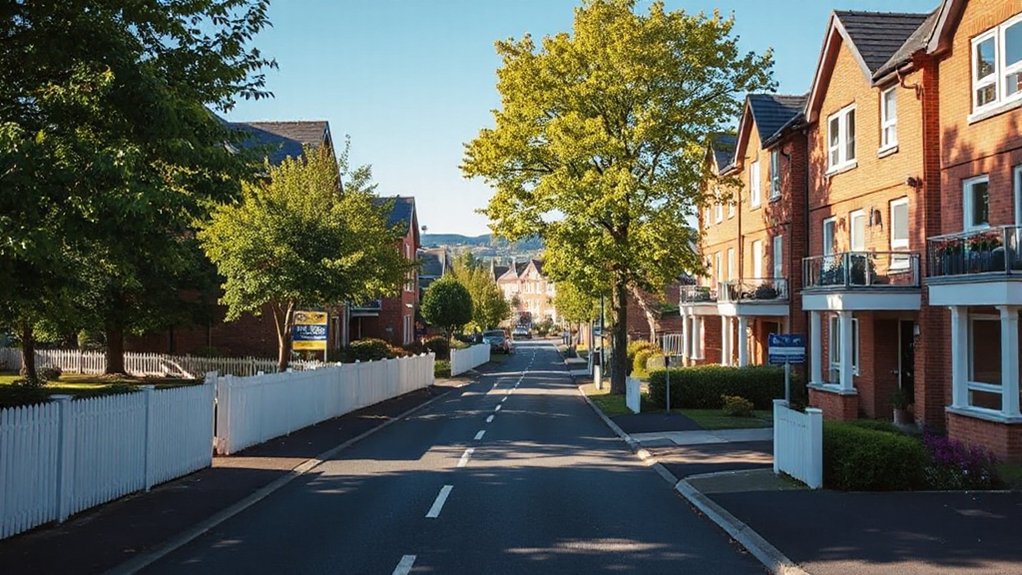
While Belfast’s property landscape remains competitive, the suburbs with the strongest ROI combine affordable entry points, steady price growth, and appealing lifestyle amenities. You can expect tight supply in popular entry zones, supporting modest yield compression yet solid total returns over five years.
Data shows higher ROI where rents track tenant demand from stable demographics, with property taxation scenarios shaping net income. Growth trajectories favor areas near transport links, schools, and mixed-use developments, balancing capital appreciation with cash-flow stability.
Lifestyle metrics—green space, local amenities, and safety—correlate with faster rent growth and lower vacancy. For investors, prioritize suburbs delivering predictable rent-to-price ratios, resilient occupancy, and governance-driven tax incentives.
Look for areas signaling sustainable upward drift, not speculative spikes.
How to Compare Belfast Areas: A Practical 10‑Point Scoring Framework
To compare Belfast areas effectively, use a practical 10-point scoring framework that translates data into actionable insights for buyers and investors. You’ll assess each district on ten criteria: price trajectory, rental demand, occupancy rates, school quality, crime trends, transport accessibility, neighborhood amenities, development momentum, growth potential, and risk factors.
Weight each factor to fit your strategy, then score 0–10 and aggregate for a transparent ranking. Track historical influences, such as legacy planning decisions and urban renewal cycles, to interpret variances over time. Use public data, agent reports, and local sentiment to validate scores.
The framework helps you identify underappreciated pockets and quantify trade-offs, enabling forward-looking decisions that balance cash flow with long-term capital appreciation. This approach keeps your due diligence disciplined and repeatable.
Frequently Asked Questions
What Factors Most Influence Belfast Neighborhood Price Growth Today?
Property tax and local amenities most influence Belfast neighborhood price growth today; you should monitor wage trends, transport upgrades, and school ratings, as these data points forecast demand shifts in the near term, shaping affordable investments and potential gains.
Which Areas Balance Rentability With Long-Term Value Best?
You should target affordable suburbs balancing solid rentability with growth, while watching luxury neighborhoods for appreciation; data shows steady yield in affordable areas and premium upside in luxury zones, guiding forward-looking, risk-aware investments.
How Does Student Demand Affect Rental Yields Citywide?
Student housing drives higher rental demand citywide, boosting yields where demand concentrates; you’ll see diversifying strength as universities expand, with demand-driven rent growth outpacing projections in key corridors, and cautious risk managed through diversified portfolio exposure.
Are There Emerging Hotspots Outside the Usual Districts?
Yes—there are emerging hotspots outside the usual districts. You should watch rising suburbia and hidden gems, as data signals growth, affordability, and rental potential, guiding your investments toward underappreciated neighborhoods with scalable long-term returns.
What Risks Should First-Time Investors Consider in Belfast?
You should factor market fluctuations and property regulations into your plan, as Belfast’s prices swing with demand signals. You’ll want robust due diligence, stress tests, and forward-looking ROI estimates to navigate regulatory changes and potential liquidity shifts.
Conclusion
As you scan Belfast’s market, trust the data: City Centre fuels turnover and rentability, South Belfast adds value through charm, and East Belfast offers entry-level gains near institutions. The Waterfront compounds yields with ongoing regeneration, while Greater Shankill and newbuild corridors carry higher risk but potentially outsized returns. If a theory holds—that diversification reduces risk—you’ll want a balanced mix across core, growth, and suburban pockets. In short: informed, data-driven allocations beat guesswork every time.