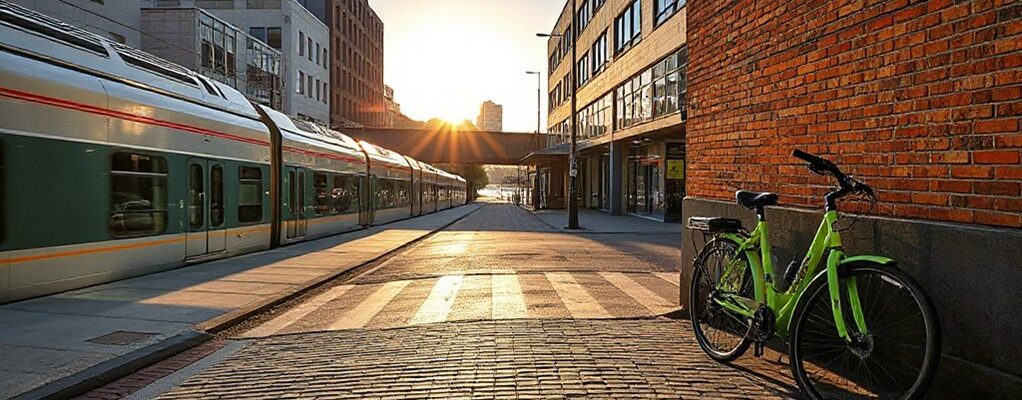
Take a look at a town like Arlington, VA, where affordable housing near Metro lines intersects with frequent trains and buses, delivering a relatively predictable commute versus car-heavy suburbs. You’ll find dense transit corridors, walkable neighborhoods, and mixed-use centers that curb travel time while supporting local economies. Yet value isn’t just price—it’s reliability, fares, and quality of life. Curious how your options stack up across similar towns and what trade-offs you’d accept for long-term satisfaction? Let’s compare the data.
Key Takeaways
- Towns with dense transit routes, all-day headways under 15 minutes, and integrated fare systems offer the best value for commuters.
- Affordable housing near high ridership rail/bus corridors reduces cost per mile and stabilizes rents.
- Transparent pricing, flexible parking, and real-time updates lower stress and improve predictability for daily commutes.
- Mixed-use, walkable town cores with local amenities preserve quality of life while keeping living costs manageable.
- Evaluate trade-offs between time, costs, and convenience, prioritizing access to employers, transit, and wage growth.
What “Value” Really Means for Commuters

Value for commuters isn’t just about the price tag; it’s about the net payoff you actually experience each day. You measure value by time saved, reliability, and predictable costs, not sticker price alone. Data shows that low commuter stress correlates with stable schedules, shorter and smoother trips, and fewer variability-driven expenses.
Practical value also hinges on parking challenges; when parking is plentiful and affordable, you spend less search time and reduce stress-induced decisions. You’ll experience higher perceived safety, clearer commute boundaries, and better access to amenities during predictable windows.
Quantify value by daily hours saved, avoided tolls, and minimized outage risks. When those inputs trend positive, your overall quality of life improves, and long-term affordability becomes easier to sustain through consistent, data-informed choices.
The Anatomy of a Smart Commute Town
Data shows high-performing towns pair dense transit routes with flexible parking schemes, balancing underutilized curb spaces and commuter lots to minimize circling. You’ll notice predictable costs across commute modes, with transparent fare structures and integrated payment apps.
Historical landmarks become anchors for walkable cores, guiding you to culturally relevant signals without added detours. Local cuisine offerings then reinforce a circular, low-stress routine, where quick, dependable access to food options complements your timetable.
A smart town design elevates daily certainty and overall value.
Affordable Housing Hotspots Near Transit
Transit-accessible housing hotspots show up where proximity to rapid or frequent transit aligns with lower housing costs, giving you measurable value per commute dollar.
When you map Affordable Neighborhood Transit Proximity, you’ll see clusters that balance price, distance to stations, and frequency of service, guiding practical choices.
These Value-Oriented Commuter Areas offer data-driven anchors for planning relocations or investments near transit corridors.
Transit-Accessible Housing Hotspots
If you’re weighing where to live near work, the strongest options cluster around transit hubs that balance cost, reliability, and travel time. Transit-Accessible Housing Hotspots concentrate growth near rail and bus corridors with high ridership, enabling lower commute costs and faster trips.
Data shows price-to-distance efficiency improves where multifamily stock intensifies within a half-mile of stations, while stabilization occurs with sustained service frequency. We track vacancy rates, time-on-market, and unit mix to identify resilient pockets that balance affordability and transit access.
Urban renewal initiatives often accompany these hotspots, expanding mixed-use development and improving street networks without sacrificing density. Community engagement guides zoning adjustments, ensuring residents influence design, pricing, and tenant protections, rather than top‑down mandates that undermine long-term value.
Affordable Neighborhood Transit Proximity
Near transit, affordable housing hotspots emerge where vacancy rates stay low, time-on-market tightens, and unit mix prioritizes value. You’ll see pricing leverage when proximity reduces commute costs, while property turnover remains steady enough to sustain supply.
Data show higher occupancy in neighborhoods with accessible bus or rail lines, yet maintenance and management practices keep rents predictable rather than volatile. You should track vacancy duration, rent per square foot, and amenity-adjusted value to gauge true affordability, not just sticker price.
Community engagement matters, shaping resident retention and long-term stability. Neighborhood safety also correlates with sustained demand, as safer corridors attract reliable tenants and lower turnover.
Use these signals to compare markets, focusing on transit proximity’s real, value-driven impact.
Value-Oriented Commuter Areas
Data shows frequent transit usage, modest price growth, and higher occupancy stability near rail nodes and bus corridors. Practical metrics matter: rent-per-square-foot, vacancy rates, and multi-unit composition guide selection, not hype.
You evaluate commute times, reliability, and access to essential services to avoid hidden costs of urban sprawl. The result is a recognizable commuter culture centered on transit-centric living, not car dependence.
Towns With Efficient Rail and Bus Networks
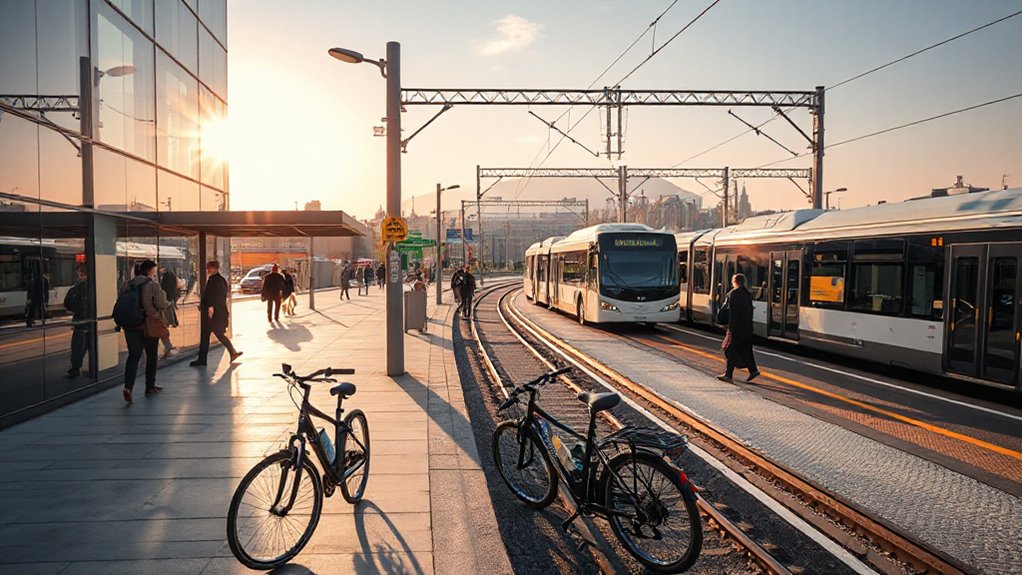
Data show higher mode share for public transit in areas with all-day headways under 15 minutes and integrated ticketing, boosting predictability. Practical benefits include reduced personal car use, lower housing-price volatility near transit corridors, and steadier trip reliability during peak hours.
Community engagement programs—from rider councils to real-time updates—correlate with higher satisfaction and faster issue resolution.
Environmental sustainability gains arise from denser development around stations and lower per-capita emissions. If you value predictable budgets and cleaner air, prioritize towns with transparent performance dashboards and continuous network improvements.
Places Where Local Economies Thrive
Data show higher startup density where civic networks support mentorship, permitting, and access to capital. Community engagement accelerates idea validation, supplier diversity, and pilot programs, translating into tangible value for residents and firms alike.
Local entrepreneurship compounds benefits: steady demand from anchor institutions, diversified revenue streams, and resilient employment even during shocks. If you want sustainable growth, prioritize places that align schools, markets, and transit with inclusive stakeholder participation.
The Hidden Daily Savings of Shorter Drives
Shorter drives quietly compound into daily savings you can measure in real time. You’ll see time saved per trip translate into lower fuel costs, reduced wear, and fewer maintenance surprises when you track mileage and RPMs.
Over weeks, the math adds up: less idle time, fewer stops, and steadier speeds cut fuel burn and engine strain, improving overall efficiency. When you choose routes with gentler grades or fewer traffic snarls, you reduce commute fatigue and keep energy reserves steadier for the workday ahead.
That’s the practical payoff of optimizing distance and timing. The quieter benefit arrives through consistency: scenic routes may offer a steadier cadence, preserving focus without introducing excessive detours or risk.
Data confirms measurable daily gains from smarter, shorter drives.
Quality of Life Factors That Matter to Commuters
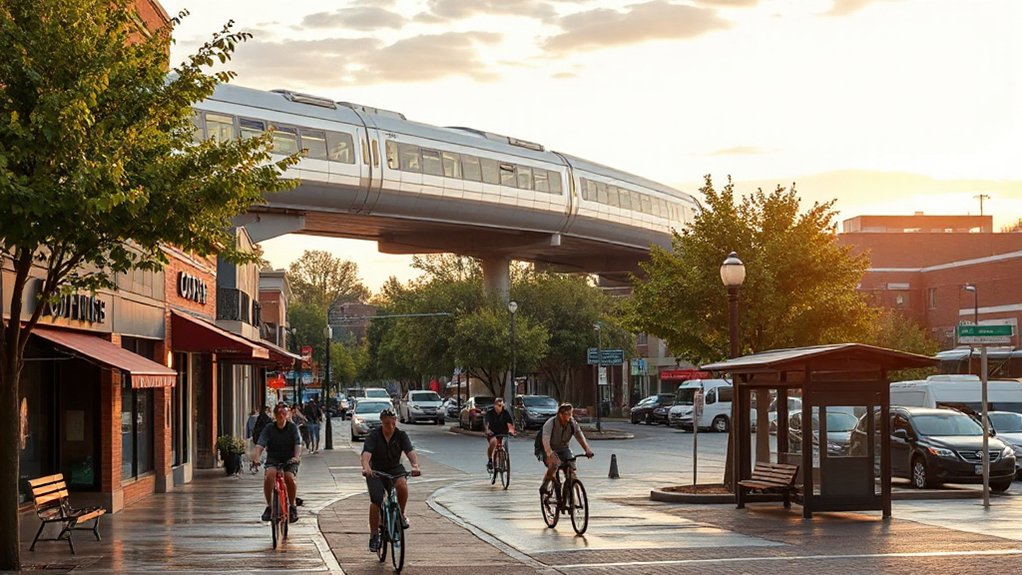
Quality of life factors matter to commuters because they translate routine decisions into measurable well-being and productivity gains. You’ll see how local metrics align with daily routines: travel time reliability, housing cost relative to wages, and access to essential services.
Data show that towns with frequent transit options and bikeable cores reduce downtime, boosting schedule adherence and evening leisure.
You’ll evaluate environmental sustainability through emissions intensity of commuting corridors and green space per resident, linking cleaner air to fewer health lapses and improved focus.
Community engagement metrics—participation in local planning, feedback loops, and visible public investments—signal governance quality and trust.
When these factors converge, overall satisfaction rises, supporting sustained, cost-conscious choices for long‑term value.
Budget-Friendly Living, High-Value Amenities
You’ll see how budget-friendly living intersects with high-value amenities by comparing upfront costs, ongoing expenses, and the frequency of essential services in each town.
The data points you’ll examine include housing costs, public transit, healthcare access, and school quality, all measured against long-term value.
Start with a concise assessment of where you can maximize daily convenience without sacrificing affordability.
Budget-Friendly Living
What makes a town truly budget-friendly for commuters isn’t just low housing costs, but the balance of affordable living with high-value amenities that save time and enhance daily life. You’ll see this in transit-efficient layouts, predictable fuel costs, and affordable essentials that stretch your paycheck.
Data show lower overall living expenses correlate with shorter average commute times and stable housing markets, reducing financial stress. Practical choices matter: proximity to major employers, reliable public transit, and reasonable rental floors keep monthly totals manageable.
Cultural diversity and local cuisine contribute to value through varied, cost-conscious options without forcing premium prices. You gain flexibility to allocate savings toward essential needs, while enjoying rich experiences that fit a commuter budget.
High-Value Amenities
You’ll notice a pattern: compact, mixed-use centers reduce errands, while well‑equipped parks and trails sustain activity without long trips. Data shows residents in these areas spend less on transportation relative to income, while consumer spending on food and leisure remains steady.
Practical impact comes from prioritizing amenities within walking or short transit distances, plus reliable schedules and maintenance. If you’re evaluating towns, weigh density, amenity variety, and seasonal access to outdoor recreation to maximize value.
Local dining options amplify weekly savings; outdoor recreation sustains long-term quality of life.
Case Studies: Top 5 Value-Driven Commute Towns
Here are five towns that stand out as value-driven commute options, based on cost of living, housing affordability, transit access, and job proximity. You’ll notice clear patterns in the data: lower housing costs relative to wages, shorter average commute times, and higher transit usage in supportive networks.
Town A pairs affordable homes with frequent rail service, yielding predictable monthly savings and reliable schedules.
Town B shows strong job clusters within a compact radius, reducing driving miles and parking costs.
Town C blends bus-speed corridors with dense downtowns, boosting daily productivity.
Town D offers digital-enabled transit technology that minimizes transfer friction, improving on-time performance.
Town E combines mixed-use zoning with affordable rental stock, sustaining steady commuter demand.
Across cases, commuter psychology and transit technology shape choices and satisfaction metrics.
How to Evaluate a Town for Your Commute
To evaluate a town for your commute, start by identifying the costs you’re willing to trade for time and convenience, then map those against real-world data: housing prices relative to wages, typical rent, transit fares, and parking costs.
Next, compare commute times across workers’ schedules, noting peak vs. off-peak variances and reliability metrics like on-time performance.
Assess cost per minute of door-to-destination travel, and weigh room for wage growth against living expenses.
Include quality-of-life signals such as access to Historical landmarks and opportunities to sample Local cuisine, which can offset longer drives when time is flexible.
Finally, build a short scoring rubric: affordability, stability, access, and vibe, then rank towns to identify the best value-fit for your routine.
Transit-First vs. Car-Optional Towns: Pros and Cons
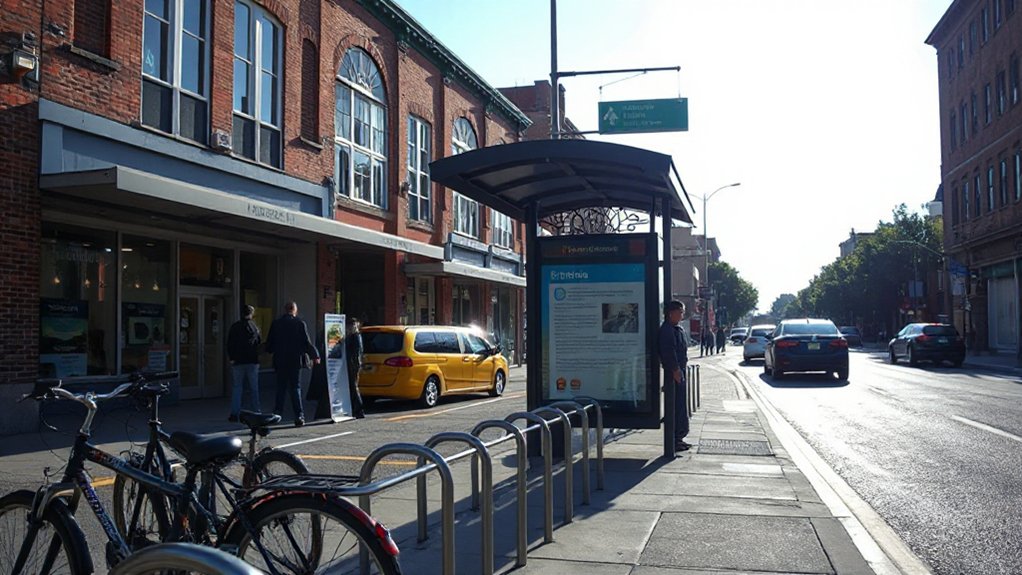
Transit-first towns prioritize rail and bus reliability, lowering per-use costs and shaving commute times when schedules are predictable.
Car-optional towns trade driving flexibility for density-driven savings, but require strong pedestrian networks and zoning to avoid stranded residents.
You’ll want to weigh transit reliability, upfront housing distances, and ongoing mode-share shifts to determine which approach aligns with your budget and schedule.
Transit-First Advantages
Urban commuters gain distinct value when a town prioritizes transit, offering reliable service, predictable schedules, and faster peak-hour trips that car ownership often can’t match.
When you choose a transit-first town, you reduce total travel time variability, lower costs per mile, and improve access equity across neighborhoods.
Data show higher ridership in dense cores, shorter wait times, and more consistent service during congestion episodes.
You benefit from coordinated schedules, multimodal hubs, and frequent feeder routes that expand beyond central business districts.
Transit-first towns tend to contain urban sprawl by concentrating growth near lines and stations, mitigating long commutes.
However, you must monitor transit deserts—areas with sparse coverage—as gaps can undercut value.
Car-Optional Tradeoffs
If you’re weighing transit-first towns against car-optional models, the tradeoffs hinge on reliability, cost, and flexibility. In data terms, car-optional towns reduce fixed commute costs but raise variability in accessibility during peak windows or weather disruptions.
You’ll save on insurance and depreciation when you rely on transit for core trips, yet you trade spontaneity for flexibility. Remote work reshapes this calculus: more days at home cut the value of a vehicle, while hybrid schedules heighten the need for reliable options during non-workdays.
Lifestyle flexibility improves in car-optional towns with spacious, multi-use real estate and bike- or walk-friendly cores. Transit-first towns win on predictability and lower maintenance, but car-optional models win on autonomy during off-peak hours and weekend trips.
The Real Cost of Commuting: Beyond Gas and Rent
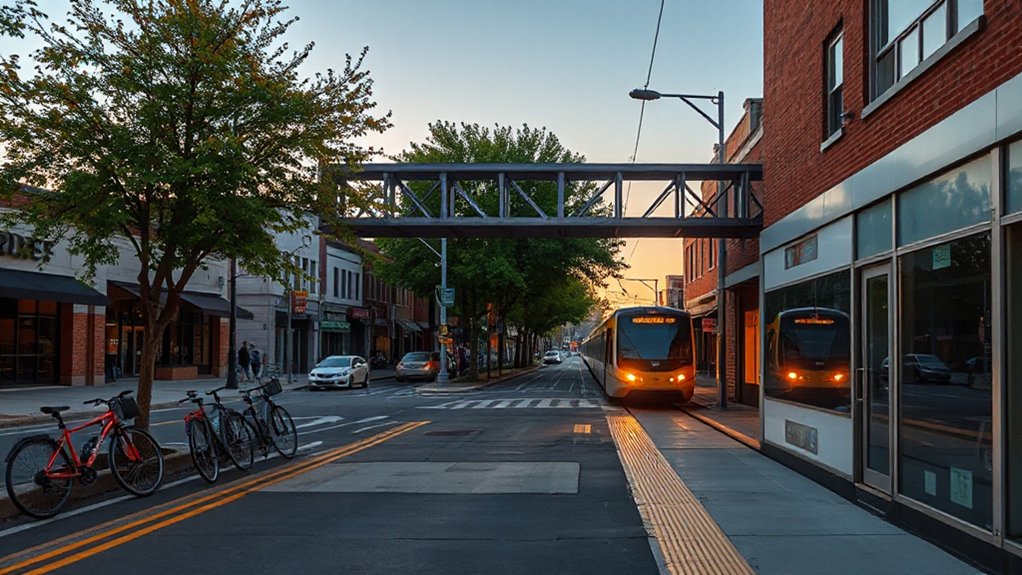
Commuting costs extend beyond monthly bills like gas and rent; overlooked factors—the value of time, reliability, and opportunity costs—often dwarf these obvious expenses.
You’ll see that time wasted in delays translates to slower career progression, stunted leisure, and reduced productivity.
Reliability data shows how schedule variability raises stress and forces costly compromises in childcare, second jobs, or education.
Opportunity costs quantify what you sacrifice by choosing longer commutes, including higher housing standards forgone and less personal development.
When you factor in environmental impact, driving alone or idling more than doubles per-mile emissions versus efficient modes, tightening your total cost of ownership.
This is commuting psychology in action: perceptions of control influence choices, yet objective costs consistently steer you toward value-focused decisions.
Next Steps: How to Test Drive a Town Before Moving
To test-drive a town before moving, start with a structured, data-driven evaluation of daily practicality. Map your commute times across typical weeks, then compare transit reliability, parking costs, and seasonal traffic. Track grocery and healthcare access, school quality if applicable, and time demands for errands, so you don’t misjudge your bandwidth.
Schedule a week of remote work in your potential area to assess internet stability, coworking availability, and time-zone harmony with teammates. Visit neighborhoods at different times to gauge noise, safety, and parking friction. Talk to locals about local culture, amenities, and service consistency.
Gather real-world impressions on cost-of-living shifts, then test social cadence: gyms, social groups, and networking. This data-first approach minimizes surprises after the move.
Frequently Asked Questions
How Do Taxes Affect True Commuting Costs in These Towns?
Taxes raise true commuting costs through higher property tax implications and limited deduction opportunities, you’ll want to compare total bills. You’ll uncover tax deduction opportunities, monitor jurisdiction rates, and quantify costs to decide where you save most.
Which Towns Have the Best Long-Term Value Retention?
Yes, these towns show the best long-term value retention: you’ll see stronger price stability and steady appreciation. You’ll evaluate affordable housing and local job markets, noting resilient demand, slower declines, and data-driven, practical growth patterns.
Do Schools Impact Overall Commute Affordability and Value?
Yes, school quality and neighborhood safety affect overall commute affordability and value; data show higher-rated schools correlate with steadier property value and lower crime improves predictability of costs, making you more confident about long-term investments and travel efficiency.
How Does Climate Influence Daily Commuting Practicality?
Climate adaptation shapes your daily routes, improving resilience against extremes. Seasonal transportation patterns alter reliability, so you adjust schedules, plan backups, and monitor forecasts; you’re data-driven, choosing routes with lower volatility and higher consistency for cost-effective commutes.
What Are Hidden Transit Fees to Watch in Towns?
Watch for Transit fare spikes and Hidden charges like peak surcharges, transfer fees, and card maintenance. You’ll compare routes with data, track total monthly costs, and budget contingencies, ensuring practical, analytics-based decisions instead of relying on surface figures.
Conclusion
You’re not hunting for a place to live—you’re engineering your daily routine. By weighing housing costs, transit reliability, and local opportunity, you’ll pinpoint a town that cuts time and expense without compromising quality. Think of it as building a bridge: steady, data-driven supports on both ends, and a clear path across. Test drive neighborhoods, compare fare systems, and map commute scenarios. When the numbers align with your lifestyle, you’ve found your ideal, affordable commute town.