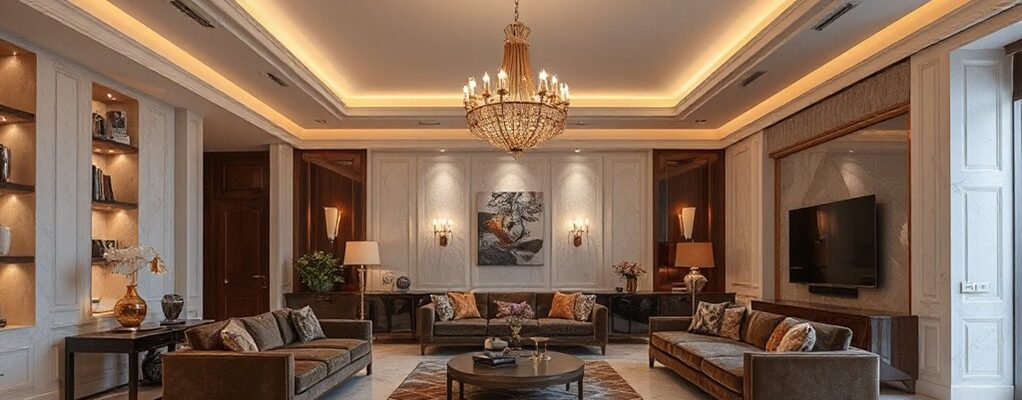
You might not realize how tiny lighting choices reshape space until you stand in a room and notice how each shadow and glow edits textures. You’ll want a layered plan—ambient, task, and accent—tuned with dimmable, tunable fixtures to adapt to mood and time. Sculptural chandeliers can anchor elegance, while subtle cove lighting adds depth without noise. Ready to see how materials, finishes, and CRI influence luxury from every angle?
What Makes Lighting Truly Luxury in Homes: Core Criteria
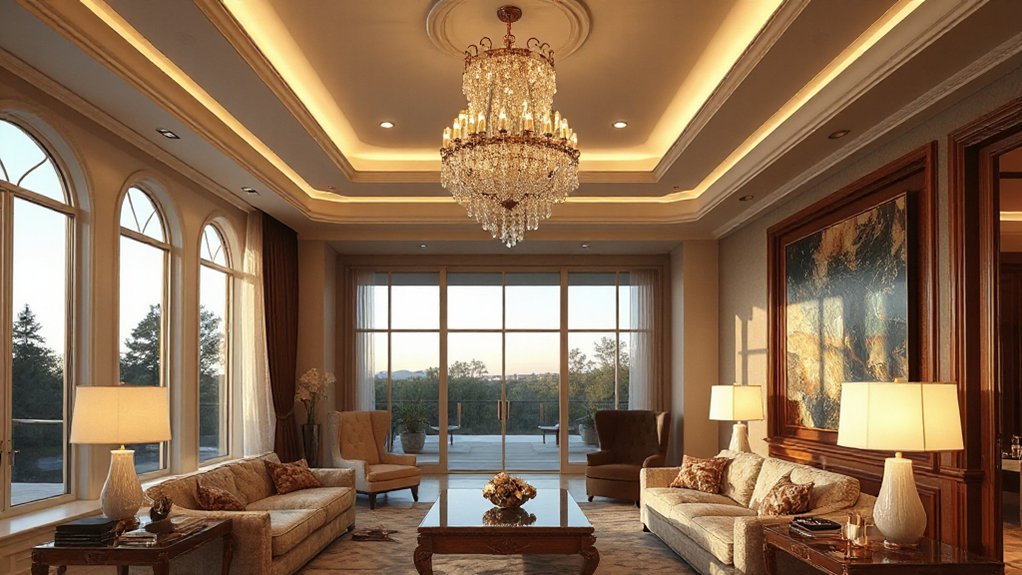
Great lighting in luxury homes isn’t about showy fixtures alone; it’s about how light enhances mood, texture, and function. You’ll recognize luxury when lighting serves intent: it sculpts space, guides perception, and respects provenance. Core criteria hinge on quality, control, and context.
Lighting technology informs efficiency, color accuracy, and adaptability, letting you tailor scenes to occasions without abandoning elegance. Historical influences matter: timeless design cues and evolving tech converge to create calm, purposeful illumination rather than glare or excess.
A true luxury scheme balances brightness with depth, ensuring shadows reveal texture and form without overpowering detail. You deserve versatile layers—ambient, accent, and task—adapted to architecture, materials, and daily rhythms.
Precision in specification, installation, and maintenance preserves consistency, comfort, and enduring value.
Master Layered Lighting: Ambient, Task, and Accent
Master layered lighting blends ambient glow with focused task light and strategic accents, creating a cohesive mood you can feel and use.
Start by aligning ambient layering essentials with the right brightness and color temperature, then weave task and accent elements to highlight key features without glare.
This balance lets you sculpt space and function with clarity, precision, and luxury.
Ambient Layering Essentials
Ambient layering is the backbone of a refined interior, balancing light levels so spaces feel cohesive and inviting while avoiding harsh glare or flatness. You’ll shape the mood by pairing dimmable sources with strategically placed fills, ensuring every zone breathes with Layered ambiance rather than harsh isolation.
Begin with a soft ceiling wash to create even illumination, then introduce warm billets of light at eye level for depth and readability. Use coves, behind-mirror hides, and wall-washes to sculpt contours without ringing shadows.
Keep color temperature consistently warm to preserve intimacy, and align fixtures to emphasize architectural cues. Focus on lighting contrast where brighter accents cue activity without overpowering surrounding calm.
Precision in layering delivers a refined, flexible atmosphere you can adapt as moments shift.
Task and Accent Harmony
To achieve cohesive lighting, blend task and accent layers with the same care you apply to ambient foundations: define practical, glare-free work zones while punctuating them with focal highlights that draw the eye and reveal architectural details.
In practice, Task coordination means selecting luminaires that support daily activities without creating hot spots or shadows. Place adjustable task lights at desks, vanities, and work surfaces, achieving even, directed brightness where you need it most.
Accent balance requires deliberate contrast—hotter, cooler, or warmer tones should align with material palettes to emphasize texture and form.
Guarantee switches and dimmers synchronize across zones for seamless progressions. Calibrate color rendering to reveal true finishes, while maintaining quiet, unobtrusive profiles that never compete with architectural lines.
Let Sculptural Chandeliers Take Center Stage
You center your space around a sculptural chandelier, letting it become the centerpiece of light. Its sculptural form acts as a spotlight, drawing the eye and defining the room’s rhythm.
Through ornament, you craft ambience that feels deliberate and refined.
Centerpiece Of Light
This centerpiece lighting becomes a deliberate focal point, guiding attention and anchoring furniture arrangements around its silhouette. Choose forms with balanced scale and material honesty—crystal refracts, metal reflects, fabric diffuses—so the glow reads as intentional art rather than decoration.
Consider dimmable drivers to modulate intensity and preserve the chandelier’s presence from dusk to night.
Placement matters: suspend at eye level or slightly higher to maximize silhouette drama without overpowering the surroundings. Let the fixture’s character dictate color warmth and contrast, creating a cohesive, refined ambience that elevates the entire interior.
Sculptural Form Spotlight
Sculptural chandeliers command attention by shaping the room’s silhouette as much as by illuminating it, turning light into a declared art form. When you select a sculptural form, you’re choosing a focal piece that translates architectural intent into luminance. Each curve, angle, and negative space becomes part of the composition, guiding eye movement and defining scale.
Spotlight design is essential: position, beam width, and intensity must harmonize with the chandelier’s presence, avoiding clash with surrounding architecture. Consider materials and finish for cohesion with your luxury palette, balancing reflectivity with warmth.
A well-conceived sculptural form yields both ambient glow and accent, creating depth without overpowering features. Prioritize craftsmanship, proportion, and delivery timing to guarantee installation reveals the chandelier’s intended drama.
Ambience Through Ornaments
Let the chandelier’s silhouette frame architecture, create shadow play, and reflect architectural finishes with intentional metal, glass, or crystal interplay.
Ornament accents matter: they should enhance proportion, not clutter it, balancing scale with nearby fixtures and furniture. Treat decorative fixtures as focal points, not background light, so they dictate rhythm across sightlines.
Consider dimmable layers that modulate mood without sacrificing design intent.
In high-ceiling rooms, a bold, sculptural form becomes a defining jewel; in intimate spaces, a refined piece adds texture and warmth.
The goal is cohesive luminosity that reads as curated sculpture.
Subtle Recessed and Cove Lighting for Depth
Subtle recessed and cove lighting can transform a luxury interior by adding depth without drawing attention to the fixtures themselves. You guide the eye along architectural lines, creating a multi-layered glow that enhances textures and silhouettes.
Recessed lighting sits flush with ceilings, delivering even, controlled illumination that punctuates art, cabinetry, and architectural features without glare.
Cove lighting, tucked into coves or beneath trim, yields a soft, indirect halo that lifts ceilings and expands space.
The key is contrast: keep direct brightness low, offset with warmer tones to evoke intimacy. Use dimmers to modulate scenes from daylight to evening richness.
Choose high-CRI sources to preserve true material color, and align beam angles to accent focal points without creating hotspots.
Subtlety here elevates sophistication.
Color Temperature to Flatter Skin and Materials in Luxury Interiors
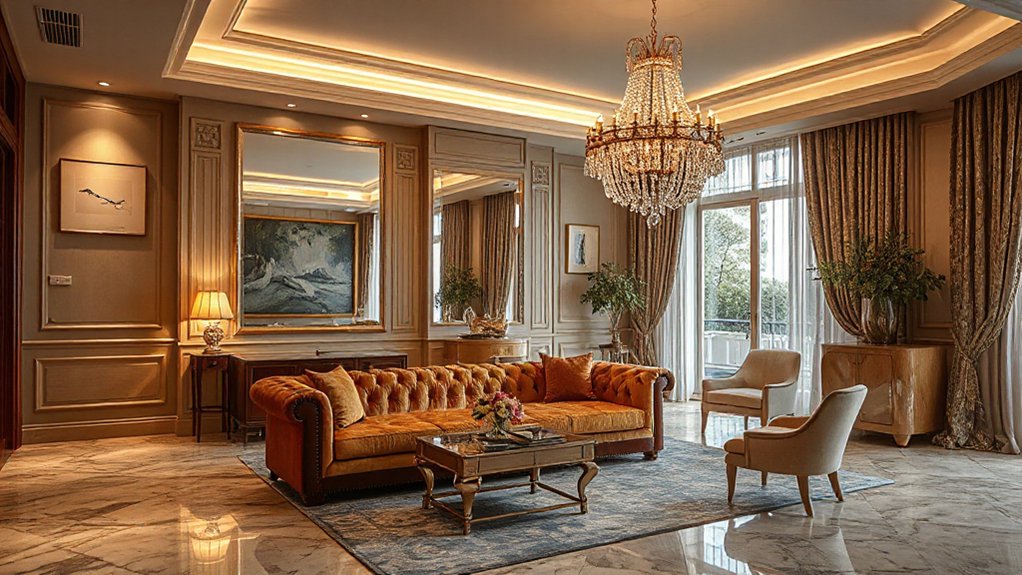
Color temperature is the compass you use to flatter skin tones and highlight materials, guiding perception from warm, inviting hues to crisp, sophisticated whites. In luxury interiors, you fine‑tune the mood with deliberate temperature adjustment, matching textiles, metals, and finishes to create cohesive scenes.
Warmer temps (2700–3000K) soften complexions and enrich wood and brass, while cooler temps (3500–4100K) sharpen architectural details and elevate marble, glass, and polished metals.
Balance is key: vary light sources to avoid color casts and guarantee consistent color rendering across rooms. Practice color harmony by assigning a dominant temperature for each zone, then mix accents that harmonize rather than clash.
Use dimming to control perceived warmth and reveal texture, depth, and refinement without sacrificing clarity.
Creating Timeless Ambiance With Smart Lighting Scenes
Smart lighting scenes transform living spaces by coordinating brightness, color temperature, and timing to sustain a timeless mood. You set up progressive lighting that shifts with the moment—bright focal points for tasks, softer washes for conversation, and warmer tones at evening wind-down.
Smart controls streamline this process, letting you program presets that align with daily rhythms or special occasions. With mood settings, you can tailor atmosphere to match your taste—from serene and traditional to vibrant and contemporary—without manual fiddling.
The key is consistency: gradual changes feel natural, not abrupt. Integrate sensors to adapt to daylight changes, ensuring the ambiance remains balanced.
A well-crafted scene collection preserves luxury through understated shifts, enhancing textures, materials, and architectural lines without shouting for attention.
Metal, Glass, and Crystal Accents: How They Sparkle
Metal, glass, and crystal accents catch the eye by refracting light in precise, intentional ways. You’ll notice how metal accents sharpen lines and create a refined silhouette, while glass surfaces bend illumination to add depth.
Crystal sparkle punctuates moments of drama, catching a chandelier or a sculptural vase as it drifts from warm to cool tones. In practice, pair metal with soft textures to prevent glare, and let crystal sparkle be your focal cue in an otherwise restrained palette.
Consider placement at eye level or along sightlines to maximize impact without overwhelming the room. Dimmed ambient light enhances the shimmer, revealing subtle color shifts.
The result is a curated, luminous hierarchy that feels deliberate and timeless.
Grand Entry Fixtures That Make a First Impression
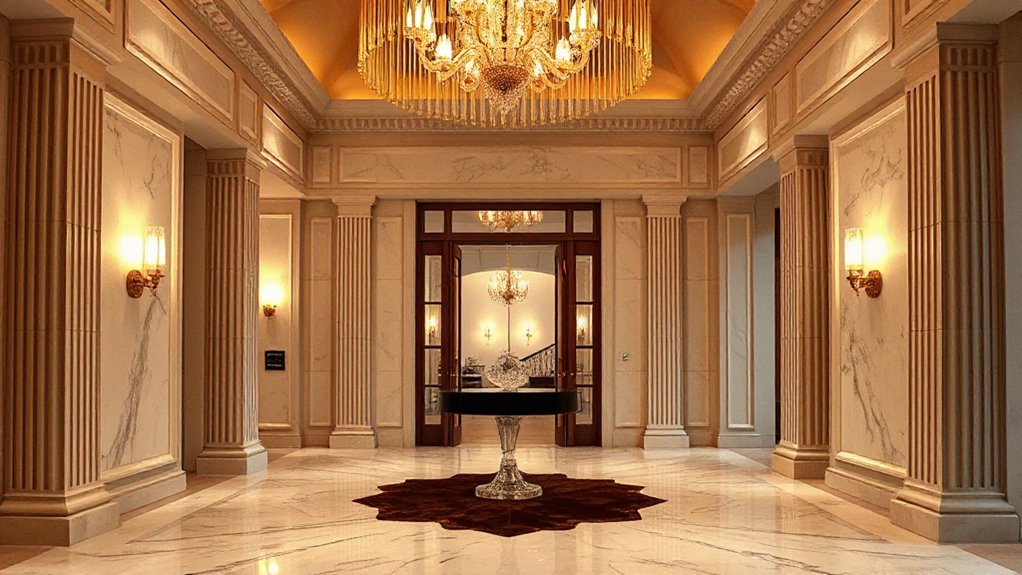
A grand entry sets the tone the moment you step inside, and the right fixture can do more than illuminate—it announces your style. You’ll choose a centerpiece that commands attention without overpowering architecture, balancing scale with ceiling height and proportion with surrounding details.
Look for fixtures that blend material richness—polished metal, crystal prisms, or sculpted glass—with warm glow to shape entryway ambiance. Layer light by combining a dramatic focal piece with subtle downlighting and wall washes, ensuring a welcoming, cinematic first impression lighting.
Consider dimmable options to shift from arrival to daily use, preserving atmosphere while saving energy. Precision in placement matters: centered above the foyer, aligned with doors, and reflecting in nearby mirrors for depth.
The result is a memorable, elegant threshold.
Moody Libraries: Lighting for Rich Texture and Contrast
Moody libraries thrive on contrast: deep shadows, warm pools of light, and textures that invite you to linger. You design with layered illumination that highlights architectural details while preserving intimate nooks for reading.
Use wall sconces at eye level to cast gentle, directional glow, then add a ceiling fixture to wash the space with ambient warmth without flattening texture. Incorporate task lighting at desks and reading chairs to define functional zones, avoiding glare that disrupts library ambiance.
Choose finishes and materials with varied reflectance—matte wood, brushed metal, and leather—so light travels and recedes gracefully. Apply contrast techniques by pairing warm-toned bulbs with cooler accents in artwork or shelves.
Balance intensity, height, and shadows to maintain depth, clarity, and a refined, immersive mood.
Spa-Like Bath Lighting: Calm, Warm Glow
Spa-like bath lighting embraces a calm, warm glow that soothes as it reveals details. You design this space to feel refuge, not glare, balancing function with mood.
Use layered layers of light: overhead fixtures for even coverage, vanity lights to eliminate shadows, and subtle wall washer accents to sculpt depth.
Choose warm temperatures around 2700 to 3000 Kelvin, delivering a relaxing ambiance without washing textures flat.
Dimmers matter; you’ll modulate intensity for morning routines or evening soaking, preserving serenity while maintaining clarity.
Avoid harsh chrome; opt for softly brushed metals or frost diffusers that soften reflections.
Consider water-resistant LED strips behind mirrors for ambient halo and task accuracy.
The result is warm illumination that elevates ritual, heightening calm and luxury.
Elegant, Practical Kitchen Lighting for Luxury Homes
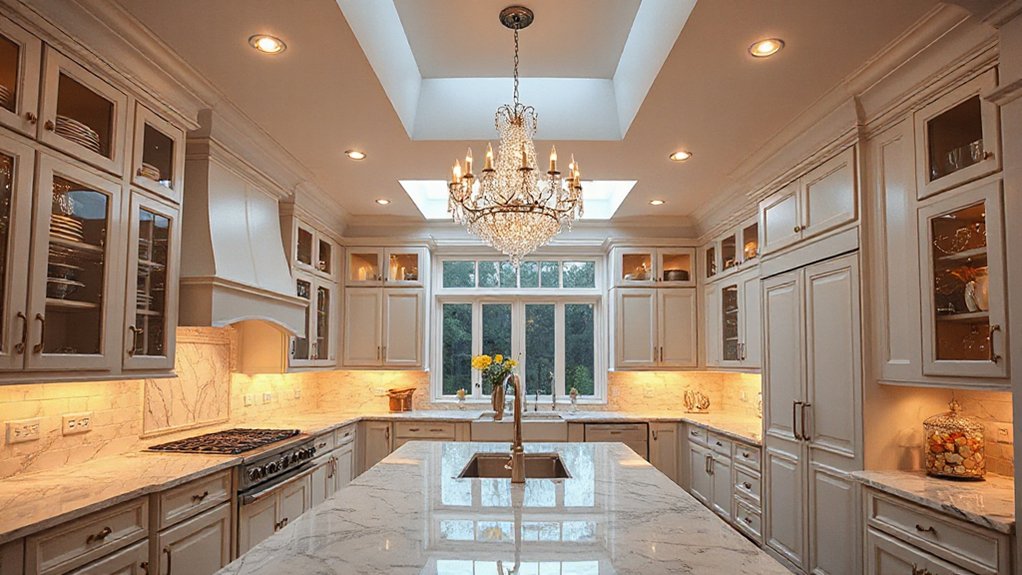
But you don’t have to choose between function and beauty: elegant, practical kitchen lighting for luxury homes blends both, delivering bright, even task light while shaping atmosphere. You’ll prioritize layered layers: recessed ceiling fixtures for glare-free work, under-cabinet strips for precise prep, and a central chandelier or pendant cluster to anchor the space without sacrificing efficiency.
Vintage fixtures can introduce character without compromising modern performance, pairing brass or pewter tones with dimmable LEDs for adjustable mood. Choose color temperature around 3000–3500K to maintain warmth during gatherings yet stay daylight-bright for tasks.
Natural illumination should be harnessed through strategically placed windows and reflective surfaces, balancing shadows and highlights. Guarantee controls are intuitive, zoning light by zone, so every countertop, island, and stove reads clearly and cohesively.
Outdoor Luxury Lighting: Patios, Facades, and Pools
As your indoor lighting emphasizes warmth, outdoor luxury lighting extends that mood to patios, facades, and pools with thoughtful layering and control. You build depth by combining ambient, task, and accent layers: soft wall washes frame architectural features, discreet downlighting highlights textures, and concealed uplights sculpt trees or facades.
For patios, choose weatherproof fixtures in warm tones to create inviting evenings, while ensuring glare is managed for comfortable viewing. Pathways deserve deliberate illumination; pathway illumination guides foot traffic with safety and elegance, using recessed or low-profile luminaires that blend into surroundings.
Garden lanterns add romance and focal points along borders or garden rooms, creating visual anchors without overpowering views. Integrate smart controls to adjust brightness with time, mood, and activity, preserving cohesion across outdoor spaces.
Dimmer Zoning by Room Type
In kitchens and bathrooms, precise brightness levels improve function while preserving mood. Room specific lighting means calibrating fixtures to height, color temperature, and activity, ensuring no zone overpowers another.
Use layered controls: central dimmers for general mood, targeted accents for texture, and ambient backlighting to soften edges. By zoning thoughtfully, you create cohesive atmospheres that respond to time of day, occasion, and occupancy, elevating luxury without complexity or excess.
Sustainable Luxury Lighting: Efficient Choices
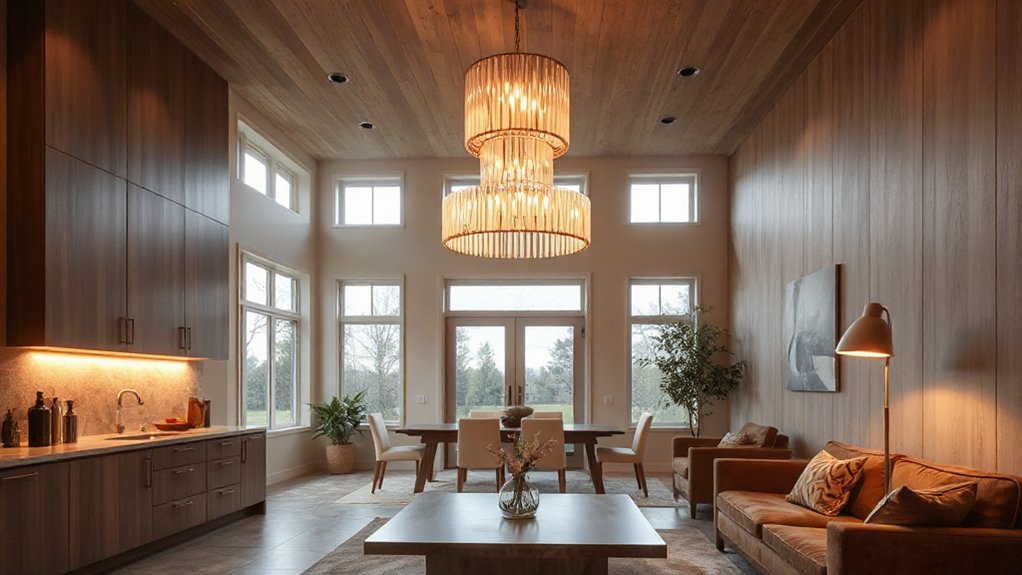
You’ll balance energy efficiency with exceptional light quality by choosing LEDs with high color rendering and steady, flicker-free output.
Prioritize sustainable materials in fixtures and packaging, ensuring long life and minimal environmental impact without compromising brightness.
This approach aligns Energy-Efficient Light Quality with Sustainable Material Selection, guiding you toward luminous, responsible luxury.
Energy-Efficient Light Quality
In energy-efficient lighting, you don’t have to compromise on light quality to save power. When selecting sources, prioritize high color rendering and consistent flicker-free output, so rooms feel natural rather than clinical.
You’ll notice that smart fixtures help optimize performance, adjusting brightness and color tone to fit activities and times of day without waste. Favor LEDs with a color rendering index (CRI) around 90 or higher for true hues in fabrics, artwork, and finishes.
Consider tunable white options to shift from warm to cool as needed, yet maintain energy savings. Plan zoning that pairs ambient, task, and accent layers to preserve depth and atmosphere.
Efficient light quality means clear visibility, flattering shadows, and a luxurious, sustainable glow.
Sustainable Material Selection
Sustainable luxury lighting starts with the materials that enclose and support it. You choose with intention, prioritizing durability, provenance, and lifecycle impact. Start with eco-friendly fixtures that combine refined aesthetics with efficient performance, reducing waste and emissions from production to disposal.
Seek luminaires crafted from renewable materials—bamboo, responsibly sourced wood, recycled metals, or high-quality composites—so beauty and responsibility align. Assess finish types for longevity and repairability, avoiding coatings that trap pollutants or degrade quickly.
Factor manufacturing ethics, transport footprint, and end-of-life options to minimize ecological baggage. Design cohesion matters: materials should echo architectural language and resist patina loss.
Debunking Common Lighting Myths (What to Question)
Myth busting in lighting isn’t about chasing trends; it’s about asking the right questions to reveal what actually works in a space. You’ll challenge common assumptions by testing outcomes against function, mood, and usability.
Question lighting stereotypes that pair brightness with inadequacy, or big fixtures with luxury alone; consider scale, color rendering, and glare control instead. Look beyond wattage to balance, hierarchy, and texture, ensuring illumination supports architecture and daily tasks.
Clarify about illumination misconceptions: more color accuracy isn’t always best for every room, and cooler tones don’t guarantee efficiency.
Assess layered lighting—ambient, task, and accent—and how each layer interacts with natural light.
Finally, insist on personal relevance: what feels like luxury to you must also serve comfort, atmosphere, and practicality.
Hiring the Right Expert: Questions to Ask Pros
When you’re hiring the right expert, start with interview-ready questions that reveal how they approach lighting, timelines, and collaboration.
You’ll want clear checks for expertise verification—confirm certifications, past project scope, and results that align with luxury standards.
This sets up a precise path for evaluating who truly matches your vision and can deliver the expected quality.
Interview Key Questions
Choosing the right lighting expert starts with sharp questions that reveal experience, process, and fit. You’ll want to probe project scope, timelines, and how they translate luxury vibes into practical design.
Ask about lighting aesthetics: how they balance mood, color rendering, and functional layering across spaces. Inquire about their typical workflow, from concept sketches to on-site tweaks, and how client input is integrated.
Clarify budget drivers, supplier networks, and their approach to decorative fixtures without compromising performance. Request examples of past residential projects that mirror your style, and ask for measurable outcomes, like glare control and energy use.
Finally, assess collaboration style and communication cadence to ensure you’ll receive proactive updates and precise oversight.
Expertise Verification Steps
To verify expertise effectively, start with targeted questions that reveal depth, breadth, and consistency across projects. Ask about Lighting aesthetics beyond trends, how they adapt to scale, and the tonal balance they’ve achieved in similar luxury spaces.
Probe project scope: design intent, timelines, budget discipline, and how they handle changes without compromising quality. Request concrete examples of fixture placement that optimize both function and ambience, plus rationale for selections in varying architectural contexts.
Inquire about collaboration with electricians, acousticians, and interior designers to ensure cohesive outcomes. Seek performance metrics: glare control, color rendering, and energy efficiency.
Finally, request references and a portfolio path that demonstrates measurable impact on mood, usability, and resale value.
Frequently Asked Questions
How to Balance Luxury Aesthetics With Energy Efficiency?
You balance luxury aesthetics with energy efficiency by Smart integration and natural accents, you optimize dimming and zoning, choose LED fixtures, and pair warm hues with daylight harvesting, ensuring sophisticated ambiance alongside sensible consumption.
What Lighting Controls Suit High-End Open-Plan Spaces?
You’ll pair smart dimming with layered layers, using scenes that adapt to tasks and mood; integrate decorative chandeliers as focal points, and employ zone controls to preserve flow, efficiency, and drama across open-plan spaces.
Which Fixtures Maximize Perceived Room Height and Depth?
You’ll maximize height and depth with Smart dimming and slender fixtures; opt for statement chandeliers that pull the eye upward, and install recessed scales to create shadows and distance. This keeps rooms appearing higher, longer, and more expansive.
How to Choose Bulbs for Long-Term Color Fidelity?
You should prioritize bulbs with high color rendering index and steady output; choose long-lasting LEDs, aiming for CRI 90+, and look for products rated for 25,000+ hours to guarantee bulb longevity and consistent color rendering over time.
What Maintenance Keeps Luxury Lighting Flawless?
Like a quiet maestro, you maintain flawless luxury lighting by following smart dimmers and meticulous maintenance routines, adjusting, cleaning, and testing components regularly to prevent flicker, heat, or dimming failures, ensuring consistent ambience and peak performance.
Conclusion
You enter a room and find its pulse—light guiding you like a quiet streetlamp homeward. The layered glow becomes a compass, skin and stone revealing their true hues. A sculptural chandelier stands as a quiet oracle, while recessed whispers carve depth. Temperature, dimming, and sustainable choices weave a trusted map you can follow, room after room. Trust the process, question softly, and let your space mirror who you are—bright, balanced, and endlessly refined.