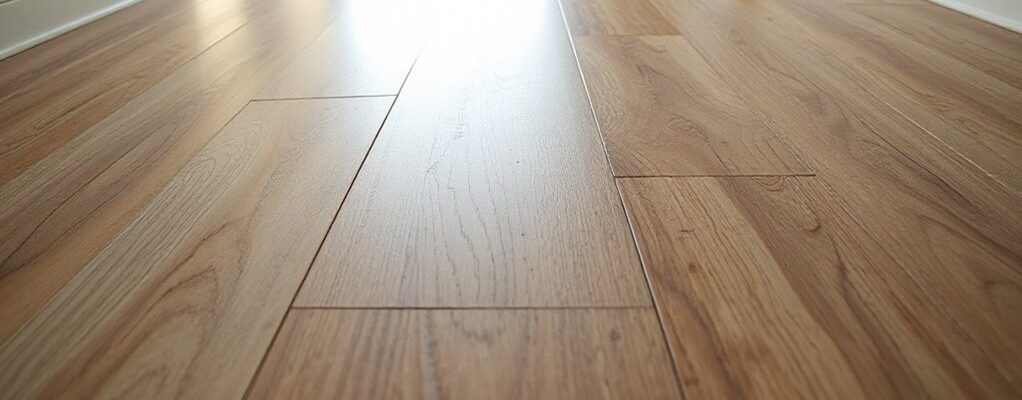
Like a quiet backbone beneath footsteps, the right flooring choices define your flat’s acoustic performance. You’ll prioritize impact sound reduction, durability, and cost, guided by standards and evidence on underlays, materials, and installation. You’ll evaluate cushioned vinyl, cork, engineered wood with underlayment, and carpet tiles for targeted absorption and long-term performance. But decisions hinge on how these options meet sound regulations in practice, so consider how each option stacks up in your specific layout and budget.
How to Choose Quiet Flooring for Flats With Noise Rules

When choosing quiet flooring for flats with noise rules, start by identifying the specific sound transmission class (STC) and impact insulation class (IIC) requirements your jurisdiction or building code mandates.
You’ll evaluate products by testing standards such as ISO, ASTM, and CE specifications to guarantee compliant STC/IIC performance.
Prioritize floor-ceiling assemblies with proven decoupling, resilient underlay, and appropriate mass per area to meet required thresholds.
Consider ongoing maintenance, installation tolerances, and compatibility with existing structures to prevent gap-induced leakage.
Decorative patterns and color options should align with code-compliant underlayment choices and not compromise acoustic performance.
Document manufacturer data sheets and third-party test reports, then verify installation details with the building manager to sustain long-term acoustic compliance.
Key Criteria: Impact Sound, Durability, and Budget
You’ll assess impact sound reduction, selecting materials that meet tested performance thresholds for flat living.
Durability and budget are weighed together, balancing long-term maintenance costs against upfront price under standard guidance.
You’ll also consider installation implications, as proper method can influence both sound performance and overall durability.
Impact Sound Reduction
What’s the most effective way to reduce impact sound in flat floors while balancing durability and budget? You evaluate impact sound reduction by selecting assemblies that meet tested impact insulation class (IIC) targets and comply with local building standards.
Subfloor decoupling, resilient layers, and mass-adding materials collectively lower impact transmission, but costs and install effort vary. Prioritize proven floor-ceiling assemblies with documented field results and standardized lab data.
In practice, combine a gypsum-based underlayment with a resilient channel or floating subfloor, then add surface finishes suited to occupancy. Use soundproofing adhesives where bonding is required between layers to minimize vibration transmission.
Consider acoustic wall panels as a retrofit to wall adjacent spaces to further reduce airborne leakage. This approach emphasizes measurable performance, durability, and cost containment.
Durability Vs. Budget
Durability and budget must be balanced against impact performance, with each choice rated for IIC improvement, long-term resilience, and installed cost.
You should compare flooring options by expected service life, maintenance needs, and replacement intervals, tying results to measurable standards.
In practice, resilient compositions typically deliver better impact mitigation per cost unit, yet may require specialized underlay or installation to meet acoustic criteria.
Flooring aesthetics influence perceived durability and value, guiding selection alongside documented performance.
Material sustainability factors—embodied energy, sourced content, and end-of-life recyclability—drive long-term cost effectiveness and regulatory compliance.
Choose options with proven track records in flats, supported by independent test data.
Prioritize low maintenance, verified durability, and cost predictability to optimize overall performance within budget constraints.
Installation Considerations
Installation Considerations: when selecting flooring for flats, you must balance impact sound performance, long-term durability, and total installed cost, all while ensuring the assembly meets applicable building codes and standards.
You evaluate underlayment systems for impact isolation, quantify impact insulation class (IIC) and sound transmission class (STC) targets, and verify through tests compliant with referenced standards.
Durability requires wear layer thickness, core resilience, and resistance to indentations, moisture, and environmental cycling.
Budgeting hinges on lifecycle cost, installation complexity, and future replacement needs.
Document compatible substrates, fastening methods, and edge detailing to minimize squeaks and gaps.
Plan decorative patterns and color options that maintain performance cues, allowing consistent acoustical performance across progressions.
Choose coatings or sealants aligned with maintenance cycles to preserve long-term effectiveness and compliance.
Cushioned Vinyl for Quiet Flats
Cushioned vinyl offers quiet flats a balance of comfort and sound dampening, delivering an underfoot feel similar to foam-backed options while maintaining low acoustic transmission. You gain pharmacokinetically predictable performance through dense, closed-cell construction that reduces impact noise without substantial mass loading.
Standards-driven testing confirms impact isolation ratings and critical radiant flux remain within typical residential ranges, supporting compliance in noise-control plans.
Eco friendly materials are increasingly specified, with recycled content and low-VOC formulations contributing to healthier interior environments.
Durability is evidenced by dimensional stability under traffic and low wear-layer loss, supporting longer service life with minimal maintenance.
Aesthetic appeal is preserved by uniform color guidance and embossed textures that align with architectural detailing while preserving acoustic performance.
Cork Flooring for Comfort and Sound Dampening
Cork flooring offers a balance of comfort and acoustic performance, delivering a soft, resilient surface that reduces impact noise while maintaining walkability underfoot. You’ll find cork’s natural elasticity contributes to lower vibration transmission, which is advantageous in multiunit buildings.
Cork resilience stems from its closed-cell structure and suberin content, enabling consistent performance under typical residential loads. When selecting sound control, prioritize products with certified ISO or CE testing data demonstrating impact and air-borne sound reductions.
Sound absorption techniques in cork systems often involve dense wear layers combined with underlayment decoupling to enhance performance without sacrificing comfort. You should verify dimensional stability under humidity cycling and guarantee installation adheres to manufacturer guidelines.
In practice, the latest standards indicate measurable improvements in impact-classification ratings for cork floors in noise-sensitive flats.
Engineered Wood With Acoustic Underlay
Engineered wood paired with an acoustic underlay provides a durable, dimensionally stable option for flats while delivering improved room acoustics. You select a core material that minimizes seasonal expansion, paired with underlay meeting standards for impact sound insulation and thermal performance.
Use a trusted installation method to guarantee uniform contact, edge compression, and seams sealed to prevent voids that escalate noise transfer. The system reduces airborne and impact noise when paired with dense underlays and correct thickness recommendations, aligning with building codes and noise-control guidelines.
Atmospherics matter: choose finishes that preserve flooring aesthetics without compromising acoustic performance. Evaluate environmental impact by considering SFCs, recycled or FSC-certified materials, and adhesive emissions.
Balance longevity, maintenance, and cost to optimize overall resilience and occupant comfort.
Carpet Tiles for Sound Reduction and Flexibility
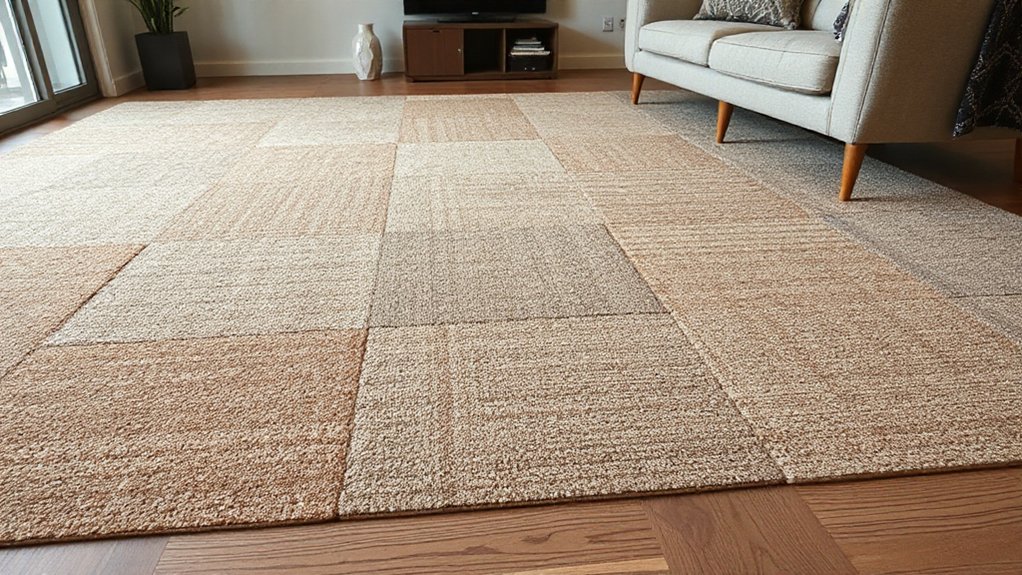
Carpet tiles offer a modular, acoustically responsive option for flats, enabling targeted sound reduction and flexible room layouts. You achieve acoustic design objectives by selecting tiles with high-density polypropylene or PVC-free backing and a closed-loop fiber system, which minimize airborne and impact noise transmission.
The tiles’ modularity allows rapid reconfiguration to adapt to evolving noise rules and occupancy patterns without full floor replacement. For performance, cite tested impact insulation class (IIC) improvements and airborne sound reduction figures per relevant standards, ensuring documented Noise mitigation outcomes.
Consider alignment with floor-ceiling assemblies and connectors that prevent seam gaps, preserving continuous surface behavior. Use color and texture strategies judiciously to maintain aesthetics while preserving acoustic performance.
Document specifications, test reports, and maintenance plans to support ongoing compliance.
Underlays and Underlayment Options You Should Consider
Underlays and underlayment choices set the stage for the performance of flat-floor assemblies, balancing impact and airborne noise control with durability and installation practicality. You should evaluate the material’s density, compression resistance, and thermal behavior to meet relevant standards for impact class and R-value where required.
Choose products with verified acoustical ratings, compatible with the chosen flooring materials and room conditions, to avoid delamination or acoustic gaps. Consider thickness, stiffness, and load-bearing capacity to prevent sagging or telegraphing through finishes.
Verify installation tools compatibility, seam tolerances, and moisture mitigation requirements in substrate assessments. Document test data from independent labs and ensure manufacturer instructions align with local building codes.
Flooring materials selection and proper installation tools integration maximize both sound performance and long-term durability.
How to Install for Maximum Sound Dampening
You should begin with layered sound-damping structures, combining resilient underlayment with a continuous air barrier to minimize flanking transmission.
Choose underlayment materials rated for impact and airborne sound reduction, and install per manufacturer specs to guarantee consistent performance.
Use sturdier installation techniques—proper fastener spacing, full-surface adhesive, and meticulous joints—to preserve the intended sound-dampening characteristics.
Layering for Sound Proofing
How can you maximize sound dampening when layering for floor isolation? You achieve this by a disciplined sequence that preserves mass, decouples textures, and minimizes flanking paths.
Begin with a rigid decoupler or resilient layer to raise the floor’s natural frequency above dominant footsteps and impact sounds, then place a continuous primary mass layer with tightly bonded seams. Include an interface seal to prevent acoustic gaps, and guarantee vertical continuity through walls and door thresholds.
Integrate acoustic panels strategically where reverberation is high, and consider Soundproof curtains for adjacent spaces to reduce airborne transmission.
Verify that material ratings meet tested criteria (STC, Impact Insulation Class) and document installation tolerances. Don’t compromise with gaps, overlaps, or improper fastening; quantify performance targets before finalizing the layer sequence.
Underlayment Material Choices
Could the right underlayment material considerably improve floor isolation while preserving comfort underfoot? When selecting underlayment, prioritize products meeting established acoustic ratings (e.g., impact isolation class or delta IIC improvements) and manufacturer installation guidelines.
You’ll evaluate core composition, moisture resistance, and compressive strength to guarantee material durability under typical foot traffic and furniture loads. In multilayer assemblies, choose padding that minimizes airborne transmission without compromising vibration damping, and verify compatibility with your chosen flooring surface to avoid delamination.
Consider thickness and density specifications that align with room usage and building code requirements. Documented tests and independent lab data should corroborate performance claims.
Also assess aesthetic appeal and surface texture compatibility with room design, ensuring a cohesive, durable floor system.
Sturdier Installation Techniques
To maximize sound dampening, install a rigid, well-sealed subfloor system combined with a decoupled, high-damping underlayment, following manufacturer specifications and relevant building codes.
You should select a compatible flooring material that supports continuous, low-impedance contact with the underlayment while preserving stiffness to reduce resonance.
Use mechanical fasteners or adhesive systems per tested assemblies, ensuring uniform coverage and shear transfer without creating hollow spots.
Install perimeter isolation strips where required to minimize edge-frame noise transfer, and verify flatness to less than 3 mm in 2 m.
Document material certifications, test results, and installation techniques in the field report.
Prioritize moisture control, proper acclimation, and air-tight connection at connections and penetrations to maintain effective decoupling and long-term performance.
Maintenance Tips to Keep Acoustic Performance Over Time
Regular inspection and timely interventions are essential to preserve acoustic performance in flats. You should implement a scheduled assessment of subfloor integrity, sealant condition, and joint cohesion, recording deviations against installed specification tolerances.
Maintain universal acoustic ratings by documenting impact-insulation class changes, resonance shifts, and vibration transmission paths, then apply corrective measures within approved manufacturer limits.
Use compatible underlayment materials and adhesives that meet relevant standards, replacing degraded components promptly to minimize material creep and air-gap formation.
Track environmental factors like humidity and temperature that influence material stiffness and sound transmission, adjusting maintenance cycles accordingly.
For long-term consistency, align color coordination with finish scheduling and ensure trend integration remains within performance envelopes.
Regular training and audit trails support ongoing adherence to best practices.
Frequently Asked Questions
How Loud Is the Impact Noise Baseline With Different Flooring Types?
Impact noise levels vary by flooring type; you’ll see higher baseline impacts on hard surfaces and lower with underlayment. You measure improvements through Flooring soundproofing metrics, applying standards-driven, evidence-based methods to quantify reductions in impact noise levels.
Which Flooring Resists Moisture Best in Flats With Thin Walls?
You should choose moisture resistant materials like ceramic or porcelain tile, vinyl, or engineered stone, as they resist moisture best in flats with thin walls. Waterproof flooring options include epoxy, luxury vinyl plank, and certain bonded laminates.
Do Pets Affect Acoustic Performance Over Time?
Pet acoustics degrade gradually; over time, repeated animal noise can lower insulation performance and elevate transmitted sound. You should monitor floor-ceiling assemblies, use tested underlayments, seal gaps, and compare results with standards to minimize deterioration.
Can You Install Quiet Flooring Over Radiant Heat Systems?
Yes, you can install quiet flooring over radiant heat, but guarantee cable- or hydronic-based systems are compatible. Verify Radiant heating and Floor compatibility with manufacturer specifications, floor coverings, and standards-driven testing before installation to minimize thermal and acoustic deviations.
Are There Grants or Rebates for Soundproof Flooring Upgrades?
Sure — grants or rebates exist in some regions for soundproofing upgrades; check local schemes. You’ll compare soundproofing techniques and flooring material costs, ensuring standards-driven, evidence-based choices while you pursue eligible incentives.
Conclusion
You should pick flooring that prioritizes impact sound reduction, durability, and cost efficiency to satisfy flat noise rules. Cushion vinyl, cork, engineered wood with quality underlay, and carpet tiles all meet these criteria when paired with proper underlayment. A key stat: impact sound reduction alone can cut perceived noise by up to 60% in typical multi-unit buildings. Guarantee installation follows relevant standards, and maintain underlayment integrity and seams to sustain long-term acoustic performance.