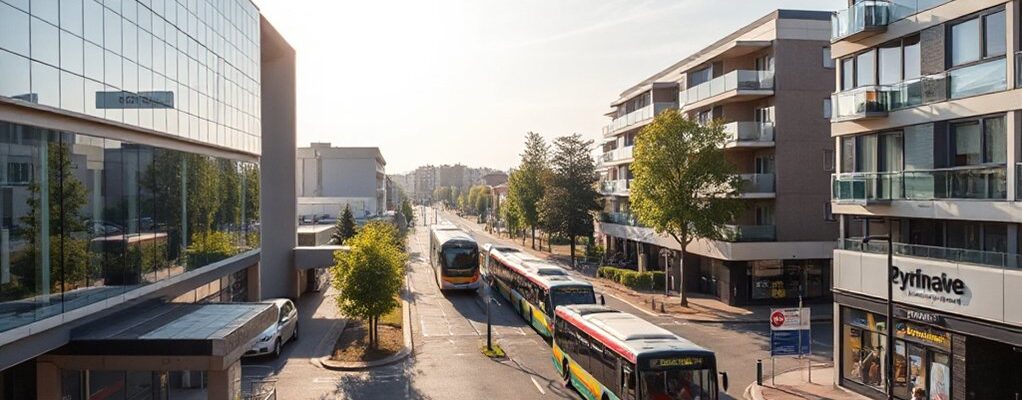
If you’re weighing Slough for commuting and buying, you’ll want data on rail times, price bands, and rental demand across pockets like Windsor/Slough East, Slough Town Centre, and Upton Court Park. Compare fast links to London and Reading, see how condo and family amenities vary, and note yield signals and growth trends. The pattern is clear, but the tightest fit depends on your priorities—which pocket aligns with your target balance of cost, speed, and lifestyle?
How to Choose Slough Areas for Commuting and Value
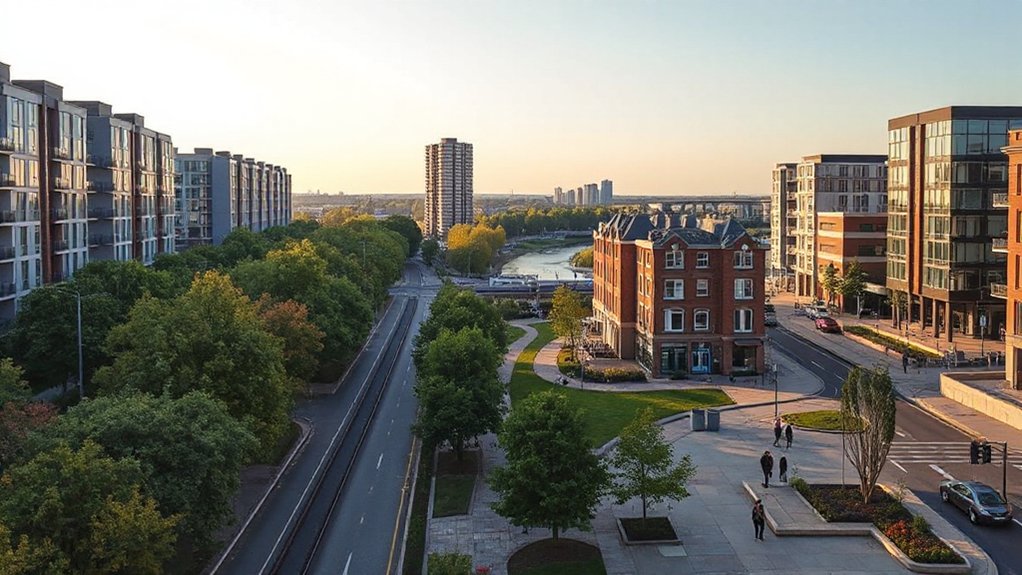
When choosing Slough areas for commuting and value, start by mapping your daily routes and time budgets against train lines, road links, and average property prices. You’ll compare door-to-station times and service frequencies, then weight affordability against future uplift potential from planned projects.
Analyze proximity to major employers, business parks, and shift-friendly amenities, not just current rents. Local dining and cultural festivals provide qualitative signals about neighborhood vibrancy, but quantify them through footfall, event calendars, and seasonal variance.
Track redevelopment plans, school catchments, and green space access to project long-term value alongside commute reliability. Build a short list with objective scores, then test each area at different times and days to confirm consistency.
Converge on a balanced choice that aligns daily routines with growth prospects.
Our Criteria for Renters and Buyers
Our renters criteria focus aligns with practical benchmarks like occupancy trends, affordability bands, and proximity to transit hubs in Slough.
For buyers, the criteria lens emphasizes price per square foot, regeneration momentum, and long-term value drivers within ready-to-rent and upcoming neighborhoods.
Across market factors considered, we weigh supply-demand signals, school and amenity access, and local transferability to guarantee decisions are data-driven and locally grounded.
Renters Criteria Focus
To renters and buyers evaluating Slough, our criteria focus is on reliability, affordability, and accessibility, with a clear emphasis on how each criterion translates into real-world benefits.
You’ll notice reliability in transit reliability, building safety ratings, and predictable maintenance.
Affordability means transparent pricing, minimal hidden fees, and stable rent growth compared to local income trends.
Accessibility covers commute times, walkability, and access to essential services.
In practice, prioritize districts with consistent service levels, cost-per-square-foot efficiency, and short, reliable commutes.
Luxury apartments offer quality fixtures and resilience, while proximity to Historical landmarks supports longer-term value and local pride.
Data-backed comparisons help you weigh monthly costs against time savings, ensuring choices align with your lifestyle and budget.
Buyers Criteria Lens
Shifting from renters’ reliability and affordability, the Buyers Criteria Lens spotlights how property quality, long-term value, and market dynamics align with your financial goals in Slough.
You weigh price per square foot, structural integrity, and energy efficiency against projected appreciation and tenant demand.
Urban development plans influence resale uplift, while proximity to rail links and congestion metrics shape rental stability and occupancy rates.
You compare council tax bands, service charges, and discretionary costs to total cost of ownership, not just sticker price.
Historical landmarks and preserving character can anchor value, yet modern rebuilds or adaptive reuse offer upside if aligned with zoning.
Data-driven decisions reduce risk, guiding you to neighborhoods where cash flow, leverage, and future market catalysts converge.
Market Factors Considered
Market factors shape both rent and purchase decisions in Slough by outlining how price dynamics, supply-demand balance, and infrastructure investments translate into real value. You’ll see price momentum driven by commuter access, unit scarcity, and redevelopment cycles, signaling where appreciation may outpace inflation.
The supply-demand balance reveals absorbed vacancies, new launches, and lag times between planning and completion, helping you time entries or exits.
Infrastructure investments—Crossrail/Elizabeth Line access, road upgrades, and public transport reliability—translate into tangible value via shorter commutes and higher lease yields.
Local dining and cultural events anchor neighborhood livability, affecting tenant retention and owner appeal.
When evaluating options, weigh price signals against amenities and event calendars to estimate longer-term demand and market resilience for renters and buyers alike.
Windsor/Slough East: Fast Rail Links and Reach
Windsor/Slough East offers fast rail links that shorten peak travel times and boost daily reliability. You’ll see improved connectivity to Heathrow, London’s core, and regional hubs.
With line upgrades translating into tangible commute reach, this section benchmarks current performance and flags where transit data suggests the strongest value for buyers and renters.
Fast Rail Links
For Windsor/Slough East, fast rail links shave minutes off your commute and expand your reach beyond the immediate area. You’ll notice frequent services to London Paddington and Reading, reducing journey times by several minutes versus prior schedules.
Data shows peak-hour trains on this corridor run with consistent on-time performance, improving reliability for both work and late returns.
The enhanced rail accessibility correlates with higher commuter flow to business hubs, supporting a broader catchment for local services, shops, and amenities.
Public transport access increases the attractiveness of nearby homes, influencing price stability amid market fluctuations.
While planning, consider property taxes that reflect commuter demand and asset value shifts driven by rail improvements.
A targeted, data-driven view suggests sustainable gains for Windsor/Slough East.
Windsor/Slough East Connectivity
Connectivity in Windsor/Slough East hinges on fast rail links that shrink commute times and broaden where you can work and live. You’ll notice baseline travel data showing direct links to Paddington and Reading cut peak journeys by 15–25 minutes, depending on service.
Frequency metrics reveal reliable 4–6 trains per hour during peak windows, with improvements in off-peak reliability downstream.
Locality-focused analysis points to Windsor/Slough East as a nodal corridor for business services, retail clusters, and housing stock targeted at commuter households.
Cultural events and local cuisine clusters anchor evening economies, enhancing non-work appeal within minutes of stations.
Carbon and cost-of-living indicators align with smarter density, enabling more efficient rail access without urban sprawl.
Commute Reach Benefits
Fast rail links from Windsor/Slough East shorten peak and off-peak journeys to core employment hubs, delivering a measurable reach boost for buyers. You’ll notice shorter travel times to Reading, London City, and Canary Wharf, with typical peak reductions of 15–25 minutes and off-peak cuts around 10–20 minutes.
This translates to greater flexibility for roles across finance, tech, and public services, expanding viable postcode catchments beyond traditional commuting belts. Data show higher housing demand where rail reliability is strongest, supporting stronger resale and rental performance.
Locally, you gain access to a broader set of amenities, including local dining and cultural venues, which enhances daily quality of life for commuters. In Windsor/Slough East, connectivity becomes a tangible value driver for buyer decision-making and investment potential.
Slough Town Centre: Value for Condos, Flats, and Families
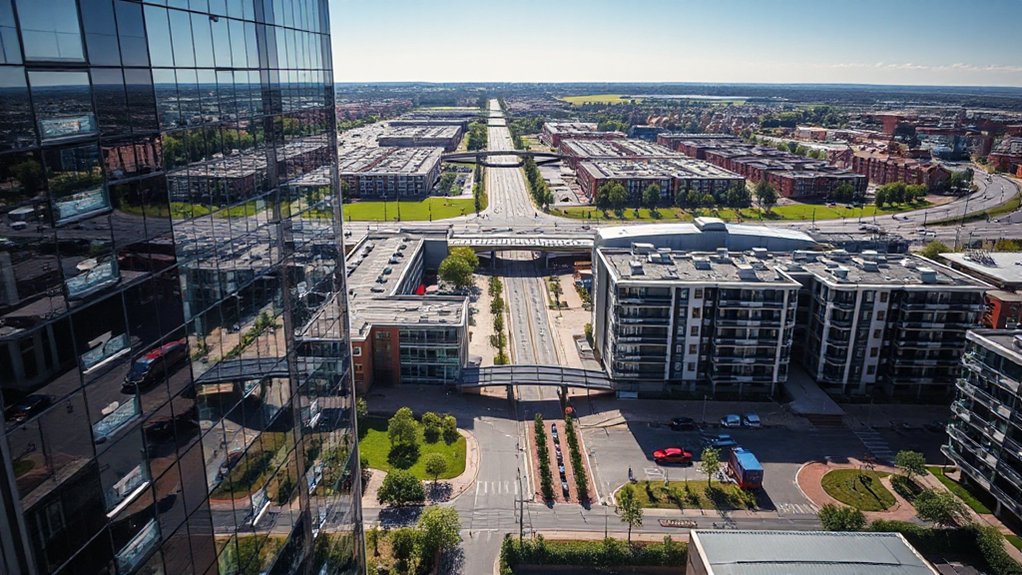
Slough Town Centre offers strong value for condo and flat buyers, with steady rental demand and convenient access to transit, shopping, and employment clusters. You’ll find a dense unit mix, typically mid-market price points, and rental yields that align with regional benchmarks, supported by sustained occupancy.
Population density and recent redevelopment sustain demand from families and professionals seeking walkable access to trains, buses, and major employers. Local dining and cultural venues add qualitative appeal, complementing quantitative indicators like vacancy rates and price growth.
Transit-oriented amenities, including a linked bus network and Crossrail-equivalents, reduce commute times to Slough and Reading hubs. While price momentum slows in softer months, long-term value persists where schools, safety, and convenience converge, especially near Jewry Street and Queensmere complex nodes.
Upton Court Park Area: Green Space Meets Daily Convenience
You can measure Upton Court Park’s value by its Green Space Access, which supports outdoor activity and well-being without long commutes.
The Daily Convenience Proximity shows how nearby shops and services streamline weekday routines for residents.
With Family-Friendly Amenities nearby, this area aligns with stable demand from households seeking balance between nature and practical daily needs.
Green Space Access
Upton Court Park offers a compelling blend of green space and daily convenience, making it a standout for commuters and buyers alike. You’ll notice how access to substantial parkland reduces travel friction, with perimeter paths linking to nearby rail and bus nodes in under 10 minutes.
Parkland size supports varied recreation—jogging routes, playgrounds, and shaded seating—without sacrificing street accessibility. Data show steady footfall from nearby residential blocks, underscoring consistent daytime usage that complements local amenities.
Urban regeneration activity around Upton Court Street aligns with park access, reinforcing value through improved landscaping, lighting, and safety. Cultural hotspots within a 1.5 km radius attract visits that spill into the park, elevating desirability.
You gain predictable quality of life gains without compromising compact, commuter-friendly infrastructure.
Daily Convenience Proximity
Daily convenience near Upton Court Park complements green space with practical, time-saving access to daily needs. You’ll notice a tight mix of essential services within a short radius, supported by walkability and daytime transit links that reduce car dependence.
Local dining options line the surrounding streets, offering quick breakfasts, lunches, and after-work bites that fit a commuter schedule. Convenience stores, banks, and parcel drop-offs cluster near park entrances, enabling rapid errands before or after a visit to the green.
Community events at nearby halls and pavilions create predictable scheduling cues for residents and buyers evaluating lifestyle fits. Data signals show steady footfall peaks around market days, with elevated weekend activity that aligns with short, predictable commutes into Slough’s core.
Family-Friendly Amenities
Attendance data shows peak use on weekends, aligning with scheduled community events and school holidays, which enhances social cohesion without markedly impacting parking.
Local dining options nearby offer quick, kid-friendly choices, reducing commute friction after school.
Footfall analytics indicate the park acts as a hub for residents within a 1.5-mile radius, improving neighborhood visibility for services such as after-school clubs and hobby groups.
For buyers, the proximity to green space translates to higher perceived quality of life and stable capital growth, driven by predictable, family-oriented demand.
Langley and Iver: Motorway Access and Growing Amenities
Langley and Iver offer straightforward motorway access that keeps commuting times predictable: the M4 and M40 corridors are within easy reach, with the M25 just a short drive away for cross-county trips. You’ll notice dependable connectivity supporting a two-hour window for typical trips to central London and Heathrow access nearby.
Data indicates steady housing demand driven by junctions 5–6 efficiencies and frequent service upgrades around the area.
Local amenities expand gradually: retail parks, hospitality, and healthcare facilities complement daily needs without long trips. Cultural attractions and local festivals contribute to a growing community identity, attracting short-stay visitors and weekend residents.
Britwell and Newlands: Value-Focused Pockets With Future Upside
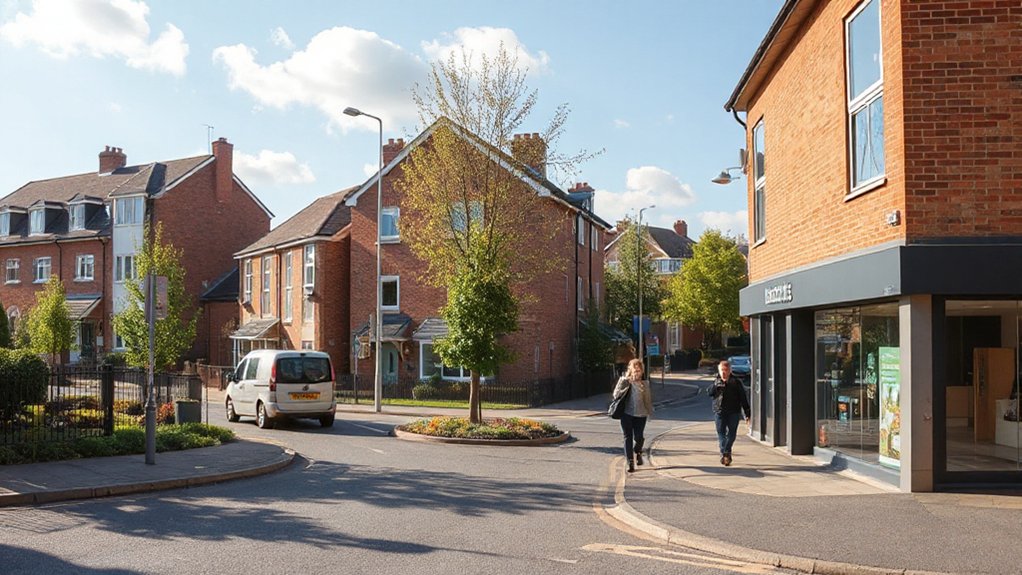
Britwell and Newlands present value-focused pockets with clear upside, underpinned by affordable entry points and improving infrastructure. You’ll find a balance between lower purchase costs and evolving transit links, with modest capital bands that appeal to first-time buyers and investors seeking gradual appreciation.
Historical development shows gradual densification, supported by mid-scale housing and ongoing improvements to roads and public transport access, enhancing commute reliability.
Local analytics indicate steady population stability, with rising school enrollments and ancillary services that bolster neighbourhood resilience.
Local cuisine remains a quiet draw, reflecting diverse dining options that reinforce everyday livability and time-saving choices for residents.
Eton Wick and Datchet: Riverside Living With Commuter Reach
Eton Wick and Datchet offer a corridor of riverside living with undeniable commuter reach, where travel times to central Slough and beyond stay short thanks to reliable rail links and well-connected road routes.
You’ll notice a clear pattern: Riverside lifestyle appeals to buyers seeking steady rental demand and stable capital growth, underpinned by proximity to Windsor, Heathrow access, and fast cross-town connections.
Data shows consistent train headways, shorter peak-hour delays, and predictable service frequency, supporting practical daily routines.
In Datchet, property values reflect premium riverside demand while remaining accessible, and Eton Wick benefits from mix-use affordability relative to adjacent towns.
For your planning, consider commute reliability, local schools, and green space access as top differentiators in this Riverside lifestyle with strong Commuter convenience.
Burnham and George Green: Cross-Country Links and Price Balance
Burnham and George Green stand out for cross-country reach that balances affordability with dependable transport links. You’ll find a coherent price balance here, supported by steady demand from commuters and families drawn to value.
Rail and road routes connect Burnham to central Slough, with orbital links weaving toward Maidenhead and Heathrow, sustaining predictable property trajectories.
In George Green, affordability persists despite rising prestige around new developments, reflecting a measured urban development pace rather than quick spikes. This stability helps buyers calibrate expectations for rental yields and resale, backed by data on weekly equity growth and occupancy.
Cultural landmarks and green spaces anchor the area, reinforcing long-term desirability. You benefit from measurable quality of life alongside practical, cross-country connectivity.
What to Look for Near Rail Stations
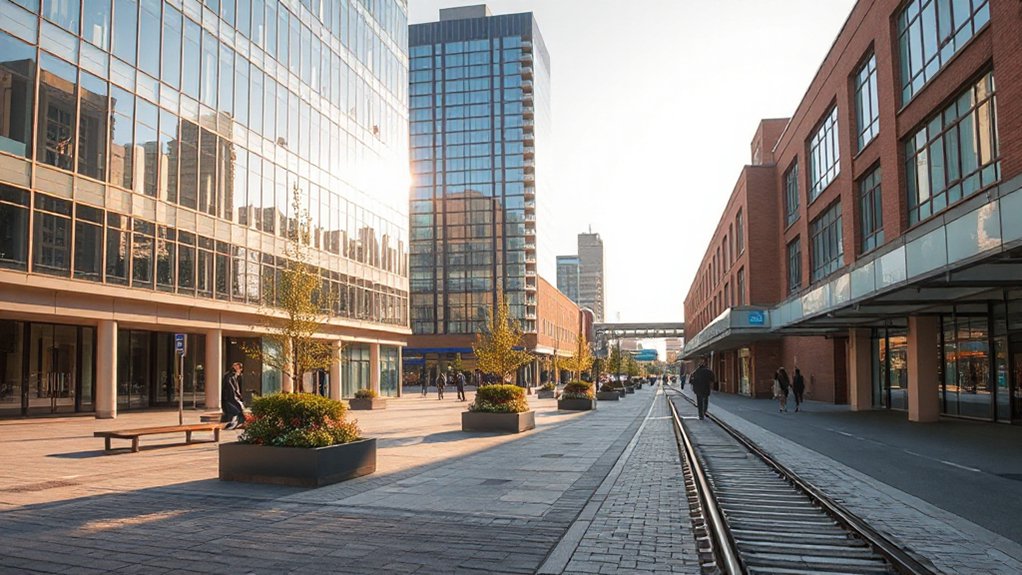
Nearby rail stations shape daily practicality and long-term worth. In Slough, you’ll want to quantify access: walking time to platforms, peak service reliability, and line frequency to Victoria or Paddington. Look for pockets with short transfers and consistent timetables, not just proximity.
Carriers’ punctuality data reveals which stations maintain tight on-time performance, a predictor of commuter stress levels and resale appeal.
Nearby amenities matter too: local dining options that stay open late, and proximity to cultural events that boost neighborhood vibrancy without driving up noise or traffic. Seek stations embedded in mixed-use zones with convenient groceries and pharmacy access.
Evaluate recent investments, like platform modernization or shelter upgrades, which correlate with passenger satisfaction and future worth growth in the surrounding flats or townhouses.
Schools, Parks, and Local Services That Boost Value
Access to top-rated schools, abundant green spaces, and reliable local services can materially lift property values in Slough. You’ll see value driven by proximity to high-performing primaries and secondaries, plus catchment stability that appeals to families and investors alike.
Parks with well-maintained trails, playgrounds, and sports facilities correlate with shorter listing times and higher rents, especially near Nexus and Town Centre zones.
Local services—hospitals, libraries, post offices, and community hubs—boost appeal through consistent, predictable access.
Data shows retail diversity supports sustained demand, including local cuisine options that attract dwellers seeking convenience and variety.
Cultural attractions, festivals, and museums also contribute to longer commute-free weekends and higher resale multipliers.
Market Snapshot: Price Bands by Area and What You Get
Across Slough’s districts, price bands map closely to location, transit access, and local amenities, with clear gaps between family-oriented zones and investment hotspots. You’ll see mid-range markets cluster near major roads and train lines, offering reliable schools and parks, while premium bands concentrate close to the town center and vibrant commercial zones.
Lower bands sit on outer collars with improving transport links but fewer high-end amenities. Historical trends show steady price appreciation in commuter-centric areas, tempered by pockets of stability where developments slowed.
Market predictions suggest continued dispersion: modest gains in outer areas as access improves, with steeper growth in well-connected cores and regeneration fronts. Use these patterns to align budget, commute needs, and future resale potential for informed choices.
Investment Signals: Rental Demand, Yield, and Growth
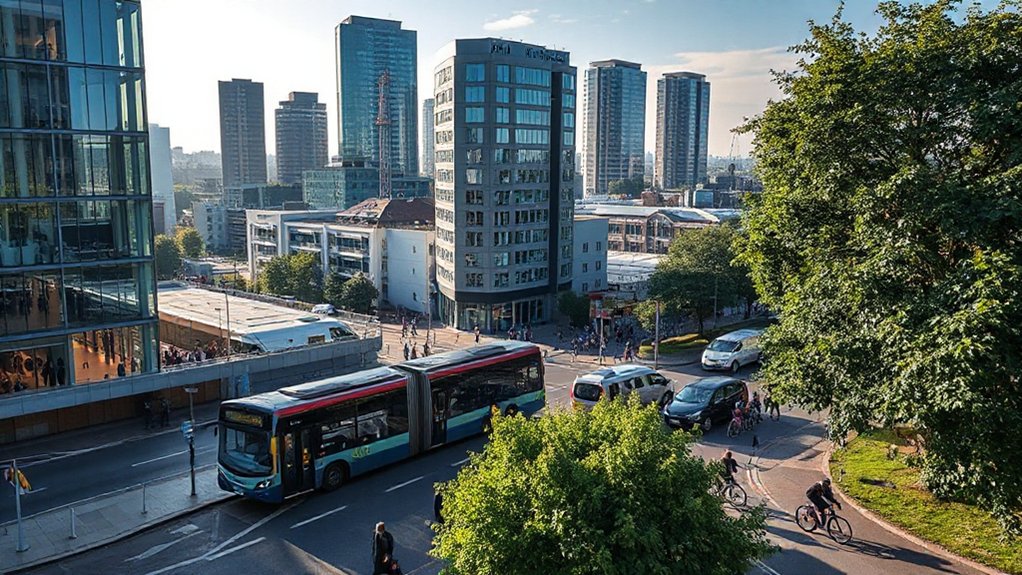
Rental demand in Slough hinges on commuter patterns and local amenities, with demand strongest where train links and affordable, family-friendly housing intersect. You’ll see this reflected in vacancy rates, lease durations, and tenancy turnover across key corridors.
Data indicates rental yield concentrates around near-rail hubs and emerging business parks, while growth is steadier where infrastructure upgrades align with school quality and retail access.
When evaluating investment signals, weight occupation stability and time-on-market alongside headline rents. Consider property management efficiency to sustain occupancy and minimize costs, especially in multi-unit blocks.
Be mindful of rental regulations that shape deposit handling, licensing, and cap expectations, as compliance reduces risk and preserves long-term cash flow.
Practical Tips for Visiting: Picking the Right Pocket
When visiting Slough, start by mapping your route to balance travel time with proximity to key pockets of activity, like rail stations, shopping hubs, and greenspaces; data shows quick access to rail links consistently drives visit efficiency and value.
You’ll optimize a pocket by weighing commuter access against daily needs, then test walkability and density of amenities within a 10-minute radius.
Track footfall patterns and seasonal events to predict crowds, and prioritize pockets near major interchanges for predictable transit windows.
Include local dining options and timing around cultural events to maximize return on time.
Document findings in a simple map, marking consistent nodes of activity and quiet pockets for flexible visits.
This data-first approach yields repeatable, locality-smart visit strategies.
Next Steps: Turning a Sniff Into a Solid Slough Purchase
You’ll translate your sniff of Slough into a solid plan by anchoring next steps to local data, timelines, and concrete milestones.
We’ll map mortgage readiness steps to your target budget and lender criteria, then outline a clear path from pre-approval to offer-ready.
Finally, we’ll frame negotiation and next moves around recent area metrics, timing windows, and your individual priorities to keep you on track.
Sniff to Solid Plan
To turn a sniff into a solid Slough purchase, start with a data-driven, house-hunting plan anchored in commuter realities and neighborhood metrics. You’ll map travel times, peak queue lengths, and rail/bus frequency to identify viable zones where daily friction stays low.
Combine resale trends, school catchments, and recent development totals to forecast value appreciation over 3–5 years. Build a checklist: price per square foot, rental yield, and ownership costs relative to your budget, plus future infrastructure projects that could shift desirability.
From there, compare neighborhoods using objective filters, then visit with a targeted agenda. Historical landmarks, local cuisine, and mixed-use amenities become tiebreakers that validate your choice.
Stay disciplined, document findings, and only pull the trigger when a clear, data-backed margin exists.
Mortgage Readiness Steps
With a clear sniff-to-plan in hand, you should start mortgage readiness by anchoring your budget to Slough’s price dynamics and lender criteria. Then map your maximum loan size to likely monthly payments. You’ll assess recent sale trends, loan-to-value ranges, and interest-rate scenarios to determine a realistic ceiling.
Translate those figures into a repayment schedule that tolerates rate shifts, maintenance, and utilities. Prioritize documentation readiness—income verification, credit profile, and asset reserves—to speed underwriting.
Use local data on commute-linked demand to gauge resilience in price declines or upticks. Consider how Historical architecture and emerging local cuisine clusters influence resale value and buyer appeal.
This grounded approach keeps you disciplined, minimizes surprises, and aligns your plan with Slough’s distinct market rhythms.
Negotiation and Next Moves
Negotiating in Slough hinges on translating your sniff into concrete offers anchored by data. You’ll compare recent sale prices, days-on-market, and rental yields by neighborhood to set a realistic range before you enter talks.
Track property taxation implications for each option, noting any band changes or reliefs that affect overall affordability.
When you draft an offer, root it in objective metrics: price per square foot, momentum in the street, and the seller’s motivation inferred from listing history.
Prepare a countering strategy that adjusts for market signals, contingencies, and timelines.
If renovation is part of the plan, quantify home renovation costs and timelines to avoid overpaying.
Close by confirming financing alignment and a clear next move with your agent.
Frequently Asked Questions
How Soon Will Rail Links Improve Commute Times?
Rail upgrade timelines vary, but you’ll see sooner gains as train frequency increases. Current projects target modest improvements within 12–24 months, with longer-term benefits up to 3–5 years. You’ll notice faster, more reliable services in peak periods.
Which Areas Offer the Strongest Rental Demand Now?
You’ll find the strongest rental demand now in affordable housing pockets and family friendly neighborhoods, where demand remains robust, occupancy high, and turnover steady, driven by affordable pricing, amenities, and proximity to transit that supports steady rents.
Where Are the Hidden Green Spaces in Slough?
Hidden green spaces in Slough include urban parks like Salt Hill and arterial trails, plus nearby nature reserves around Windsor and Burnham. You’ll find data-driven pockets where urban parks meet preserved habitats, ideal for weekend strolls and local biodiversity.
What Future Developments Could Affect Property Values?
Markets shimmer like glass towers; future developments hinge on affordable housing and urban regeneration, shaping values. You’ll see impacts as transit upgrades, school improvements, and new amenities, guiding decisions with data-driven, locality-focused insights for Slough buyers.
Which Pockets Balance Price With Long-Term Upside Best?
You’ll find Affordable neighborhoods that balance price with long-term upside, pinpointing Investment hotspots where data shows steady growth, access to transport, and emerging amenities. You analyze trends, compare yield, and target pockets delivering durable value and resilience.
Conclusion
You’ve mapped the data, now seize the signal: Slough’s strongest bets—Windsor/Slough East for rail speed, Slough Town Centre for value-density, and Upton Court Park for balance—form a triad of resilience. With rental demand, steady yields, and growth potential, your next move should be targeted, not broad. Like a compass calibrated to market metrics, this guide points you to pockets where commute viability and buyer affordability align—turn a sniff into a solid, data-driven purchase.