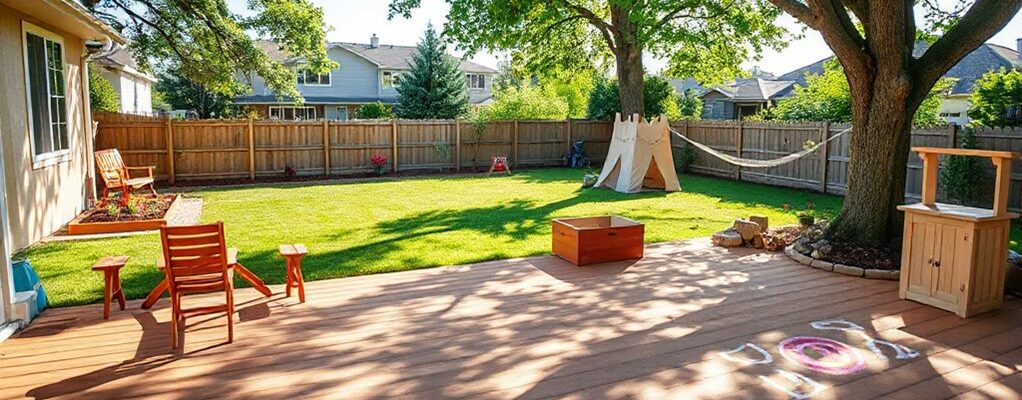
You wonder if a truly family-friendly outdoor space can stay orderly while still inviting play. It can, with clear zones, kid-safe seating, durable surfaces, and simple storage that kids can use too. You’ll plan for shade, lighting, and weatherproofing so it works year-round, and invite kids to help with veggie beds to build ownership. But the tricky part is balancing access and cleanup without hindering curiosity—that tension keeps you moving forward.
Key Takeaways
- Define versatile zones for cooking, dining, play, and relaxation with future-proofed spacing and accessible paths.
- Choose kid-friendly seating and durable, safe surfaces with rounded edges and proper drainage.
- Involve children in garden tasks, use raised beds, label patches, and plan multi-year crop rotations.
- Implement weatherproof shade, lighting, and storage solutions to maintain usability in all conditions.
- Design modular, scalable spaces with integrated storage and flexible furniture for evolving family needs.
Define Your Family’s Outdoor Needs and Goals
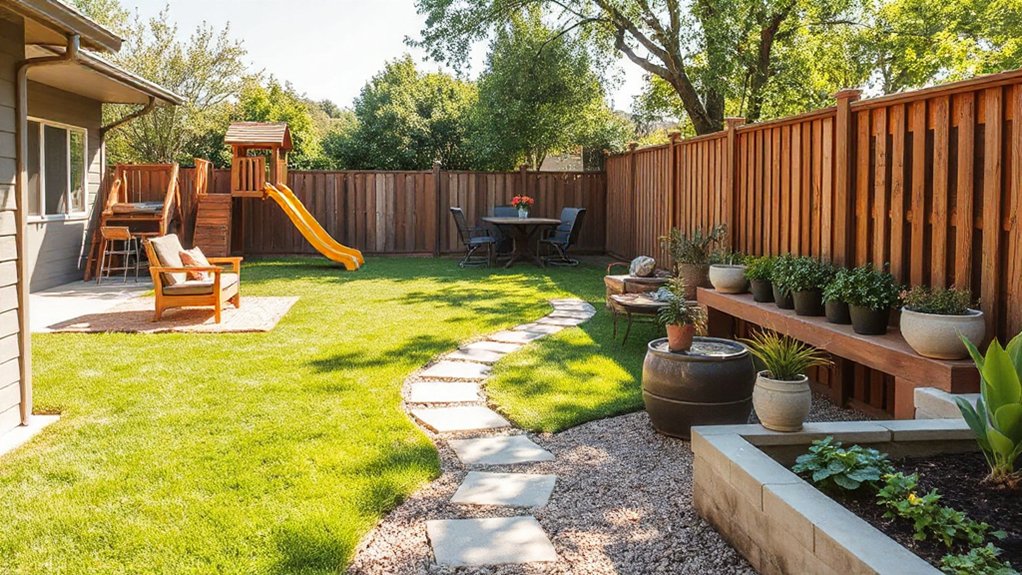
To define your family’s outdoor needs and goals, start by clarifying how you’ll use the space now and in the near future. You’ll map activities, traffic flow, and seasonal use, then translate them into concrete criteria.
Prioritize safety, accessibility, and durability, selecting surfaces, edging, and storage that withstand family life. Consider zones for cooking, dining, play, and downtime, and note how shifts in ages or interests could change demands.
Establish clear maintenance expectations and a realistic schedule, so upkeep stays manageable. Balance garden aesthetics with practical durability, ensuring curb appeal aligns with daily use.
Decide on outdoor decor that supports the mood you want without clutter. Document priorities, constraints, and decision dates to guide sourcing and budgeting.
This framework keeps you focused and action-ready.
Choose Kid-Friendly Seating That Feels Relaxing
Choose kid-friendly seating that feels relaxing by prioritizing soft padding for kids, durable materials, and safe access and flow. You’ll want cushions that resist stains and are easy to wipe, frames that withstand frequent use, and clear pathways so caregivers can move smoothly without tripping. Plan for low, stable seating that invites rest between activities while keeping edges rounded and grips secure.
Soft Padding For Kids
Soft padding makes outdoor seating safer and more inviting for kids, so start with cushions and mats that are snug, non-slip, and easy to clean. Choose pieces with high-density foam, covered in wipeable, durable fabric to resist moisture and spills.
Opt for furniture with rounded edges and integrated soft zones to reduce impact during playful tumbles. Test stability by pressing down firmly; avoid oversized cushions that slip or bunch.
Establish clear zones: seating, reading, and nap areas, each padded appropriately to minimize hard contact with hard ground.
Prioritize playground safety by selecting cushions that meet safety standards and are free of loose parts. Rotate cushions seasonally to maintain cleanliness and padding performance, and store them properly when not in use to extend lifespan.
Soft padding enhances comfort without sacrificing safety or practicality.
Durable Materials Choice
Durable materials set the foundation for kid-friendly seating that feels relaxing and lasts season after season. You’ll prioritize weather resistant furniture that withstands sun, rain, and temperature swings without warping or fading. Choose frames and joints that tolerate daily use and rough handling, like high-impact plastics, powder-coated metals, or rot-resistant woods.
Opt for cushions with quick-dry foam cores and removable, washable covers to simplify cleanup. Confirm seating surfaces have non-slip surfaces to reduce slips on wet decks or grass.
Consider modular pieces that can reconfigure for groups or solo time, yet lock securely into place for safety. Maintain with simple annual inspections: tighten hardware, treat wood, and replace worn cushions promptly to preserve a calm, durable outdoor zone.
Safe Access And Flow
Efficient flow starts with thoughtful seating placement that guides movement and minimizes tripping hazards. You’ll design a layout that keeps common paths clear, turning seating into wayfinding cues rather than obstacles.
Choose kid-friendly options with rounded edges, stable bases, and durable finishes that withstand sun and rain. Position seating to create short, direct routes between play zones, snack stations, and shaded rest areas, avoiding choke points near doorways or gate entrances.
Use low-profile furniture to maintain sightlines for supervising adults, and group chairs into conversational clusters that deter crowding.
Integrate garden aesthetics with natural materials—wood, stone, and soft fabrics—while ensuring safety margins around play equipment.
Consider wildlife attraction by planting native borders away from seating, providing viewing spots without disturbing active habitats.
Select Durable, Safe Surfaces for Every Zone
When choosing surfaces for every zone, prioritize safety, maintenance, and accessibility alongside cost. You’ll want durable, slip-resistant options that cushion impacts and resist weathering.
For play zones and paths, consider low-maintenance surfaces like artificial turf or poured-in-place rubber. Artificial turf provides a clean look, year-round usability, and reduced mud, but guarantee a dense pile and proper drainage to prevent knee discomfort.
Rubber mulch offers cushioning and weed suppression, yet check for aging seams and temperature sensitivity in hot sun.
In high-traffic areas near homes, select solid-tongue, integrated-subbase systems or textured concrete for longevity. Install proper edging to contain materials and prevent migration.
Regular inspections, prompt drainage fixes, and appropriate cleaning extend life and keep play safe.
Invite Participation With Veggie Patches
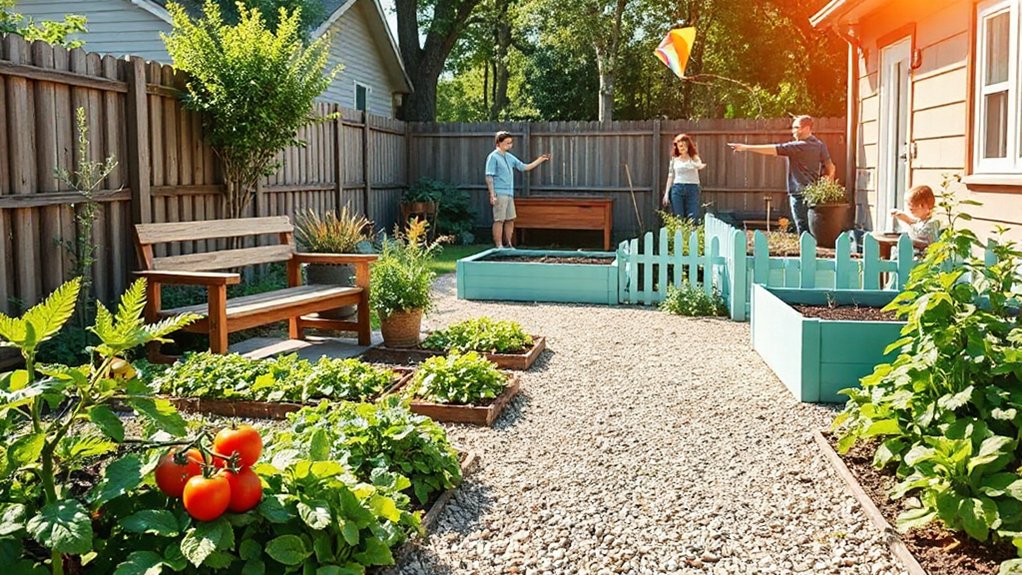
Plant easy veggie patches right where you spend time, so kids can see quick results and stay motivated.
Involve them in simple tasks like soil prep, sowing, and watering, then celebrate small harvests together.
Rotate crops seasonally to keep the patches interesting and teach problem-solving through planning and experimentation.
Plant Easy Veggie Patches
Curious how to get kids and guests hands-on without a muddy mess? Start small with raised beds or clearly defined patches. Choose fast-growing, forgiving vegetables like radishes, lettuce, and bush beans to build confidence quickly.
Layout paths wide enough for wheels and watering cans, then label each patch to reduce guesswork. Practice companion planting by pairing basil with tomatoes or onions with carrots to improve flavor and deter pests.
Use simple, pre-mixed organic fertilizers or compost tea sprinkled lightly according to package directions; avoid overfeeding. Install a low, ergonomic soil surface and mulch to minimize mud, conserve moisture, and discourage weeds.
Water early in the day, in gentle doses, so beginnings aren’t overwhelmed. Keep tasks short, measurable, and aligned with your family’s routine.
Involve Kids In Planting
Getting kids involved starts with clear, hands-on opportunities that fit into your veggie patches. You’ll assign simple tasks aligned with their abilities, like sowing small seeds, watering with a controlled stream, and thinning sprouts as they grow.
Use garden tools that are kid-sized and safe, demonstrating correct grips and strokes to build confidence. Create a short planting calendar you review weekly, so they know what’s coming: when to transplant, when to weed, and when to harvest.
Keep expectations realistic and celebrate small milestones to sustain motivation. Label each bed or row with photos or icons, so they can track progress independently.
Foster ownership by rotating roles, but stay present to provide guidance and immediate feedback. As momentum builds, kids enjoy ongoing participation in this practical routine.
Rotate Crops For Fun
To keep veggie patches engaging, rotate crops for fun by inviting kids to participate in a simple, structured plan. You map a two- or three-year cycle, separating families’ favorites from quick growers and space-limited beds. Each season, assign kid roles: seeds, watering, and record-keeping.
Use crop rotation to break pest cycles and reduce garden pests, keeping soil healthier and yields steadier. Plan pairs like tomatoes with leafy greens, or beans with carrots, ensuring families don’t plant the same family in the same bed repeatedly. Label beds clearly and rotate markers yearly.
Track outcomes in a small notebook or chart, noting color, height, and harvest dates. This disciplined approach teaches responsibility while boosting engagement and crop success.
Design Versatile Zones for Play, Shade, and Relaxation
A well-designed outdoor space balances play, shade, and relaxation by creating distinct zones that flow together. You’ll define a clear play area with impact-absorbing mulch, low borders, and durable toys. Then place seating nearby for supervision without hovering.
Shade zones should use trees or a cantilevered canopy to protect sunny intervals and create respite spots for adults. Layer seating with a mix of benches, loungers, and a compact table so relatives can mingle or retreat.
For relaxation, add a calm corner with garden art accents and a water feature that hums softly in the background.
Plan circulation paths to minimize crossing zones, and designate a simple outdoor entertainment setup: a weatherproof speaker, power supply, and accessible storage. These elements deliver versatile, family-friendly function.
Plan Storage, Cleanup, and Ongoing Maintenance
Regularly inspect play areas and replace worn parts before they fail. Commit to consistent storage solutions and a concise cleanup routine that you can complete in minutes after each session.
- Define dedicated storage zones near each activity
- Label containers and inventory tools weekly
- Schedule a quick post-play cleanup routine
- Review maintenance needs seasonally and adjust accordingly
Add Shade, Lighting, and Weatherproof Features
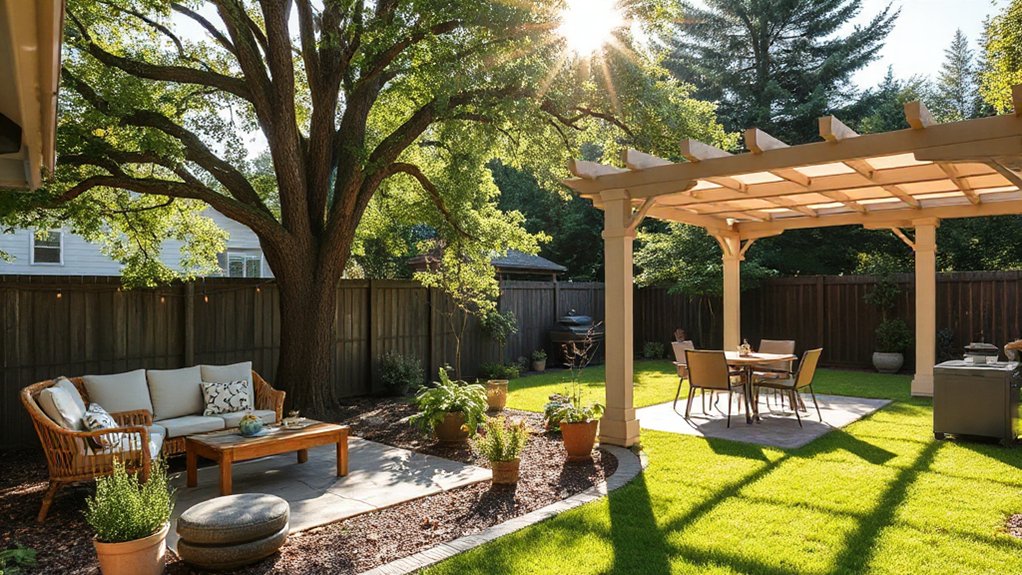
Shade, lighting, and weatherproof features should integrate with existing zones so you can use the space year-round. Start with a durable, UV‑resistant canopy or pergola that complements outdoor decor and resists wind.
Add weatherproof outlets, secure power strips, and LED fixtures rated for damp locations to reduce maintenance. Prioritize adjustable shade—crowns, sails, or retractables—so you can modulate sun exposure for kids, pets, and gatherings.
Install motion-activated lighting along paths and entry points for safety without glare. Choose weatherproof furniture and cushions with quick-dry foams, plus storage to protect gear.
Finally, create a wildlife habitat by planting native shrubs and a small water feature. These details boost usability, durability, and ecological value without complicating upkeep.
Create a Layout That Evolves With Your Family
To create a layout that evolves with your family, start with flexible zones that adapt as needs shift—think modular storage, adjustable seating, and reconfigurable play and dining areas.
Prioritize scalable spaces that grow with ages and interests, so today’s toddler is tomorrow’s tween still engaged in the yard. Use durable, easy-to-move furniture and clearly defined zones for cooking, reading, and climbing.
Consider integrated storage that doubles as seating to minimize clutter while maximizing use. Plan pathways that reflow with gatherings and storms, keeping traffic smooth.
Include garden decor and outdoor art as focal points that can swap with seasons without reconstructing the space.
1) Modular zones
2) Adjustable furniture
3) Reconfigurable play/dining
4) Seasonal updates
Budget, Timeline, and Next Steps for a Green-Light Plan
With a green-light plan, you’ll set a realistic budget, map a practical timeline, and outline concrete next steps that keep momentum without overcommitting.
You’ll begin with Budget planning that aligns costs to your priorities, then establish a cap for essential elements and a lightweight reserve for surprises.
Next, break the timeline into phases: quick wins, midterm improvements, and long-term additions, assigning target dates and decision checkpoints.
Track hiring, materials, and permits in a simple planner to prevent scope creep.
Regular reviews, weekly if possible, help you adjust priorities without derailing progress.
Document decisions, vendor comparisons, and cost estimates so you can justify changes.
Prioritize family safety and usability, and keep communication concise with everyone involved to sustain accountability and momentum.
Timeline management remains your ongoing discipline.
Frequently Asked Questions
How Can I Balance Play Space With Garden Privacy?
You can balance play space with garden privacy by designing a cohesive layout that separates zones with selective sightlines. Use playground design elements like low-profile play structures and soft edging to keep activity contained.
Install privacy screens along property lines or around seating areas, using permeable materials to maintain airflow. Plant fast-growing evergreens or bamboo screens strategically, while leaving sunny play turf intact.
Choose modular fencing and movable planters to adjust as your kids grow.
What Kid-Safe Plants Should I Avoid?
Poisonous plants, toxic berries are the ones you should avoid around kids. You avoid, you replace, you flag, you educate.
You’ll skip oleander, yew, foxglove, and dieffenbachia, and steer clear of holly with red berries and buckthorn.
You inspect berries before curiosity bites, you supervise outdoor forays, you label plants clearly, you prize non-toxic varieties, you plant safe alternatives, you maintain fences and mulch, and you practice emergency know‑how so danger stays away.
How Do I Involve Teens Without Sacrificing Safety?
To involve teens safely, implement clear rules and active supervision, balancing independence with vigilant oversight. Assign age-appropriate tasks, like plant care or garden maintenance, and set designated outdoor zones for socializing with boundaries.
Prioritize teen safety by enforcing helmet use during biking, secure tool storage, and visible sightlines. Maintain outdoor supervision while granting autonomy, and schedule regular check-ins.
Document safety expectations, update them as teens grow, and use feedback to refine responsibilities and risk-aware routines.
What’s the Best Order to Tackle Outdoor Projects?
Start with a clear plan: outline priorities, then tackle safety-first tasks before aesthetics.
Begin with drainage, grading, and shade to protect kids from hot sun.
Install outdoor lighting along paths and entryways for visibility, then set up durable patio furniture in a core gathering area.
Next, address power needs and water, followed by planting and edging.
Finally, finish with storage and safety checks.
Reassess seasonal use, adjust layouts, and keep paths wide and well-lit.
How Can I Budget for Unexpected Weather Repairs?
You should budget for unexpected weather repairs by setting aside a storm preparedness fund and a budget contingency. Start with a realistic estimate of potential damages, then allocate a dedicated percentage of your annual budget to cover them.
Track costs monthly, adjust for changing seasons, and review coverage on home insurance plus warranties. Prioritize high-probability repairs, document receipts, and keep emergency contact lists handy to minimize downtime during storms.
Maintain your plans proactively.
Conclusion
Your outdoor space becomes a living ledger: each zone a chapter, each tool a signature. When you design with safety as your spine and joy as your compass, the yard reads like a well-kept garden—kids plant hope, you prune doubt, and shade folds into evenings. The space, like a sturdy tree, grows stronger with rain and routine. Maintain it, and it will shelter your family through seasons, a symbol that care sustains what you love.