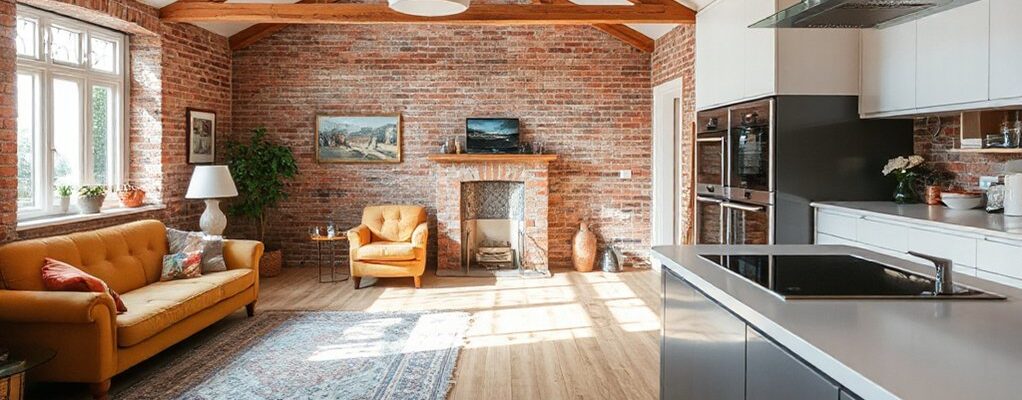
You’re looking to modernize a 1970s UK home without losing its character. Start by tightening the layout for flow and accessibility, then upgrade insulation, heating, and glazing for real energy savings. Weave in smart tech discreetly to keep the vintage feel, and choose durable, period-inspired finishes that still handle daily life. Plan a maintenance routine now so upgrades don’t fade, and weigh where the upgrades offer the best payback. The balance you strike will shape how this house evolves, brick by brick.
Assess Your 1970s Home for Modern Comfort
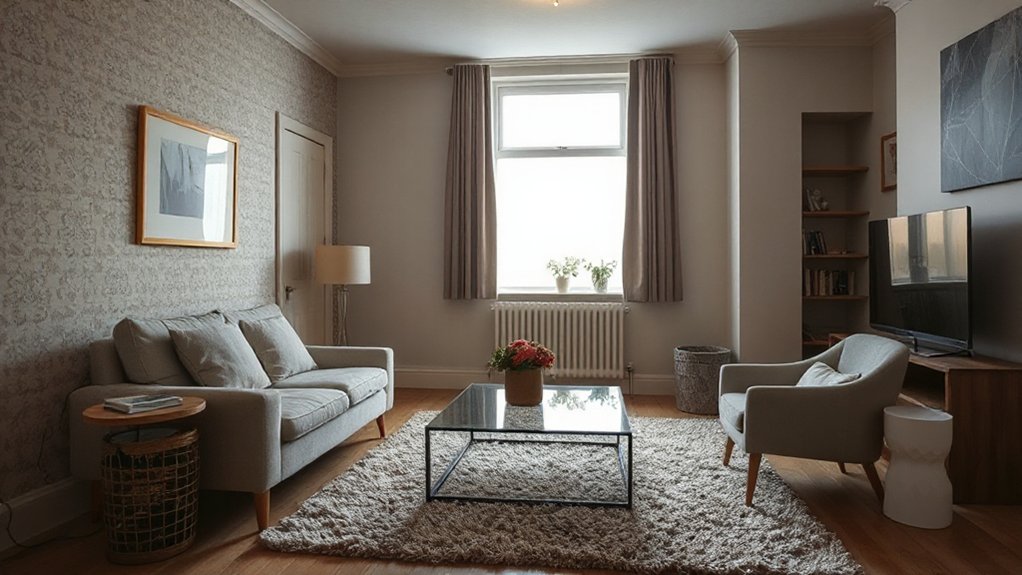
Assess the layout, structure, and existing systems of your 1970s home to identify what modern comfort requires. You’ll map traffic flows, note bottlenecks, and check wiring, insulation, and heating.
Prioritize safety and reliability first, then consider comfort upgrades that don’t disrupt the core bones of the house.
Evaluate room sizes relative to daily needs, storage adequacy, and acoustic performance.
Inspect windows and doors for drafts, glazing, and sealing opportunities, planning cost-effective fixes before major renovations.
Record potential improvements, estimating time, disruption, and impact on value.
Recognize vintage charm as a baseline, not a limitation; plan enhancements that respect era details while enabling modern convenience.
Consider exterior updates early, ensuring exterior decisions align with overall renovation goals without compromising character.
Plan Layout Tweaks That Preserve Character
You’ll rethink circulation so you preserve the original flow while adding subtle modern zoning. Consider hidden nook solutions that keep intimate, tucked-in moments intact as you reconfigure spaces.
We’ll start by mapping how traffic moves and where small tweaks can reveal extra function without erasing character.
Preserve Original Flow
Preserving the original flow means tweaking the plan to keep how rooms relate to each other intact while updating the details that make the space feel dated. You focus on sightlines, traffic patterns, and doorway logic first, then tune finishes.
Keep major connections—hall to living room, kitchen to dining area—so movement remains intuitive, not forced. Replace fussy partitions with subtle shifts: a partial wall, a glass divider, or a pocket door to preserve openness without erasing the room hierarchy.
Update ceilings, floors, and lighting to reflect contemporary standards while respecting proportions. Introduce restrained, period-aware finishes to sustain Vintage charm and Period authenticity, avoiding gimmicks.
Document changes, test real-world use, and refine, ensuring the home still reads as cohesive, functional, and true to its era.
Hidden Nook Solutions
Could a hidden nook quietly transform the flow without sacrificing character? Yes, and you can implement it with deliberate placement and tidy detailing.
Start by identifying underused corners: a retracted alcove beside stairs, a shallow recess along a wall, or a chimney breast. Left intact, these spaces become focal points instead of wasted gaps.
Use hinged doors or sliding panels to conceal storage, preserving the room’s silhouette. This is about Hidden nook solutions that blend with timber, brick, or wallpaper textures, so finish wraps the surrounding era without competing with it.
For creative storage, install slim pull-out cabinets, narrow book displays, or a fold-down desk. Prioritize accessibility, ventilation, and load limits, ensuring daily use remains simple and unobtrusive.
Energy Upgrades With Strong Payback
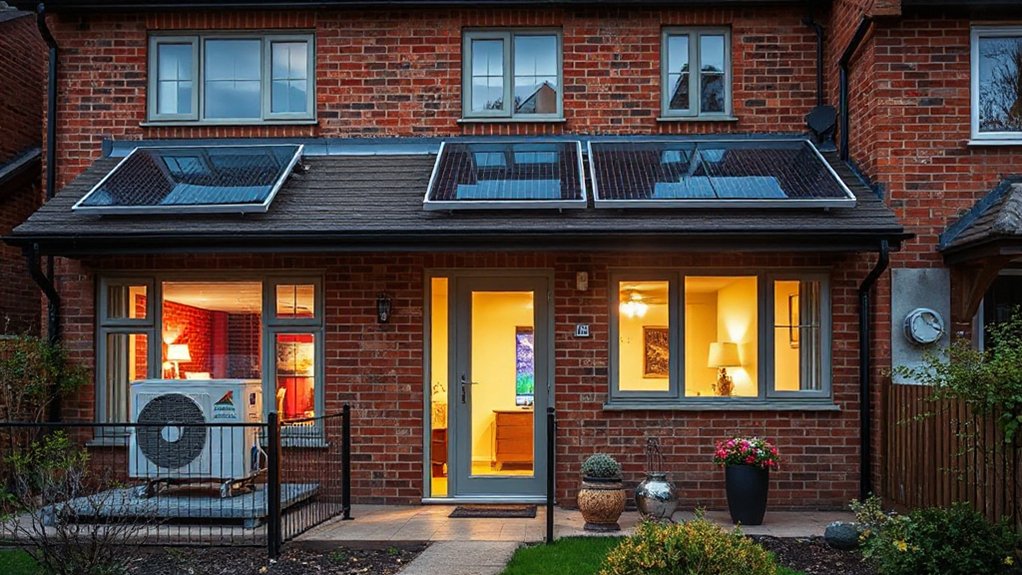
A smart thermostat can cut heating and cooling waste, so you’ll see savings as soon as you install it.
Insulation payback time hinges on your current gaps, but upgrading now often yields noticeable comfort and lower bills.
We’ll compare how these two points—Smart Thermostat Savings and Insulation Payback Time—work together for a strong financial case.
Smart Thermostat Savings
Smart thermostats save money from day one by giving you precise control over heating and cooling, learning your patterns, and adjusting temperatures automatically. You’ll see incremental utility savings as you profile daily routines and seasonal shifts, minimizing waste without sacrificing comfort.
Set schedules that align with work hours, school runs, and weekend occupancy, then let the device optimize on your behalf. In practice, the savings come from lowering boiler run times and avoiding temperature dips when you’re away.
The device communicates with boilers, radiators, and zone controls to prioritize efficiency, not excess heat. Expect faster payoff if your system supports smart integration, occupancy sensing, and fault alerts.
Track performance via app dashboards to verify energy gains and justify upgrades. Smart thermostat delivers clear, measurable utility savings.
Insulation Payback Time
Insulation upgrades pay back quickly when you size the improvement to your home and climate. You’ll see payback when you target gaps, draughts, and heat loss hotspots first, then layer insulation where it matters most.
In a 1970s UK home, consider loft, cavity walls, and solid-wall treatments, paired with sensible ventilation to prevent moisture issues. Choose materials with proven thermal resistance and install them with airtight detailing to maximise effect.
Budget for project phases that align with seasonal energy pricing to boost savings. Look for discounted rates and rebate programs, which can shorten the payback period further.
Track energy use before and after each upgrade to quantify gains, and re-evaluate annually as prices and policies shift. Practical, measured steps deliver reliable, fast returns.
Timeless Finishes for an Authentic Retro Look
Timeless finishes carve an authentic retro vibe without shouting “old.” Use materials and textures that were staples of 1970s design—think warm wood veneers, matte metal accents, and textured wallpapers—paired with modern coatings to keep maintenance practical.
You’ll select durable surfaces that resist wear while delivering character, then balance sheen levels to avoid glare in living spaces.
Introduce Vintage textiles in upholstery, curtains, and cushions to establish warmth and tactile depth without overwhelming the room.
Contrast bold wallpaper panels with smooth painted walls to create rhythm and ease of cleaning.
Retro lighting should blend form and function, using fixtures that echo era silhouettes with efficient LED cores.
Finish with cohesive hardware and switch plates to unify the palette, ensuring the retro look remains timeless and livable.
Retro-Friendly Smart Tech and Controls
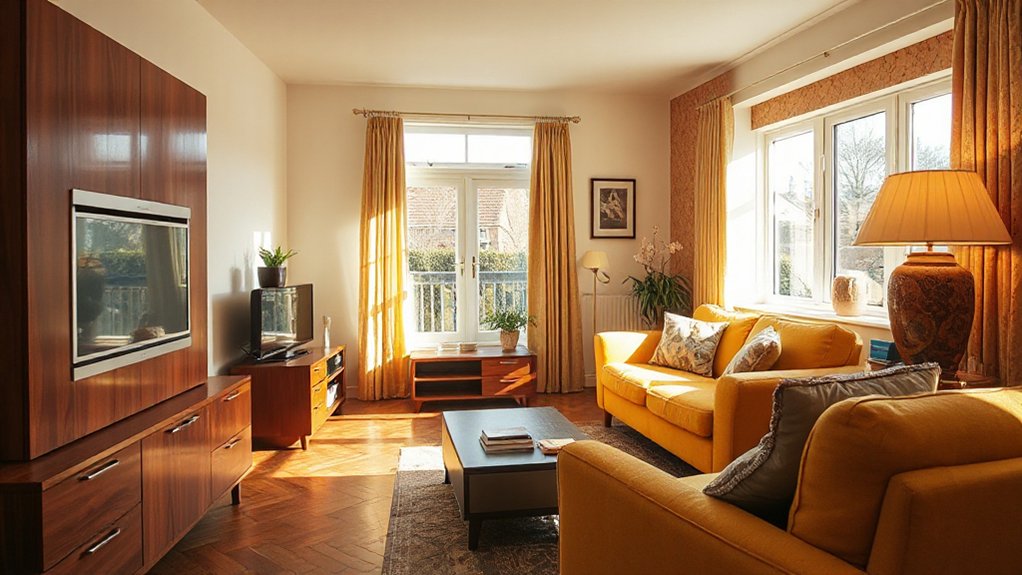
Are you bringing retro flair into the digital age without sacrificing practicality? In this retro-friendly section, you’ll pair modern controls with period charm. Choose smart hubs and wall-mounted interfaces that mimic classic toggles or bakelite finishes, so screens feel familiar, not foreign.
Prioritize compatibility with voice, app, and physical switches to reduce dead spots in daily use. For lighting, implement dimmable smart bulbs housed in vintage fixtures or retrofit lamp bases, preserving nostalgic decor while delivering adjustable ambience.
Integrate smart thermostats and blinds to respect room rhythms without overhauling fabric. Hide routers and power packs in discreet soffits or cabinets to maintain clean sightlines.
Opt for tactile, labeled controls to preserve intuition, ensuring technology supports rather than disrupts the home’s original character.
Budget-Smart Renovation: Where to Invest
Smart renovation pays off when you invest where it counts: durable systems, scalable upgrades, and features that save time and money over the long term. You prioritize essential components first: HVAC efficiency, solid insulation, and robust wiring that supports modern tech without invasive rewiring.
Budget smart means selecting mid-range, reliable fixtures with transferable warranties, not flashy gimmicks. Plan for adaptability: modular cabinets, flexible lighting, and easy-to-update finishes.
Allocate remaining funds to tastefully enhance ambiance without compromising value. Vintage decor and Eclectic furniture can define character without costly structural work; integrate them as accents rather than core investments.
Focus on daylight, soundproofing, and air quality as tangible comfort upgrades.
Document costs, compare suppliers, and avoid scope creep to keep the project on target.
Maintenance Plan to Sustain Your Modernised Home
A maintenance plan keeps your modernised home performing as designed, so set up a practical schedule that covers critical systems, finishes, and fittings. You’ll map seasonal checks for plumbing, heating, and electrical safety, plus airflow and moisture control to protect fabric.
Document warranty dates, service intervals, and replacement timelines to prevent surprises. Align tasks with your landscape design so external elements stay in balance with interior climates, reducing moisture ingress and heat loss.
Create routines for cleaning, sealing, and repainting to sustain finishes without overhauling aesthetics. Use storage solutions to keep tools, filters, and spare parts organized, ensuring quick access and consistent upkeep.
Review the plan annually, adjusting for new fixtures, changing usage, or climate shifts, and retain concise records for maintenance cycles and costs.
Frequently Asked Questions
How Can I Improve Soundproofing Without Altering Exterior Looks?
You can improve soundproofing by upgrading interior acoustics and wall insulation without changing exterior looks. You’ll seal gaps, add mass-loaded vinyl or dense plasterboard, and decouple studs, while choosing floor underlays and door seals to reduce noise transmission.
What Insurance Considerations Come With Retrofit Upgrades in Older Homes?
“Look before you leap.” Insurance coverage varies with retrofits; expect adjustments to premiums and criteria. You’ll want clearly documented retrofit costs, contractor qualifications, and plan approvals to avoid gaps, exclusions, or coverage limits during and after upgrades.
Are There Grants or Tax Relief for 1970S Home Modernisation?
You can access grants or tax relief for 1970s home modernisation, depending on schemes like energy efficiency incentives; consider Historic preservation and Environmental impact as criteria. You’ll explore eligibility, apply carefully, and document improvements that support preservation and sustainability goals.
Which Permits Are Typically Required for Structural Changes Inside?
When you redraw the blueprint, you typically need building permits and compliance with structural regulations. You’ll verify with your local authority, submit plans, and guarantee loads, foundations, and fire safety meet required standards before starting any interior changes.
How Do I Future-Proof Wiring for Evolving Smart Tech Standards?
You future-proof wiring by planning for wireless integration and energy efficiency, using conduit-friendly layouts, accessible pull boxes, and labeled zones; install robust backbones, smart meters, and flexible terminations to accommodate evolving standards and safer, scalable upgrades.
Conclusion
You’re steering a vintage ship through a broader sea. Each upgrade is the compass, each insulation layer the hull planks; layout tweaks open the cabin like a friendly harbor. Smart tech glows like quiet binnacles, while durable finishes patina with time. Budget becomes the tide you ride, maintenance the watchful crew. Stay true to the original keel as you chart new currents, and your home will sail—bright, efficient, and unmistakably retro.