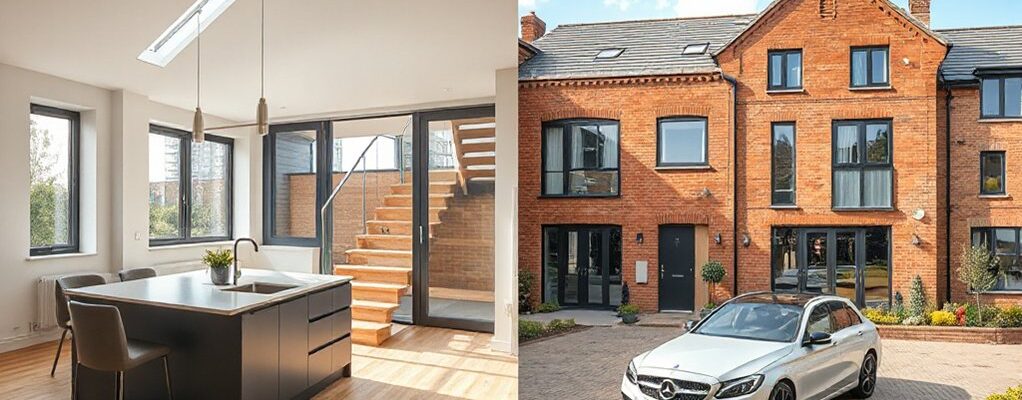
In Leeds and Manchester, you’re balancing harsh winters with rising costs, so your best upgrades must be both robust and efficient. You’ll want airtight insulation, smart controls, and scalable storage that don’t complicate future tweaks. Start with practical steps—windows, boilers or heat pumps, and durable cladding—then layer in smart meters and zoning to tame bills. The next move could redefine comfort and resilience, but first you’ll need a clear plan you can actually implement.
What Drives Smart Upgrades in Leeds and Manchester
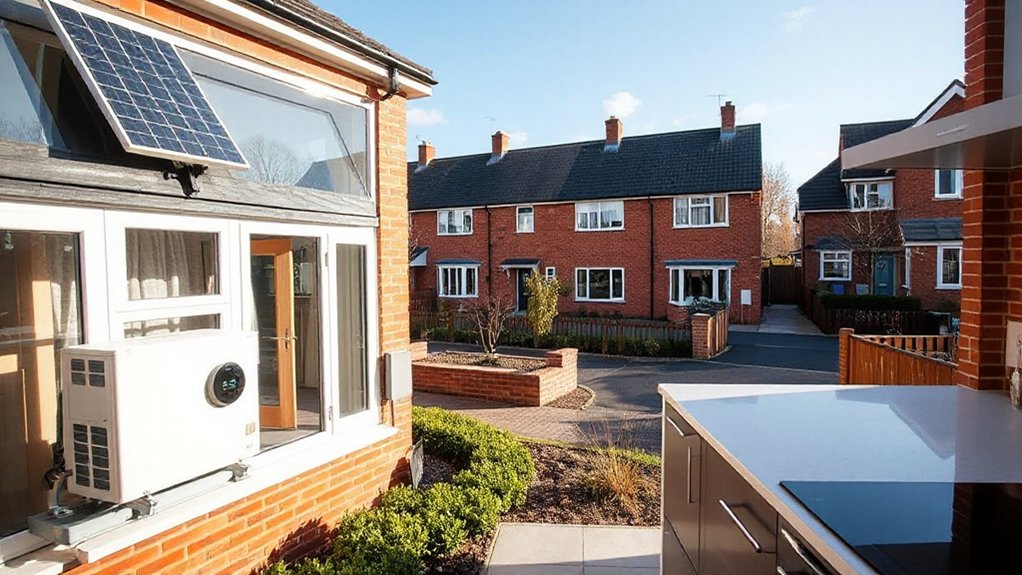
In Leeds and Manchester, smart upgrades are driven by a mix of cost efficiency, regulatory requirements, and evolving consumer expectations for new builds. You’ll prioritize practical integration that reduces running costs while meeting local standards.
Smart home integration becomes a core feature, enabling centralized control of lighting, climate, and security without complicating maintenance. You’ll evaluate wiring and networking needs upfront to support scalable systems, ensuring future-proofing as tech evolves.
Regulatory drivers push installers toward compliant, energy-aware designs, so you align with building performance codes and local planning expectations. Renewable energy options, like rooftop solar or heat pumps, are considered where feasible to lower bills and boost sustainability credentials.
Choose solutions with clear maintenance paths and documented performance data for reliable, long-term operation.
Insulation and Thermal Efficiency for Northern Homes
In Northern homes, start with solid insulation options that suit Leeds and Manchester’s damp, cool winters and narrow construction gaps. We’ll outline practical thermal performance upgrades, from cavity and external wall insulation to roof and floor solutions, with an eye on cost, local climate, and build practicality.
You’ll also see how airtightness, controlled ventilation, and sensible retrofit choices impact energy bills and comfort.
Insulation Options for Northern Homes
Do you know which insulation options deliver the best heat retention for northern UK homes? In Leeds and Manchester builds, you match climate with materials that minimize cold drafts and damp.
Start with wall insulation, aiming for continuous coverage and a tight seal at corners and quoins. Use insulation types common to northern specs: mineral wool for fire resistance and sound, high-density rigid foam boards where you need long-run thermal breaks, and cavity fills that avoid bridging at mortar joints.
Consider loft insulation depth and radiant barriers only where space and budget allow. For interior comfort, pair with controlled ventilation and moisture management.
Also, plan where to place indoor plants for humidity balance without compromising air paths. Focus on practical, install-friendly options that suit local homes.
Thermal Performance Upgrades Ideas
To boost thermal performance in northern UK homes, start with airtight detailing and continuous insulation that minimize cold bridges and drafts. You’ll seal gaps around junctions, sleeves, and penetrations, using high‑performance tapes and membranes to create a continuous envelope.
Choose insulation with high density and low thermal conductivity for walls, roofs, and floors. Install cavity or external wall insulation where appropriate to reduce heat loss.
Guarantee roof and floor detail align with pattern‑loading and wind exposure typical of Leeds and Manchester suburbs.
Integrate solar gains and renewable energy where feasible, sizing systems to balance demand.
Prioritize indoor air quality by selecting materials with low emissions and coordinating with mechanical systems.
These steps yield durable comfort while supporting energy savings and sustainable fabric efficiency.
Airtightness and Ventilation Benefits
Airtightness and ventilation are core to reliable thermal performance in Leeds and Manchester homes, where rapid temperature swings and variable wind exposure test envelopes.
You should treat airtightness as a first-principles design target, not an afterthought, steering detailing at junctions, penetrations, and openings to minimize air leakage.
Achieve peak envelope performance with continuous air barriers, well-sealed electrical boxes, and properly installed tapes and membranes that suit Northern weather loads.
Pair this with balanced ventilation to maintain consistent indoor air quality without sacrificing energy savings.
In practice, select heat-recovery ventilation systems sized for occupancy and climate, and ensure commissioning confirms low leakage rates and stable air change.
Regular inspections guard against degraded seals, protecting comfort, costs, and long-term durability.
Smart Meters and Home Energy Storage for Leeds & Manchester
Smart meters give you real-time usage data, helping you spot where you can cut bills in Leeds and Manchester grids.
Paired with home energy storage, you can store cheap daytime power and smooth out peaks on your tariff, boosted by local incentives.
We’ll cover the practical choices and pros and cons of available storage options for new builds in our region.
Smart Meter Benefits
Smart meters delivered direct feedback on energy use and pair with home energy storage to smooth Leeds and Manchester’s needs. You’ll gain real-time consumption data, enabling quicker decisions on when to run high-demand appliances or charge storage.
With demand-side awareness, you’ll optimize bills and minimize peak charges. The system supports better integration with renewable energy sources, letting you align generation peaks with household demand.
You’ll also benefit from better forecast accuracy for monthly bills, reducing surprises. For home energy storage, smart meters inform charging schedules to maximize savings and extend storage life.
In a regional context, this supports smarter load management within the local grid. Overall, smart meter benefits enhance efficiency, reliability, and resilience, contributing to robust smart grid integration across Leeds and Manchester.
Home Energy Storage Options
In Leeds and Manchester, pairing home energy storage with smart meters open practical, regionally tuned options for managing energy use. You’ll evaluate battery options based on daily demand, solar intake, and grid tariffs.
Home energy storage lets you store excess daytime generation for evenings, reducing peak charges and smoothing supply during outages. For new builds, choose a system with scalable capacity, fast response times, and integrated monitoring to align with local TOU (time-of-use) rates.
Consider lithium iron phosphate or nickel manganese cobalt chemistries for longevity and safety in UK climates. Battery options should balance cost, warranty, and installation footprint, while guaranteeing ventilation and thermal management.
Ensure your smart meter data feeds directly into the storage controller for peak charging, discharging, and grid participation.
Efficient Heating: Boilers, Heat Pumps, and Zoning
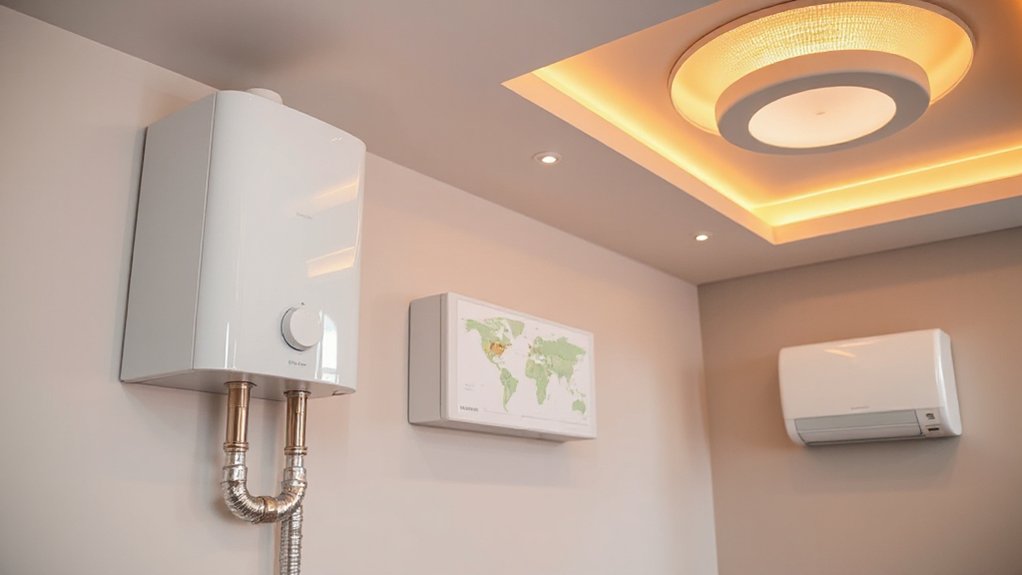
Efficient heating in new-build homes hinges on choosing the right combination of boilers, heat pumps, and zoning controls to match Leeds and Manchester’s cooler, damp winters. You’ll optimize performance by pairing a reliable boiler with heat pump redundancy for shoulder-season efficiency.
Then, tailor zoning to dampen heat loss through corridors and unused spaces. In practice, select a boiler with a high modulating range and low standby losses, and pair it with a heat pump optimized for colder UK climates.
Install smart zoning valves and room-by-room controls to avoid overshoot. Prioritize Smart thermostats for responsive, weather-adjusted control and reliable diagnostics.
Plan radiator upgrades where needed to improve distribution, ensuring pipe runs accommodate future upgrades without invasive rewrites. Keep installations compliant with local Part L targets and manufacturer guidelines.
Plumbing and Water-Saving Upgrades to Cut Bills
Plumbing and water-saving upgrades can noticeably cut bills in Leeds and Manchester’s damp winters. To start, target water conservation through efficient sizing and flow controls. Fit low-flow plumbing fixtures for taps, showers, and toilets to reduce daily consumption without sacrificing comfort.
Select dual-flush toilets and metered taps that suit family patterns, and install aerated or laminar-flow devices to maintain pressure at lower flow rates. In wet regions, minimize hot-water wait times by locating the boiler and hot-water cylinder closer to user points, and insulate pipes to curb heat loss.
Consider smart leak detection and metering to identify waste early. Choose durable materials, simple maintenance, and local serviceability to sustain long-term savings and predictable water bills.
Electrical Upgrades for a Safe, Modern Home
Electrical upgrades are essential for a safe, modern home in Leeds and Manchester, where aging circuits and inconsistent power quality can cause nuisance trips. You’ll want a qualified electrician to assess your load requirements, main protection, and panel health, then plan a staged upgrade that matches local demand.
Prioritise Electrical safety with residual current devices, proper isolation, and zero-doubt fault finding. Confirm wiring regulations are followed for consumer units, cable routes, and terminal connections, reducing fire risk and future disruption.
Consider upgrading to a modern consumer unit, arc-fault protection where available, and additional circuits for kitchens and crowded living areas. Document compliance, testing, and label circuits clearly to simplify future maintenance and any safety audits by property managers or insurers.
Layout Tweaks to Maximize Small Northern Spaces
In Leeds and Manchester homes, you’ll want layouts that punch up space without crowding it. Consider compact zones that smartly channel natural light, using wall-mounted storage and foldable furniture to keep paths clear.
We’ll explore practical tweaks that boost usability in small northern rooms, balancing function with regional build realities.
Space-Saving Layouts
When space is tight in new builds across Leeds and Manchester, smart layout tweaks can make a big difference. You’ll prioritize open plan living zones and clear circulation paths, using furniture as room dividers rather than walls.
Implement modular furniture that adapts to changing needs, like sofa units with hidden storage and extendable dining tables. Consider wall-mounted storage to free floor space, and place work surfaces along secondary walls to keep central areas open.
Use consistent material palettes and slim-edged cabinetry to reduce visual bulk. Elevate efficiency with compact wardrobes and pull-out pantry shelves that don’t encroach on living areas.
Plan electricals and data drops to support flexible configurations, so you can reconfigure layouts without major upheaval. Marin, Manchester, Leeds will appreciate the pragmatic, space-maximizing approach.
Natural Light Optimization
Natural light isn’t a luxury in compact Leeds and Manchester homes—it’s a practical design tool. You’ll optimize small interiors by mapping daylight paths from east to west, aligning rooms to maximize exposure without glare.
Window placement matters: locate glass toward the sunlit zones, avoid obstructing sightlines, and use narrower frames to reduce bulk in tight walls. In kitchens and living areas, height adjustments and continuous panels can flood spaces without sacrificing privacy.
Consider strategically placed skylight installation where roof access allows; this boosts upper-floor brightness and lowers evening reliance on artificial lighting. Apply light-colored finishes and reflective surfaces to amplify every beam.
Test layouts with daylight simulations and adjust sill heights for usable views—small tweaks, big gains in perceived space.
Lighting, Mood, and Home Automation for Northern Living
Stride into northern living with lighting systems that adapt to climate, layout, and routines—you’ll want control that’s reliable, fast, and intuitive.
In Leeds and Manchester homes, smart lighting isn’t just convenience; it’s a climate-aware tool. Use zoned LEDs and dimming to fine‑tune brightness for screens, work tasks, and atmospheric moments.
Mood lighting should be directional and adjustable, with color temperature options from cool for productivity to warm for evenings. Integrate with a simple home hub and voice or app control to minimize friction during busy days.
Prioritize firmware‑over‑the‑air updates and robust networking to prevent dead zones. For mood shifts, create scenes that reflect daily routines, so you step into a lighting plan that feels tailored, responsive, and dependable.
Exterior Upgrades: Weatherproofing, Comfort, and Value
From here, upgrading the exterior means adding weatherproofing and comfort features that protect the home while boosting value in Leeds and Manchester markets. You’ll select exterior materials that resist typical UK conditions—wind, rain, and temperature swings—while keeping maintenance modest.
Focus on breathable, durable cladding, sealed joints, and robust drainage to minimize damp risk. Insulation added into walls and roofs improves year-round comfort without oversized HVAC loads.
Enhance entry and egress with effective door and window seals, plus overhangs or porches that shield walls and foundations. Landscaping design around the footprint helps microclimate control, reducing heat loss and guiding water away from foundations.
Budget, Timeline, and Local Considerations for Leeds & Manchester
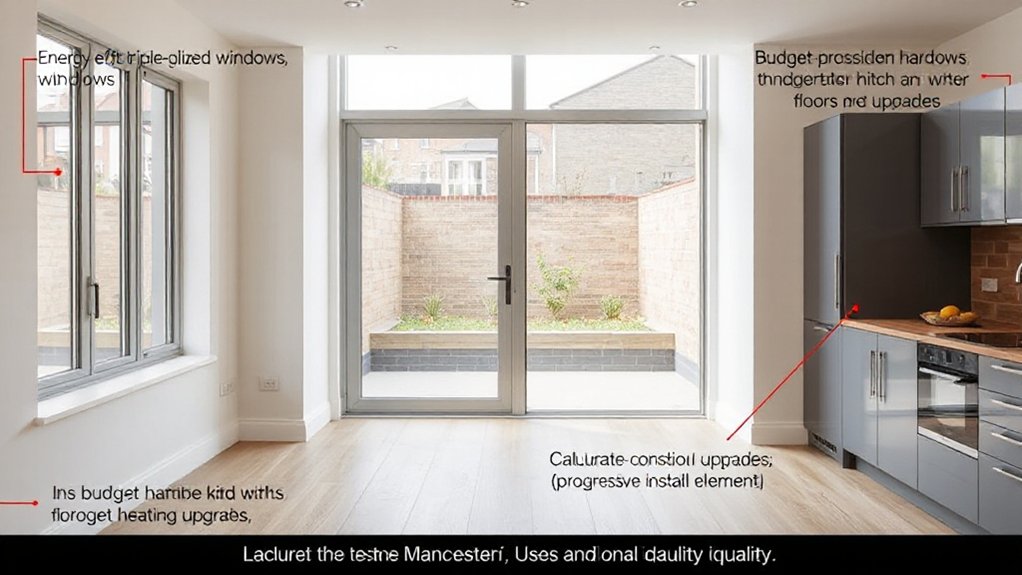
For Leeds and Manchester, setting a realistic budget and timeline starts with a clear scope and local cost benchmarks. Expect higher insulation and weatherproofing standards, modestly higher material costs in urban areas, and a faster pace of project sequencing where trades are in high demand.
You should build in allowances for energy efficient windows and lean scheduling to avoid delays caused by limited on‑site labour. Use Sustainable building materials where practical to meet local climate codes and retrofit expectations.
Factor in permit and inspection windows that can stretch timelines. Contingencies of 10–15% help cover rising freight or availability issues.
Communicate milestones with your supplier network and equip crews with detailed drawings to keep cost and lead times predictable.
Frequently Asked Questions
What Grants or Incentives Exist for Upgrades in Leeds and Manchester?
You can access grants for energy efficient windows and smart home technology through local schemes in Leeds and Manchester, plus UK-wide incentives. You’ll need to check eligibility, apply through councils, and document energy savings for potential rebates and funding support.
How Do Local Regs Affect Renovation Permits in These Cities?
“Kick the tires”—local regs shape renovation permits; you’ll navigate building codes and permit processes, specific to Leeds and Manchester. You assess changes, submit plans, and expect approvals with regional timelines, fees, and inspection checkpoints throughout the project.
Which Materials Perform Best in Northern UK Climates?
In northern UK climates, you’ll prioritize Climate resilience and material durability. Choose robust timber, insulated masonry, and weatherproof finishes; guarantee airtightness and wind resistance. You’ll test performance under freezing rain, snow, and damp for long-term durability.
Can Upgrades Boost Resale Value in Leeds or Manchester?
Yes, upgrades can boost resale value in Leeds or Manchester. You’ll appeal to buyers with smart technology and energy efficiency, improving comfort, operating costs, and future-proofing, while aligning with regional standards and local utility incentives.
What Are Typical Return-On-Investment Timelines for Upgrades?
Did you know homes with energy efficiency upgrades recoup roughly 60–80% of costs over time? You’ll see return-on-investment timelines short for energy efficiency and longer for aesthetic appeal, typically within 5–10 years, depending on local market demand.
Conclusion
You’ve got an energy-smart, future-ready home on your hands. Prioritize practicality, performance, and provenance with airtight insulation, efficient heat, and smart controls. Roof to floor, harness daylight, and heat-smart zoning to slash bills. Weatherproof exteriors plus sturdy cladding keep Leeds and Manchester homes comfortable through changing climes. Plan with a phased budget and local builders, so switches, sprinklers, and smart meters slot smoothly. Sustainable, scalable, secure—speedily start, steadily stay, savor superb Northern living.