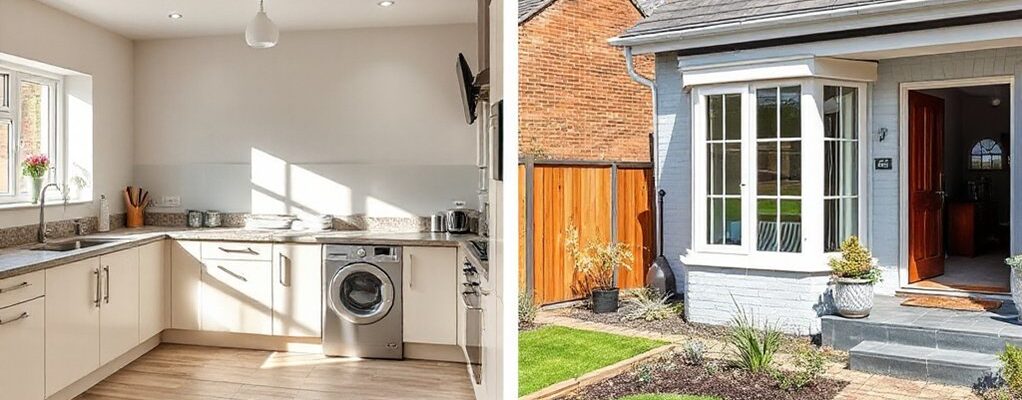
If you want to boost Leeds property value, start with energy efficiency and structural integrity, then layer in refreshed interiors and curb appeal. Compare cost and impact of double-glazed windows, insulation, and smart controls against kitchen and bathroom updates, while timing renovations to local demand cycles. You’ll want to balance upfront costs with long-term savings and market appeal, yet the next step hinges on which property type and neighborhood dynamics will push value most.
Prioritize Upgrades for Leeds Homes: A Value-First Checklist
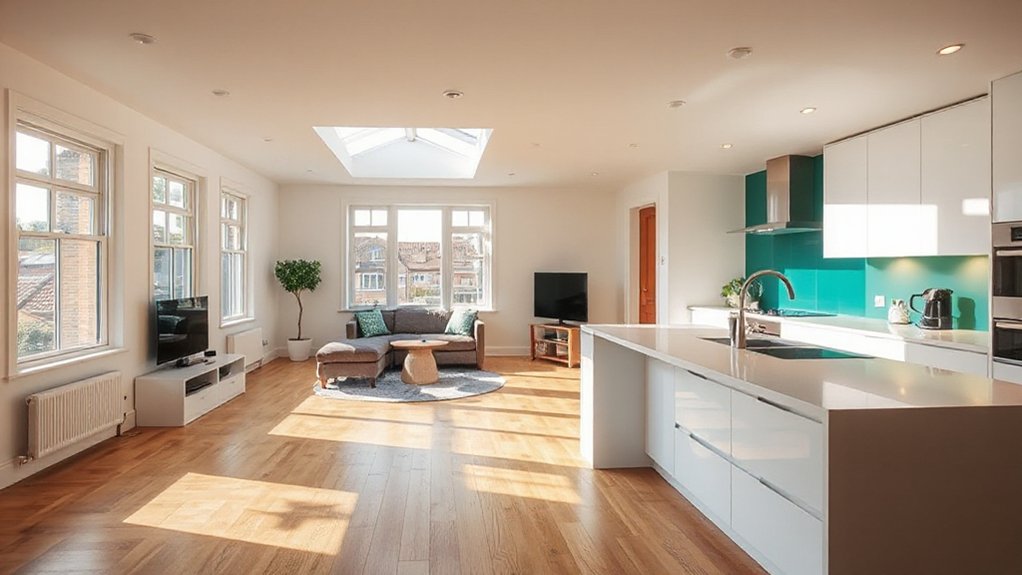
Prioritize upgrades for Leeds homes by focusing on value-first decisions that boost resale potential and energy efficiency. You’ll assess ROI across core areas, prioritizing changes with proven resale impact.
Begin with energy-related improvements tied to utility costs and comfort. Then evaluate finishes that signal quality to buyers.
Interior lighting choices matter: opt for LED fixtures with high color rendering and dimming capability to enhance perceived space and reduce operating costs.
Flooring options should balance durability, maintenance, and style. Consider mid-priced, low-maintenance options with long life and broad appeal.
Document cost vs. benefit for each upgrade, emphasizing quick payback cycles and measurable energy savings.
Avoid niche trends that lack broad appeal; anchor decisions in market data, upfront costs, and long-term value to resale trajectory.
Leeds Value Drivers: What Really Increases Price
In Leeds, price gains hinge on tangible, market-backed drivers rather than stylistic trends. You’ll see value rise when you align upgrades with measurable demand signals, supply constraints, and regulatory realities.
Leeds market trends indicate demand concentration in three-bedroom homes near transport links and local amenities, with price momentum strongest in lower- to mid-priced bands. You should prioritize improvements that widen appeal to entry-level buyers and families, while minimizing overbuilding in high-end segments.
Structural integrity, energy efficiency, and usable space yield durable returns, not novelty.
Property tax considerations can shift after-tax profitability, so factor assessment-year levies and potential rebates into ROI calculations.
Data-driven choices reduce risk, ensuring renovations translate into verifiable price uplift rather than speculative speculation.
Leeds Energy Upgrades That Pay Off
Energy efficiency upgrades in Leeds offer measurable, long-term cost savings and appeal to price-conscious buyers. You’ll see stronger resale appeal when you quantify payback periods, often within 5–10 years, depending on energy pricing and house size.
Prioritise upgrades with proven ROI, such as energy saving windows, which reduce heat loss and heating demand, lowering annual bills by a meaningful margin. Insulation enhancements также reduce thermal bridging and maintain steady interior temperatures, boosting comfort and reducing energy spikes.
Data indicate Leeds properties with upgraded envelopes experience higher energy performance ratings and faster sale times relative to peers.
Pair these improvements with smart controls to optimize usage patterns. In short, targeted efficiency work strengthens value without overinvesting beyond local climate realities.
Refresh Leeds Kitchens for Local Appeal
To boost local appeal, you should prioritize modern cabinetry updates, comparing costs, return on investment, and stylistic fit with Leeds homes.
Efficient layouts matter, so quantify workflow improvements, cabinet spacing, and traffic patterns to support a data-driven redesign.
Upgrading quality countertops ties aesthetics to durability and value, so assess material performance, maintenance, and long-term resale impact.
Modern Cabinetry Updates
Have you considered how modern cabinetry updates can redefine the functional heart of a Leeds kitchen? In this section, you’ll examine data-driven choices that impact value and daily use.
Custom cabinetry, tailored to space constraints, yields improved storage density and workflow efficiency, quantifying gains through cabinet-depth utilization and drawer counts per footprint.
Modern finishes, from matte neutrals to high-gloss accents, influence perceived room size and maintenance costs, with coatings rated for durability and ease of cleaning.
Material performance, including moisture resistance and edge-banding durability, correlates with long-term cost avoidance.
Budget segmentation matters: prioritize soft-close mechanisms, full-extension slides, and integrated hardware to maximize user satisfaction.
Finally, installation accuracy and carpenter quality predict future resale outcomes, reducing voids, gaps, and warranty claims.
Efficient Layouts Matter
Efficient layouts drive everyday usability and property value, so invigorating Leeds kitchens with data-informed spacing choices matters. You assess traffic patterns, appliance reach, and work triangle efficiency to optimize flow.
Open floorplans can enhance perceived space, but only when cleared sightlines and distinct zones prevent bottlenecks. Measure clearance around islands or peninsulas, ensuring at least 42 inches for primary work areas and 36 inches for secondary paths.
You tailor furniture placement to support task-focused zones—prep, cooking, dining—without overcrowding. Integrate storage within reach to reduce milling and friction.
Document the impact of layout changes with post-implementation traffic surveys and resale sensitivities in Leeds markets. Your goal is a kitchen that feels expansive yet purposeful, balancing aesthetic openness with practical constraints for sustained value growth.
Quality Countertops Upgrade
Quality countertops are a leverage point for Leeds kitchens, translating material performance and maintenance data into day-to-day practicality. You’ll evaluate surface hardness, heat resistance, and stain durability from local supplier data, then translate findings into actionable choices for remodel planning.
Marble countertops offer timeless aesthetics but require sealant schedules and careful spill management; you’ll quantify maintenance intervals and life-cycle costs to determine fit for high-traffic prep zones.
Quartz surfaces, by contrast, deliver uniform appearance and scratch resistance with lower upkeep, enabling longer warranty coverage in rental or resale scenarios.
Compare total cost of ownership, installation timelines, and supplier warranty terms to identify value drivers.
Prioritize consistent slab thickness, edge profiles, and integrate with durable underlayment for Leeds-area humidity and temperature fluctuations.
Modernize Leeds Bathrooms on a Budget
If you’re aiming to modernize Leeds bathrooms on a budget, start by mapping out where the biggest value gains occur: fixtures, finishes, and plumbing efficiency. You’ll prioritize high-impact upgrades that deliver measurable ROI, avoiding costly overhauls.
Begin with efficient fixtures: low-flow toilets and taps reduce ongoing costs while appealing to value-conscious buyers.
Choose finishes that look premium without exorbitant price tags, focusing on matte neutrals and durable ceramic or porcelain surfaces.
Plumbing efficiency matters most in long-term savings, so assess pipe routing and leak safeguards to minimize waste and disruption.
For aesthetics, incorporate luxury fixtures strategically, pairing them with high-end materials only where the budget permits, ensuring a cohesive, upscale feel.
Document costs, projected energy savings, and payback periods to guide decisions.
Boost Curb Appeal to Attract Leeds Buyers
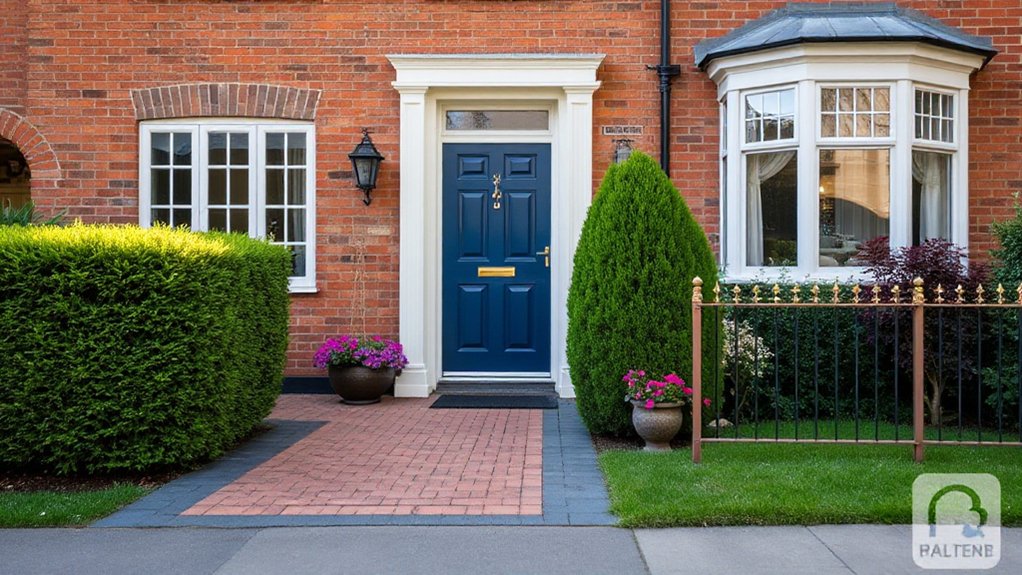
Boosting curb appeal is a data-driven way to attract Leeds buyers by signaling quality and efficiency from the outside. You’ll see value in proven elements: refresh your entry with a clean fascia, preserve sightlines, and guarantee stones or gravel paths align with the street’s measurements.
Landscaping trends indicate buyers respond to balanced, low-maintenance greenery, crisp borders, and seasonal color that doesn’t overwhelm the façade. Prioritize symmetry and porch lighting that highlights architectural features without glare.
Exterior lighting should extend the usable hours of outdoor spaces, improving perceived safety and reducing shadows near entry points. Pair lighting with durable finishes and moisture-aware elevations to minimize maintenance across years.
Measure impact by tracking foot traffic and time-on-market before and after improvements to verify ROI.
Smart Storage and Layout Tweaks for Leeds Homes
Smart storage solutions and thoughtful layout tweaks can materially improve everyday usability and long-term value in Leeds homes. You’ll optimize space by prioritizing vertical storage, built-in shelves, and multifunction furniture that preserves floor area.
Data show that homes with efficient storage report faster sale times and higher perceived value, driven by reduced clutter and streamlined circulation. When evaluating layout tweaks, measure room proportions, door swing clearances, and traffic patterns to minimize wasted space.
Consider a logical flow from entry to living areas, with clearly defined zones that support daily tasks. Implement integrated lighting and outlets to enhance usability without visual bulk.
Emphasize adaptable spaces, such as desks that convert to dining surfaces, to sustain appeal as needs evolve. Smart storage and layout tweaks therefore deliver measurable, durable value.
Garden and Outdoor Space Value for Leeds Properties
Ever wondered how outdoor space translates into value for Leeds properties? In this analysis, you’ll see how garden features impact saleability and price per square foot.
Data shows that well-defined zones, year-round usability, and low-maintenance plants correlate with higher desirability among buyers, especially in mid to high tiers of the Leeds market.
Landscape design matters: cohesive layouts, sightlines from living spaces, and functional hardscape increase perceived square footage and curb appeal, lifting offers by a measurable margin.
Outdoor lighting extends usable hours and highlights architectural assets, boosting nighttime curb presence without excessive energy use.
Cost efficiency matters too; scalable improvements deliver better ROI when paired with durable materials and seasonal maintenance plans.
Prioritize plan, implement, and measure outcomes to optimize value.
Financing, Timing, and Property-Type Priorities in Leeds
In Leeds, financing strategies hinge on timing, property type, and risk tolerance, with data showing that entry-level and mid-market buyers prioritize mortgage affordability, lender-backed renovation credits, and flexible repayment terms.
While higher-end properties emphasize cash flow stability and longer-term value-added options. You’ll weigh interest rates, loan-to-value limits, and prospective appreciation when choosing a plan, ensuring alignment with project scopes and market cycles.
Renovation loans emerge as a tool to release value without tying up capital, yet you should compare terms, prepayment penalties, and draw schedules across lenders.
Timing matters: phase projects to match seasonal demand and interim cash flow.
For property type, tailor strategies to rental income potential, tax incentives, and resale trajectory, balancing risk and opportunity.
Frequently Asked Questions
How Do Property Taxes Affect Value After Improvements in Leeds?
Property tax reassessment typically follows significant improvements, boosting assessed value and potentially increasing taxes; your valuation adjustments reflect new market value, so you may pay more, but some jurisdictions phase ins or exemptions temper impacts over time.
What Leeds Neighborhoods Yield the Strongest Resale Bump?
Nearly every Leeds neighborhood with strong historic architecture and ample green space yields the sharpest resale bump, you’ll see, statistically, when demand concentrates there and buyers prize character plus parks over newer builds.
Do Tradable Energy Labels Influence Buyer Decisions in Leeds?
Yes, tradable energy labels influence buyer decisions in Leeds. You’ll notice energy efficiency key to buyer perception, with data showing higher labels correlate to swifter offers and premium prices, especially in newer or retrofit-focused properties.
Are There Local Permits Required for Small Home Upgrades in Leeds?
Yes, you’ll likely need Building permits for small upgrades and must follow renovation regulations; verify local authority guidance, timelines, and required inspections, as permit processes vary by project scope and zoning, affecting timelines and compliance costs.
Which Home Improvement Returns Are Overrated in Leeds Markets?
Overpriced kitchens and luxury baths are overrated in Leeds markets; focus on practical value. You’ll see landscaping trends and interior paint colors drive ROI less than durable updates, with data showing mid-range renovations outperform high-end splurges for resale.
Conclusion
In essence, you’ll maximize value by prioritizing energy efficiency, solid structure, and refreshed spaces that align with Leeds buyer demand. You should quantify ROI from windows, insulation, and smart controls, then tailor kitchen and bathroom updates to local tastes and budgets. Keep curb appeal sharp and optimize storage layouts to enhance usability. Monitor timing and financing to minimize carry costs. Are you confident your plan balances short-term costs with long-term resale gains for Leeds markets?