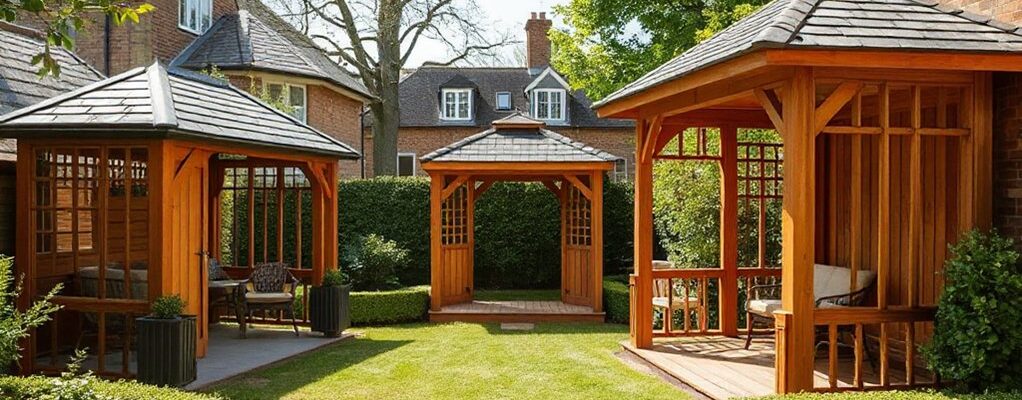
You expect simplicity, yet your garden demand nuance: a compact gazebo that grounds rather than overwhelms. As you plan, consider footprint, materials, and weather resilience to avoid trade-offs that haunt small spaces. Think through shape, roof style, and privacy features that fit UK winds and rain. With the right balance, the next decision becomes clearer, guiding you toward a design that supports both function and ambience—but you’ll want to weigh the options before committing.
How to Pick a Gazebo for a Small UK Garden
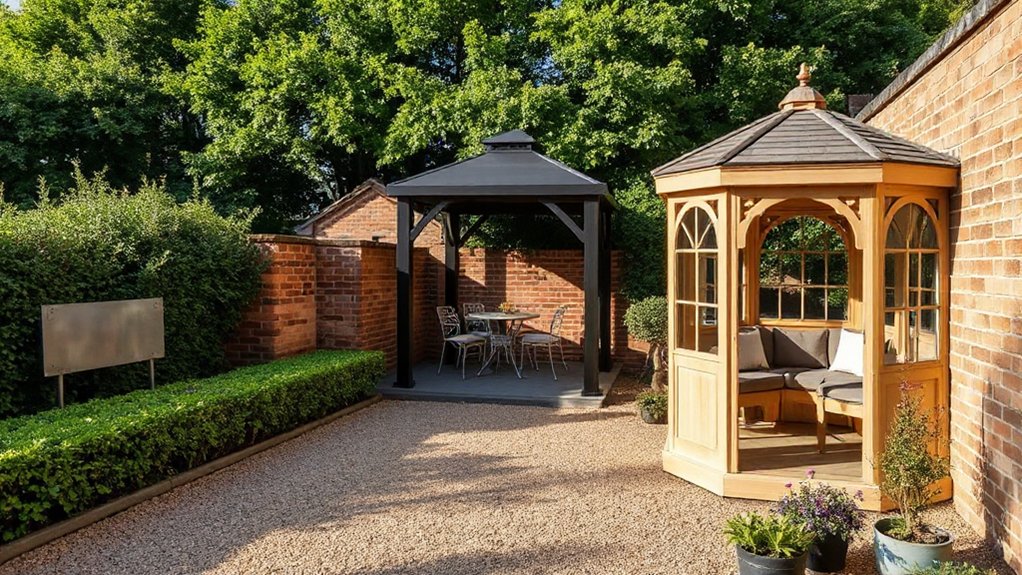
Selecting a gazebo for a small UK garden requires careful consideration of space, purpose, and weather resilience. You evaluate footprint, access routes, and proximity to existing structures to prevent crowding. Identify the primary use—dining, shaded retreat, or sheltered entertaining—to determine size, roof height, and door placement. Material choice influences maintenance and durability; opt for corrosion-resistant metal, timber with treated finish, or composite blends suited to damp conditions. Consider anchoring and wind ratings, guaranteeing stability on permeable or uneven ground. Integrate garden lighting as you plan paths, steps, and ambient zones, avoiding glare and moisture exposure. Plan for plant integration with trellises or built-in planters that complement scale without obstructing movement. Ensure assembly access, warranty terms, and local regulations are clearly understood before purchase.
Best Lightweight Pop-Up Gazebos for Sunny Summers
You’ll evaluate lightweight pop-up gazebos for sunny summers by prioritising easy setup, fast deployment, and reliable lightweight stability. Consider how UV sun protection gear integrates with breathability and wind resistance, ensuring you maintain shade without adding bulk. This discussion maps practical choices to your garden planning needs, balancing portability with performance.
Easy Setup, Fast
Pop-up gazebos offer instant shade and quick setup, making them ideal for sunny UK summers. You’ll benefit from lightweight frames, simple toggles, and push-button assembly that reduces time on site. Prioritize models with pre-attached guy ropes and a spring-loaded ribs system to minimize fiddling during deployment. Verify fabric denier and UV protection ratings to ensure durable, fade-resistant sheltering for prolonged outdoor use. Consider a compact carry bag with recessed wheels for easy transport and a stable base footprint to resist wind gusts without auxiliary anchors. When planning layout, position adjacent to garden furniture for seamless entertaining flow and integrate with outdoor lighting so illumination remains consistent after dusk. Confirm replacement parts are readily available, preserving long-term performance without frequent replacements.
Lightweight Stability Tips
To keep lightweight pop-up gazebos stable in sunny UK summers, start with a sturdy frame and wind-smart setup. You guarantee anchor points secure the canopy feet, using taut guy lines and adjustable stakes to resist gusts encountered on decked areas or lawns. Prioritize frame materials with low flex and high torsional stiffness; recheck joints after initial setup. Implement a wind-sensing routine: pause use if gusts exceed manufacturer limits, and deploy braces in exposed locations. For sustained comfort and usability, plan around garden furniture placement to avoid crowding ingress paths while maintaining easy access. Lighting solutions should be installed only after stability is verified, preventing tripping hazards. Keep maintenance logs for fabric tension, and store components in weatherproof containers to extend performance.
UV Sun Protection Gear
When selecting UV sun protection gear for lightweight pop-up gazebos, prioritize fabric with high UPF ratings and proven UV resistance to maintain shade integrity across sunny UK summers. You assess material composition, ensuring tightly woven polyester or canvas with UV inhibitors. Consider dual-layer canopies and overhangs for extended sun coverage without added bulk. Check colourfastness to minimize fading and degradation after repeated exposure. Verify that protective coatings remain effective after washing routines typical of garden use. For portability, choose gear with compact carry bags and quick-assembly frames that preserve UV protection through repeated setup and takedown. Emphasize sun safety by labeling the maximum UV protection period and performing routine fabric inspections. This approach aligns with precise, context-aware planning for reliable UV protection.
Sturdy Timber and Metal Gazebo Designs for Wind-Prone Days
Rugged timber and metal gazebo designs provide reliable shelter in wind-prone days, combining solid framing with secure anchoring to resist gusts. You evaluate structural integrity by inspecting joint connections, anchorage methods, and load paths to guarantee restraint against lateral forces. Timber frames benefit from seasoned finishes and reinforced posts, while metal variants use gussets and bracing to maintain rigidity under gust loads. Consider corrosion resistance, seam protection, and grid spacing to distribute wind pressure uniformly. Aesthetics must align with site constraints, so incorporate Decorative lattice without compromising airflow or strength. Timber finishes should be durable and low-maintenance, contrasting with metal’s streamlined silhouette to suit garden scale. Plan anchorage to soil type, height, and anticipated wind speeds, documenting performance criteria for future maintenance.
Weather-Ready Features: Roofs, Canopies, and Shade Options
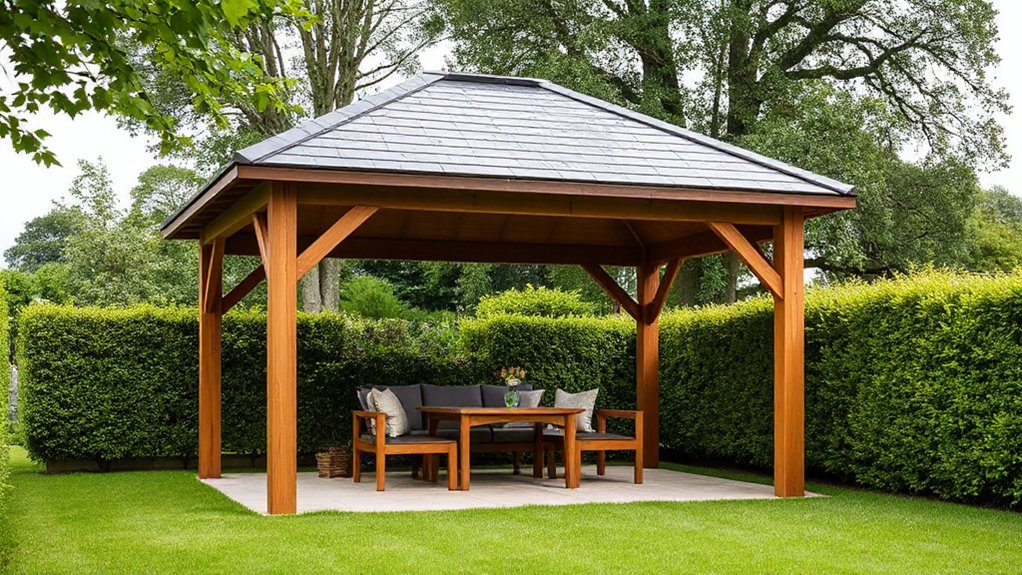
Consider weather-resistance as a foundational requirement when selecting roof designs, shade options, and canopy systems for small UK gardens. You’ll compare materials, drainage, and UV protection to guarantee stability, longevity, and comfort across seasons. This discussion sets criteria for Weather-Resistant Roof Designs, Shade Options For Gardens, and All-Season Canopy Solutions to inform your design choices.
Weather-Resistant Roof Designs
Are your gazebo plans ready to withstand typical UK weather? When selecting weather-resistant roof designs, you prioritize structural integrity, material resilience, and tight seals. Opt for a reinforced frame with corrosion-resistant coatings and precision joinery to endure wind, rain, and frost without deformation. Consider pitched roofs or dual-layer membranes that promote drainage and reduce pooling, paired with UV-stable finishes to limit material degradation. Choose roofs with integrated gutters and overhangs to direct runoff away from foundations and garden furniture. Incorporate ventilated eaves for condensation control while maintaining shade integrity. Plan for discreet drainage channels that preserve aesthetics and safety. Guarantee compatibility with outdoor lighting and positioned garden furniture access for maintenance without compromising rotational access.
Shade Options For Gardens
Shade options for gardens should deliver reliable sun protection while maintaining airflow and weather resistance. When selecting canopy fabrics, prioritize high UPF ratings, breathable weaves, and colorfast materials to reduce heat buildup. For frame systems, choose corrosion-resistant metals or treated timber with secure anchoring to withstand UK wind loads. Integrate adjustable shade devices—tilt or retractable sails—and guarantee seamless interaction with roofed zones to maintain circulation. Consider lightweight, modular components that enable rapid reconfiguration for varying sun angles across seasons. Garden furniture placement should optimize shade coverage without hindering paths, while allowing easy access to seating and dining areas. Plant integration can supplement shading through strategically positioned greenery, reducing glare and cooling microclimates near seating zones. Isolated shading corners enable targeted comfort without compromising overall design.
All-Season Canopy Solutions
Weather-ready canopy systems for all seasons combine robust roof options with adaptable shade features to sustain comfort and protection year-round. You select modular frames and weatherproof fabrics to guarantee consistent performance across shifting UK conditions. Consider roof materials with high UV resistance, drainage channels, and insulated panels to reduce heat gain while preserving visibility. Integrate motorized or retractable shades that respond to sun angle, wind, and precipitation, maintaining garden décor without sacrificial design. For nighttime use, pair canopies with integrated outdoor lighting calibrated to beam patterns and color temperature, minimizing glare while enhancing focal points. Ensure installation plans include adequate clearance for drainage, access, and maintenance. Finally, schedule seasonal inspections to preserve longevity and weather resilience, aligning canopy systems with landscape layout and outdoor lighting priorities.
Space-Saving Footprints: Compact Shapes and Clever Layouts
Compact footprints maximize usable area without sacrificing function. You evaluate gazebo scale against site constraints, prioritizing efficient geometry to preserve circulation and access. Use square or octagonal bases to minimize wasted corner space, favor low profiles that reduce visual mass while maintaining shelter. Align entryways with primary walk lines to streamline movement, and place pillars to support optimum interior clearance without crowding furniture zones. Consider modular modules that permit reconfiguration for seasonal use, enabling a flexible garden layout while preserving structure integrity. Choose outdoor furniture with integrated storage or fold-away options to maximize floor area for dining or lounging. Incorporate sheltered alcoves for weather-protected *passage*, avoiding excess plinths or steps. This disciplined footprint strategy enhances usability without compromising aesthetic coherence.
Privacy Touches: Skirting, Lattices, and Enclosure Ideas
Skirting, lattices, and enclosure ideas provide targeted privacy enhancements that align with the compact footprint we’re optimizing. You assess available wall heights, materials, and mounting methods to minimize visual clutter while maximizing screening. Privacy screens serve as modular elements, offering adjustable transparency and wind stabilization without full enclosure, and can be integrated with existing frames for quick upgrades. Lattices provide partial concealment while promoting airflow, supporting plant trellises that reinforce shaded zones and contribute sound reduction. Enclosure options span partial panels to full rear walls, chosen for duty cycle, maintenance, and ingress control. Plan for continuity with boundaries, ensuring privacy without impeding light or sightlines. Select durable, low-maintenance finishes to sustain long-term privacy across seasonal UK conditions.
Anchoring and Wind Management for British Climates
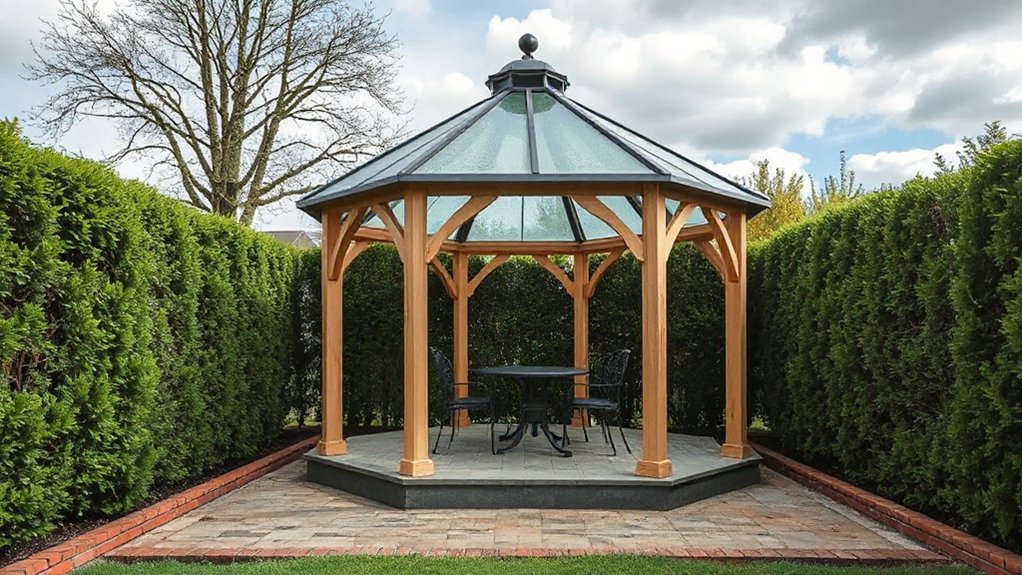
Wind loads and site preparation set the foundation for reliable anchoring in British climates. You’ll assess wind exposure, select appropriate anchors, and guarantee soil conditions support effective deployment for both wind resistance and stability. We’ll cover wind anchoring basics and practical jetting site preparation to guide precise, durable gazebo installations.
Wind Anchoring Basics
To anchor structures effectively in British climates, you must assess typical wind loads, soil conditions, and local regulations before installation. You then determine appropriate anchoring strategies tailored to your gazebo footprint, height, and weight. Begin with wind resistance considerations: assess exposure, terrain, and shielding to estimate gust and sustained pressures. Next, select anchoring techniques aligned with ground type; concrete augers for solid substrates, ground anchors for turf, and screw piles where vibrations must be minimized. Guarantee fasteners are corrosion-resistant and compatible with timber components. Implement redundancy, such as multiple anchors per leg and cross-bracing for lateral stability. Document anchoring details for maintenance checks and compliance reviews. Regularly inspect connections after storms and adjust tension as soil moisture shifts.
Jetting Site Preparation
Jetting site prep for British gardens demands that you establish stable foundations and control wind exposure before any gazebo erection. You assess soil type, load paths, and equipment access to determine appropriate anchoring methods and foundation depth. For solid surfaces, embed certified anchors or concrete pads aligned with anticipated gusts; on soft ground, implement reinforced footings with ground screws or screw piles. Erection planning includes wind loading calculations, setback margins, and redundancy in fixings to prevent progressive failure. Site coordination covers utility avoidance and drainage alignment to prevent ponding near the structure, while making certain accessible maintenance routes. Incorporate garden pond and outdoor lighting considerations into the layout to minimize shade, make certain cable routing stays protected, and preserve aesthetic balance without compromising stability. Perform final inspection before frame installation.
Aesthetics in Traditional and Modern UK Gardens
In traditional UK gardens, aesthetics hinge on a restrained palette, balanced proportion, and thoughtfully placed focal points that anchor the space without overpowering it; modern designs, by contrast, emphasize clean lines, uncluttered planes, and deliberate contrasts between materials. You assess materials, textures, and scale to optimize gazebo integration within site constraints, ensuring the structure complements surrounding planting and hardscape. Garden art informs focal expressions, guiding sightlines and seasonal impressions without dominating the vista. Floral arrangements near entry points must harmonize with plant communities, considering bloom times, scent, and color weight. In planning, you prioritize durability, weathering behavior, and maintenance cycles to sustain elegance. Proportions, alignment, and material progression convey cohesion between traditional restraint and contemporary clarity.
Quick Setup, Upkeep, and Seasonal Use Tips
Setting up a gazebo quickly and efficiently hinges on using a defined sequence: place, level, anchor, and secure, then verify clearance for doors, vents, and drainage. You organize maintenance as a routine: inspect joints, lubricate hardware, and wipe surfaces to prevent corrosion. Seasonal use should align with weather, guaranteeing rain runoff paths remain unobstructed and that garden furniture is stored or covered when not in use. For upkeep, schedule quarterly checks and promptly address any loose fittings. Allocate lighting plans to minimize energy use while maximizing safety and ambience. Assure outdoor lighting is protected from moisture and agrees with local regulations. Efficient management reduces downtime and extends lifespan while enhancing garden experiences.
- Prepare a pack of quick-release tools for setup
- Align lighting with traffic flow and zones
- Store garden furniture during heavy rain or wind
- Inspect joints and seals after seasonal shifts
Budget Ranges and Value-Driven Buying Decisions
When planning a gazebo purchase, you’ll want to map budget ranges to performance and durability, ensuring value aligns with your garden’s size and climate. You should assess frame materials, joinery quality, and UV resistance to forecast maintenance intervals and total cost of ownership. For entry-level options, expect relative ease of assembly, basic weatherproofing, and standard accessories, with compromises in longevity and rigidity. Mid-range models typically offer reinforced legs, powder coating, and modularity for plant integration and seasonal adjustments. High-end gazebos emphasize structural stability, premium hardware, and extended warranties, supporting garden lighting integration and bespoke shading plans. Allocate contingency for foundations and anchor systems. Prioritize designs that scale within your space, permit safe wind loading, and preserve aesthetic harmony without overcapitalizing.
Frequently Asked Questions
How Tall Is a Typical Gazebo for a UK Garden?
A typical UK garden gazebo stands about 2.4 to 2.6 meters tall. In planning, consider Garden accessories and Lighting options to guarantee clearance, airflow, and safe entry. You’ll assess site height, beams, and anchoring for ideal performance.
Do Gazebos Require Planning Permission in the UK?
No, you rarely need planning permission for a standard garden gazebo, but check height, footprint, and arise with permitted development rules; you’ll likely justify Garden lighting and Privacy screens within restrictions, ensuring compliant, precise technical documentation for context planning.
Which Materials Withstand UK Winter Humidity Best?
Yes, stainless steel and powder-coated aluminum withstand UK winter humidity best. You should prioritize seasonal maintenance and material durability, inspecting joints and seals annually to prevent corrosion, rot, or warping, ensuring long-term structural integrity and contextual planning compliance.
Can Gazebos Be Used With Decking or Patios?
Yes, you can install gazebos on decking or patios. Think of it like adding a sunroom extension; anchor securely, respect weight limits, and wire garden lighting, add privacy screens, and plan drainage to avoid water pooling.
How Long Do Pop-Up Gazebos Last Outdoors?
Pop-up gazebos typically last 1–3 years outdoors, depending on use and maintenance. You’ll extend life by ensuring proper setup, storage, and weatherproof fabric care; frequent high-wind exposure reduces durability. Portable shelter efficiency hinges on quality components.
Conclusion
Certainly! Here’s the modified version with a replacement for “In summary”:
To sum up, choosing a gazebo for your compact UK garden blends smart footprint design with practical features like weatherproof roofs and lattice privacy. Prioritize a sturdy, lightweight frame, easy setup, and space-efficient layout to maximize usability in confined spaces. Consider wind anchoring and maintenance needs for British climates. With the right model, you’ll gain a weatherproof retreat that feels bigger than a football field—an architectural oasis that quietly elevates everyday outdoor living.