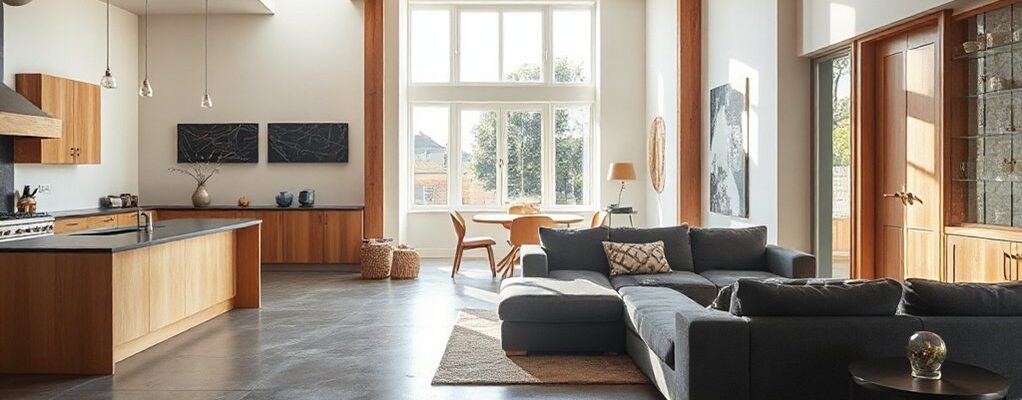
Open-plan living in UK homes offers brighter spaces and flexible social flows, but you’ll trade privacy and sound control for openness. You’ll feel more connected yet face noise transmission and temperature challenges without careful zoning. The balance hinges on layout tweaks, insulation, and smart zones that separate high-activity areas from quieter spaces. If you want to optimize comfort without sacrificing light and sociability, there are critical considerations you’ll want to weigh before committing to a design path.
Open-Plan Living in the UK: A Quick Decision Checklist
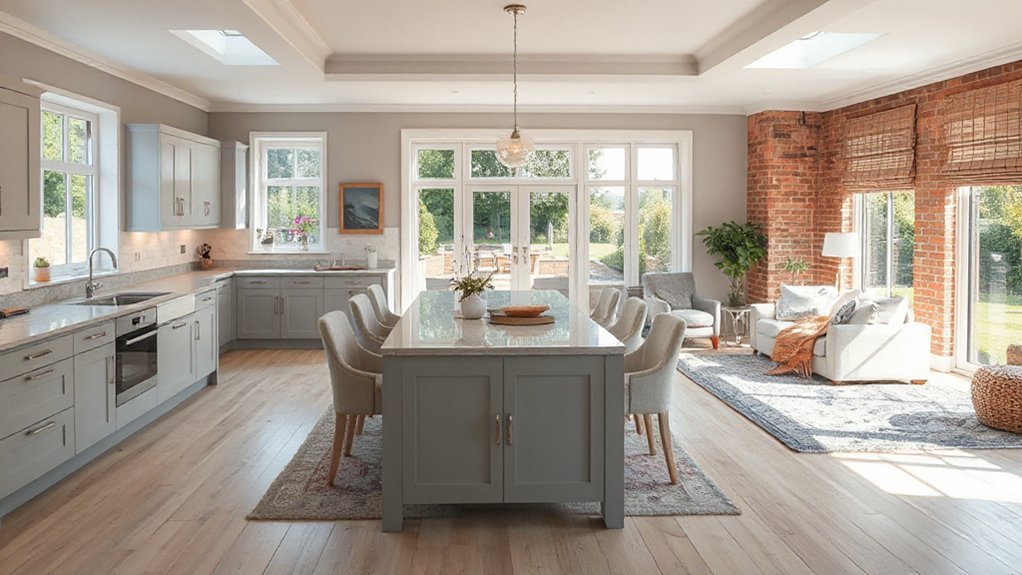
Open-plan living hinges on how you balance light, space, and function. You evaluate room adjacency, traffic flow, and noise tolerance, then translate those insights into a quick decision checklist. Start with site conditions, sunlight patterns, and garden integration potential to determine whether extended views and indoor-outdoor access will justify the layout. Next, assess structural feasibility, ceiling heights, and ventilation needs, so you can flag retrofit costs early. Consider architectural styles to guarantee cohesion with existing exteriors and compliant planning requirements, then prioritize zones for cooking, lounging, and working. Finally, set clear success criteria: target daylight hours, acoustics metrics, and flexible furniture footprints. If you can tick these boxes, you’re positioned to choose confidently.
How Open Plans Boost Light, Space, and Sociability
Open plans reduce physical barriers, letting light spill through shared zones and illuminate alcoves that would otherwise stay dim. You’ll notice how flowing connections between living, dining, and kitchen areas expand perceived space and invite social interaction. This configuration promotes brighter interiors, flexible layouts, and seamless sociability through continuous sightlines and unified acoustics.
Light-Filled Communal Spaces
How does a light-filled communal space transform everyday living in UK properties? You observe daylight cascading through open plans, reducing reliance on artificial lighting and shaping daily rhythms. In technical terms, large glazed elevations, strategically placed apertures, and shared volumes maximize natural light penetration, enhancing perceived space without adding structural bulk. You assess layout as a system: allowed sightlines, column spans, and ceiling geometry work together to distribute illumination evenly across zones. Natural ventilation supports air exchange, reducing thermal pockets while preserving comfort. Acoustic treatments matter in open precincts; you note absorptive panels and floor-ceiling contrasts that dampen reflections without sacrificing openness. The result is a sociable environment that maintains clarity of function, with light guiding activity zones and enabling efficient, compact living.
Flowing Room Connectivity
From here, you can see how flowing room connectivity stitches daylight, volumes, and social activity into a coherent whole. In open-plan layouts, sightlines and ceiling height guide perception of space, while continuous flooring and aligned work zones minimize visual clutter. You’ll notice that daylight travels farther when furniture isn’t stacked in blocks, creating a seamless glow across living and dining zones. This integration supports sociability without mechanical disruption, as residents move fluidly between areas for conversation, cooking, and tasks. To optimize this effect, employ deliberate zoning solutions that preserve openness while defining use. Consider furniture arrangement that prevents bottlenecks and maintains clear transit paths. Thoughtful zoning and placement sustain permeability, enhancing light, space, and interaction without compromising function.
Common Drawbacks: Noise, Privacy, and How to Mitigate Them
Noise and privacy are among the most persistent drawbacks of open-plan living, but they’re not inevitable. You assess how sound transmits through shared walls and floors, and you quantify its impact on daily routines. Structural gaps, fittings, and ventilation can amplify noise, so you map dominant sources and times of day to prioritize mitigation. Soundproofing techniques should target airborne and impact transmission, employing fail-safe detailing rather than bulk remedies. Consider floor underlays, staggered stud walls, and door seals to reduce leakage. Privacy enhancement relies on acoustic zoning, visual screening, and controlled sightlines without sacrificing openness. Evaluate furniture layout, screen placements, and soft furnishings for damping. Implement a layered approach, testing after each adjustment to confirm reduced intrusion while preserving functional flow.
Comfort and Energy: Temperature, Insulation, and Efficiency
Comfort and energy in open-plan UK homes hinge on how temperature is managed, how well the space is insulated, and how efficiently systems operate. You optimize thermal comfort by balancing heat gain and loss, using zoning, and choosing responsive controls. Insulation efficiency hinges on continuous envelopes, reduced thermal bridges, and appropriate ventilation that doesn’t undermine warmth. You’ll profile heat sources, heat loss paths, and the impact of airflow on comfort metrics, then quantify performance with simple indicators like setpoint stability and exposure to drafts. Efficient systems mean precise sizing, low standby losses, and intelligent thermostats that adapt to occupancy. In short, control, envelope integrity, and system efficiency drive comfort and energy outcomes, not guesswork.
- Temperature management strategies that minimize drafts and hotspots
- Envelope continuity and insulation efficiency measures
- Zoning and control logic for responsive heating and cooling
- Measurements that indicate thermal comfort and energy performance
Fixes That Work: Layout Strategies for Better Flow
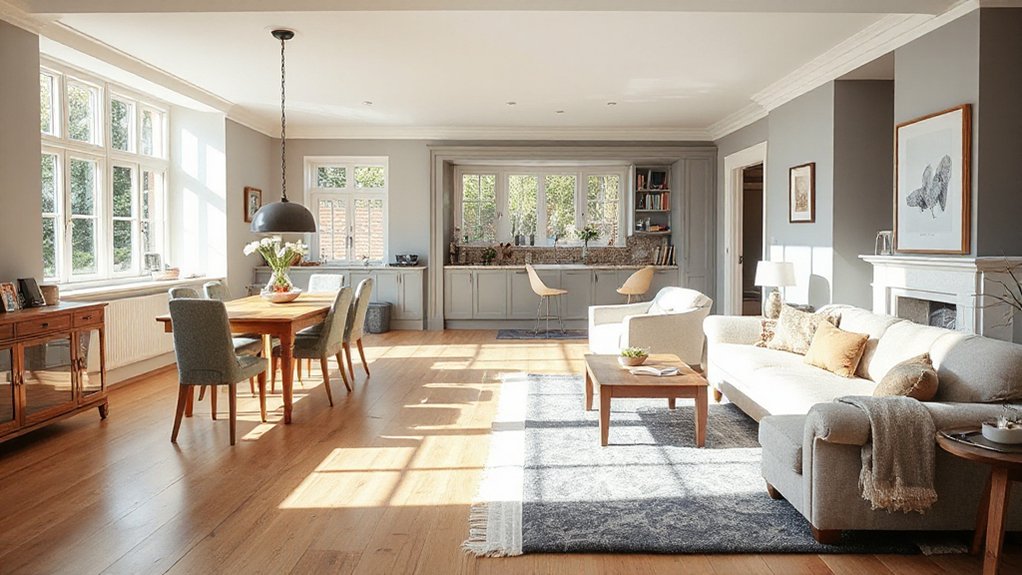
Effective open-plan layouts hinge on deliberate circulation paths and logical zoning that prevent dead zones and reduce interruptions to flow. You optimize space by mapping primary routes, ensuring doors, thresholds, and furniture don’t collide with movement, and layering zones for cooking, dining, and lounging. Use clear sightlines to minimize interruptions and encourage natural progression from one activity to another. Acoustic insulation matters: integrate ceiling and wall treatments to curb sound carry between zones, preserving privacy where needed without isolating spaces. In furniture arrangement, position larger pieces to define areas while leaving generous aisles; avoid cluttered edges that trap foot traffic. For flexible use, choose modular furniture and adjustable screens to reconfigure layouts with minimal effort when activities shift.
Who Benefits Most: Personal Suitability for Open-Plan Living
Your lifestyle compatibility assessment helps identify who gains from open-plan layouts, weighing how daily routines align with shared spaces and zoned activities. Consider how noise and activity management, privacy needs, and interaction balance influence suitability for different household dynamics. This analysis clarifies who benefits most by linking preferences and constraints to practical design and management strategies.
Lifestyle Compatibility Assessment
Open-plan living suits individuals who value open sightlines and social interaction, but it benefits most those with flexible routines and minimal need for isolation. You evaluate lifestyle compatibility by matching daily rhythms to space flow, acoustic considerations, and multi-use zones, recognizing how Cultural expectations shape interactions and privacy norms. You also assess how Architectural diversity in design influences furniture placement, glare control, and movement patterns. Your analysis prioritizes objective criteria: activity timing, hosting frequency, and workload spillover into communal areas. You should anticipate potential friction from competing uses, then quantify tolerance thresholds and adaptability.
- Daily schedule alignment with shared spaces
- Preference for visual openness versus defined zones
- Sensitivity to sound and heat transfer
- Flexibility to reconfigure layouts for events
Noise and Activity Management
Noise and activity management in open-plan spaces hinges on how well individuals optimize acoustics, layout, and routines to minimize interference. You assess how partition strategies, furniture density, and material choices shape sound propagation, reflections, and perceived privacy. Soundproofing challenges emerge when competing needs—work zones, family hubs, and communal events—share air and surface paths, necessitating targeted interventions like decoupled ceilings, absorbent panels, and flexible zoning. You weigh fixed versus movable elements to preserve openness while dampening noise, using zone-specific acoustics calibrations and screen placement. Privacy concerns arise when acoustic leakage routes correlate with sightlines and micro-areas where confidential tasks occur. You favor disciplined routines, time-blocking, and signal conventions to reduce interruptions, ensuring that the open-plan remains functional for both collaboration and focused activity without sacrificing comfort.
Privacy Versus Interaction Balance
Effective open-plan living hinges on who gains the most from its blend of interaction and privacy, and that depends on how individuals value collaboration versus focused tasks, routines, and personal space. You assess tolerance for noise, glare, and interruptions, then map needs to zones. Interaction suits households prioritizing spontaneous collaboration, shared supervision, and social cues, while privacy favors individuals requiring concentration, health breaks, or study time. Soundproofing options and privacy screens become design levers to tailor outcomes, balancing flow with attenuation where needed. Your goal is a measurable compromise that minimizes trade-offs and preserves daylight, sightlines, and accessibility.
- Zoning strategies that align task intensity with acoustic performance
- Material choices that pair sound-reduction with visual openness
- Mobility-friendly privacy screens and flexible partitions
- Perimeter vs. interior layout considerations for routines and chatter
Real-World Tweaks: Practical UK-Ready Design Adjustments
In the real world, practical tweaks for UK-ready open-plan spaces focus on balancing acoustics, flexibility, and compliance without sacrificing flow. You tune room zones with deliberate furniture arrangement to preserve sightlines while softening sound transmission. Use layered materials—curtains, rug, wall panels—to dampen reflections without crowding the space. Choose adaptable storage and modular seating that reconfigures for meals, work, or entertaining, keeping cable management tidy to meet building regs. Prioritize outdoor aesthetics when linking interiors to terraces or gardens, ensuring weatherproof progression and consistent materials. Lighting schemes should be layered and dimmable, supporting various activities without off-putting glare. Finally, embed ventilation and acoustical ratings in early planning to prevent retrofits, enabling seamless occupancy changes and long-term flexibility.
Frequently Asked Questions
How Does Open-Plan Affect Resale Value in the UK?
Open-plan tends to slightly boost resale value when you implement good interior zoning and maintain flexible layouts, but privacy concerns can dampen appeal; you’ll maximize value by delineating spaces thoughtfully and preserving sound separation where needed.
What Building Regulations Cover Open-Plan Kitchens?
The building regulations covering open-plan kitchens focus on electrical, fire, and ventilation standards; interior lighting and privacy considerations shape layout, ensuring safe egress, adequate illumination, and sightlines that protect occupants while meeting performance criteria.
Are There Health Concerns With Open-Plan Layouts?
Open-plan layouts raise privacy concerns and higher noise levels as you navigate shared spaces; you’ll notice sound travels, conversations echo, and visual oversight increases. You should mitigate with zoning, acoustic treatments, and strategic furniture to protect privacy.
How Much Does Soundproofing Cost for Open Plans?
Sound insulation costs for open plans vary, but you’ll typically budget per room, with higher-end systems demanding more. You normalize Noise reduction with thicker partitions. You’ll compare materials, labor, and airflow impacts to optimize sound performance and affordability.
Can Open-Plan Work With Small UK Homes?
Open-plan can work in small UK homes, you’ll optimize space with agile furniture arrangement and zoning. You’ll address privacy concerns through clever screens, sound-aware layouts, and logical lighting, refining flow while maintaining functional privacy and efficient, technical structure.
Conclusion
Open-plan living is a river, you’re the bend where banks meet. Its current carries light, social flow, and a sense of space, yet it can flood with noise and spill privacy. If you steer with thoughtful zoning, acoustic shields, and climate-aware layouts, you’ll enjoy broad horizons without drowning in disruption. The allegory warns: without boundary, your coherence ebbs; with deliberate channels, you transform openness into a navigable, efficient stream that serves diverse needs. Decide where to let the current guide you.