
On the surface, a turnkey finish seems tempting, but the real risk hides in what you can’t see. You’ll want to scope the renovation before you buy, confirm planning permissions and building regs, and demand solid surveys up front. Check party walls, access, and neighbour implications, then lock in realistic costs with contingencies. With warranties, encumbrances, and boundaries clarified, your budget and timeline stay grounded—yet you’ll still face decisions only after you weigh these checks. So, what comes next for you?
Scope Your Renovation Before You Buy

Before you buy, scope the renovation to avoid surprise costs or scope creep. You’ll assess current conditions, identify constraints, and quantify the work in clear terms. Start with a thorough site walkthrough, noting load-bearing walls, plumbing routes, electrical panels, and potential asbestos or damp issues. Translate findings into a bill of quantities with unit costs, so you can compare options reliably. Define design ideas that align with your budget, then test feasibility against structural or service limitations. Consider material choices early to prevent late substitutions that derail timelines. Create a provisional timeline, milestone gates, and a contingency buffer—roughly 10–15%. Document decisions, suppliers, and lead times to minimize delays. This disciplined scope reduces redesigns and strengthens negotiating leverage with sellers and contractors.
Check Planning Permissions and Building Regulations (UK)
After you’ve scoped the project, you need to verify that your plans won’t run into regulatory roadblocks. Check planning permissions and building regulations to avoid costly revisions later. You’ll confirm whether changes require local authority approval, and assess consent needs for alterations affecting historic preservation or exterior appearance. Review permitted development rights and potential conditions, then map out the inspection milestones with your contractor. Guarantee compliance for energy efficiency, fire safety, and structural stability from the outset to minimize delays.
- Visualize approvals as a gate you must pass, with official stamps and timelines stamped on your plan
- Picture historic preservation constraints shaping facade, setbacks, or alterations
- Imagine environmental impact considerations guiding waste handling and insulation choices
Review Structural and Other Surveys, Warranties Up Front
To avoid costly surprises later, review structural surveys and warranties up front and lock in assignments before you sign contracts. You’ll assess structural surveys for load paths, timber integrity, and foundation conditions, then compare findings with project scope. Prioritize warranties that transfer with the property and cover concealed defects, warranties on major components, and builder guarantees. For design considerations, verify that structural recommendations align with your renovation plan and local standards, noting any required consent or damp-proofing measures. Consider material selection impacts on longevity and maintenance, ensuring chosen products have compatible warranties and performance data. Document any remedial work, costs, and timelines in writing. Seek a professional interpretation of survey reports, request clarifications, and secure written sign-offs before committing to contracts.
Assess Party Walls, Access, and Neighbours
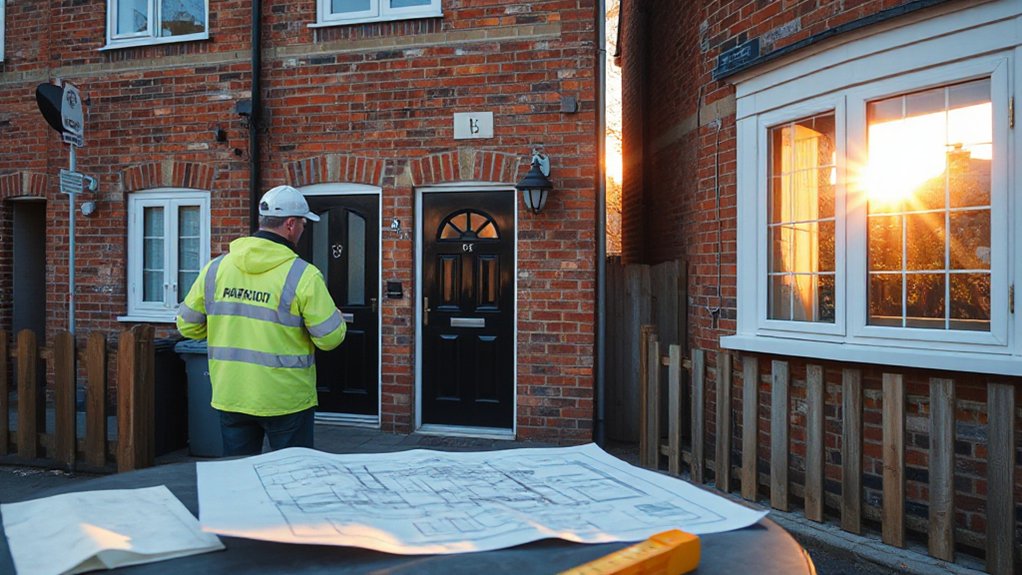
Assess party walls, access, and neighbours to prevent disputes and project delays. You’ll verify legal obligations early, including Party wall agreements, and confirm neighbour notifications are completed before work begins. Clarity on access rights avoids site stall and ensures material delivery windows align with scaffoldings and skips. Check property boundaries, consent, and timing restrictions with your builder and the local authority where applicable. Identify shared access routes, service runs, and potential disturbance zones to limit liens or claims later. Prepare a communication plan that records each notification and response, and maintain a log for compliance and dispute resolution.
- Clear party wall boundaries and responsibilities
- Documented neighbour notifications and responses
- Shared access routes, disruption risks, and mitigation steps
Estimate Costs, Contingencies, and Financing
Estimating costs, building contingencies, and arranging financing are next steps you’ll handle after clarifying party wall, access, and neighbour matters. You’ll start with precise budget planning, listing all primary trades, materials, and compliance fees, then attach realistic unit costs and allowances for unknowns. Build a contingency buffer, typically 10–20% for renovations, to cover price fluctuations, design changes, and unexpected site issues. Assess financing options early—bridging loans, redraw facilities, or specialist renovation credit—to secure affordable terms and timelines. When researching, consider contractor selection criteria: track record in similar projects, transparent pricing, and clear milestone delivery. Tie your budget to a procurement strategy, specifying fixed-price versus cost-plus contracts. Document assumptions, review with lenders, and align funds with project phases to maintain cash flow discipline.
Verify Legal Checks to Safeguard Your Investment
Legal checks should be your early priority, not an afterthought. You verify legal checks to safeguard your investment by confirming ownership, encumbrances, and planning permissions before you commit. Focus on staying within scope, avoiding surprises that could derail renovation timelines or budgets. You’ll assess Legal documentation and property history to guarantee transparency and enforceable rights. This disciplined approach minimizes risk and strengthens negotiation leverage.
- Confirm title ownership and any liens or rights of way visible in the title register
- Review planning history, granted permissions, conditions, and current compliance
- Inspect building regulations compliance, covenants, and any enforcement notices
Document all findings, cross-check with official registers, and seek rapid legal clarification if anomalies appear. This diligence underpins a sound, legally protected purchase.
Frequently Asked Questions
How Long Do Planning Appeals Typically Take in the UK?
Typically, planning appeals take 6–12 months, depending on complexity and workload. You’ll navigate planning process steps, submit grounds for appeal, and endure potential hearings. The appeal procedures involve formal timelines, evidence submissions, and possible public consultations.
What Insurance Should I Obtain Before Starting a Renovation?
Renovation insurance covers you for contractor errors and project delays; get thorough builder verification to confirm qualifications. You should obtain it before starting, ensuring coverage limits, workmanship protection, and evidence for any future claims.
Can Tax Relief Apply to Renovation Costs in the UK?
Yes, tax relief can apply, but rules vary by project and expenses. You can claim tax deductions for eligible costs and pursue VAT recovery where applicable, ensuring proper documentation and timing to maximize relief on renovation expenditures.
How Do I Verify Builder Qualifications and References?
Builders credentials and reference checks: you verify licenses, registrations, and insurance, then contact past clients and projects. Check trade qualifications, certifications, and ongoing training; request written references, corroborate dates, scope, and outcomes, and document results for your records.
What Are Typical Lead Times for Getting Project Permits?
Permit procedures vary by project, but you should expect 6–12 weeks for typical approvals, with some timelines extending to several months. Track approval timelines, submit complete plans, and anticipate potential delays in early stages of your renovation.
Conclusion
You’ll want to walk away wiser, with warranties warranted and worries walled away. Thorough checks translate to tangible trust: timelines turn tractable, costs stay controllable, and conflicts fade. By building baselines—bold budgeting, brisk boundary checks, and brisk, bottom-line decisions—you’ll banish big-budget blunders. Good governance guarantees gracious gains: grasp the graph of grants, grip the guarantees, and guard against green-light gluts. Plan, protect, and prevail; practical, precise prep prevents precarious, pricey perturbations.