
If you’re considering a garage conversion in the UK, you’ll want a clear plan that covers permissions, insulation, and layout. Start by evaluating structural proof, access, and potential light changes, then map practical uses—office, bedroom, or lounge—paired with efficient heating and ventilation. You’ll need cost estimates and a phased timeline to avoid delays, plus a design mood that keeps external aesthetics cohesive with the home. The right approach sets the foundation for practical space that could redefine your property—and there’s more to optimize beyond the basics.
UK Garage Conversions: Permissions and Building Basics
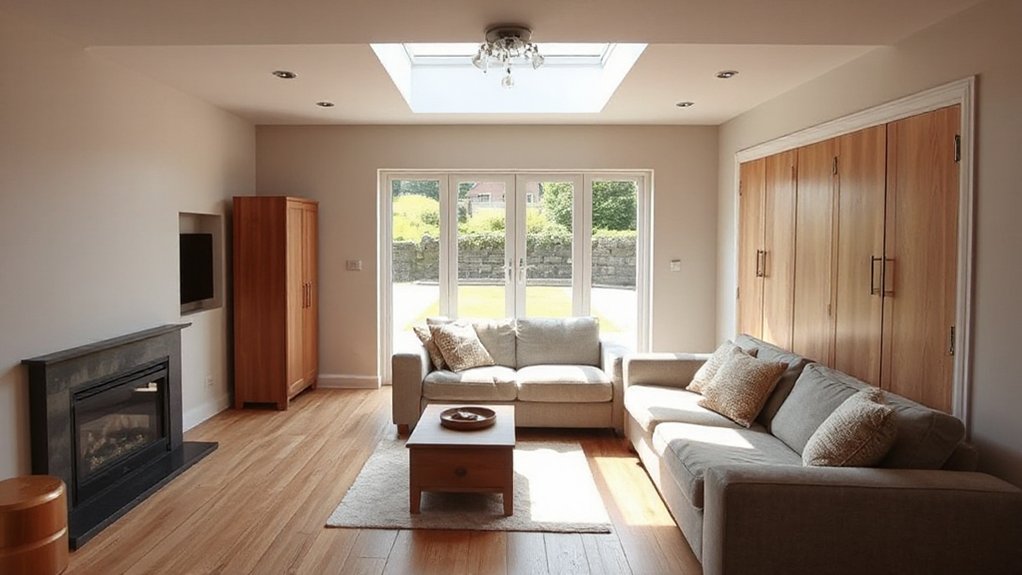
In the UK, garage conversions must comply with planning and building regulations to guarantee safety, energy efficiency, and neighborhood impact are considered. You assess whether you need planning permission; permitted development rights may apply, but limitations exist for size, height, or location. Building regulations ensure structural integrity, fire safety, insulation, ventilation, and drainage meet standards before any conversion proceeds. You’ll coordinate with designers, surveyors, and the local authority to align on scope, exemptions, and documentation. Garage aesthetics matter, since appearance and frontage can influence listed status or neighborhood character. You face conversion challenges such as bridging foundations, ensuring Party wall conditions, and updating services for heat, power, and water without compromising existing systems. Plan for access, egress, and future adaptability while minimizing disruption to the main dwelling.
Practical Layouts for UK Garages (Office, Lounge, Bedroom)
A well-planned garage conversion starts with practical layouts that maximize space while meeting UK building standards. In an office layout, place a compact desk under a window or along a short wall, ensuring access to power, data points, and task lighting without obstructing egress. For a lounge setup, keep a clear traffic path by limiting oversized furniture and positioning a sofa to face focal points such as a media wall or fireplace, with cable management integrated. A bedroom arrangement should prioritize privacy and storage, using built-in wardrobes and a low-profile bed to preserve floor area. Focus on Garage aesthetics through coherent finishes and material choices, while Storage solutions keep clutter concealed and accessible. Choose adaptable zones with modular furniture for future reconfiguration.
Design Ideas to Maximize Light, Warmth, and Insulation
Design ideas to maximize light, warmth, and insulation focus on letting natural daylight in without sacrificing energy efficiency. You’ll optimize glazing, frame materials, and orientation to reduce heat loss while enhancing brightness. Use high-performance propostas like triple-glazed units and low-emissivity coatings, paired with airtight seals for continuous comfort. Integrate thermal breaks in detailing and insulate floors, walls, and roofs to maintain stable temperatures. Plan interior decor and furniture placement to avoid obstructing light paths and to reflect daylight deeper into the space. Incorporate controlled shading for summer comfort and consider radiant underfloor heating for efficient warmth.
- Optimized glazing with low-E coatings and triple glazing
- Airtight construction and continuous thermal insulation
- Reflective interior decor to amplify daylight
- Radiant floor heating for efficient warmth
- Strategic furniture placement to preserve sightlines and light
Budgeting Tips and Cost-Saving Strategies for UK Garage Conversions
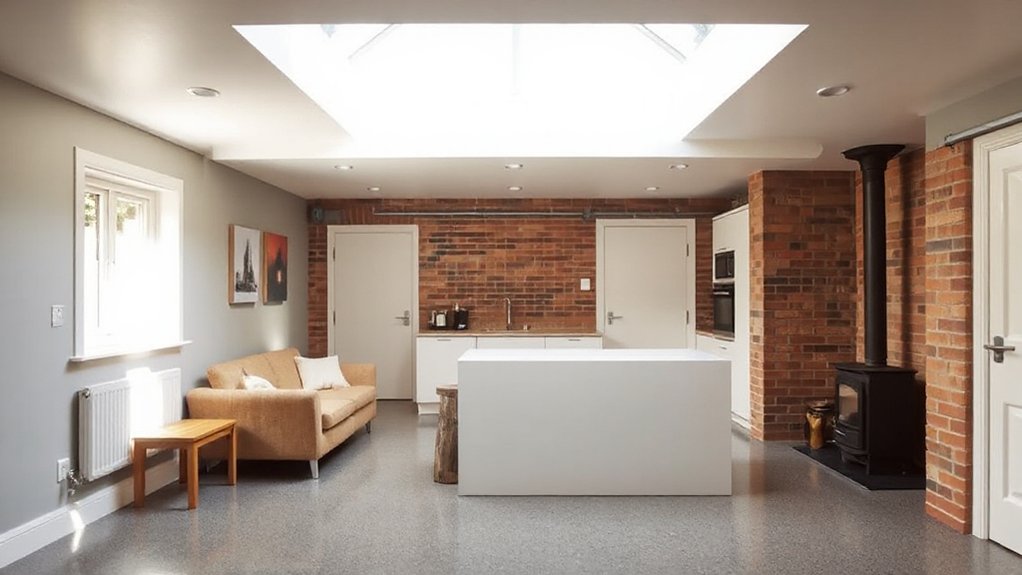
Renovating a UK garage into living space demands a clear budget plan from the start, balancing upfront costs with long-term savings. You should itemize essential components (shell, insulation, finishes) and assign fixed targets to avoid scope creep. Prioritize cost effective materials with proven performance, comparing lifecycle costs rather than upfront prices alone. Where possible, choose modular or off-site manufactured elements to reduce on-site labor time and disruption. Implement energy-efficient options—insulation, airtight membranes, efficient glazing—to lower ongoing running costs and enhance comfort. Utilize DIY renovation tips for non-structural tasks, reserving skilled trades for critical installations to optimize labor expenditure. Track expenditures using a simple spreadsheet, forecast contingencies, and document supplier lead times to prevent delays. Regularly review progress against budget to stay financially on course.
Step-By-Step Planning: Approvals, Permits, and Next Steps
Securing the right approvals, permits, and a clear sequence of next steps is essential before you break ground on a garage conversion. You’ll identify applicable building regulations, planning constraints, and any historical restrictions that affect scope, materials, and timelines. Initiate with a design brief, then consult your local authority or a chartered surveyor to confirm compliant routes. Document responsibilities, permit types, and inspection milestones to avoid delays. Prioritize DIY safety when drafting temporary works and structural checks, and guarantee utility connections meet code. Proceed with a formal submission, awaiting approvals, then schedule reviews, surveys, and compliance tests in logical order.
- Confirm planning permission vs. permitted development and any conservation area considerations
- Verify structural calculations and party-wall implications
- Align electrical, plumbing, and HVAC plans with building regulations
- Identify required inspections and approval milestones
- Plan for contingencies addressing DIY safety and historical restrictions
Frequently Asked Questions
Can a Garage Conversion Affect Home Insurance Premiums?
Yes, a garage conversion can affect your home insurance premiums. You’ll want to contemplate better Garage insulation and Flooring options, as improvements may lower risk. Notify your insurer, provide specs, and compare quotes to secure accurate adjustments.
Do Local Councils Require Party Walls or Neighboring Consent?
Yes, your project triggers a party wall, neighbor consent process; councils may require formal notice and possible surveyor involvement. You’ll need party wall and neighbor consent steps to avoid disputes and lawful construction across shared boundaries.
Is a Garage Conversion Eligible for VAT Relief or Grants?
A garage conversion may qualify for VAT relief or grants depending on scheme rules, but you should check current Tax implications and eligibility; guarantee compliance with Building regulations, thresholds, and approved installer criteria before applying.
What Are Typical Ventilation Requirements for Habitable Space?
Absolutely; typical ventilation requirements for habitable space call for continuous mechanical or natural ventilation meeting local codes, with at least 30–60 CFM per room and CO2/air quality considerations to guarantee safe, breathable air—ironically, overlook this at your peril.
How Long Does a Standard Garage Conversion Project Take?
A standard garage conversion typically takes between 4 to 8 weeks, depending on size and approvals. You’ll install Garage insulation, select Flooring options, complete damp-proofing, and finish with final fittings and inspections to meet building standards.
Conclusion
You’ve mapped out the options, but the real hinge is what lies behind that doorway. As you weigh permissions, insulation, and layout, a precise plan will reveal the true potential of your garage. Will the final design deliver seamless light, warmth, and flow, or will hidden snags derail your timetable? Stay poised: with the right steps, your conversion can open a confident, functional space—yet the last detail you fix just might decide the whole project’s fate.