
A bay window invites you to carve out a cozy, focused corner with smart seating, light-filtering screens, and cushions that invite lingering. You’ll balance brightness with soft textures, reflectors with calm color, and tidy storage that stays out of sight. Arrange sightlines for easy views and quiet zones, then layer gentle lighting for day or night. Want to know how to balance form and function without clutter, and which details make this nook truly yours? Let’s start.
Why a Bay Window Makes a Great Reading Nook
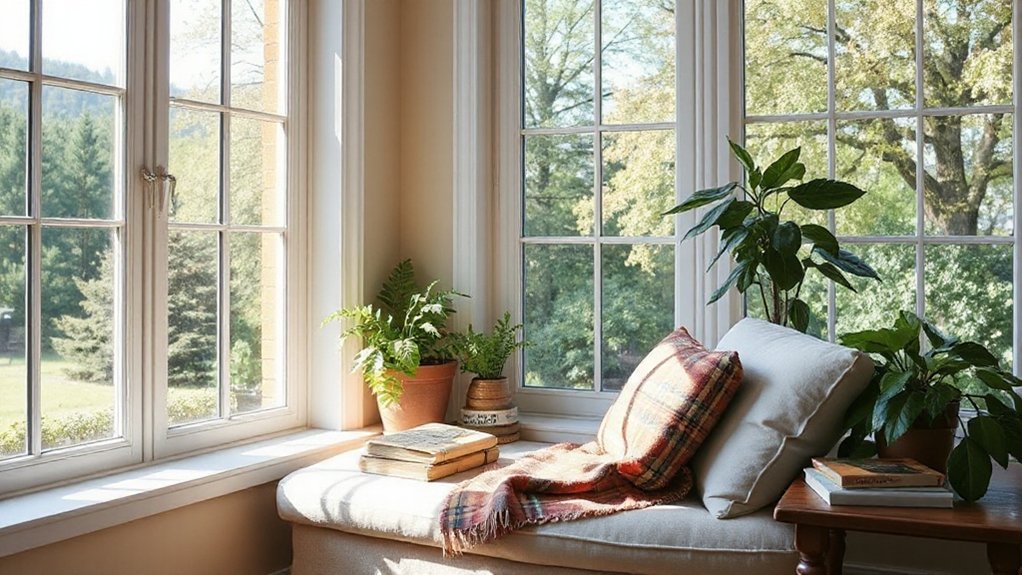
A bay window instantly creates a cozy, purposeful nook by bringing in daylight and framing a view. You gain a natural focal point that invites you to linger, skim a page, then glance up at a skyline or tree canopy. The depth cushions your seat and anchors your posture, so you read longer without fatigue. With a broader field of light, you see color, texture, and detail in your book’s pages more clearly, which enhances focus. Your choice of window treatments shapes mood and glare, while privacy solutions keep your escape feeling intimate during daytime bustle. Thoughtful hardware, soft fabric, and clean lines maintain a stylish, functional profile, ensuring the nook remains inviting, uncluttered, and ready for your next reading moment.
Choose Seating and Cushions for Comfort
Is comfort the anchor of your bay-window reading nook? You’ll choose seating and cushions that invite lingering without crowding the view. Start with a low-profile seat that doesn’t block natural light, paired with a rectangular ottoman for versatility. Consider a built-in bench with a slim back or a compact accent chair, depending on space. Cushion textures matter: a mix of smooth linen, soft velvet, and a sturdy boucle adds tactile depth without overwhelming the palette. Layer with accessible cushions in a tight, cohesive color story to maintain clarity. Plan seating arrangements that encourage conversation or solitary reading, while leaving a clear path to the window. Bind the setup with breathable fabrics and durable fills for sustained comfort.
Layer Lighting for Easy Daytime and Nighttime Reading
To layer lighting for easy daytime and nighttime reading, combine ambient, task, and accent options so the bay window stays bright without glare. You’ll layer ambient lighting with a gentle wash from concealed LEDs or a slim ceiling fixture, then add task illumination at your chair’s side with a swing arm or adjustable desk lamp. Keep glare managed by diffusers and dimmers, ensuring even spill without hotspots. Use ambient layering to set mood for daytime quiet and evening focus, switching to higher, cooler tones for reading details. Accent lighting highlights architectural features—the window seat’s molding or art on the wall—without stealing attention from your pages. Choose dimmable, energy-efficient options to maintain comfort and readability. Task illumination remains the workhorse, precise and reliable.
Storage Ideas That Stay Out of the Way
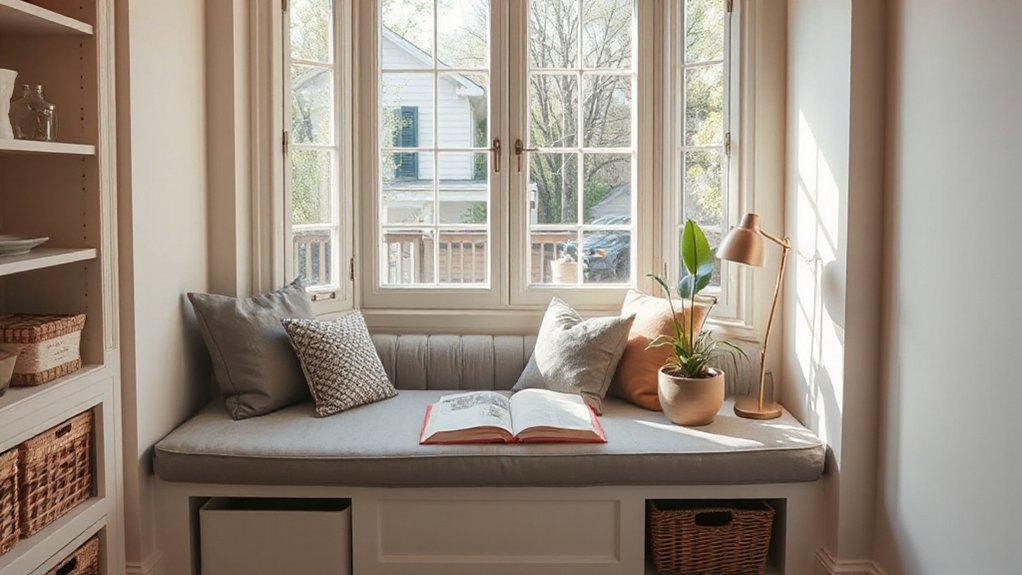
Hidden storage can slip into a bay window without crowding the view; think shelves, benches, or slim drawers tucked under the seat. You’ll preserve openness while you gain function. Use hidden compartments under cushions or a shallow, pull-out tray for daily odds and ends, so clutter never interrupts your reading vibe. Opt for multiuse pieces: a bench that hides extra blankets, a coffee table with a discreet lid, or a window-seat chest that doubles as seating and storage. If you’ve got vertical space, install overhead cabinetry—sleek, recessed, or glass-front—to keep seasonal items out of sight. Choose finishes that blend with trim and cushion tones, ensuring a calm, cohesive look that stays intentionally quiet.
Color and Textiles That Boost Focus and Coziness
Colors set the mood for focus, while textiles invite warmth you can feel. You’ll tune hue with calm, low-contrast palettes for steady concentration, and layer textiles for tactile coziness that keeps you perched comfortably. Balance patterns to avoid visual noise, ensuring a serene nook that supports both attention and relaxation.
Hue Psychology for Focus
When you design a reading nook, color and textiles aren’t just decorations—they’re tools for focus and coziness. Hue psychology guides your choices: cool blues and greens calm attention, while muted neutrals reduce visual noise. For sustained focus, pair a soft slate wall with a high-contrast bookmark shelf in satin black; it reinforces visual anchors without shouting. Introduce strategic pops of color only where you want quick engagement—an accent pillow, a throw, or a plant pot in terracotta to cue mood enhancement. Natural light shifts hues subtly, so choose colors with low chroma to avoid glare. Remember color therapy isn’t spectacle; it’s cadence. Align hues with your tasks, balance brightness, and your focus becomes steadier, your reading moments more deliberate and enjoyable.
Textiles for Warmth
Textiles that feel warm without overwhelming the space begin with material and weight. You choose fabrics that drape softly but resist sag, balancing tactile coziness with silhouette. Aim for medium-weight textiles in natural fibers—cotton blends, linen, or brushed cotton—to create a tactile boundary that calms the eye without crowding light. Color should read warm at a distance: dusty ochre, caramel, or moss, with low saturation to maintain focus. Introduce texture through weaves and slight nap, not busy prints, to avoid visual noise. Consider textile durability from the outset, so you don’t sacrifice form over time. Plan for fabric maintenance: stain resistance, easy cleaning, and simple refreshes. Prioritize performance alongside comfort for a nook that stays inviting and calm.
Pattern Balance and Calm
In a reading nook, balance color and texture to sharpen focus while keeping coziness intact. You pair a restrained palette with tactile fabrics, letting pattern harmony guide the look rather than overpower it. Choose one dominant color and two supporting hues; keep contrast subtle to avoid visual noise. Textiles should feel deliberate: a solid base, a secondary pattern, and a quiet accent. Use natural fibers—linen, cotton, wool—for depth and warmth, then layer with a small-scale print that repeats softly. Keep lighting neutral and even to sustain a tranquil ambiance. Minimal accessories ensure calm; let the window view do the talking. When done right, you’ll create focus without fatigue, a space that invites sustained reading and restful, stylish downtime.
Plan Sightlines and Layout for a Calm, Clutter-Free Nook
A calm, clutter-free nook starts with deliberate sightlines and a thoughtful layout that invites you to sit and stay. Plan your seating to align with the window’s natural glow, not against it, and keep pathways direct to the door. Center the chair or bench where your gaze travels without interruption, and tuck side tables within easy reach. Use built-in shelves or slim desks to minimize visual bulk, and choose low-profile storage to hide cushions, cords, and remotes. Opt for window treatments that soften glare while preserving the view, and establish privacy solutions that don’t feel oppressive. Maintain a restrained palette, select a single, functional lighting layer, and place reading materials within arm’s reach. Clear surfaces become calm, focused space for thought and immersion.
Personal Touches for a Bay Window Reading Nook: Plants, Art, and Book Display
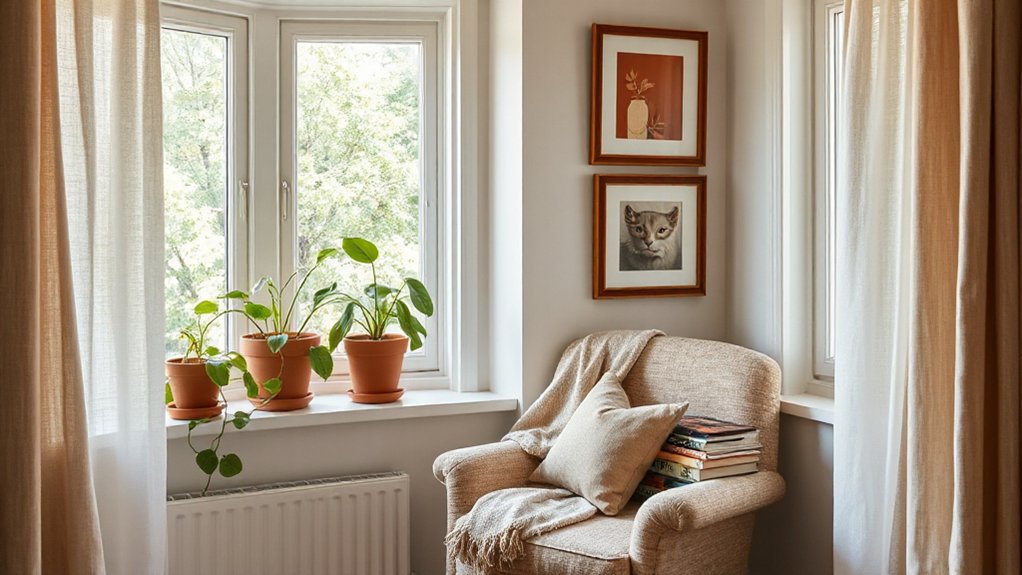
As you move from plan-friendly sightlines to personal expression, your bay window nook comes alive with plants, art, and a thoughtful book display. You curate art displays that echo your taste without crowding the shelf, choosing a few bold pieces and rotating seasonal favorites. Keep plant arrangements compact and varied in height to create depth—place a trailing vine near the sill, a sculptural specimen on a short stand, and a low-form bonsai at eye level. Use open shelving or a slim book ledge to organize titles by mood, not just alphabetically, so reading feels intuitive. Pair textures: matte ceramics, glossy frames, and soft textiles. The result is a polished, inviting corner that supports focus and relaxation.
1–2–4 Step Plan to Finish Your Bay Window Nook
Start by planning your bay window layout to make the most of the space and flow. Maximize natural light with smart furnishings and sheer window treatments, so you get a bright, inviting nook. Then design cozy seating that anchors the area, inviting you to linger and read.
Plan Your Bay Window
Ready to turn that bay window into a cozy, practical nook? Plan with purpose. First, map the space: measure seating depth, clearance for opening blinds, and junk-free floors. Next, choose a single, durable seating option—built-in or compact bench—that invites hours of reading without feeling crowded. Consider cushion density and fabric that’s easy to clean. Then select window treatments that control light and glare without crowding the view; a roller shade or light-filtering blind keeps the focal point intact. Finally, address interior acoustics: add a low-profile rug, a couple of soft cushions, and a slim acoustic panel if needed to reduce echo. Keep cables hidden, outlets accessible, and surfaces easy to maintain for daily use.
Maximize Natural Light
Why settle for dim when your bay window can glow with natural light from every angle? You’ll start by evaluating the light pattern throughout the day and mapping peak hours. Choose window treatments that control glare without sacrificing brightness—think sheer panels for diffused sun and adjustable blinds for stronger afternoon punch. Position your nook to capture corner light, then use acoustic panels sparingly to reduce echo without blocking views. Reflective surfaces, like a glossy side table or a light-framed mirror, bounce daylight deeper into the space. Keep clutter minimal so daylight isn’t obscured, and opt for light, neutral fabrics that amplify brightness. Finally, test lighting at dusk to facilitate a smooth transition from natural to ambient.
Create Cozy Seating
Pair comfort with function by choosing seating that fits your bay window without crowding the view. You’ll select pieces that invite long reads and quick contemplations, while keeping surfaces uncluttered and easy to clean. Focus on scale, durability, and a touch of personality with textiles and subtle textures.
- Opt for a compact window-seat with storage to hide magazines and blankets, blending outdoor decor influences with indoor ease.
- Choose cushions in weather-inspired hues that resist fading, pairing comfort with practicality.
- Layer soft throws and a slim side table for drinks, keeping workflow surfaces clear.
- Integrate window treatments that frame light without obstructing the view, preserving ambiance and accessibility.
Frequently Asked Questions
How Can I Prevent Glare on Sunny Bay Windows During Reading?
Yes, you prevent glare by employing UV protection window films or treatments and light diffusers; use adjustable blinds or sheer curtains, plus a UV-blocking screen, oriented seating, and task lighting to keep glare off your pages.
What Height Should the Seating Be for Ergonomic Comfort?
The seating height should be about 16-18 inches for ergonomic design, aligning with your ankles and hips for comfort. Prioritize support, cushions, and adjustable options to maintain proper posture during long reads. Seating height supports precise, functional styling.
Can I Reuse Existing Furniture in the Bay Window Nook?
Yes, you can reuse furniture; irony aside, it saves effort and money. You’ll explore upholstery options, storage solutions, and smart trims to fit the bay window nook, making the pieces both stylish and precisely functional for daily use.
How Do I Choose Curtains That Don’T Clutter the View?
Yes—pick curtains that won’t crowd the view: opt for decorative curtain styles with clean lines and sheer panels. Consider fabric light filtering options to maintain brightness while preserving focus on the bay window.
What Safety Considerations Exist for Built-In Window Seats?
You should prioritize window reinforcement and child safety, installing sturdy fasteners, secure cushions, and railing if needed. Check glazing, edge padding, and seat height, plus non-slip floors—ensuring quick exits and durable, elegant, and functional built-in protection.
Conclusion
In this bay window, bring brightness, balance, and bliss. Build a comfy perch with cushions, keep clutter to a quiet minimum, and curate clear sightlines for calm contemplation. Layer light from daylight to lamplight, and let gentle textures and reflective surfaces amplify ambiance. Personal touches—plants, art, book stacks—provide personality while staying practical. Finish with a focused, feather-light furniture flow, and you’ll savor sweet, steady reading sessions, savoring sophisticated, serene sanctuary spaces. Alliteration adds a polished, poised touch.