
To add character to a new-build townhouse, define your vision and budget first, then layer in architectural details and textures that feel intentional rather than pasted on. Prioritize practical upgrades, from warm color palettes to durable finishes, and plan lighting as a design layer, not an afterthought. Curate greenery and personal touches that suit daily life, then test flow and storage without losing personality. Start strong, but the better part awaits as you connect style with function.
Key Takeaways
- Define a cohesive design foundation: establish a clear character, budget, and decision criteria to ensure consistent, intentional choices throughout the townhouse.
- Add architectural depth with trim, moldings, textures, and balanced scale to create visual interest without overwhelming spaces.
- Choose durable, timeless textures and materials, prioritizing longevity, warranties, and low-maintenance finishes for high-traffic areas.
- Maximize storage and personalize spaces with discreet solutions, curated art, and meaningful décor that tell a narrative.
- Use layered, zoned lighting to shape mood and space perception while reinforcing the design’s character and proportion.
Define Your Character and Budget: Set the Vision and Constraints
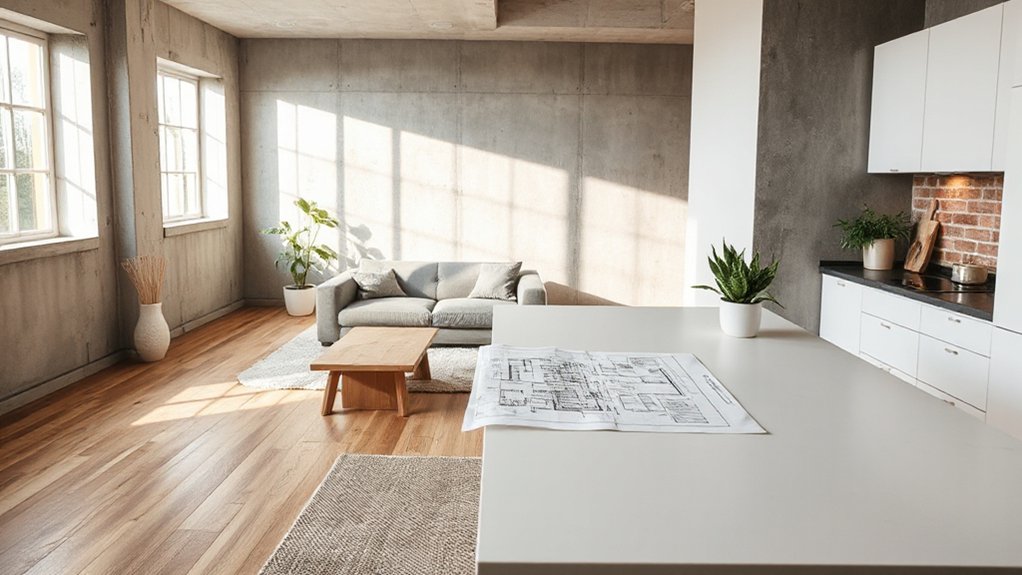
Define your character and budget upfront so your townhouse feels intentional from day one. You begin by outlining your core character—modern, cozy, industrial, or minimal—and translating it into tangible design rules.
Set a realistic budget that aligns with that vision, then allocate funds to essential areas: foundational finishes, furniture, and a few standout accents. You’ll want a clear decision tree: what must stay flexible, what’s nonnegotiable.
With constraints in place, you’ll approach furniture placement and color coordination deliberately, avoiding impulse buys. Consider scale, rhythm, and provenance as you pair textures and tones.
Track decisions in a simple checklist to prevent scope creep. This disciplined start keeps execution smooth, ensuring every choice reinforces your chosen character while staying financially responsible and adaptable.
Add Architectural Details Without Structural Changes
You can add architectural details without touching the structure by focusing on non-structural design enhancements, like trim, molding, or decorative panels that pull in character.
Choose elements that nod to your theme and balance with scale, spacing, and light to avoid clutter. You’ll iterate with samples and measurements to guarantee the details enhance function as much as form.
Adding Architectural Details
Start with proportion and alignment—frame moldings, baseboards, and door casings that echo existing profiles for a unified look. Choose finishes that resist wear but don’t overwhelm space, like satin paints, matte wallpapers, and tasteful hardware.
Introduce contrast through texture rather than color, such as tactile wall panels or fabric-backed cork for accents. Blend vintage accents with modern minimalism: a retro light fixture paired with clean-lined cabinetry, or a carved mirror above sleek surfaces.
Prioritize timeless materials—wood, stone, metal—that age gracefully and support consistent detailing throughout.
Non-Structural Design Enhancements
Start with deliberate detailing: trim profiles, layered moldings, and custom millwork that feels intentional rather than decorative filler. Choose finishes that balance texture and light, such as matte wallpapers, engineered wood, and climate-friendly paints, to maintain durability.
Introduce vintage accents sparingly—antique hardware, time-worn mirrors, or a restored console—to anchor spaces without overloading them.
Pair those touches with Modern minimalism: clean lines, restrained palettes, and purposeful negative space. Highlight focal points with well-placed lighting, art grids, and tactile textiles.
Document decisions to guarantee cohesion, ease future updates, and preserve architectural integrity.
Budget Your Texture Upgrades: Priorities and Caps
When budgeting texture upgrades for a new-build townhouse, start by mapping which surfaces will most impact daily living and resale value. Prioritize upgrades that yield the best payoff: durable, timeless textures in high-traffic zones, with flexible colors that adapt to future décor.
Establish caps for both cost and scope, then back them into realistic timelines and installment phases. Begin with a core budget planning framework that separates essential from aspirational textures, and define approval gates for each category.
Document installation sequencing to reduce downtime and vendor overlaps. Choose materials with strong warranties and maintainability, avoiding trend-heavy choices that degrade quickly.
Align material selection with utility needs, then test samples under lighting conditions. Track changes, recalculate contingencies, and keep decisions lean and purposeful.
Choose Materials That Read as Rich Yet Practical
Choosing materials that read as rich yet practical starts with evaluating texture, color, and performance in equal measure. You’ll prioritize durable surfaces that age well, then select textures that add depth without overwhelming spaces.
Pair tactile substrates—stone, brick, timber—with restrained finishes to keep modern lines intact. Consider hardware and fixtures as design shorthand: vintage fixtures can lend patina without fragility, while industrial accents inject character through exposed elements and clean metal tones.
Test light reflection and scale in each room, ensuring materials don’t clash with architectural features. For kitchens and baths, pick materials that tolerate moisture while retaining warmth.
Document maintenance needs and replacement cycles upfront, so your choices stay cohesive over time. Balance authenticity with practicality, and your townhouse reads deliberately crafted, not decorative.
Warmth Through Color Schemes and Finishes
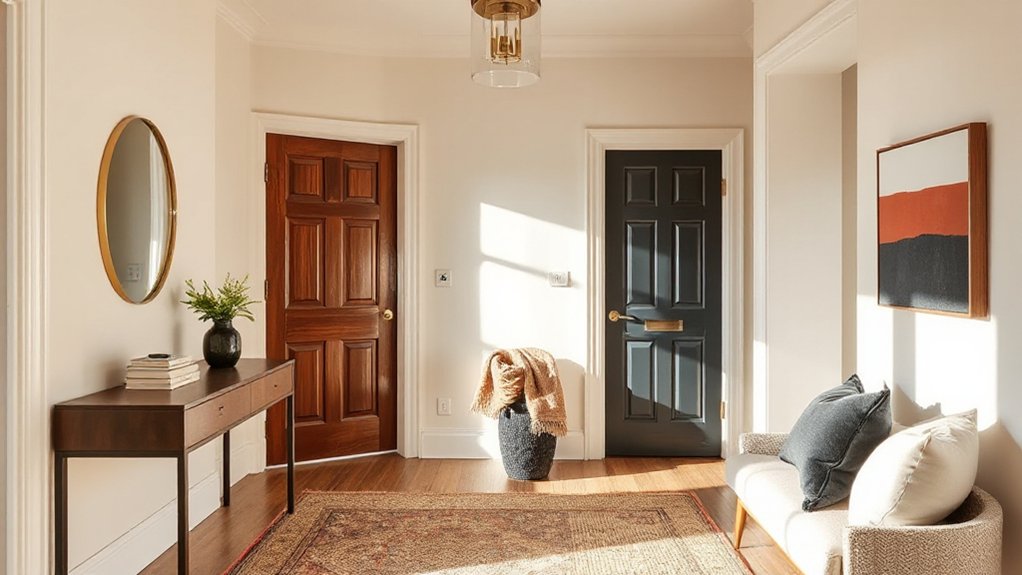
You’ll start by pairing warm colors with careful balance, so rooms feel inviting without shouting. Natural material textures and restrained accent finishes add tactful depth that stays practical for daily living.
This approach keeps a fresh, cohesive tone across spaces, highlighting warmth through deliberate choices.
Warm Color Pairings
Use soft terracotta or amber on walls sparingly, letting larger panels stay light to avoid enclosure. Introduce depth with wood finishes, brushed metals, and matte textures that catch light differently in every room.
Vintage accents punctuate a modern palette, while modern contrasts keep lines clean and fresh. Plan progressions between spaces with a consistent undertone, so furniture feels intentional and not fragmented.
Test samples at different times of day, then finalize a palette that voices quiet confidence.
Natural Material Textures
Natural textures in a warm-tone scheme transform a new-build townhouse into a tactile, inviting space. You choose surfaces that feel honest and durable: warm woods, textured concrete, and brick with a softened patina.
Prioritize Eco friendly materials that age gracefully, avoiding synthetic finishes that shout rather than welcome. Pair materials with thoughtful lighting to enhance their grain and crackle without exaggeration.
Maintain a cohesive palette—sand, clay, walnut, and leather—so contrasts stay calm and intentional. Opt for finishes that emphasize tactile, not glossy, sensations: matte varnishes, oiled surfaces, and brushed textures.
This approach supports Sustainable design by reducing coatings and extending life cycles. Document maintenance routines, keeping textures functional, repeatable, and aesthetically consistent across rooms.
Accent Finishes Balance
How can you achieve warmth without overwhelming contrast when selecting accent finishes? You balance color accents with careful proportion and texture. Start with a cohesive base and introduce small, deliberate pops that echo the palette. Use finishes that read as warm neutrals—bronze, caramel, uplit wood—then layer with textiles and art to reinforce mood without shouting.
- Choose a dominant accent color and limit it to two surfaces per room to maintain harmony.
- Pair cool-toned lighting with warm finishes to keep spaces inviting without jarring shifts.
- Plan furniture placement so accent pieces anchor sightlines, guiding the eye through the room.
This method keeps warmth authentic, precise, and evolving, ensuring accent finishes enhance rather than overpower.
Introduce Texture Through Fabric, Rugs, and Surfaces
Texture, when woven into fabric, rugs, and surfaces, instantly elevates a new-build townhouse from blank slate to lived-in home. You can start with fabric layering: pair a durable upholstery fabric with a softer throw and a tactile cushion palette to create depth without clutter.
Focus on surface textures—matte wall finishes, brushed metal accents, and split-finish wood panels—so light reads differently as you move through rooms. Rugs add anchor and whisper sound, guiding traffic and defining zones.
Introduce contrast through texture shifts: a chunky knit throw against a smooth linen sofa, a sisal or jute rug beneath a sleek coffee table. Keep scale and pattern intentional, ensuring every texture complements rather than competes with architectural details.
Smart Storage That Supports Style
Smart storage should feel invisible yet accessible, so you save square footage without sacrificing style. You curate built-ins and hidden compartments that blend with finishes, delivering function without bulk. Prioritize modular designs that adapt over time, keeping lines clean and undistracting. Focus on vertical space, pull-out solutions, and labeled bins that stay tidy under daily use. Integrate vintage accents and minimalist charm to unify storage with the overall look, ensuring the practical feels deliberate rather than generic. Use these ideas to elevate every room discreetly.
- Install wall-mounted cabinets with shallow depths and soft-close doors for seamless silhouettes.
- Choose furniture with hidden drawers, lift-top surfaces, and versatile ottomans that double as storage.
- Label and group items by category, then rotate rarely used pieces seasonally for clarity.
Art and Décor That Tell Your Story
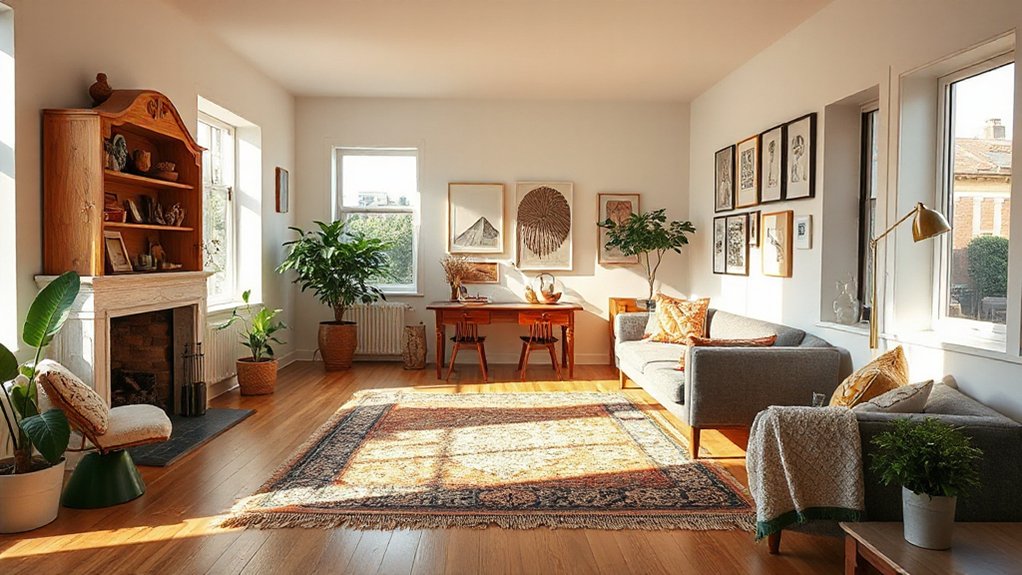
Art and décor aren’t just adornments; they’re your story told in color, shape, and memory. You’ll curate spaces that quietly narrate your days, avoiding generic tropes.
Start with a practical plan: inventory heirlooms, photos, and mementos, then assign themes to rooms. Use personalized color palettes to bind disparate items into a cohesive vibe, not a chaotic collage.
Opt for balanced contrasts—warm woods with cool metals, soft fabrics against crisp edges—to guide the eye and feel. Create artistic wall displays that showcase meaningful moments without crowding the line of sight; stagger frames, use shelving, or gallery ledges for changeable setups.
Prioritize quality over quantity, rotation over repetition, and deliberate placement over random filling. Your story stays legible, intimate, and distinctly yours.
Lighting as a Design Layer, Not an Afterthought
Lighting isn’t something you add at the end; it’s a core design layer that shapes mood, function, and perceived scale. You treat lighting as architecture you can see, not an afterthought. Structure your approach with deliberate layering: both ambient illumination and focused tasks become coherent to the space’s rhythm.
- Map lighting layers by zone: entry, living, kitchen, baths, and bedrooms, ensuring even base brightness with dimmable controls.
- Prioritize adaptable tasks: under-cabinet in the kitchen, desk lighting for work, and soft, indirect uplighting for ambience.
- Integrate fixtures that reinforce proportion, color temperature, and finishes, so light feels intentional, not incidental.
Greenery and Natural Elements for Life and Depth
You’ll start by shaping a microclimate where greenery moderates heat and noise, creating a calmer main living space. Think of natural elements as architectural accents that add depth, texture, and tactility without clutter.
We’ll explore practical pairings and placements that keep life close at hand while maintaining sleek, built-in precision.
Greenery as Microclimate
Could greenery truly redefine a microclimate in a new-build townhouse? You’ll shape comfort by pairing plants with form, sun, and airflow. Implementing greenery as a cooling and humidity buffer isn’t magic—it’s measurable, repeatable improvement. Focus on scale, placement, and maintenance to achieve dependable results.
- Select vertical and horizontal greenery that balances shade and daylight, aligning with sun paths and wind corridors.
- Integrate green roofs and walls where feasible, tying irrigation to local rainfall and water use goals.
- Align plant selection with urban planning and zoning regulations, ensuring safety, fire codes, and accessibility are met while maximizing microclimate benefits.
Activation comes from monitoring moisture, temperature, and air quality data, then adjusting species and positions as seasons shift.
Natural Elements For Depth
Natural elements add depth by integrating greenery, textures, and materials that engage all senses and steady microclimates. You’ll harness vertical gardens, planters, and reclaimed wood to create tactile layers that invite investigation.
Prioritize urban sustainability by selecting native species, drought-tolerant plants, and permeable surfaces that reduce runoff. Mix soft foliage with mineral textures—stone, concrete, and ceramic—to balance warmth and coolness across seasons.
Use eco-friendly materials for cabinetry, countertops, and finishes, ensuring low-VOC emissions and longevity.
Layer lighting to reveal depth: grazing, backlighting, and task illumination that highlights texture without glare.
Consider seasonal changes: evergreen anchors, flowering accents, and scent cues that enrich memory.
Integrate sustainable drainage, rainwater reuse, and modular systems to adapt as needs evolve.
Layout Tweaks That Improve Flow and Flexibility
To improve a new-build townhouse’s flow and flexibility, start with a thoughtful, door-first approach: position primary living spaces to minimize hall traffic and create clear, connected sightlines from the moment you enter. You’ll gain immediacy and adaptable use if routes feel natural, not forced, and if doors invite or subdue noise as needed.
- Optimize circulation with a single, dominant corridor that clips off secondary paths, reducing cross-traffic.
- Use smart zoning to separate daily from private zones, while preserving sightlines to key activity hubs like living and kitchen.
- Integrate landscape design cues at thresholds so indoor-outdoor progression reinforce flow.
This approach remains practical, meticulous, and innovative, aligning with thoughtful space planning.
Evaluate for Resale Value While Keeping Personality
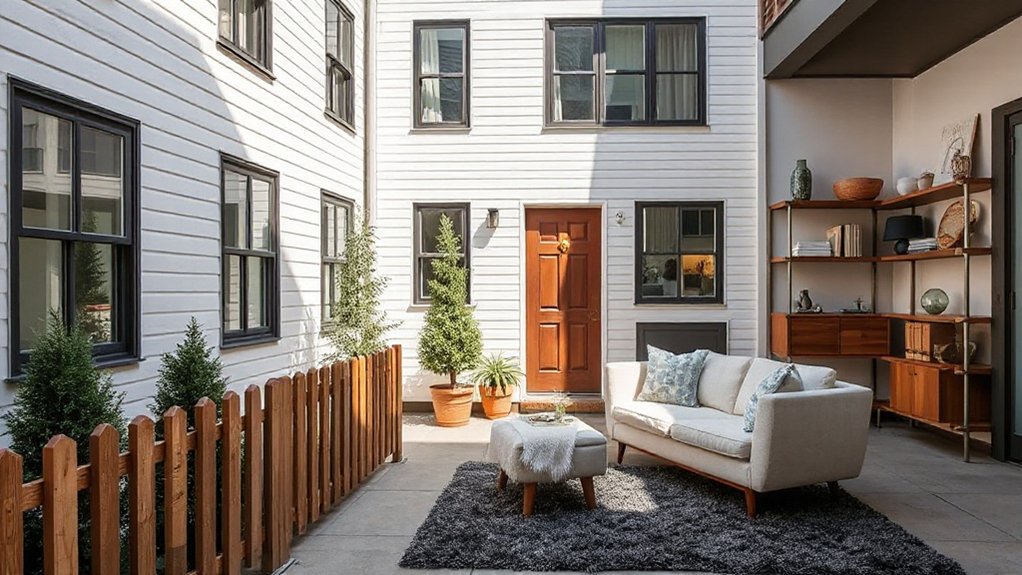
Balancing resale value with personality means prioritizing enduring appeal while preserving distinctive touches that reflect you. When evaluating, map how features translate to broad buyers: timeless finishes, adaptable layouts, and quality builders’ details matter more than fleeting trends.
You’ll safeguard resale by documenting upgrades, ensuring compliance, and preserving architectural integrity, while still tucking in personal flair through subtle accents.
Consider Feng Shui principles to create a calm, broadly appealing flow that doesn’t overpower rooms. For acoustics, plan with Acoustic Design in mind, since sound quality influences comfort and perceived value.
Choose semi-permanent, reversible statement pieces rather than irreversible edits. Prioritize storage efficiency, daylight balance, and kitchen and bath quality.
Test potential resale hot buttons with a local agent, then refine, keeping your personality gracefully visible.
Frequently Asked Questions
How to Avoid Personalization Clashing With Neighbors’ Style?
To avoid personalization clashing with neighbors’ style, you align with subtle, respectful choices. Start by observing existing landscapes and exterior color schemes, then pick complementary accents rather than matching fixtures.
Use landscaping themes that echo shared street tones while preserving your identity. Choose durable materials and consistent proportions, and document your plan.
Communicate early, and iterate designs. You’ll maintain consistency, but still express individuality through tasteful contrasts in lighting, textures, and focal plantings.
What Zoning or HOA Rules Affect Character Additions?
Zoning and HOA rules affect character additions by dictating what you can alter publicly, like landscaping, fencing, and exterior features.
Check your HOA covenants and local zoning, noting landscaping regulations and signage restrictions that limit plant choices, placement, and any temporary displays.
You’ll need approvals for exterior changes, setbacks, and height.
Plan meticulously, document proposals, and adapt designs to comply.
Stay proactive: coordinate with neighbors, submit revisions promptly, and keep records of all approvals and altered plans.
Can I Budget for Future Upgrades Without Delaying Build?
Yes. You can budget for future upgrades without delaying the build by setting aside a separate line item and timeline.
Start small with flexible allocations for landscaping ideas and interior accents, then adjust as you go.
Use a phased plan: essentials now, upgrades later.
Track costs weekly, prefer modular improvements, and keep quotes lockable.
This practical approach stays meticulous, innovative, and you remain proactive about investments that won’t stall construction.
How to Ensure Timeless Character Over Trendy Details?
To guarantee timeless character over trendy details, you prioritize enduring Architectural styles and deliberate Material selections.
Start with a cohesive palette rooted in classic forms—think understated moldings, balanced proportions, and quality woods or brick.
Choose materials that age gracefully, resist wear, and echo local heritage.
Mix textures thoughtfully, avoid fads, and let craftsmanship drive the finish choices.
Plan upgrades around durable, reusable components, and document decisions to keep your home cohesive as trends evolve.
What Small, Non-Structural Changes Boost Resale Appeal?
What small, non-structural changes boost resale appeal? You clear this by focusing on landscaping accents and interior lighting.
Add cohesive landscaping accents—reliable planters, low-maintenance shrubs, a defined path—to create curb appeal.
Inside, swap outdated fixtures, layer warm lighting, and emphasize task lighting in kitchens and baths.
You’ll feel the impact in photos and tours. Do you notice how a few thoughtful tweaks shape first impressions and confidence in the home?
Conclusion
You’ve mapped a clear vision and a smart budget, then layered textures, lighting, and greenery to build warmth. With practical storage, resilient finishes, and thoughtful layout tweaks, your townhouse feels both efficient and expressive. Keep refining until every detail supports daily life and your unique mood. Think of your home as a well-tuned instrument: when each string hums in harmony, the whole space resonates with character, function, and quiet confidence.