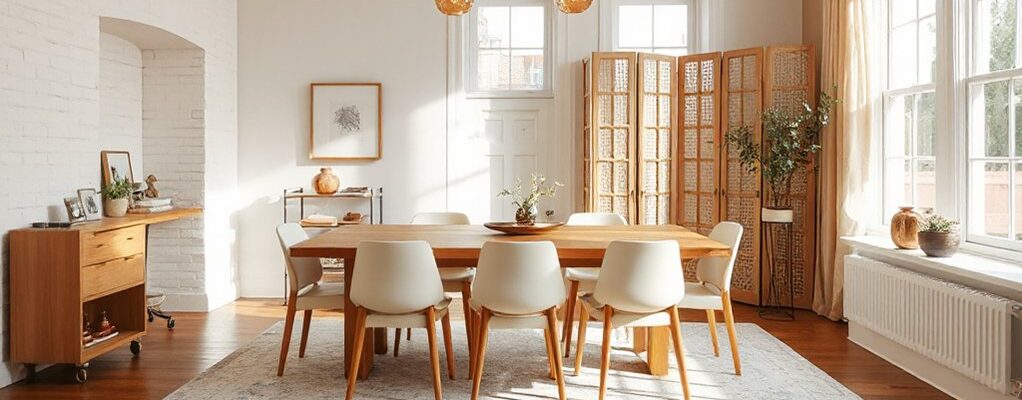
Did you know you can turn a single footprint into multiple moods with the right zones and furniture you already own? You’ll design a space that flows—from dining to work to casual gathering—without walls that close you in. Think extendable tables, stackable chairs, and hidden storage that vanish when not in use, paired with adaptable lighting to switch from bright task mode to warm, social glow. Keep an eye on how each choice supports both daily function and flexible entertaining; the payoff is worth it.
Key Takeaways
- Map weekly townhome usage to carve dedicated blocks for dining, work, and social moments, protecting them with simple rules and visible calendars.
- Zone for daily tasks and entertaining with fluid flow, clear sightlines, adaptable surfaces, and a work/meal corridor for quick transitions.
- Use flexible, transformable furniture and integrated storage to switch between dining, work, and lounging without clutter.
- Link indoor and outdoor areas with sliding doors and acoustic treatments to extend usable space and enhance ambiance.
- Layer lighting (ambient, task, accent) with dimmers and adjustable color to support mood, function, and cohesive material strategy.
Define Your Townhouse Dining-Workspace Rhythm
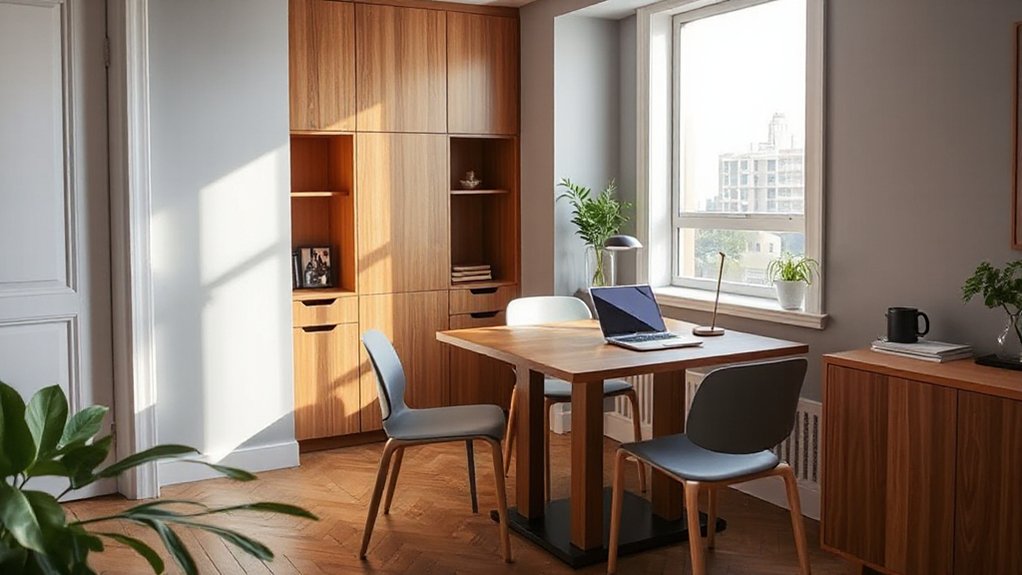
To define your townhouse dining-workspace rhythm, start by mapping how you actually use each area throughout a week. You’ll notice patterns: meals overlap with work blocks, and guests blend with daily tasks.
Prioritize time management by blocking dedicated hours for remote work, meals, and brief social moments, then protect those blocks with simple rules. Mark how long you spend dining, typing, brainstorming, and cleaning up, so you can reallocate space as needed.
Establish social boundaries so colleagues don’t linger in zones meant for focus; use a visible calendar, and set end times.
Visualize handovers: a compact desk near the dining table, a charging nook, and a quiet corner for calls.
Your rhythm should feel efficient, adaptable, and inspiring while preserving everyday comfort.
Create Flexible, Non-Walled Zones for Daily Life
Flexible, non-walled zones let daily life flow without rigid separations. You’ll create seamless passages between cooking, dining, and work by using visual cues, movable screens, and partial sightlines that don’t close off spaces.
Establish functional zones with soft boundaries: low-storage shelving, rug shifts, and ceiling treatments that cue purpose without walls.
Prioritize Outdoor integration where weather allows—sliding doors that blur inside/outside boundaries extend dining to the porch or balcony, expanding the usable area.
Use color coordination to unify disparate zones: a restrained palette, consistent materials, and repeat accents so functions feel cohesive.
Keep access clear and sightlines open, so conversations move freely.
Finally, plan lighting scenes that adapt from work to meal to relaxation, enhancing versatility.
Pick Multi-Use Furniture That Transforms
Choose multi-use furniture that adapts to your neighborhood of activities, so a single piece can serve dining, work, and lounging without crowding the room. Pick pieces that transform with intent, not weight, so you can reconfigure in seconds. Convertible furniture wins when you need instant boundaries between meals and projects, or a spot to stretch after a long day.
Favor modular design that can scale with your space: tables that extend, benches that become seating, stacks that rearrange into a workstation. Prioritize clean profiles, integrated storage, and durable mechanisms that resist fatigue.
Guarantee you test motion paths—doors, chairs, and legs should glide without snagging. Choose quality finishes that resist scratches and spills, and align all elements with sightlines for a cohesive, spacious feel.
Store Smarter: Clutter-Free Flexibility
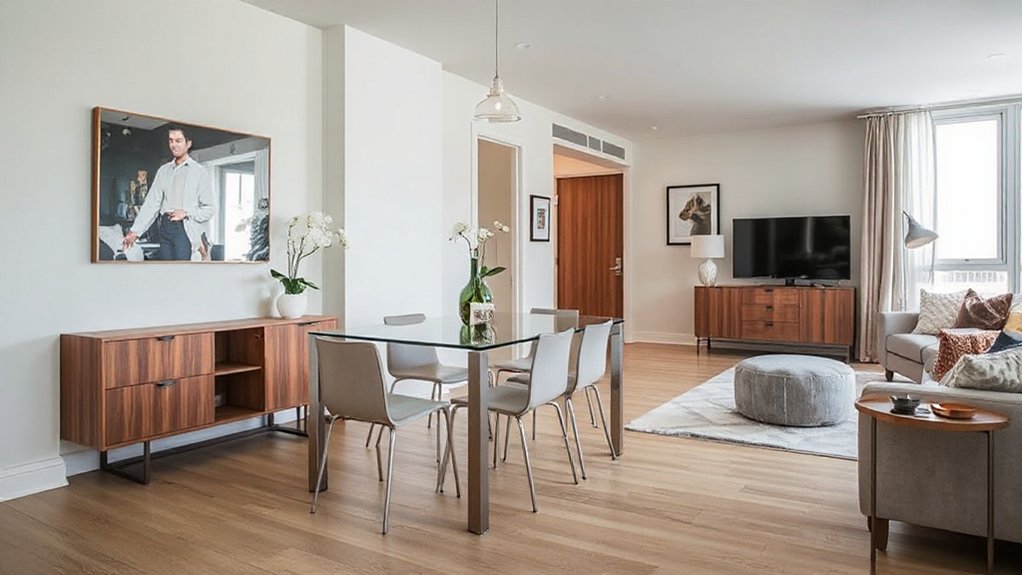
When you store smarter, clutter-free flexibility becomes a built-in feature, not an afterthought. You design storage solutions that support daily use and surprise guests with adaptable space. Choose modular stacks, hover-lid benches, and hidden compartments that keep keys, chargers, and napkins tucked away yet accessible.
Prioritize pull-out systems in narrow alcoves and ceiling-height cabinets for seasonal essentials, so you never clutter the main dining zone. Integrate furniture with built-in storage to reinforce design versatility, letting tables and consoles reconfigure without visual noise.
Label zones clearly to reduce rummaging and preserve flow. Plan for a quick reset: a single sweep, a swap of cushions, and you’re ready for work, meals, or play. This disciplined approach sustains calm, accuracy, and forward-looking use.
Light It Right: Mood and Function in One Space
Lighting isn’t just illumination—it defines zones and moods for every use of your dining space. You’ll balance task light for meals and work, with ambient layers that flex from intimate dinners to roomy, social gatherings.
Lighting for Zoning
Zoning a dining space starts with lighting that adapts to both mood and function, so you can dine, work, and entertain without swapping fixtures. You’ll layer light to carve zones: ambient lighting for broad coverage, task illumination where you need precision, and accent light to emphasize architectural details.
Use dimmers to shift intensity by activity, and choose color temperatures that don’t clash—warmer tones for meals, cooler for work tasks. Install adjustable pendants over the dining area and a discreet wall wash to soften corners.
Integrate under-cabinet or shelf lighting in the adjacent prep zone to extend usability. Plan controls that synchronize fixtures, so one switch or app scene toggles the room’s character.
Practical, precise zoning keeps flow, function, and mood aligned.
Ambiance With Flexibility
Ambience should be as flexible as the space itself, so you can shift from intimate dinner to productive work without rewiring the room. Start with layered ambient lighting that adapts: dimmed overheads for meals, bright task lights for reading, and warm accents to soften long evenings. Choose fixtures with adjustable color temperature to sustain mood across activities.
Pair lighting with sound management; use soundproofing solutions like soft panels, rugs, and perforated screens to minimize echoes when voices rise during lively gatherings. Define zones without overpowering them—moveable screens or furniture can reconfigure sightlines and acoustics on demand.
Finally, embed cues—consistent textiles, materials, and finishes—that unify progressions, so the space feels intentional, calm, and energized, no matter the function.
Decor That Supports Flexible Dining and Work
You can design your decor to cue flexible dining zones, so seating shifts smoothly between meals and quick work sessions.
Choose dual-purpose surfaces and finishes that read as cohesive, yet adaptable, to support writing, laptops, and shared meals without clutter.
Create quiet work nooks that feel intentional and nearby, inviting focus without isolating the dining area.
Flexible Dining Zones
How can you design flexible dining zones that adapt to both meals and work sessions without clutter? You create zones with modular furniture that shifts from dining to work setups in minutes. Choose a compact, extendable table and stackable chairs that tuck beneath a console when not in use.
Use a light, neutral palette and hidden storage for cables, chargers, and supplies, so surfaces stay clean. Integrate ambient lighting and acoustic panels to support focus without distraction.
Position zones near natural light for outdoor dining moments, while keeping indoor options comfortable year-round. Use movable screens or curtains to reconfigure spaces for collaboration or quiet dining.
Treat the area as a canvas for artistic expression, ensuring comfortable, functional, and efficient changeover.
Dual-Purpose Surfaces
Here are practical, transformative choices:
1) Multifunctional tabletops that expand or fold for extra prep space or seating.
2) Extendable edges that transform a console into a dining surface in minutes.
3) Built-in charging, cable management, and under-counter storage to keep clutter away.
Designed for flow, dual purpose surfaces let you switch gears without reconfiguring the room. You gain efficiency, cohesion, and a future-ready rhythm.
Quiet Work Nooks
Start with compact desks or foldable surfaces that tuck away after use, preserving floor space for seating. Choose ergonomic seating to maintain posture during longer tasks and simple meals, preventing fatigue.
Layer soundproofing ideas like acoustic panels, plush rugs, and cushioned seating to minimize spillover noise between zones. Use adjustable lighting to shift moods from bright task light to warm dining glow.
Integrate hidden storage for chargers, notebooks, and placemats, ensuring clean surfaces. Finally, align materials—wood, textile, and metal—to unify function with a calm, forward-looking aesthetic.
Zoning for Daily Tasks and Entertaining
To zone for daily tasks and entertaining, start by mapping clear, purpose-driven areas that support both routines and social moments. You want a fluid flow where work, meals, and guests don’t collide, yet feel connected. Prioritize sightlines, storage, and adaptable surfaces so you can shift from quick chores to hosted evenings without reconfiguring.
- Create a work/meal corridor with compact stations, matching lighting to task needs.
- Position seating clusters that invite conversation while keeping circulation open.
- Incorporate outdoor integration and acoustic treatment to soften boundaries and extend usable hours.
Aim for tactile materials, integrated tech hubs, and switchable zones. Your townhouse becomes a living stage where daily tasks blend with entertaining, maintaining serenity, efficiency, and a forward-looking vibe.
Budget-Friendly Upgrades That Pay Off
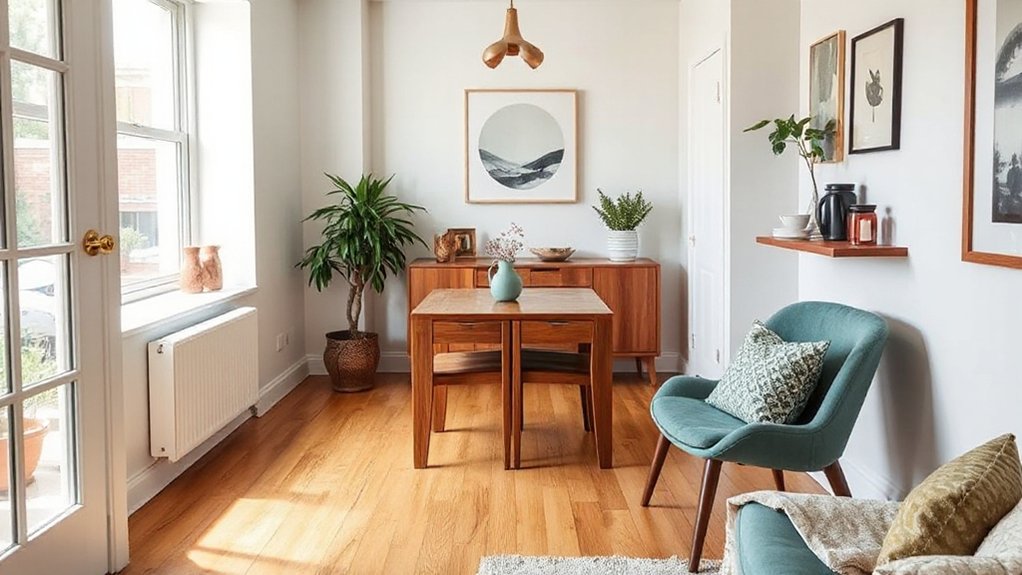
Smart, budget-friendly upgrades can transform a townhouse dining space without overhauling the layout. You gain impact by prioritizing small, reversible changes that shift function without breaking the bank.
Start with a focused palette and add a single, statement piece that evokes Artistic inspiration, then build around it with versatile furnishings.
Choose Functional accessories—folding chairs, extendable tables, and wall-mounted storage—that adapt to daily tasks or entertaining.
Update lighting with a dimmable fixture or warm bulbs to redefine mood quickly.
Use layered textiles: a durable runner, cushions, and a simple curtain to soften acoustics and define zones.
Label where to store seasonal items, keeping clutter out of sight.
Finally, invest in quality fasteners and hardware to ensure longevity at low cost.
Quick Fixes With Big Impact on Your Space
Start with a few quick, high-impact tweaks that don’t derail your layout. You’ll unlock space, light, and personality with minimal risk.
1) Use movable screens or folding furniture to sculpt zones on demand, preserving flow while enabling meals, work, and gathering.
2) Introduce a compact gallery wall or rotating art display to celebrate artistic expression without clutter, reflecting cultural influences in subtle, personal ways.
3) Optimize lighting with layered options: dimmable pendants, task lights, and a reflective surface upgrade to brighten corners and unify the room’s mood.
These tweaks deliver big results fast. Pair flexible storage with curated accents, and your townhouse adapts to changing needs while staying cohesive and intentional.
Frequently Asked Questions
How Can I Create Distinct Zones Without Walls?
Yes, you can create distinct zones without walls by embracing open plan layouts and smart zone defining techniques.
You’ll anchor seating with a rug and varied furniture scales, then use lighting to cue areas. Place a universally accessible island or console as a tactile boundary, add plants for soft separation, and choose color shifts or accent walls to visually distinguish zones.
Align storage and work surfaces to flow, ensuring function meets openness and cohesion.
What Multipurpose Furnishings Maximize Compact Townhouse Space?
Convertible furniture, modular storage—these two collide to maximize your compact townhouse. You pair a wall‑bed with a fold‑out table, then tuck away lamps and cushions in modular storage, so dining becomes a quick office, then a quiet retreat.
You’ll swap scenes in minutes, keeping floors open and zones distinct without walls. Convertible furniture keeps comfort immediate; modular storage keeps clutter at bay.
You gain flexibility, efficiency, and a future‑proof, stylish space.
Which Lighting Setups Support Dining and Work Moods?
Ambient lighting sets the mood for dining, while task lighting supports work tasks with focused clarity. You’ll want dimmable fixtures for evenings and adjustable desk lamps or under-cabinet lights for daytime work.
Position ambient lighting to wash the room evenly, and use task lighting near the work zone without glare. You’ll switch between modes easily, creating a versatile space that feels both inviting and productive, without sacrificing style or function.
How to Store Items for Quick Switching Between Uses?
You store items for quick switching with smart storage solutions and clear division between uses.
Keep compact, multi-purpose bins near the dining area, labeled by zone (dining, work, storage).
Use vertical shelves and rolling carts to swap surfaces in seconds.
Regularly purge unused items, and wind cords neatly in designated hooks.
Practice daily organization tips: return items to their spots, stackable containers for stackable tasks, and maintain accessible, distraction-free storage for fluid shifts.
What Budget-Friendly Upgrades Deliver the Best Impact?
You’ll want budget-friendly upgrades that actually transform the room, think of your space as a chameleon. Choose durable, easy-on-the-wallet pieces, like adjustable lighting, fold-down tables, and modular seating.
Color schemes should shift with mood, so pick two or three versatile hues you can tweak with textiles.
Wall decor adds personality without breaking the bank—printable art, mirrors, or gallery frames.
You’ll save with multi-use furniture, then savor the bright, practical, visionary rhythm you created.
Conclusion
As you reshape your townhouse, think like a conductor guiding a small orchestra. Your space can hum with flexible furniture, smart storage, and adaptive lighting, each note swapping between meal and work with ease. When guests arrive, it feels open and effortless—yet intimate. Channel the quiet confidence of a lantern in a harbor: clear, guiding, and steady. The future of dining is not fixed; it’s a living rhythm you tune, again and again.