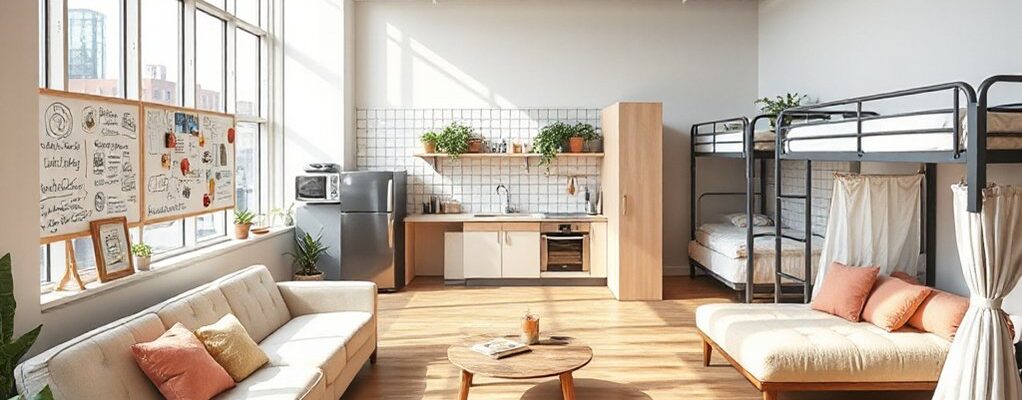
To design an HMO that appeals to students in 2026, create flexible, modular spaces that balance study zones with social hubs. Prioritize quiet-first rooms, acoustic zoning, and durable, easy-to-clean finishes, plus energy‑efficient appliances and smart thermostats. Offer flexible leases, convertibles, and well‑designed common areas that foster peer networks. Integrate wellness amenities, tutoring pods, and strong tech support. Use transparent pricing and data‑driven marketing to boost occupancy. If you keep exploring, you’ll uncover how to implement these ideas effectively.
Understanding 2026 Student Lifestyles and Your HMO
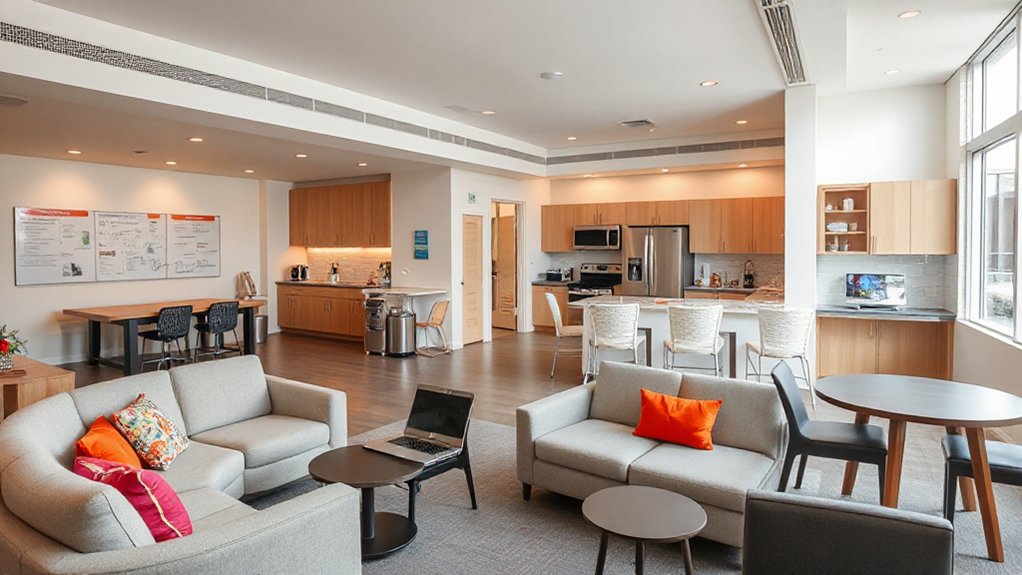
Ever since 2026 began, student life has shifted toward balancing flexibility with study-focused routines, and your HMO should reflect that. You’ll design spaces that support adaptable schedules: quiet study nooks, spillover work zones, and post-class regroup areas.
Understand that students value meaningful routines over rigid timetables, so offer modular rooms and flexible lease terms.
Emphasize practical amenities—high-speed Wi‑Fi, ample outlets, and noise-mitigating materials—that cut friction during cramming and collaboration.
When planning common areas, prioritize spaces for Student socialization that foster peer networks without sacrificing study focus.
Address Campus transportation by locating near shuttle hubs or bike storage, and provide clear, updated transit info.
Your HMO should feel responsive, efficient, and connected to daily student rhythms.
Layouts That Maximize Space and Community in Student HMOs
Layout choices should maximize both space and community by pairing compact, flexible units with well-designed common areas that invite collaboration without sacrificing study focus. You’ll use modular furniture and partitionable layouts to adapt rooms for study, sleep, and small-group sessions.
Prioritize shared kitchens, breakout nooks, and multipurpose lounges that promote casual interaction while preserving quiet zones. Align circulation with sightlines that encourage face-to-face contact without crowding.
Optimize storage so every square meter serves dual purpose, reducing clutter and expanding usable space. Integrate targeted acoustic management to keep conversations contained.
Design aesthetics matter: consistent aesthetic branding across doors, furniture, and lighting signals belonging and reduces confusion in dense cohorts.
Focus on community engagement through visible boards and micro-events, reinforcing collaborative culture. Use these cues to elevate student satisfaction and retention.
Affordable, Energy-Efficient Fixtures That Last
You’ll prioritize durable, low-cost fixtures paired with energy-efficient appliances to keep upfront costs down while lowering utility bills.
Choose long-lasting materials that sustain wear from multiple roommates and frequent moves, without sacrificing performance.
This approach aligns with current sustainability trends and practical, long-term reliability.
Durable, Low-Cost Fixtures
Select fixtures with simple, modular components to speed replacement and reduce labor costs. In configuration, favor standard sizes and widely available parts to curb future price spikes.
Durability testing should simulate high-traffic use, moisture exposure, and quick-connect plumbing for fast repairs. Track fixture maintenance with a lightweight log so you can predict replacements before failures occur.
Favor finishes that hide grime yet wipe clean easily, preserving a fresh look between leases. By emphasizing longevity and serviceability, you deliver consistent performance and tenant satisfaction without sacrificing affordability.
Energy-Efficient Appliance Choices
Energy-efficient appliances are a smart investment in student housing, delivering lower utility bills and quicker ROI without sacrificing comfort. You’ll prioritize units with Energy Star ratings, compact dimensions, and reliable warranties to fit diverse layouts.
Favor ENERGY STAR refrigerators, dishwashers, and heat pumps that minimize peak demand and heat loss. Pair appliances with smart thermostats and LED lighting to maximize savings without compromising habitability.
Consider solar panels as a building-wide efficiency accelerator, enabling residents to see tangible bills reductions and supporting a green branding angle.
Plan for regular energy audits to verify performance, spot inefficiencies, and guide replacements before costs spike.
Choose modular, serviceable models to reduce turnover work, and guarantee components are readily available to maintain long-term reliability.
Long-Lasting Material Sustainability
What makes long-lasting materials a smart bet for student housing is their ability to cut costs without sacrificing comfort or reliability, especially when you’re balancing tight budgets and frequent tenant turnover. You’ll prioritize durable, low-maintenance choices that perform year after year, reducing replacement cycles and nuisance repairs.
Focus on recyclable materials and eco-friendly construction to align with sustainability goals and tenant expectations.
- Use durable, repairable fixtures with simple componentry to extend life and ease maintenance.
- Select systems and finishes that can be refurbished rather than replaced, minimizing waste.
- Source recyclable materials that meet indoor air quality standards and support circular design.
Keep It Quiet: Acoustic Strategies for Shared Living
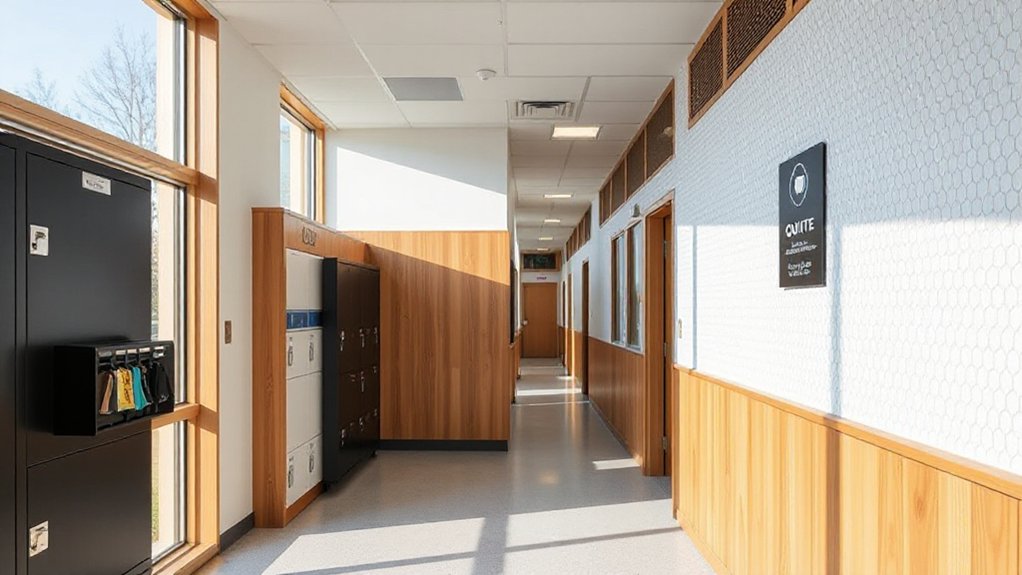
Think about acoustic zoning to separate study zones from social areas, so noise from one room doesn’t bleed into another.
Prioritize quiet-first room layouts that place rooms needing focus away from high-traffic corridors and communal spaces.
Choose soundproofing materials with proven performance—think dense boards, mass-loaded vinyl, and resilient channels—to keep conversations and music contained.
Acoustic Zoning Solutions
Could you really keep noise in check in a shared student apartment without sacrificing social life? Acoustic zoning partitions spaces by function, not by walls alone, so you can pursue conversation zones and study zones without compromising vibe.
You’ll design lightweight dividers, door seals, and ceiling treatments that zone sound effectively while keeping the space airy. Prioritize sound masking to cover transient chatter and footsteps, creating acoustic privacy where it matters most.
This approach supports both collaboration and concentration, aligning with campus life rhythms.
- Use movable, sound-damping screens to reconfigure zones quickly
- Implement shared corridors with soft finishes and door seals for subtle separation
- Schedule quiet periods with integrated sound masking that respects students’ study and social needs
Quiet-First Room Layouts
With Quiet-First Room Layouts, you prioritize sound management from the door onward, shaping each space to minimize disruption before activity starts. You map flow so doorways and corridors cue low-traffic use, reducing sudden noise spikes.
In practice, place beds and desks away from shared walls, and align door swings to skim past settled areas rather than active hubs. Use soft-edged furniture, rugs, and fabric panels to absorb reverberation without clutter.
Include meditation spaces tucked near entry pauses for rest between classes, offering a quiet retreat without leaving the unit. Leverage noise canceling technology in critical zones, like study nooks and communal lounges, to curb unexpected chatter.
Maintain flexibility with modular layouts to adapt to evolving student rhythms and group sizes.
Soundproofing Material Choices
Once you’ve set Quiet-First layouts, the next step is choosing materials that absorb and block sound without compromising space efficiency. You’ll want options that balance performance with practicality, prioritizing thin profiles, recycled content, and easy installation.
Look for soundproofing innovations that pair well with study zones and living spaces, while keeping airflow and natural light intact. For acoustic treatment, favor modular panels and mass-loaded vinyl in targeted areas to reduce impact noise and echoes without crowding rooms.
Consider underlayments for floors and door sweeps for gaps to seal routes of sound transfer.
- Thin, high‑density panels that install on walls or behind furniture
- Modular tiles with stacked absorption and decorative value
- Door seals and threshold upgrades to minimize drafts and noise paths
Privacy by Design: Zoning and Access Controls for Suites
Privacy by design starts with clear zoning and robust access controls for each suite, so residents feel secure from day one. You’ll map early layouts to create distinct privacy zones, separating study desks, sleeping nooks, and communal cues to reduce noise transfer and interruptions.
Pair this with disciplined access controls: individual keyless entry, time-based unlock windows for quiet hours, and auditable visitor logs. Use cameras only where legally justified, with signage and data minimization to protect privacy.
Build in zone-based routing so guests don’t wander into private study or rest areas. Document switchovers between common areas and private zones, and test for bottlenecks during peak move-in.
Regularly review access permissions, updating roles as students rotate, ensuring ongoing alignment with evolving safety and privacy standards.
Tech-Enabled Convenience for Busy Students
You’ll optimize your stay with smart scheduling apps that align class times, study blocks, and maintenance windows, reducing back-and-forth and freeing up more study time.
A 24/7 support portal keeps issues small and fixes fast, so you never stall on a deadline or worry about night-time emergencies.
Seamless online leasing streamlines move-ins, renewals, and amenity bookings, keeping your focus on coursework and campus life.
Smart Scheduling Apps
- centralizes notifications and reminders
- blends academic calendars with personal to-dos
- adapts to changing syllabi and time blocks
This approach keeps you on top of evolving schedules, freeing mental bandwidth for exams and projects. Use smart filters to prioritize study sessions and backfill gaps with quick, relevant tasks.
Trends show students value integrations with note apps, ride-share, and meal services, so you stay efficient without juggling multiple tools.
The result is consistent, reliable planning you can trust, day after day.
24/7 Support Portals
Seven efficient support portals empower busy students to navigate campus life without breaking stride. You’ll access a centralized hub offering digital assistance across housing, dining, academics, tech, safety, and health.
Each portal is lightweight, mobile-first, and fast, with chat, ticketing, and FAQs that resolve common issues in minutes. Quick-start guides walk you through routine tasks like submitting maintenance requests, checking class schedules, or renewing passes.
Real-time status dashboards keep you informed about outages or service delays, reducing guesswork. Personalization tailors alerts to your campus routine, while multilingual options widen accessibility.
Integrated analytics help you predict peak inquiry times, so you’re never stuck waiting. With these seven portals, you gain seamless support, measurable response times, and a smoother daily cadence—effortless digital assistance tailored to student life.
Seamless Online Leasing
- Real-time document status and automated approvals
- In-app messaging with leasing staff for quick resolutions
- Integrated alerts for student transportation and campus events planning
Safety, Compliance, and Campus-Ready Standards
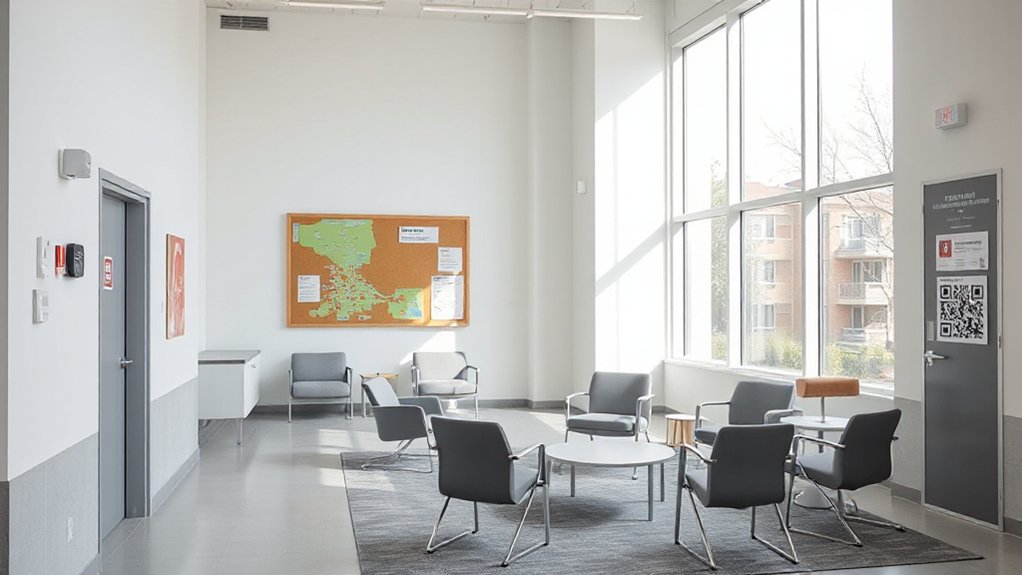
Are you confident your student housing plan can pass campus safety audits on the first inspection? You’ll embed Safety protocols into every design decision, from fire exits to electrical layouts, so observers see clear, marks-ready compliance.
Map spaces to occupancy codes, then pair them with scalable safety features that adapt as cohorts shift. Align with compliance standards through documented processes: inspection checklists, third‑party verifications, and routine drills that stay current with campus expectations.
Use modular layouts that accommodate future growth without compromising egress or visibility. Integrate secure access controls, proper lighting, and visible signage to reinforce safety culture.
Finally, maintain a living compliance binder, updated quarterly, to demonstrate proactive risk management and campus-readiness at all times.
Wellness Amenities That Attract Student Cohorts
What wellness amenities best draw today’s student cohorts, and how can you design them to boost both satisfaction and retention? You’ll center amenities around practical outcomes, pairing convenience with measurable impact on campus involvement and academic support.
Prioritize spaces that foster accountability, stress relief, and social connection, while staying adaptable to evolving routines. Design with clear signage, easy access, and quiet zones that still invite collaboration.
Track usage data to refine offerings and demonstrate value to stakeholders.
- Multi-functional fitness and recovery hub linked to study-break wellness programs
- Quiet study lounges with ambient wellness features tied to campus involvement initiatives
- On-site tutoring pods and mental-health resources integrated into housing services, showing visible academic support
Flexible Leases and Adaptable Rooms for New Cohorts
Flexible leases and adaptable rooms will anchor your housing strategy for new cohorts, enabling quick pivots in demand and integration with shifting academic calendars. You’ll implement month-to-month or semester-based terms, offer short-term renewals, and keep rent predictable with tiered options.
Design adaptable rooms with modular furniture, convertible desks, and plug-and-play layouts that reconfigure for study pods or quiet zones during exam seasons. Pair this with flexible common spaces that can host different group sizes and activities, keeping shared amenities accessible without clutter.
Prioritize transparent onboarding processes and clear renewal triggers to reduce churn. Schedule regular community events that stabilize occupancy and sense of belonging, while maintaining flexibility.
Your approach supports steady occupancy and responsive capacity management for evolving cohorts.
Future-Proofing Infrastructure for Growing Student HMO Networks
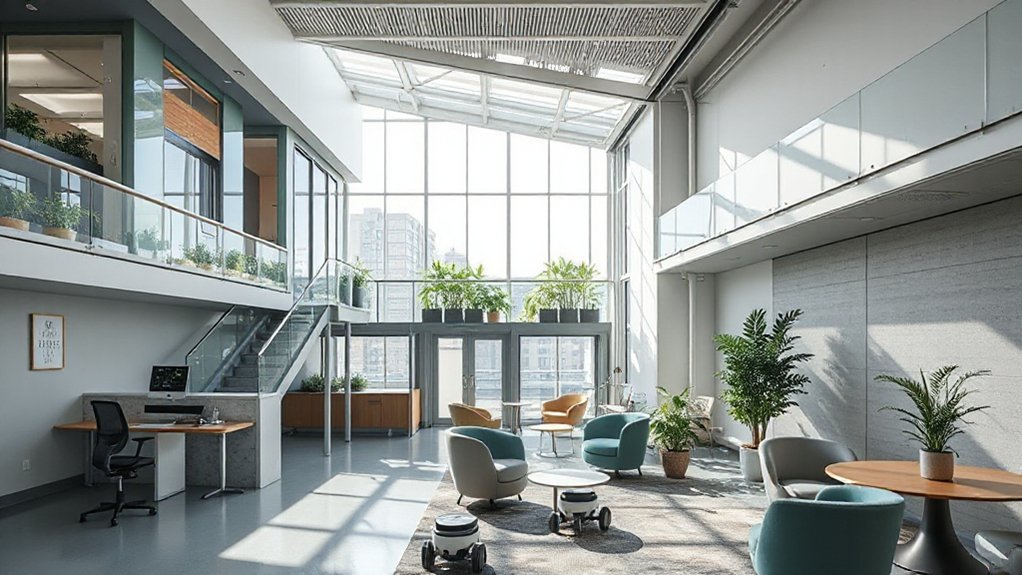
Future-proofing your HMO infrastructure means building scalable, resilient systems that grow with student demand. You’ll design with modular utilities, robust network backbones, and data-driven maintenance to handle peak occupancy and shifting patterns.
Prioritize shared spaces that adapt to study pods, social hubs, and quiet zones, while embedding energy-efficient controls to support Campus sustainability goals.
Plan for multi-tenant services that can be upgraded without disruptive overhauls, and implement remote monitoring to catch faults before they impact residents.
Anticipate evolving needs in transit access, safety, and wellness, and align with campus partners to streamline approvals and integration.
Your success hinges on flexible foundations, routine testing, and clear governance.
- Modular utilities and scalable networks
- Remote monitoring and proactive maintenance
- Integrated transit and sustainability metrics
Student transportation, Campus sustainability
Budgeting, ROI, and The Path to a Winning Student HMO
Budgeting for a winning student HMO starts with a clear, reality-tested financial plan that links upfront capital to long-term value. You map capital deployment to occupancy, maintenance cadence, and debt service, then stress-test scenarios for turnover and rent inflation.
ROI isn’t abstract—it’s tied to unit mix, premium amenities, and efficient operations that reduce vacancy risk. Prioritize student financial literacy by designing transparent pricing, flexible payment options, and credit-friendly terms that boost retention.
Tie marketing spend to measurable outcomes like inquiries per campus cohort and lease conversion rates. Factor campus transportation access into property value, utility costs, and appeal to commuting students.
Track KPIs weekly, reallocate funds quarterly, and publish a short, practical ROI summary for stakeholders to sustain momentum.
Frequently Asked Questions
How Do Leases Adapt to Sudden Student Cohort Changes?
Leases adapt by prioritizing lease flexibility and cohort forecasting, you’ll implement adjustable occupancy terms, mid-term renewals, and scalable room blocks. You’ll track enrollment signals, reserve short-term sublets, and align pricing to sudden cohort shifts efficiently.
What Are Hidden Costs Beyond Initial Fit-Out?
“Look before you leap.” Hidden fees lurk beyond fit-out, and maintenance surprises pop up later. You’ll track hidden fees, schedule proactive upkeep, factor inflation, and negotiate caps to keep operating costs predictable and student-friendly in 2026.
Which Sustainability Metrics Matter Most to Students?
You’re asking which sustainability metrics matter most to students: prioritize Renewable energy usage and Waste reduction, tracking kilowatt-hours, recycling rates, and composting uptake, plus on-site energy generation and water efficiency to demonstrate practical, trend-aware impact and accountability.
How to Handle Emergency Repairs With Limited Staff?
In a pinch, you prioritize clear crisis communication and swift triage; you designate key roles, predefine emergency procedures, and post updates. You’ll streamline repairs with offsite vendors, maintain transparency, and rehearse drills to bolster emergency preparedness.
What’s a Practical Disruption Plan for Move-In Week?
A practical disruption plan for move-in week: you coordinate staggered arrivals, designate contingency housing, and establish 24/7 support. You boost student engagement with real-time updates and embed technology integration for quick, clear communications and swift issue resolution.
Conclusion
You’ve got a blueprint that’s ready to roll—designs that fit real student rhythms, not just graphs on a page. Prioritize space-efficient layouts, quiet zones, and flexible leases, so your HMOs feel like smart, welcoming homes. Use energy-smart fixtures and privacy-by-design to cut costs and boost appeal. Think scalable infrastructure and wellness perks that students actually use. It’s a living, breathing system, like a well-tuned orchestra, where every room plays a part in the future-proofed win.