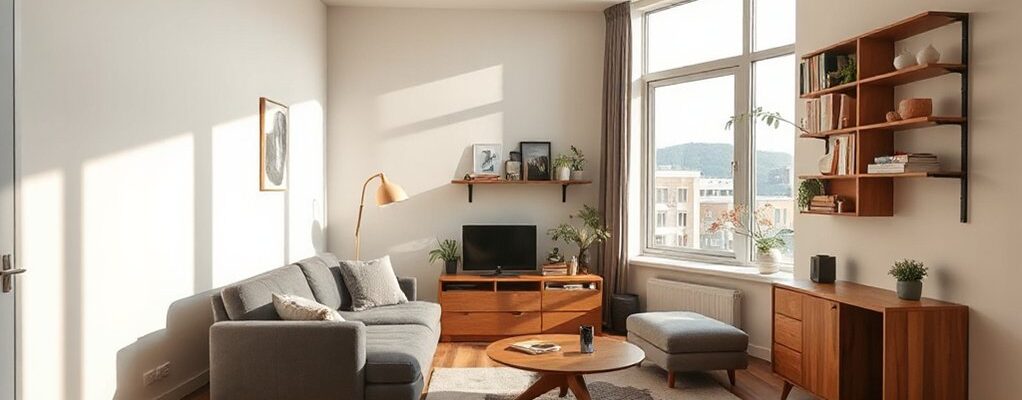
For 2026, you’ll want a practical, premium HMO setup built around modular, durable furniture that adapts to changing tenants. Start with a smart layout that prioritizes common areas and individual zones, using modular sofas, compact dining, and multi-use desks with hidden storage. Choose timeless finishes, easy-clean surfaces, and eco-friendly materials, paired with smart lighting and acoustic solutions. Keep clutter minimal with clear labeling and centralized systems. If you keep going, you’ll uncover how to optimize comfort, function, and cost.
Why HMO Furniture Essentials Matter in 2026
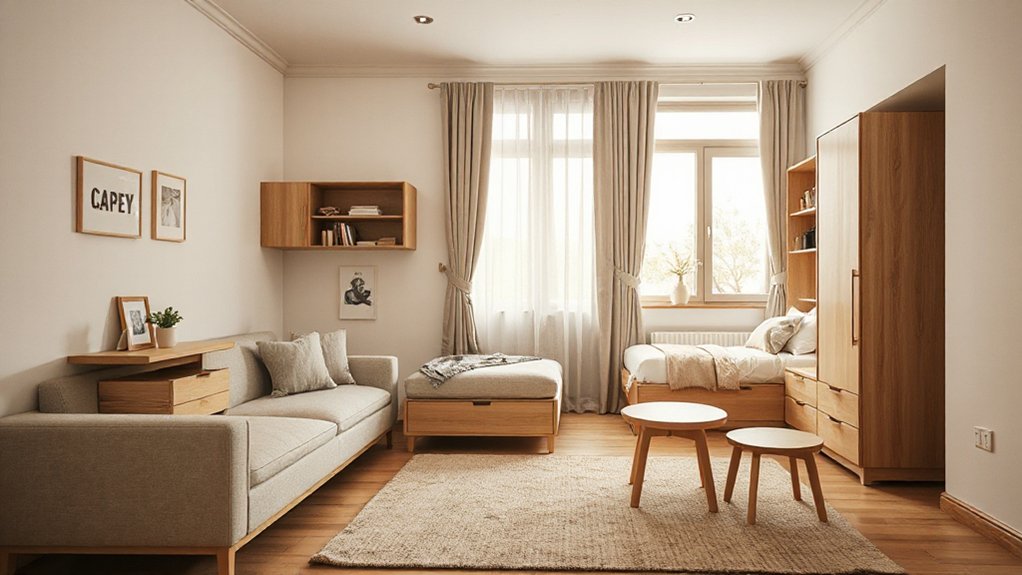
In 2026, well-chosen HMO furniture is more than décor—it’s a safety, efficiency, and comfort investment. You feel the difference when you choose pieces with solid construction, modular design, and durable finishes.
When you invest in thoughtful furniture, you streamline daily routines, cut wear and tear, and simplify maintenance. Furniture assembly becomes straightforward with clear instructions, labeled parts, and support from trusted brands, so you spend less time tinkering and more time living.
Decor styling matters, too—balanced textures and neutral tones create calm, scalable spaces you can adapt as needs shift. The right setup supports study focus, social zones, and overnight guests without compromising safety or flow.
In short, purposeful choices elevate the entire HMO experience.
How to Plan a Smart 4–6 Room HMO
Start with a smart layout plan that maximizes common areas while giving each room its own identity.
Budget smart furnishings that are durable and modular, so you can adapt as rooms change.
Allocate rooms with clear usage zones to simplify daily routines and guarantee efficient occupancy.
Plan Efficient Layouts
To plan an efficient layout for a 4–6 room student HMO, start by mapping current furniture and traffic flow before you buy or rearrange anything. You’ll optimize by prioritizing clear pathways, ergonomic work zones, and flexible social areas, then test several configurations quickly.
Use modular pieces to adapt to study, sleep, and guest needs without crowding corridors. Measure doorways, window placements, and outlets, then place desks near natural light while keeping chargers and cables hidden for safety.
Name zones: study, rest, and social space, assigning each a focal piece to anchor the layout. Leverage artificial intelligence tools to simulate foot traffic and optimize storage.
Consider scalability for renovations, and keep a lightweight, premium aesthetic that aligns with space exploration-inspired design.
Budget Smart Furnishings
Smart budgeting for a 4–6 room student HMO means prioritizing versatile, affordable pieces that endure. You’ll aim for a neutral foundation—sturdy, easy-clean surfaces, modular seating, and compact storage that adapts as needs shift.
Invest in durable, mid-range essentials rather than trendy, disposable items; pick furniture with hidden appeal and transferable function, like sofa beds or extendable tables, to maximize space without sacrificing comfort.
When selecting décor, balance practicality with personality: introduce Vintage décor pieces that resist the next season’s fads, and pair them with Artistic accents to elevate style without clutter.
Prioritize multi-use, easy-install options, and simple upgrades over heavy renovations.
Budget smartly by batching purchases, tracking warranties, and choosing timeless finishes that stay relevant room after room.
Optimize Room Allocation
Optimizing room allocation starts with a clear map: assess each occupant’s needs, timing, and privacy preferences, then draft a floor plan that prioritizes shared ease and personal space. You’ll balance bedroom counts, study zones, and storage, ensuring walkways stay clear and access is simple.
Map out core furniture zones first—beds, desks, wardrobes—and reserve flexible alcoves for guests or hobbies. Use a consistent theme to unify spaces, but allow distinct color accents for personality.
Consider noise buffering between rooms, with shared areas featuring durable, easy-clean surfaces. Choose eco-friendly materials for desks, shelving, and seating, prioritizing longevity and low emissions.
Track decor trends to keep the look fresh without overwhelming functionality. Finalize with a budget-aware purchasing list, and assign responsible ownership to minimize clutter.
The Modular Sofa for Flexible Shared Living
A modular sofa shines in shared student housing, adapting to different room sizes and roommate needs without sacrificing style. You choose configurations that suit study nooks, movie nights, and late‑night chats, so space feels open rather than crowded.
With quick‑changing layouts, you can reconfigure seats as personalities shift, keeping common areas functional and inviting. Prioritize ergonomic design to support long study sessions without fatigue, and look for low‑profile cushions that maintain sight lines across the room.
Color psychology matters: select neutral bases with adaptable accents that calm or energize according to activity. Durable upholstery handles heavy use, while modular pieces with hidden storage keep clutter out of sight.
Invest in a quality, easy‑to‑clean fabric and sturdy frames that survive constant rearrangement.
Compact Dining Setups for Social Meals
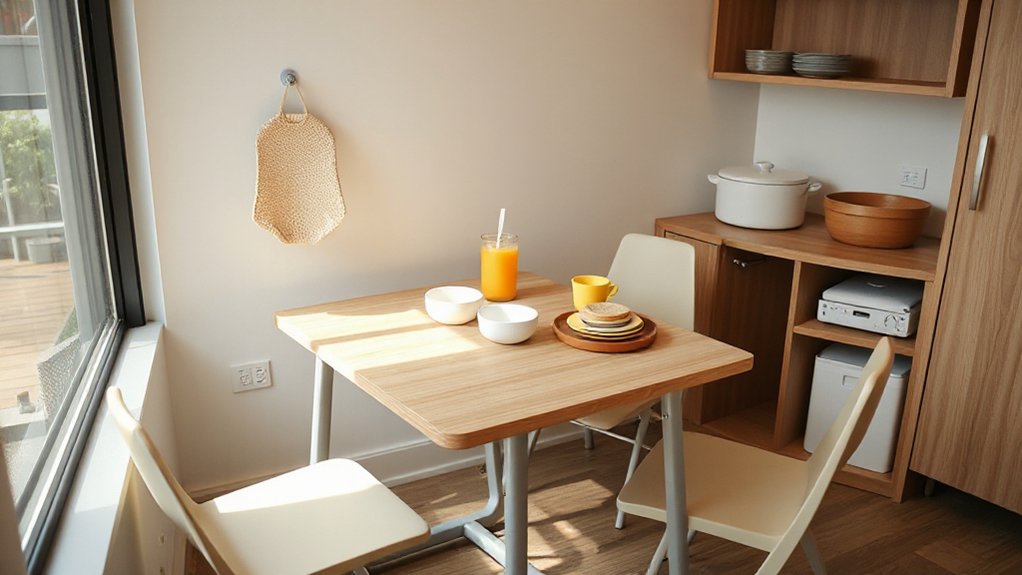
Choose compact table shapes that maximize surface area without wasting floor space, so meals feel effortless for everyone.
Look for multi-purpose seating that folds or tucks away, making room for study or social time after dinner.
Plan space-saving layouts that keep traffic easy and lines of sight clear for a premium, social dining vibe.
Compact Table Shapes
When space is tight, pick compact table shapes that maximize seating without sprawling across the room; round, oval, and square options let you seat more people in a smaller footprint while keeping easy conversation flow. For a premium feel, choose shapes that suit your room’s geometry and traffic patterns, not just aesthetics.
Miniature tables excel in studio flats or alcoves, offering sufficient surface area without dominating space. Corner furniture can transform underutilized zones into social hubs, especially when paired with a slim pedestal or drop-leaf base.
Prioritize stable edges and easy-clean finishes for daily student life. If you mix materials, guarantee color harmony to maintain a polished look. Practical, durable options keep your dining setup versatile, inviting, and ready for study breaks turned meals.
Multi-Purpose Seating
- Modular stools and benches for flexible sizing
- Fold-away chairs with foam cushions and non-slip feet
- Stain-resistant fabric options in calming tones
Space-Saving Layouts
Maximize seating without crowding your dorm kitchen by pairing compact dining layouts with the modular furniture you’ve already got. You’ll optimize space with slim, legless or pedestal tables that tuck against walls when not in use, freeing floor real estate for movement.
Choose modular stools or foldaway chairs that convert to storage, so gatherings stay social without clutter. Prioritize a layout that supports easy conversation: a small, round or square setup keeps sightlines open and reduces crowding, while adjustable-height surfaces enhance comfort.
Space-efficient planning means labeling zones for meals, study, and social time, then keeping pathways clear. Focus on furniture ergonomics to prevent fatigue during long sessions, and select durable finishes that resist spills.
The result: premium practicality that scales with your group’s needs.
Storage Solutions That Save Space and Money
Need more space without breaking the bank? You’ll streamline your room with smart storage choices that don’t scream “cheap.” This is where Creative storage meets Space optimization, delivering a premium feel without the premium price tag. You’ll pick modular units that fit tight corners, use under-bed drawers for off-season gear, and rotate on wheels for flexible layouts.
Efficiency isn’t flashy; it’s practical, durable, and tidy.
- Overlapping boxes with labeled fronts to maximize vertical stacking
- Multi-use furniture like ottomans with hidden compartments
- Wall-mounted shelves paired with slim file organizers
These moves reduce clutter, free floor space, and keep essentials accessible. The result is a neat, functional HMO room you won’t outgrow, within budget.
Durable Bedroom Basics for Sleep and Study
A durable sleep setup means a mattress and bedding you can trust night after night, paired with a sturdy frame that supports your back during long study sessions.
Set up a study-ready desk with a reliable surface, organized storage, and cable management to keep distractions low.
Nearby bedside storage keeps essentials within reach, so you stay focused and rested without clutter.
Durable Sleep Essentials
Suppose you want a bedroom that fuels both sleep and study, start with durable essentials that stand up to daily use and frequent moves. You’ll prioritize sleep hygiene and mattress durability, selecting pieces that resist wear and still feel premium after a semester of late nights.
Opt for a mattress with solid edge support and tested durability, plus a breathable cover that stays clean. Choose a low-profile, sturdy frame to minimize squeaks and delay wear.
Add a blackout curtain system and a compact, quiet fan to regulate comfort without distraction.
- High-density foam or latex mattress with reinforced edge
- Solid wood or metal bed frame with anti-squeak hardware
- Room-darkening curtains and a quiet, energy-efficient fan
Study-Ready Desk Setup
Your study-ready desk setup pairs clean design with durable construction so you can focus on work, not on wobbling furniture or clutter. You’ll want a compact desk with a smooth finish and cable management that hides cords, plus a solid chair that supports long sessions without fatigue.
Choose a neutral desktop and legs, then add color coordination through ergonomic accessories like a matte mouse pad, a focused lamp, and a minimal monitor stand. Keep surfaces clear with a single tray for supplies and a discrete under-desk drawer.
Decorative accents should feel intentional, not excessive—think a single steel pen holder or a small plant. Prioritize quality over quantity, and you’ll maintain an organized, productive workspace that lasts through 2026.
Bedside Storage Solutions
- bedside lamps
- storage baskets
- compact nightstands
Soft Acoustics: Furniture That Lowers Noise
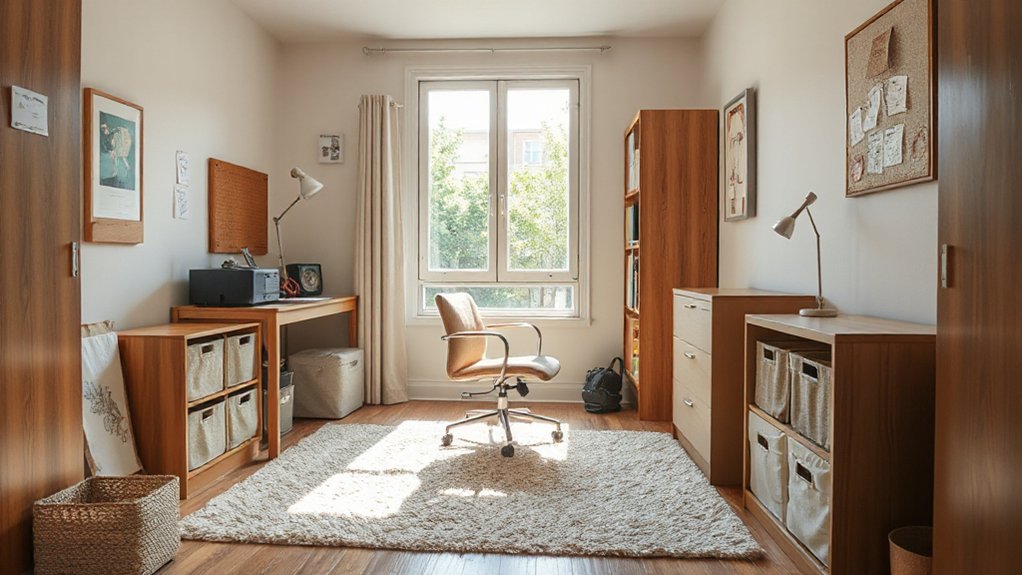
Soft acoustics aren’t just an add-on; they’re a practical upgrade that makes a student’s HMO feel calmer and more productive. You’ll notice the difference when you choose furniture that dampens noise at the source and reflects less sound.
Start with Acoustic panels mounted discreetly on common-wall hot spots to absorb chatter and keyboard clatter without clutter. Pair these with soundproof curtains over windows to cut street noise and late-night footsteps, while preserving light and airiness.
Opt plush seating and thick area rugs to disrupt reverberations in living zones. Finally, select modular pieces with soft edges and textured fabrics that trap sound without sacrificing style.
Balanced, thoughtful choices deliver a premium, low-distraction environment you can rely on.
Multi-Use Desks and Seating for Study Zones
Multi-use desks and seating move study zones from a rigid setup to a flexible, productive core. You’ll benefit from pieces that adapt to solo study, group work, or quick breaks, keeping paths clear and focus sharp.
Choose desks with integrated storage, smooth-glide surfaces, and cable management to maintain a neat, premium vibe. Pair chairs that support upright posture and easy swiveling so you can reconfigure without fuss.
Add decorative accents and personal touches to reflect your style while preserving functionality.
- Quiet, compact desks with modular components
- Ergonomic seating that folds into collaborative layouts
- Cable-friendly stations that host chargers and decor
Incorporate decorative accents and personal touches to keep the space inviting without sacrificing efficiency.
Quick-Assembly Tips to Speed Up Setup Day
Kick off setup day with a quick-essentials check: pack your Packing Essentials Quick-Check and keep to hand the Tool Kit Quick-Grab for fast fixes.
Follow a Step-by-Step Assembly Flow to minimize backtracking and maintain momentum. This approach keeps you efficient, reducing downtime and delivering a premium, hassle-free room in record time.
Packing Essentials Quick-Check
Have you got a packing checklist that actually speeds up setup day? The Packing Essentials Quick-Check cuts waste and protects your investment, so you settle in faster without drama. Pack smartly, label cords, and keep small parts together in a dedicated pouch.
Prioritize Personal safety by separating heavy items and using proper lifting technique to avoid strains.
Aim for an efficient carry: compact boxes, soft wraps, and a single tote for essentials.
Maintain aesthetic appeal with coordinated basics—neutral tones, tidy cables, and wrinkle-free textiles.
- Clear, labeled bags for hardware and small parts
- A single, flexible tote with daily-use items
- Compact wraps and protective sleeves for furniture corners
Tool Kit Quick-Grab
A well-organized tool kit keeps setup day efficient and headache-free. You bundle essentials for fast assembly: a compact screwdriver set, interchangeable bit driver, pliers, and adjustable wrench. Keep a magnetic tray for screws and small parts, plus a sharp utility knife for trimming packaging.
Label bags by furniture piece to reduce searches and delays. Pre-torque fasteners to avoid rework, and test connections as you go to catch misalignments early. Stay nimble with a lightweight drill and a spare battery, plus a compact level for accuracy on tall items.
For downtime, tuck in gardening tips for small balcony greens and a travel destinations card to spark quick breaks between tasks. This toolkit speeds flow without sacrificing quality, keeping you focused and organized.
Step-by-Step Assembly Flow
Begin with a clear plan and a fast track checklist, then tackle each piece in a logical sequence. You’ll save time by grouping steps: unbox, sort, and verify parts, then assemble in clean, labeled zones. Follow the manufacturer’s instructions, but adapt spacing for your room and power access.
Use multi-step fasteners first, then final screws, and tighten with a single pass to avoid rework. Keep tools within reach, and test stability after each major stage. For a premium finish, align edges precisely and wipe down surfaces as you go.
Consider eco friendly materials and choose sustainable components when possible, and lean into vintage decor accents to elevate the look without slowing setup.
- Quick-start zones and part validation
- Pre-fit and center major panels for symmetry
- Final checks that ensure long-term sturdiness
Budget-Smart Picks to Maximize Value per Room
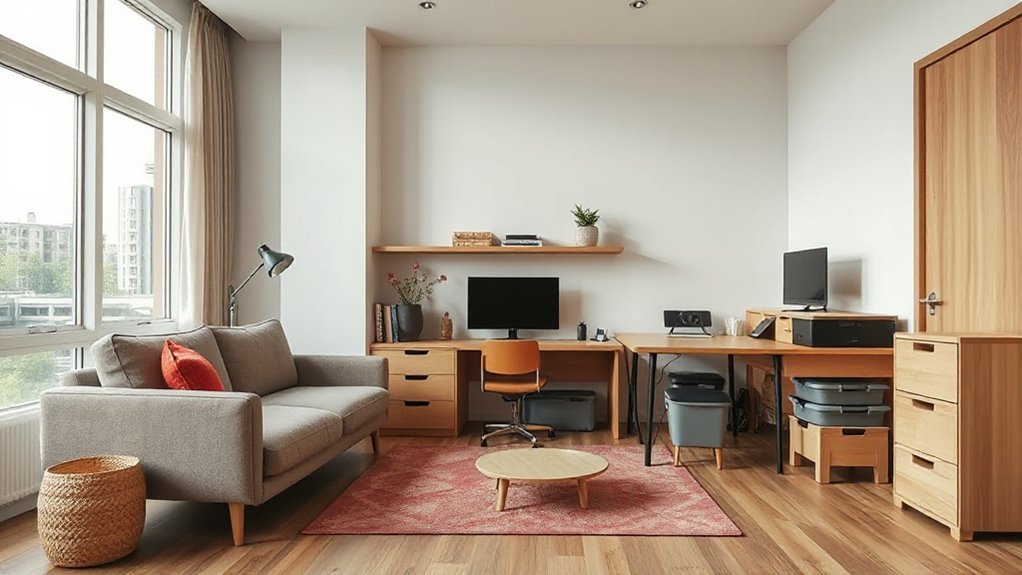
Smart budgeting starts with a smart room plan: you don’t need every high-end piece to maximize value per room. You’ll prioritize modular furniture that adapts to study, sleep, and social zones, then layer in durable basics.
Choose a solid bed frame with built-in under-bed storage and a versatile desk that folds or expands for different coursework. Opt for a compact sofa bed to host guests without crowding space.
For surfaces, select a neutral finish and add color with affordable textiles—throws, cushions, and rugs—that wear well.
Outdoor decor can extend common areas, so integrate a weatherproof balcony set or foldable bistro table for fresh air breaks.
Favor Eco friendly materials to reduce waste and boost long-term value.
Lighting That Boosts Focus and Mood in Student Spaces
Good lighting is non-negotiable for study focus and mood in student spaces, so prioritize fixtures that adapt to task, ambient, and accent needs. You’ll want a mix of daylight-mimicking bulbs, dimmable controls, and placement that prevents glare.
Mood lighting sets the tone for late-night sessions, while focus-enhancing fixtures keep you sharp during exams. Choose adjustable desk lamps, under-shelf LEDs, and floor uplights that balance brightness with warmth.
Pair color temperatures around 2700–4000K to shift from study to downtime effortlessly. Invest in smart controls for scenes labeled Focus and Relax.
Small-scale, premium finishes elevate your space without clutter.
- Mood lighting with warm dimmable tones
- Focus enhancing fixtures with adjustable brightness
- Smart controls for study and downtime scenes
Materials That Stand Up to Lived-In Occupancy
Eco-friendly materials prove you can reduce waste without sacrificing durability, while finishes that can be refreshed keep your space looking fresh year after year. Vintage furniture offers character plus resilience when chosen with solid joints and quality upholstery.
Prioritize modular designs that adapt to roommates and study setups, ensuring cushions retain shape and legs stay level. Practical maintenance routines—spot clean, rotate cushions, and protect surfaces—extend longevity and preserve a premium feel.
Cohesive Style on a Budget: Limit Clutter, Maximize Impact
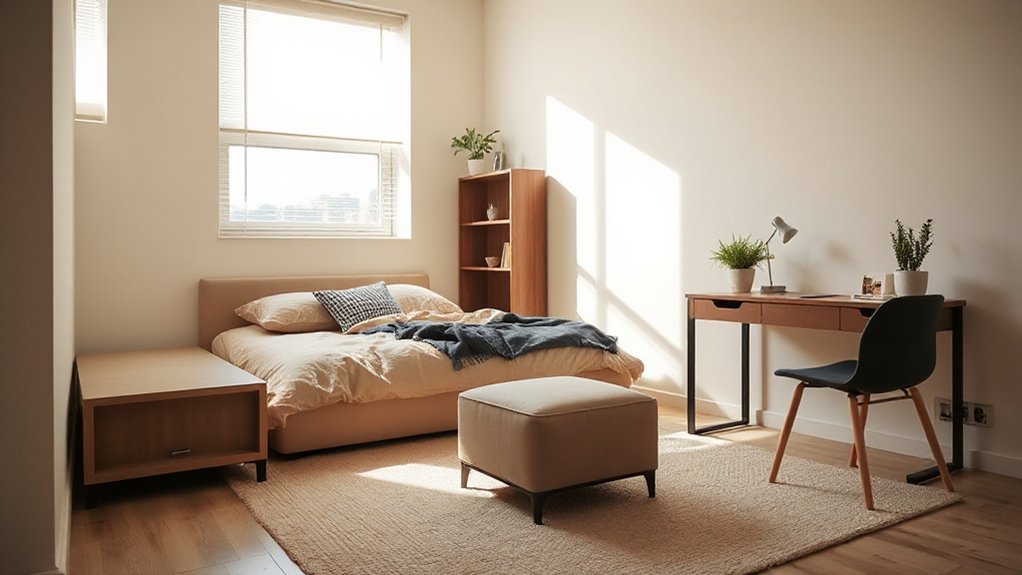
Efficient student spaces start with a clear plan: limit clutter to boost impact, then choose a few statement pieces that feel premium. You’ll create cohesion by selecting a small, complementary palette and sticking to it. Focus on quality over quantity, letting a few well-placed items carry the room.
Vintage décor and artistic accents add character without chaos, so mix a single vintage piece with modern essentials for contrast. Keep surfaces clear, storage tucked away, and avoid overlapping textures that shout “busy.” This approach makes every item count and keeps your space adaptable for guests.
The result is a polished, functional zone that looks intentional, not crowded.
- Choose 1 vintage piece to anchor the room
- Pair artistic accents with muted furniture
- Prioritize hidden storage and clean lines
Organization Systems That Work for Multiple Tenants
Use stackable, modular furniture so layouts adapt as tenants rotate or relocate. Color psychology guides quick, healthy mood shifts—cool tones quiet study corners, warm accents energize common areas—without sacrificing cohesion.
Choose durable, eco-friendly materials that resist wear and odors, and implement a centralized cleaning and supply station to streamline chores.
Create a digital inventory and a tenant-facing cheat sheet for deposits, moves, and replacements. By standardizing components and documenting decisions, you reduce surprises, improve accountability, and deliver a premium, low-friction living experience for every occupant.
Safety and Maintenance Tips for Communal Living
Safety and maintenance go hand in hand in a shared home, so establish clear protocols from day one and keep them visible—think laminated checklists near every entrance and a single, color-coded quick-reference guide. You’ll reduce mishaps and set expectations, with simple ownership for cleanliness, spills, and damaged items.
For communal spaces, schedule regular inspections of garden decor and outdoor furniture, and address wear before it becomes a hazard. Train everyone to report issues promptly and to follow a quick-response procedure for leaks, electricals, and tripping hazards.
Maintain an eco-friendly approach: clean with non-toxic solutions and rotate furniture placement to minimize stress on floors. Consistency and clear communication protect residents, preserve value, and elevate daily living.
- Post daily quick-reference guidelines
- Inspect garden decor and outdoor furniture weekly
- Report damage immediately to prevent escalation
Move-In and Move-Out Staging Tips for HMOs
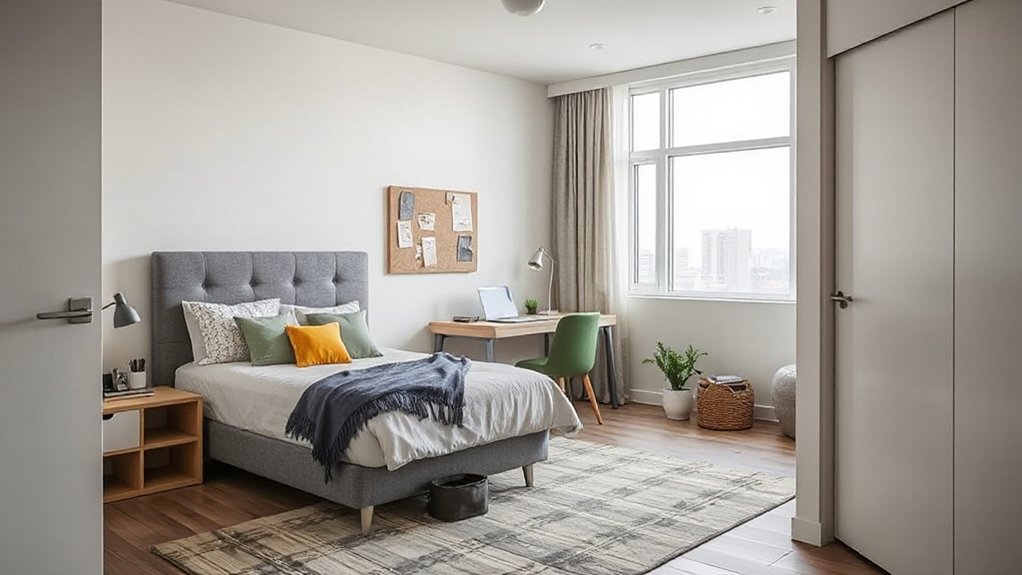
Move-in and move-out staging for HMOs should prioritize clarity and flow from the moment residents arrive or depart. You’ll set clear entry points, labeled zones, and quick-access storage to reduce congestion during busy move days.
Arrange common areas with obvious paths to kitchens and bathrooms, so guests move naturally without crossing private spaces. Use modular furniture to adapt layouts for different groups, and pre-stage essential items near doors to speed unloading.
For move-out, create a temporary hold area for personal decor and belongings, minimizing hallway clutter. Communicate a simple, time-stamped checklist to tenants, easing rent negotiation by documenting condition changes upfront.
Prioritize consistency in signage and scale decor thoughtfully, ensuring spaces feel premium yet practical for every lease cycle.
Final Checklist: Comfort, Function, and Cost Balance
When finalizing your HMOs, balance comfort, function, and cost to deliver spaces that feel premium without overspending. You’ll assess each room for durable basics, ergonomic layouts, and easy maintenance, then trim extras that don’t add daily value.
Prioritize bed quality, ample storage, and flexible study corners to support student wellness. Choose eco-friendly materials where possible to lower long-term costs and appeal to eco-conscious tenants.
Use modular furniture that can adapt to evolving needs, saving money on future reconfigurations. Bundle purchases to secure bulk discounts and waivers on delivery.
Track impact with a simple checklist: comfort, function, and cost, ensuring every choice strengthens overall livability while staying under budget.
- Durable essentials with ergonomic design
- Modular, adaptable layouts
- Eco-conscious sourcing and bundled savings
Frequently Asked Questions
How Can I Budget Furniture for a 4–6 Room HMO?
You can budget for a 4–6 room HMO by prioritising essentials, comparing prices, and using flexible payment options. Consider student financing and rental agreements to spread costs, and invest in durable, modular pieces for premium practicality.
Which Fabrics Resist Wear in Student Housing?
You should choose fabrics with high abrasion resistance and stain tolerance. Durability testing shows performance, while Fabric maintenance tips keep upholstery pristine; opt for tight weaves, performance blends, and darker tones to withstand daily student use.
What Multi-Use Pieces Save the Most Space?
Convertible sofas and fold away beds save the most space, letting you pivot between lounge and sleep areas with ease. You’ll enjoy practical, premium pieces that maximize room functionality while keeping your HMO’s style cohesive and effortless.
How to Safely Stage Move-In for Multiple Tenants?
To safely stage move-in for multiple tenants, coordinate timed arrivals, assign staggered access, and stage routes with clear signage, ensuring smart lighting and security systems stay powered and monitored throughout the process for smooth shifts.
Which Storage Solutions Minimize Noise and Clutter?
Silent shelving and Soundproof storage minimize noise and clutter, letting you glide through your space. You pick practical, premium solutions, choosing sturdy mounts and padded bins, reducing echoes as you organize—your room stays serene, organized, and effortlessly chic.
Conclusion
You’ll win with a smart, flexible setup that suits every tenant and keeps costs predictable. Think modular furniture, compact dining, and clever storage that grows with your HMO. Prioritize safety, ease of maintenance, and clear move-in steps so shifts feel seamless. Do a final balance of comfort and budget before you wrap. And yes, don’t forget to stage like you’re hosting a minimalist gala—think premium yet practical, where every item earns its keep, even the vintage coffee maker. Anachronism: rotary dial landline.