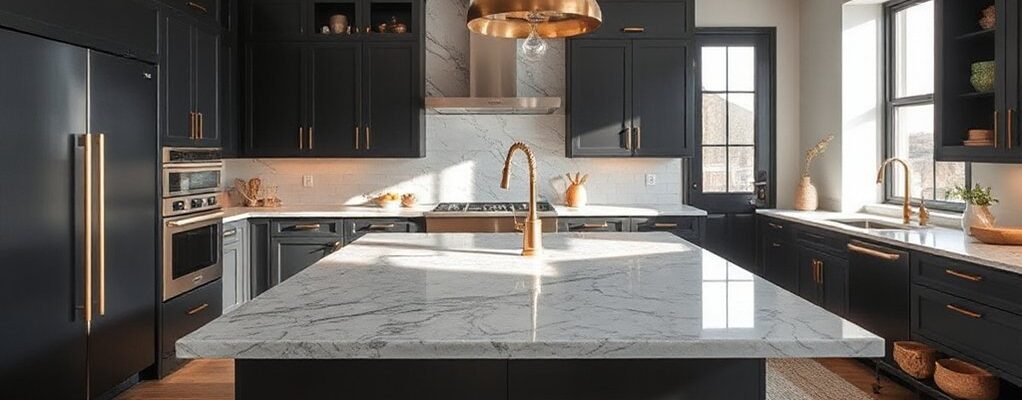
You run your fingers along a cool slab, noticing how the space gleams with quiet purpose. You can design a luxe kitchen on a budget by prioritizing layout, durable materials, and layered lighting that reads high-end without the price tag. You’ll balance timeless finishes with smart storage and statement details that feel intentional. But the path to that polished result isn’t guesswork—there’s a careful sequence to follow, and it starts with defining what truly moves the room.
How to Design a Luxe Kitchen on a Budget: First Steps
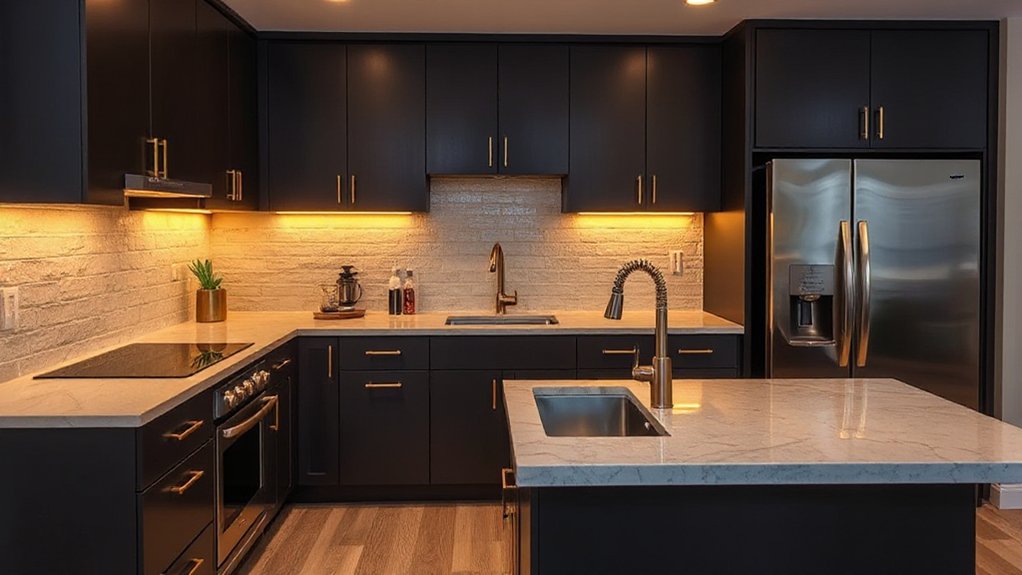
Start by clarifying your priorities and your budget ceiling, then map them to a cohesive style. You’ll begin by choosing a restrained color base and clean lines, so everything reads as luxe without shouting.
Prioritize durable, easy-to-clean surfaces and smart technology that actually saves time and energy, not just noise. Eco-friendly materials matter here—think responsibly sourced timber, recycled-metal hardware, and low-VOC finishes that still feel premium.
If you love minimalism, pick a single statement piece, like a refined island, and carry it through with uniform hardware and lighting.
Budget-smart decisions include updating key components first: sink, storage, and ventilation, then layer in texture with textiles and accents.
Keep options open for modular storage that scales as you refine your layout.
Set a Realistic Budget That Keeps Style Intact
Set a realistic budget that preserves your chosen style by starting with a precise ceiling and a clear map of essentials versus luxuries. You’ll lock in a cap you won’t exceed, then allocate funds by priority: core installations, then cabinetry, then finishes. Track every line item, revising as needs shift. Avoid impulse buys that inflate costs without adding value.
Anticipate budget pitfalls: overestimating discounts, underbudgeting for installation, and neglecting delivery timelines. Build in a contingency, but keep it lean so you don’t derail your goals.
Choose materials with longevity in mind, focusing on durability and timeless appeal rather than fleeting trends. Material longevity stabilizes costs over time, reducing replacement cycles and preserving your refined look.
Revisit the plan quarterly to confirm alignment with style and budget.
Define Your Luxe Look: Three Palettes That Work
Your Luxe Look starts with three palettes that balance the essentials with personality. Consider Luxe Palette Foundations, then tune the Neutral vs Bold Balance so textures and finishes—think matte, satin, and high-gloss—read as intentional accents.
Choose combinations that feel cohesive yet allow you to mix materials and subtle contrasts for depth.
Luxe Palette Foundations
A Luxe Palette Foundation begins with three proven looks you can mix, match, and adjust to suit space, light, and budget. You’ll build a cohesive base by pairing restrained neutrals with strategic accent shades, then layer texture and hardware to read as high-end without overspending.
Color psychology guides your mood shifts: soft linens feel calm in small kitchens, while charcoal and brass read luxe in larger spaces. Ergonomic design underpins every choice, so you’ll pick cabinetry, drawers, and lighting that streamline tasks and reduce reach.
The first palette favors warm undertones, natural stone, and matte finishes for timeless refinement.
The second leans cool with greige, steel, and glass accents for a crisp, modern edge.
The third combines earthy warmth with polished metals, delivering versatile scalability across layouts.
Neutral vs Bold Balance
Can you strike the right balance between neutral calm and bold impact? The answer starts with a clear framework: define your Luxe Look by pairing a restrained base with intentional accents.
Neutral tones create spaciousness and longevity, while bold elements inject personality without overwhelm. Use color psychology to guide mood—cool neutrals for calm, saturated accents to energize zones like the prep counter or dining nook.
Choose a dominant palette from soft whites, creams, or greys, then introduce a limited set of statement colors through cabinetry, hardware, or a striking backsplash.
Lighting fixtures matter deeply here; they sculpt contrast, color rendition, and perceived depth.
Keep textures refined, scale harmonious, and let purposeful contrast do the heavy lifting for a polished, budget-smart kitchen.
Texture and Finish Variants
Start with material textures that render warmth or cool precision—think honed stone, satin metals, or matte laminates—so your cabinets read refined, not fussy. Introduce subtle variations in sheen: a brushed finish on lowers, a glossy panel on a tall unit, and a soft-textured countertop edge.
Keep hardware minimalist to preserve polish. Use color blocks sparingly, allowing natural grain to speak. By pairing tactile surfaces with restrained color palettes, you achieve a luxe vibe that’s resilient to trends.
The result is a curated, functional kitchen that reads expensive without excess.
Prioritize Upgrades That Deliver the Most Impact
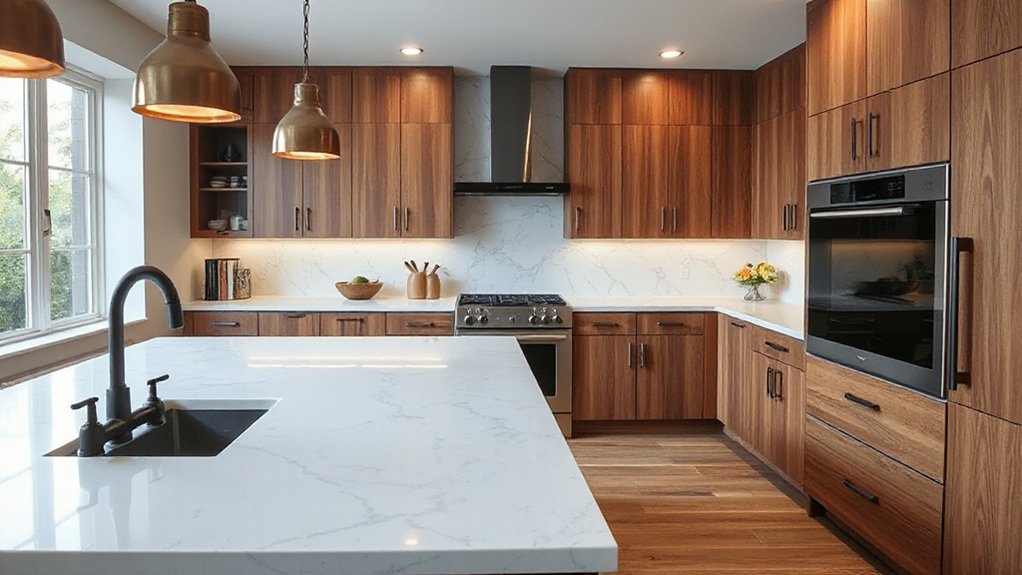
You’ll want to start by choosing high-impact upgrades that make a visible difference, like durable counters or efficient appliances.
Pair those with budget-smart material choices that elevate texture and finish without blowing the budget.
Focus on elements that boost daily use and perceived value, and you’ll set a strong, curated foundation for the rest of your kitchen.
Prioritize High-Impact Upgrades
If you’re limited by budget, focus on the upgrades that move the needle most: cabinetry layout, lighting quality, and durable surfaces. You’ll maximize impact by aligning layout with workflow, so traffic flows smoothly from sink to stove to fridge.
Choose lighting that layers task, ambient, and accent, avoiding harsh glare while showcasing materials. Durable surfaces should tolerate daily use and computer-printed menus alike, so prioritize scratch- and stain-resistant options with simple care.
When selecting finishes, lean into timeless criteria: clean lines, cohesive color, and easy-to-clean textures. Elevate the space with Eco friendly materials subtly integrated into profiles, backsplashes, and edges without shouting.
Consider Vintage accents as restrained touches—one statement piece, a metal hood, or a reclaimed wood island—to add character without clutter. Prioritize longevity, function, and refined restraint.
Budget-Smart Material Choices
When upgrading on a budget, prioritize materials that deliver lasting performance and easy maintenance over pure aesthetics. You’ll gain more by choosing surfaces and components that resist wear and still look refined after years of use. Prioritize durability, stain resistance, and cleanability in high-traffic zones like counters and backsplashes.
Eco-friendly materials can meet both practicality and ethics, delivering long life with lower environmental impact. Favor solid-core options, thermofoil with real texture, and recycled-content finishes that don’t scream budget.
Balance with refined details: matte textures, subtle veining, and precise edge profiles. Introduce Vintage accents through hardware, lighting, or cabinetry details to elevate the sense of luxury without substantial cost.
Finish with consistently tight tolerances, simple maintenance routines, and thoughtful color coordination for a polished, cohesive space.
Choose Durable, Cost-Effective Materials That Read Lux
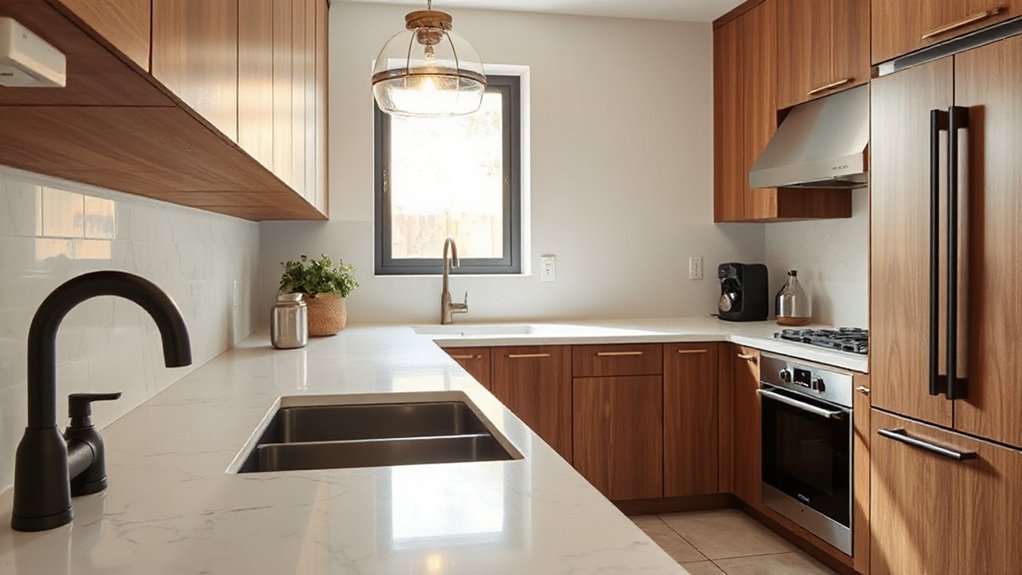
Choosing durable, cost-effective materials that read lux starts with smart pairings: high-quality laminates or veneered wood for cabinetry, paired with solid-surface or quartz countertops, and accented by real metal hardware. You’ll keep lines clean and finishes cohesive, so the room feels expansive without overspending.
Opt for eco-friendly finishes that resist wear and wipe clean easily, preserving polish over years of daily use. Balance texture with matte and subtle gloss, avoiding busy patterns that cheapen the look.
Introduce vintage accents through hardware, shadows, and lighting fixtures to deliver character without replacing entire modules. Select durable substrates and water-based finishes to minimize maintenance.
Prioritize concealed seams, uniform edge profiles, and precise alignment to ensure a refined, luxurious presence on a practical budget.
Cabinets: Makeovers vs New Doors-What Delivers More?
You’ll weigh cabinet makeovers against new doors, focusing on what delivers real value for your budget. We’ll compare the efficiency, cost, and impact of each option, so you can spot which path aligns with your luxe look.
This chat starts by outlining the key tradeoffs: the pros of makeovers, the value of new doors, and how the budget adds up.
Cabinet Makeovers Pros
Cabinet makeovers can deliver big results without the demolition—think refreshed color, updating hardware, and smarter storage, all without replacing full doors. You’ll gain a fresh aesthetic without the upheaval, plus budget-friendly timing.
The practicality is in the process: assess existing layout, prep surfaces, and choose durable finishes. Cabinet makeovers shine when you select cohesive, high-contrast hardware and a unified color palette that reads as luxe.
Paint techniques matter: even coats, proper priming, and edge sealing prevent chips and keep a smooth, lasting finish. You can achieve a modern, timeless look with minimal disruption by focusing on doors, panels, and interiors that influence perceived depth.
This approach preserves character while delivering a refined, curated result that fits a budget.
New Doors Value
Is replacing doors the better bet, or can a makeover still deliver the wow factor? You’re evaluating value, not vanity, so focus on impact per dollar.
Door upgrades can yield a refreshed silhouette quickly, with minimal disruption to your layout. New doors often deliver a more pronounced transformation than surface sprucing, especially when frames, panels, and hardware align with your chosen material selections.
Consider how door profiles and finish depth influence perceived space, light, and texture in the room. If you crave a high-end mood on a tight budget, combine strategic door upgrades with selective cosmetic tweaks—soft-close hinges, glare-minimizing glass, and durable finishes.
Decide based on how you use the space and the value each option adds to resale appeal and daily enjoyment.
Budget Impact Compare
When weighing budget impact, you’ll get more long-term value by choosing the option that drives the most perceived upgrade per dollar. In this Budget Impact Compare, you weigh two paths: cabinet makeovers and new doors.
Makeovers deliver cost efficiency with surface refresh, but door upgrades often shift perceived luxury more quickly because new faces alter color psychology and mood instantly. If your goal is a crisp, cohesive look, new doors can align hardware, countertops, and cabinetry into a single statement without rebuilding.
Yet consider furniture ergonomics: smoother, properly contoured doors improve ease of use and reduce daily friction. A pragmatic mix—refresh handles and refinish frames, then swap doors selectively—can balance budget and impact.
Prioritize changes that users feel first, then justify with durable, visible upgrades.
Hardware That Elevates: Faucets, Hinges, Knobs, and Pulls
High-end hardware can redefine a kitchen’s tone without a full remodel. You’ll notice how faucets, hinges, knobs, and pulls set the stage for cohesion, not cost. Opt for clean lines and matte finishes that pair with your cabinetry’s vibe, then mix in subtle contrast to create depth.
Choose hardware with smooth operation, easy maintenance, and predictable durability, so daily use stays effortless. Vintage accents add character without shouting, while eco-friendly materials keep your project responsible.
You’ll prioritize concealed fasteners, soft-close hinges, and ergonomic levers that feel premium in hand and sight. Plan placements to boost flow: align pulls with drawers, space handles for reach, and ensure faucet reach matches sink size.
A curated hardware palette elevates, yet remains practical, budget-aware, and timeless.
Budget-Friendly Countertops With Big-Impact Appeal
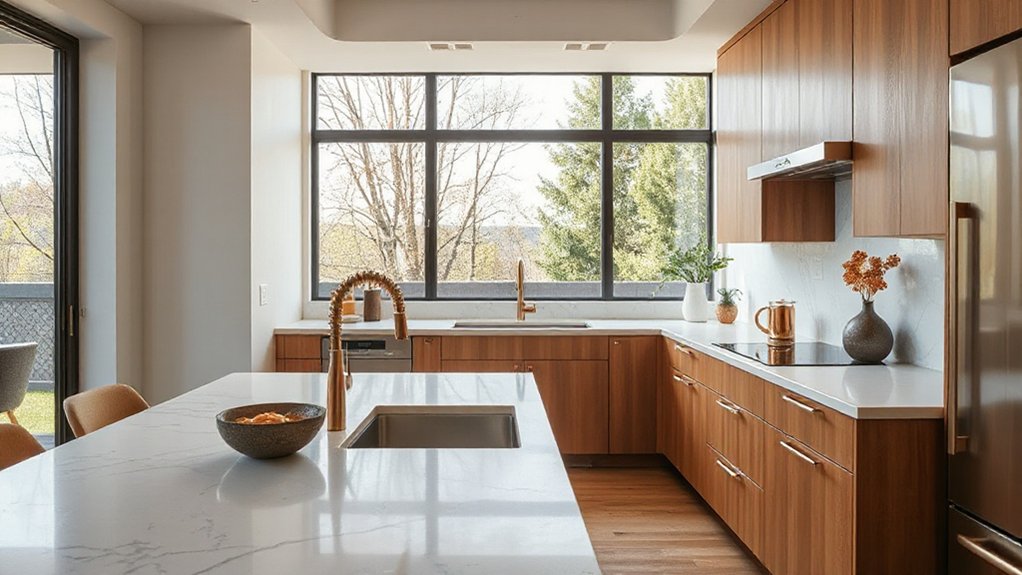
Next, you’ll see how to pair that refined hardware with countertops that punch above their price point. You want surfaces that feel luxe without the sticker shock, so choose materials that maximize impact per square inch.
Eco friendly materials can deliver high-end visuals at a lower cost, like quartz composites with dramatic veining or porcelain slabs that mimic marble’s depth. Look for low-maintenance options that resist stains and heat, reducing long-term upkeep.
Color and texture matter: go for bold neutrals or subtle contrast to elevate your scheme.
Smart technology matters, too—surfaces with integrated sensors or maintenance apps help monitor temperature, cleanliness, and wear.
Cap it off with clean edges and precise seams for a seamless, curated finish.
Lighting for Five-Star Ambiance Without the Price Tag
Lighting can transform a space without breaking the bank, so you’ll want to layer sources that add warmth, depth, and function. In a five-star kitchen, practical lighting earns style points by highlighting focal features, without shouting.
Use a mix of recessed fixtures for general glow, task lights under cabinets for prep clarity, and a statement pendant or two for personality. Dimmers let you tailor mood from bright for cooking to soft for cocktails.
Choose color temperatures that feel warm yet true to food colors—think 2700–3000K for hospitable ambience. Embrace lighting trends like layered LEDs and energy efficiency, while keeping cords minimal and switches accessible.
Consider Color psychology: cooler whites can feel clean; warmer tones encourage relaxation and sociability around the island.
Layout Mastery: Sink, Choreography, and Flow
Position your sink for peak efficiency, balancing reach, clearance, and sightlines to support everyday tasks.
Map the choreography of prep, cook, and cleanup so movements feel natural and uninterrupted.
Apply flow optimization tactics to minimize steps and create a cohesive, luxury-feel kitchen—without clutter.
Sink Positioning Principles
A well-positioned sink anchors your kitchen’s flow, guiding how you move from prep to cleanup with minimal steps and maximum ease. You’ll gain efficiency by placing the sink where prep surfaces, trash, and dishwasher align in a logical triangle, reducing reach and backtracking.
Prioritize sightlines to the main work zones, so you don’t lose time turning around. Consider vertical clearance for drying racks, and guarantee comfortable depth to prevent splashes while you rinse.
Kitchen ergonomics matter: avoid bottlenecks near ovens or tall cabinets, and keep ample counter space on both sides for soap, sponge, and drying tasks. Appliance placement around the sink should support daily routines without crowding.
Balance form with function, and your workflow will feel effortless.
Choreography Of Movement
When you map your kitchen’s layout, choreographing movement means designing a natural rhythm between sink, prep zones, and cleanup. You’ll align the primary worktriangle with practical distances, keeping the sink near the prep zone for wash-up efficiency.
Position drawers and pullouts within arm’s reach to minimize steps during meal prep and plating. Consider counter heights and tool placement to support fluid progression from chopping to washing to serving.
Embrace clear sightlines and minimal obstacles to sustain momentum, especially for multi-task days. The choreography of movement hinges on deliberate zoning, smart storage, and ergonomic touches that reduce strain.
This is Kitchen ergonomics in action: a measured, purposeful configuration that elevates luxury through disciplined, efficient design.
Flow Optimization Tactics
Flow optimization starts with a precise map of tasks and paths: you’ll align the sink, prep zone, and cleanup for a smooth, continuous rhythm that minimizes steps and backtracking. You design around a single workflow, so every move feels effortless.
Position garden landscaping cues as visual cues near the exterior access, keeping enter-and-exit routes clean and uncluttered. Gatekeeping zones matter: keep the fridge, pantry, and waste within a short, linear arc to the main work surface.
Choreography between sink and stove should be fluid, with appliances grouped to support lifting and plating—avoid bottlenecks. Choose compact, high-performance kitchen appliances and integrate smart storage that hides clutter.
This approach preserves a refined aesthetic while maximizing efficiency and ease of use.
Backsplash Ideas That Look Custom on a Budget
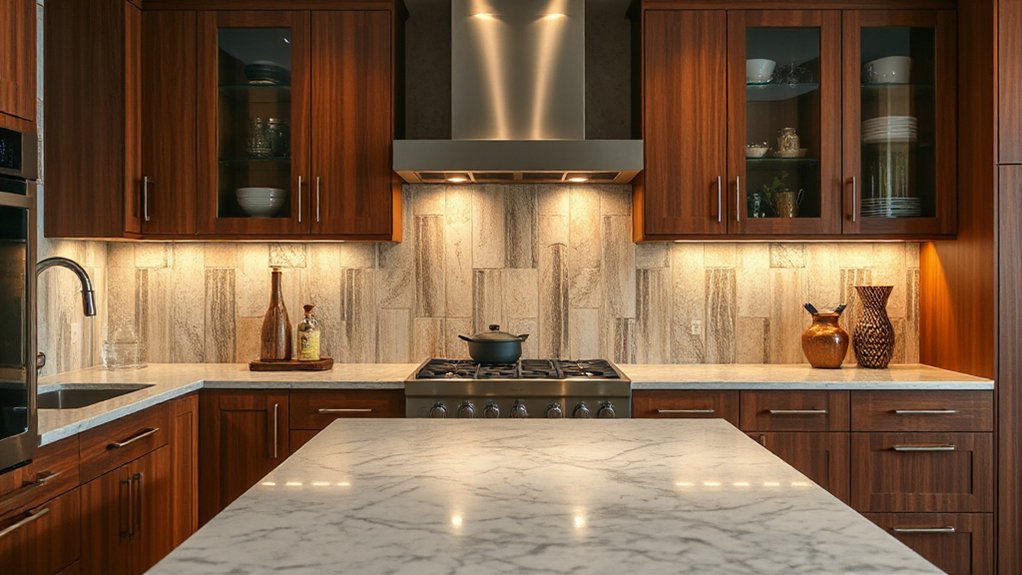
You don’t need to overspend to make a kitchen backsplash look custom; smart materials and creative layouts can mimic high-end finishes at a fraction of the cost. You’ll elevate impact with precision: choose panels or tiles that read as a single surface, then mix textures for depth.
Consider oversized pieces for a seamless look, or stacked horizontal runs to hint at luxury without bespoke grout work. Creative color schemes add personality without pricey prints, while neutral bases keep a handcrafted vibe intact.
Incorporate unique lighting fixtures near the backsplash to cast flattering reflections and emphasize texture. Use metal trims or carpenter-grade edges to fake custom edging, and press-fit designs to avoid messy grout.
Plan connections to adjacent surfaces to maintain a cohesive, curated kitchen aesthetic.
Smart Storage Solutions for a Boutique Feel
Smart storage transforms a compact kitchen into a boutique space without sacrificing function. You’ll maximize every square inch with pullout organizers, corner carousels, and slim, deep drawers that tuck in under-range gaps.
Use vertical dividers for lids, trays, and baking sheets to cut clutter and boost visibility. Install a magnetic strip for knives and metal tools, freeing counter space for prep.
Consider open-well organizers inside cabinets for quick access to daily essentials, paired with closed drawers for hidden needs. Add a hidden trash solution and a compact recycling station to keep surfaces pristine.
Choose modular units that adapt to your workflow, so your space remains calm and curated. Smart storage delivers a true Boutique feel without compromising efficiency.
Textures and Finishes: Realistic vs Faux Luxe
Textures and finishes define the impression of a luxurious kitchen, but they don’t have to cost a fortune. You’ll balance realism with value by pairing authentic cues with clever substitutes.
Marble textures read as premium, yet you can achieve the look with porcelain slabs or coordinated veining on high-contrast backsplashes. For surfaces, choose durable, low-maintenance materials that mimic stone or metal without the price tag.
Faux finishes—crafted textures that resemble marble or brushed metal—deliver luxe drama without heavy investment, especially on cabinetry and hardware.
Use contrast to sharpen the space: matte cabinetry with glossy countertops, or warm wood tones against cool stone visuals.
Sustainable Choices That Save Money Over Time
Sustainable choices not only trim upfront costs but also slash bills over time, making them a smart part of a luxurious kitchen plan. You’ll start with eco friendly materials that endure, resisting wear while reducing disposal and replacement cycles.
Pair that with energy efficient appliances, chosen for performance and low standby consumption. Focus on durable surfaces and proper insulation, so your space stays comfortable without cranking the heat or AC.
Thoughtful lighting, LED and smart controls, minimizes electricity use while maintaining ambience. Water-saving fixtures cut utility spikes without sacrificing convenience.
Select finishes that age gracefully and require minimal maintenance, keeping the kitchen looking curated year after year. When calculations favor longevity, the luxury feel remains intact, and monthly costs stay intentionally restrained.
Sourcing Authentic Details Without Overpaying
Authentic details elevate a luxury kitchen without inflating the tab, and you don’t need to chase rare finds to get there. You can curate a refined look by prioritizing character over cost, with smart sourcing and timing.
Seek vintage accents from reputable dealers, flea markets, or upcycled shops, ensuring solid condition and provenance. Pair them with contemporary silhouettes to keep the space balanced and timeless.
Focus on finish, texture, and scale—materials that read as premium without a premium sticker. Choose eco-friendly materials when possible, like FSC-certified wood, low-VOC paints, or recycled metal hardware, to boost sustainability and value.
Negotiate with vendors, request bulk or historical pricing, and bundle purchases to minimize freight. Your refined, budget-smart kitchen will feel tailored, not sacrificed.
Budget-Before-Build Checklist: Step by Step
Before you carve out the plan, lock down a realistic budget and a strict timeline. This budget-before-build checklist keeps you focused, not frazzled.
Start with a ceiling and a floor: list must-haves, nice-to-haves, and hard constraints, then map costs to each item.
Prioritize Eco friendly materials for durability and resale value, and designate voice-and-tone for your space with Vintage accents for character.
Compare quotes from at least three suppliers, and plan buffered contingencies for surprises.
Create a phased schedule to align procurement with install windows, avoiding rush-order fees.
Confirm contractor milestones, permits, and utility upgrades early.
Document decisions in a single, searchable file, including warranties, install dates, and return policies.
Review monthly, adjust as needed, and keep the plan lean and actionable.
Real-World Before/After Inspirations to Guide You
Real-world before-and-after stories show what’s possible when budget constraints meet smart design. You’ll see how small swaps create big impact: refacing cabinetry instead of full replacement, pairing glossy tile with matte wood, and adding hidden storage to keep counters clear.
Look for rooms that emphasize proportion—long runs, open shelving, and consistent hardware—to achieve a luxe feel without overspending. Vintage accents, like a brass faucet or a tailored rug, anchor the vibe without dominating the palette.
Eco-friendly paints help you achieve a fresh, durable finish while staying mindful of the environment. Prioritize lighting layers—ambient, task, and accent—to elevate texture and color.
Use these examples as a practical roadmap, not a dream, for your own kitchen project.
Frequently Asked Questions
How Can You Maximize Perceived Luxury on a Strict Budget?
You maximize perceived luxury by choosing luxury kitchen accessories sparingly, focusing on quality over quantity, and embracing minimalist design principles to keep lines clean, cohesive, and high-end, while letting strategic accents elevate every task into a refined, curated experience.
Which Cabinetry Upgrades Deliver the Best ROI?
Smart storage upgrades deliver the best ROI, you’ll maximize space and efficiency. Choose modular organizers and pull-out shelves, and guarantee Material durability from solid wood or coated composites to sustain value and minimize wear over time.
What Finish Puolations Read High-End Without Price Tag?
Shimmering whispers guide your eye: you seek finishes that read high-end without price tag. Embrace luxury appliance trends and high end countertop materials; you’ll curate a sleek, practical look that feels effortlessly refined and budget-smart.
How to Price Separate Upgrades to Stay Under Budget?
To price upgrades under budget, you compare costs early and allocate a fixed cap per item. You choose budget friendly appliances and cost effective materials, then you balance features with value, prioritize necessity, and track every decision.
What Lighting Layers Create Luxe Ambiance Affordably?
Ambient lighting sets mood, so layer it with task and accent options and choose dimmable options. You’ll build ambiance with statement fixtures while keeping pockets happy, balancing bold visuals with practical, curated details for a luxe, affordable kitchen.
Conclusion
You can design a luxe kitchen that feels premium without breaking the bank. Start with a clear budget, pick one of three timeless palettes, and invest where it counts—durable cabinets, solid hardware, and smart lighting. You’ll save with cost-effective materials that read high-end and sustainable choices that pay you back over time. Fun fact: kitchens with layered lighting are rated 20–30% more functional in daily tasks. Stay disciplined, curated, and confident—the result is both stylish and effortless.