
Like a steady drumbeat beneath a growing city, Luton’s market shows steady momentum you can quantify in supply constraints, demand strength, and transport-linked value. You’ll see modest price upticks tempered by affordable pockets and attractive yields in key regeneration zones. With upcoming redevelopments and transit upgrades shaping hot spots, you’ll want to weigh neighborhood fundamentals and rental dynamics before you commit—because the next move could hinge on timing, risk, and the long view.
What’s Driving Luton’s Market Momentum Right Now?

Luton’s market momentum is being propelled by a tight supply of homes paired with steady demand from first-time buyers and commuters.
You’ll see a consistent pattern in the Historical overview: listings remain limited relative to transactions, sustaining pricing pressure despite seasonal dips. Buyer activity concentrates in mid-priced segments, where affordability pairs with commuting advantages to London and key employment hubs.
Market comparison shows Luton outperforming regional peers on price stability and time-on-market, while still offering entry points for first-time buyers.
Inventory shortfall persists even as new-build approvals rise modestly, supporting a gradual price floor rather than a sharp drop.
How Have Property Prices Moved in Luton Recently?
Prices in Luton have shown modest appreciation over the latest six to twelve months, with momentum centered in mid-price segments favored by first-time buyers and commuters.
In this period, you’ll see a pattern of steadier monthly gains, punctuated by small pullbacks during seasonal lulls, then quick recoveries as demand returns.
Historical trends indicate a gradual tilt toward price resilience, even when broader regional markets wobble, supported by supply constraints and ongoing rental demand.
Market analysis suggests that underlying activity remains stable: transactions cluster around a specific price band, while inflows from semi-favorable mortgage terms intermittently bolster volume.
You should monitor occupancy and price-per-square-foot shifts, as micro-fluctuations often precede larger shifts.
Which Luton Neighborhoods Offer the Best Value and Growth Potential?
You’ll want to weigh Best Value Neighborhoods against Growth Potential Areas, using recent price trajectories, rental yields, and local development plans.
Look for market Trend Hotspots where price momentum and new infrastructure signal future appreciation.
This data-driven lens helps you spot where value is strongest and where growth is most likely to persist.
Best Value Neighborhoods
Several neighborhoods in Luton offer strong value and growth potential, driven by affordable entry prices, improving transport links, and ongoing regeneration. You’ll find measurable price-to-rent ratios that indicate solid yields in affordable zones, with weekly transport updates showing reduced commute times to central employment hubs.
Data highlight steady annual appreciation in core districts while newer developments diversify risk. Urban regeneration projects correlate with rising ancillary demand, shifting the local service mix, and delivering incremental value beyond initial entry costs.
Property taxation trends show stable, moderate increases tied to council priorities and infrastructure funding, not speculative spikes. Fundamentally, your best-value picks balance entry price, liquidity, and near-term regeneration momentum, supported by transparent market data and predictable holding costs.
Prioritize neighborhoods with documented transport improvements and active development pipelines.
Growth Potential Areas
Across Luton, growth-prone areas combine affordable entry points with rising transport efficiency and ongoing regeneration. You’ll notice value concentrates where recent investments intersect improving rail links, bus rapid transit options, and cycle corridors, lifting commuter appeal without pushing prices too high.
Data shows growth corridors cluster around newer housing developments adjacent to town centers and key employment hubs, delivering higher rental yields and steady capital appreciation over five-year horizons.
Urban regeneration efforts target mixed-use schemes that open underutilized parcels, creating dense, walkable neighborhoods with better services and placemaking.
Green spaces remain a differentiator, boosting livability scores and attracting families, professionals, and students.
In short, neighborhoods balancing affordability, connectivity, regeneration momentum, and parkland access present the strongest growth potential for disciplined buyers.
Market Trend Hotspots
Are the best-value hotspots in Luton defined by a blend of rising transport links, regeneration momentum, and affordable entry prices? You’ll see this in the data: transport upgrades cluster around key corridors, boosting walkability and commute times for residents.
Regeneration unfolds in mixed-use districts, elevating local amenities and lease comparables. Entry-price trajectories remain modest relative to peers, yet pockets of acceleration appear where new schools, parks, and business hubs converge.
Market signals show demand concentration near central stations and upcoming regeneration zones, suggesting resilience and upside. Look for patterns across property types; luxury apartments cluster near transit nodes, while heritage homes retain appeal where streetscapes are preserved and planning supports selective modernization.
What Rental Yields Can You Expect in Luton by Property Type?

In Luton, rental yields vary by property type, with flats and terraced homes typically delivering higher gross yields than detached houses due to demand from renters seeking affordability and location convenience.
Your yield analysis begins with a baseline: average gross yields for flats hover around mid-teens, while terraced properties often mirror this range, supported by steady renter turnover.
Detached houses tend to pull lower yields, yet offer stronger long‑term capital stability, appealing to families.
Consider leveraged scenarios and maintenance costs to refine the Rental potential for each segment.
Short-term lets may boost yields but bring regulatory and vacancy risk.
Use data on occupancy rates, average rents, and procurement costs to calibrate expectations.
Compare property-specific metrics to identify where your portfolio maximizes return.
Where Are the Current Luton Demand Hotspots?
Demand hotspots in Luton cluster around well-connected, price-sensitive neighborhoods with strong rental turnover and ongoing development. You’ll notice demand concentrates near major transport routes, with rail links to London and easier access to the M1 driving activity.
Data show higher rental velocity in affordable suburbs where entry costs remain competitive, supporting quicker tenant turnover and tighter vacancy windows. Population growth and student presence push occupancy rates above city averages in these pockets.
While price sensitivity keeps cap rates tight but sustainable, historic landmarks, while not core drivers, anchor certain subareas with consistent demand from long-term renters and first-time buyers seeking character at reasonable prices.
How Do New Developments Shape Price and Choice in Luton?
New developments influence price signals and available options by shifting supply, influencing buyer expectations, and creating value tiers across Luton.
You’ll see stronger price trajectories around upcoming projects and a broader mix of homes, from starter units to larger family homes.
As local values adjust, buyer choice responds to both the scale of schemes and their perceived impact on neighborhoods.
New Developments, New Values
New developments in Luton are reshaping price trajectories and buyer choices. You’ll notice value shifts linked to density, amenities, and transport access, with price per square foot climbing fastest in mixed-use schemes near stations.
Data show luxury apartments commanding premium premiums when paired with concierge services and design-led finishes, while studios and one-bed units in high-demand corridors attract competition and tighter caps on negotiation.
Historical estates converted to modern flats retain appeal for legacy buyers, though premiums reflect restoration quality and listed-structure constraints.
Nearby green space and walkable cores correlate with higher absorption rates and shorter listing times, supporting faster price realization in recent quarters.
Buyer Choice, Local Impact
In Luton, the mix of new developments is shaping both price trajectories and buyer options, with different product architectures drawing distinct segments. You’ll see price gradients tied to location, density, and tenure mix, not just overall market cycles.
Data signal that mid-market flats near planned transit and mixed-use blocks command premium rents and sale prices, while smaller schemes on edge sites attract first-time buyers with lower deposits.
Buyer choice narrows where amenities cluster; projects with integrated leisure, schools, and healthcare diversify demand beyond commuter savings alone.
Community engagement correlates with higher valuations, as residents perceive stronger social capital and governance.
Local amenities function as price anchors, elevating sales velocity and resale resilience, particularly when developers transparently align design standards with neighborhood priorities.
How Do Transport Links Affect Value in Luton?
Transport links strongly shape property values in Luton: homes near frequent, reliable rail and road connections command premium and recover faster after market shifts. You’ll see this in data on resale yields, where properties with swift access to key stations outperform slower neighbors.
Public transport accessibility correlates with higher occupancy rates and shorter vacancy periods, reinforcing price resilience during downturns.
Road infrastructure improvements, such as bypasses or improved arterial routes, typically elevate nearby values more than in comparable towns, reflecting reduced congestion and reliable journey times.
Conversely, limited transit options dampen desirability and compress margins for speculative buyers.
In short, transport-linked advantages translate into stronger capital growth, tighter spreads, and steadier cash flows, validating prudent investment focus on transit-adjacent Luton neighborhoods.
What First-Time Buyers Should Know About Luton Pricing

First-time buyers should note that pricing milestones in Luton align with local demand and loan availability, shaping when to act and how much to offer.
Key market factors to watch include wage growth, mortgage rates, and supply tightness, which together influence price momentum.
This snapshot sets up a data-led discussion on strategies for steering through these dynamics while staying within budget.
Pricing Milestones For First-Time Buyers
Steering through Luton’s pricing milestones starts with recognizing a typical buyer journey: prices often rise steadily in the short term, then plateau as mortgage limits tighten and supply adjusts.
For first-time buyers, track monthly index moves, not just annual averages, to spot early acceleration or deceleration signals. Your entry point tends to cluster around small–to–mid-range properties, where price per square foot reacts quickly to demand shifts and lending criteria.
In recent quarters, price growth has moderated amid tighter affordability tests, creating a window for negotiated concessions and favorable terms.
When comparing options, assess luxury apartments sparingly priced versus proven value in family-friendly districts near Historic landmarks, balancing lifestyle goals with long-term equity potential.
Stay disciplined on budget, due diligence, and contingency planning to navigate Luton’s evolving market trajectory.
Luton Market Factors To Watch
Luton’s pricing landscape hinges on multiple moving parts, from mortgage affordability to housing supply and local economic momentum. You’ll want to track demand drivers, such as first-time buyer activity, seasonal fluctuations, and lender criteria that influence eligibility.
Historical landmarks shape neighborhood desirability, often correlating with price resilience in mature areas, while newer developments can shift micro-markets quickly as buyers chase modern amenities.
Local amenities, including schools, transport links, and employment hubs, directly affect price trajectories and resale prospects.
Watch supply indicators like planning approvals, completion timelines, and vacancy rates, which forewarn price pressure or relief.
In practice, compare price per square foot across corridors near major stations and shopping districts.
Stay agile: small shifts in interest rates or incentives can substantially alter affordability and timing.
What Relocators Should Consider When Moving to Luton?
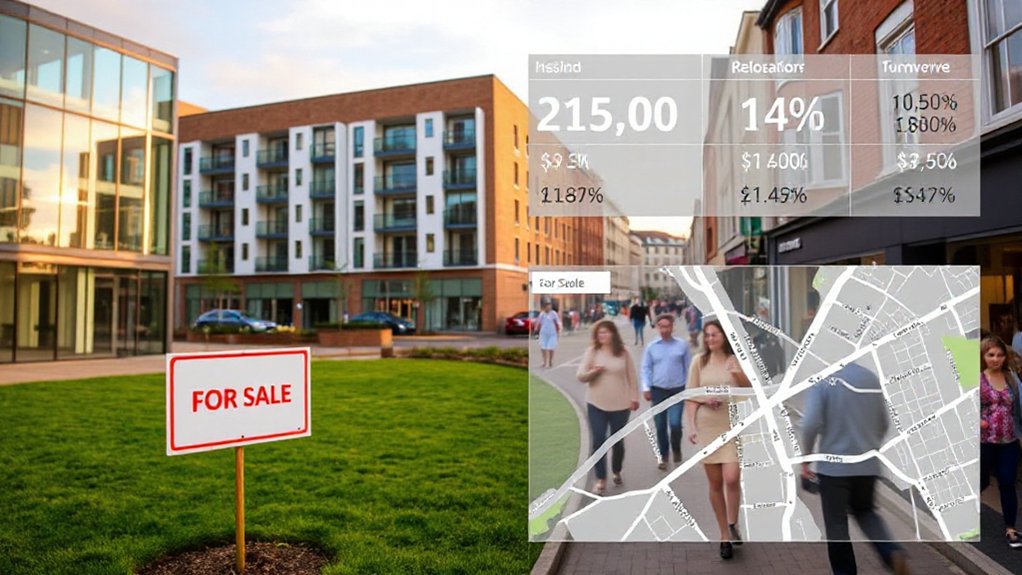
Relocating to Luton requires a clear view of practical factors that influence value and quality of life. You’ll weigh housing costs against commute times, school quality, and access to healthcare.
Use local data on average rent, purchase prices, and vacancy rates to benchmark relative affordability. Evaluate neighborhood amenity scores, including parks, grocery density, and retail options, since these influence daily convenience and long-term desirability.
Consider proximity to transport links—M1 access, rail services, and flight connections—because connectivity often drives resale value and rental yield.
Analyze crime statistics and demographic trends to anticipate stability and community fit. Compile a short-list of neighborhoods with consistent performance in value and livability metrics.
For relocation tips, prioritize scalable options, such as transit-oriented housing near key amenities. Neighborhood amenities anchor long-term satisfaction.
What Investors Should Evaluate Before Buying in Luton
Investors should start from the same data-driven lens used for relocators, but tighten the focus to metrics that drive yield and price resilience in Luton.
Begin with a Historical overview of past cycles, noting rent growth, occupancy stability, and vacancy swings during economic shocks.
Assess yield by comparing net income to purchase price, factoring management costs and tax implications.
Examine price resilience through cooldown periods, price per square foot, and reinvestment in property upgrades.
Use a Market comparison against nearby hubs to gauge demand drivers, such as transport links and student influx.
Evaluate risk-adjusted indicators like debt service coverage and loan-to-value limits.
Conclude with a concise checklist: tenant mix, regulatory environment, and exit timing to align with capital goals.
Buy-to-Let vs Long-Term Residential in Luton: How to Compare
When you compare buy-to-let and long-term residential in Luton, start with clear ROI expectations and cash-flow scenarios to see which stance fits your targets.
Consider risk factors like tenant demand shifts and interest-rate exposure alongside management costs and regulatory changes.
This framing lets you quantify returns, weigh ongoing expenses, and decide if you should self-manage or hire a property manager.
Return on Investment
To compare ROI between buy-to-let and long-term residential in Luton, start by aligning rental yields, price growth, and occupancy stability over a typical 5–10 year horizon.
You’ll want to quantify cash-on-cash return, net yield after expenses, and capex needs for each strategy.
Buy-to-let typically trades higher gross yields but faces tenancy volatility and periodic voids.
Long-term residential offers steadier occupancy and simpler management.
Incorporate Property taxes and ongoing maintenance costs to compute net cash flow, then model appreciation scenarios using local market data.
Consider impact of home staging on occupancy and rent, plus potential for tax benefits or incentives.
Compare total ROI after 5–10 years, highlighting sensitivity to vacancy rates, mortgage terms, and regulatory shifts.
Risk Comparison Factors
Relative risk factors differ meaningfully between buy-to-let and long-term residential in Luton, so you should quantify volatility in yields, vacancy frequency, and maintenance exposure to compare risk-adjusted returns.
In practice, compare annual yield swings (standard deviation), typical vacancy spells, and capex cadence across housing cycles. Buy-to-let often shows higher short-term volatility due to tenant turnover and policy shifts, whereas long-term residencies trend toward steadier cash flow with lower turnover risk.
Assess market volatility by analyzing month-to-month rent growth versus occupancy rates over at least five years.
Consider property taxation impacts, including depreciation and deductibility changes, that alter net returns.
Use scenario testing—baseline, recession, and growth—to gauge downside risk and resilience of each strategy’s after-tax, after-carry costs.
Management and Costs
Buy-to-let typically incurs higher management costs due to tenant turnover, agency fees, and regulatory compliance, but can be offset by rental yields.
Long-term residential often benefits from lower turnover and predictable cash flow, reducing management frequency and related fees.
In terms of cost control, scrutinize strata, service charges, insurance, and void periods; vacancy risk tends to skew total costs higher for rentals with weaker demand.
Analyze tax treatment, mortgage interest limitations, and depreciation where applicable.
Use data dashboards to track net income, reconcile yields, and benchmark against local market metrics for informed decision-making.
Which Financing Options Suit Luton Buyers Right Now

Luton buyers are steering through a tightening mortgage landscape, making fixed-rate and government-backed options particularly attractive as rates stabilize. You’ll notice lenders prioritizing predictability, with 2- to 5-year fixed terms dominating new applications and caps on early repayment to protect margins.
Government incentives, such as lower deposit schemes and affordable-rate products, are increasingly relevant for first-time buyers and those with limited cash flow. In practice, you’ll compare lender panels offering dual-rate or blended solutions to manage payment shocks during volatility.
For investors, government-backed schemes may improve affordability when stress-testing rental yields. Property auctions continue to attract capex-focused buyers seeking value, but auction-finance constraints demand diligence on legal packs, contingencies, and completion timelines.
When Is the Best Time to Buy in Luton?
The best time to buy in Luton hinges on a mix of market timing and personal readiness, but data suggests targeting periods when mortgage costs stabilize and listings reach a healthy balance of supply and demand.
Historically, buyers see better pricing windows when seasonal activity cools and financiers tighten credit criteria, creating slower negotiation dynamics.
You should compare your personal cash flow against short-term rate expectations and inventory metrics.
Market forecasts indicate modest price appreciation ahead, with more favorable terms during lower volatility periods.
Align your purchase with concrete milestones—pre-approval, confirmed move date, and sustainable cash reserves.
Practical Tips to Secure a Competitive Luton Deal
Managing a competitive Luton deal hinges on prep, precision, and pace; start by anchoring your offer in verifiable data like comparable sales, days-on-market, and current mortgage costs to avoid overpaying.
You’ll tighten every step with a clear bid strategy: set a ceiling, justify it with recent comps, and adjust for seasonality and loan terms.
Prioritize options that allow flexible timelines and supply supporting contingencies for price reductions.
Use home staging to maximize perceived value without inflating price, and present a professional, data-backed package to the seller.
Consider property taxes and ongoing costs in your total ownership picture to strengthen your position.
Maintain prompt communication, pre-approve funding, and document every decision to minimize negotiation friction.
Real-World Pricing Snapshots: A Month-by-Month View
Real-world pricing shifts unfold month by month, revealing how buyer demand, seasonal factors, and financing costs shape value. You’ll see a data-driven trail: January starts modest, February tightens, and March often nudges higher as inventories tighten.
Market fluctuations emerge from shifting buyer confidence and lender criteria, then ease when rates stabilize. April’s listings typically rise, pressuring prices downward unless demand remains robust.
By May and June, you may notice pricing strategies that blend quick-turn discounts with staged pricing to test market reaction. July through September dampen activity, yet premium segments hold value where scarcity persists.
October and November often reflect year-end reassessment, while December brings muted demand but clearer seller expectations. In sum, track momentum, not single datapoints, to anticipate shifts.
Negotiation and Due-Diligence Tricks for Luton Purchases
Negotiation and due-diligence in Luton hinge on disciplined prep and precise metrics: start with a data-driven benchmark of comparable sales, days-on-market, and price-per-square-foot to establish a realistic target.
You’ll compare recent closed prices, absorption rates, and listing-to-sale ratios to set a defensible range for offers.
In price negotiation, anchor near the lower end of the range while highlighting favorable factors like renovated kitchens or favorable tenancy terms, then justify adjustments with quantified comps.
For due diligence, verify title and planning records, inspect structural reports, and confirm utilities and EPC ratings, documenting any discrepancies.
Maintain a concise issue log, assign owners, and establish a short-remediation timeline.
This disciplined process reduces surprises and strengthens your negotiating position through objective evidence.
The Long-Term Outlook: What to Watch in Luton’s Market Next
As we look ahead, several data-driven signals point to how Luton’s market could evolve: population and jobs growth, supply constraints, and shifting mortgage rates will jointly shape demand, pricing, and days on market.
In the long term, you should monitor population projections, especially commuter spillovers, and the resilience of local employment hubs.
Supply constraints—permitted density, planning approvals, and construction timelines—will cap inventory recovery, supporting price stability or moderated gains.
Mortgage rate volatility could delay activity cycles, elevating the importance of timing for purchases and refinances.
Property taxation and market regulation will directly affect affordability and seller motivation, influencing bid-ask dynamics and holding costs.
Stay attuned to policy shifts, capex trends, and regional infrastructure plans that influence Luton’s growth trajectory.
Frequently Asked Questions
How Do Interest Rate Changes Impact Luton Property Affordability?
Interest rate changes reduce affordability by raising monthly payments and debt service, so you feel tighter budgets. Mortgage fluctuations influence your upfront costs, while Market stability moderates long-term planning, helping you assess risk and secure sustainable borrowing terms.
Which Submarkets in Luton Show Fastest Rental Growth?
Lightning-fast growth hits you in central Luton’s luxury apartments and in thriving suburban neighborhoods, you’ll see the sharpest rental rises there, with luxury apartments leading and suburban neighborhoods following, driven by demand, supply tightness, and investor activity.
What Government Schemes Benefit Luton Buyers Currently?
You can access government schemes like Help to Buy and Shared Ownership now, supporting affordable housing; keep in mind property taxes considerations as you evaluate Luton purchases. These programs affect affordability, eligibility criteria, and long-term cost projections for you.
How Does School Quality Influence Luton Property Demand?
School rankings strongly influence demand, because higher-rated schools boost buyer confidence and resale value. Educational impact shows buyers pay premium for proximity to top institutions, elevating price trajectories and shortening time on market in neighborhoods with superior schools.
What Are Insider Tips for Negotiating in Luton Auctions?
You’ll worry you’ll overpay, but here’s how: use an auction strategy built on comps and timing, and apply bidding techniques like setting thresholds, eyeing reserve moves, and staying calm. This data-driven approach minimizes risk and maximizes leverage.
Conclusion
In conclusion, Luton’s market remains resilient: limited supply, solid demand, and strong transport links keep price growth cautious but steady. Nightly data shows steady rents and attractive yields in affordable zones, with regeneration and connectivity boosting long-term value. Buyers should target mixed-use areas near transit hubs, time entry to align with project milestones, and verify due diligence to lock favorable deals. Like a compass, the data points true north toward sustainable appreciation, even amid modest price movement. Rigor wins.