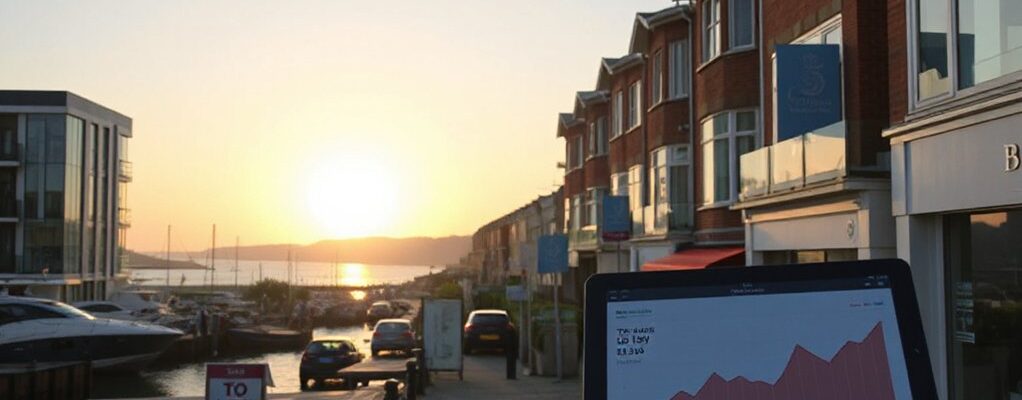
A coincidence in Bournemouth’s market this year is how steady demand meets only modest price growth, as you’ll see in rental yields near 5% and supply constraints that dampen rapid moves. You’ll want to map how coastal regeneration and commuter-friendly pockets shape value, while seasonal spikes and tighter lending temper activity. Stay with me as we unpack which neighborhoods, property types, and refurbishments offer the best risk-adjusted returns in 2026.
Bournemouth Property Market 2026: What Buyers Need to Know

Bournemouth’s property market in 2026 is shaped by steady demand, modest price growth, and a narrowing gap between buyers’ expectations and available stock. You’ll find that transaction velocity remains solid in mid-range segments, while premium properties see selective activity.
Data show year-over-year price gains hovering around low single digits, with seasonal peaks in spring and autumn. Mortgage availability has tightened modestly, influencing debt service ratios and affordability narratives for you as a buyer.
Property tax considerations are evolving, affecting holding costs and long-term planning. You should evaluate renovation permits early in property assessment, as permit pipelines and compliance timelines can impact timelines and budgeting.
Track master-plans for local infrastructure, because improved transport and amenities tend to correlate with renewed demand in nearby neighborhoods. Stay disciplined and rely on recent market metrics to guide decisions.
What Drives Bournemouth Housing Demand Today
You’ll see housing demand driven by a mix of income growth, affordability trends, and supply constraints shaping buyer behavior in Bournemouth.
Key Market Pulse indicators—sales velocity, price momentum, and mortgage activity—signal where demand is strongest and where it’s easing.
Understanding these drivers helps you read current momentum and anticipate near-term shifts in the Bournemouth market.
Demand Drivers Explained
Demand for Bournemouth housing is driven by a combination of affordability dynamics, location advantages, and increasingly targeted buyer profiles. You’ll see demand tighten as buyers respond to shifting price-to-rent comparisons, while rising incomes in shoulder-season sectors push disposable budgets higher.
Our data show steady activity from first-time buyers leveraging smaller deposits, plus relocations from urban hubs seeking lifestyle value. Price momentum threads through both infrastructure upgrades and university-linked demand, sustaining rental throughput even in slower market windows.
You’ll also note how property taxes and market regulations shape entry costs and financing feasibility, nudging demand toward well-regulated submarkets with clear tax implications.
Market Pulse Indicators
Market volatility informs risk appetites, with swings in pricing nudging expectations and timing. You’ll see buyer confidence tied to mortgage access, local wage trends, and infrastructure projects that alter perceived future value.
Distilled data show demand concentration around coastal towns, commuter links, and amenity clusters, while higher supply in peripheral areas tempers prices yet sustains activity.
Volume shifts, days-on-market, and premium versus entry-level splits reveal subtle strength or softness in segments.
Bournemouth Price Trends: Where Values Are Headed
You’ll see price trajectories tightening as we compare recent data with historic patterns, signaling whether gains are accelerating, stabilizing, or reversing.
Supply dynamics and demand signals are shaping momentum, with inventory shifts and buyer activity nudging values in predictable ranges.
Taken together, the trend-fit metrics suggest where Bournemouth prices are headed next and what that means for near-term investment decisions.
Price Trajectories Bournemouth
Prices in Bournemouth are continuing to trend upward, but the pace has moderated as buyers weigh affordability and available stock. Across the past four quarters, average prices rose around 4% year-on-year, while weekly sales dipped slightly, signaling cautious demand.
The trajectory shows a two-stage pattern: steady uplift in mid-market segments and flatter gains in prime units, suggesting selective capital deployment rather than broad, indiscriminate bidding. Property taxation changes and annual relief schedules appear to have tempered speculative activity, with more buyers adopting longer horizons and stricter affordability checks.
Market speculation has shifted toward rental yields stabilizing near 5%, supporting a marginal rebalancing to owner-occupier-led activity. If inventories remain constrained, we expect gradual price resilience, tempered by macroeconomic headwinds and policy signals.
Demand & Supply Signals
Demand and supply signals in Bournemouth continue to frame where values are headed. You’ll see tight supply in desirable coastal pockets, with new-builds and conversions filling gaps but not oversupplying the market.
Market stability rests on measured demand from local buyers and selective investor activity, keeping price moves gradual rather than dramatic. Inventory turnover remains steady, indicating balanced competition across mid-to-high price tiers.
While affordable segments show modest pressure from competing rentals and owner-occupier demand, you should track days-on-market, listing-to-sale ratios, and vendor willingness to negotiate. All of these factors point to a cautious but persistent upward bias in valuations.
Investor confidence appears resilient where rental yields align with evolving regulatory norms, reinforcing a trend toward steadier, sustainable growth rather than short-lived spikes.
The Bournemouth Rental Market Snapshot: Rents and Yields
What do the latest numbers reveal about Bournemouth’s rental market, and how have rents and yields shifted over the past year? Rents have been edging up across the coastal town, driven by steady demand from key commuter and student segments.
While yield profiles show selective strength in central and university-adjacent pockets. You’ll see rental trends pointing to gradual rent acceleration despite seasonal swings, with modest variance between coastal fringe and core campuses.
Yield analysis reveals pockets where gross yields hold around mid-single digits, yet prime zones near institutions outperform. This is supported by favorable occupancy rates and limited new supply.
Buyer Sentiment in Bournemouth: Activity and Constraints
Buyer sentiment in Bournemouth currently centers on steady housing-market activity tempered by price sensitivity and financing constraints. You observe cautious engagement in mid-market segments, with buyers prioritizing value and near-term affordability.
Data indicate consistent transaction volumes week over week, yet average sale prices show marginal pullbacks when mortgage rates pause or lenders tighten underwriting. Buyer confidence fluctuates with headlines on market volatility, influencing retry attempts on stalled deals or selective bidding.
In practical terms, you see more offers that sit briefly before renegotiation, not immediate rushes to close. Lenders’ serviceability criteria remain the main constraint, with deposit requirements and rate locks shaping decision timelines.
New Developments Shaping Bournemouth’s Coastline

As Bournemouth’s coastline evolves, new developments are reshaping the economic and physical landscape, with investment-driven projects and infrastructure upgrades driving observable shifts in land use, housing supply, and visitor dynamics. You’ll see data-driven patterns: coastal zoning reallocates parcels, mixed-use schemes increase density near shorefronts, and high-quality amenities attract short-term and long-term demand.
Projected completion timelines align with seasonal visitor peaks, smoothing price trajectories and occupancy rates. Early indicators show stronger demand for waterfront and clifftop residences, tempered by strict coastal conservation requirements.
Public-private partnerships emphasize sustainable construction practices, storm-resilience features, and shoreline restoration. Coastal conservation remains a governing constraint on scale, while Marine tourism grows as operators adapt to permit-led access and ecosystem-friendly experiences, shaping occupancy, yields, and risk profiles across Bournemouth’s coastal markets.
Infrastructure and Transport: Bournemouth’s Value Implications
You’ll see how Transport Connectivity boosts footfall and commuter demand, with data showing gradual, consistent ridership growth across key routes.
Infrastructure Investment Ripples are widening access to fringe districts and accelerating upweight in property values where connectivity improves, according to recent trend lines.
This sets the stage for a tighter link between transit upgrades and price momentum, guiding where buyers and developers place bets next.
Transport Connectivity Impact
Transport connectivity is a key lever shaping Bournemouth’s value trajectory, with recent investments in rail and road links tightening travel times to regional hubs and boosting attractiveness for residents and investors alike.
You’ll see data-driven signals: improved rail punctuality, shorter average door-to-door commutes, and higher occupancy rates near transit corridors.
Public transport usage has risen as service frequency increases, reinforcing demand for well-located homes and mixed-use schemes.
Road infrastructure enhancements, including smarter signaling and bypass improvements, correlate with congestion relief during peak periods and more predictable pricing for commuters and firms.
This trend supports higher asset resilience in core neighborhoods and premium values near stations.
To put it concisely, connectivity advances translate into measurable value uplift, guiding buyer and developer expectations.
Infrastructure Investment Ripples
Infrastructure investments reverberate through Bournemouth’s value trajectory by tightening travel times, enhancing reliability, and boosting demand for well-connected assets. You can see the ripple effects in wholesale property premiums around upgraded corridors and transit hubs, with rental yields stabilizing as congestion declines.
Data indicate faster commutes correlate with higher occupancy rates in mixed-use schemes near stations, while office and residential assets share upside from greater footfall and shorter occupancy cycles.
Trend lines show development for urban greenery and cultural venues elevates amenity value, attracting both residents and visitors and reinforcing price resilience during cycles.
Investor sentiment remains sensitive to planning milestones, with incremental gains concentrated where transport efficiency pairs with quality public spaces.
Best Neighborhoods for First-Time Buyers in Bournemouth
In Bournemouth, first-time buyers should focus on neighborhoods that balance affordable entry prices with solid growth potential and convenient access to amenities.
Across recent profiles, you’ll see lower entry costs cluster near transit hubs and high street services, while price growth tracks school quality, redevelopment cycles, and council incentives. Look for areas with recent renovation momentum and proactive planning; these tend to preserve affordability while offering future upside.
Data indicates that affordable neighborhoods near transport corridors sustain steadier volume even in slower markets.
First time buyer tips include validating up-front costs, comparing council tax bands, and evaluating nearby rental demand to gauge short-term flexibility.
Prioritize communities with clear infrastructure plans, walkable centers, and diversified amenity access to maximize long-term stability.
Investment Hotspots in Bournemouth: Opportunities by Area
Area-led investment is shifting Bournemouth’s trajectory, with you seeing concentrated gains where data shows higher rental yields and turnover in select wards.
Coastal Growth Corridors are fueling demand as accessibility and amenity access rise, making those routes stand out in quarterly trends.
Unseen Market Variants remind you to watch for niche pockets—where micro-trends can outpace broader averages and reveal new opportunities.
Area-Led Investment Pulse
Across Bournemouth, investment hotspots map to distinct momentum signals: coastal regeneration, transport connectivity, and urban core housing demand converge to create area-specific upside. You’ll see area-led pulses driven by submarket traits, showing how demand, supply, and policy shape performance differently by district.
In coastal zones, regeneration funds boost mixed-use schemes, while investor appetite leans on visibility and shorter cycles.
In central and inner-city pockets, hedged by high-density housing targets, you’ll observe faster turnover and stronger rent growth, aided by improved transport access.
You should monitor property taxes and market regulations, as shifts here can alter yields and hold periods.
Data points converge: vacancy trends, planning approvals, and pricing momentum reveal nuanced, area-specific alpha rather than a uniform Bournemouth story.
Coastal Growth Corridors
You’ll see concentration along practical transit axes, with projected pedestrian-friendly precincts and updated flood-resilient infrastructure driving occupancy growth in mixed-use assets.
Data indicate rising cap rates in coastal nodes, tempered by development-led value uplift from strategic land assembly and shoreline upgrades.
Tourism influence remains strong, yet investor focus increasingly prioritizes resilience and biodiversity, aligning with Coastal ecosystems preservation alongside densification.
Year-over-year occupancy trends show steady demand from leisure and short-stay sectors, supported by improved accessibility to parks and beaches.
Conservative forecasts favor phased deployment, performance monitoring, and adaptive re-use to maximize returns within these corridors.
Unseen Market Variants
In Bournemouth, these variants often ride micro-trends—school catchments, transport access, and amenity clustering—rather than macro-market signals alone. Track area-level absorption rates, price dispersion, and time-on-market to validate long-term, data-driven decisions.
Seasonal Factors Affecting Bournemouth Property
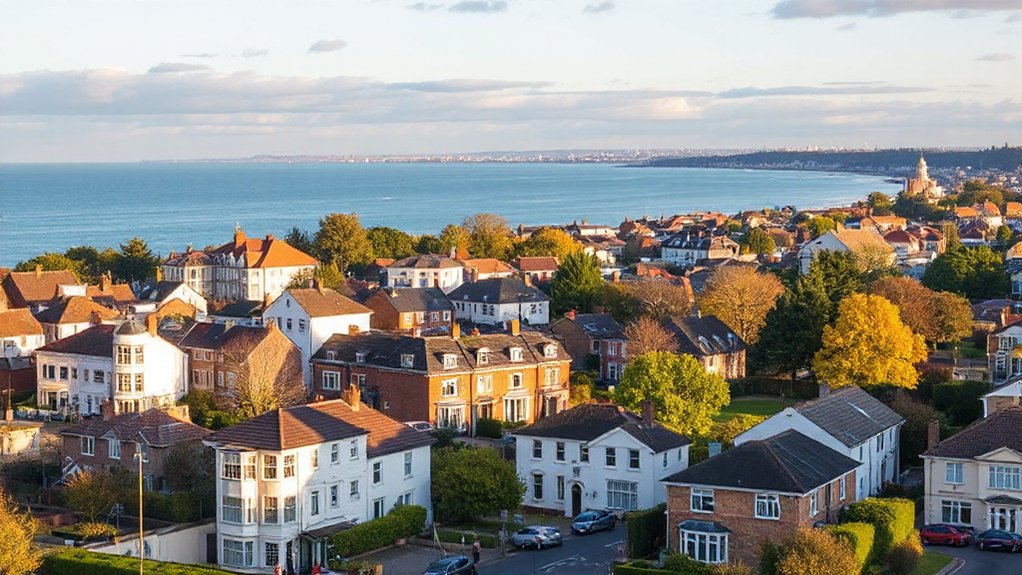
Seasonal patterns shape Bournemouth’s property market by driving both demand and supply cycles through the year. You’ll notice higher activity in late spring and early summer as families align moves with school terms, while autumn slows listings and viewings.
Data show seasonal fluctuations in buyer turnout, with weekend open houses and weekday showings peaking when daylight extends access. Inventory often expands after holidays, yet price momentum remains sensitive to local seasonal demand shifts and tourism trends.
Weather influence plays a measurable role: milder winters sustain market dialogue, while wetter months dampen foot traffic and staging efforts. Seasonal pricing signals tend to tighten around peak tourist seasons, then loosen post-season, creating predictable cadence for forecasting, rental turnover, and agent scheduling.
Financing Options and the Mortgage Climate in Dorset
Financing options in Dorset have shifted measurably in recent months, with lenders tightening affordability criteria and adjusting rate thresholds as inflation trends influence the Bank of England’s policy path. You’ll notice higher stress tests and more prominent income verification, narrowing some borrower pockets while expanding others via tailored products.
Data show a widening gap between fixed and variable rate offerings, with pricing sensitivity to the BoE’s signal on rates. In practice, lenders are emphasizing term-length, deposit readiness, and regional risk assessments, shaping regional mortgage options accordingly.
Alternative financing structures, such as shared ownership and government-backed schemes, gain visibility but remain conditional on policy support and lender appetite. Overall, borrower suitability is tightening, yet diversified options persist for Dorset buyers with robust documents and clear affordability buffers.
Flats vs Houses vs Conversions in Bournemouth
In Bournemouth, the mix of flats, houses, and conversions is shifting as buyers recalibrate demand signals and yield prospects. Flats are gaining traction for first-time buyers and buy-to-let entrants due to lower entry costs and shorter commitment, while houses offer longer-term capital appeal in established neighborhoods.
Data show flats clustering around affordable entry points and higher rental yields in near-term cycles, whereas houses exhibit steadier appreciation aligned with school catchments and infrastructural upgrades.
Conversions bridge the gap, offering diversification but tighter planning controls and variable occupier profiles.
Property tax dynamics influence post-purchase costs and portfolio strategy, while property management efficiency correlates with occupancy stability and maintenance cycles.
Risks to Watch in Bournemouth Property in 2026
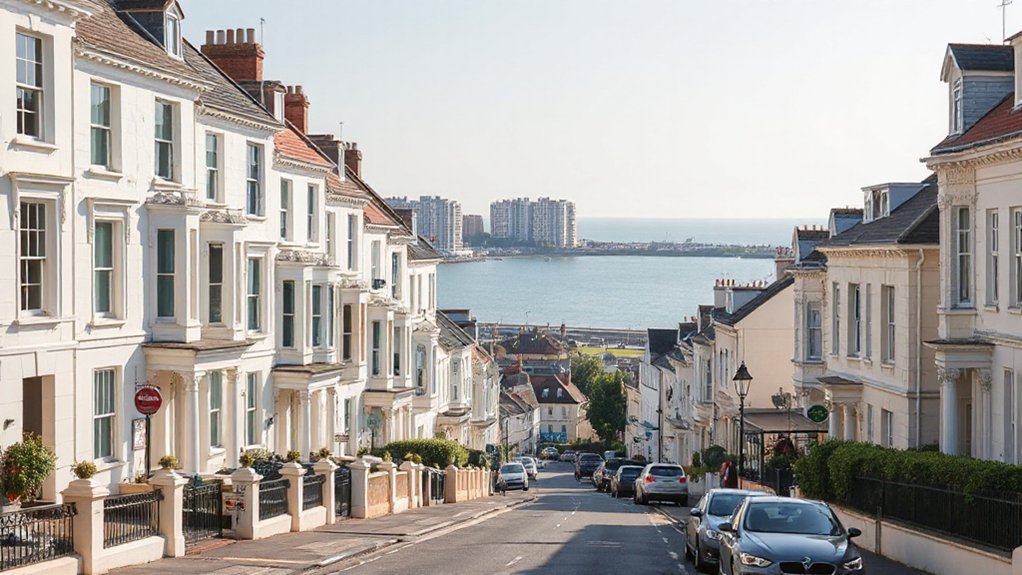
Housing supply constraints, from planning delays to permit backlogs, may intensify price volatility even as demand cools. Local factors—visitor economy swings, seasonal spillovers, and wage trends—will influence vacancy rates and rental yields.
Property tax changes, including phased reforms or relief adjustments, could alter after-tax returns for investors and owners. Legal considerations, such as evolving landlord-tenant regulations and compliance costs, may erode net income if not budgeted.
Stay attuned to quarterly market data, lender guidance, and policy signals to anticipate magnitude and duration of these risks.
How to Assess Price per Square Foot Across Bournemouth Areas
To compare price per square foot across Bournemouth neighborhoods, start with a standardized metric: total sale price divided by interior square footage. Then adjust for features like parking, storage, and outdoor space that can skew raw area values.
You’ll normalize data by stripping out inconsistencies such as non-standard room counts, basement usage, and age-related deductions. Track trend lines over time to spot momentum shifts in submarkets, then layer in amenity adjustments for proximity to beaches, schools, and transit.
Use price comparison as a baseline, but weigh renovation potential separately when evaluating value-add opportunities. Compile a consistent dataset across wards, then compare year-over-year changes.
This approach reduces noise and clarifies where price pressure and disinflation intersect with market demand.
Renovation and Value-Add Strategies for Bournemouth Homes
Renovation and value-add strategies in Bournemouth focus on transforming baseline asset performance where the largest gains come from targeted, data-informed upgrades. You assess return on investment by aligning improvements with market demand, vacancy rates, and occupancy duration.
Prioritize low-friction upgrades with visible impact, like fresh finishes and plumbing updates, then quantify effects on rent and resale trajectory. Track energy efficiency improvements, since utility costs influence tenant appetite and long-term ownership costs.
Integrate home staging to showcase space utilization and scale, using neutral palettes and staging psychology to lift perceived value without overcapitalizing. Use market heatmaps to time renovations around seasonal demand shifts, ensuring cashflow stays resilient through cycles.
Document post-renovation performance, compare against baseline benchmarks, and refine tactics quarterly to maintain competitive advantage.
Frequently Asked Questions
How Do Seasonal Trends Affect Bournemouth Property Values?
Seasonal fluctuations influence Bournemouth property values, typically peaking in spring and dipping in winter, so you’ll want precise market timing. You’ll notice year‑over‑year patterns, enabling you to align offers and pricing with optimized, data-driven trends.
What Tax Implications Affect Bournemouth Purchases in 2026?
In 2026, you’ll face updated tax regulations on property purchases, including higher stamp duty and rental income changes, so you should adjust investment strategies accordingly; monitor cap gains rules and potential exemptions to optimize after-tax returns.
Which Bournemouth Neighborhoods Offer Best Resale Potential?
You’ll want to target districts with high demand and timing, as Luxury apartments and Coastal developments show strongest resale potential, especially where infrastructure and amenities improve value trajectories across recent data and trend analyses.
Do Short-Term Rent Strategies Work in Bournemouth?
Short-term rent strategies can work in Bournemouth if you optimize occupancy and pricing; vacation rentals outperform long stays in peak seasons. Use rental management tools to analyze demand, adjust rates, and maximize revenue while controlling costs.
How Does School Proximity Influence Bournemouth Home Values?
You’ll notice school proximity nudges home values, even as you shrug at the irony: school quality and educational attainment consistently correlate with price premiums, suggesting tighter demand near top schools, with gradual, data-driven gains you can track over time.
Conclusion
You’ll see Bournemouth’s 4% annual growth supported by tight supply, solid yields near 5%, and steady demand from first-time buyers, investors, and relocators. Data shows resilient prices, modest seasonal swings, and a pivot to refurbishment in prime coastal areas. As mortgage criteria tighten, you’ll want to favor value-add opportunities and neighborhoods with regeneration momentum. In short, steady, data-driven gains are within reach—this market isn’t just growing; it’s turbocharged—that’s how confident you can be.