
Basildon’s market is booming—almost too healthy to ignore. You’ll find steady demand, modest price growth, and strong rental yields supported by affordable housing and improving infrastructure. Prices have cooled just enough to negotiate, while transport links and new housing keep supply tight in core areas. If you’re considering investment or a first home, you’ll want to understand which neighborhoods push value, how financing is shaping decisions, and what’s next for supply and lease stability. Stay with me.
Basildon Market Today: What Buyers, Sellers, and Investors Need to Know
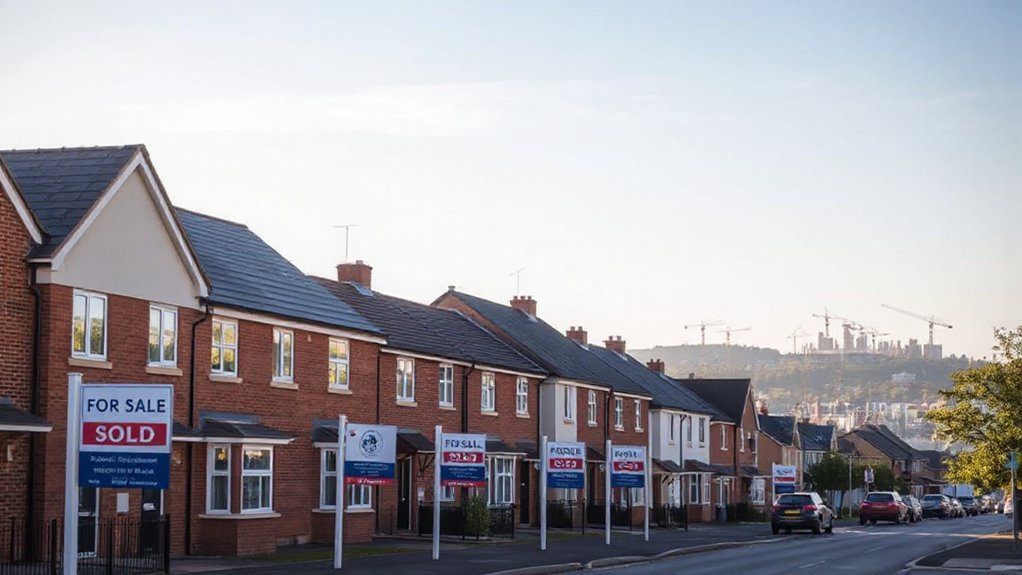
Basildon’s market is marked by steady demand amid modest price growth, with buyers typically prioritizing transport links, local amenities, and value for money. You’ll notice transaction volumes remain steady quarter to quarter, supported by accessible mortgage options and a resilient rental sector.
For buyers, evaluating Property tax implications and a property’s long-term running costs is essential, especially near commuting corridors.
Sellers should align pricing with recent comparable sales and factor in swift negotiation windows driven by market visibility.
Investors benefit from consistency in lease yields, particularly in areas with redevelopment potential and new-build activity.
Construction regulations influence site feasibility timelines and compliance costs, shaping project viability and risk.
Stay informed on planning cycles and regulatory updates to optimize timing and return.
Basildon Price Trends: Are Homes Getting More Affordable?
You can see Basildon’s price shifts and how they’re shaping affordability for buyers and renters alike.
Affordability indicators show how mortgage costs, income trends, and credit conditions affect what you can purchase today.
We’ll map these moves against mortgage impact trends to frame where prices may head next.
Basildon Price Shifts
Prices in Basildon have cooled modestly over the past year, signaling a shift toward greater affordability for buyers. You’ll notice price shifts aligned with broader regional trends, not isolated spikes.
On a data-driven read, Basildon’s median sale price moved sideways for several quarters before a gentle correction emerged, suggesting buyers gained negotiating leverage without eroding value.
Historical price fluctuations show recurring cycles tied to seasonality, lending cycles, and local demand pockets, rather than a one-way slide.
Demographic shifts—young families relocating from denser boroughs and renting-to-own entrants—have tempered the speed of appreciation, while inward investment supported steady volume.
In practice, you should watch month-to-month variance and closing-to-listing gaps, which remain meaningful indicators of ongoing pricing normalization and buyer sentiment.
Affordability Indicators Now
Is affordability improving in Basildon, or are lingering gaps keeping buyers cautious? In Basildon, you’ll see housing affordability metrics edging toward balance, but uneven pockets persist. Price-to-income ratios have softened modestly over the latest quarter, supporting steadier price momentum without a rapid uplift.
Mortgage rates and deposits remain a constraint for first-time buyers, yet wage growth in local sectors provides some relief for occasional buyers. Market affordability indicators show improvement in outer boroughs and commuter corridors, while central Basildon retains tighter affordability due to ongoing demand.
You should track both price trajectories and income tracks simultaneously to gauge true affordability shifts. Overall, housing affordability is improving gradually, but the gap between demand and supply keeps some buyers on the sidelines.
Mortgage Impact Trends
Mortgage costs are the key driver shaping Basildon’s affordability dynamics now. You’ll notice how monthly payments respond to shifting rates, even when headline prices hold steady.
The latest data show interest rate fluctuations compressing purchase power for new buyers while enhancing refinancing incentives for existing borrowers. Mortgage refinancing activity upticks when fixed rates dip, extending debt service relief and improving purchase budgets in short windows.
Across Basildon’s neighborhoods, affordability tests reveal a tighter debt-to-income threshold for higher-LTV loans, nudging demand toward Shadow buyers and first-time buyers with larger deposits.
Lenders increasingly emphasize rate-locks and borrower pre-qualification, tempering impulsive purchases.
In short, careful timing of rate movements and refinancing options shapes whether homes remain within reach or drift beyond affordability benchmarks.
What Renters Are Paying in Basildon: Yields and Demand
You’ll see Basildon rents holding steady as yields tighten where demand stays strongest, signaling a balanced outlook for landlords and investors.
Market data shows rent levels rising modestly in multi-lets and newer stock, with occupancy pressures easing in older stock as tenant choices broaden.
In short, current demand patterns point to steady cash flows with selective premium opportunities across high-demand areas.
Rent Levels And Yields
Rents in Basildon remain competitive relative to nearby markets, with steady monthly payments driven by solid demand from working professionals and families. You’ll see rent levels stay anchored by local supply dynamics, with modest year-over-year growth restrained by affordability ceilings.
In the current snapshot, average rents hover in line with regional peers, while premium segments attract higher yields due to newer stock and upgraded interiors. Tenant turnover remains moderate, supporting stable cash flow for landlords.
Rent affordability is a key constraint shaping tenant mix and vacancy duration, prompting selective pricing and targeted concessions. Yield optimization hinges on balancing occupancy and cost efficiency—optimizing repairs, energy efficiency, and management overhead.
Market demand shows resilience, but careful pricing and asset quality will drive superior returns in Basildon.
Demand In Basildon Renters
Multi-bedroom homes attract families and shared households, boosting occupancy and stabilizing rents despite cyclical twists.
Student housing remains a notable sub-market, shaping demand peaks during term starts while driving constrained supply in key clusters.
In response to rental regulations, you’ll see tighter compliance costs and longer procurement timelines, influencing leasing strategies and unit turnover.
Overall, yields hover around modest, predictable ranges, supported by steady population growth and new-build activity targeting mid-market segments.
You benefit from data-driven positioning: emphasize value, space, and compliant operations to attract durable demand.
Market Trends And Insights
In Basildon, rents are hovering around mid-market levels, with yields supported by steady demand from value-seeking renters and steady population growth.
You’ll find that current rents are closely aligned with historical property values, showing gradual appreciation without spikes.
Yields remain competitive, supported by a mix of affordable two- and three-bedroom stock and renewed interest from first-time buyers converting to rental demand.
Demand is strongest in well-connected, affordable pockets near key transport links, while newer builds on the periphery attract steady occupancy.
Local government policies continue to influence turnover and investment viability, shaping planning reversals and tenant protections.
Basildon Neighborhoods to Watch for Growth and Value

Basildon’s up-and-coming pockets show clear value signals, with affordability metrics lagging behind neighboring markets and planned infrastructure boosting short- and medium-term appeal.
You’ll notice growth hotspots concentrated around commuter corridors, new housing initiatives, and mixed-use developments that enhance daily convenience.
Data points to higher rental yields in fringe neighborhoods and improving capital value trajectories as infrastructure completes.
Property taxation implications appear favorable for first-time buyers in targeted wards, supporting demand resilience even in softer macro cycles.
Neighborhood amenities—schools, parks, and local commerce—are improving in tandem with investment, reinforcing price stability and lifestyle appeal.
You should monitor zoning updates, projected transport links, and community planning dashboards to identify scalable, value-driven prospects within Basildon’s evolving market.
How Buyers Are Financing Basildon Purchases (Mortgage Climate and Sentiment)
Mortgage conditions in Basildon are tightening modestly, but buyers still benefit from competitive rates and accessible lending programs. You’ll see a mixed debt-service outlook as lenders calibrate affordability metrics against local wage growth and house-price momentum.
Average mortgage rates hover near historical lows for fixed terms, while variable-rate products remain constrained by rate-path expectations. You should note that loan-to-value thresholds have tightened slightly, elevating required deposits for higher-priced purchases.
Alternative financing options are entering more play, including lenders offering stress-tested affordability buffers and tailored repayment schedules for first-time buyers. Buyer sentiment remains cautiously optimistic, supported by stable employment and modest price growth in core areas.
In aggregate, financing remains viable, but due diligence on cash flow, term, and debt-service coverage is essential.
Basildon Supply Pulse: New Homes, Stock Levels, and Opportunities
New housing starts and current stock levels are shaping Basildon’s near-term buying window. You’ll see a measured uptick in new builds near transit corridors, with projects shifting from planning to construction in the quarter.
Stock levels remain tight in core neighborhoods, keeping days-on-market low and bid-ask spreads modestly wider than last year. You should monitor inventory turnover in midtown and east Basildon, where developers are prioritizing affordable flats and compact family homes to meet demand.
Green spaces and local amenities remain critical differentiators, influencing pricing and absorption rates across micro-markets. Opportunities arise in converting aging stock into updated, energy-efficient units, and in leveraging mixed-use corridors that integrate retail, schools, and parks.
Stay data-driven: track completions, absorption, and price momentum weekly.
Basildon Compared: How It Stacks Up Against Nearby Towns
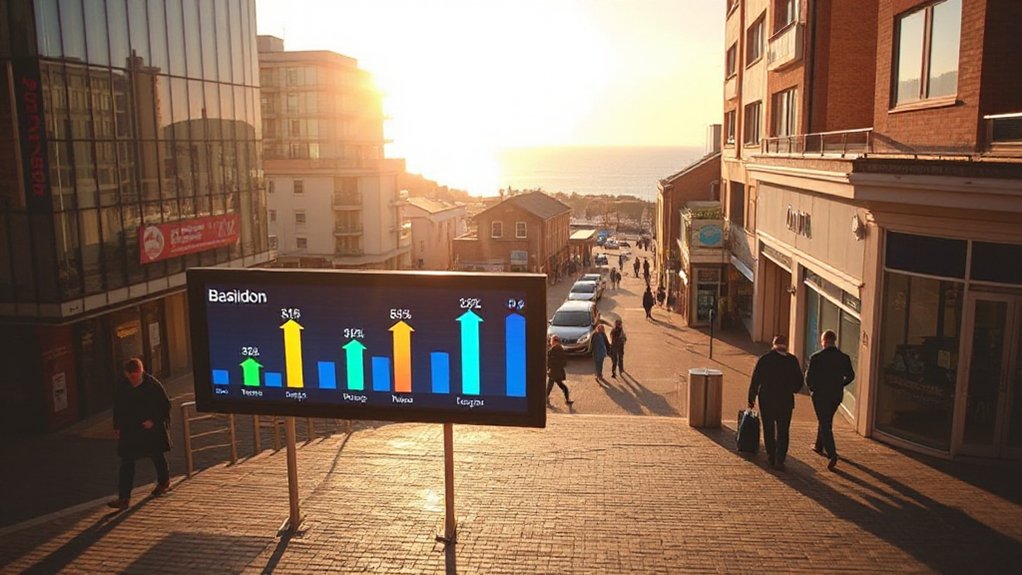
Basildon stacks up well against nearby towns on value and growth metrics, with faster absorption and steadier price momentum in the latest quarterly data.
When you compare performance, Basildon delivers competitive sale prices and robust rental yields relative to surrounding markets, while price corrections remain modest.
You’ll notice stronger weekly listing-to-sale conversions and shorter average days-on-market, signaling healthy demand.
Historical development patterns shape current trajectories, with ongoing infrastructure upgrades supporting transport and employment access.
Cultural influences, including a diverse, international resident base and mixed-use zones, help sustain demand across sectors.
In contrast, towns with slower regeneration timelines show more volatility and longer absorption lags.
Practical Basildon Buyer’s Checklist: What to Inspect Before You Invest
When you’re evaluating Basildon buys, start with a practical, data-driven checklist to avoid surprises down the line. Begin with a property condition snapshot: structural integrity, roof age, wiring, plumbing, damp, and drainage.
Verify recent surveys and compare with council records for permits and alterations.
Check neighborhood metrics: schools, transit access, crime trends, and planned developments that could affect value.
Assess financials upfront: annual property taxes, insurance costs, service charges, and maintenance reserves.
Demand a clear rent roll if it’s an investment, plus occupancy history and tenant turnover.
Schedule a thorough home inspection to uncover latent issues before negotiations.
Prioritize defects by repair cost and impact on resale, and quantify escrows for upcoming work.
Use this data to refine your offer strategy and risk appetite.
Investment Outlook for Basildon: Next 12–24 Months
Despite near-term headwinds, Basildon’s housing market shows resilience driven by continued housing supply constraints, improving local employment, and steady demand from commuters seeking value outside London.
In the next 12–24 months, you’ll see limited new stock relative to rising demand, sustaining modest price growth and attractive rental yields.
Local development pipelines, including urban development projects and transit upgrades, bolster utility for investors and tenants alike.
Employment gains, led by logistics and light manufacturing, support rental occupancy and income stability, even as macro headwinds temper rapid rises.
Demographic shifts toward smaller households and younger professionals favor apartment and mid-sized unit demand.
Your risk-adjusted returns hinge on selecting well-located assets near transport links and ensuring robust management to capture ongoing market tailwinds.
Frequently Asked Questions
How Do Basildon’s Blue-Chip Areas Compare Long-Term for Value?
In Basildon’s blue-chip areas, value tends to be stable and shows steady growth, reflecting market stability and high investment potential you can expect long-term. You’ll see resilient rents, conservative cap rates, and durable demand driving dependable appreciation.
What Hidden Costs Affect Basildon Property Purchases?
Hidden fees and renovation costs can surprise you when purchasing in Basildon; expect upfront surveys, legal fees, stamp duty, and removal costs. You’ll need contingency budgeting, as data shows these hidden charges shape overall affordability and timelines.
Are Flood Risks a Concern in Basildon Neighborhoods?
“Forewarned is forearmed.” You should know flood risks vary by neighborhood; some areas threaten properties. Monitor flood prevention measures and water management initiatives; weigh data-driven risk maps, insurance costs, and municipal resilience before buying in Basildon.
Which Basildon Roads Impact Commute Times Most?
You’ll notice Traffic congestion hits peak on the A127, A13, and surrounding arterial routes, shaping commute times most. Road accessibility declines at rush hours, emphasizing bottlenecks and predictable delays for Basildon buyers and workers alike.
How Do School Rankings Influence Basildon Property Value?
School performance nudges prices: stronger scores lift buyer demand, while weaker ones slightly dampen it. You’ll notice this in neighborhood reputation, where data shows premium property values cluster near top-rated schools; you gain or lose value accordingly.
Conclusion
You’ll notice Basildon’s market gliding on steady demand and affordable options, like a well-tuned engine: quiet, reliable, and ready for tweaks. Price gains are gentle, rents hold firm, and new stock hints at upside without overheating. With infrastructure uplift and strong transport links, risk feels cushioned, not erased. If you’re buying or investing, tread with measured steps, read the data clearly, and expect a measured, gradual horizon—where opportunity blends with prudence.