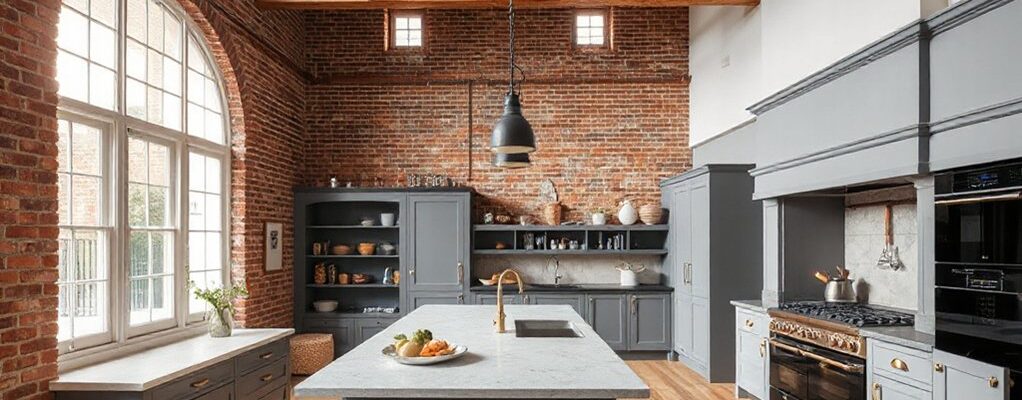
You step into a sunlit footprint where walls recede and air flows freely, revealing how a Victorian terraced heart can breathe anew. You’ll balance light with structure, carving zones that feel open yet intimate, and choose finishes that echo heritage while leaning modern. The challenge is tight footprints and concealed storage, so you’ll optimize layouts and partners in design that keep the sense of history intact while inviting conversations to carry through the space. The secret lies in what you decide to keep close and what you let drift.
Why Open Plan Works in Victorian Terraced Kitchens
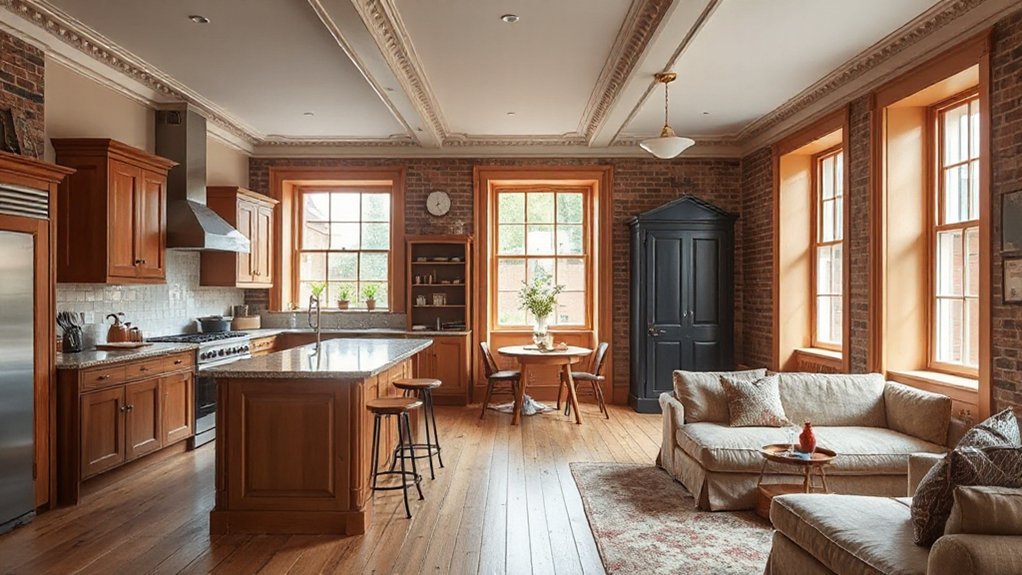
Open-plan layouts suit Victorian terraced kitchens because they address its tight, compartmentalized origins with practical flexibility. You transform confinement into connection, linking cooking, dining, and social space without sacrificing function.
By removing walls, you gain visual breadth that compensates for narrow footprints, while preserving essential workflow. You expect clear zones, yet remain adaptable—a single, shared surface can host prep, service, and casual meals.
Kitchen acoustics matter: you control noise through material choices and layout cues that reduce echo and disruption. You’ll also implement privacy solutions, such as partial screens or shelving buffers, to maintain conversation quality when guests linger.
This balance supports daily routine and entertaining, converting restricted rooms into versatile hubs without erasing the building’s historical character.
Light, Flow, and Narrow Footprints: Practical Breakpoints
You’ll start by prioritizing light-driven spatial flow to guide movement through a tight footprint. Consider how narrow breakpoints influence sightlines, task zones, and ventilation.
Ensure no bottlenecks disrupt the sequence. In practice, test small-scale adjustments that maintain openness while preserving functional, clearly defined areas.
Light-Driven Spatial Flow
Natural light governs how space feels and functions in compact Victorian terraces, so you should design for a clear visual and movement hierarchy that guides the eye and footfall through narrow footprints.
Light-driven spatial flow emerges when you prioritize sightlines, glare control, and functional zoning without clutter. Use high-contrast color accents to delineate zones, while preserving a cohesive palette that won’t break the line of sight.
Material textures matter: a brushed timber floor under a Gloss ceiling boundary can subtly reflect light and advance or recede areas. Position key work zones along principal sightlines to reduce unnecessary turns.
Integrate reflective surfaces and minimized cabinetry to expand perceived depth. Balance openness with tactile cues, ensuring circulation remains intuitive, direct, and calm as you move through the kitchen and connected living spaces.
Narrow Footprint Breakpoints
Narrow footprints demand clear breakpoints that preserve light-driven flow while preventing clutter. You plan zones that read as a cohesive corridor, not stacked rooms, so define thresholds with subtle cues. Use color schemes to distinguish functions without crowding sightlines; cool neutrals can recede, while warm accents mark progressions.
Material choices matter: matte cabinetry minimizes glare, glass or reflective surfaces are limited to strategic points to keep luminosity unmarred. Keep appliance footprints compact, with integrated panels to maintain a sleek frontage.
Divide spaces using architectural cues—vary ceiling heights, flooring tones, or slender shelving—rather than bulky walls. Prioritize storage that tucks away, so each footprint remains legible.
Test layouts for simultaneous light access, traffic, and task zones, adjusting breakpoint placements until flow feels inevitable, not imposed.
Zone Without Walls: Living, Dining, and Cooking Together
In Victorian terraced homes, a zone without walls blends living, dining, and cooking into one cohesive space, maximizing light and social flow. You design this open area to sustain clear sightlines, so interaction remains fluid across activities.
Position the dining zone near the kitchen work triangle, enabling quick shifts without crowding pathways. A shared surface for meals and prep reinforces family gathering without isolating anyone.
Storage should be integrated and minimal, preserving openness while supporting cooking efficiency. Task zones stay legible: prep sits adjacent to ventilation; cleanup flows toward utilities with quiet, accessible outlets.
Finishes favor subtle contrasts that delineate zones without walls, maintaining unity. Consider lighting that accents activity zones during different times, enhancing comfort and engagement throughout the day.
Heritage Finishes That Read Modern
Heritage finishes can read modern when you balance time-honored materials with contemporary detailing. You fuse traditional textures with clean lines to signal current design thinking without erasing history.
Start with timber floors or reclaimed timber ceilings paired with matte, industrial hardware to set a restrained, modern mood. Introduce contemporary cabinetry in soft, muted tones that echo vintage palettes but feature integrated handles and minimal hardware for a streamlined feel.
Use tilework as a bridge: patterned classics reinterpreted in larger scales or with restrained color. Consider lighting that emphasizes form over ornament, such as exposed bulbs under timber beams or slim track lighting.
Storage That Fits Tight Quarters
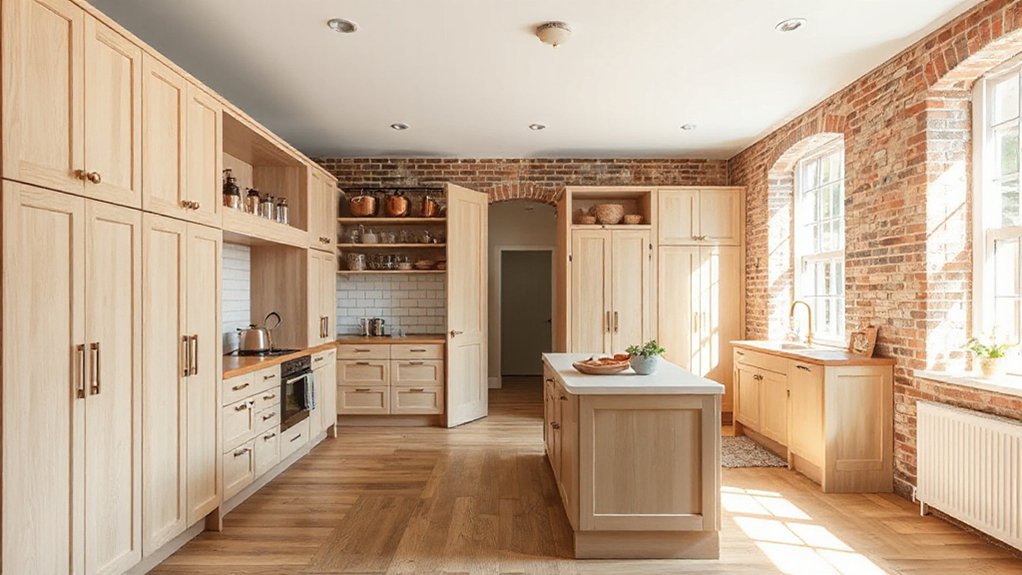
In tight kitchens, you’ll map clever cabinet layouts to maximize every inch without crowding the flow. Slimline storage solutions let you hide essentials in plain sight, keeping counters clear and tasks efficient.
Clever Cabinet Layouts
Corner cabinets, pull-out shelves, and built-in niches transform tight kitchen closets into efficient storage. You optimize layout by prioritizing flow: work zones aligned to prep, cook, and clean, with sightlines kept clear.
Choose cabinetry styles that minimize bulk while maximizing reach—think shallow-depth units and tall, narrow cupboards that tuck into awkward corners without swallowing floor space. Hidden storage, such as toe-kick drawers and edge-mounted half-height cabinets, keeps counters free for prep.
Use adjustable shelving to adapt for cookware, pantry items, and small appliances, reducing rummage time. Smart division of a run into open-shelved display zones and concealed cabinets balances accessibility with clutter control.
Finish with consistent hardware to unify diverse modules, ensuring a cohesive, efficient kitchen narrative.
Slimline Storage Solutions
Slimline storage proves you don’t need a full-width pantry to maximize capacity in tight Victorian terraced kitchens. You match vertical efficiency with shallow pull-outs and tall, narrow cabinets that tuck into alcoves, keeping surfaces clear.
Use slimline drawers for spices, trays, and utensils, and install retractable or swing-out racks beside the sink for daily essentials. Choose integrated lighting to reveal items without clutter, and label bins for quick access.
Prioritize modular units so you can reconfigure as needs shift. Opt for Eco friendly materials and finishes that resist moisture and wear, preserving a neat aesthetic over time.
Minimalist aesthetics keep lines clean, while hidden hardware minimizes visual noise. This approach balances practicality with style, enhancing flow without sacrificing storage density.
Layout Patterns for a Social Kitchen Hub
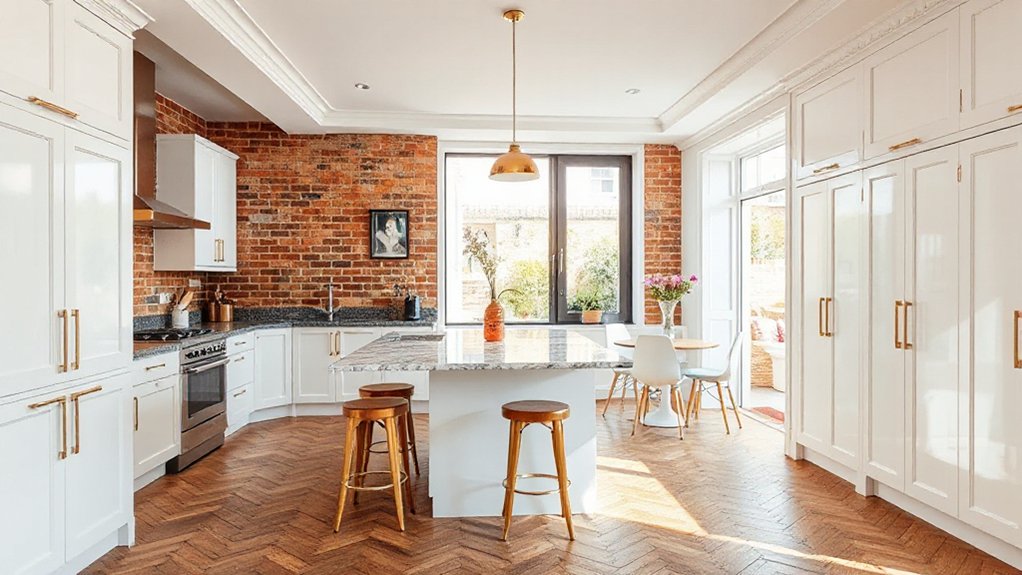
A social kitchen hub thrives when layout patterns encourage flow, sightlines, and easy interaction between cooks, diners, and guests. You structure spaces to keep conversations uninterrupted by traffic, using clear sightlines from prep to dining areas.
Consider an island with seating that faces both cook and table, preserving dialogue without forcing you into corners. Furniture arrangement should prioritize varied heights and zones, so you can prep, socialise, and dine without constant rearranging.
Avoid clutter by keeping typically used tools within arm’s reach and storing infrequently used items out of view. Acoustic considerations matter too: incorporate soft-voiced materials, area rugs, and sound-dampening panels to minimise reflective noise.
Test paths for logical, unobstructed routes, and align electrical outlets with predictable appliance placement for seamless, sociable routines.
Start Here: Practical Steps for an Open Plan Remodel
Starting here, begin with a clear plan: map your goals, measure your space, and prioritize zones that support both cooking and socializing. You’ll set a practical framework by documenting current layouts, traffic patterns, and electrical needs, then translate these findings into a phased remodel.
Next, assess structural constraints and regulatory considerations, ensuring any alterations respect historical preservation while enabling modern performance. Establish a midline budget with room for contingencies, and define measurable milestones to track progress.
Choose an open plan layout that preserves key historical features where possible, aiming for energy efficiency through insulation, lighting, and appliance choices. Finally, create a test run of the proposed zones to verify flow, acoustics, and sightlines before committing materials.
This disciplined approach yields clarity, reduces risk, and maximizes long‑term value.
Frequently Asked Questions
How Does Ventilation Work in Open Plan Victorian Kitchens?
Ventilation in open-plan Victorian kitchens relies on strategic airflow optimization: you create cross-ventilation with windows or vents, and use mechanical ventilation systems where needed to remove steam, odors, and heat efficiently; this maintains comfortable, balanced indoor air.
Can I Install an Island in a Narrow Terrace Footprint?
Yes, you can, but in a narrow terrace footprint you’ll exaggerate the challenge and optimize Space with a compact island. Consider Kitchen storage solutions, wall-mounted units, and clever storage to maximize flow and precise circulation.
Will Open Plans Affect Listed-Building Permissions or Covenants?
Open plans can affect listed-building permissions or covenants, so you should check with local conservation officers. You’ll weigh historic preservation concerns against Building regulations, ensuring space changes respect safeguards while meeting code requirements.
What Lighting Layers Best Suit Mixed Cooking and Living Spaces?
Ambience wins: you should layer ambient lighting with focused task illumination to suit mixed cooking and living spaces. You’ll balance ceiling, wall, and under-cabinet sources, ensuring even coverage, color accuracy, and flexible zones for dining, prep, and lounging. Hyperbole.
How Can Acoustics Be Controlled in a Busy Open Plan?
You’ll control acoustics by installing acoustic panels strategically, soaking up excess chatter, and applying soundproofing techniques to boundaries. You’ll test layouts, calibrate reflections, and maintain clarity for conversations while cooking, achieving balanced, focused spaces.
Conclusion
You’ll discover that an open plan can gently rebalance Victorian quirks into a social, breathable backdrop. By embracing subtle shifts and pared-back zones, you avoid overhauls that feel loud or abrupt. Start small, then trust light, texture, and careful acoustics to whisper comfort rather than shout space. With thoughtful storage and heritage-worthy finishes, you’ll enjoy a modern flow that nods to history—elegant, practical, and almost effortlessly inviting.