
In 2026, you’ll see Liverpool’s rental market stabilizing around core urban zones, universities, and employment hubs, with prices proving resilient despite tighter housing supply. Demand from students, young professionals, and families keeps occupancy steady, especially near campuses and transit links. While flats, HMOs, and houses diverge in cost, affordable options offer quicker occupancy and lower entry barriers. Policy moves on permitting and subsidies could moderate rent growth, keeping pressure on you to act strategically.
What Drives Liverpool Rents in 2026

The drivers of Liverpool rents in 2026 center on sustained demand from core urban areas, tight housing supply, and shifting tenant preferences. You’ll see strong rental inflows tied to university campuses, healthcare hubs, and local employment clusters, reinforcing price resilience even as macro shifts modulate growth.
Data show occupancy rates remain high, with turnover concentrated in mid-range units, signaling persistent efficiency in rental markets.
Policy levers, including Rental regulations, influence what landlords can charge and how quickly vacancies fill, shaping cap rates and rent trajectories.
Property maintenance standards increasingly correlate with premium yields, as quality assets attract longer tenancies and reduce vacancy risk.
You should monitor enforcement timelines, landlord compliance costs, and subsidy structures that affect net rent affordability and investment viability.
Top Liverpool Neighborhoods by Rent This Year
You’ll see which neighborhoods lead in rent this year, with high-demand areas setting the baseline and influencing nearby markets.
Early data show clear splits between student-heavy and family-friendly pockets, shaping both price ceilings and rental supply strategies.
We’ll compare rent ranges to highlight policy levers for affordability and guarantee predictable market dynamics.
High-Demand Neighborhoods
Which neighborhoods in Liverpool command the highest rents this year, and what does that say about demand and policy implications?
In 2026, the core demand centers around city fringe cores and inner-city campuses, where rents surpass averages by roughly 15–25%. You’ll see dense clusters in the Ropewalks, Baltic Triangle, and waterfront-adjacent wards, driven by access to transit, employers, and amenities.
Historical rental trends show sustained price acceleration through 2024–2025, with steady demand even as supply tightens, signaling a price-inelastic tenant base in prime zones.
Tenant satisfaction metrics remain highest where transparency on fees, upkeep, and speed of response aligns with rent levels.
Policymakers should balance new supply with protections against abrupt spikes while preserving market signals that reward location value.
Rent Range Leaders
Rents in Liverpool continue to concentrate in city-fringe cores and inner-city campuses, with the highest weekly and monthly ranges anchored in Ropewalks, Baltic Triangle, and waterfront-adjacent wards.
In 2026, Rent Range Leaders cluster around these zones, reflecting premium access to transport, amenities, and university-linked demand.
Weekly rents top the market in Ropewalks, followed by Baltic Triangle, with waterfront-adjacent wards showing the strongest monthly premiums.
Data show a widening gap between top-tier and mid-range neighborhoods, driven by limited supply and selective leasing cycles.
Policy signals focus on rental regulations that curb abrupt increases while protecting tenant rights, promoting predictable turnover and better maintenance.
For renters, this means prioritizing contracts with clear rent review rules and transparent costs to avoid hidden fees.
Student and Family Split
Meanwhile, family-oriented wards near waterfront-adjacent areas secure steadier, mid-to-long-term contracts at more predictable monthly rates.
In 2026, student accommodation demand concentrates around central campuses, pushing vacancy turnover and price volatility upward in those pockets.
By contrast, family housing near Liverpool’s estuarine fronts exhibits lower volatility and stronger occupancy, supported by long-hold leases and policy incentives for stable housing.
Trends indicate targeted investments in student blocks alongside preservation of family housing stock to balance affordability and supply.
How Students Shape Liverpool’s Rental Market
Student demand is rising where universities drive peak-season rents and occupancy rates, signaling tighter markets during term starts.
You’ll see behavioral shifts, like earlier lease renewals and longer stays, as tenants prioritize flexibility and affordability.
This trend frames policy questions on supply responses, pricing transparency, and targeted student housing programs.
Student Demand Trends
What patterns in demand are shaping Liverpool’s rental market as students return to campus and expand their share of housing needs? You’ll see student housing driven by policy-leaning indicators: enrollment stability, shifting term-time occupancy, and university-led housing guarantees.
Data show demand fluctuations align with academic calendars, with spikes at term starts and dips during holidays. You’ll note stronger demand in central and south campus corridors, where purpose-built blocks and higher-capacity units offer predictable returns.
Vacancy rates tighten when international arrivals surge or funding changes limit private affordability. Price trends respond to enrollment growth and occupancy tenure, signaling the need for targeted capex and planning approvals.
Policy implications emphasize mixed-use development, enhanced student welfare provisions, and transparent rent controls to balance accessibility with market vibrancy.
Tenants’ Behavioral Shifts
As students return to campus, tenants’ choices are shifting toward flexibility, longer tenant-tenure commitments, and preference for properties with predictable utility costs and included amenities. You’ll see rental offers increasingly bundle bills, wifi, and study spaces, signaling demand for predictable budgeting.
Data indicate higher retention when leases align with academic calendars, reducing turnover spikes in term starts. Behavioral trends show heightened sensitivity to energy efficiency, with tenants favoring green discounts and metered usage transparency.
Tenant satisfaction rises where landlords provide clear maintenance SLAs and rapid issue resolution, correlating with higher renewal rates. Policy implications point to targeted incentives for multi-occupant units and standardized utility disclosures.
What Young Professionals Look For in 2026
For 2026, young professionals prioritize affordability, flexibility, and mobility, with clear demand for rental packages that align with career shifts and urban lifestyles. You’ll see preferences centered on transparent pricing, short-term leases with upgrade options, and scalable housing solutions that support job changes and hybrid work.
Data show a premium placed on amenities that reduce friction, like reliable high-speed internet, flexible lease terms, and on-demand maintenance. Policy trends emphasize inclusion and portability across cities, encouraging landlords to offer modular units and digital onboarding.
Luxury apartments attract interest when maintenance and utilities are bundled, while Pet friendly policies widen appeal among households with pets. Overall, landlords winning market share will tailor offerings to value, predictability, and seamless mobility.
Liverpool’s Listing Trends and Vacancy Dynamics

Liverpool’s listing dynamics show how affordability and mobility play out in real-time. Across 2026, listing trends reveal a steady rise in regulated or partially regulated units, with landlords increasingly using short-term listing platforms for quick turnover.
You’ll notice data pointing to seasonal spikes in listings during late spring and early autumn, followed by gradual stabilization as tenant demand shifts toward longer tenancies.
Vacancy dynamics emphasize a tight market in central and university-adjacent zones, yet pockets of higher vacancy appear in peripheral areas with slower job growth.
Policy signals, including targeted incentives for new-build rental stock, are influencing new listings’ composition and quality.
Rent Growth by Property Type: Flats, HMOs, Houses
Rent growth varies by property type, with flats, HMOs, and houses diverging in pace and drivers. In flats, modest price gains reflect higher supply and stricter lending, while demand remains steady among young professionals and students; turnover supports rent stabilization rather than sharp increases.
HMOs show stronger growth when occupancy is high and licensing reforms reduce supply risk, yet maintenance costs rise with shared facilities, tempering net yields.
Houses continue to outpace due to family demand and scarcity of suitable stock, though regional price ceilings and build-out constraints limit acceleration.
Across all types, property maintenance costs and landlord responsibilities influence effective rent growth, shaping cap rates and tenant retention.
Policymakers should align inspections and safety standards with clear timing to sustain predictable rent trajectories.
Value Wins: Where Budget Beats Location in Liverpool
Despite higher upfront costs tied to location, budget-led choices in Liverpool often win on value, driven by lower purchase or rental hurdles, faster time-to-rent, and steadier occupancy.
In 2026 data shows affordable options command steady demand even as premium areas price out a segment of renters, evidence of a budget priorities arc across districts.
Vacancy rates for budget rentals remain nearer to 5–6%, while higher-location assets linger longer before securing tenants.
Policy implications emphasize streamlined permitting, predictable rent cycles, and targeted subsidies to sustain occupancy without inflating market risk.
Data indicates households prioritize total cost of ownership and flexibility over prestige, shaping a shift toward modular leases, transparent pricing, and longer tenancy commitments.
Overall, value-led strategies outperform location-first bets for many renter cohorts.
Affordable options drive resilience and market balance.
Universities and Campus Connectivity for Renters
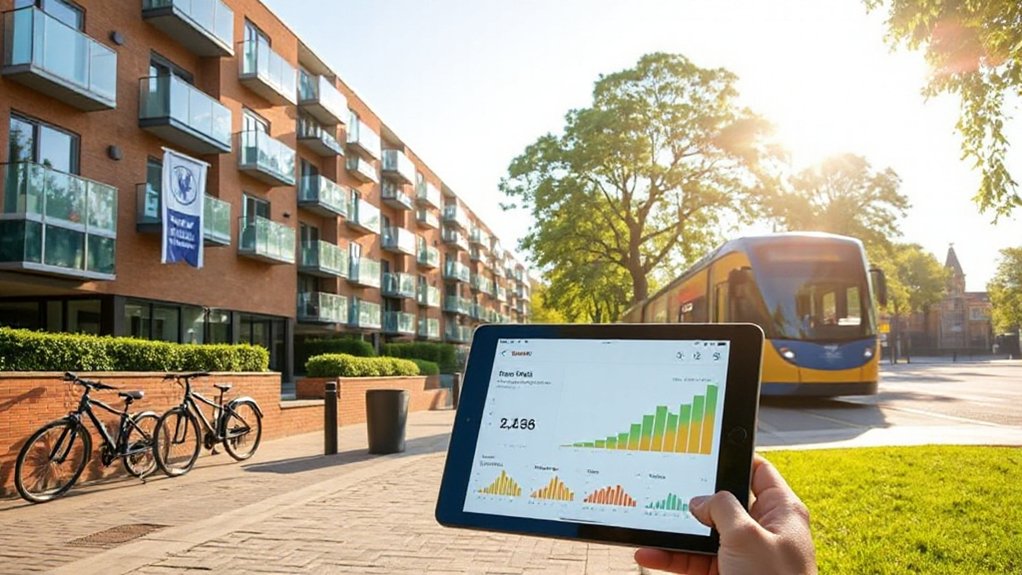
What role do universities and campus connectivity play in shaping rental choices in Liverpool? You see a clear link between campus proximity, dorms, and rental demand, with data showing spikes near major universities during term times.
On-campus facilities like study hubs, libraries, and social spaces elevate perceived value, pushing rents higher where campus amenities are robust.
International students influence demand patterns, concentrating in areas offering affordable, furnished options and visa-support services, even as housing supply tightens.
Policy implications include targeted off-campus housing incentives and clearer listing standards to accommodate international cohorts.
Trends indicate that students prioritize reliable broadband, safety, and reasonable commute options, which in turn shape landlord incentives toward longer leases and energy-efficient, flexible layouts to attract this growing segment.
How Transport Access Influences Rental Choices
How does transport access shape rental choices in Liverpool? You’ll see clear links between proximity to reliable public transportation and rental demand, especially in zones with frequent services and high accessibility scores. Data indicate that housing near transit hubs commands premium rents, but also attracts longer lease terms and faster occupancy when congestion or parking fees rise.
Access convenience correlates with turnover rates, school and job market proximity, and perceived safety around routes. Policy trends favor integrated transport planning, fare harmonization, and last‑mile solutions, boosting demand for well‑connected neighborhoods.
Renters favor schemes that minimize commute times and maximize predictability, even if initial rent is higher. Sellers should highlight transit access in listings to capture transitional demand and stabilize vacancy risk.
Seasonal Patterns in Liverpool Rents and Vacancies
Seasonal patterns shape rental demand and vacancy in Liverpool, with clear cycles tied to academic calendars, tourism flows, and fiscal quarters. You’ll observe higher inquiries and transient lets around September as students secure housing, followed by a lull in late spring when exams thin the market.
Seasonal fluctuations drive occupancy rates downward after summer peaks, then rebound ahead of new intakes in autumn. Vacancy trends show pockets of short-term vacancies near campuses during holiday breaks, while central districts exhibit steadier fill rates due to corporate and redevelopment activity.
Policy implications point to targeted leasing incentives in shoulder seasons and improved data sharing between universities, councils, and landlords. You should align marketing, pricing, and lease structuring with these seasonal rhythms to optimize occupancy and revenue outcomes.
What Tenants Value More Than Price in 2026

Location is proving more decisive than sticker price as tenants prioritize longer-term fit.
Flexibility and nearby amenities shift rental value in 2026. You’ll see demand lean toward homes offering adaptable layouts, longer lease options, and access to transport, parks, and services.
This trend signals policymakers and landlords should measure value beyond rent by tracking mobility, amenity access, and neighborhood resilience.
Location Beyond Price
Neighborhood quality, not just rent, dominates tenant choices in 2026 as people prioritize proximity to work and transit, safety metrics, and accessibility to amenities over price alone. You’ll notice tenants increasingly value walkability scores, commute resilience, and access to green spaces when evaluating listings.
Data shows demand clusters around major employment hubs and well-connected corridors, with higher occupancy stability where public transport reliability improves travel times.
Policy implications include preserving affordable transit options, investing in safer streets, and aligning zoning with mixed-use developments near stations.
Cultural diversity and Local events matter as signals of community vibrancy, influencing social cohesion and perceived safety.
In short, location premium grows when neighborhoods offer connected living, inclusive culture, and accessible cultural programming.
Flexibility And Amenities
In Liverpool, landlords increasingly pair these terms with clear policy shifts—transparent notice periods, option-to-extend, and easy renewal processes—to reduce perceived risk for renters.
Amenities enhancements are becoming a baseline expectation: high-speed broadband, communal workspaces, secure bike storage, and energy-efficient fittings.
Data indicates tenants value predictability and turnkey living, with properties offering modular spaces and flexible layouts attracting longer tenancies.
For policymakers, anchoring incentives around consumer clarity and landlord compliance can stabilize demand while elevating housing outcomes.
Landlord Tactics for 2026: Pricing, Promotions, and Incentives
Optimizing 2026 rental outcomes starts with pricing discipline: landlords who align rents to demand signals, operating costs, and market benchmarks tend to sustain occupancy and revenue over cycles. You’ll rely on data to calibrate what tenants will pay, then adjust in response to occupancy, seasonality, and local supply.
Landlord tactics for 2026 center on transparent, tiered pricing strategies that reflect unit features, location desirability, and risk of vacancy. Promotions should be time-limited and performance-based, tying concessions to lease length or renewal likelihood rather than blanket discounts.
Incentives, such as refurbished common areas or utility bundles, can shift demand without eroding base rents. Monitor competitor yields, apply dynamic pricing, and document rationale to support policy-facing decisions about affordability and market stability.
Local Policy Impacts on Rents and Supply
Local policy shapes rents and supply through a mix of rent controls, zoning rules, and housing subsidies, and the net effect depends on design and enforcement. You’ll see policy shifts influencing cap levels, timing of annual adjustments, and eligibility criteria for subsidies, which correlate with observable rent trajectories and new-build approvals.
In Liverpool, tighter rent control tends to stabilize short-term affordability but may dampen new supply if developers anticipate limited returns. Conversely, targeted subsidies and faster permitting correlate with higher completion rates and modest rent growth in core neighborhoods.
Data reflects a pattern: jurisdictions balancing predictability with carrots for developers achieve faster supply expansion while preserving tenant protections. To interpret trends, compare policy changes with vacancy indicators, construction starts, and median rents across council districts.
Vacancy Turnover and Its Effect on Rents
Vacancy turnover drives rents by signaling how quickly units move from listing to occupancy, influencing landlords’ pricing power and tenants’ bargaining room. In Liverpool, higher turnover generally accompanies tighter demand, pushing average rents upward as landlords adjust to faster vacancy absorption.
When turnover accelerates, you’ll see shorter listing windows and more frequency of price reductions, which can temporarily soften rents but may also shift expectations toward premium for readily available units.
Policy implications include the potential for rent stabilization to temper rapid increases without constraining supply, ensuring predictable budgeting for renters and steady cash flow for owners. Tracking turnover alongside vacancy rates offers a clearer gauge of market stress, informing targeted interventions like leasing incentives or temporary caps during peak seasons.
Investment Hotspots Driving Quick Rent Growth
You’ll want to start by identifying Quick Rent Growth Drivers that signal where rents outpace the market.
We’ll examine Hotspot Market Indicators and Investment Return Signals to map where investor activity aligns with rapid rent increases.
This data-driven lens should guide policy and market stakeholders toward targeted, evidence-based action.
Quick Rent Growth Drivers
Quick rent growth is being propelled by a mix of demand dynamics and policy shifts shaping investment hotspots. You’ll see momentum concentrate where housing supply aligns with student and workforce inflows, urban redevelopment plans, and favorable tax treatment for lettings.
Historical trends reveal cyclical upticks following major infrastructure upgrades and university expansions, while tenant income growth tightens affordability thresholds in core districts.
Market forecasts, reinforced by zoning liberalization and permitting accelerations, point to sustained rental pressure in mixed-use corridors and university-adjacent zones.
Data indicates higher rent resilience where transit access, tech employment, and private investment converge, creating compounding demand.
You should monitor policy signals and delivery timelines, as they modulate supply ramps and absorption rates, shaping near-term rent trajectories across Liverpool’s neighborhoods.
Hotspot Market Indicators
Data show price-per-square-foot uplifts in areas offering luxury amenities like modern gyms, coworking spaces, and curated common areas, heightening bid competition among landlords and developers.
Policy signals emphasize tightened licensing, stricter occupancy rules, and enhanced enforcement against rental scams, shifting risk toward operators with transparent practices.
Growth forecasts align with occupancy stability, elevated renewal rates, and shorter vacancy cycles in these micro-markets.
To navigate, couple robust due-diligence on property condition and management quality with clear disclosures on fees and services to deter misleading listings and sustain value.
Investment Return Signals
Luxury apartments appear as high-convex segments, often amplifying cap rate compression when delivered with premium amenities and efficient energy use. Data show rental legislation increasingly shaping rent trajectories, with policy levers that curb abrupt spikes yet still permit targeted appreciation in constrained markets.
Yield operators watch vacancy trends, renewal rates, and service costs to fine‑tune pricing. You should assess regulatory risk, infrastructure upgrades, and demographic shifts to identify investment frontrunners before rents react to tightening liquidity.
How Liverpool Stands Against Similar Cities
Liverpool stacks up differently compared with peer UK cities when you look at rental yields, vacancy rates, and affordability pressures.
In 2026, data show Liverpool’s yields are competitive but not at the top tier, while vacancy cycles respond to university demand and housing policy.
You’ll notice rental affordability pressures remain pronounced relative to wage growth in several peers, signaling tighter housing budgets for renters.
Historical affordability matters, shaping household choices and policy scrutiny, with residents weighing options beyond price alone.
Policy levers, including rental regulations and enforcement clarity, influence market stability, impacting entry barriers for landlords and access for renters.
Trend lines suggest Liverpool aligns with regional patterns, yet differences in planning speeds and targeted housing programs keep outcomes nuanced for investors and tenants alike.
Negotiating Rents in a Tight Liverpool Market
You’ll see rents respond to the balance of supply and demand, so knowing the levers of negotiation—like timing, concessions, and renewal terms—can shift outcomes in a tight market.
We’ll compare current occupancy rates, vacancy trends, and price pressure to identify practical, data-backed tactics you can use.
As prices tighten, policy- and market-informed approaches become essential to secure fair terms without overpaying.
Negotiating Rent Levers
In a tight Liverpool rental market, renters can lean on leverage points beyond price alone, such as lease flexibility, including shorter-term options or amenity upgrades, to negotiate better terms.
You should view negotiation as a data-informed process: quantify rent trends, vacancy rates, and time-to-rent metrics for comparable properties, then map leverage points to outcomes.
Key rent levers include lease duration, renewal options, deposit structures, included utilities or furnishings, and access to preferred maintenance windows.
Employ evidence-based negotiation strategies that anchor offers to market benchmarks, while proposing value-added terms that reduce landlord vacancy risk.
Policy-oriented incentives—such as capped rent escalators or compliance with energy standards—can broaden acceptable terms.
Track outcomes, refine tactics, and align with fair housing and transparency requirements.
Market Tightness Tactics
Market tightness in Liverpool means rents respond quickly to shifts in demand, vacancy, and time-on-market data, so you should anchor negotiations in current benchmarks and observable trends.
In tight markets, you leverage real-time indicators—days on market, vacancy rates, and weekly price moves—to set flexible rent bands rather than fixed demands.
Align offers with rental affordability thresholds informed by local incomes and subsidy options, and avoid overpaying for marginally more space.
Emphasize transparent pricing gaps between comparable units and model sensitivity to shorter notice periods.
Consider tenant preferences, such as utility inclusions or flexible lease terms, as negotiation levers.
Use data-driven concessions tied to proven outcomes, like shortened renewal notice gaps or staged rent increases that reflect ongoing market tightness.
A First-Timer’s Guide to Renting in Liverpool
Renting in Liverpool as a first-timer means maneuvering a tight rental market with rising demand, limited supply, and a mix of purpose-built flats, student lets, and traditional houses. You’ll benefit from understanding local policies shaping availability, such as deposit protections, tenancy durations, and energy efficiency standards.
Data show competitive pricing in central wards, with longer lead times for popular neighborhoods and quicker moves in outlying areas. Prioritize documenting income checks, guarantor requirements, and rental references to avoid delays.
Consider options like Luxury apartments for manageable maintenance and modern facilities, but assess total costs, including utility bills and council tax.
Don’t overlook Green spaces in planning commutes and wellbeing; proximity can influence desirability and value over time. Stay informed on policy changes affecting tenancy terms and eligibility.
Long-Term Outlook: Demand, Supply, and Rent Trajectories
Despite recent fluctuations, demand in Liverpool’s rental market is likely to stay robust, driven by student intake, ongoing affordable housing programs, and job growth in service sectors.
However, supply constraints from planning delays and limited new-build completions will continue to cap availability in core wards. You’ll see continued pressure on rents as allocations tilt toward higher-density developments near universities and employment hubs.
Historical migration patterns indicate regions within the city’s core will retain strong tenancy turnover, influencing vacancy rates seasonally.
Policy indicators point to tighter property taxation regimes and reform proposals that may affect investor behavior and capex decisions.
Over the medium term, trajectories suggest gradual rent growth tempered by new-build completions, aimed at balancing affordability with market demand.
Practical Checklists for Renters and Landlords in 2026
Given that 2026 brings tighter policy signals and ongoing affordability pressures, renters and landlords in Liverpool should lean on concise checklists that reflect current regulations, risk factors, and market dynamics. These materials will help you verify eligibility, negotiate terms, and enforce compliance efficiently.
You’ll find a renter checklist emphasizing Rental regulations, proof of income, right to rent, tenancy deposits, and energy efficiency disclosures, plus a property maintenance lens to reduce later disputes.
For landlords, a compliance checklist covers licenses, safety standards, gas and electrical checks, and rent-review timing tied to policy changes. Data-driven targets guide negotiation on capex, responsive maintenance, and service charges.
Use these prompts to track changes, document actions, and enforce transparent expectations with tenants.
Frequently Asked Questions
How Will Brexit-Era Changes Affect Liverpool Rents in 2026?
Brexit-era changes will likely pressure rents modestly by 2026, you’ll see steadier growth despite demand shifts. Foreign investment could bolster supply, while housing regulations might cap spikes; you should monitor policy shifts, landlord rules, and market indicators closely.
Do Rent Concessions Outweigh Location in High-Demand Areas?
Concessions don’t necessarily outweigh location in high-demand areas; you should weigh them, because luxury apartments with favorable pet-friendly policies can compensate, yet demand still dominates. You’ll compare values, trends, and policy impacts in data-driven analyses.
What Impact Do Student Leases Have on Annual Rent Stability?
Student housing stabilizes annual rents by anchoring demand, you see, because long leases reduce turnover. This improves Lease affordability and predictability, helping you lock in steadier payments while trends show occupancy stays high even as new units enter the market.
Which Neighborhood Offers Best Value per Square Foot in 2026?
To get the best value per square foot, you’ll want Affordable neighborhoods rather than Luxury districts, declining rents signaling value. You’ll compare trends, policy impacts, and data to identify the strongest price-to-space balance in 2026.
How Do Seasonal Shifts Influence End-Of-Year Rent Spikes?
Seasonal shifts intensify end-of-year spikes as vacancy rates tighten and landlords offer rental incentives; you’ll notice concessions while demand remains strong, guiding you to adjust lease timing and pricing to align with policy-driven, trend-focused market dynamics.
Conclusion
Collision of demand and limited supply keeps Liverpool rents steady but competitive in 2026. Data shows core districts near campuses and transit hubs lead pricing, while affordable flats and HMOs move quickly. Policy levers—streamlined permitting, targeted subsidies—temper spikes and support stable occupancy. You might worry about rent growth, but the trend stays modest due to balanced demand, occupancy resilience, and ongoing supply tweaks. Stay informed, negotiate smart, and align choices with upcoming incentives for best value.