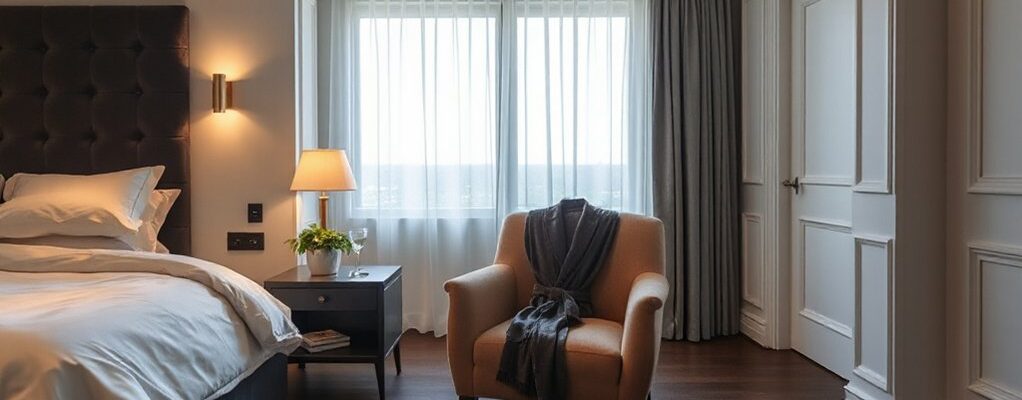
Create a calm palette, create warm accents; layer textures, layer surfaces. You’ll balance minimal decor with functional furniture, hide clutter with smart storage, and invite calm with soft lighting and subtle scents. You’ll want inviting bedding and mindful layering that feels luxurious yet attainable, so you keep a cohesive look across materials and finishes. Ready to design a retreat that stays polished day after day, without losing practicality, but the next detail might surprise you.
How to Build a Hotel-Style Bedroom in 3 Easy Steps
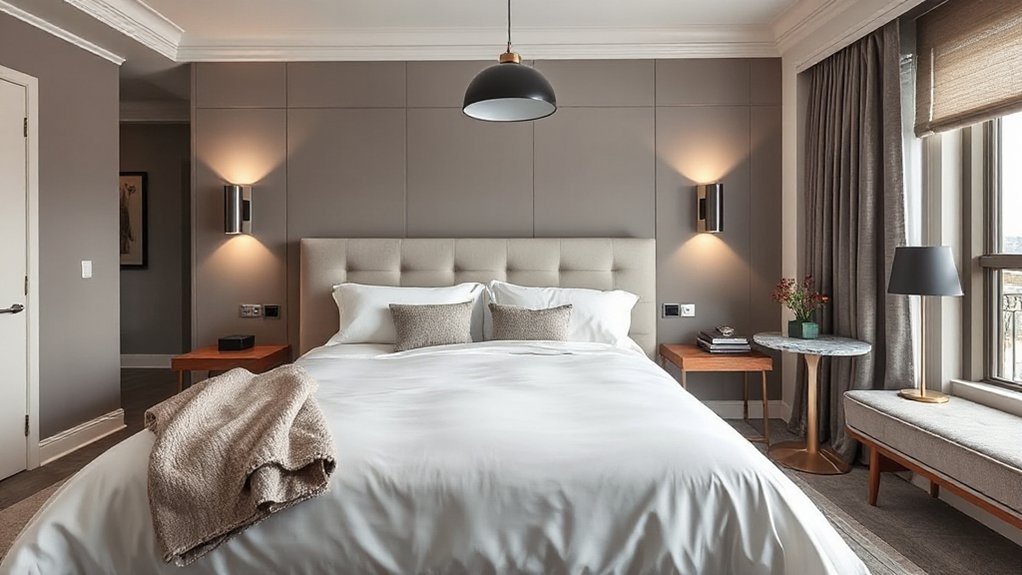
To build a hotel-style bedroom in three simple steps, start with a crisp foundation: invest in a soothing, neutral palette, and choose a bed with a clean silhouette and high-quality linens. You then refine the space with balanced textures, layering bedding, towels, and a plush rug that reads quiet luxury.
In step two, curate luxury amenities that elevate daily routines—soft lighting, sober hardware, and discreet storage that keeps surfaces uncluttered.
Finally, optimize the guest experience by selecting quiet appliances, a streamlined nightstand setup, and a cohesive art scheme that feels intentional rather than staged. Maintain cohesion through thoughtful proportions, consistent finishes, and purposeful spacing.
When you prioritize calm, refined details, every moment in this room feels effortlessly hotel-caliber.
Step 1: Define a Calm, Neutral Palette With Warm Accents
Creating a calm, neutral palette with warm accents sets the foundation for a hotel-grade bedroom. You’ll base this on color psychology, choosing tones that soothe yet invite warmth—soft beiges, taupes, and misty greiges paired with warm wood or bronze highlights.
Let neutrals dominate walls, linens, and major surfaces, then introduce color through carefully selected accessories. Focus on furniture arrangements that promote serenity: low-profile beds, uncluttered nightstands, and a simple dresser lineup that keeps sightlines clean.
Avoid busy contrasts; instead, test combos in natural light to ensure cohesion throughout the room. Balance precision with texture through subtle variations in finish, avoiding reveal of patterns that interrupt the calm.
Your goal is refined harmony that feels universally calming and effortlessly luxurious.
Step 2: Texture First: Elevate With Fabrics, Surfaces, and Layers
Texture sets the tone from the get-go, so you start with plush fabrics and thoughtful layering to feel hotel-smart rather than fussy. Pair soft textiles with surface texture harmony—think woven headboards, tactile throw pillows, and varied finishes on essentials—to create depth without crowding space.
You’ll begin by choosing fabrics and surfaces that read cohesive under your neutral palette. Then build in layers for warded warmth and quiet luxury.
Plush Fabrics Layering
Choose luxury fabrics in a restrained palette to maintain cohesion; limit patterns to one or two subtle motifs.
Start with a luxe foundation—sheeting in a sateen or percale blend—then add texture via tactile layers: a quilted coverlet, faux-fur accents, and a matte-winish velvet pillow assortment.
Balance scale by varying square and rectangle profiles, ensuring every piece feels intentional.
Prioritize fabric layering over quantity, and keep edges pristine with proper care.
The result is a serene, hotel-inspired retreat built on thoughtful, tactile choices.
Surface Texture Harmony
From here, you’ll weave tactile richness across surfaces to amplify that hotel-caliber calm. Surface texture harmony begins with a measured mix of finishes: matte paints, brushed metals, and low-sheen woods create quiet contrast.
Prioritize surface textures that invite touch—stone trays, linen veneer, and velvety headboard panels—while avoiding visual overload. Use tactile layering to guide the eye: pair a textured rug with smooth drapes, or pair a quilted throw with a sleek bench.
Keep scale deliberate; don’t crowd different textures into one plane. Introduce subtle sheen only where you want focal movement.
Balance warmth and restraint by aligning color families across fabrics and surfaces. The result is cohesive tactility that reads calm, refined, and hotel-inspired at home.
Step 3: Plan Hidden Storage for a Clutter-Free Space
Hidden storage isn’t an afterthought—it’s the backbone of a serene hotel vibe. You’ll prioritize clean lines and smart concealment to keep surfaces uncluttered while preserving easy access to essentials.
Explore ideas that balance practicality with a refined, clutter-free aesthetic.
Hidden Storage Ideas
To plan hidden storage for a clutter-free space, start by identifying every area where you currently hide items and reimagine it with built-in solutions that blend seamlessly with your room’s design. Look beneath the bed, inside ottomans, and within sofa backs to reveal discreet, accessible space.
Opt for bed frames with recessed drawers and headboard shelves that keep essentials out of sight yet within reach. Consider hidden compartments in storage furniture that double as decorative pieces, so form supports function.
Leverage wall niches and slim cabinets to maximize verticality without crowding floor space. Choose cohesive finishes and soft lines to preserve hotel-like serenity.
Hidden storage ideas should feel intentional, balanced, and designed to maintain a calm, uncluttered ambience.
Clutter-Free Design Solutions
Tackling clutter starts with a clear plan for hidden storage that supports a calm, hotel-style bedroom. You map zones for essentials and overflow, choosing furniture with built-in baskets, lift-top ottomans, and slim consoles that hide daily clutter without sacrificing ambiance.
Prioritize decorative lighting that doubles as storage cues—LED strips under shelves glow softly, while lamps with concealed compartments keep remotes out of sight. Use floor plans that prioritize flow, so you never trench into relaxation areas.
Apply Feng shui principles: keep the bed visually centered, clear pathways, and storage placed to avoid blocking chi. Emphasize multi-function pieces, align hardware with a cohesive finish, and label storage so you refresh quickly.
The result is serene, organized, and hotel-like.
Create Spa Vibes in the Bedroom: Towels, Scents, and Soft Surfaces
Creating spa vibes starts with tactile luxuries you can feel behind the scenes: plush towels, soothing scents, and soft surfaces that invite you to linger. You’ll curate a towel arrangement that feels intentional—folded hems, equal counts, and accessible piles near the sink for quick pampering.
Choose cotton, feel the weight, and consider a color palette that echoes your bathroom accents. For scent diffusion, place a discreet diffuser or essential oil candles to maintain a steady, gentle aroma without overwhelming the room.
Add soft fabrics: a chenille throw, a velvet pillow, and a plush rug that invites bare feet. Maintain a calm visual field by keeping surfaces clear, letting textures and scents become the focal points of your hotel-like sanctuary.
Choose Plush Bedding That Signals Relaxation
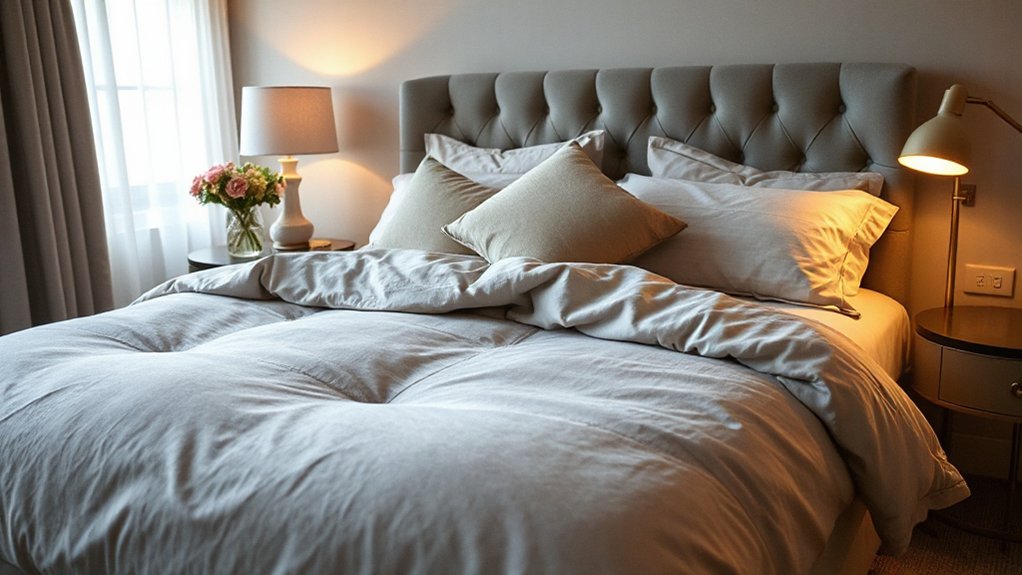
Add a few decorative pillows for visual depth and a softer touch, but avoid crowding the sleeping surface. Choose mattress toppers that suit your firmness preference—from memory foam to latex—to achieve a balanced sink and lift.
Keep the palette cohesive, with subtle textures that read luxe rather than busy. Finish with a tidy, uncluttered bedscape, so you sleep deeply and wake refreshed.
Layer Lighting for Day and Night Comfort
Layering lighting for day and night comfort begins with a thoughtfully arranged plan: combine ambient, task, and accent lights so the room feels inviting and functional at every hour. You’ll organize sources to sculpt mood without glare, using dimmable fixtures and warm tones that align with hotel-caliber calm.
Start with a soft, overhead glow for general circulation, then add bedside lamps for reading, and consider a slim floor lamp to highlight artwork. Integrate adjustable task lighting at desks or vanity areas to support focused work or makeup routines.
Use mood lighting to cue transitions—lower wattages at night, warmer hues, and subtle accent LEDs to emphasize textiles and architecture. Arrange lighting deliberately, ensuring flexibility, coherence, and a serene, hotel-inspired ambiance. Arrange lighting, Mood lighting.
Add Noise-Reducing Elements for Quiet Sleep
You’ll start by choosing sound-absorbing materials, like soft carpets, heavy curtains, and upholstered furniture, to soften everyday noise.
Pair these with white noise essentials, such as a gentle fan or a compact sound machine, to mask interruptions.
Then arrange a quiet room layout that minimizes echo and concentrates sleeping zones away from doors and windows.
Sound-Absorbing Materials
To create a tranquil sleep space, start by choosing sound-absorbing materials that calm outside noise and reflections inside the room. You’ll thin the soundscape with targeted choices that don’t overwhelm aesthetics.
Soundproof curtains hang where walls meet windows, absorbing mid to high frequencies while enhancing blackout performance. Acoustic panels, placed thoughtfully on walls or ceilings, break up echoes without sacrificing style.
Opt for breathable fabrics and neutral tones that blend with your décor, preserving a hotel-like calm. Layering materials—soft rugs, cushioned headboards, and upholstered furniture—adds depth and further dampens resonances.
Consider placement for practical access and maintenance, ensuring panels are easy to clean and curtains slide smoothly. The result: a quieter, more restful environment aligned with refined design.
White Noise Essentials
Sound-absorbing materials quiet the room, but true hotel calm also comes from purposeful noise management. In this section, you’ll harness white noise to create a sleep-friendly backdrop without distraction.
Start with a high-quality white noise machine that offers consistent tones and adjustable volume. Place it across the room, not directly beside your head, to keep the sound even and non-intrusive.
For lighter sleepers or fluctuating noise environments, consider a sound masking option, which blends ambient tones into a smooth, unobtrusive cushion that reduces startling rises in noise. Keep cycles simple: a steady hum or soft rain can work best.
Pair with a firm routine and consistent bedtime to reinforce the effect, achieving a tranquil, hotel-inspired sleepZONE at home.
Quiet Room Layouts
Strategically arrange furniture and tech to maximize quiet without crowding the room. Place the bed away from walls shared with external spaces and position minimal electronics near the door to limit hallway noise.
Use plush headboards and layered textiles to dampen sound reflections, and select low-traffic surfaces that don’t echo. Implement soft lighting and a gear-free nightstand to reduce daytime clutter that attracts attention.
Deploy soundproof curtains or blackout window treatments on windows to block street noise and drafts, enhancing sleep stability.
Institute a media-free zone or controlled Bluetooth speaker corners, keeping volume low and purposeful.
Finish with a calm color palette and consistent textures to cultivate a serene, hotel-esque retreat.
Optimize Blackout Solutions for Silent Sleep
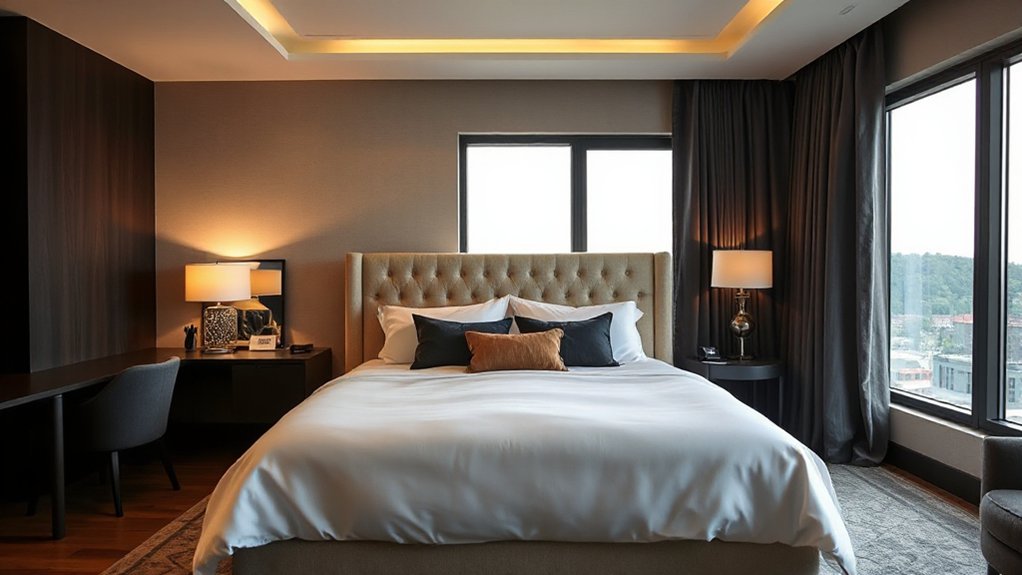
Blackout solutions aren’t just about darkness; they’re about quiet, undisturbed sleep. To optimize, assess your room’s noise sources and align them with the right products.
Start with blackout curtains that combine dense fabric with a woven lining to minimize light and muffled sound. Pair them with a sturdy curtain rod and precise mounting to prevent gaps.
Next, consider soundproof windows or retrofit options, like laminated glass or secondary glazing, which dramatically cut street and HVAC noise without sacrificing daylight. Guarantee seals around frames are tight and that drapery folds meet the window edges for an airtight fit.
Finally, test sleep conditions at different hours, adjusting curtain weights and window treatments until you consistently wake refreshed. Precision choices yield hotel-grade stillness at home.
Declutter Surfaces With Smart Surface Management
You’ll establish clear surface zones to keep essentials visible without clutter.
Implement a daily debris reset to maintain calm, intentional spaces.
Try hidden tray tactics to conceal daily clutter while keeping essentials within reach.
Clear Surface Zones
Clear surfaces instantly elevate a room’s sense of calm. To create clear surface zones, designate a single visual plane for each area—bedside, dresser, and desk—so textures and tones stay intentional.
Prioritize minimalism: use a small tray for essentials, a single decorative accent, and one lighting fixture per zone. Keep cords and chargers out of sight with clever management solutions, like wall-mounted outlets or cord clips.
Limit decorative accents to a cohesive set that echoes your palette, avoiding clutter that stops your eye. When you add items, ask if they serve function or mood; remove the rest.
Maintain balance by aligning objects with clean edges and soft finishes, letting negative space breathe. This discipline reinforces hotel-like calm and polished cohesion.
Daily Debris Reset
Maintaining the calm you established with clean surface zones hinges on a daily debris reset that keeps every plane pristine and purposeful. You perform a quick sweep each evening, clearing crumbs, receipts, and stray gadgets before they accumulate into clutter.
Prioritize flat surfaces: desk, dresser, nightstand, and window sill. Use a single tray or tray-like bin to consolidate essentials—remote, charger, care items—so you can wipe and rearrange in seconds.
Integrate guest amenities and room service leftovers into a controlled system: return, recycle, or relocate to a designated bin, not the open surface.
Establish a minimal ritual: wipe, sort, store, and observe. The goal isn’t perfection but consistent order, so you wake to serenity, not chaos, and a bed that remains hotel-clean throughout the day.
Hidden Tray Tactics
Start by selecting a hidden tray option that tucks into a shallow drawer or beneath a panel, creating a concealed compartment for essentials like chargers, remotes, and notepads. Use soft-close mechanisms to prevent squeaks and maintain a hotel-like hush.
Labeling isn’t needed when placement is deliberate; integrate trays into the flow of your surface plan so you can clear items in a single, practiced motion. With smart surface management, daily debris stays contained, and you preserve clean lines and calm, hotel-inspired elegance.
Curate Calm-Ready Tech-Free Zones
Creating calm-ready, tech-free zones in your bedroom starts with a deliberate boundary between relaxation and screens. You set a clear cutoff: no devices inside the sleep area, no notifications after sundown, no work creeping into night routines.
Designate a tech-free sanctuary corner with a comfortable chair, soft lighting, and a small journal for reflection. Embrace a technology detox by removing charging docks from the bedside and storing cables out of sight.
Choose calming color schemes—muted greens, warm taupes, or powder blues—that soothe the nervous system and signal stillness. Add tactile cues: a weighty throw, a textured rug, and a soothing ambient sound option.
Communicate expectations with household members to protect the zone, preserving a serene, hotel-like retreat.
Select Bedroom Art and Scents That Calm
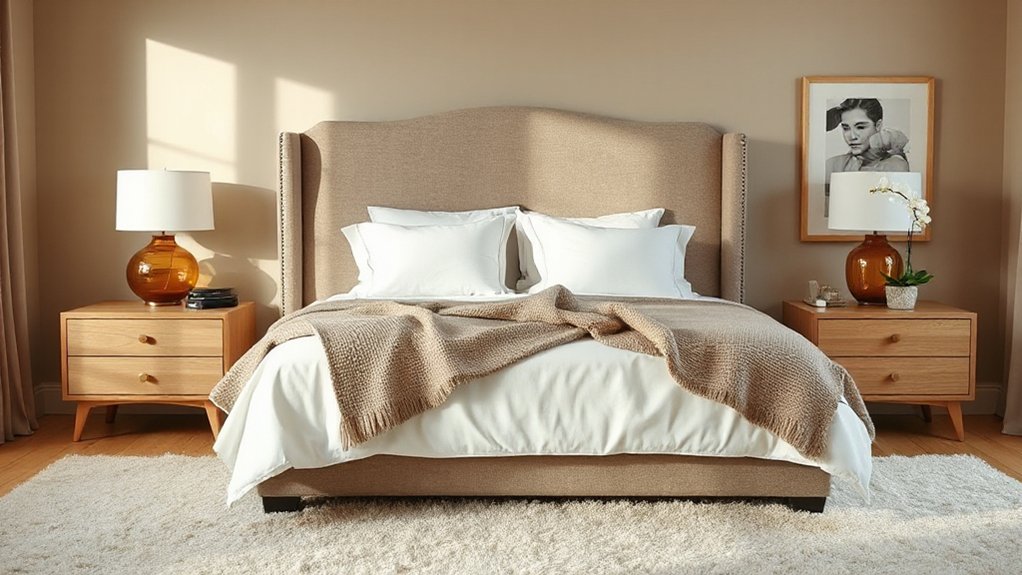
Art and scent choices should cultivate repose, not distraction, so opt for calm, cohesive selections that feel intentional.
When selecting art, choose pieces with soft palettes, gentle lines, and minimal framing that echoes your room’s color story. A single focal work or a paired diptych creates calm without competing for attention, so prioritize art selection that breathes serenity.
For scent, aim for subtlety rather than drama; use scent layering to build a gentle, layered atmosphere. Start with a light base, like a mild essential oil diffuser, then add a secondary note near bedside to avoid overpowering sleep.
Keep scents consistent with your decor to reinforce a hotel-like calm throughout your space.
Place Rugs for Cozy Footfall and Defined Zones
Rugs anchor the room, guiding foot traffic while defining distinct zones for sleeping, dressing, and lounging. You’ll choose rug placement that supports flow, avoiding clutter and competing patterns. Start with a largest rug under the bed to ground the sleeping area, then layer smaller pieces to delineate seating or dressing corners.
Consider the room’s proportion: ceiling height, door swing, and furniture footprint all influence placement. Flooring options matter for longevity and feel; opt for low-pile, dense loops for foot comfort and easy maintenance.
In a hotel-inspired scheme, pair a neutral base with subtle texture to prevent visual noise. Place rugs so edges align with furniture feet, not cram into tight corners.
Balance warmth and rhythm, ensuring transitions feel seamless rather than forced.
Define a Functional Bedside Setup
A functional bedside setup starts with a nightstand that supports your routine and fits the scale of your bed. Choose a bedside table with clean lines and a calm finish to anchor the space without competing with the headboard.
Prioritize surface real estate for essentials—reading light, a glass of water, and a small notebook—so you’re not reaching in the dark.
Use one or two quiet accessories, keeping nightstand decor purposeful rather than decorative clutter.
Integrate a lamp with soft, warm light and a dimmer for late-night reading.
Keep cords managed and out of sight, and consider a drawer for essentials to maintain a tidy surface.
This disciplined approach yields a practical, hotel-inspired bedside vignette.
Refresh on a Budget: Small Upgrades Without Renovation
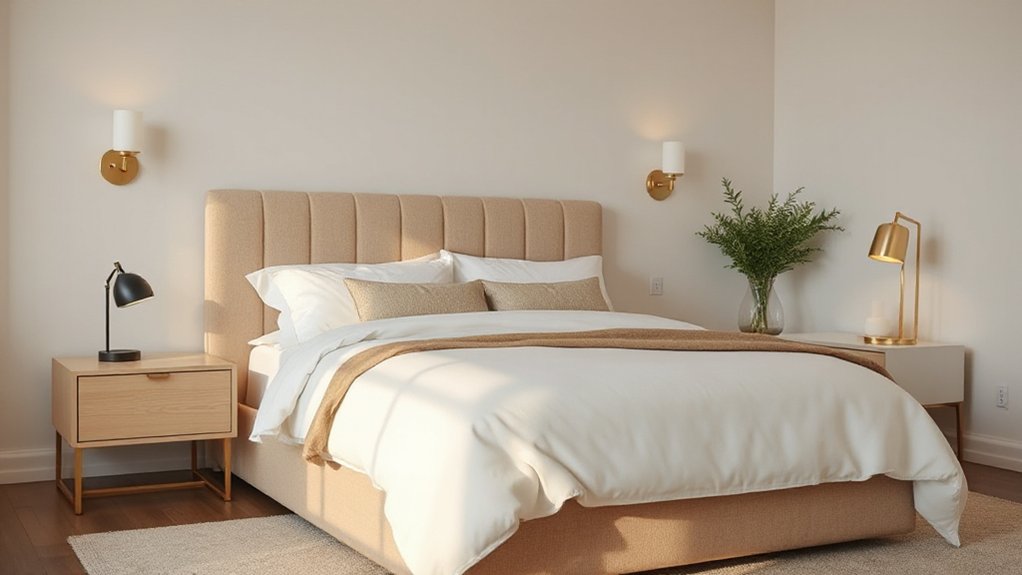
Small changes can make a big impact, and you don’t need a renovation to refresh a hotel-style bedroom. You can elevate the room with simple, budget-friendly upgrades that feel curated and intentional.
Swap out generic accents for purposefully chosen pieces: a new throw, a textured rug, or velvet pillows that echo a refined palette. Layer lighting with a dimmable bedside lamp and a warm ambient string light to mimic boutique hotel warmth.
Refresh textiles—curtains, linens, and a tactile throw—without overhauling the core setup. Prioritize cohesive color, subtle metallics, and clean silhouettes to maintain polish.
Budget friendly tips emphasize smart, reversible efforts. Try DIY decor projects like framed fabric panels or a homemade headboard accent to tailor the space without heavy costs.
Build a Weekend-Worthy Bedding System
To build a weekend-worthy bedding system, start with a core set of high-quality basics and layer for texture and warmth. You’ll begin with a crisp, breathable core sheet set, a medium-weight duvet, and a supportive pillow pairing.
Add texture with a quilt or throw, then reinforce color harmony through a coordinated palette. Elevate comfort and longevity by matching thread counts and fabric blends that hold up to frequent washing.
Invest in luxury linens for the top layer and a duvet cover that’s easy to remove and clean. Finish the look with ambient lighting placed to soften edges and highlight the bed’s structure.
A well-curated mix of materials and tones creates an inviting, hotel-like retreat you’ll want to revisit every weekend.
Sustain Your Hotel-Style Bedroom: Routine and Refreshes
Maintaining a hotel-style bedroom starts with a practical rhythm that keeps your space consistently fresh. Establish a simple weekly cycle: one day for linen refresh, another for surface decluttering, and a midweek reset to align lighting and scent.
Keep guest amenities accessible but discreet—narrow down to essentials like spare toiletries and a compact tissue box to mirror hotel efficiency. Rotate a small selection of pillows or throws to preserve novelty without clutter.
Schedule quarterly deep cleans for corners, vents, and dust-prone areas, and refresh textiles with a targeted wash or dry clean.
Align your decor with deliberate hotel branding: a consistent color palette, understated art, and a signature scent. Clear routines reduce decision fatigue and sustain the calm, curated atmosphere guests expect.
Frequently Asked Questions
How Long Does It Take to Complete a Hotel-Style Bedroom Makeover?
A hotel-style bedroom makeover typically takes 1 to 3 weeks, depending on scope. You’ll install luxury lighting, add plush textiles, and set ambient scents, ensuring every detail feels polished, cohesive, and thoughtfully curated for ultimate relaxation and sophistication.
What Is the Most Important Budget Upgrade for Hotel Vibes?
Symbolism whispers: you invest in ambient lighting, because shadows reveal luxury accessories and elevate mood. The most important budget upgrade for hotel vibes is ambient lighting, guiding texture, color, and scale to craft a polished, cohesive sanctuary.
Can Small Spaces Feel Luxurious Without Remodeling?
Yes, small spaces can feel luxurious without remodeling. You’ll transform with luxury lighting and plush textiles, creating depth and softness while keeping a cohesive, curated vibe that celebrates smart layout, warm tones, and thoughtful accessories.
Which Color Schemes Best Evoke a Calm Hotel Look?
Calm hotel vibes come from soft neutrals and cool blues, sparking serenity through color psychology; pair with warm, layered room lighting to prevent harsh contrasts, keeping you relaxed yet curious as you transform your space tonight.
How to Maintain Hotel-Grade Bedding at Home Long-Term?
Maintain hotel-grade bedding long-term by investing in luxury linens and plush pillows, rotating sets weekly, following care labels, and airing fabrics to prevent moisture buildup. You’ll preserve softness, avoid pilling, and sustain a cohesive, curated sleep sanctuary.
Conclusion
Create your hotel-style bedroom as a curated sanctuary you’ll actually use. You’ll notice calm, cohesive colors, layered textures, and thoughtful storage translating into effortless serenity. For example, a busy professional uses under-bed bins and a fabric-lined chest to keep surfaces serene, while dimmable warm lighting bathes the room in a soft glow. Commit to a simple weekly refresh—swap linens, fluff cushions, and quicken scent. With consistency, your space stays luxurious, calming, and utterly yours.