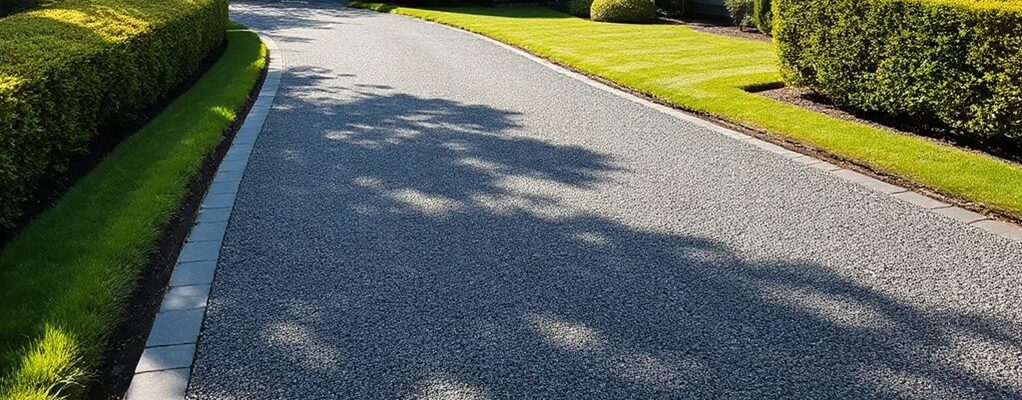
Does the material you choose truly stack up for Surrey’s climate and daily use, or is it mainly about looks? You’ll weigh concrete for durability, asphalt for budget flexibility, and permeable options to curb runoff, keeping maintenance manageable. Statement-worthy choices exist—from cobblestones to block paving—each with trade-offs in cost, longevity, and curb appeal. There’s more to it than initial price, and a careful comparison will determine long-term value for your home. The next steps reveal what matters most in Surrey driveways.
Key Takeaways
- Consider Surrey’s temperate, damp winters and dry summers; choose materials with good drainage, frost resistance, and sealing needs.
- Compare concrete, asphalt, permeable pavers, and resin-bound surfaces for durability, maintenance, and long-term costs.
- Permeable pavers reduce runoff and may offer tax or utility savings, but require proper base preparation and permeability testing.
- Align driveway material with your home style (traditional, modern, rustic) while prioritizing sustainability and low embodied energy.
- Account for installation timelines, site prep, weather windows, and ongoing maintenance (sealing, cleaning, resealing) in budgeting.
Surrey Driveways: Goals, Climate, and Choosing Value
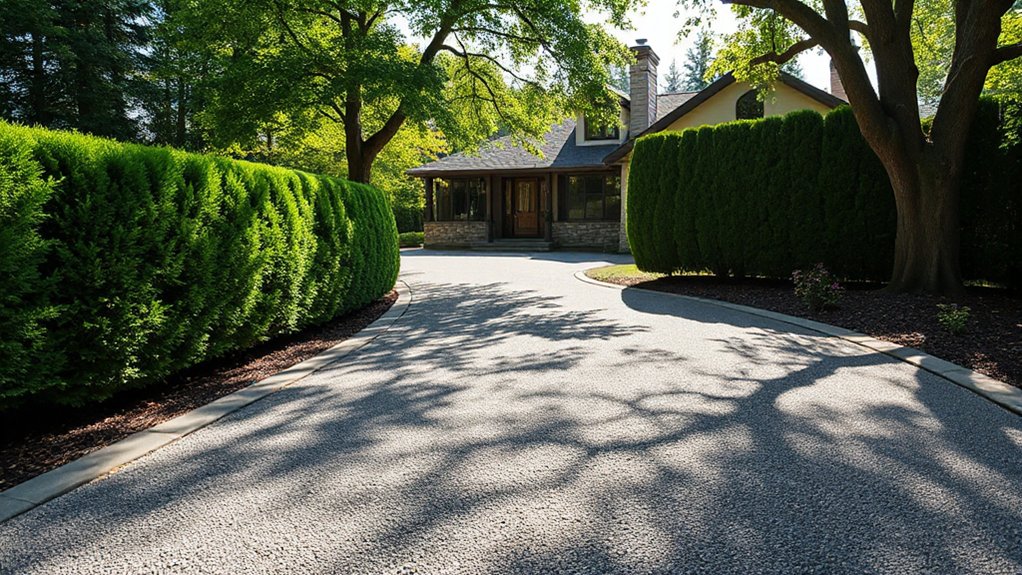
If you’re planning Surrey driveways, start by clarifying your goals, climate considerations, and how you’ll measure value. You’ll assess durability, maintenance, and long-term costs against upfront price.
Define desired Driveway aesthetics—whether you want a traditional, modern, or rustic look—and match it to your home’s style.
Consider Surrey’s temperate, often damp winters and dry summers, selecting materials with proven performance in this climate.
Prioritize material sustainability, looking for low embodied energy, recyclability, and longevity to reduce ecological footprint.
Evaluate install complexity and expected life span, factoring repairability and resurface intervals into value calculations.
Establish objective metrics: slab or surface resilience, drainage behavior, and resistance to freeze-thaw cycles.
With these criteria, you’ll choose a driveway that balances beauty, performance, and responsible stewardship.
Permeable Pavers: Runoff Control, Curb Appeal, and Cost Realities
Permeable pavers offer practical gains in Surrey driveways by balancing runoff control, curb appeal, and cost realities. You’ll reduce stormwater runoff through porous surfaces that absorb rain and recharge groundwater, mitigating localized flooding.
Choose designs that complement homes and streetscapes, preserving curb appeal with neat patterns and varied textures.
Installation requires proper base preparation, joint materials, and compaction to prevent deformation; ask your contractor about permeability tests and maintenance plans.
While upfront costs are higher than traditional pavers, long-term savings come from reduced drainage needs and potential tax incentives.
Consider eco-friendly materials that resist staining and wear, extending life with minimal environmental impact.
Permeable pavers align with responsible stormwater management while delivering durable, attractive Surrey driveways.
Concrete Driveways: Types, Durability, and Long-Term Value
Concrete driveways offer solid durability and long-term value, so you’ll want to weigh the upfront cost against ongoing maintenance and lifespan.
You’ll consider different finishes and joint patterns for durability, plus how wear, exposure, and load affect longevity.
In short, durability and longevity drive maintenance needs and influence true long-term value.
Durability And Longevity
Concrete driveways stand out for their exceptional durability and long service life when properly installed and maintained. You’ll benefit from reinforced mixtures, proper jointing, and adequate curing, all reducing cracks and surface rutting over decades.
In Surrey’s climate, expect strong resistance to freeze–thaw cycles when you seal and protect against water ingress. Long-term value comes from proper design choices: appropriate thickness, drainage planning, and compatible substrates that minimize settlement risk.
You’ll notice minimal maintenance if you keep hairline cracks addressed early and use high-quality finishes that resist staining. Durability also supports landscape integration and aesthetic appeal, letting the driveway complement the home and surroundings without frequent replacements.
With thoughtful installation, your investment sustains curb appeal and functional longevity.
Cost And Maintenance Value
Are you getting real value from your concrete driveway over time, or will ongoing costs erode your investment? You’ll evaluate long-term value by considering maintenance needs, repair frequency, and lifecycle costs.
Concrete offers durability, but sealant refreshes and joint fixes matter to prevent cracking and water damage. Look beyond initial install to total cost of ownership, including landscaping integration and driveway lighting, which can affect aging and upkeep.
Plan for cost-effective upkeep, not just upfront savings, to preserve resale value and curb appeal.
- Landscaping integration reduces maintenance headaches and ties your drive to surrounding spaces
- Driveway lighting enhances safety, reduces accidental damage, and can deter staining
- Scheduled sealing and crack repairs extend life without major overhauls
Resin-Bound Driveways: Pros, Cons, and Cost Considerations
Resin-bound driveways offer a smooth, permeable surface that’s both durable and visually appealing, but they come with trade-offs you’ll want to verify. You’ll benefit from quick installation, strong frost resistance, and minimal maintenance, yet costs can rise with resin types and surface thickness.
Consider long-term upkeep, as UV exposure may cause subtle color fading and joint cracking if installed too thin. Surface texture remains comfortable underfoot and driving, while a professional mix ensures consistent hardness and slip resistance.
Material sourcing matters: choose high-quality aggregates and a reputable binder to avoid premature wear. Calculate total cost per square meter, including base preparation, drainage, and potential restoration.
Assess climate, usage, and neighborhood drainage permits to determine whether resin-bound fits your Surrey home’s needs.
Cobblestone Vs Block Paving: Traditional Charm With Modern Performance
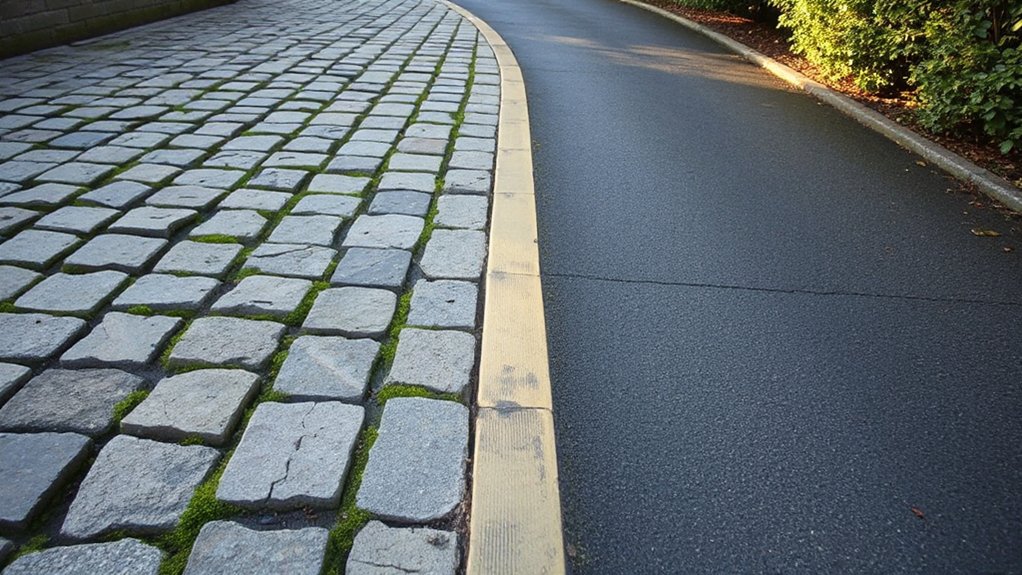
Cobblestone and block paving each offer distinct curb appeal and performance, so you don’t have to choose between charm and practicality. Cobblestone delivers historical significance with enduring texture, while block paving provides reliable, uniform surfaces and easier maintenance.
You’ll notice aesthetic variations—from muted tones to bold contrasts—that let you tailor a Surrey home’s look without sacrificing durability. For budgeting and longevity, weigh material lifespan, joint maintenance, and slip resistance relevant to local weather.
Consider installation precision, drainage, and seasonal expansion that affect long-term performance. Overall, cobbles exude classic character, and block paving offers modern versatility, so you can blend tradition with practicality.
- Historical significance and its influence on curb appeal
- Aesthetic variations that suit different home styles
- Maintenance considerations for longevity and safety
Asphalt vs Concrete in Surrey: Weather Resilience and Lifespan
Asphalt and concrete each offer tangible strengths for Surrey driveways, building on the durability discussion from cobblestone and block paving. You’ll find weather resilience varies by material, climate exposure, and maintenance cadence.
Asphalt tolerates freeze-thaw cycles with proper sealing, but it softens in heat and develops surface ruts if not resurfaced regularly.
Concrete resists deformation under heavy loads and tends to last longer with minimal cracking when installation follows proper jointing and curing practices. Lifespan is influenced by drainage, sun exposure, and routine upkeep.
Color options exist for both surfaces, with pigments available in asphalt blends and concrete dyes, affecting heat absorption and curb appeal.
Environmental impact matters: consider production emissions, recyclability, and end-of-life options to choose the solution that best suits your Surrey home.
Surrey Driveway Budgets: Typical Cost Ranges per Square Foot
For Surrey driveways, budgeting typically ranges from roughly $8 to $15 per square foot for materials and installation.
Concrete tends to be at the higher end of this range when full-depth pours and proper jointing are used. Asphalt, on the other hand, is closer to the lower end when sealcoating and resurfacing are emphasized.
You should plan for variability based on site access, subgrade prep, and any landscaping aesthetics you want integrated with the project.
In practice, factor in long-term maintenance, drainage, and potential lighting upgrades to preserve curb appeal and functionality, including driveway lighting.
- Material choice expectations influence the price range and upkeep
- Landscaping aesthetics integration can affect excavation, grading, and permits
- Concrete versus asphalt tradeoffs impact total cost and schedule
Note: All figures are indicative and subject to contractor quotes.
Installation Timelines and Site Considerations for Surrey Homes
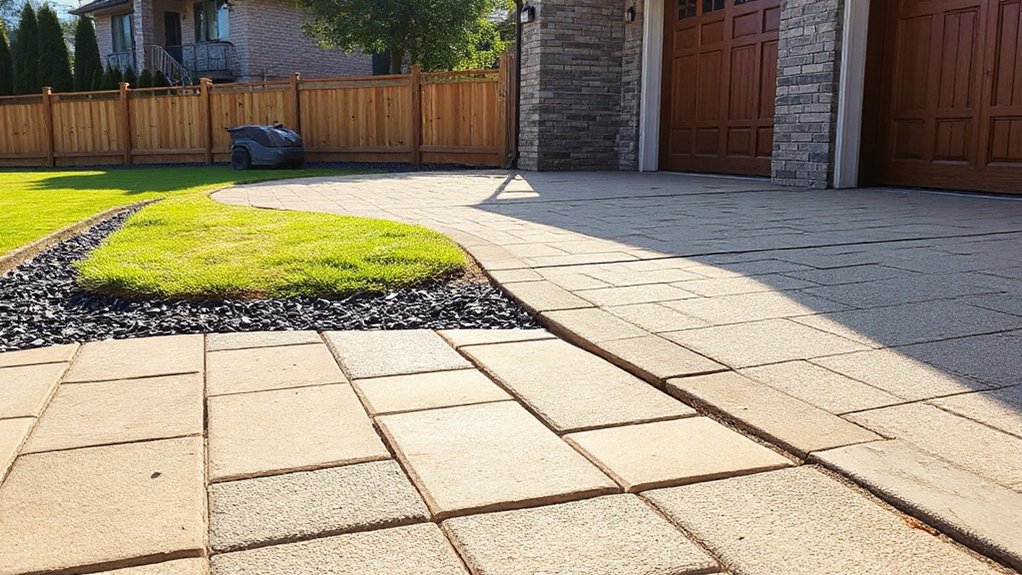
Weather conditions set your start and cure windows, so you’ll plan around temperature, precipitation, and frost risk.
Begin with a site assessment to identify slope, drainage, utilities, and access constraints.
Then align sequencing with curing and sealing timelines.
We’ll cover how these factors influence installation windows, material choices, and long-term performance for Surrey homes.
Weather Impact Timing
In Surrey, installation timelines for driveway materials hinge on seasonal weather and recent conditions; plan around temperature, precipitation, and ground moisture to avoid delays. You’ll want to align work windows with dry spells and frost-free periods, since rain, snow melting, and soil saturation slow excavation, compaction, and curing.
Coordination with drainage plans matters, especially where Rain gardens influence surface runoff. Keep expectations realistic for material delivery and backfill when ground stays damp.
Contingencies help: reschedule for prolonged wet spells, and pause during freezing nights.
- Schedule windows during consistent dry days and avoid post-rain or thaw cycles.
- Verify drainage compatibility with Rain gardens and nearby slopes.
- Prepare for snow melting and temporary access restrictions due to soft ground.
Site Assessment Guidelines
Site assessment before driveway installation in Surrey centers on documenting site conditions, identifying constraints, and outlining sequence and timing. You’ll map grade, existing utilities, and access points, then verify setback and drainage rights.
Establish a realistic timeline that aligns with weather windows, materials lead times, and contractor availability. Consider landscaping design to preserve aesthetic balance, ensuring pathways, trees, and shrubs won’t be undermined by excavation or compaction.
Prioritize drainage solutions to prevent standing water and frost heave, planning slopes and swales that direct water away from structures.
Assess soil type, subgrade stability, and load-bearing capacity to select appropriate base materials.
Finally, document permits, inspections, and contingency buffers, so installation proceeds predictably without surprises.
Clear communication with your team minimizes delays and maximizes durability.
Curing And Sealing Windows
After completing the site assessment, you’ll align curing and sealing windows with Surrey’s climate and your installation plan. You’ll follow a clear sequence: set framing, then apply appropriate curing, then implement sealing techniques to prevent moisture intrusion.
The curing process must be monitored for uniform temperature and humidity, with protection from direct sun and wind when needed. Use manufacturer guidelines to determine cure times before handling glazing and finishing.
For sealing techniques, prioritize airtight joints, proper gasket compression, and flashing to direct water away from the frame. Timing aligns with paving and landscaping work to avoid rework.
Coordinate trades to prevent damage during curing. Plan for inspections at critical milestones to verify performance and durability.
- Align cure times with site conditions and weather windows
- Verify joint seals and gasket integrity during install
- Schedule inspections to confirm durability and finish quality
Maintenance and Longevity: Seasonal Care by Material Type
Seasonal care varies by material, but you’ll find that consistency yields the best longevity for Surrey driveways. You’ll implement a routine tailored to your surface, not a generic timetable.
For concrete and textured pavers, perform Seasonal cleaning in spring and fall to remove debris, prevent moss, and reduce surface wear. Seal or reseal per manufacturer guidance to curb freeze-thaw damage and material staining.
For asphalt, monitor for oxidation and cracking; reseal when you notice surface dulling, typically every 2–4 years.
For permeable systems, prioritize drainage checks and leaf removal to preserve infiltration rates. Address spills promptly to minimize Material staining, especially oil or fuel.
Winter prep includes clearing snow with plastic shovels and avoiding hot water or salt on delicate residues. Regular inspections catch problems early.
Design Guidance: Harmonizing House, Garden, and Driveway Style
To harmonize your house, garden, and driveway, start by selecting materials and colors that echo the home’s exterior and landscape tones. Then plan the driveway layout to complement sightlines and entry points.
You’ll create coherence by repeating texture and hue across surfaces, so choose a unifying palette that flows from the facade to the yard. Consider subtle contrasts to define zones without severing unity.
Garden pathways should weave toward focal points and seating, while driveway lighting accents edges and safety.
Keep scale balanced with surrounding plantings and architecture to avoid visual noise. Use durable, low-maintenance finishes for longevity and clarity.
- Align materials and colors across house, garden, and driveway for a cohesive look
- Integrate garden pathways to guide movement and enhance focal points
- Plan driveway lighting to improve safety and ambiance without glare
Choosing a Surrey Driveway Contractor: Questions to Ask and Red Flags
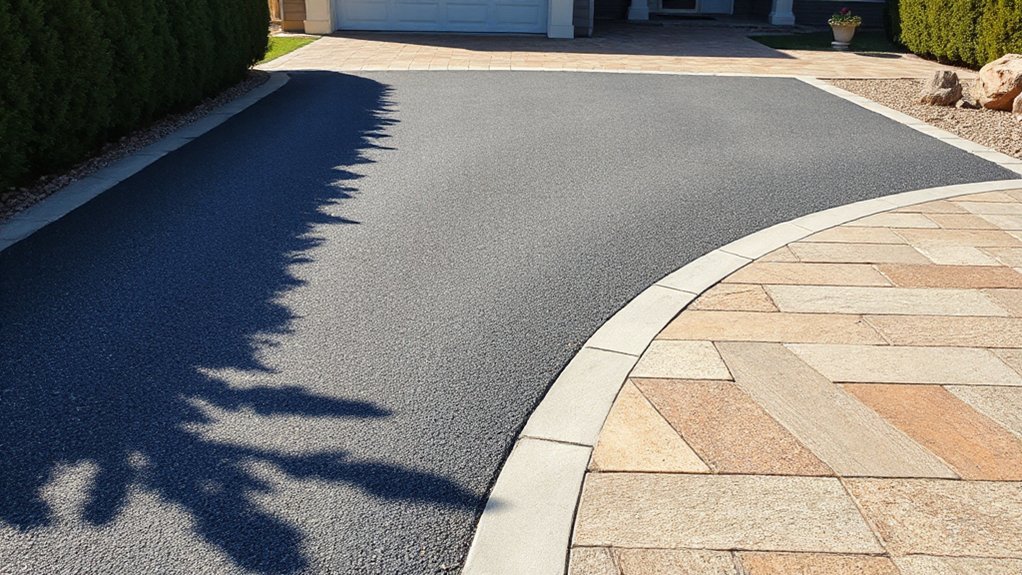
When choosing a Surrey driveway contractor, you should start by spotting red flags early—unlicensed crews, vague timelines, or pressure to pay upfront.
Ask clear, specific questions about licenses, warranties, materials, and project milestones, and insist on written estimates and a detailed contract.
Be prepared to walk away if responses are evasive or promises warm over vague assurances.
Red Flags To Watch
Caution is essential when hiring a Surrey driveway contractor, because red flags often surface early and save you from costly problems later. You monitor signs like vague quotes, unclear insurance, or pressure to skip permits.
Trustworthy contractors provide detailed estimates, current licenses, and a documented timeline. Beware incremental price hikes after work begins, or requests for upfront cash without a contract.
If they can’t clearly explain material choices or your landscaping trends and eco-friendly options, reassess. A lack of portfolio or references is a red flag, as is dodging warranties or post-completion follow-up.
- Ask for written contracts, full material specs, and warranty terms
- Check licenses, insurance, and past client references
- Demand a clear timeline and upfront, itemized pricing
Key Questions To Ask
Inquire about project sequencing, site protection, and erosion control. Demand detailed warranties for workmanship and materials, plus clear payment milestones tied to milestones.
Probe for subcontractor use and supervision, ensuring a project manager is available for on-site questions. Discuss integration with existing landscaping and drainage plans to prevent future issues.
Clarify how driveway lighting is addressed for safety and aesthetics, and confirm Landscaping integration to preserve curb appeal and access. Avoid vague promises; insist on precise, accountable commitments.
Frequently Asked Questions
What Driveway Material Resists Surrey Winters Best?
A resin-bound or permeable paver resists Surrey winters best. It sheds snow efficiently and dries quickly, so you’ll experience fewer icy patches.
You’ll appreciate strong drainage, too, thanks to better drainage solutions that prevent pooling. In cold, wet conditions, these surfaces flex with freeze-thaw cycles, reducing cracks.
For routine Snow clearance, you’ll find no-till shoveling easier. Pair with good edge restraints to keep runoff on the surface and maintain traction in tougher weather.
How Do Maintenance Needs Differ by Material Type?
Maintenance needs differ by material: concrete requires sealing every 2–3 years and crack repairs.
Asphalt needs periodic resurfacing and sealing.
Brick or paver driveways demand joint cleaning and weed control.
Gravel costs less maintenance but requires grading and replenishment.
Porous options need rare backwashing or debris removal.
Consider Color options and installation complexity when choosing, since more colorful or intricate setups can raise upkeep.
You’ll prioritize durable choices to minimize ongoing maintenance.
What Prevents Moss and Weed Growth Long-Term?
Moss prevention and weed control come down to proper drainage, sunlight exposure, and periodic maintenance.
To stop moss long-term, keep surfaces dry, install a weed-proof barrier, and apply a moss-inhibiting cleaner or preventative treatment annually.
For weed control, tighten joints, use polymeric sand, and reseal every few years.
Regular brushing, edge upkeep, and addressing shaded, damp areas also help.
Consistent monitoring prevents resurgence and preserves surface integrity.
Which Option Adds the Most Property Value?
Choosing concrete pavers adds the most property value, because you get durable, timeless design aesthetics and flexible layouts that boost curb appeal. You’ll enjoy low maintenance and a solid resale impression, while the sealed surface minimizes weathering.
Consider permeable options for better Environmental impact. Keep joints tight and colors neutral for lasting appeal.
If you want maximum appeal, invest in professional installation to guarantee even sizing and a clean, high-end finish.
Are There Hidden Costs After Installation?
Yes, there can be hidden costs after installation. You should expect extras like site prep, drainage fixes, or permit fees that aren’t included in initial quotes.
To protect yourself, insist on pricing transparency and get a detailed, written breakdown before work starts.
Check contractor reputation, request references, and ask how changes are billed.
If costs arise, you’ll know who’s responsible and how they’re communicated, ensuring you’re not surprised by additional charges.
Conclusion
Choosing the right Surrey driveway isn’t guesswork—it’s a practical plan. Assess your climate, soil, and drainage, then match material to budget and upkeep. Concrete, asphalt, permeable pavers, or cobblestone each offer strengths; weigh durability, aesthetics, and long-term costs. Vet installers, demand warranties, and confirm drainage solutions. With careful selection, your driveway becomes a reliable backbone for your home—like a well-tuned engine that keeps your property steady, stylish, and ready for every season.