
A case study shows a renovated 2-bed in Boscombe yielding mid-6% net after costs in a peak season. You’ll find demand from young professionals and students sustains occupancy around 95%, with rents rising 3–5% year over year in core pockets like Boscombe and Southbourne. As finance tightens and prices climb, savvy investors couple amenity upgrades with prudent budgeting to push yields higher, especially on short-term lets near the coast—keep an eye on regulatory shifts and seasonal swings as you size up the opportunity.
What Attracts Bournemouth Renters Today

Bournemouth renters are drawn to a blend of affordability, coastal lifestyle, and strong demand signals, with data showing steady vacancy compression and resilient rent growth compared to regional peers.
You’ll notice a sustained appetite for compact, rentable spaces near the shoreline, reinforced by rising occupancy rates and shorter vacancy cycles.
Beachside cafes and art galleries anchor daily routines, supporting steady foot traffic and skewing demand toward mixed-use clusters.
In surveys, tenants cite predictable utility costs, proximity to employment hubs, and accessible transport as key drivers, while rent trajectories remain modestly upscaled versus national benchmarks.
You can expect tighter market liquidity in seasonal peaks, with pricing reflecting both tourism spillovers and year-round resident demand.
Bournemouth Rental Yield: Current Snapshot and Trends
Premium yields in Bournemouth remain pressured by steady rent growth and resilient occupancy, yet they’re tempered by rising purchase costs and tighter financing. You’ll see yields stabilizing around mid-single digits for traditional buy-to-let strategies, with variation by submarket and property type.
Occupancy trends stay robust, supported by steady demand and longer tenancies in core clusters. While gross rental growth cools from peak velocity, it remains positive year over year.
Cap rate dispersion widens as financing costs rise, nudging investors toward value-led assets and renovated stock. In maintaining performance, you’ll lean on disciplined property management and meticulous tenant screening to sustain net yields.
Data signals favor efficiency gains, proactive maintenance, and cost controls, underscoring a cautious but steady outlook for Bournemouth rental portfolios.
Coastal Flats in Bournemouth: Short-Term Potential
Coastal flats in Bournemouth show rising demand for short stays, with occupancy upticks across peak seasons and a brighter shorter-term pipeline.
Short-term yield trends point to modest expansion, driven by higher daily rates and stable vacancy dips.
Flats market dynamics indicate you should watch seasonal mix and price granularity to optimize returns.
Coastal Rentals Demand
In Bournemouth’s coastal flats, demand for short-term rentals shows brisk, near-term momentum, with occupancy dipping slightly in off-peak months but spiking on weekends and holidays. You’ll see occupancy rising from 75% in winter to 92% during peak springs, while average nightly rates trend up 8% year over year.
Short-term funnels form around core beach weeks, holidays, and event weekends, driving higher ARI and revPAR signals. Seasonal demand demonstrates clear pull from domestic travelers seeking Seaside tranquility and coastal ambiance, with longer stays clustered around long weekends.
Commissionable listings with flexible pricing outperform static-rate rivals by roughly 12% in high-season windows. To optimize, synchronize pricing with advanced demand forecasts, not just calendar dates, and monitor weekly occupancy shifts to align marketing spend.
Short-Term Yield Trends
Short-term yield in Bournemouth’s coastal flats is buoyed by the same weekend and holiday demand that boosted occupancy earlier, with daily rates driving RevPAR higher during peak periods. Throughout recent weeks, occupancy hovered near 78–82%, while ADR advanced 6–9% month-over-month, lifting short-term yield metrics.
You’ll notice a widening gap between peak-season and off-peak days, signaling clearer micro-trends in daily revenue. Market volatility has compressed some appetite for longer commitments, yet transient demand remains resilient, supporting higher rolling yields when occupancy spikes.
Investor psychology appears attuned to near-term volatility, preferring data-driven adjustments to price, rather than long renovations. In Bournemouth’s coastal flats, short-term yields track occupancy shifts closely, with price discipline and timely rate updates sharpening performance during holidays and long weekends.
Flats Market Dynamics
Flats along Bournemouth’s coast are showing tighter short-term dynamics as occupancy remains the primary driver of daily revenue, with ADR momentum persisting into peak weekends and holidays. You’ll see occupancy stabilize near 88–92% on high season weekends, while midweek dips temper overall yield.
ADR climbs 8–12% in summer windows, supporting revenue per available room despite modest rate ceilings. Property valuation signals align with demand concentration in coastal clusters, reinforcing premium pricing for premier bayside units.
Tenant demographics shift toward younger professionals and short-let explorers, driving shorter tenancy cycles and higher turnover. Market dispersion narrows in core zones, while peripheral flats rely more on volume and flexible pricing.
In this environment, monitoring occupancy and ADR correlations to seasonal events remains essential for framing investment timing and asset strategy.
Inland Bournemouth Family Homes: Steady Demand and Caps
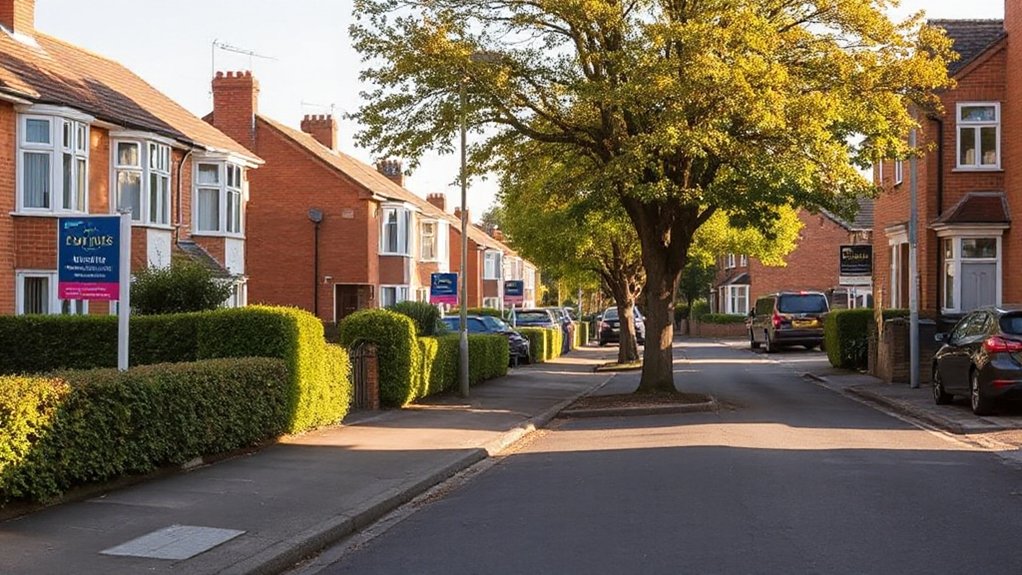
Inland Bournemouth family homes continue to show resilient demand, driven by steady population growth, affordable entry points, and improving local amenities.
While cap rules and lender oversight keep sentiment cautious, you’ll see modest price growth aligned with salaries and mortgage rates, with occupancy hovering near long-run norms.
Year-over-year rental yields trend upward modestly as commuter demand remains stable and single-family stock tightens, supporting premium rents for well-located properties.
Market sensitivity to policy shifts, including caps and affordability schemes, persists, so you’ll monitor lender tightening signals and regional development plans.
Rural charm and agricultural land influence persists in peripheral pockets, where infrastructure upgrades facilitate absorption.
Bournemouth Neighbourhood Spotlight: Boscombe vs Southbourne
Boscombe and Southbourne present contrasting yet complementary profiles for Bournemouth’s coastal market, with recent data highlighting divergent rental yields, price momentum, and tenant demand.
You’ll notice Boscombe’s affordability pressure yields higher gross yields on beach-facing flats, while Southbourne shows steadier cap rate compression amid growing family demand.
Price momentum in Boscombe has outpaced regional averages over the last 12 months, yet Southbourne retains stronger long-term rent growth tied to stable occupancy.
Tenant mix diverges too: first-time renters gravitate to Boscombe’s revised beachfront development, whereas professionals seek Southbourne’s transit links and village amenities.
Coastal conservation remains a shared priority, shaping planning constraints and asset resilience.
Both areas benefit from improved beach access, but differences in capital expenditure and rental volatility will guide your investment timing.
What Drives Bournemouth Rents: Seasonality and Amenities
Seasonal patterns push rents higher in peak months and soften in off-peak periods, with occupancy rates and weekly asks tracking those cycles.
In-demand amenities like beach access, parking, and modern appliances consistently correlate with premium rents and faster take-up, especially near transport links and city centers.
You’ll see the strongest yield signals when utilization aligns with school holidays, events, and seasonal turnover, underscoring the need for metrics-led pricing and flexible contracts.
Seasonal Rent Drivers
What drives Bournemouth rents across the year are clear: seasonality peaks around school holidays and the summer rush. Amenities like beachfront access, proximity to transport links, and high-demand facilities (parking, clean modern kitchens, secure storage) lift rents in peak months and cushion them in off‑peak periods.
Seasonal fluctuations shape monthly rent trajectories, with average rent per night rising 12–18% during summer and school-break windows. Year‑over‑year trends show consistent quarterly bumps in Q2 and Q3, aligning with tourism and student cycles.
You’ll notice occupancy rates tracking above 85% in peak periods, while off‑season lull reduces rents but maintains steady occupancy. Rental seasonality, plus amenity access, drives higher daily rates, tighter vacancy, and improved yield dispersion across Bournemouth’s rental mix.
In-Demand Amenities
Amenities shape Bournemouth rents as much as seasonality. When you analyze occupancy and price data, you’ll see high-demand features correlate with higher yields. Luxury apartments command premium rents in central coastal pockets, driven by finishes, space, and access to transport links.
In contrasts, student housing sustains steady demand near universities and on-campus hubs, buffering seasonality and sustaining occupancy across term cycles. Look at occupancy rates by amenity: secure entry, modern appliances, in-building laundry, and integrated tech correlate with premium pricing.
Rental trajectories show spikes when new amenity clusters appear, signaling value uplift for investors. You should track year-over-year changes in amenity-driven rents, noting how renovations shift yield curves.
Bournemouth Lettings: Regulatory Changes to Watch
Regulatory changes in Bournemouth lettings are accelerating, and landlords must track the impact on yields, onboarding costs, and compliance timelines. You’ll want a data-led view: recent regulatory compliance shifts correlate with interim vacancy spikes and longer onboarding cycles, averaging a 6–12% drag on net yields across single-let portfolios.
Legal updates constrain tenancy terms, licensing requirements, and energy performance metrics, pressuring owners to retrofit or reprice units to maintain occupancy.
Monitor quarterly KPI trends: time-to-let, compliance spend per property, and average rent uplift needed to cover new obligations.
Benchmark against regional peers to identify best-practice cost controls and faster onboarding.
Build a regulatory calendar, allocate budget buffers, and align lease terms with anticipated rule changes to preserve cashflow resilience.
Building a Bournemouth Rental Strategy: Buy-To-Let, Holiday Lets, HMOs
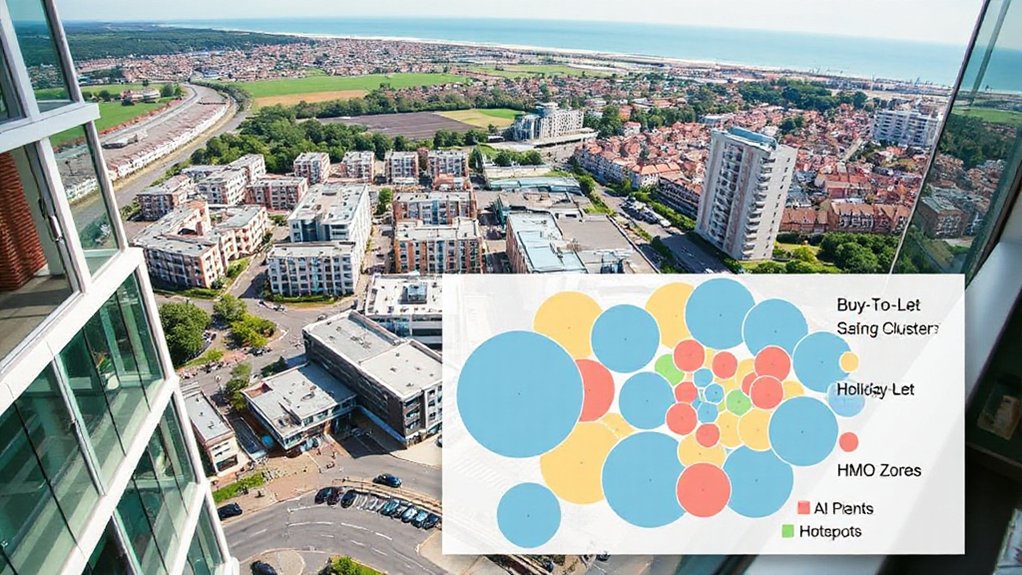
To build a Bournemouth rental strategy that balances risk and return, start with a clear view of demand signals across buy-to-let, holiday lets, and HMOs. Then map those signals to unit economics.
You’ll compare occupancy rates, average nightly rates, and seasonal volatility to project gross yields under each model. Buy-to-let emphasizes steady cash flow and longer leases, while holiday lets hinge on occupancy concentration and premium pricing during peak periods.
HMOs push higher per-unit income but raise management complexity and regulatory scrutiny. Track cap rates, service costs, and maintenance tails to refine rent cards and debt service.
Align Rental regulations and property management practices early, ensuring compliant licensing, safety standards, and proactive tenant services for sustainable performance.
Continuous benchmarking keeps your strategy resilient amid market shifts.
Maximizing Bournemouth Yield: Renovation and Furnishing Tips
You’ll see that renovation ROI hinges on cost-per-square-foot vs. expected rent uplift, so focus on high-demand finishes that push per-pathway yields.
Furnishing appeal boosts occupancy and nightly rates, with data showing the biggest lifts from modern, durable pieces and cohesive design across one- to two-bedroom flats.
We’ll measure success by incremental yield per property, tracking renovations against rent growth, occupancy, and turnover rates to refine your strategy.
Renovation ROI Strategies
Renovation ROI in Bournemouth hinges on quick, data-backed decisions: target improvements with proven yield impact, prioritize high-demand features, and track pre- and post-renovation rents to quantify return.
You’ll map Historical property values across recent cycles to identify price-sensitive gaps, then couple that with renovation cost analysis to forecast net gains.
Focus on kitchens, bathrooms, and energy efficiency where rental demand remains strongest, and size your scope to minimize downtime.
Use a delta approach: estimate incremental rent boosts per upgrade, then compare against project costs and carrying charges.
Track market absorption rates after completion to validate pacing.
Maintain a living dashboard of cap rates, cash-on-cias, and vacancy shifts.
Prioritize fast, flexible design tweaks that optimize occupancy without overcapitalizing.
Furnishing Appeal Boosts
Furnishing choices can lift Bournemouth yield as much as structural fixes, but focus on data-backed selections that boost occupancy and rent. You should prioritize high-demand styles backed by occupancy metrics, with a lean inventory that accelerates turnover.
In trend terms, furnishing appeal correlates with shorter vacancy periods and higher nightly rates in mid- to high-tier segments. Pair durable, easy-to-clean pieces with timeless interior design to maximize longevity and guest satisfaction.
Track metrics on average stay length, booking lead time, and renewal rates after upgrades; refine through A/B furniture testing where possible. Favor neutral palettes accented by local-facing details to improve photo appeal and click-throughs.
Invest in quality mattresses, appropriate storage, and cohesive lighting to elevate perceived value and positive reviews.
Financing Bournemouth Investments: Budgeting and Options
Financing Bournemouth investments hinges on aligning budgeting with the latest market metrics: cap rates, debt service coverage, and expected rental yields. You’ll start with precise budget planning that captures purchase costs, refurbishments, and ongoing carrying expenses.
Track forecasted net operating income against debt service to judge affordability and resilience under rental volatility. Use trend data to estimate vacancy, cap rate shifts, and price appreciation across Bournemouth neighborhoods, refining projections quarterly.
Compare financing options that match your cash flow profile: fixed-rate loans for stability, interest-only deals for early-stage growth, and lines of credit for opportunistic acquisitions. Prioritize lenders offering competitive covenants and transparent amortization schedules.
Align leverage with risk tolerance, ensuring buffers for maintenance, taxes, and regulatory changes. Document scenario analyses to support decision gates and investment pacing.
Bournemouth Investment Risk: Mitigating Factors
Bournemouth investment risk hinges on identifying and mitigating key volatility factors across markets, tenant demand, and regulatory shifts. You quantify exposure by tracking quarterly price swings, occupancy rates, and rent per square foot, then apply hedges for periods of trend reversals.
Market saturation signals when new supply outpaces absorption, so you adjust yield assumptions and capex plans accordingly. You prioritize Tenant diversity to reduce renter-concentration risk, cycling through property types and price bands to stabilize occupancy.
Regulatory shifts, such as change in tenancy rules or taxes, receive forward-looking scenario modeling with probability-weighted outcomes. Diversification across submarkets buffers macro shocks, while dynamic rent reviews preserve cashflow.
In practice, you document metrics, set trigger thresholds, and review risk dashboards monthly for timely reallocation.
Case Studies: Typical Bournemouth Rental Playbooks

Case studies reveal the typical Bournemouth rental playbooks you’ll rely on to drive steady yields: focused on specific submarkets, tenant profiles, and price bands where occupancy and rent growth outpace regional benchmarks.
You’ll see patterns across student, professional, and family clusters, with price sensitivity aligned to amenity access and commute times.
Historical property prices provide context for cap rates and exit velocity, while vacancy duration signals risk-adjusted returns.
Data shows submarket diversification reduces variance, with micro-trends in coastal vs. inland pockets translating into higher occupancy during seasonal peaks.
Local school quality correlates with family demand, informing rent escalations and lease structures.
Playbooks emphasize careful pricing bands, proactive maintenance, and transparent communication to sustain occupancy and outperform benchmarks.
Insights rely on metrics-led dashboards and timely market updates.
How to Evaluate a Bournemouth Deal Step by Step
To evaluate a Bournemouth deal step by step, start with a tight hypothesis about submarket demand, price tier, and tenant profile. Then test it against fresh data on rents, occupancy, and cap rates.
You’ll benchmark the plan against current supply, vacancy trends, and seasonal cycles to gauge resilience.
Track key metrics: gross yield, net yield after fees, and cash-on-cash return, alongside cap rate compression or expansion.
Use sensitivity analyses for rent growth and occupancy shifts to stress-test the model.
Within property management, guarantee maintenance velocity, service level agreement costs, and tenant turnover costs are reflected in cash flow.
Don’t overlook legal considerations—licensing, tenancy regulations, and lease compliance—as material risk factors that can alter profitability.
Maintain ongoing monitoring to adjust assumptions as markets evolve.
Frequently Asked Questions
How Does Bournemouth’s Seasonal Tourism Affect Rents Year-Round?
Seasonal fluctuations push rents up during peak months and ease off in off-season, you’ll notice a clear pattern: tourist influx drives higher yields in summer while vacancy risk elevates in winter, shaping quarterly rent volatility alongside occupancy metrics.
Which Local Regulations Most Impact Short-Let Profitability?
Short-lets in Bournemouth face extreme rules: zoning restrictions and licensing requirements dominate profitability. You’ll track occupancy, licensing cost, and compliance timelines, trend where approvals fluctuate, and metrics indicate revenue dips when regulations tighten, rebounds with streamlined processes and clear policy signals.
What Are Hidden Costs in Bournemouth Property Investment?
Hidden fees and maintenance costs bite into your returns, especially with Bournemouth properties. You’ll see hidden fees creep into management, cleaning, and compliance; track maintenance costs trends, capex needs, and seasonal variances to protect net yields.
Are There Upcoming Infrastructure Changes Influencing Property Prices?
Yes, transport development and evolving zoning reforms are shaping prices: you’ll likely see higher demand along new transit corridors and mixed-use hubs, with price growth aligning to project timelines, infrastructure investments, and density targets guiding future market metrics.
How Do Rent Controls Vary Across Bournemouth Neighborhoods?
In this allegorical map, you steer through Neighborhood zoning, where rent controls vary by district, reflecting Rental demand patterns. You measure trends, compare metrics, and determine where caps align with supply, demand, and price resilience across Bournemouth neighborhoods.
Conclusion
Conclusion:
You’re reading the market’s pulse: rents rise with young professionals and students, yet costs press on yields. Boscombe and Southbourne act like steady lighthouses, guiding cash flow through seasons and occupancy shifts. Renovated, amenity-rich units are the magnet, coastal flats the wind. Track occupancy, cap rates, and financing margins like a tide chart; let demand, cost, and regs be your compass. When the signals align, your Bournemouth deal becomes a resilient anchor in a shifting sea.