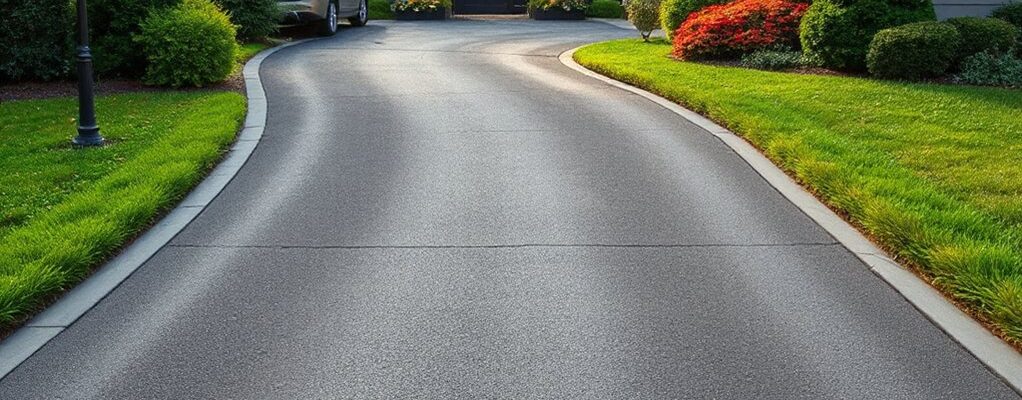
You might not realize that your driveway can do more than park cars; it can frame your home and guide the eye with color, texture, and lighting. Start by choosing durable materials that match your house and landscape, then plan a layout that balances function with curb appeal. It’s practical to take into account drainage, maintenance, and climate-smart options from the get-go. Want a step-by-step path to a stunning, cohesive result? Let’s begin.
Key Takeaways
- Choose durable, climate-appropriate materials and match color/texture to the home for cohesive curb appeal.
- Plan layout with clear sightlines, zones for parking, and subtle lighting to guide the eye and enhance nighttime appeal.
- Prioritize permeable or reflective surfaces and eco-friendly drainage to improve sustainability and reduce heat.
- Define precise edge details and landscape borders to frame the drive and soften transitions.
- Use a staged plan (design layout, permits, timeline) and consider professional help for quality, warranties, and efficiency.
Choose Materials for Kerb Appeal
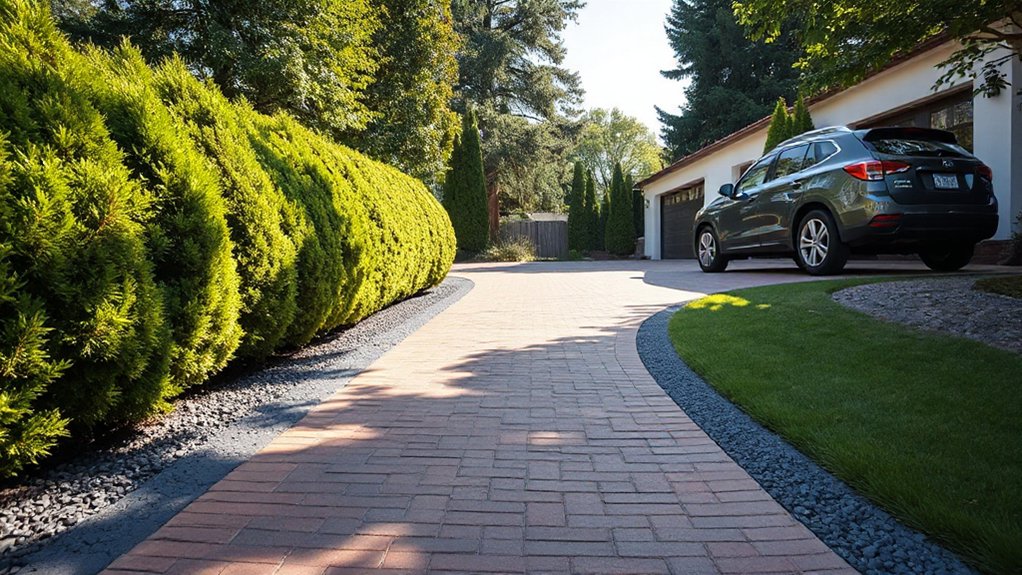
Choosing the right materials is the quick win for curb appeal. You’ll pick options that survive weather, complement your home, and fit your budget.
Start by evaluating your landscape integration: how the driveway blends with paths, planting beds, and focal points. Choose materials with similar tones or textures to create a cohesive connection from street to entry.
Consider durability, maintenance, and slip resistance for safety. Concrete, pavers, and permeable surfaces each offer distinct looks and performance—select one that aligns with traffic, climate, and drainage.
Plan for lighting enhancement by ensuring material joints accommodate low-voltage lighting or embedded LEDs, which heightens nighttime appeal and visibility.
Finally, verify delivery timelines, warranties, and installation quality to prevent future scuffs or cracks.
Match Color and Texture to Your Home
To guarantee your driveway feels like a natural part of the home, match its color and texture to your siding, roofing, and surrounding stone or brickwork. Start with color coordination that echoes your primary exterior hues, so the driveway recedes rather than competes with the facade.
Choose materials whose surface texture aligns with nearby surfaces so progressions feel seamless. If your siding is smooth, select a driveway finish with a gentle, uniform texture; if you have rustic brick, lean toward a slightly rougher texture for cohesion.
Consider subtle contrast only where you want emphasis, not distraction. Document the palette before installation and verify samples on-site under natural light.
In final checks, assure consistency across borders, joints, and edging for durable, cohesive curb appeal.
Plan Driveway Layouts for Curb Appeal
Start with clear layout principles that frame curb appeal, such as sightlines, proportions, and drive width, so your approach reads as intentional rather than accidental.
Consider pathways and focal points that guide the eye to key features like entrances, borders, and a defined edge, while selecting materials and edge details that reinforce the overall style.
Plan your layout with practical steps for spacing, curves, and shifts that balance durability, drainage, and visual impact.
Layout Principles For Curb Appeal
A well-planned driveway layout boosts curb appeal by guiding traffic smoothly from street to home while framing the front landscape. You design paths that reduce turns, create clear entrances, and preserve yard vegetation.
Prioritize symmetry or intentional asymmetry to match your house style, ensuring sightlines to the door. Allocate zones for parking, guest access, and service, so pedestrians aren’t routed through vehicles.
Consider landscape lighting to highlight key features and improve safety after dark, without overpowering the façade. Integrate driveway signage where appropriate for directions or rules, but keep it unobtrusive.
Use materials that complement the home and landscape, with edging that contains gravel or pavers neatly. Maintain accessibility with gentle slopes and stable surfaces, ensuring longevity and low maintenance.
Pathways And Focal Points
With a clear driveway layout in mind, you’ll wire pathways to guide visitors naturally toward the entry while making focal points pop. Plan routes that frame views, balance symmetry with subtle asymmetry, and keep sightlines clear for safety. Use garden borders to define edges and soften gradual shifts between driveway and garden spaces, creating inviting entrances without clutter. Integrate lighting accents at key junctures to enhance depth and highlight features after dark.
- Align a main path with the front door sightline, then branch secondary routes toward garden focal points.
- Edge every path with garden borders for texture, color, and defined rhythm.
- Place lighting accents at corners, stair landings, and entry thresholds to draw attention and improve usability.
Materials And Edge Details
Choosing durable, visually cohesive materials sets the tone for curb appeal; select driveway surfaces that pair well with your home’s style and climate.
Start simple: define edge details that guide traffic and visually frame the path to the door. Choose edging that resists shifting, whether concrete, brick, or precast pavers, and maintain a clean joint line for a polished look.
Consider how materials contrast or match adjacent walkways, landscape beds, and the driveway’s width to enhance balance.
Plan for landscape integration by weaving plantings along the borders to soften progressions and add year‑round texture.
Lighting enhancements should extend visibility at critical points—corners, corners of the drive, and entry—without glare.
Prioritize durability, maintenance, and cohesive color palettes to support lasting curb appeal.
Ensure Maintenance and Durability From the Start
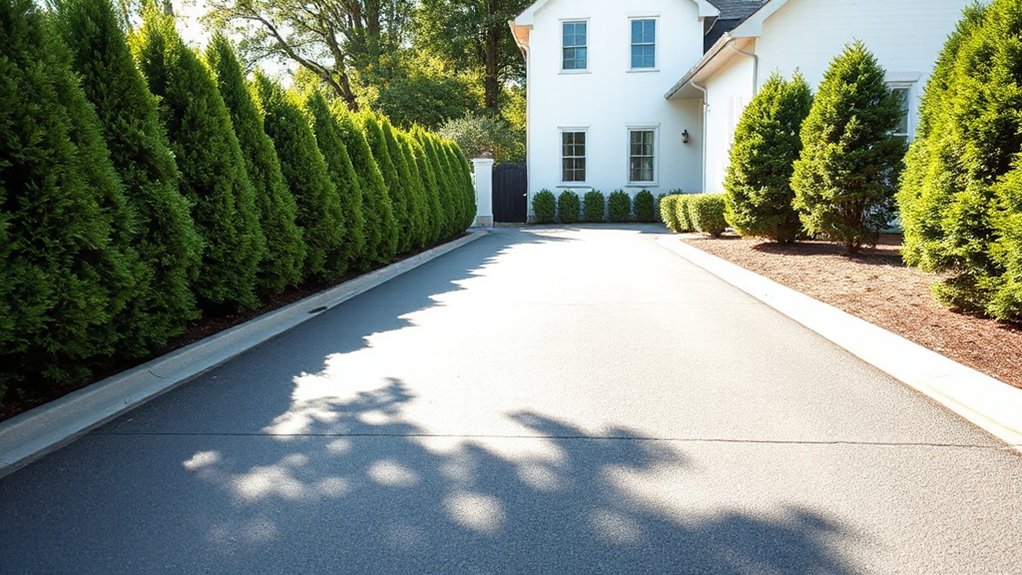
Choosing durable materials and planning for ongoing upkeep now saves you time and money later.
Prioritize options that withstand weather and heavy use, and set a simple maintenance routine to extend life.
This approach keeps your driveway looking sharp and performing reliably for years.
Materials That Last
When you pick materials that last, durability starts long before the first shovel hits the ground. You’ll set up a driveway that resists wear, weather, and shifting soils by choosing proven options and proper installation.
Focus on surface integrity, drainage, and easy repair to keep your curb appeal intact over time. Landscaping accents and lighting enhancements should complement, not complicate, the material you select.
Stay practical: balance cost, maintenance, and performance in every choice.
- Reversible pavers with tight joints that curb weed growth and cracking
- Permeable concrete or asphalt mixes that manage water and resist deformation
- Natural stone or decorative stamped options that tolerate freeze-thaw cycles
Choose materials that last, and your driveway stays impressive with minimal ongoing upkeep.
Maintenance for Longevity
To guarantee longevity, start with a maintenance plan that begins at day one and stays active throughout the life of your driveway. Regular inspections catch cracks, drainage issues, and surface wear before they escalate. Seal or reseal asphalt or concrete on schedule to preserve strength and curb appeal, and address vegetation encroachment promptly to prevent root damage.
Clean debris and stains with mild detergents, avoiding harsh chemicals that can degrade surfaces. Garden integration should be intentional: plan edging, edging height, and pathways so soil erosion stays controlled and plantings don’t undermine the substrate.
Lighting enhancements improve nighttime visibility and deter intruders, but assure fixtures are rated for outdoors and wired safely. Maintain proper drainage, monitor seasonal freeze-thaw cycles, and document service intervals for lasting durability.
Budget Upgrades That Create Instant Impact
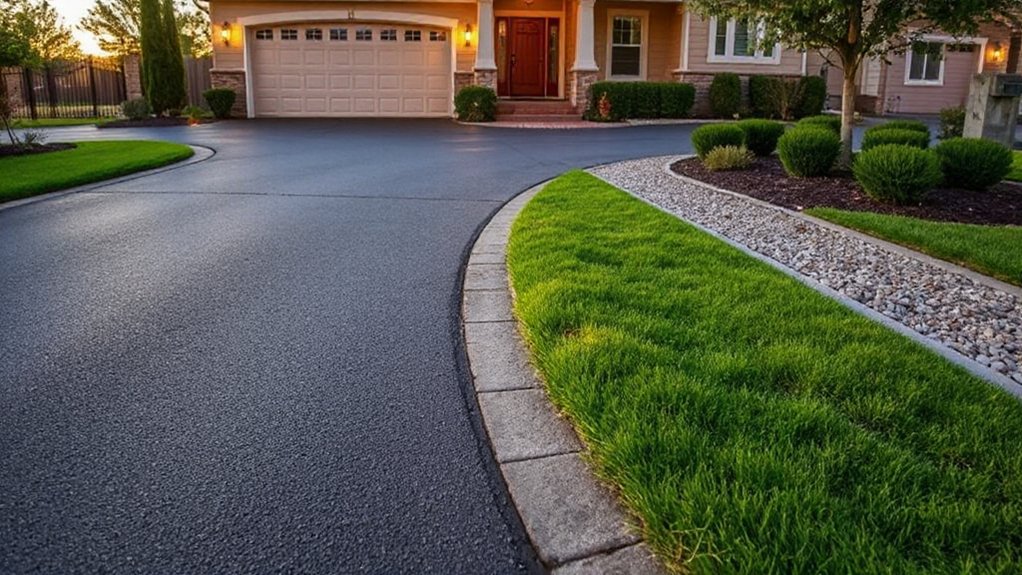
Even small upgrades can make a big impression, especially when you’re aiming for curb appeal fast. You’ll get noticeable results without blowing your budget by focusing on strategic tweaks that pay off visually and functionally. Prioritize finishes and accents that draw attention to the driveway and home entry.
1) Plant bed edge in clean lines with low-maintenance shrubs and mulch to frame the path and boost garden integration.
2) Add targeted lighting enhancements along the driveway and entry, using warm LEDs to illuminate features and improve safety.
3) Install a simple, contrasting border or edging to define the drive and create instant, polished contrast.
These tweaks deliver immediate impact, improve nighttime appeal, and keep maintenance minimal.
Choose Climate-Smart Surfaces and Manage Drainage
Choosing climate-smart surfaces and managing drainage starts with knowing your site’s conditions. You’ll assess soil type, slope, sun exposure, and rainfall patterns to pick durable materials that handle water well.
Favor sustainable materials that resist cracking and fading, like permeable pavers, gravel overlays, or asphalt with reflective sealant, which reduce heat buildup and runoff.
Prioritize eco-friendly drainage solutions, such as French drains, swales, and vegetation buffers, to direct water away from foundations and sidewalks without pooling.
Design should blend with your landscape and curb appeal while meeting local codes.
Guarantee proper installation: compacted base, slope away from structures, and joints that promote infiltration.
Regular maintenance, including clearing debris and resealing, keeps performance high and surfaces looking sharp.
Hire a Pro or DIY With Confidence
Weigh the options: you can hire a pro for a turnkey, durable driveway, or tackle the project yourself with careful planning and clear checkpoints.
Weighing pro vs. DIY hinges on time, budget, and skill. A pro delivers consistency, warranty, and faster results; you control style and layout if you DIY, with strict milestones to stay on track.
Consider landscaping ideas and lighting options early to guide material choice and placement.
1) Visualize the result with a concrete or paver plan, then map tasks, permits, and sequencing.
2) Schedule inspections, set weather windows, and reserve equipment to avoid delays.
3) Compile a checklists-driven timeline to stay aligned with budget and quality targets.
Frequently Asked Questions
How Long Does a New Driveway Typically Last Before Replacement?
A new driveway typically lasts 20 to 30 years, depending on material and maintenance. You’ll boost driveway durability by sealing asphalt every 2–5 years and performing timely repairs.
For concrete, expect 25–40 years with proper joint maintenance and crack treatment. Material longevity hinges on climate, heavy loads, and drainage.
You should monitor for cracks, potholes, and settlement, addressing issues early to preserve strength and curb appeal. Regular upkeep protects your investment and extends overall durability.
Will a Driveway Increase the Home’s Resale Value Significantly?
Yes, a driveway can considerably boost resale value, especially with strong landscaping improvements and curb appeal enhancements that attract buyers.
You’ll likely see a noticeable lift when the project complements your home’s style, improves front-yard presentation, and creates better first impressions.
Keep quality materials, proper drainage, and consistent paving patterns in mind.
A well-executed driveway that blends with landscaping improvements adds value and helps you recoup a good portion of its cost at sale.
Which Eco-Friendly Materials Offer the Best Long-Term Savings?
Eco-friendly options deliver the best long-term savings. For sustainable paving, look at permeable concrete, recycled asphalt, and interlocking pavers, which reduce maintenance and utility costs over time.
You’ll want cool pavements with light colors to cut cooling loads, and concrete with fly ash for durability.
Choose modular, repairable designs to extend lifespan.
In short, sustainable paving minimizes water waste, lowers energy bills, and keeps your driveway looking sharp season after season. This approach pays off.
Can Driveways Be Designed to Reduce Privacy Concerns?
Yes, driveways can be designed to reduce privacy concerns. You should plan for landscape integration with thoughtful planting, fencing, or screens that buffer sightlines while preserving curb appeal.
Use privacy screening strategically—tall evergreens, lattice walls, or layered shrubs—to block nearby views without feeling enclosed.
Integrate color and texture with hardscape edges, and position features to direct attention away from living spaces.
Keep maintenance simple, and guarantee drainage and accessibility remain practical.
What Maintenance Tasks Should Be Scheduled Seasonally?
Seasonal maintenance tasks you should schedule include inspecting edges and surfaces, resealing asphalt or concrete, trimming overgrowth, and cleaning debris from drainage.
In spring, check lighting and adjust landscaping enhancements for growth.
Summer requires irrigation tuning and inspecting pavers for looseness.
Fall focuses on clearing leaves and winterizing edging.
Throughout, prioritize lighting improvements for safety and curb appeal, and perform weatherproofing as needed.
You’ll maintain consistency, prevent damage, and keep your property looking sharp year-round.
Conclusion
With these steps, you’ll transform your driveway into a practical, stylish entryway. Choose durable materials that pair well with your home, and align color and texture for a cohesive look. Plan layouts that balance function and curb appeal, and factor in drainage and maintenance from day one. If you’re upgrading on a budget, target high-impact areas first. Go climate-smart where you can, and decide whether to hire a pro or DIY with confidence—you’ll be driving up your home’s value in no time. Break ground and reap the rewards.