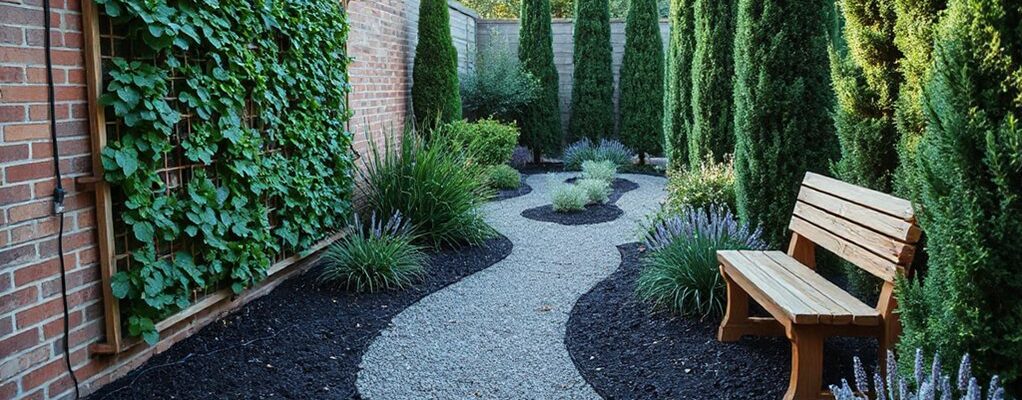
In your narrow plot, start with linear beds that run the length of the space and pair them with meandering paths to guide light and airflow. Consider vertical gardens on walls or fences to gain height without width, and carve out multipurpose zones—seating, planting strips, and wildlife spots—so every inch earns a function. Choose layered, compact plantings and modular elements to keep the layout adaptable, balanced, and low-maintenance, while a thoughtful detail here or there hints at a bigger plan you’re building toward.
Key Takeaways
- Use linear beds with winding, accessible paths to maximize sun, airflow, and maintenance ease on narrow plots.
- Employ vertical gardening on walls or fences to multiply growing space without widening the footprint.
- Create multipurpose garden rooms with modular edges, tall planters, and fold-away seating for flexibility.
- Plan compact, drought-tolerant, disease-resistant plants with tiered layering for year-round interest.
- Prioritize solid foundations, proper drainage, and seasonal color through a mix of perennials and annual accents.
Foundations for Narrow-Plot Design
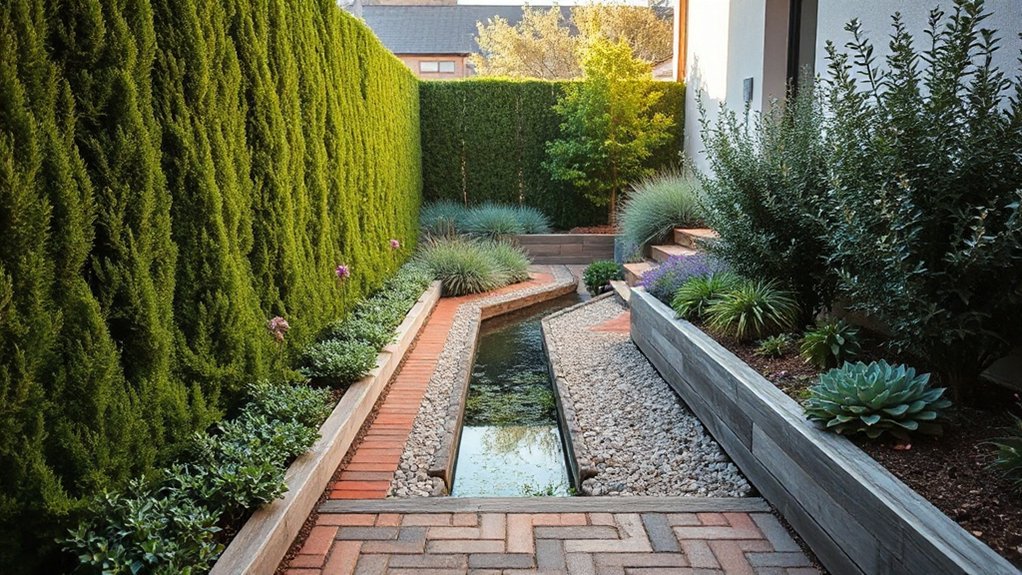
Ask what a strong base looks like, and you’ll see it starts with a sturdy, tailored footing. You assess narrow spaces by anchoring foundations that align with your overall axis, avoiding waste and misalignment. Your plan prioritizes even bearing, moisture control, and long-term stability.
For garden furniture, you specify compact, low-profile supports that resist rot and misleveling, ensuring safe access along tight walkways. Before laying any structure, you complete soil preparation: tests, amendments, and compacted subgrades that prevent settlement under weight.
You document elevations, drainage gradients, and frost lines to keep foundations stable through seasons. Your approach blends precision with vision, producing a framework that supports crafted edges, discrete pathways, and accessible utilities, while preserving sightlines and sunlight for every planted bed.
Linear Beds and Winding Paths for Light and Air
Linear beds run straight to maximize sun exposure and simplify maintenance, while winding paths weave through them to invite airflow and visual interest. You guide plant placement along the beds, pairing companions for mutual benefits and easier care.
The paths create microclimates that reduce heat stress and improve access for pruning, watering, and harvests, all while preserving sightlines. Plan for seasonal color by stacking perennials with annual accents so bloom times overlap, avoiding gaps.
Companion planting enhances pest resistance and soil health, letting you reduce inputs. Use narrow edging to keep beds tidy and accessible, and label plant pairs for easy rotation.
- Align beds with sun hours for peak photosynthesis
- Pair herbs with vegetables for synergy
- Space for mature plant spread
- Schedule seasonal color shifts for continuous interest
Vertical Gardens on Narrow Lots
Vertical gardens offer a powerful solution for narrow lots by turning walls, fences, and trellises into productive green space. You’ll optimize vertical surfaces with modular planters, wall-mounted pockets, and trellis systems that support vertical growth without crowding ground space.
Choose compact, sun-loving varieties for fast results, and layer by height to create microclimates along the full width of your lot. Use irrigation that drips from top to bottom, minimizing waste while keeping roots consistently moist.
Plan for maintenance access—leave walking clearances and tool-free access points. Prioritize urban planting strategies: select disease-resistant cultivars, rotate crops seasonally, and stagger harvests to sustain visual impact.
Integrate lighting to extend viewing windows after dark, and document growth to refine future vertical gardening choices.
Create Multipurpose Garden Rooms That Save Space
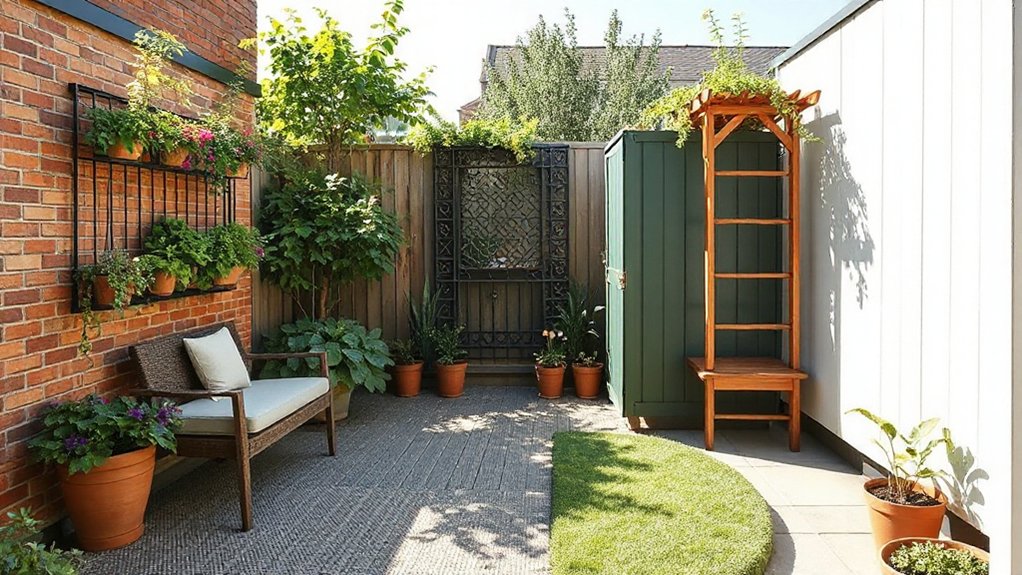
Creatively combine zones to form multipurpose garden rooms that feel expansive while staying compact. You design layered spaces: a seating alcove, a narrow pathway, and a planting strip that doubles as a border wall. Each area serves at least two functions—dining, sunbathing, or storage—so you max utility without widening your footprint.
Use tall, slim planters to create visual rooms, then integrate seating that folds away for perimeter clearance. Focus on container gardening to relocate seasonal beds without major reshaping. Include wildlife attractors along edges to maintain ecological balance while conserving space.
Define zones with low, modular elements that can reconfigure seasonally. Choose container garden setups that rotate crops and colors. Install discreet wildlife attractors to boost biodiversity. Align paths with sightlines to preserve openness.
Smart Plant Choices and Tips to Maximize Narrow-Plot Impact
Smart plant choices can dramatically amplify a narrow plot’s impact by maximizing vertical interest, season-long color, and easy maintenance. You’ll prioritize compact, sturdy varieties that tolerate edge conditions and allow light to reach lower layers.
Use tiered plantings: tall, upright specimens at the back, mid-height fillers, and cascading ground covers. Choose shrubs with neat growth habits and seasonal foliage to reduce pruning.
Integrate Companion planting to enhance pest resistance and pollination; pair tomatoes with basil, peppers with oregano, and herbs with leafy greens to create microenvironments that favor productivity.
For Seasonal planting, rotate crops to sustain soil health and stagger harvests. Select disease-resistant cultivars and mulching to conserve moisture.
Maintain spacing, monitor microclimates, and adjust irrigation to prevent water stress in narrow spaces.
Frequently Asked Questions
How Do I Access a Narrow-Plot Garden in High Winds?
In high winds, you access a narrow-plot garden by creating protection first. Install protective fencing to reduce gusts and erosion, then set windbreak planting along exposed edges.
Position taller, sturdy shrubs as a screen, and nestle smaller beds behind them. Use permeable netting or trellises to shelter pathways without trapping air.
Regularly inspect stakes, adjust anchors, and mulch to stabilize soil. With this setup, you navigate and tend every corner safely.
What Maintenance Schedule Suits Tiny, Dense Layouts?
You should set a tight, steady maintenance rhythm, like clockwork in a heartbeat, to suit tiny, dense layouts. Inspect weekly for tangled growth, prune by sight, and water at dawn to reduce evaporation.
Schedule monthly checks for soil health, mulching every early spring, and sharp, targeted pest control as needed.
Track plant spacing and tag overlaps. Keep notes, adjust cycles, and stay vigilant; your compact bed will thrive, precise, and resilient.
Can I Use Edible Crops in All Narrow-Plot Themes?
Yes—you can use edible crops in all narrow-plot themes, but design matters. You’ll thrive with companion planting to maximize pest resistance and nutrient use, and vertical gardening to multiply yields without widening paths.
Choose compact varieties, staggered succession, and trellises along sunny walls. Pair beans with corn? Not ideal in extreme tight corners—use peas or gourds instead.
Optimize rotation, mulch, and water capture. Your narrow plot can feed you, beautifully and efficiently.
Which Irrigation Minimizes Runoff on Narrow Spaces?
A striking 30% water savings drops when you switch to drip irrigation in tight spaces. You minimize runoff by delivering water directly to roots, not along paths, and keep soil moist with efficient emitters.
You’ll also bolster conservation with mulch techniques, which slow evaporation and stabilize temps. In practice, install a compact drip system, align lines with plant rows, and mulch thickly around bases.
Your narrow plot stays hydrated, tidy, and productive.
How Do I Evaluate Soil Health in Compact Plots?
You evaluate soil health in compact plots by testing texture, structure, and organic matter, then noting compaction layers and drainage.
Soil testing guides you to adjust with targeted amendments.
Proactively loosen with light passes and avoid heavy disturbance.
You’ll measure pH and nutrient levels, then plan precise compost application to boost structure and microbial life.
Observe root penetration and water retention after trials.
Track improvements and repeat soil testing to confirm gains.
Conclusion
In a narrow plot, your garden becomes a layered, living room—calm, usable, and endlessly evolving. Embrace linear beds with winding paths to invite light and airflow, and install vertical gardens to steal every inch of wall space for greenery. Create multipurpose zones—seating, planting, wildlife corners—that feel cohesive yet flexible. For example, imagine a 15-meter lane with a shaded seating alcove, a herb strip, and a trellis blooming with climbers, transforming a squeeze into a serene, functional landscape.