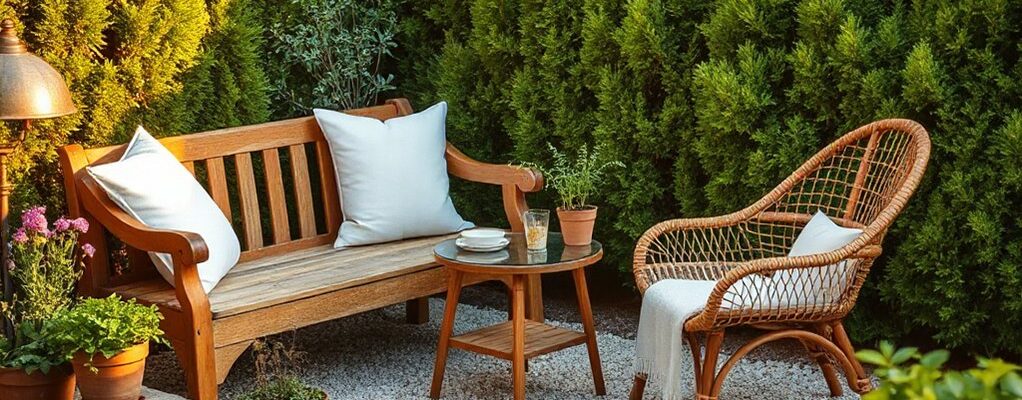
You can sculpt a calm, usable corner in a small garden by prioritizing compact, multifunctional pieces, smart zoning, and soft textures that invite lingering. Focus on a simple layout, layered greenery, and weather-ready finishes so you’re not chasing upkeep. Add gentle lighting and a cohesive color palette to avoid clutter, then plan quick seasonal tweaks to keep the space fresh. Start with one clear goal and a practical step—you’ll see how a small change unleashes bigger serenity, if you stay curious.
Key Takeaways
- Define goals and zones for a calm flow, using subtle dividers and focal points while ensuring easy access and clear sightlines.
- Choose compact, multifunctional furniture with lightweight, durable finishes and hidden storage to maximize seating without crowding.
- Use narrow, layered greenery and a neutral color palette with 1–2 accents to create year-round structure and calm visuals.
- Implement soft, layered lighting with dimmable LEDs and warm tones for inviting evenings without glare.
- Establish a simple maintenance routine and seasonal adjustments to protect furniture, manage pests, and refresh plantings.
Plan Your Small-Garden Layout for Relaxation
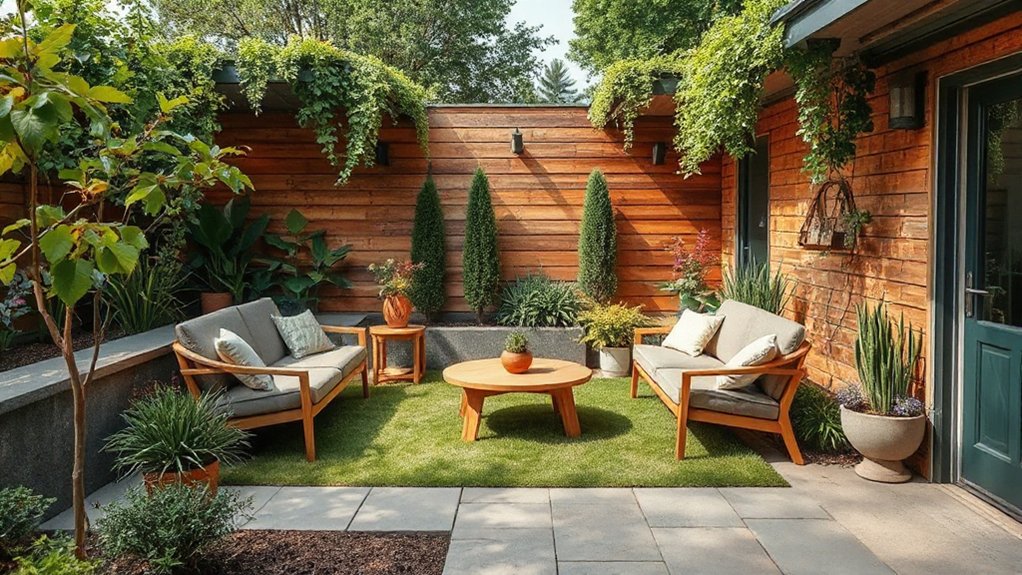
Start by clarifying your goals and constraints. You’ll map a calm flow, prioritizing sightlines, shade, and easy access.
Identify a defined seating zone, then place a focal point—perhaps a piece of garden art or a water feature—that guides the eye without overpowering the space.
Choose a compact footprint that still feels expansive, using paths or gravel to segment zones while preserving openness.
Consider outdoor storage that stays discreet yet convenient, like a hidden bench box or slim cabinet, so cushions and accessories stay tidy without clutter.
Align furniture with prevailing wind and sun patterns, so you stay comfortable throughout the day.
Finally, keep clutter minimal and scale cohesive with plantings to maintain calm, breathable ambience.
Choose Compact, Multitask Furniture
Opt for compact, multitask furniture that maximizes function without crowding the space. In a small garden, every piece should serve more than one purpose.
Choose seating that doubles as storage or a surface, like benches with hidden compartments or ottomans that lift to reveal cushions, tools, or outdoor blankets. Look for stackable or foldaway options to adapt to sun, shade, and entertaining needs.
Favor pieces with thin profiles and lightweight materials that stay easy to move. Consider modular units you can reconfigure for lounging, dining, or conversation without adding clutter.
Prioritize durable finishes suitable for outdoor conditions and simple maintenance. Emphasize space-saving designs that keep walkways clear while delivering comfort, utility, and a cohesive, polished look.
Create Cozy Zones With Smart Zoning
To create cozy zones, define distinct seating areas that suit different moods and activities without blocking flow. Start by mapping your garden’s pathways and sight lines, then assign a purpose to each zone (conversation, reading, sunbathing).
Use subtle separators—trellises, low hedges, or a narrow gravel strip—to delineate spaces without crowding them. Choose compact, multitask furniture that can be rearranged for intimacy or openness.
Layer lighting so zones feel inviting after dusk, and add garden art at focal points to guide movement and cue mood changes. Introduce patio accessories like lightweight cushions, stools, and small side tables that are easy to relocate.
Maintain cohesion with a consistent color palette and durable materials suited to your climate. Regularly reassess layout as you use each area.
Greenery That Thrives in Tight Spaces
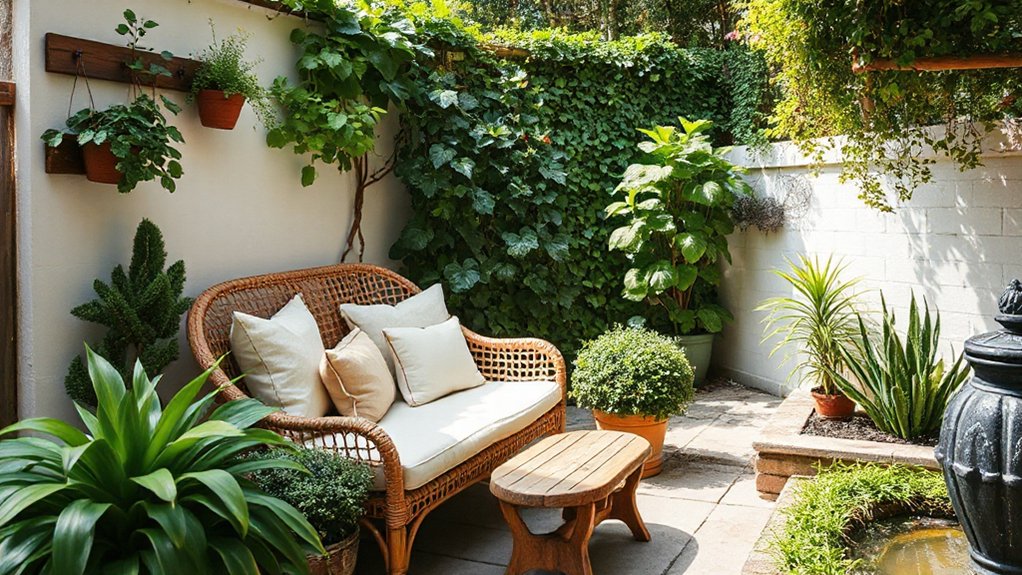
You can maximize a small space with narrow, lush plants that tolerate sun shifts throughout the day. Choose sun-switching foliage that stays vibrant from morning to late afternoon, so color and texture read clearly in a tight setting.
Keep plant layers compact and strategic to create a green, inviting backdrop for your seating area.
Narrow Yet Lush
In tight garden spaces, choose compact, vigorous plants that deliver high impact without crowding the area. You’ll create a green backbone that anchors your seating zone while preserving open sightlines. Favor dwarf varieties and columnar forms to maximize vertical presence with minimal footprint, so you can walk and sit comfortably.
Use slow-growing evergreens for year-round structure and year-round privacy. Then layer with seasonal accents for texture and color.
Integrate narrow pathways to guide visitors through the space without interrupting the flow, keeping circulation clear and purposeful.
For privacy, select lush privacy screens that remain tidy with regular trimming.
Keep soil healthy and mulched, and group plants by water and light needs to reduce maintenance while sustaining dense, resilient growth.
Sun-Lwitching Foliage
Sun-loving foliage thrives in tight spaces when you choose compact, sun-tolerant varieties that offer high impact with minimal footprint.
For sun-lighting foliage, select compact evergreens and deciduous shrubs that maintain structure year-round. Focus on easy-care options with strong form and resilience, so you don’t fight the climate or size.
Pair plants with varying seasonal leaf color to keep interest without crowding, ensuring each specimen shines through different seasons.
Use vertical accents like tall grasses or dwarf conifers to maximize sun exposure and create layered texture.
Favor varieties with proven drought tolerance and rapid but controlled growth to preserve space.
Prune lightly to preserve shape, and group plants by sun exposure to sustain consistent color and robustness, delivering a polished, low-maintenance vignette.
Weatherproof Textures and Color Schemes
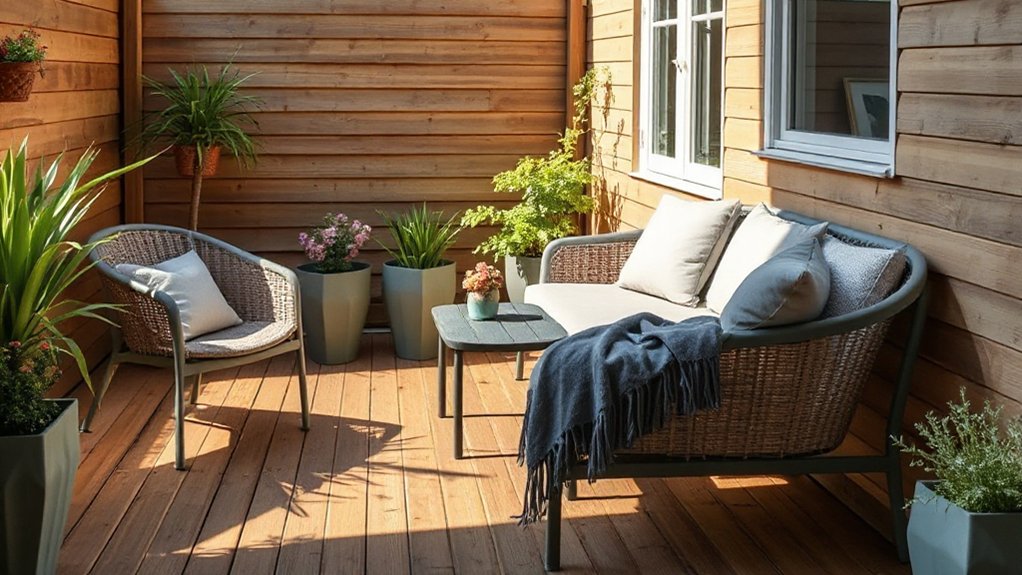
You’ll want weatherproof textures that stand up to sun, rain, and lawn equipment, so choose durable fibers, treated wood, and porcelain or composite surfaces.
Pair these with a coordinated color scheme—neutral bases with a couple of accent tones—to keep the space calm yet inviting.
Start by selecting one resistant material for your seating and table tops, then build your palette around it for a cohesive, long-lasting look.
Weatherproof Material Textures
Weatherproof textures come in a range of tactile options that stand up to sun, rain, and temperature swings without sacrificing style. You’ll choose materials with durable weaves and solid core fibers, prioritizing resistance to fading and moisture.
Weatherproof fabric is essential for seating cushions and poufs, offering color stability and quick-dry performance after showers. Look for textured finishes that hide dirt while adding grip, such as wicker-like polymer weaves or matte resin surfaces.
For tabletops, opt for stone-look composites or powder-coated metals with subtle grain, ensuring heat resistance and easy cleaning.
Consider layering different textures—smooth slate, ribbed concrete, and plush outdoor textiles—to create depth without clutter. Match tones to your garden’s palette, and avoid busy patterns in small spaces.
Coordinated Color Schemes
- Establish a neutral base and add 1–2 accent colors that mirror flowering borders.
- Group textures with similar undertones to reinforce unity.
- Use cool or warm schemes for perceived temperature comfort.
- Test palettes in natural light before finalizing cushions and planters.
Lighting That Sells Calm, Not Glare
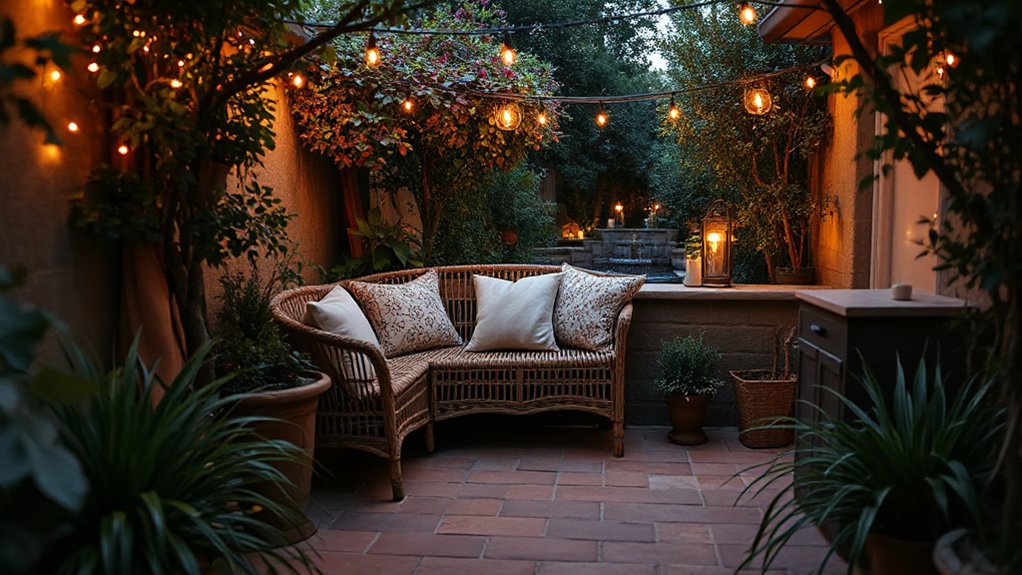
Soft lighting is key to a calm garden seating area; choose fixtures that glow softly and distribute light evenly to avoid harsh glare. You’ll create a serene mood by layering light sources at different heights, so paths, seating, and focal plants stay visible without glare.
Aim for soft ambient illumination that wraps the scene in gentle hues rather than bright beams. Use dimmable LEDs, warm white tones, and shrouded bulbs to reduce glare and color distortion.
Place lanterns along walkways, and tuck stake lights near seating edges for subtle depth. Avoid overly focal fixtures that shout; instead, blend fixtures with the garden’s palette and texture.
This approach yields soft ambient lighting that remains practical for evenings, relaxing your eyes and inviting lingering, tranquil moments.
Budget-Friendly Décor That Packs a Punch
Want big impact without breaking the bank? You can transform your small garden seating area with budget-friendly decor that still feels premium. Focus on simple, repeatable ideas that emphasize texture, color, and contrast to amplify scale and calm.
- DIY projects: Create custom cushions from thrifted fabric, and stitch simple piping for a tailored look.
- Outdoor art: Hang weatherproof prints or painted wooden panels to cue the eye toward the seating zone.
- Natural accents: Layer baskets, lanterns, and potted herbs to add warmth without footprint.
- Treat surfaces: Paint an outdoor tabletop with high-adhesion stain or limewash for a refreshed focal point.
Keep lines clean, choose durable materials, and align decor with soft lighting for cohesive impact.
Maintenance Hacks for Tiny Outdoor Rooms
Small outdoor spaces demand quick, practical upkeep; with smart habits, you’ll preserve a calm, usable courtyard without a constant chore list.
In tiny rooms, establish a weekly 15-minute routine: wipe furniture, sweep debris, and check cushions for moisture.
Use weatherproof covers to shield seating and rotate pots to prevent shade gaps.
Keep tools nearby in a small caddy to speed tasks and reduce clutter.
Integrate garden art as focal points, not clutter, choosing lightweight pieces you can move for seasonal cleanups.
For pest control, seal gaps around planters and use breathable, natural repellents to deter critters without harming plants.
Schedule quarterly cleans of rails, lighting, and drainage to avoid buildup.
Minimize maintenance by pairing tasks with existing habits, ensuring your space remains inviting year-round.
Quick Troubleshooting for Seasonal Shifts
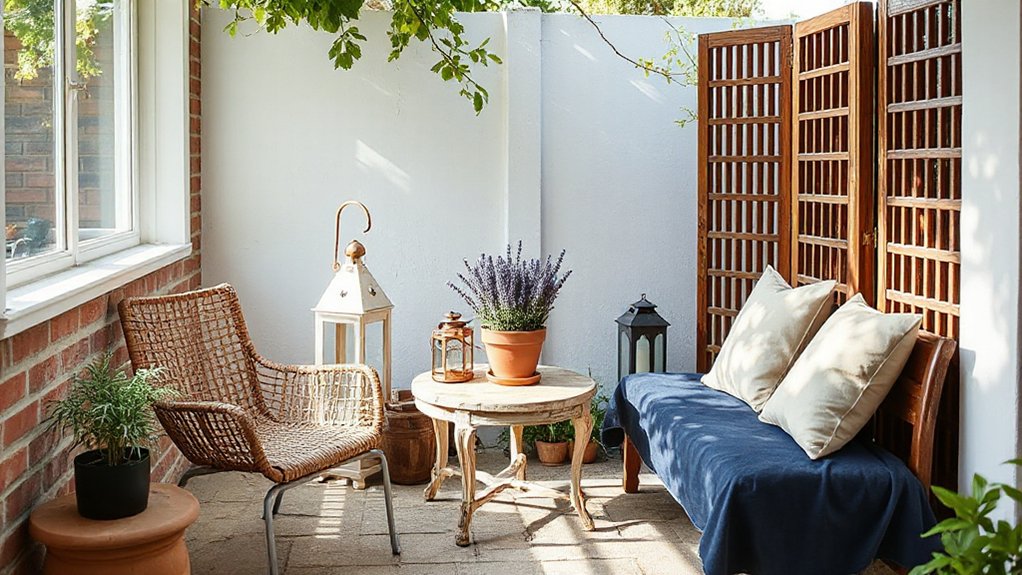
Seasonal shifts can surprise your garden seating area, but a quick, focused trouble‑shoot keeps it usable year round. When storms threaten, stash cushions, secure light cords, and check drainage to prevent puddling. For sun heat or shade swings, swap textiles and reposition containers to balance exposure. Keep a small kit with timer, spare bulbs, and a weatherproof cover to cut downtime.
Use seasonal plant rotations to refresh color and microclimate, rotating sun-loving plants with hardy perennials as the season changes. Pair plant shifts with outdoor heating options for cooler evenings.
- Inspect fabrics and covers after rain; air out cushions to prevent mildew.
- Reassess sun/shade spots; relocate cushions and furniture accordingly.
- Rotate seasonal plant rotations to maintain color and airflow.
- Test heating devices before use and store safely.
Frequently Asked Questions
How Can I Maximize Comfort in a Tiny Seating Area?
You maximize comfort in a tiny seating area by smart layout and cozy touches. Choose compact, multi-functional furniture and place seating to face a focal point.
Apply soft Outdoor lighting to extend usability and mood without glare.
Optimize furniture arrangement by keeping pathways clear and using vertical planters for greenery.
Add plush cushions, weatherproof throws, and a rug to define the space.
Prioritize good shade, a compact coffee table, and adjustable seating for versatility.
What Are the Best Plant Choices for Shaded Corners?
Shade-loving plants thrive in your darker corners, so you’ll want indoor greenery that brightens without fuss. For a graceful palate, pick hostas, ferns, and caladiums; add heucheras for color, and begonia varieties for subtle glow.
Water regularly, mulch to conserve moisture, and guarantee good drainage. You’ll enjoy easy care and enduring texture in shaded spaces, with indoor-leaning, gentle vibes.
Indoor greenery stays lush, while shade-loving plants quietly elevate your cozy retreat.
How Do I Hide Utilities and Clutter in a Small Garden?
You can hide utilities and clutter by using discreet storage solutions and clever garden accessories. Choose weatherproof bins, benches with hidden compartments, and roller carts you can tuck away after use.
Mount wall organizers and trellises to conceal hoses and cords. Opt for multi-functional furniture, and use screens or lattice panels to form distraction-free zones.
Keep pathways clear, label storage, and rotate items seasonally. Garden accessories and storage solutions streamline cleanliness while preserving style.
Which Fabrics Resist Sun and Rain in Small Spaces?
Did you know 70% of outdoor fabric damage comes from sun and rain within the first year? Weather resistant textiles beat that.
You’ll want UV protected fabrics that resist fading and water. When you choose cushions, covers, and throws, look for those labels and test color fastness.
You’ll maintain vibrancy longer, even in small spaces. Keep storage handy and wipe spills promptly, then air dry to prevent mold.
How Can I Seasonally Refresh a Compact Outdoor Nook?
To seasonally refresh a compact outdoor nook, you rotate seasonal planting and swap textiles or cushions to match the mood.
Start with bright annuals or herbs for spring, then add fall foliage accents and a few potted evergreens for winter interest.
Integrate outdoor lighting to highlight focal points and extend usability.
You’ll refresh textures, swap planters, and layer fragrances, keeping the space welcoming all year long.
Conclusion
You’ve mapped a pocket of peace, where small space, big calm coexist. Let your layout guide the eye like a soft current, weighted by compact furniture that does double duty. Shape zones with subtle shade and textures that invite lingering, not rush. Grow greens that hug the corners, and layer light so evenings feel like a quiet chorus. Maintain with simple rituals, weatherproof what matters, and let seasonal tweaks drift in like a gentle breeze. Your tiny garden, endlessly welcoming.