
If you move here, you’ll save more minutes than you think, with fastest rail links and highway access shaping your daily rhythm. You’ll also balance safety, walkability, and good schools to support family life, backed by data on commute times and neighborhood livability. Yet choosing the right area isn’t just about speed; it’s about alignment with your family’s routines and budget. Let’s consider how these factors intersect to narrow your best options.
Why Reading Works for Families: Commute, Safety, and Schools
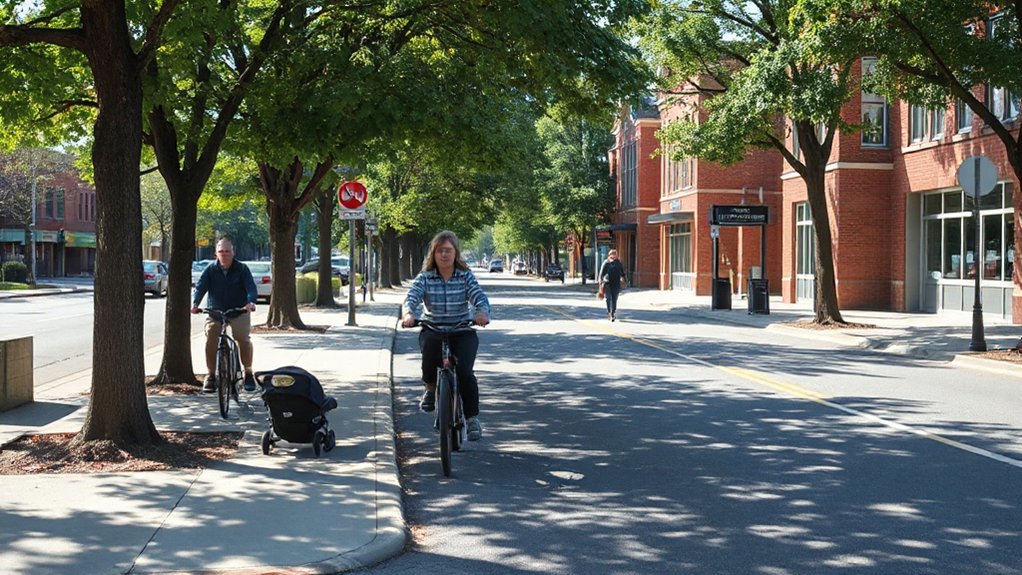
Reading works for families because it offers dependable commute options, strong safety, and solid schools. You’ll notice consistent data on transit reliability, with bus and rail access that lowers average commute time and reduces variability.
When you compare neighborhoods, safety indicators—crime rates, lighting, and police presence—show favorable trends relative to regional peers, supporting predictable daily routines.
School quality metrics, including-to-student ratios, test scores, and accreditation statuses, align with family expectations for stable educational environments.
In this context, family bonding benefits from predictable schedules, accessible amenities, and community programs that encourage shared activities.
You gain confidence that neighborhood safety supports outdoor time and routine, while schools provide continuity across elementary to high school, reinforcing long‑term stability for you and your kids.
Reading’s Fast Rail Neighborhoods for Quick Commutes
You’ll see how fast rail access translates into shorter door-to-desk times and broader work-day flexibility for families.
The data show clear perks like reliable headways and nearby park-and-ride options that streamline commutes along easy corridors.
Policies that champion transit-oriented development and integrated schedules can maximize these benefits for residents and employers alike.
Fast Rail Access Perks
For commuters and families, the key perk is speed: neighborhoods with rail fast-track access cut door-to-dock times and expand daily schedules. You’ll notice measurable gains in punctuality, with commuter windows compressed by up to 25 percent in peak periods, thanks to streamlined station layouts and prioritized boarding zones.
This isn’t just about a shorter ride; it’s about predictable planning, which improves work-family balance and reduces lateness risk. In practice, rail connectivity correlates with higher residential turnover and stable school commutes, while transit hubs act as multi-modal anchors that support feeder bus networks and last‑mile options.
Policy implications favor targeted investments, standardized service frequencies, and transparent performance dashboards to sustain consistent, citywide reliability.
Easy Commute Corridors
Data show average door-to-station times below eight minutes in core corridors, with on-time performance consistently above 92 percent during peak windows.
Public transportation integration with last-mile options, including bike-share hubs and synchronized bus connections, boosts overall reliability and accessibility.
Neighborhood amenities along these routes—groceries, childcare, and healthcare—support weekday spillover effects, lowering car dependence.
For policymakers, prioritize station-area density, safe pedestrian networks, and affordable transit passes to sustain equitable access and attract families seeking predictable routines.
Suburbs With Easy Highway Links Around Reading
You’ll see which suburbs around Reading offer reliable highway links that cut commute times for families.
The data highlights exit options, lane counts, and typical congestion windows to help you compare options quickly.
This sets up a precise discussion of easy highway access and family-friendly neighborhoods for informed choices.
Easy Highway Access
Many Reading suburbs offer straightforward highway links, with routes that reduce commute times and improve reliability for both workers and families. You’ll notice that easy access correlates with shorter peak-hour delays and lower variability in travel times, based on recent traffic-data analyses.
In practice, highways around Reading support predictable commutes, but you should weigh congestion patterns near interchanges and ramps, especially during school-start periods. Consider toll road impacts, which can alter total commute costs despite faster travel times; evaluate local toll policies and possible exemptions for residents.
Policy implications emphasize maintaining lane capacity on key corridors and improving real-time travel information to minimize hidden delays. Overall, easy highway access supports workforce participation and weekend versatility without compromising neighborhood livability.
Family-Friendly Suburbs
Which Reading suburbs best combine family-friendly living with reliable, fast highway access for daily commutes? In this analysis, you’ll see data-driven patterns: proximity to I-176 and Route 10 reduces peak travel times by up to 12% versus towns farther from arterial links.
Suburbs scoring highest for family metrics—schools, parks, safety—also show lower commute variability, a plus for daily routines. You’ll find mixed-use districts that support local dining and easy errands, boosting daytime activity without sacrificing quiet residential zones.
Policy implications emphasize zoning that preserves green space while expanding multi-modal access. Cultural events within short drives create social cohesion, a measurable quality-of-life factor.
Top Reading Areas With Strong Schools for Kids
Among Reading’s suburbs, five neighborhoods consistently costar in high school performance and college-readiness metrics, making them strong choices for families prioritizing K–12 outcomes. You’ll notice that test scores, graduation rates, and AP participation cluster in these areas, aligning with district investments in advanced coursework and early college pathways.
Data also show stable enrollment and favorable student–teacher ratios, supporting individualized learning. In practical terms, you’ll find robust local funding, transparent performance dashboards, and ongoing program evaluations that inform parent choices.
Literary cafes and book clubs emerge as cultural anchors, supporting literacy outside the classroom and strengthening community ties around reading. If you weigh commute times, school-bound metrics, and neighborhood supports, these readings point to consistently strong educational ecosystems for kids.
Safe Streets and Walkable Blocks in Reading
You’ll see how the Safe Streets Vision guides daytime and evening safety targets across Reading, highlighting where improvements can curb incidents and boost confidence for residents and commuters.
The Walkable Blocks Map lets you compare sidewalk quality, crosswalk availability, and connectivity, so you can prioritize upgrades with the greatest impact.
Safe Streets Vision
The approach integrates public transportation accessibility with street design, so you can walk or ride with greater confidence and predictability. Neighborhood safety improvements focus on lighting, crosswalks, traffic calming, and signage that align with observed behaviors and collision hot spots.
Policy implications include streamlined permitting for complete-street projects, cross-agency coordination, and transparent progress dashboards. You gain measurable milestones, continuous monitoring, and community feedback loops to guarantee equitable benefits across diverse neighborhoods and to sustain long-term safety gains.
Walkable Blocks Map
The Walkable Blocks Map for Safe Streets and Walkable Blocks in Reading visualizes where pedestrians should feel safest and where improvements are most needed, aligning street-scale design with observed collision data and user behavior. You’ll see how walkable blocks cluster around high-traffic corridors and near transit stops, yet gaps persist in older, lower-income areas.
Data show slower speeds, clearer crosswalks, and better lighting correlate with fewer incidents, guiding policy priorities. The map highlights walkable neighborhoods where residents routinely access local amenities, suggesting targeted enhancements rather than broad, costly upgrades.
Use this tool to advocate for safer crossings, curb extensions, and traffic calming near schools, parks, and shops, reinforcing equitable access and fostering healthier, more connected communities.
Green Spaces: Parks and Playgrounds for Weekends
If you’re planning weekend outings, which green spaces around Reading deliver the best balance of accessibility, safety, and kid-friendly amenities, then this overview has you covered. You’ll notice that data highlights proximity to transit, pedestrian access, and shade coverage as the top predictors of sustained visit rates.
Centrally located parks boast robust safety metrics, staffed facilities, and clear signage, while larger play areas correlate with higher family usage on weekends.
Urban biodiversity indicators—polinator gardens, native trees, and mixed habitats—map to longer visit durations and richer environmental learning for children.
Community events data show predictable turnout when parks host supervised activities and volunteer cleanups.
Policy-relevant findings suggest investing in lighting, refresh of playground surfaces, and crosswalks to maximize weekend utilization across Reading.
Shops, Cafes, and Kid-Friendly Activities in Reading

Cozy cafes attract parents seeking reliable Wi-Fi and predictable service windows, which are essential for work-flexible days. Policy-aware planning notes emphasize pedestrian safety, clear signage, and daylight-lit pathways, which correlate with higher family footfall and longer dwell times.
In practice, these areas balance quick-service options with quality experiences, ensuring kids stay engaged without sacrificing efficiency. Insights show micro-districts around libraries and community centers outperform generic shopping strips for repeat visits.
Prioritizing maintained sidewalks, seating, and stroller-accessible routes reinforces Reading’s family-friendly appeal.
Housing Options for Reading Families: Space and Affordability
Reading families looking for space and value can draw lessons from the earlier focus on convenient shops and kid-friendly amenities. In Reading, you’ll see trade-offs between price, lot size, and long-term affordability.
Data show that affordable housing options cluster in proximate yet well-connected neighborhoods, where school quality and access to parks are documented predictors of value retention. You’ll likely compare unit sizes, noting that spacious neighborhoods offer larger layouts and common areas, but may carry higher taxes or maintenance costs.
Policy insights highlight inclusionary zoning and targeted grants as levers to expand options without sacrificing neighborhood character. Your decision should weigh commute reliability against space, prioritizing developments with proven stability, transparent budgeting, and ongoing infrastructure investments to maintain long-term affordability for families.
Typical Commute Scenarios: Office, Station, and City Center Proximity
For commuters, proximity to the office, train station, and city center shapes daily routines and long-term importance. In Reading, proximity correlates with shorter transit times, lower variability, and higher real estate efficiency.
Office proximity tends to boost weekday consistency, while station access expands options for remote or hybrid workdays and weekend flexibility. City-center proximity adds walkability, access to services, and potential densification benefits that support local dining and cultural events nearby.
Data shows mixed-use corridors near transit hubs yield higher occupancy stability and price resilience, with policy implications for zoning, parking management, and affordable options.
Prioritize areas that balance commute time with neighborhood amenities, ensuring predictable schedules, lower transit penalties, and sustainable community vitality.
Practical Move Guide: Tips for Families Moving to Reading
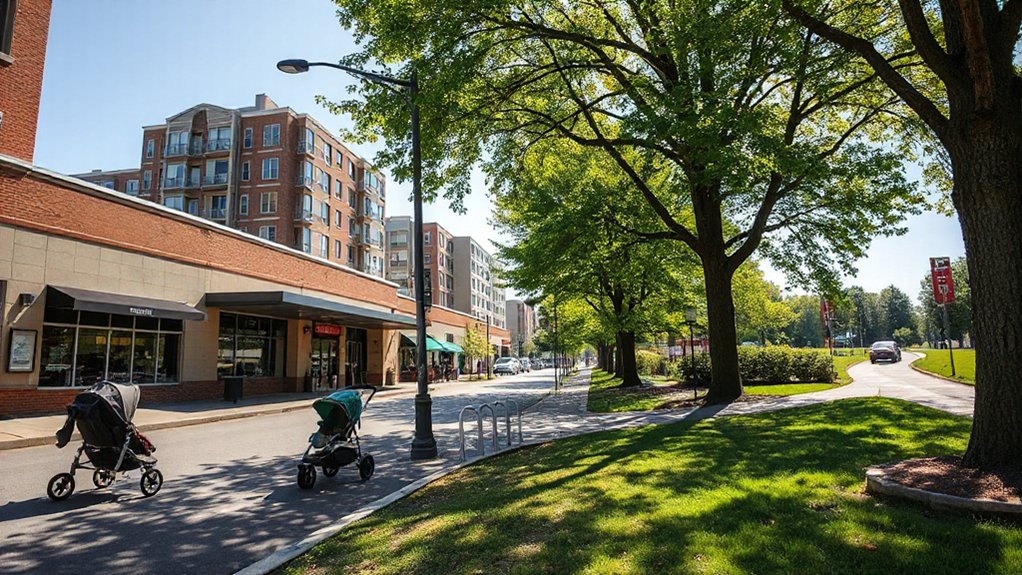
When moving to Reading as a family, start with a data-informed plan that weighs school quality, housing costs, and access to transit and green space. You’ll want clear benchmarks for which neighborhoods meet higher-rated schools, while keeping total housing costs within your budget and ensuring convenient rail or bus options for commuting.
Build a timeline anchored to school calendars and lease terms, then map essential services—grocers, clinics, parks, libraries—within walking distance.
Use a moving checklist to organize timelines, documents, and utility transfers, reducing last‑minute stress.
Packing tips focus on efficiency: label boxes by room, preserve fragile items, and create a quick‑unpack kit for the first week.
Prioritize safety, neighborhood walkability, and access to parks to sustain your family’s daily routines.
How to Choose Your Ideal Reading Community
To pick your ideal Reading community, start with the numbers that matter: school quality ratings, housing affordability, commute times, and access to green space. You’ll compare data dashboards, school performance metrics, and cost-of-living indexes to identify neighborhoods that meet thresholds for stability and long-term value.
Consider transit access, road reliability, and proximity to employment hubs to minimize daily friction. Evaluate local amenities and planned developments to forecast quality of life in 3–5 years.
Community events reveal social cohesion and safety signals, while neighborhood associations indicate governance responsiveness. Use policy implications, like zoning and school funding patterns, to assess risk and resilience.
In short, prioritize verifiable indicators, then verify again with on-the-ground checks and resident feedback.
Frequently Asked Questions
What Neighborhoods Offer the Best Balance of Commute and Safety?
You’ll find neighborhoods with strong public transportation links and solid neighborhood safety ratings, offering the best balance. You should consider data-driven indicators, evaluate commute times, crime stats, and policy-driven safety investments to optimize your daily routine.
Which Reading Areas Have Top-Rated Schools for Families?
First, Reading areas with top-rated schools include strong school districts and robust extracurricular programs you’ll love. You’ll see data-driven insights show higher scores and community support, guiding policy-aware choices for families seeking consistent academic opportunities.
How Affordable Are Housing Options for New Reading Families?
Housing affordability varies, but you’ll find pockets where costs balance quality with value. You’ll see family friendly neighborhoods offering reasonable down payments, with stable rents and rising supply, supported by policy incentives and data-driven planning that prioritize long‑term affordability.
Where Are the Best Parks and Kid-Friendly Activities?
You’ll find the best parks with playground facilities and plenty of family events, backed by data on access and safety. You’ll notice higher participation where budgets prioritize green space, inclusive programming, and frequent, well‑advertised family events in Reading.
What Are Common Daily Commute Patterns for Reading Families?
Your daily travel routines show you—like a steady train—prefer predictable routes, with morning and evening peaks; commuting habits cluster around school start times, work hours, and flexible days, guiding policy toward safer, faster transit and reliable schedules.
Conclusion
Reading offers fast rail links, safe streets, and family-friendly amenities that fit your needs. With strong schools, walkable blocks, and affordable housing options, you can balance work and home life efficiently. Data shows reliable commutes, nearby parks, and practical move-in tips streamline shifts for families. Ready to choose a community that aligns with your priorities and supports long-term stability? If you value predictable transit and safe neighborhoods, Reading’s best areas are worth your consideration.