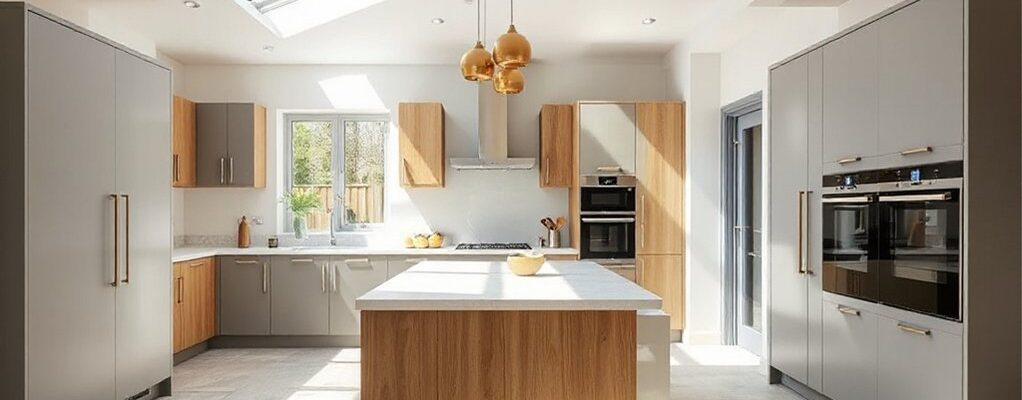
This is the kitchen you’ll tell your friends about for years to come—everything feels bigger, yet more intimate, as you blend cooking, dining, and living in one seamless space. You’ll want to know how sustainable materials meet smart tech without clutter, and how earthy tones can calm a busy family home. Curious about the smart upgrades and future-proof choices that actually pay off? Keep going to uncover practical ideas you can start applying today.
What Is Modern UK Kitchen Zoning in 2026?
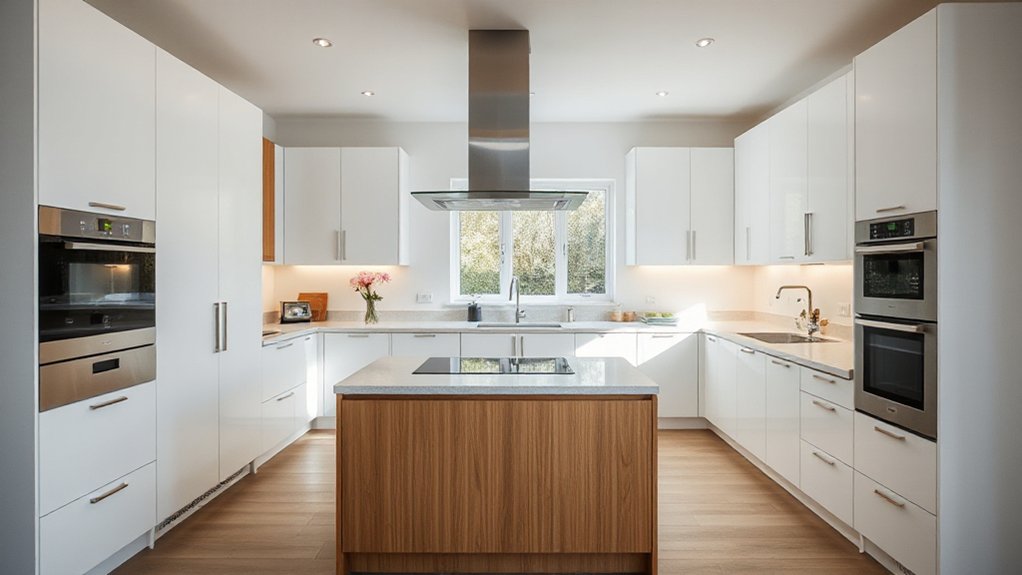
Modern UK kitchen zoning in 2026 centers on flexible, tech-enabled layouts that blend cooking, dining, and living spaces. You’ll design with multifunction zones that flow into social areas, ensuring contactless tech and smart storage feel seamless.
Think open plans with defined micro-zones: prep islands, casual dining nooks, and quiet task corners that don’t shout “kitchen.” The core idea is adaptable circulation—paths that minimize friction between cook, guest, and family member.
Wiring and data lines run smartly to support appliances, lighting, and climate control without clutter. Your zoning strategies emphasize human-centric comfort: acoustics, natural light, and accessible heights.
Focus on a coherent kitchen layout that keeps essentials visible yet tucked away. Efficient zoning reduces clutter while elevating everyday hospitality.
Choosing Sustainable Materials for UK Kitchen Surfaces
Recycled countertops demonstrate how ingenuity meets utility, delivering stylish finishes without new resource strain. They’re ideal for confident daily use, from meal prep to cleanup, and pair well with contemporary tones.
Eco friendly coatings add a protective, low-VOC layer that prolongs life and keeps surfaces looking fresh longer. When evaluating options, consider supply chain transparency, repairability, and end-of-life recyclability.
Energy-Saving Appliances That Actually Cut Bills
Are you really getting the most out of your kitchen tech? In 2026, energy-saving appliances aren’t just green; they’re cost-cutters you’ll actually notice. Look for models with high efficiency ratings, adaptive cycles, and real-time energy dashboards so you see the savings in pounds, not promises.
Pair smart storage with efficient devices to minimize footprint and waste: put fridges and freezers where they perform best, label shelves for easy organization, and choose compact, high-performance units that suit smaller UK kitchens.
Prioritize quiet operation and reliable brands to sustain long-term savings. Blend vintage accents with modern efficiency to maintain style without sacrificing function.
The result: a more economical workflow that feels premium and thoughtfully designed.
How to Integrate Smart Tech Without Cluttering the Space
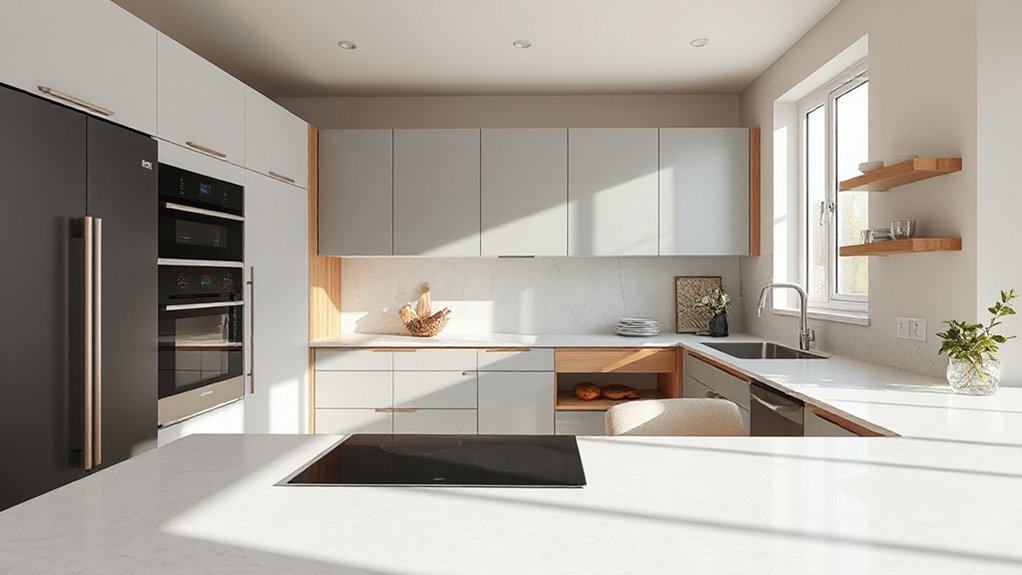
Smart tech should simplify, not crowd, your kitchen—so start by selecting devices that truly serve your workflow and hide the rest behind cabinets, panels, or smart hubs. Prioritise a central control system and wireless connections that reduce visible clutter.
Opt for multi‑functional appliances that combine tasks, so you need fewer gadgets on the counters. Implement concealed charging solutions and recessed outlets to keep surfaces clean.
Use routines that automate lighting, cooling, and ventilation based on time or activity, trimming manual fiddling. Choose devices with clear status indicators and intuitive apps to avoid tech fatigue.
Focus on smart integration that enhances efficiency without adding bulk, reinforcing a streamlined aesthetic. This approach supports clutter reduction while maintaining modern, responsive kitchen performance.
Warm, Earthy Tones for a Welcoming UK Kitchen
Warm, earthy tones instantly warm up a UK kitchen, grounding the space with soft olives, warm terracotta, and creamy sand hues that pair beautifully with natural textures. You’ll notice how this palette invites comfort without sacrificing modern polish, letting daylight bounce softly across matte surfaces.
Opt for muted cabinets and warm-metal hardware to amplify the cozy vibe, while backsplash tiles in earthy tones create subtle contrast.
Introduce vintage accents as a nod to heritage—think aged brass fixtures, retro glassware, or a porcelain lamp.
Pair with eclectic decor: a throw rug, woven baskets, and artisan pottery add personality without clutter.
Keep furniture streamlined to preserve flow, and let color do the talking.
The result: a welcoming, approachable kitchen that remains contemporary and versatile.
Textural Surfaces: Wood, Limestone, and Forged Metals
You’ll notice how wood brings warmth through texture and grain, pairing beautifully with softer limestone for a timeless, tactile contrast.
Subtle forged metal details add a modern edge without shouting, tying the look together with industrial restraint.
This trio invites you to play with light, shadow, and patina to craft a kitchen that feels both grounded and contemporary.
Textural Wood Accents
Embrace Textural wood as a unifier: its grain adds movement against cool stone and glass, while contrasting finishes—matte woods beside high-gloss surfaces—create subtle tension. You’ll optimize grain direction to guide flow, and pair warm timbers with soft lighting to enhance tactile surfaces.
Consider recessed door pulls and integrated handles to preserve clean lines, letting texture do the talking. For sustainability, choose FSC-certified timber or reclaimed planks.
In UK homes, keep it balanced, ensuring the wood feels contemporary, durable, and intimately inviting.
Limestone Surface Warmth
Could limestone countertops and surfaces redefine a kitchen’s mood, adding a soft glow that’s both timeless and current? Yes. Limestone exudes surface warmth, creating a welcoming counterpoint to sleek cabinetry and industrial fixtures. Its natural variation brings subtle movement, so every piece feels crafted, not manufactured.
You’ll notice limestone durability in daily use: resistant to heat and consistent with care, it ages gracefully without shouting. Pair it with matte metals or warm timber for cohesive warmth, or contrast it with glass for a brighter feel.
For practicality, seal it to minimize staining, then reap long-term, low-maintenance appeal. In 2026 UK kitchens, limestone becomes a quiet anchor—elevating texture and light, while maintaining a refined, approachable tone.
Forged Metal Details
In 2026 UK homes, forged metals harmonize with wood and limestone by providing contrast: the soft grain or stone’s cool edge is offset by dark, oxidized surfaces. Use ornamental accents to elevate cabinetry profiles and door pulls, ensuring a cohesive narrative across zones.
Decorative trims frame islands, rails, and backsplashes, delivering artisanal charm with minimal footprint. Choose matte or burnished tones to maintain a refined, durable look that ages gracefully, while keeping upkeep straightforward and repair simple.
Hidden Storage Solutions That Maximize Small UK Kitchens
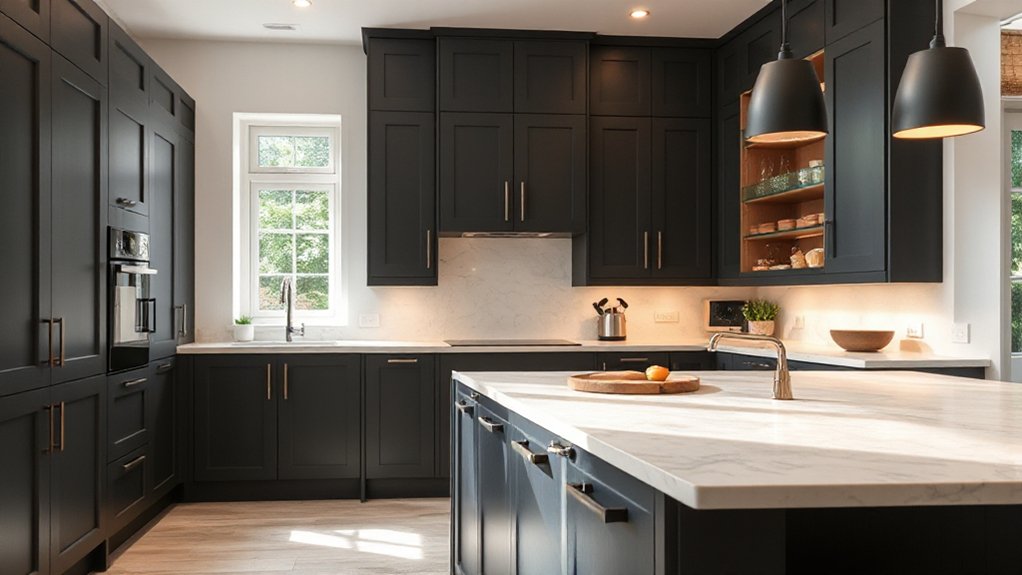
Hidden storage is the secret to a small UK kitchen that feels larger and more livable. You’ll access space with clever hidden compartments that tuck away rarely used items, keeping counters clean and workflows seamless.
Concealed drawers, installed flush with cabinetry, reduce bulk while maximizing usable depth for pans, lids, and gadgets. Opt for tiered organizers inside cabinets to convert corners into functional zones, and use pull-out pantry shelves to transform slim gaps into accessible storage.
Consider toe-kick drawers for flatware and small appliances, plus lift-up lids on overhead cabinets to reveal trays and spices. Choose runs with uniform, minimal hardware to preserve sightlines, and employ light, reflective surfaces to amplify brightness.
A well-planned hidden system elevates efficiency without compromising style.
The Compact Kitchen Island: Practicality in Small UK Homes
A compact kitchen island can be a game-changer in small UK kitchens, delivering work surface, storage, and a social hub without stealing floor space. In tight layouts, you’ll prioritize multifunctional storage—drawers, open shelves, and hidden compartments—so every inch serves a purpose.
Choose a shallow overhang for comfortable seating without crowding traffic flow, and pair with ergonomic counters that keep your spine aligned during prep. Opt for integrated appliances or pull-out sections to keep surfaces clear.
Then position the island to anchor the work triangle while leaving generous clearance for doors and drawers. Materials matter: durable, easy-clean surfaces that resist fingerprints maintain a polished look.
Finally, tailor lighting and seating to suit daily rhythms, making the island a flexible centerpiece rather than a bulky obstacle.
Lighting Tactics for Mood and Task in UK Kitchens
Layered lighting planning is your blueprint for flexible UK kitchens, balancing atmosphere with clarity. You’ll want task-driven illumination zones that switch between bright prep light and softer ambient tones as you move from cooktop to dining nook.
Start layering light layers—ambient, task, and accent—to shape mood while keeping every cut, chop, and recipe crystal clear.
Layered Lighting Planning
Layered lighting in UK kitchens isn’t just about brightness—it’s about shaping mood and boosting efficiency for every task, from chopping to lingering over a coffee. You design layered lighting by pairing general ambient with targeted task illumination and a few accent cues that highlight materials and architecture.
Begin with ceiling and under-cabinet fixtures to create a balanced base, then add dedicated task lights over prep zones and islands for precision without glare. Dim curves give you mood shifts from bright daytime work to soft evening scenes.
Consider color temperature consistency to avoid visual fatigue; opt for 2700–3000K for warmth near dining areas and 3500–4000K for work zones. Implement controls that blend presets, ensuring seamless progression between activities.
Task-Driven Illumination Zones
In practice, implement clear task lighting above work surfaces and keep ambient light low elsewhere to reduce glare. Use warmer temps for dining zones and cooler tones for chopping and measuring, creating intuitive zone division across the room.
Dimmed pendant clusters over islands provide flexible focal points, while under-cabinet strips highlight counters without shadow.
A scalable approach pairs motion sensors with smart controls, ensuring lights engage only when needed. This method supports efficient workflows, reduces energy waste, and keeps your kitchen visually cohesive, contemporary, and ready for both speed-demon mornings and lingering conversations.
Mood-Enhancing Light Layers
Use layered layers: a warm general glow, focused task lights over counters, and subtle wall or cabinet accents that softly delineate zones. Dimmable controls are essential, letting you shift from bright prep sessions to relaxed dining ambiences.
Color psychology matters: warmer temps can ease concentration during evening prep, while cooler tones heighten alertness for morning routines. ThinkCRI-compatible LEDs for true color rendering in food prep.
Avoid glare by angling fixtures, and guarantee dimmers across all layers. This approach keeps kitchens feeling contemporary, usable, and emotionally resonant across UK homes in 2026.
Flooring Ideas That Stand Up to a Busy Family
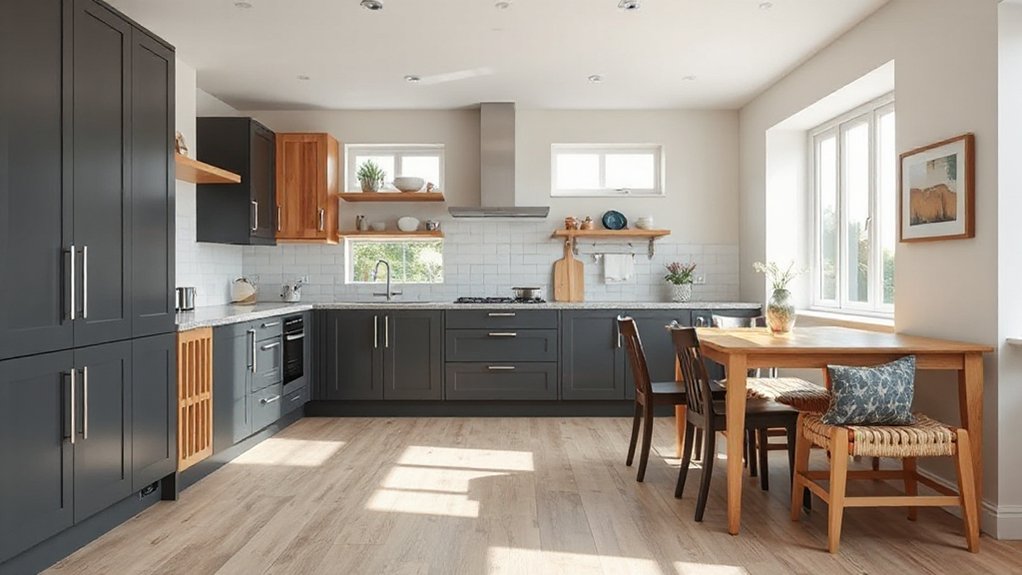
If you’re choosing flooring for a busy family, durability should lead every decision, not just appearance. You’ll want surfaces that resist scuffs, spills, and heat while remaining welcoming underfoot.
Consider engineered wood for warmth with added stability, or thick luxury vinyl planks that mimic realism without maintenance headaches. Stone-look porcelain tiles offer longevity and easy cleaning, ideal around sinks and cooktops.
Grout choices matter: choose darker tones or wider joints to hide wear. Add resilience with practical finishes—matte or low-sheen reduces show-through from traffic.
For style, lean into vintage charm or rustic accents through patterns, textures, and color palettes that still perform under daily life. Balance practicality with personality, and your kitchen won’t sacrifice flow for function.
Biophilic Design: Bringing Nature Into the UK Kitchen
You’ll maximize natural light to brighten the kitchen vibe and reduce the need for artificial lighting.
Choose green materials that feel sustainable yet stylish, from timber accents to low-VOC finishes.
Embrace biophilic wellness benefits by weaving plants and nature-inspired textures into everyday tasks for a calmer, more energized space.
Natural Light Maximized
Natural light shapes how a UK kitchen feels and functions, so prioritize window placement, glazing, and reflective surfaces to flood the space with daylight from dawn till dusk.
You’ll benefit from natural lighting by choosing larger, well-positioned windows, strategically placed skylights, and glass doors that blur indoor-outdoor boundaries. Use lightweight frames and high-transparency glazing to minimize visual weight while maximizing brightness.
Incorporate polished metals, glossy tiles, and pale surfaces to amplify daylight and create a sense of spaciousness. Orient key work zones near light sources without glare, and consider light shelves for daytime beam extension.
For daylight optimization, pair sheer window treatments with shaded zones to balance glare. Embrace biophilic accents indoors that complement natural light, elevating mood and perception of space.
Green Materials Choices
Green materials anchor biophilic design in UK kitchens, marrying sustainability with tactile warmth. You’ll notice how choices like recycled steel lend industrial texture without sacrificing eco-conscious credibility, while still echoing natural cues through matte finishes and clean lines.
Opt for surfaces that age gracefully, such as responsibly sourced timber veneers or low-embodied‑carbon composites, to keep that warm, inviting feel. Organic textiles bring softness to upholstery, cushions, and window treatments, softening hard edges and adding comfort without compromising cleanliness.
Choose finishes that resist wear, yet patina gracefully, reinforcing a lived-in, nature-inspired vibe. Prioritize regional materials to reduce transport impact and support local craftspeople.
Biophilic Wellness Benefits
Could tapping into nature in your kitchen boost wellbeing? Absolutely. Biophilic design leverages natural cues to reduce stress and heighten focus, so you’ll feel calmer and more energized during meal prep.
You don’t need a full rainforest; even small, intentional choices matter. Indoor plants add texture, improve air quality, and create visual connection to outdoors, reinforcing a sense of liveliness as you cook.
Prioritize natural lighting to elevate mood, enhance color accuracy for groceries and plating, and cut reliance on artificial sources.
Pair greenery with organic textures and warm tones to mimic nature’s rhythms. The result is a kitchen that breathes, feels inviting, and supports well-being throughout busy UK days.
Maintenance-Friendly Finishes for UK Homes
Maintenance-friendly finishes save you time and hassle in UK homes. You’ll prioritize durable, wipe-clean surfaces that resist spills and fingerprints without constant upkeep.
Eco friendly finishes are increasingly popular, pairing low emissions with high durability, so your kitchen stays fresh with minimal treatment. Look for materials that synergize with ongoing cleanliness: matte textures that disguise smudges, non-porous options that resist staining, and integrated seals that deter moisture.
When choosing countertops, consider maintenance free countertops that simplify care while remaining stylish. Solid-surface and high-quality quartz offer seamless seams, easy repair, and consistent color.
For cabinets, choose thermofoil or laminate panels with tight edge detailing to reduce grime buildup.
Finally, guarantee hardware and hinges are corrosion-resistant for long-term, carefree performance.
Quiet Kitchen Design: Sound-Reflective Layouts for Open Plans
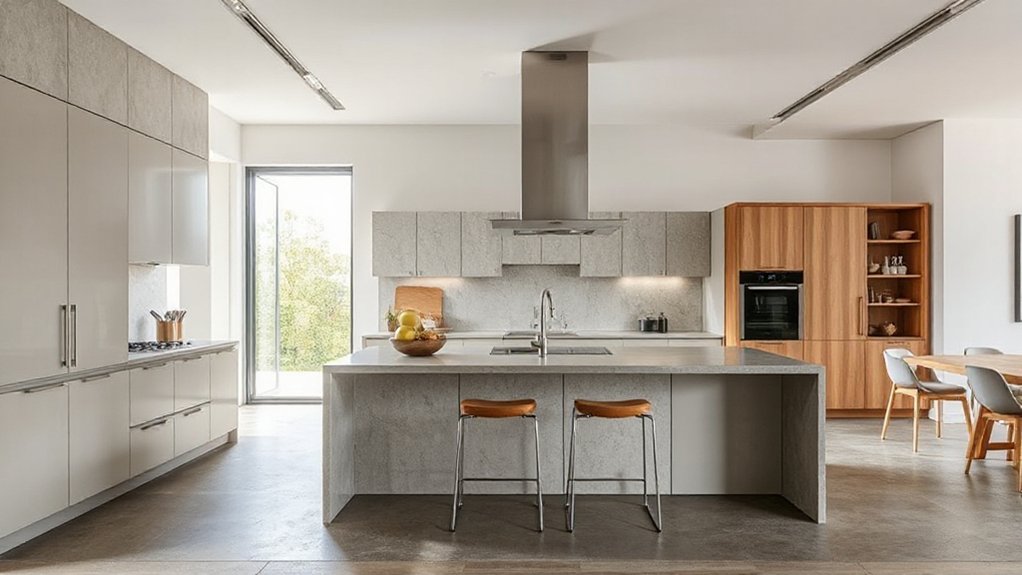
You’ll explore how quiet kitchen acoustics shape open-plan living, balancing talk-ability with containment. Consider sound-reflective layouts that reduce spillover between prep zones and dining spaces.
While keeping the space feeling bright and connected. This trend blends functional noise control with a sleek, modern aesthetic, prompting you to rethink layout choices from island placement to wall treatments.
Quiet Kitchen Acoustics
Quiet kitchens can feel surprisingly calm in open-plan homes—if you design for sound from the start. You’ll notice the payoff when you place zones thoughtfully, using soft materials and measured acoustics to curb chatter and clatter alike.
Prioritize containment around noisy tasks, and let passages breathe with thresholds and cabinetry that absorb rather than reflect. Integrate silent appliances where possible, so ovens and dishwashers blend into the background rather than dominate the room.
Pair this with soundproof panels in key listening zones to dampen footsteps and appliance noise without sacrificing style. Choose matte finishes, wool rugs, and cork underlays to diffuse echoes.
The result is a serene hub that stays practical, modern, and pleasantly quiet in busy UK homes.
Sound-Reflective Layouts
As you push beyond quiet zones, you’ll start to map layouts that leverage sound reflections to shape open-plan kitchens. In this approach, you work with strategic furniture placement, island orientation, and ceiling planes to guide conversation flow while maintaining perceived calm.
Rather than dampening sound everywhere, you create zones where chatter is absorbed in key hotspots and reflected toward seating areas, enhancing sociable vibes without overwhelming the space. Practical details include layering textures, selective glazing, and low-profile cabinetry that modulates echo without sacrificing light.
When planning, consider soundproofing techniques for adjacent rooms and optimize sightlines to reduce noise spill. Look to acoustic panel designs that blend into decor, delivering performance while staying visually cohesive with modern UK kitchens.
Open-Plan Noise Control
What makes open-plan kitchens feel calmer isn’t silence alone but smart noise control that shapes how conversations move. In 2026 UK homes, you’ll prioritize layouts that buffer chatter without closing spaces.
Use sound-reflective strategies to keep activity low in prep zones while letting family banter flow at breakfast. Position islands and work zones to create subtle acoustic angles, guiding sound away from dining areas.
Soundproof doors can segment late-night cleanup without isolating guests, while acoustic paneling adds tasteful, functional texture along walls and ceilings. Combine these elements with soft-close cabinetry and under-counter buffers to minimize impact.
The result is a versatile hub where speaking stays intimate, cooking stays efficient, and the room feels calmer, confident, and stylish.
UK Kitchen Colour Palettes: Soft Neutrals to Bold Accents
Soft neutrals form the backbone of modern UK kitchens, creating calm, versatile backdrops that pair easily with bold accents. In 2026 you’ll see soft creams, warm beiges, and cool greys anchoring spaces while you experiment with color pops.
Think matte cabinetry in pale tones, contrasted by a deeper island or hardware for visual drama. Accent palettes shift toward saturated greens, midnight blues, or terracotta for personality without noise.
You’ll also notice Vintage charm and Retro motifs reappearing in detailing, from curved edges to patterned tiles, delivering warmth without overpowering the room. Balance is key: temper intense colors with natural woods and soft textures, so lighting and airflow keep the palette fresh.
This approach supports versatile, resilient kitchens ready for evolving tastes.
Sustainable Layouts: Water-Efficient Fixtures and Waste Flow
You’ll explore water-efficient fixtures that cut bills and curb waste, from low-flow taps to dual-flush or sensor-operated options.
Waste flow optimization guides safer, cleaner layouts that reduce clogs and streamline daily chores.
Embrace sustainable layout principles that balance ergonomics, accessibility, and future-proofing for UK homes.
Water-Efficient Fixtures
Prioritize eco friendly faucets that balance style with low flow, using aeration and efficient cartridges to maintain a satisfying tap feel.
Pair them with water saving toilets designed for compact spaces and powerful flushes, which reduce overall water use without compromising hygiene.
In kitchens, select fixtures with adjustable spray patterns and timed shut-off features to curb splashes and runoff.
Consider leak-prevention basics, like simple shut-off valves and easy-access under-sink panels, so maintenance is straightforward.
Embrace a design that emphasizes resilience, material durability, and future-proofed efficiency.
Waste Flow Optimization
What’s the fastest way to optimize a kitchen’s waste flow without sacrificing style or storage? Start with a compact strategy: integrated recycling stations near prep zones keep sorting effortless, while a discreet compost bin keeps green waste out of the main bin.
Use a pull-out trash system with separate compartments to minimize cross-contamination and encourage routine disposal habits. Align waste stations with your plumbing and under-sink drainage to reduce splash and odor.
Choose stainless or matte finishes that blend with cabinetry for a seamless look. Label bins clearly and use color-coding or icons to reinforce behavior.
Finally, plan for future-proofing: modular units, easy-clean liners, and accessible placement that support changing routines and evolving sustainability goals.
Sustainable Layout Principles
Sustainable layouts prioritize efficient water use and streamlined waste flow, because small choices at the planning stage yield big savings over time. You’ll optimize fixtures for low flow, sensor taps, and greywater reuse where feasible, cutting consumption without compromising function.
Position sinks, dishwashers, and trash stations to minimize travel and contamination risk, supporting smooth waste flow and easier separation of recyclables.
Choose integrated pull-outs and compact storage to reduce energy use and clutter, aligning with modern, tidy aesthetics.
Vintage motifs and rustic charm can coexist with efficiency through durable materials and timeless hardware that don’t demand frequent replacement.
Use dual-flush toilets, water-efficient faucets, and appropriately sized appliances to maintain performance while trimming bills and waste.
Informed layouts translate into calmer kitchens and smarter, sustainable living.
Durable, Kid-Friendly Surfaces for Busy UK Households
Durable, kid-friendly surfaces are the backbone of busy UK kitchens, where spills, scrapes, and rapid turnarounds are the daily norm. You want materials that resist daily abuse without nagging maintenance. Look for hard-wearing options that clean quickly and stay pristine after puddles of juice or sauce.
Prioritize resilience over flash, then consider appearance and upkeep. Child proof countertops reduce hazards while keeping edges smooth for little ones learning to climb and reach. Stain resistant finishes keep high-traffic zones looking fresh, even during messy cooking sessions or after homework snacks at the counter.
Practicality should still feel modern: choose low-maintenance textures, consistent colorways, and subtle patterns that hide minor imperfections. Pair with sealed joins and high-quality seals to extend longevity in a busy household.
Kitchen Connectivity: USB-C Power, Wireless Charging, and More
As kitchens become more connected, USB-C power hubs, wireless charging pads, and smart basins are transforming how you cook, prep, and clean up. You’ll notice these advances streamline tasks without adding clutter, letting you dock devices directly at work zones.
USB-C hubs accelerate charging for phones, tablets, and recipe displays, keeping you focused on workflows rather than outlets. Wireless charging keeps counters clear, freeing space for prep and knife work while preserving device readiness for digital recipes.
Smart appliances integrate with your routines, offering voice or app control that fits into daily cycles.
Prioritizing Kitchen ergonomics means layouts support one‑handed access to power and charging, reducing reach fatigue.
In short, connected solutions boost efficiency, safety, and interaction with your range, hood, and sink.
Budget-Friendly Upgrades That Maximize Impact
To upgrade on a budget, start with small, high-impact changes that transform daily use without breaking the bank. You’ll gain momentum by prioritizing efficiency and feel, not size or cost.
Focus on core zones: prep, cleanup, and storage, then apply targeted upgrades. Budget hacks include swapping old lighting for bright LED fixtures, installing under-cabinet lights, and choosing reflective backsplashes to brighten spaces.
Impact techniques rely on tactile updates—soft-close drawers, easy-grip knobs, and a durable, wipe-clean countertop tile option. Reorganize with simple inserts and labeled containers to reclaim cabinet real estate.
Choose stainless steel or matte finishes to modernize without major renos. Plan with a color accent wall or fresh paint for instant transformation.
Small investments, big everyday payoff, smarter kitchen flow, lasting value.
Custom Cabinet Hardware: Handles That Elevate Everyday Use
Upgrading cabinet hardware is a quick, high-impact move that ties the whole look together and improves daily use. You’ll notice how small changes—sleek pulls, tactile knobs, or statement backplates—alter perception and ease.
In 2026 UK kitchens, choose finishes that pair with your cabinetry: brushed brass for warmth, matte black for contrast, or satin nickel for versatility. Prioritize ergonomic shapes that feel good in daily routines and guarantee smooth operation.
Vintage charm can coexist with modern lines when hardware carries a timeless silhouette rather than excess embellishment. Decorative hardware becomes both function and focal point, guiding eye travel and reinforcing your chosen style.
Select pieces with durable hardware and a cohesive set across drawers and doors for a cohesive, refined kitchen.
Planning for Longevity: How to Future-Proof a 2026 UK Kitchen
Future-proofing a 2026 UK kitchen means planning for shifts in technology, lifestyle, and resilience without sacrificing style. You’ll design a flexible Kitchen layout that adapts to family routines, work-from-home spills, and evolving entertaining needs.
Prioritize robust, low-maintenance materials and modular storage that reconfigures as your space changes. Build in smart readiness with accessible power, data, and charging points, while keeping interfaces intuitive.
Appliance placement matters: zone zones for cooking, cleaning, and refrigeration reduce steps and energy use. Choose energy-efficient, quiet models with future-proof connectors and serviceability.
Favor concealed ventilation and sound-dampening that keep conversation smooth. Finally, integrate lighting and outlets that scale with gadgetry, ensuring your kitchen stays usable, stylish, and resilient for years to come.
Frequently Asked Questions
How Can I Avoid Common Layout Mistakes in UK Kitchens?
Prioritize kitchen ergonomics to prevent wasted steps and fatigue; map work zones and guarantee clear triangle flow. Use smart storage solutions—pull-outs, vertical organizers, and hidden bins—to keep counters decluttered and appliances within easy reach.
What Are Hidden Costs for a 2026 UK Kitchen Remodel?
Hidden costs can surprise you: studies show 25% average overrun. You’ll face hidden expenses and need solid budget planning, including contingencies, delivery delays, installer tweaks, and VAT variations, so you stay on track without derailing your remodel.
Which Warranties Cover Modern UK Kitchen Installations?
Warranty coverage typically includes manufacturer and installer guarantees; always confirm installation guarantees with your fitter. Look for extensive coverage that extends beyond defects, covering workmanship, and guarantee terms transfer if you move. This protects your modern kitchen investments.
How Long Does a Typical 2026 UK Kitchen Upgrade Take?
Regarding your timeline, expect about 2–6 weeks for a typical 2026 UK kitchen upgrade. You’ll install kitchen appliances and choose flooring options quickly, coordinating trades smoothly; it’ll feel like a flux of progress, with you optimizing every detail.
What Grants or Incentives Support UK Kitchen Renovations?
Grants and incentives vary, but you can access government schemes, local rebates, and energy-efficient loans to fund kitchen renovations. You’ll prioritize Kitchen appliances that cut energy use and Eco friendly materials, boosting value and sustainability while staying budget-smart.
Conclusion
As you embrace 2026’s UK kitchen trends, you’ll blend zones, sustainability, and smart tech into one calm, flexible heart of the home. Choose durable surfaces, earthy tones, and modular storage that grow with you. Prioritize energy-saving appliances, seamless charging, and future-proofed layouts. With thoughtful acoustics and concealed appliances, your space stays welcoming and clutter-free. The rhythm of form and function will guide every decision, turning daily chores into effortless, stylish rituals. The future is quietly yours.