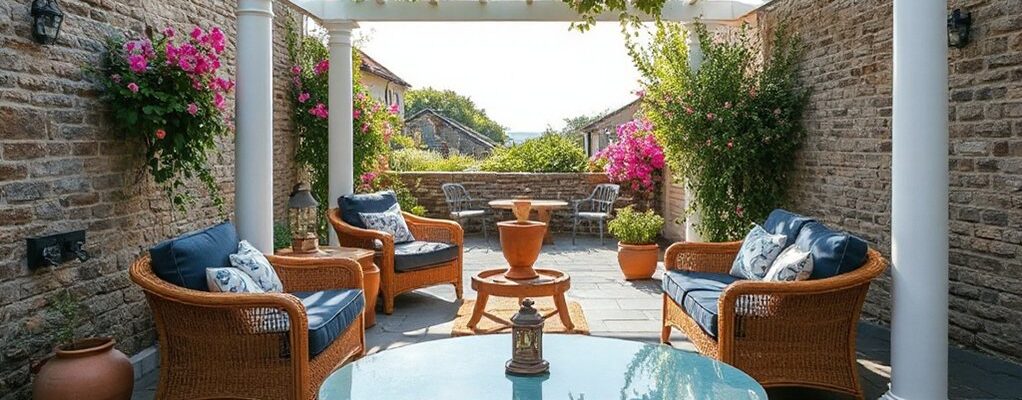
Like a sturdy harbor, your patio should anchor the home against salt spray and wind. You’ll want climate-ready layouts that optimize sun, drainage, and shelter, using durable materials and modular furniture to keep maintenance minimal. As you consider Cornwall’s unique challenges, a measured, technical approach will guide material choices, protective covers, and space planning—and there’s more to weigh before you decide, especially when shaping a patio that performs year after year.
Key Takeaways
- Prioritize coastal resilience with salt-tolerant materials, corrosion-resistant metals, and permeable drainage to handle Cornwall’s wind and rainfall.
- Combine Mediterranean warmth with modern minimalism for a durable, weather-resistant aesthetic suited to coastal homes.
- Plan raised or permeable surfaces and proper grading to ensure rapid drainage during heavy rain and high tides.
- Use layered shelter: retractable canopies and windbreak screens to provide protection while maintaining airflow.
- Choose low-maintenance, durable furnishings and moss- and algae-resistant coatings for long-term coastal beauty and ease of upkeep.
Why Cornwall Patios Are Unique and the Planning Challenge
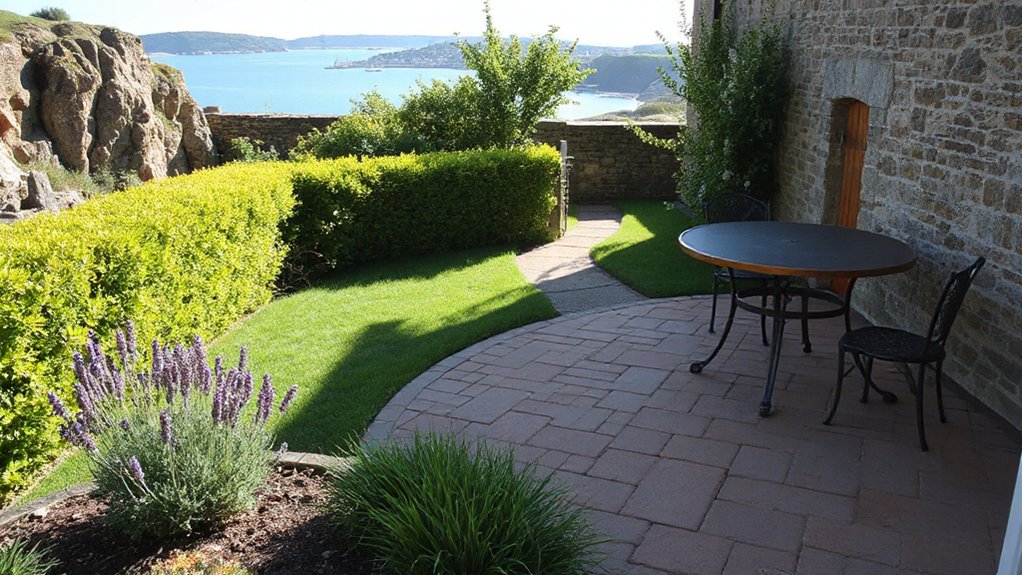
Cornwall’s patios stand out because their outdoor spaces must withstand a coastal climate that combines salty air, strong winds, and regular rainfall. You face a planning challenge that centers on durability, adaptability, and regulatory constraints, all while preserving distinct coastal character.
The need for robust, corrosion-resistant materials shapes your material selection, with attention to substrate stability and drainage efficiency. You’ll balance practical constraints with aesthetic intent, ensuring that patio aesthetics remain coherent across seasons and wind exposure.
Design flexibility matters: modular layouts, versatile shading, and adaptable furniture allow you to reconfigure spaces without compromising structural integrity. Windbreak strategies, salt-tolerant finishes, and protective detailing minimize maintenance while extending service life.
Clear documentation, inspection regimes, and code compliance keep the project efficient and enforceable.
Climate-Ready Layouts for Coastal Homes
To create climate-ready layouts for coastal homes, prioritize wind exposure, salt tolerance, and drainage from the outset. You should design setbacks and orientation that minimize direct wind impact while maximizing passive solar gain.
Integrate raised or permeable surfaces to facilitate rapid drainage during heavy rain and high tide events. Favor materials and finishes with proven salt resilience and low maintenance, supporting long-term stability without frequent replacements.
In planning, balance Mediterranean influence with modern minimalism to achieve a cohesive, durable aesthetic that remains legible in varied weather.
Establish clear zones for seating, cooking, and shade that reduce wind tunnels and moisture buildup.
Document performance criteria for airflow, moisture management, and routine inspection to guarantee sustained coastal functionality.
Materials That Withstand Wind and Salt in Cornwall
Materials that survive Cornwall’s coastal conditions demand primers of durability and resistance. You’ll prioritize substrates and finishes engineered for maritime durability, resisting salt spray, wind-driven abrasion, and humidity without compromising aesthetics.
Opt for corrosion-resistant metals, such as powder-coated aluminum or stainless steel, with seamless joins to minimize salt intrusion. Consider salt resistant materials like high-density concrete, ceramic tiles rated for coastal environments, and weathered timber alternatives treated for rot and salt exposure.
Protect surfaces with UV-stable, water-repellent sealants that maintain traction and curb staining. Fasteners should be marine-grade and corrosion-resistant, with hidden fixings to reduce crevice loading.
Preserve structural integrity by detailing to shed salt-laden spray and by selecting coatings with proven coastal performance data. Your design achieves longevity through proven materials, tested finishes, and meticulous detailing.
Small-Cornwall Plots: Space-Saving Patio Ideas
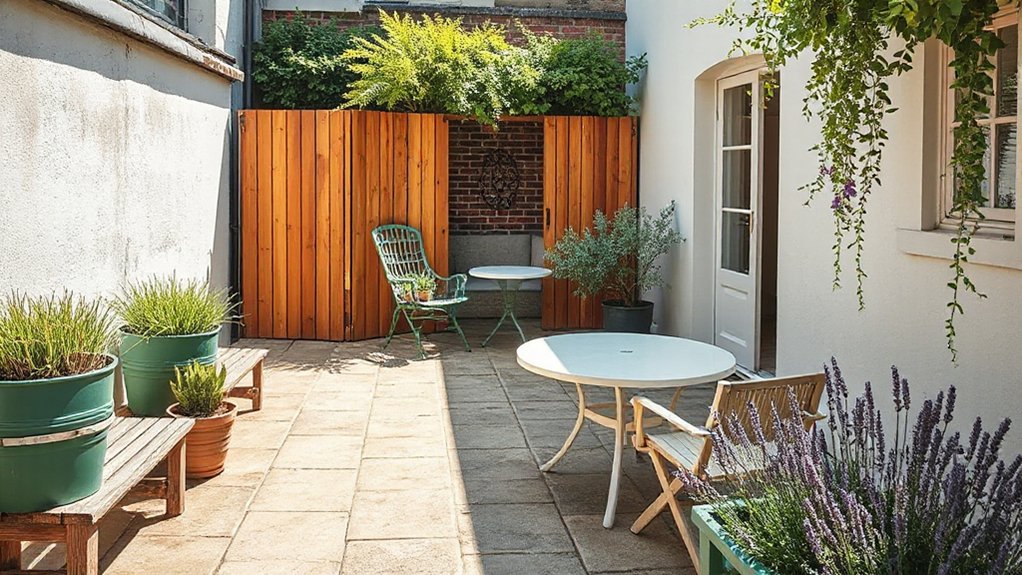
With the coastal realities established, small Cornwall plots demand patio layouts that maximize usable area without sacrificing durability or coastal aesthetics. You optimize shape and circulation by selecting compact, modular furniture and multi-functional surfaces that serve as seating, dining, and storage.
Choose permeable pavers or decking with non-slip textures to preserve drainage and safety in damp maritime climates. Layer vertical interest through trellises and hanging planters, which conserve ground space while boosting appeal.
Use narrow borders for herb strips or low shrubs to frame zones without crowding. Furnishing styles should emphasize weather-resistant materials and subdued tones aligned to seaside palettes.
Decorative accents, like integrated lighting and subtle sculpture, enhance nocturnal ambience while maintaining clarity of movement and drainage efficiency.
Shelter Options for Rain and Wind Protection
When wind and rain threaten usability, selecting shelter options that balance protection with openness is essential. You can structure coverage with a layered approach to minimize wind tunnels while preserving sky view.
Consider fixed and adjustable options: retractable canopies or sails for flexible shading, pergola roofs with clear panels for rain shedding, and sturdy overhangs that channel prevailing breezes away from seating zones.
Integrate outdoor furniture in sheltered zones to maximize usability during drizzle, using water-resistant fabrics and corrosion-resistant frames.
Decorative screens act as windbreaks with visual restraint, enabling airflow without full enclosure.
Prioritize drainage, UV resistance, and ease of maintenance, ensuring components endure Cornwall’s climate.
Choose modular components to adapt shelter depth to evolving seasonal needs.
Lighting, Warmth, and Heat for Golden-Hour Moments
As you plan patio lighting and heat, consider how Golden Hour lighting enhances texture, color, and mood while maintaining energy efficiency. We’ll balance warm outdoor heating with subtle fixtures to extend comfort without overwhelming natural light. This approach blends precise specifications with practical choices to support comfortable, stylish evenings.
Golden Hour Lighting
1) Position seating to leverage low-angle illumination and minimize glare.
2) Select finishes with subtle sheen to mirror warm tones.
3) Integrate pergolas or louvers to shape light distribution.
4) Plan shifts between shaded and sunlit zones for contrast.
Cozy Outdoor Heating
An outdoor heater should be positioned for safe clearance and ideal comfort, while fuel type, venting, and duty cycles are chosen to match patio size and wind exposure. Pairing a fire pit with wind shields or a low-profile enclosure enhances ambiance without sacrificing safety or fuel efficiency.
When integrating lighting, select low-glare, warm-tone fixtures that complement heat sources, preserving visibility and mood. Prioritize robust venting, temperature control, and durable materials to sustain performance across seasonal shifts.
This approach yields reliable warmth, controlled lighting, and extended outdoor use.
Planting Palettes That Thrive by the Atlantic
To thrive along Cornwall’s coast, select planting palettes that tolerate saline spray, wind exposure, and moist, well-drained soils. You’ll optimize resilience by choosing native species and materials that enhance garden aesthetics while withstanding coastal conditions.
- Salt-tolerant perennials and grasses for structure and movement.
- Drought-conscious, moisture-loving natives to balance drainage and humidity.
- Low-fertility-friendly species to reduce maintenance and leaf burn.
- Evergreen and seasonal accents to maintain year-round garden aesthetics and visual coherence.
You’ll structure palettes that harmonize foliage textures, bloom times, and color contrasts, ensuring visual unity from patios to borders.
Emphasize upright forms for wind shelter and groundcovers to stabilize soils. Pair native species with coastal-adapted ornamentals to sustain long-term health, reduce irrigation, and preserve authentic garden aesthetics along the Atlantic fringe.
Low-Maintenance Setups for Busy Lives
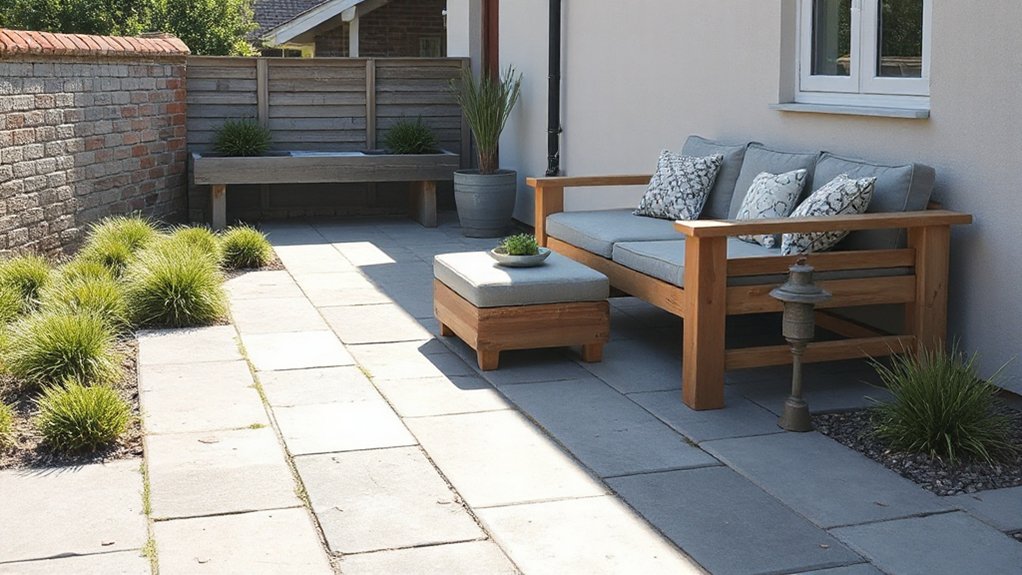
Coastal patios can be designed for low maintenance without sacrificing style or resilience. You’ll prioritize durable materials, streamlined layouts, and smart irrigation to reduce ongoing effort.
Choose outdoor furniture built for Cornwall’s coastal humidity and salt exposure, with powder-coated frames and weather-resistant cushions. Use a restrained color palette and simple lines to minimize cleaning needs and visual wear.
For maintenance tips, install a permeable surface to improve drainage and curb weed growth, and apply a moss- and algae-resistant coating to non-porous hardscapes. Schedule seasonal inspections for fasteners and sealants, then rely on automated lighting and drip irrigation to cut daily tasks.
Keep plants to a compact, low-water selection to further lower upkeep without compromising appeal.
A Practical Step-by-Step Plan to Design Your Cornwall Patio
Start by outlining your goals and constraints: determine how you’ll use the patio (entertaining, dining, relaxation), assess site specifics (sun exposure, wind, drainage), and set a realistic budget. You’ll follow a practical, step-by-step plan that translates intent into tangible design decisions.
- Define zones: living, dining, and circulation, optimizing access to doors and shade.
- Analyze materials: select durable, Cornwall-friendly surfaces and weather-resistant joints.
- Plan utilities and drainage: guarantee proper grading, lighting, and power access for appliances.
- Select furnishings: pair outdoor furniture with low-maintenance finishes and ergonomic layouts.
Integrate decorative accents strategically to enhance cohesion. Document decisions with sketches and specifications.
This plan keeps your Cornwall patio technical, concise, and repeatable, guaranteeing durable aesthetics and functional outdoor living.
Frequently Asked Questions
How Much Does a Cornwall Patio Typically Cost?
A typical Cornwall patio costs around £6,000 to £12,000, depending on size, materials, and labor. You’ll pay more for premium stone, intricate layouts, or timber decks.
You’ll save by choosing pavers or concrete slabs and handling some prep work yourself.
For value, factor in patio lighting and landscaping ideas as upgrades.
You’ll want to budget for drainage, permits if needed, and weatherproofing.
You’ll compare quotes to make certain the design meets your budget and goals.
Which Timber Types Resist Coastal Weather Best?
Timber types that resist coastal weather best are treated softwoods and durable hardwoods. You should choose timber durability proven for salt spray, high humidity, and wind-driven abrasion.
Specifically, choose accoya or cedar for lasting resistance, and larch or iroko where budget allows.
You’ll prioritize species with low shrinkage and dimensional stability. With proper sealing, maintenance, and timber durability testing, you’ll enjoy reliable performance in coastal weather over decades.
Can I DIY a Cornwall Patio Without Planning Permission?
Yes, you can DIY a Cornwall patio, but planning permission depends on size and impact.
If your project stays within 5 square meters, isn’t closer than 2 meters to a boundary, uses non-permanent materials, and doesn’t include raising the surface by more than 30 cm, you typically aren’t required to apply.
For larger or more intrusive builds, obtain Planning permission.
When you plan, reference DIY patio guidelines and confirm with your local planning authority.
What Plants Tolerate Salty Sea Spray and Wind?
Salt-tolerant plants thrive where daily spray reaches, and you can choose from hardy options. Coastal wind resistant flora include sea thrift, beach grass, and salvia; these resist salt burn and drying winds.
About 70% of surviving coastal shrubs show tolerance across seasons, so you can confidently mix varieties. You’ll want well-drained soil, partial sun, and regular pruning.
Salt tolerant plants endure spray, while Coastal wind resistant flora maintain structure, color, and health under persistent gusts.
Which Local Suppliers Offer Windproof Furniture Options?
Local suppliers offering windproof furniture options include notable garden centers and outdoor retailers in Cornwall. Check their ranges for outdoor lighting integrations and patio privacy features.
Guarantee frames use corrosion-resistant alloys and powder coatings, with UV-stable fabrics. Verify wind-load ratings and warranty terms, and request test data.
Request samples or demonstrations to assess stability in coastal gusts. Ask about delivery, assembly, and after-sales service, plus compatibility with existing outdoor lighting and privacy screens on your patio.
Conclusion
Ultimately, your Cornwall patio should marry durability with coastal charm, delivering windward resilience, efficient drainage, and sun-ready comfort. By selecting weather-resistant materials, modular furnishings, and shelter options, you create a space that’s easy to maintain and endlessly adaptable. Follow a clear, step-by-step plan, from layout to planting, and your patio will endure salt spray and spray years of use. Anachronism: imagine a brass-titted sundial ticking patiently as you enjoy a modern, sunlit horizon.