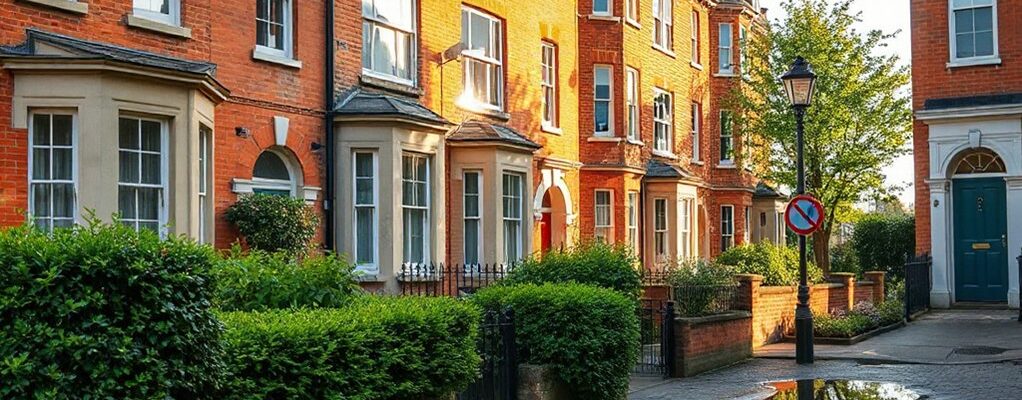
You can elevate kerb appeal on Bristol’s Victorian streets by honoring original details—sash windows, cornices, and brickwork—while choosing period-appropriate colors and durable materials. Subtle lighting and cohesive pathways should echo the era, with low-maintenance planting that complements rather than competes with architectural rhythms. Engage with conservation officers early to navigate permissions and codes. Start with a clear sense of era and character, then align every update to its authentic language—the result might surprise you.
Identify Your Bristol Victorian Street Style: Pinpoint Era and Character
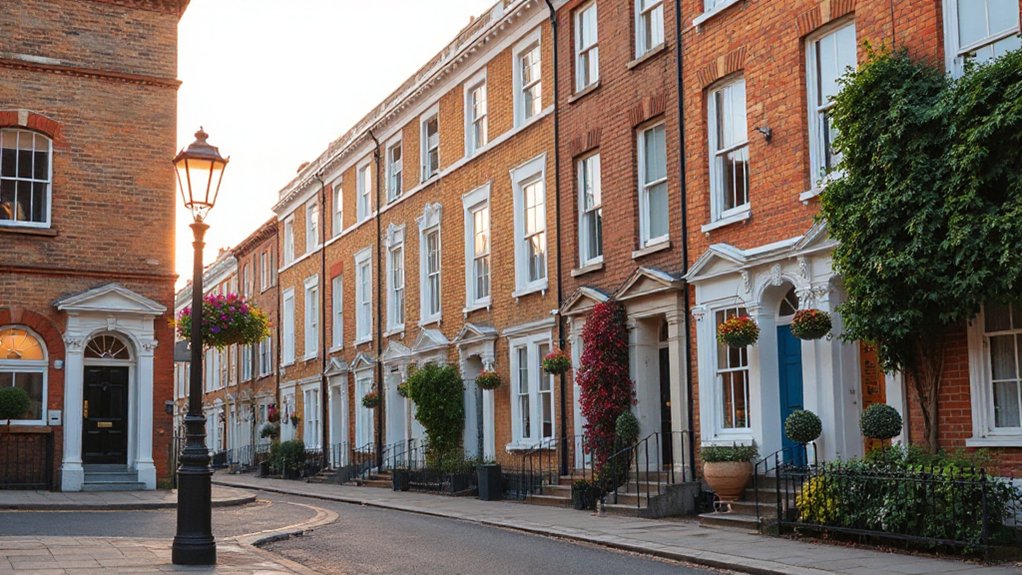
To identify your Bristol Victorian street style, start by pinpointing the era and the character that define your terrace. You’ll map architectural lineage to avoid generic choices, acknowledging how Victorian architectural details reveal local craft and time.
Consider terrace variations: Regency-influenced corners, mid-century proportions, or late-Victorian exuberance. Examine door surrounds, brickwork patterns, sash window configurations, and decorative ironwork for clues about intention and status.
Observe the historical street character of nearby façades: uniformity or eclectic flourishes, pedestrian rhythms, and materials that whisper about workshops and trades.
Your aim isn’t replication but resonance—aligning color, proportion, and texture with the period’s mood. By thoughtfully pairing features with era cues, you articulate a coherent, authentic identity for your home.
Refresh Facades With Period-Sensitive Colors
Ever thought that color speaks before texture or form? You’re invigorating facades with period-sensitive hues that respect Bristol’s Victorian voice.
Begin with a restrained palette drawn from your street’s era, balancing contrast and cohesion. Color palettes should emphasize masonry tones—warm ochres, muted greens, slate grays—paired with accent trims that read as deliberate, not decorative.
Prioritize historical accuracy by researching local dye books, paint manufacturer catalogs, and preserved samples. Then test swatches on small sections to observe patina development under sun and shadow.
Apply colors in proportion to architectural features: cornices, string courses, and lintels framed to guide the eye. Document the palette for future maintenance, ensuring continuity beyond one season while maintaining authenticity to the era.
Update Doors, Windows, and Railings With Respect
Refresh the eye drawn to the street by updating doors, windows, and railings with a respectful hand. You approach doors with care, preserving original profiles and proportions while choosing finishes that age gracefully.
Prioritize door craftsmanship: select solid cores, traditional joints, and period-accurate hardware to maintain authentic character without sacrificing security.
For windows, keep sash movement smooth and weather-tight, restoring sashes, cords, and glazing beads where needed, and repaint in muted, era-appropriate tones.
Railings deserve meticulous railing restoration—clear, durable coatings and precise re-anchoring to existing masonry without bulk or over-ornament. Match metalwork to architectural cues and avoid modern overstatement.
The goal is cohesion: doors, windows, and railings that read as a unified, respectful restoration rather than a competing update.
Light It Right: Exterior Lighting and Pathway Design
Good lighting can transform a Victorian street façade without overwhelming it, guiding the eye to architectural details while ensuring safety and usability at night. You’ll balance brightness with warmth, selecting fixtures that complement brickwork and sash windows.
Favor low, downward spill to emphasize textures without glare, and place accents along entry paths to define rhythm and scale. Solar powered fixtures offer sustainability and easy retrofitting, especially for gateposts and lanterns that flank entrances.
Choose pathway materials that correspond to historic hues—calibrated pavers, clay bricks, or rendered gravel—so light reflects softly and evenly. Plan layers: ambient glow from wall-mounted luminaires, task light for steps, and subtle uplighting to reveal cornices.
Prioritize continuity, symmetry, and tactility to enhance curb appeal while preserving authenticity.
Low-Maintenance Front-Garden Ideas
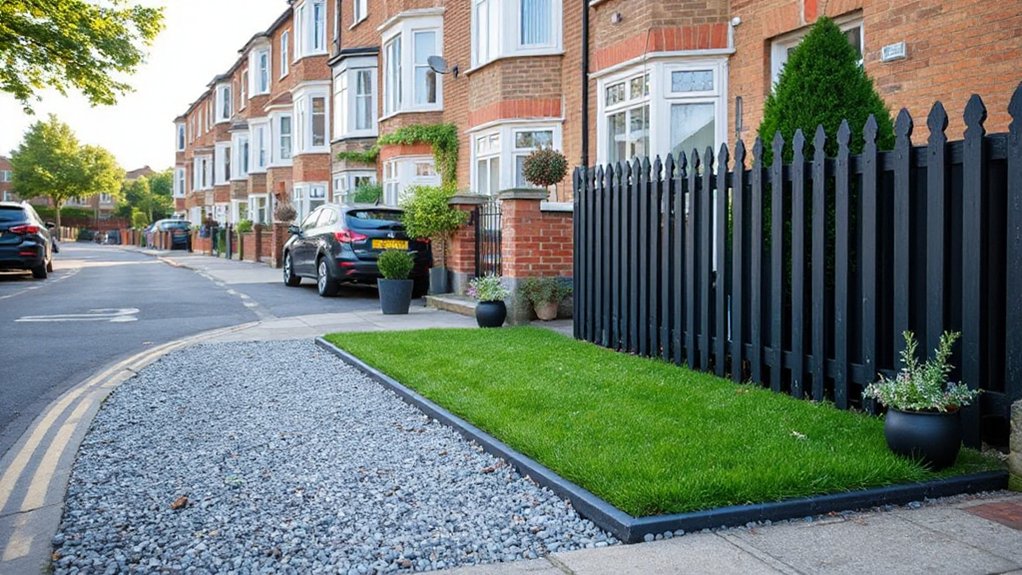
You’ll balance form and function by shaping a front garden that respects natural flow—think creating a “low-muss-backyard” shift that stays tidy without fuss.
Consider drought-tolerant planting choices paired with smart mulch and groundcover to suppress weeds and conserve moisture, while still offering year-round texture.
This approach keeps maintenance minimal yet visually compelling, so your Victorian streetscape remains inviting with every season.
Low-Muss-Backyards (Adjust for Natural Flow)
In tighter Victorian lots, you can honor the natural slope by aligning paths and planting beds to the terrain, which minimizes maintenance while enhancing curb appeal. You’ll design low-muss backyards by pairing compact, layered greenery with clean edges that follow the site’s contour, reducing irrigation needs and weed exposure.
Choose materials that age well in Bristol’s climate: slate, brick, and gravel textures layered to guide drainage without visible effort. Keep seating and focal points within natural sightlines to preserve openness; select garden furniture that folds or hiatuses for versatility.
Introduce subtle outdoor art—rusted panels, ceramic accents, or sculptural stakes—that reflect the street’s history without dominating the space. Maintain a cohesive palette, ensuring each element complements the architectural details of neighboring homes.
Drought-Tolerant Planting Options
Drought-tolerant planting can dramatically reduce front-garden maintenance while boosting curb appeal on Bristol’s Victorian streets. You’ll select xeriscaping plants that thrive in dry soils with minimal irrigation, aligning classic charm with modern practicality.
Focus on structure first: tall, sculptural grasses or drought resistant shrubs create year-round silhouettes against brick facades. Then layer with medium or low-growing textures to soften edges.
Choose plants with refined foliage—silver greens, blue-tinged textures, and evergreen tones—to maintain visual interest through seasons.
Groupings should echo the street’s rhythm, using repetition for cohesion and focal points near entryways.
Mulch can conserve moisture and reduce weeds, but you’ll keep to a restrained palette to preserve Victorian elegance.
Finally, guarantee drainage is adequate and irrigation is targeted, maintaining a tidy, low-maintenance aesthetic.
Mulch And Groundcover Ideas
Mulch and groundcovers play a pivotal role in linking Bristol’s Victorian curb appeal together by controlling moisture, suppressing weeds, and softening brick textures.
In this low-maintenance approach, you’ll prioritize mulch layering to guarantee even coverage, slow release nutrients, and deter stray seedlings from taking root.
Choose groundcover selection that respects heritage materials—low-growing, drought-tolerant varieties work well between paths and edging, while taller options can soften stairs and borders without overwhelming the facade.
Apply a mulch depth of 2 to 3 inches, renewing seasonally to maintain weed suppression and moisture balance.
Pair textures, like pine fines with a creeping thyme or sedum, to create year-round interest.
Keep color shifts subtle, focusing on greens, ambers, and muted florals that echo brick and stone motifs.
Planning Essentials: Permissions, Codes, and Bristol Nuances
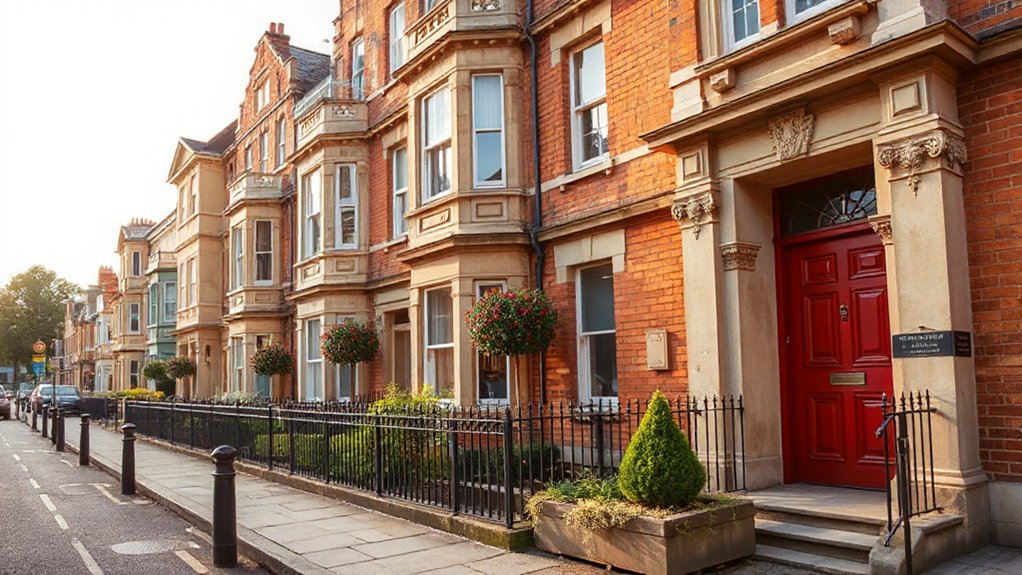
Planning permissions and local codes in Bristol aren’t a hurdle—they’re a framework that can streamline your project and protect the district’s Victorian character.
As you plan, you’ll want to consult historic preservation guidelines early, identifying which features require approval and which are permissible alterations.
Planning regulations emphasize scale, materials, and silhouette, so you can anticipate permissions timelines and prepare clear, visually cohesive proposals.
In practice, you’ll assess boundary changes, window replacements, and roofline treatments to ensure compatibility with surrounding brickwork and decorative cornices.
Engage with local conservation officers to understand nuanced Bristol requirements, including conservation area considerations and listed-building sensitivities.
By aligning your strategy with these standards, you safeguard aesthetics while achieving modern functionality.
Your project stays authentic, compliant, and beautifully integrated.
Frequently Asked Questions
How Can I Tell if My Street Era Matches Nearby Houses?
To tell your street era, you compare architectural details and materials, then note consistency with nearby houses. You’ll spot harmonies in proportion, rooflines, and masonry, while integrating garden lighting and driveway design to echo surrounding rhythms and textures.
Are There Hidden Permitting Steps for Victorian-Era Embellishments?
Yes, there may be hidden permitting steps for Victorian-era embellishments. You should anticipate permitting nuances, document Victorian craftsmanship details, and consult local planners early, ensuring accuracy, aesthetic alignment, and compliance while preserving historical integrity in your project.
Which Local Plaques or Covenants Affect Front Garden Choices?
Plant a care-worn tale: a hedgerow survives where covenants forbid garish decks, and you’ll honor historical preservation and property covenants by choosing natives. You’ll tailor front gardens to respect limits, textures, and curb-appeal authenticity.
Can I Mix Modern Materials With Period Details Legally?
Yes, you can mix modern materials with period details, as long as you respect Historic preservation guidelines and heritage constraints. Prioritize coordinated palettes, durable integrations, and sympathetic textures to master Modern integration without diminishing character.
What Grants or Funding Exist for Bristol Frontage Upgrades?
You can explore historic preservation grants from Bristol City Council and national bodies, plus crowdfunding for frontage upgrades. You’ll balance garden landscaping with period-appropriate details, ensuring compliance, clear project plans, and documented impact to maximize funding eligibility and aesthetic impact.
Conclusion
You’ve got the blueprint to elevate kerb appeal without losing Bristol’s Victorian soul. By matching era-specific hues, restoring sash windows and rails, and lighting gently to reveal texture, your street scene becomes cohesive, inviting, and timeless. A recent study shows homes with period-appropriate facades retain value up to 5% higher in heritage-conscious neighborhoods. Partner with conservation officers, use durable materials, and opt for low-maintenance planting to keep the charm intact long after the first glance.